
Artificial Heart Stent Market Size, Trends & Growth by 2034
Coverage: by Product (Bare-Metal Stent (BMS), Drug-Eluting Stent (DES), Bioresorbable Vascular Scaffold (BVS)); Application (Acute Myocardial Infarction, Unstable Angina, Angina Pectoris); End User (Hospitals, Ambulatory Surgical Center, Others), and Geography (North America, Europe, Asia Pacific, and South and Central America)
- Status : Data Released
- Report Code : TIPRE00013450
- Category : Life Sciences
- No. of Pages : 150
- Available Report Formats :


- Last update date : September 02, 2026


2025 Market Size
US$ 2.82 Bn
Base year value
2034 Forecast
US$ 5.18 Bn
Projected by 2034
CAGR 2026-2034
6.98 %
Growth rate
Addressable Market
US$ 36.11 Bn
(2026-2034)
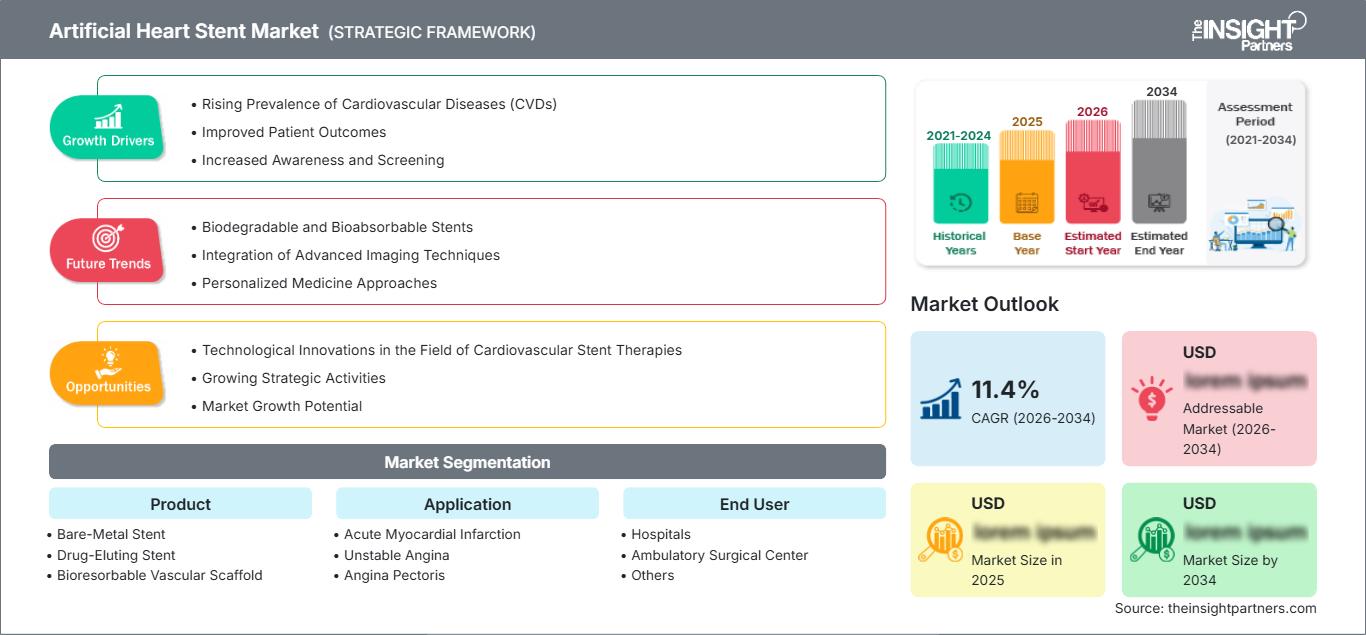
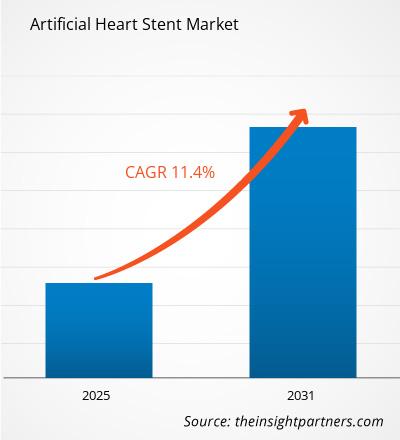
The artificial heart stent market is valued at US$ 2.82 Billion in 2025 and is projected to reach US$ 5.18 Billion by 2034, registering a CAGR of 6.98% from 2026 to 2034. Market continues to grow on the back of innovation in the field of interventional cardiology in relation to development of smaller strut stents, enhanced delivery methods, optimal drug-eluting technology, and more anatomically customizable platform. Market growth will be driven by increased rates of coronary interventions, prevalence of cardiovascular diseases, and developments in the field of stent technology.
North America region will continue to be significant due to existing catheterization equipment infrastructure, high volume of procedures, availability of specialists, and reimbursement models for percutaneous coronary intervention. The artificial heart stent market size will increase at a rate of 6.2% to 7.2% CAGR from 2026 to 2034 in North America.
Artificial Heart Stent Market Assessment and Insights
- North America: North America is expected to command a 35–39% share in 2025, expanding at a 6.2–7.2% CAGR between 2026–2034. The region benefits from mature PCI infrastructure, specialist capacity, advanced imaging adoption, and broad availability of drug-eluting platforms.
- US: The US is estimated to represent 78–83% of North American revenue in 2025, growing at a 6.1–7.1% CAGR between 2026–2034, supported by high PCI volumes and established cardiovascular reimbursement.
- Europe: Europe is projected to hold a 27–31% share in 2025, advancing at a 5.8–6.8% CAGR between 2026–2034. Germany, the UK, France, Italy, and Spain remain important markets because of established interventional cardiology networks and sophisticated hospital procurement systems.
- Asia Pacific: Asia Pacific is estimated at 22–26% share in 2025, with a 7.8–8.8% CAGR between 2026–2034. China, Japan, South Korea, and India are leading demand centers, supported by expanding catheterization laboratories, cardiovascular screening, and domestic device manufacturing.
- Largest Segment: Drug-Eluting Stent is estimated to hold a 66–71% market share in 2025, with a 6.7–7.7% CAGR from 2026–2034, reflecting established clinical preference for restenosis control.
- High Growth Segment: Bioresorbable Vascular Scaffold is expected to represent a 4–7% market share in 2025, with a 8.0–9.5% CAGR from 2026–2034, supported by renewed development in temporary scaffolding technologies.
- Key companies analyzed in detail: Abbott, B. Braun Melsungen AG, Terumo Corporation, Medtronic, Boston Scientific Corporation, BIOTRONIK, Biosensors International Group, Ltd., Atrium Medical Corporation, Sino Medical Sciences Technology Inc., Cardinal Health.
Source: The Insight Partners' analysis based on proprietary research, government publications, company annual reports, investor presentations, industry databases, and expert interviews.
The design of stents has evolved from metallic scaffolds to designs that are thinner in nature, increased radiopacity, advanced coatings on polymers, and drug-eluting capabilities aimed at handling complex cases. Manufacturing now increasingly depends on precise laser cutting, coating techniques, strict measurement of dimensions, and effective delivery systems. The above changes have increased the need for consistency in manufacturing, material science, and design of catheter stents.
In the coming years, there will be more emphasis on growth outside the well-established western markets. China and India have significant volume growth potential while Southeast Asia and some selected markets in the Middle East are building PCI capacities. Modernization in regulations, infrastructural investment in hospitals, and adoption of image guided procedures will drive localization of sales and manufacturing.
Artificial Heart Stent Market Report Scope
| Report Attribute | Details |
|---|---|
| Market size in 2025 | US$ 2.82 Billion |
| Market Size by 2034 | US$ 5.18 Billion |
| Global CAGR (2026 - 2034) | 6.98% |
| Historical Data | 2021-2024 |
| Forecast period | 2026-2034 |
Artificial Heart Stent Market Analysis
Growth of demand for the artificial heart stent market is driven primarily by coronary artery disease rates, angioplasty procedure numbers, demographics, and the need for vessel patency following angioplasty. The ecosystem includes specialty metal suppliers, polymer and drug suppliers, precision machining manufacturers, coating firms, catheter manufacturers, hospitals, interventional cardiologists, and distributors. Procurement looks at clinical efficacy in addition to deliverability, shelf-life, compatibility, and overall procedural costs.
Supply trends are driven by the needs of the cobalt-chromium, platinum-chromium, stainless steel, polymer, and drug-coated stents. Stent suppliers need to be able to hold tight tolerances while achieving radial strength, flexibility, visualization, and profile. Hospitals increasingly prefer stent platforms which are able to address different types of lesions without stocking an overly large inventory, encouraging stent manufacturers to expand their diameter and length matrixes.
The rivalry is still restricted to diversified cardiovascular device makers who have ties with doctors, capability of regulation, and comprehensive interventional portfolios. Abbott relies on its XIENCE range to compete whereas Boston Scientific has many products based on platinum-chromium and bioabsorbable polymer. Medtronic, Terumo Corporation, BIOTRONIK, and Biosensors International Group, Ltd. diversify the competition across different regions and types of products.
The artificial heart stent market report reveals the increasing need for complex coronary intervention, patients at risk of bleeding, lesion-based platforms, and imaging devices as key strategies. Sino Medical Sciences Technology Inc. is a key player in the Chinese device environment. At the same time, B. Braun Melsungen AG, Atrium Medical Corporation, and Cardinal Health have contributions in terms of cardiovascular product portfolios or distribution channels.
● REPORT CUSTOMIZATION
Tailor This Report To Align With Your Specific Business Requirements
This report can be customized to align precisely with your business objectives, scope, and target markets. Customization options include tailored segmentation, geography, competitive analysis, and strategic insights to support informed decision-making.
Customize This Report →WHAT YOU CAN ADJUST
- ● Segmentations
- ● Geography
- ● Competitive Analysis
- ● Language Preferences
Artificial Heart Stent Market: Strategic Insights
Regional Insights
North America artificial heart stent market
North America is expected to contribute 35-39% to the Artificial Heart Stent Market share in 2025 and to grow at a CAGR of 6.2-7.2% from 2025 to 2034. United States is the leading source of demand owing to the existence of well-developed catheterization laboratory infrastructure, cardiac specialties, and reimbursement of PCI procedure. Canada will help through publicly funded cardiovascular disease programs and hospital procurement. Usage is highest with drug-eluting systems for routine and difficult coronary interventions.
Moreover, North America enjoys fast adoption of technologies such as intravascular ultrasound, optical imaging, lesion preparation, and delivery innovations. Hospitals are using imaging to achieve precision in sizing and deploying the stents, thus increasing the usage of sophisticated platforms. Competition is driven by the presence of manufacturers such as Abbott, Boston Scientific Corporation, Medtronic, Terumo Corporation, and BIOTRONIK. Economic consideration is increasingly becoming the criterion for procurement decisions.
U.S. artificial heart stent market
North America will be responsible for about 78-83% of 2025 revenues of US with CAGR of 6.1-7.1% in 2034 due to high PCI usage rate, high prevalence of cardiovascular diseases, number of specialists, and sophistication of catheterization laboratories. Abbott, Boston Scientific Corporation, Medtronic, Terumo Corporation and BIOTRONIK occupy strong commercial positions in the field of coronary interventions.
Usage demand in application is growing in relation to acute coronary syndromes, complex lesions, long lesions, bifurcations, and patients that need optimized antiplatelet management. Hospitals will still be the key buyers, however, outpatient cardiovascular interventions become increasingly more important due to improvements in patient selection and procedure efficiency. US market will be important launching point for advanced platforms of stents, imaging solutions, and delivery solutions.
Europe artificial heart stent market
Europe will have a share of 27-31% and grow at a CAGR of 5.8-6.8%, with Germany being the largest national market. Other significant markets include the United Kingdom and France, while Italy and Spain provide support for the growth through their public hospital infrastructure and growing number of interventions.
The United Kingdom is a combination of developed PCI and procurement process, as well as health economic evidence being a major requirement. Germany has an extensive number of hospitals and specialists providing for complex coronary interventions. France, Italy, and Spain will develop advanced drug-eluting systems; however, the reimbursement and procurement processes are different for each of them. European suppliers and multinationals need to take into account MDR, as well as the need for clinical evidence in this competitive market.
APAC artificial heart stent market
APAC is expected to comprise 22% to 26% of 2025 revenues and is growing at 7.8% to 8.8% CAGR, which makes it the most rapidly growing region among all regions. China dominates regional demand, followed by Japan, South Korea, India, and Australia. Access to PCI, local production, and knowledge about cardiovascular diseases drive growth.
Large procedure volumes and strong competition exist in China. Interventive care facilities are well-established in Japan and South Korea, while in India, there is fast-growing use of catheterization and DES platform access. In Australia, a specialist network has been established. These factors will help promote the technology in the region.
Middle East & Africa artificial heart stent market
Growth in Middle East and Africa is pegged at 5.5-6.5% CAGR driven by Saudi Arabia and UAE on account of the tertiary cardiovascular centers and healthcare development. South Africa will continue to play a key role regionally while RoMEA market will be limited due to specialist availability and infrastructure issues.
Saudi Arabia's investments in hospitals and UAE's medical tourism infrastructure facilitate advanced heart intervention procedures. South Africa will continue to have comparatively more advanced interventions procedures while other African markets rely on referrals and imported technology. Financial strength and infrastructure investments in the Gulf nations could finance catheterization laboratories, but financial reimbursement, specialist training and supply chain would play a key role.
Segmentation Analysis
Product
The Product segment in the Artificial Heart Stent Market is expected to grow at a 6.7–7.7% CAGR from 2026–2034. Drug-eluting platforms dominate because they combine mechanical scaffolding with localized pharmacological control of neointimal proliferation. Bare-metal stents retain selected clinical applications, while bioresorbable vascular scaffolds represent a technology-development opportunity where improved mechanical performance and clinical evidence could broaden adoption.
- Bare-Metal Stent: Bare-metal platforms retain relevance where short-term mechanical scaffolding, lower device complexity, or specific clinical considerations influence selection. Their established manufacturing base also supports availability in price-sensitive settings.
- Drug-Eluting Stent: Drug-eluting stents represent the principal product category, supported by established physician familiarity, extensive clinical evidence, and continued improvements in polymer coatings, drug kinetics, strut thickness, and delivery performance.
- Bioresorbable Vascular Scaffold: Bioresorbable scaffolds offer temporary vessel support followed by scaffold resorption, creating strategic interest in younger patients and selected lesions where restoration of vessel function is a priority.
Application
The Application segment is forecast to expand at a 6.5–7.5% CAGR from 2026–2034. Acute myocardial infarction generates substantial procedural urgency, while unstable angina and angina pectoris sustain elective and semi-urgent PCI demand. Clinical decision-making increasingly incorporates lesion complexity, bleeding risk, vessel characteristics, and anticipated duration of antiplatelet therapy.
- Acute Myocardial Infarction: Emergency PCI requires rapid device delivery and reliable deployment, making trackability, visibility, radial strength, and broad size availability particularly important for acute coronary interventions.
- Unstable Angina: Treatment demand depends on risk stratification and coronary anatomy, with stenting frequently selected when significant obstructive disease requires mechanical revascularization after diagnostic evaluation.
- Angina Pectoris: Stable symptomatic disease supports planned PCI, where physicians can devote greater attention to lesion preparation, imaging-guided sizing, and selection of stent architecture suited to vessel anatomy.
End User
The End User segment is expected to register a 6.1–7.1% CAGR from 2026–2034. Hospitals remain central because they house catheterization laboratories, cardiac intensive-care capabilities, and multidisciplinary teams. Ambulatory surgical centers can capture selected lower-risk procedures as outpatient infrastructure develops, while specialty care centers remain important for complex cardiovascular services.
- Hospitals: Hospitals account for the core purchasing base because they manage emergency PCI, complex coronary disease, intensive cardiac care, and high-volume interventional programs requiring broad device inventories.
- Ambulatory Surgical Center: Ambulatory centers are positioned for selected lower-risk interventions where clinical protocols, observation requirements, emergency backup, and reimbursement permit safe outpatient management.
- Others: Other facilities include specialty cardiovascular settings and focused procedural centers, with adoption determined by local accreditation, specialist availability, equipment investment, and referral patterns.
Opportunity Snapshot
| Application | Revenue Contribution (High/Medium/Low) | Trend Tag | Adoption Stage |
|---|---|---|---|
| Acute Myocardial Infarction | High | Emergency PCI | Mature |
| Unstable Angina | Medium | Risk Stratification | Scaling |
| Angina Pectoris | High | Elective PCI | Mature |
Artificial Heart Stent Market Growth Drivers and Impact Analysis
Rising Cardiovascular Disease Burden
The continuing prevalence of coronary artery disease creates a durable clinical need for revascularization technologies. Aging populations, diabetes, hypertension, obesity, and sedentary lifestyles increase the number of patients requiring cardiovascular assessment and intervention. For device manufacturers, this translates into sustained procedure opportunities rather than dependence on a single therapeutic indication. The impact is strongest in countries where cardiovascular screening is improving and previously untreated patients are entering formal healthcare pathways. Greater disease recognition also supports earlier referral to interventional cardiology. Manufacturers can benefit by developing product matrices suited to different vessel sizes, lesion complexities, and bleeding-risk profiles. However, procedure growth does not automatically translate into equivalent revenue growth because procurement systems, tendering, and price controls can shift product mix toward clinically differentiated but economically defensible platforms.
Expansion of Minimally Invasive Coronary Intervention
The continued preference for minimally invasive treatment is strengthening the role of PCI in appropriate coronary patients. Compared with open surgical approaches, catheter-based interventions can reduce procedural invasiveness and facilitate treatment through established cardiac catheterization infrastructure. The market impact extends beyond stents because hospitals increasingly invest in imaging, guidewires, balloons, lesion-preparation technologies, and hemodynamic support that improve the overall PCI ecosystem. As procedural workflows become more sophisticated, stent manufacturers face greater expectations for compatibility with imaging and delivery technologies. This creates opportunities for suppliers capable of integrating device design with procedural requirements. The commercial consequence is a shift from basic product availability toward performance differentiation, particularly in complex lesions, calcified anatomy, long lesions, and high-bleeding-risk patients where physicians place greater value on predictable deployment and optimized vessel treatment.
Improving Access to Advanced Interventional Cardiology
Healthcare infrastructure investment in emerging economies is broadening access to coronary intervention. New catheterization laboratories, specialist training programs, insurance expansion, and government-backed cardiovascular initiatives can convert previously unmet clinical need into procedural demand. China and India are particularly important because their large populations provide substantial room for treatment expansion, while Southeast Asian markets offer additional opportunities as specialist capacity improves. Increased domestic manufacturing also changes competitive dynamics by introducing lower-cost alternatives and encouraging multinational companies to localize products, partnerships, and clinical education. For manufacturers, successful expansion increasingly requires more than regulatory registration. Distribution reliability, physician training, tender participation, after-sales support, and evidence appropriate to local populations can determine market penetration. This infrastructure-led expansion is therefore likely to broaden the addressable patient base while increasing competition on price and service.
Artificial Heart Stent Market Future Trends
Imaging-Integrated Stent Optimization
The artificial heart stent market trends are likely to increasingly connect stent selection with intravascular imaging and procedural decision support. IVUS and optical imaging can provide detailed information on vessel dimensions, plaque characteristics, expansion, apposition, and lesion morphology before and after implantation. Over time, manufacturers may differentiate systems according to how effectively their stents interact with imaging-guided workflows rather than treating the implant as an isolated product. Artificial intelligence could further assist measurement and procedural planning, particularly where lesion complexity makes visual angiographic assessment insufficient. This evolution should encourage tighter integration among stents, imaging catheters, software, and procedural platforms. Companies that develop compatible ecosystems may gain stronger physician engagement because the clinical workflow becomes increasingly centered on measurable optimization rather than device selection alone.
Next-Generation Temporary Scaffolding
Bioresorbable technologies are positioned for renewed development as material science improves mechanical strength, degradation control, radiopacity, and delivery performance. Future platforms may focus on overcoming limitations that previously restricted broad clinical adoption, including scaffold thickness, radial strength, recoil, visibility, and thrombosis concerns. The strategic objective is to provide temporary mechanical support while enabling the vessel to recover more naturally after scaffold resorption. Regulatory agencies and clinical investigators are likely to require robust long-term evidence before wider adoption, making clinical development timelines important to investment decisions. Manufacturers with capabilities in polymer engineering, precision fabrication, drug delivery, and longitudinal clinical monitoring may be better positioned to commercialize improved platforms. This trajectory could create a differentiated premium segment alongside established metallic drug-eluting technologies.
Artificial Heart Stent Market Opportunities
Localization of Production in High-Volume Emerging Markets
Investment opportunities are emerging around localized manufacturing and regional supply networks, particularly in China and India. Local production can reduce logistics complexity, improve responsiveness to hospital tenders, and support pricing strategies aligned with public procurement systems. Manufacturers should evaluate localization selectively, prioritizing components where production scale, regulatory requirements, and supply security justify capital expenditure. Partnerships with established contract manufacturers can provide an intermediate pathway before full-scale facilities are developed. The opportunity is broader than assembly because local capabilities can eventually encompass laser cutting, coating, delivery-system integration, packaging, and quality testing. Companies entering these markets should combine manufacturing localization with physician education and clinical evidence generation. Such an integrated strategy can strengthen tender competitiveness while reducing dependence on imported finished devices and potentially improving resilience during international supply disruptions.
Complex-Lesion Platforms and Evidence-Based Premiumization
The artificial heart stent market Forecasts indicate that value creation can increasingly come from products designed for anatomically difficult cases rather than from unit-volume expansion alone. Long lesions, bifurcations, calcified vessels, large proximal vessels, and high-bleeding-risk populations create requirements for specialized designs, stronger delivery systems, and optimized polymer or drug technologies. Manufacturers can pursue premium positioning by demonstrating measurable procedural or clinical advantages supported by controlled studies and real-world evidence. Investment should therefore prioritize platforms that address clearly defined unmet procedural needs instead of incremental modifications without differentiated clinical value. Partnerships with major cardiac centers can accelerate evidence generation and physician adoption. In parallel, companies can use health-economic data to demonstrate whether higher device acquisition costs are offset by procedural efficiency, reduced complications, or lower downstream resource utilization.
Recent Developments
- March 2026: Abbott launched XIENCE Skypoint in India, expanding availability of its latest everolimus-eluting coronary stent for complex PCI. The platform offers an expanded size range and is indicated for vessels up to 5.25 mm, with design features intended to improve flexibility and deliverability in challenging coronary anatomy.
- June 2026: Terumo Corporation announced the first US procedure using its OPUSWAVE Dual Sensor Imaging System. The platform combines OFDI and IVUS in one catheter, strengthening Terumo's coronary intervention ecosystem and supporting more comprehensive vessel assessment during PCI procedures. The development illustrates the industry's movement toward imaging-supported stent planning and deployment.
- January 2025: BIOTRONIK introduced two new CE-approved indications for its Orsiro Mission drug-eluting stent, including one-month dual antiplatelet therapy for high-bleeding-risk patients and treatment of moderate-to-severe calcified lesions. The expansion broadens the clinical positioning of the ultrathin-strut platform in complex intervention.
Frequently Asked Questions

- Comprehensive Market Sizing and Forecast Analysis
- Detailed Segmentation Analysis
- In-Depth Market Dynamics Assessment
- Regional and Country-Level Insights
- Competitive Landscape and Company Benchmarking
- Strategic Business Intelligence
Recent Reports
Testimonials

The Insight Partners' SCADA System Market report is comprehensive, with valuable insights on current trends and future forecasts. The team was highly professional, responsive, and supportive throughout. We are very satisfied and highly recommend their services.
RAN KEDEM Partner, Reali Technologies LTDs
I requested a report on a very specific software market and the team produced the report in a few days. The information was very relevant and well presented. I then requested some changes and additions to the report. The team was again very responsive and I got the final report in less than a week.
JEAN-HERVE JENN Chairman, Future Analytica
We worked with The Insight Partners for an important market study and forecast. They gave us clear insights into opportunities and risks, which helped shape our plans. Their research was easy to use and based on solid data. It helped us make smart, confident decisions. We highly recommend them.
PIYUSH NAGPAL Sr. Vice President, High Beam Global
The Insight Partners delivered insightful, well-structured market research with strong domain expertise. Their team was professional and responsive throughout. The user-friendly website made accessing industry reports seamless. We highly recommend them for reliable, high-quality research services
YUKIHIKO ADACHI CEO, Deep Blue, LLC.
This is the first time I have purchased a market report from The Insight Partners.While I was unsure at first, I visited their web site and felt more comfortable to take the risk and purchase a market report.I am completely satisfied with the quality of the report and customer service. I had several questions and comments with the initial report, but after a couple of dialogs over email with their analyst I believe I have a report that I can use as input to our strategic planning process.Thank you so much for taking the extra time and making this a positive experience.I will definitely recommend your service to others and you will be my first call when we need further market data.
JOHN SUZUKI President and Chief Executive Officer, Board Director, BK Technologies
I wish to appreciate your support and the professionalism you displayed in the course of attending to my request for information regarding to infectious disease IVD market in Nigeria. I appreciate your patience, your guidance, and the fact that you were willing to offer a discount, which eventually made it possible for us to close a deal. I look forward to engaging The Insight Partners in the future, all thanks to the impression you have created in me as a result of this first encounter.
DR CHIJIOKE ONYIA MANAGING DIRECTOR, PineCrest Healthcare Ltd.Reason to Buy
- Informed Decision-Making
- Understanding Market Dynamics
- Competitive Analysis
- Identifying Emerging Markets
- Customer Insights
- Market Forecasts
- Risk Mitigation
- Boosting Operational Efficiency
- Strategic Planning
- Investment Justification
- Tracking Industry Innovations
- Aligning with Regulatory Trends





 Get Free Sample for