
Artificial Vascular Grafts Market Size, Demand & Growth by 2034
Coverage: By Raw Material (Polyester Grafts, Biosynthetic Grafts, Polyurethane Grafts); Indication (Endovascular Aneurysm Repair, Hemodialysis Access, Peripheral Vascular); End User (Hospitals, Ambulatory Surgical Centers); Application (Coronary Artery Disease, Aneurysm, Vascular Occlusion, Renal Failure,), and Geography (North America, Europe, Asia Pacific, and South and Central America)
- Status : Data Released
- Report Code : TIPRE00014853
- Category : Life Sciences
- No. of Pages : 150
- Available Report Formats :


- Last update date : September 07, 2026


2025 Market Size
US$ 3.81 Bn
Base year value
2034 Forecast
US$ 7.38 Bn
Projected by 2034
CAGR 2026-2034
7.63 %
Growth rate
Addressable Market
US$ 50.42 Bn
(2026-2034)
The artificial vascular grafts market is expected to expand from US$ 3.81 Billion in 2025 to US$ 7.38 Billion by 2034, registering a CAGR of 7.63% during 2026–2034. The market encompasses artificial vascular conduits employed in vascular reconstruction, aneurysms repairs, dialysis access, and peripheral vascular surgeries. Product innovation is increasingly focused on achieving high levels of biocompatibility, mechanical strength, anti-infection capability, conformability to anatomy, and procedural efficiency in open surgical and endovascular approaches.
North America is likely to retain its dominance due to advanced vascular surgery facilities, high procedure rates, and expertise. The artificial vascular grafts market size for artificial vascular grafts is further driven by the growing need for durable dialysis access, aneurysms treatment, and peripheral vascular reconstruction. Growth will continue to be underpinned by replacement procedures, aging populations, and increased usage of minimally invasive vascular surgeries.
Artificial Vascular Grafts Market Assessment and Insights
- North America: North America is estimated to account for a 37–41% share in 2025 and expand at a CAGR of 7.1–7.9% during 2026–2034. Mature vascular centers, established reimbursement, and high procedural capacity support regional demand.
- US: The US is estimated to represent 80–84% of North America's 2025 revenue and grow at a CAGR of 7.2–8.0% through 2034, supported by specialist centers and established vascular-care pathways.
- Europe: Europe is estimated to hold a 25–29% share in 2025 and grow at a CAGR of 6.8–7.5% during 2026–2034, with Germany, the UK, France, Italy, and Spain representing major markets.
- Asia Pacific: Asia Pacific is estimated to represent a 21–25% share in 2025 and expand at a CAGR of 8.2–9.1% through 2034, led by China, Japan, India, South Korea, and Australia.
- Largest Segment: Polyester Grafts are estimated to hold a 45–49% market share in 2025 and grow at a CAGR of 7.0–7.7% during 2026–2034, supported by established use in large-vessel reconstruction.
- High Growth Segment: Biosynthetic Grafts are estimated to hold a 5–8% share in 2025 and expand at a CAGR of 8.8–9.8%, supported by tissue integration and next-generation graft development.
- Key companies analyzed in detail: LeMaitre Vascular, Inc., Terumo Corporation, Heart Medical Europe B.V., Becton, Dickinson and Company, Getinge AB, Cook Group Incorporated, B. Braun Melsungen AG, Medtronic plc, Cardinal Health, Inc., and W. L. Gore & Associates, Inc.
Source: The Insight Partners' analysis based on proprietary research, government publications, company annual reports, investor presentations, industry databases, and expert interviews.
Factors driving the growth of the artificial vascular grafts market include the burden of vascular diseases, the treatment of aneurysms, peripheral artery disease, and the need for a long-lasting vascular access in hemodialysis patients. The demand follows the unique supply chain that includes raw materials suppliers, polymer or biologic graft manufacturers, sterilizers, distributors, hospitals, vascular surgeons, interventionalists, and dialysis centers. The choice of a particular device is determined by such factors as patient anatomy, desired flow rate, diameter, the risk of infection, method of graft placement, and its lifespan.
Dynamics of the supply differ significantly depending on the design of the product. Polyester grafts involve the process of controlled weaving and sterilization, while polyurethane and biosynthetic products have a somewhat unique material preparation process. Large players have advantages in their experience in regulatory environment and strong relationships with hospitals, while specialized companies have their own niche thanks to the unique design of grafts.
Artificial Vascular Grafts Market Report Scope
| Report Attribute | Details |
|---|---|
| Market size in 2025 | US$ 3.81 Billion |
| Market Size by 2034 | US$ 7.38 Billion |
| Global CAGR (2026 - 2034) | 7.63% |
| Historical Data | 2021-2024 |
| Forecast period | 2026-2034 |
Artificial Vascular Grafts Market Analysis
The analysis of artificial vascular grafts market Report indicates the presence of fragmented but established competition environment comprising diversified manufacturers of medical devices and specialized vascular devices. LeMaitre Vascular, Inc. has a strong portfolio of vascular-focused products, whereas Terumo Corporation unites graft products with wider endovascular solutions. Becton, Dickinson and Company, Medtronic plc, Getinge AB, B. Braun Melsungen AG, and Cardinal Health, Inc. enjoy extensive healthcare distribution networks and partnerships.
Portfolio diversification, geographical presence, clinical data and manufacturing consistency become crucial strategic advantages. Cook Group Incorporated and W. L. Gore & Associates, Inc. offer necessary endovascular and vascular devices, whereas Heart Medical Europe B.V. specializes in distribution. Strategic investments should be made in biosynthetic grafts development, enhancement of infectious resistance properties, customizable solutions, and innovations that decrease procedure complexity.
● REPORT CUSTOMIZATION
Tailor This Report To Align With Your Specific Business Requirements
This report can be customized to align precisely with your business objectives, scope, and target markets. Customization options include tailored segmentation, geography, competitive analysis, and strategic insights to support informed decision-making.
Customize This Report →WHAT YOU CAN ADJUST
- ● Segmentations
- ● Geography
- ● Competitive Analysis
- ● Language Preferences
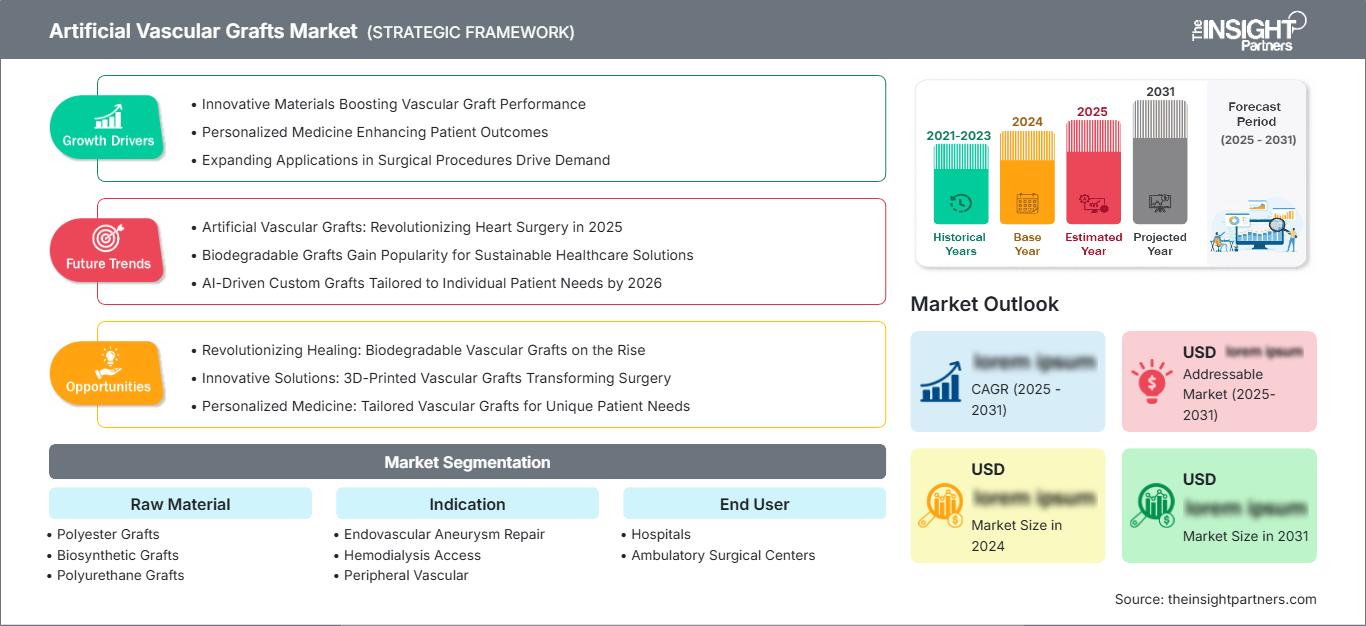
Artificial Vascular Grafts Market: Strategic Insights
Regional Insights
North America artificial vascular grafts market
North America is estimated to account for a 37–41% of the artificial vascular grafts market share of global revenue in 2025 and grow at a CAGR of 7.1–7.9% through 2034. The region benefits from established vascular surgery centers, advanced imaging, high physician specialization, and mature procurement systems. The US represents the dominant market, while Canada provides additional demand through specialized cardiovascular and vascular programs.
The aging population, peripheral arterial disease, management of aneurysms, and dialysis access will drive replacement demand. Increasingly, hospitals are assessing grafts according to their durability, infection resistance, handling properties, and procedural ease. LeMaitre Vascular, Inc., Medtronic plc, Becton, Dickinson and Company, and W. L. Gore & Associates, Inc. have excellent market presence. The continued development of outpatient vascular treatment can further drive demand for properly selected grafts.
U.S. artificial vascular grafts Market
According to market estimates, the US is expected to account for 80–84% of revenue in North America, with a CAGR of 7.2–8.0% during 2025-2034. Well-established vascular centers, reimbursement mechanisms, and adoption of advanced endovascular technology have contributed to its strong position.
Some of the key applications include aneurysm repair, peripheral vascular reconstruction, and hemodialysis access. LeMaitre Vascular, Inc., Medtronic plc, Becton, Dickinson and Company, Cardinal Health, Inc., and W. L. Gore & Associates, Inc. have made their presence felt in this market. Hospitals continue to be among the key buyers; however, ambulatory venues are also becoming significant owing to the feasibility of transferring procedures.
Europe artificial vascular grafts Market
Europe is estimated to hold a 25–29% share in 2025 and grow at a CAGR of 6.8–7.5% through 2034. Germany is a leading market, followed by the UK, France, Italy, and Spain. Established vascular-care systems and ageing populations sustain demand.
Germany enjoys the availability of specialist vascular centers along with abundant procedural know-how. On the other hand, the UK focuses on evidence-based procurement and healthcare provision in an organized manner, whereas the approach taken by France involves the combination of public hospitals and specialist vascular care. Italy and Spain keep developing minimally invasive vascular care and aneurysms treatment options. Throughout Europe, product selection is becoming more and more evidence-based, taking into account also product reliability and hospital budgets.
APAC artificial vascular grafts Market
APAC is estimated to represent a 21–25% share in 2025 and expand at a CAGR of 8.2–9.1% through 2034. China is the leading market, supported by expanding cardiovascular infrastructure, domestic device manufacturing, and increasing access to complex vascular procedures.
Both Japan and South Korea have reached high levels of expertise, whereas India and Australia offer distinct avenues of development. Factors that help the demand side include growing dialysis patient populations, growing awareness about vascular diseases, increased spending on hospitals, and increased focus by governments to expand their health care systems.
Middle East & Africa artificial vascular grafts Market
The Middle East and Africa is expected to grow at a CAGR of 7.0–7.8% during 2026–2034, with Saudi Arabia representing a leading market. UAE and South Africa provide important specialist centers, while demand across the rest of MEA remains more infrastructure-dependent.
There are ongoing developments in hospitals and tertiary cardiac care in Saudi Arabia and UAE. South Africa acts as a regional hub for vascular operations. The development of infrastructure, healthcare modernization, and medical tourism activities may help in the process of grafting, despite the challenges that include cost issues, availability of specialists, and importation dependence.
Segmentation Analysis
Raw Material
The Raw Material segment includes Polyester Grafts, Biosynthetic Grafts, and Polyurethane Grafts. Polyester Grafts remain the leading category, supported by extensive clinical familiarity and established manufacturing. The segment is projected to grow at a CAGR of 7.0–7.7% during 2026–2034. The artificial vascular grafts market scope increasingly includes material innovation aimed at improving compliance, tissue integration, and infection resistance.
- Polyester Grafts: Polyester grafts maintain strong demand in large-vessel and surgical reconstruction because of established handling properties, mechanical strength, dimensional stability, and extensive physician familiarity. Their mature manufacturing base supports consistent hospital availability.
- Biosynthetic Grafts: Biosynthetic grafts occupy an emerging position, with demand supported by efforts to improve tissue interaction and address limitations associated with conventional synthetic materials. They are strategically relevant for specialized and higher-risk vascular applications.
- Polyurethane Grafts: Polyurethane grafts provide flexibility and material characteristics suited to selected vascular applications. Development increasingly focuses on balancing mechanical performance, compliance, biocompatibility, and long-term resistance to complications.
Indication
The Indication segment comprises Endovascular Aneurysm Repair, Hemodialysis Access, and Peripheral Vascular applications. It is projected to expand at a CAGR of 7.4–8.2% through 2034. Hemodialysis access and aneurysm treatment provide recurring demand drivers, while peripheral vascular procedures offer opportunities for product differentiation.
- Endovascular Aneurysm Repair: This indication is strategically important because graft systems must achieve accurate deployment, reliable sealing, and long-term exclusion of aneurysmal segments. Complex anatomy is encouraging development of more adaptable designs.
- Hemodialysis Access: Hemodialysis access generates sustained demand because vascular access must support repeated treatment sessions. Product reliability, infection management, patency, and ease of implantation are central purchasing considerations for dialysis providers.
- Peripheral Vascular: Peripheral vascular applications address reconstruction and bypass requirements across lower and upper extremity circulation. Demand is influenced by peripheral arterial disease, limb preservation strategies, and increasing use of specialist vascular services.
End User
The End User segment includes Hospitals and Ambulatory Surgical Centers. It is projected to grow at a CAGR of 7.2–8.0% during 2026–2034. Hospitals remain the principal purchasing environment because complex graft procedures require multidisciplinary capabilities, while ambulatory facilities can capture selected lower-complexity interventions.
- Hospitals: Hospitals remain the dominant end-user environment because they provide vascular surgery, interventional radiology, dialysis access, intensive care, and emergency services. Comprehensive infrastructure supports complex graft implantation and postoperative management.
- Ambulatory Surgical Centers: Ambulatory Surgical Centers represent an expanding opportunity for selected vascular procedures where clinical complexity, anesthesia requirements, reimbursement, and post-procedure monitoring permit outpatient treatment. Efficient workflows can improve facility utilization.
Application
The Application segment consists of Coronary Artery Disease, Aneurysm, Vascular Occlusion, and Renal Failure. It is expected to grow at a CAGR of 7.3–8.1% during 2026–2034. Application mix varies according to disease prevalence, procedure selection, and availability of alternative conduits.
- Coronary Artery Disease: Coronary applications remain clinically important where vascular reconstruction requires a suitable conduit. Product selection depends on anatomy, surgical approach, vessel dimensions, and long-term performance considerations.
- Aneurysm: Aneurysm treatment represents a major application because grafts can exclude diseased vascular segments and restore blood-flow pathways. Demand is supported by ageing populations, imaging-based diagnosis, and expansion of endovascular treatment.
- Vascular Occlusion: Vascular occlusion applications include bypass and reconstruction procedures intended to restore circulation. Demand is linked to peripheral arterial disease, limb ischemia, procedural complexity, and the availability of experienced vascular specialists.
- Renal Failure: Renal failure applications primarily relate to vascular access requirements for hemodialysis. Repeated cannulation and access failure make durability, infection resistance, patency, and rapid clinical usability important product attributes.
Opportunity Snapshot
| Segment Name | Revenue Contribution | Trend Tag | Adoption Stage |
| Hospitals | High | Complex Reconstruction | Mature |
| Ambulatory Surgical Centers | Medium | Outpatient Vascular | Scaling |
Artificial Vascular Grafts Market Growth Drivers and Impact Analysis
Increasing Burden of Cardiovascular and Vascular Disease
With continued challenges faced in relation to cardiovascular diseases globally, there is a large pool of patients for vascular reconstruction procedures. The World Health Organization states that cardiovascular diseases remain the number one cause of mortality worldwide, with ischemic heart disease and stroke being among the main reasons. With the rising incidences of peripheral arterial disease, aneurysms, diabetes, and kidney disease, there are demands for grafts in many different applications. For companies, there is differentiated demand by application and not just expansion in overall volume. Hospitals need grafts that allow for complicated cases without compromising handling and mechanical properties. The business implications are very important in elderly patients where more than one condition may exist, and staged surgeries will be necessary.
Expansion of Hemodialysis Patient Populations
The chronic and end-stage renal diseases lead to continuous need for proper vascular access. Patients undergoing hemodialysis may require grafts when creation of native fistulas is inappropriate or ineffective, thus grafts become a necessary part of the renal care infrastructure. The International Society of Nephrology and national renal programs continue to stress on vascular access quality, infection prevention and access planning. Thus the expansion of dialysis capabilities in the emerging markets can lead to growing needs for vascular grafts along with existing needs in North America, Europe and Japan. The manufacturers can capitalize on the development of grafts that facilitate easy implantation, minimize complications and allow repeated access. The procurement process becomes more concerned about access durability and frequency of interventions due to failed access that leads to further procedures.
Growth of Endovascular and Minimally Invasive Treatment Pathways
The continued evolution of endovascular treatment is changing how vascular disease is managed across specialist centers. Catheter-based approaches can reduce operative burden for appropriately selected patients and expand treatment options for individuals considered unsuitable for extensive open surgery. This shift increases demand for graft systems designed around accurate delivery, anatomical adaptability, secure fixation, and reliable sealing. Hospitals are investing in imaging, hybrid operating rooms, and specialized vascular teams that enable more complex interventions. Manufacturers consequently face pressure to integrate graft design with delivery technology and procedural workflow. The commercial effect extends beyond device sales because hospitals increasingly evaluate suppliers according to training, technical support, inventory availability, and evidence generation. Companies capable of combining graft technology with broader endovascular capabilities may therefore gain an advantage when hospitals consolidate purchasing across vascular procedure categories.
Artificial Vascular Grafts Market Future Trends
Next-Generation Biosynthetic and Tissue-Integrated Grafts
The artificial vascular grafts market trends are expected to increasingly emphasize biosynthetic materials designed to interact more effectively with surrounding tissue. Future products may combine synthetic scaffolds with biologically active components, controlled degradation profiles, or surface characteristics intended to encourage tissue incorporation. The objective is to reduce long-term limitations associated with conventional prosthetic conduits while preserving manufacturing consistency and mechanical strength. Development will likely focus on scalable production, sterilization stability, shelf life, and reproducible biological performance. Regulatory pathways may require extensive evidence because material behavior can change after implantation. Companies that successfully demonstrate predictable integration could create differentiated positions in dialysis access and peripheral reconstruction. The opportunity will be strongest where improved biological performance can reduce reintervention, infection, or access failure sufficiently to justify higher acquisition costs.
Patient-Specific and Custom-Configured Graft Design
Future vascular reconstruction is likely to incorporate greater customization based on vessel diameter, lesion location, anatomy, and procedural strategy. Advances in imaging, digital planning, computational modelling, and manufacturing could support graft configurations tailored to individual patients or narrowly defined anatomical profiles. Customization may be particularly valuable for complex aneurysms and unusual vascular geometries where standardized graft dimensions are insufficient. Manufacturers will need flexible production systems capable of maintaining quality while supporting smaller production batches. Regulatory frameworks will also influence how quickly customized technologies can reach clinical use. As digital workflows mature, hospitals may increasingly integrate preoperative imaging with device selection and procedural planning. This could shift competitive advantage toward suppliers capable of linking engineering, manufacturing, software, and clinical support into a coordinated platform rather than offering a standardized graft portfolio alone.
Artificial Vascular Grafts Market Opportunities
Localized Manufacturing and Regional Distribution Partnerships
The artificial vascular grafts market Forecasts indicate an opportunity to strengthen local manufacturing and distribution networks in high-growth emerging markets. China, India, Southeast Asia, and selected Middle Eastern markets are developing vascular-care infrastructure while seeking greater availability of advanced medical devices. Local partnerships can reduce import dependence, improve tender competitiveness, and strengthen physician training. Manufacturers can initially localize packaging, distribution, technical service, or selected assembly activities before progressing toward broader production. Such strategies should preserve validated material specifications, sterilization controls, traceability, and quality-management requirements. Regional partnerships can also improve market intelligence by providing direct visibility into procedure patterns, reimbursement conditions, and procurement behavior. Companies that combine global quality systems with locally adapted commercial models may improve penetration without requiring a fully independent manufacturing footprint in every target country.
Integrated Vascular Care Portfolios
Manufacturers can create additional value by integrating grafts with complementary vascular technologies, procedural support, and clinical education. Hospitals increasingly prefer suppliers capable of supporting complete treatment pathways rather than isolated products, particularly when procedures involve multiple devices and specialist teams. A portfolio strategy could combine surgical grafts, endovascular components, access products, imaging-compatible technologies, and training programs. Such integration may increase account retention and create cross-selling opportunities while simplifying procurement. Companies should prioritize applications where existing technologies share physicians, distributors, or hospital departments. Strategic acquisitions and partnerships can accelerate portfolio expansion, particularly for firms seeking entry into specialized vascular categories. The strongest opportunities will arise when portfolio breadth is supported by credible clinical evidence and reliable supply, rather than by product proliferation alone.
Recent Developments
- August 2026: LeMaitre Vascular, Inc. reported second-quarter 2026 results, with sales reaching US$70.4 million, up 10% year over year. Artegraft sales increased 34%, while graft sales increased 23% and reached a quarterly record. The company also reported record performance across EMEA, APAC, and the Americas, indicating continued geographic expansion and strengthening demand for its vascular graft portfolio.
- July 2026: Terumo Corporation announced a voluntary global recall covering specific Relay Pro Thoracic Stent-Graft System models. Approximately 7,000 units distributed between May 2024 and March 2026 were included across 43 countries. The company had previously suspended shipments of affected models outside Japan in March 2026 and initiated additional measures to address product-safety concerns.
- July 2025: Getinge AB received US FDA Premarket Approval for an expanded indication for its iCast covered stent system as a bridging stent in patients with aneurysmal disease. The product continued to be distributed in the US through Cook Medical under an existing distribution arrangement, expanding its use alongside approved endografts.
Frequently Asked Questions

- Comprehensive Market Sizing and Forecast Analysis
- Detailed Segmentation Analysis
- In-Depth Market Dynamics Assessment
- Regional and Country-Level Insights
- Competitive Landscape and Company Benchmarking
- Strategic Business Intelligence
Recent Reports
Testimonials

The Insight Partners' SCADA System Market report is comprehensive, with valuable insights on current trends and future forecasts. The team was highly professional, responsive, and supportive throughout. We are very satisfied and highly recommend their services.
RAN KEDEM Partner, Reali Technologies LTDs
I requested a report on a very specific software market and the team produced the report in a few days. The information was very relevant and well presented. I then requested some changes and additions to the report. The team was again very responsive and I got the final report in less than a week.
JEAN-HERVE JENN Chairman, Future Analytica
We worked with The Insight Partners for an important market study and forecast. They gave us clear insights into opportunities and risks, which helped shape our plans. Their research was easy to use and based on solid data. It helped us make smart, confident decisions. We highly recommend them.
PIYUSH NAGPAL Sr. Vice President, High Beam Global
The Insight Partners delivered insightful, well-structured market research with strong domain expertise. Their team was professional and responsive throughout. The user-friendly website made accessing industry reports seamless. We highly recommend them for reliable, high-quality research services
YUKIHIKO ADACHI CEO, Deep Blue, LLC.
This is the first time I have purchased a market report from The Insight Partners.While I was unsure at first, I visited their web site and felt more comfortable to take the risk and purchase a market report.I am completely satisfied with the quality of the report and customer service. I had several questions and comments with the initial report, but after a couple of dialogs over email with their analyst I believe I have a report that I can use as input to our strategic planning process.Thank you so much for taking the extra time and making this a positive experience.I will definitely recommend your service to others and you will be my first call when we need further market data.
JOHN SUZUKI President and Chief Executive Officer, Board Director, BK Technologies
I wish to appreciate your support and the professionalism you displayed in the course of attending to my request for information regarding to infectious disease IVD market in Nigeria. I appreciate your patience, your guidance, and the fact that you were willing to offer a discount, which eventually made it possible for us to close a deal. I look forward to engaging The Insight Partners in the future, all thanks to the impression you have created in me as a result of this first encounter.
DR CHIJIOKE ONYIA MANAGING DIRECTOR, PineCrest Healthcare Ltd.Reason to Buy
- Informed Decision-Making
- Understanding Market Dynamics
- Competitive Analysis
- Identifying Emerging Markets
- Customer Insights
- Market Forecasts
- Risk Mitigation
- Boosting Operational Efficiency
- Strategic Planning
- Investment Justification
- Tracking Industry Innovations
- Aligning with Regulatory Trends





 Get Free Sample for