
Automotive Heat Exchanger Market Size, Trends & Demand by 2034
Coverage: By Design (Plate Bar, Tube Fin, Others); Vehicle Type (Passenger Cars, LCV, HCV) , and Geography (North America, Europe, Asia Pacific, and South and Central America)
- Status : Data Released
- Report Code : TIPRE00007254
- Category : Automotive and Transportation
- No. of Pages : 150
- Available Report Formats :


- Last update date : August 06, 2026


2025 Market Size
US$ 10.24 Bn
Base year value
2034 Forecast
US$ 13.38 Bn
Projected by 2034
CAGR 2026-2034
3.40 %
Growth rate
Addressable Market
US$ 109.34 Bn
(2026-2034)
The Automotive Heat Exchanger Market is projected to grow from US$ 10.24 Billion in 2025 to US$ 13.38 Billion by 2034, registering a CAGR of 3.40% during 2026–2034. Growth is supported by tighter thermal efficiency requirements, rising electrification content, compact engine layouts, and increasing use of aluminum heat exchangers across passenger cars, light commercial vehicles, and heavy commercial vehicles.
North America remains a technology-led demand center, with the Automotive Heat Exchanger Market size supported by pickup, SUV, hybrid, and fleet vehicle platforms. The region is estimated to hold 23–26% share in 2025 and expand at a 3.1–3.5% CAGR during 2026–2034, driven by stricter fuel economy targets, electric compressor adoption, and battery thermal management investments.
Automotive Heat Exchanger Market Assessment and Insights
- North America: Accounted for an estimated 23–26% share in 2025 and is projected to grow at a 3.1–3.5% CAGR during 2026–2034, supported by hybrid platforms, thermal module localization, and fleet efficiency requirements.
- US: Represented 78–82% of North America demand in 2025 and is expected to expand at a 3.2–3.6% CAGR, led by passenger trucks, SUVs, and electrified vehicle thermal systems.
- Europe: Held 25–28% share in 2025 and is forecast to grow at a 2.8–3.2% CAGR, with Germany, France, Italy, Spain, and the UK leading adoption of compact, emission-compliant thermal systems.
- Asia Pacific: Represented 41–45% share in 2025 and is projected to grow at a 3.8–4.3% CAGR, led by China, Japan, South Korea, and India due to vehicle production scale and EV thermal demand.
- Largest Segment: Tube Fin held 55–59% market share in 2025 and is expected to grow at a 3.0–3.4% CAGR, supported by radiator, condenser, and HVAC use.
- High Growth Segment: Passenger Cars held 62–66% share in 2025 and is expected to grow at a 3.6–4.0% CAGR as electrified and compact thermal architectures expand.
- Key companies analyzed in detail: AKG Thermal Systems, Inc.; Dana Incorporated; DENSO Corporation; Hanon Systems; MAHLE GmbH; Marelli Corporation; Nippon Light Metal Company, Ltd.; Sanden Corporation; T.RAD Co., Ltd.; Valeo SE.
Source: The Insight Partners' analysis based on proprietary research, government publications, company annual reports, investor presentations, industry databases, and expert interviews.
Thermal systems have shifted from standalone cooling components toward integrated modules that manage engine, transmission, battery, cabin, and power electronics loads. Suppliers are improving fin geometry, brazed aluminum structures, and compact packaging to reduce mass while maintaining heat transfer efficiency. The Automotive Heat Exchanger Market growth is increasingly tied to platform-level thermal optimization rather than component replacement alone.
During the forecast period, regional investments will focus on localized manufacturing, heat exchangers for EVs, and climate control systems. Asia Pacific will continue to be the largest producer, whereas Europe and North America will emphasize performance, durability, and regulations. Companies with flexible production in tube fin and plate bar are likely to cater to cost-sensitive as well as high-end thermal applications.
Automotive Heat Exchanger Market Report Scope
| Report Attribute | Details |
|---|---|
| Market size in 2025 | US$ 10.24 Billion |
| Market Size by 2034 | US$ 13.38 Billion |
| Global CAGR (2026 - 2034) | 3.40% |
| Historical Data | 2021-2024 |
| Forecast period | 2026-2034 |
Automotive Heat Exchanger Market Analysis
Demand is shaped by higher thermal loads across turbocharged engines, hybrids, and battery electric vehicles. Automobile manufacturers require small heat exchangers to regulate engine temperature, minimize HVAC energy losses, and safeguard power electronics. The metal of choice continues to be aluminum due to its low weight, resistance to corrosion, and ease of manufacturing, although microchannel and brazed designs are becoming increasingly popular.
The value chain includes aluminum producers, fin and tube fabricators, brazing specialists, module integrators, Tier 1 suppliers, and OEM platform teams. Supply dynamics are influenced by metal price volatility, regional content rules, and tooling lead times. The Automotive Heat Exchanger Market analysis shows that suppliers with localized production and validated EV thermal designs can reduce delivery risk for global automakers.
Competition is concentrated among global thermal management suppliers with broad application coverage. DENSO Corporation, Valeo SE, MAHLE GmbH, Hanon Systems, Dana Incorporated, Marelli Corporation, and T.RAD Co., Ltd. compete through design efficiency, system integration, and OEM relationships. Specialist suppliers such as AKG Thermal Systems, Inc. and Nippon Light Metal Company, Ltd. support niche and material-driven applications.
Investment trends are moving toward electric compressors, battery chillers, integrated heat pump modules, and lightweight exchanger cores. Strategic positioning depends on engineering depth, regional manufacturing, and the ability to serve both internal combustion and electric platforms. Cost pressure remains high, but differentiated designs can support margin resilience where efficiency, durability, and compactness are critical.
● REPORT CUSTOMIZATION
Tailor This Report To Align With Your Specific Business Requirements
This report can be customized to align precisely with your business objectives, scope, and target markets. Customization options include tailored segmentation, geography, competitive analysis, and strategic insights to support informed decision-making.
Customize This Report →WHAT YOU CAN ADJUST
- ● Segmentations
- ● Geography
- ● Competitive Analysis
- ● Language Preferences
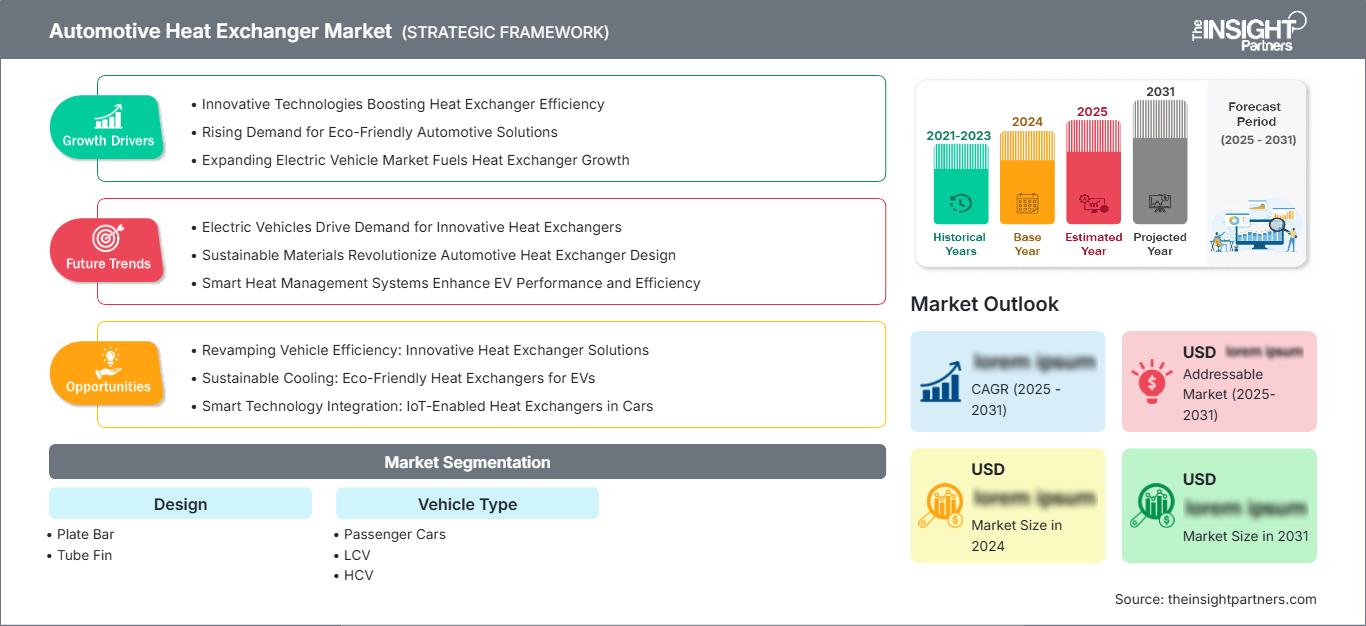
Automotive Heat Exchanger Market: Strategic Insights
Regional Insights
North America Automotive Heat Exchanger Market
North America is estimated to hold 23–26% Automotive Heat Exchanger Market share in 2025, with a projected 3.1–3.5% CAGR during 2026–2034. Demand is concentrated in SUVs, pickup trucks, hybrids, and commercial fleets, where cooling capacity and durability remain high priorities. Localized component production and supplier proximity support faster platform validation.
Thermal demand is also increasing in electric and plug-in hybrid vehicles, particularly for battery cooling, cabin heat pump systems, and power electronics. US regulations on efficiency and fleet emissions reinforce adoption of compact aluminum exchangers. Canada and Mexico contribute through manufacturing integration and North American vehicle assembly supply chains.
U.S. Automotive Heat Exchanger Market
The US accounted for an estimated 78–82% of North American demand in 2025 and is projected to grow at a 3.2–3.6% CAGR through 2034. Demand is supported by high vehicle parc, premium HVAC content, pickup truck production, and increasing hybrid utility vehicle launches.
Supplier presence is strong across thermal modules, electric compressors, and cooling components. Dana Incorporated, DENSO Corporation, Hanon Systems, MAHLE GmbH, and Valeo SE support OEM programs through engineering centers, regional plants, or aftermarket channels. Electrified vehicles are increasing the need for precise heat exchangers in battery and powertrain loops.
Europe Automotive Heat Exchanger Market
Europe held an estimated 25–28% share in 2025 and is forecast to grow at a 2.8–3.2% CAGR during 2026–2034. Germany remains the leading country due to premium vehicle platforms, engineering intensity, and strict efficiency requirements. France, Italy, Spain, and the UK support demand through passenger car and commercial vehicle production.
Euro emission rules and electrification targets are increasing adoption of lightweight, compact, and multi-loop thermal systems. Germany and France lead high-value integration, while Italy and Spain contribute through component manufacturing and small vehicle platforms. UK demand is linked to hybrid vehicles, premium brands, and commercial fleet upgrades.
APAC Automotive Heat Exchanger Market
APAC represented 41–45% share in 2025 and is projected to grow at a 3.8–4.3% CAGR through 2034. China leads regional demand through EV scale, passenger car production, and localized component ecosystems. Japan and South Korea contribute advanced thermal technology, while India supports volume growth in compact vehicles.
Industrial policy, supplier localization, and EV battery cooling needs are reshaping product design. Tube fin systems remain widely used, while plate bar designs gain relevance in compact and high-load applications. Australia contributes smaller but stable replacement and fleet demand.
Middle East & Africa Automotive Heat Exchanger Market
The Middle East & Africa market is expected to grow at a 2.6–3.0% CAGR during 2026–2034. Saudi Arabia and the UAE lead demand through high ambient temperatures, passenger vehicle imports, and fleet durability needs. South Africa supports regional assembly and aftermarket replacement activity.
Heat exchangers in this region must withstand thermal stress, dust exposure, and extended operating cycles. Demand is tied to commercial fleets, infrastructure activity, and replacement parts. EV penetration remains selective, but premium electric models are creating early opportunities for battery and HVAC thermal components.
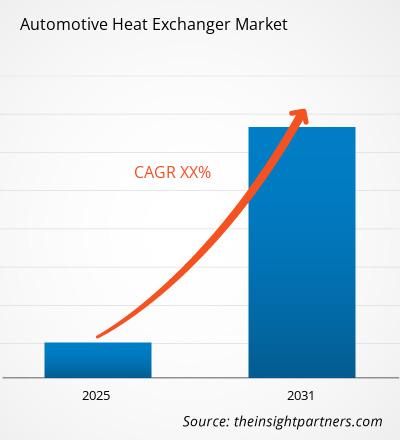
Segmentation Analysis
Design
Design is expected to grow at a 3.2–3.6% CAGR during 2026–2034. The Automotive Heat Exchanger Market scope across design is shaped by thermal load, packaging space, operating pressure, and cost targets. Tube fin designs dominate conventional cooling and HVAC systems, while plate bar architectures are preferred where higher structural strength and compactness are required.
- Plate Bar designs support high-pressure and compact thermal applications, particularly in charge air cooling, oil cooling, and emerging EV systems where durability and dense heat transfer surfaces are critical.
- Tube Fin designs remain widely adopted because they balance manufacturability, cost, and performance across radiators, condensers, evaporators, and heater cores used in passenger and commercial vehicles.
Vehicle Type
Vehicle Type is projected to grow at a 3.3–3.8% CAGR during 2026–2034. Demand varies by production volume, duty cycle, engine configuration, and electrification intensity. Passenger cars represent the largest base, while LCV and HCV applications require robust cooling systems to support payload, towing, and long operating hours.
- Passenger Cars generate the highest demand due to large production volumes, rising HVAC content, hybridization, and EV adoption requiring battery, cabin, and power electronics thermal management.
- LCV demand is supported by urban logistics, fleet uptime requirements, and increased use of efficient HVAC and powertrain cooling systems in delivery and service vehicles.
- HCV applications require durable heat exchangers for heavy-duty engines, transmission cooling, and long-haul thermal reliability under high load, variable terrain, and extended operating cycles.
Opportunity Snapshot
| Vehicle Type | Revenue Contribution | Trend Tag | Adoption Stage |
| Passenger Cars | High | EV Cooling | Scaling |
| LCV | Medium | Fleet HVAC | Scaling |
| HCV | Medium | Heavy Cooling | Mature |
Automotive Heat Exchanger Market Growth Drivers and Impact Analysis
Electrified Powertrains Increase Thermal Complexity
Electrification is increasing the number of cooling loops in vehicles, creating demand for battery chillers, power electronics coolers, heat pumps, and compact HVAC exchangers. Contrary to traditional vehicles, electric architectures need constant temperature to safeguard the batteries' lifespan, charge time, and range. This means moving away from simple cooling equipment towards thermal systems. Companies with the ability to design light and efficient heat exchangers that have minimum pressure drops will be more important in the future.
Emission and Fuel Efficiency Rules Push Lightweight Designs
Regulatory pressure on emissions and fuel economy continues to influence thermal system design. Car manufacturers are focusing on reducing the weight of vehicles, optimizing fuel combustion, and managing energy consumed by HVAC systems. Aluminum tube fin and plate bar heat exchangers play an important role in meeting these requirements by minimizing weight without affecting the heat exchange capability. This effect is felt in passenger cars and light commercial vehicles.
Higher Comfort and Durability Expectations Raise Content per Vehicle
Consumers and fleets expect reliable cabin comfort, engine durability, and stable performance under diverse operating conditions. Multiple zone HVAC systems, turbo-charged engines, automatic transmissions, and hybrid systems add to the complexity and quantity of heat exchangers used in each vehicle. This increases the chances of making more money even if the number of cars produced is only increasing slightly. The supplier gains by providing a system that reduces assembly complexity and improves warranty performance.
Automotive Heat Exchanger Market Future Trends
Integrated Thermal Modules
Automotive Heat Exchanger Market trends point toward integrated modules that combine chillers, condensers, valves, sensors, and control logic into compact assemblies. This method reduces the amount of packaging, simplifies car manufacturing, and increases the energy transfer between the battery pack and the passenger cabin and power electronics subsystems. For future projects, assessments of suppliers will emphasize system efficiency, software compatibility, and validation time over component performance.
Advanced Materials and Microchannel Designs
Lightweight materials, corrosion-resistant coatings, and microchannel geometries will gain importance as automakers seek higher heat transfer density. These designs have a reduced amount of coolant, faster response times, and thinner packaging for electric vehicles and hybrid vehicles. It is important to maintain consistent manufacturing because slight differences in the design will impact pressure drops, durability, and thermal balance.
Automotive Heat Exchanger Market Opportunities
Battery Thermal Management Expansion
The Automotive Heat Exchanger Market forecast demonstrates increasing growth opportunities in battery cooling owing to increasing EV platforms with high fast charging and greater mileage capabilities. The batteries and chillers need to operate within a limited temperature range in order to avoid damage to cell life and safety. This will provide suppliers with the opportunity to develop scalable heat exchangers for various vehicle platforms.
Localized Production for Regional OEM Programs
Localization offers a practical opportunity as automakers seek resilient supply chains and shorter validation cycles. Suppliers that have capabilities for brazing, assembling, and testing their heat exchangers regionally will help reduce logistics costs and facilitate just-in-time manufacturing. This is particularly pertinent in North America and Asia Pacific, where new platform launches necessitate suppliers being local and adhering to regional requirements.
Frequently Asked Questions

- Comprehensive Market Sizing and Forecast Analysis
- Detailed Segmentation Analysis
- In-Depth Market Dynamics Assessment
- Regional and Country-Level Insights
- Competitive Landscape and Company Benchmarking
- Strategic Business Intelligence
Recent Reports
Testimonials

The Insight Partners' SCADA System Market report is comprehensive, with valuable insights on current trends and future forecasts. The team was highly professional, responsive, and supportive throughout. We are very satisfied and highly recommend their services.
RAN KEDEM Partner, Reali Technologies LTDs
I requested a report on a very specific software market and the team produced the report in a few days. The information was very relevant and well presented. I then requested some changes and additions to the report. The team was again very responsive and I got the final report in less than a week.
JEAN-HERVE JENN Chairman, Future Analytica
We worked with The Insight Partners for an important market study and forecast. They gave us clear insights into opportunities and risks, which helped shape our plans. Their research was easy to use and based on solid data. It helped us make smart, confident decisions. We highly recommend them.
PIYUSH NAGPAL Sr. Vice President, High Beam Global
The Insight Partners delivered insightful, well-structured market research with strong domain expertise. Their team was professional and responsive throughout. The user-friendly website made accessing industry reports seamless. We highly recommend them for reliable, high-quality research services
YUKIHIKO ADACHI CEO, Deep Blue, LLC.
This is the first time I have purchased a market report from The Insight Partners.While I was unsure at first, I visited their web site and felt more comfortable to take the risk and purchase a market report.I am completely satisfied with the quality of the report and customer service. I had several questions and comments with the initial report, but after a couple of dialogs over email with their analyst I believe I have a report that I can use as input to our strategic planning process.Thank you so much for taking the extra time and making this a positive experience.I will definitely recommend your service to others and you will be my first call when we need further market data.
JOHN SUZUKI President and Chief Executive Officer, Board Director, BK Technologies
I wish to appreciate your support and the professionalism you displayed in the course of attending to my request for information regarding to infectious disease IVD market in Nigeria. I appreciate your patience, your guidance, and the fact that you were willing to offer a discount, which eventually made it possible for us to close a deal. I look forward to engaging The Insight Partners in the future, all thanks to the impression you have created in me as a result of this first encounter.
DR CHIJIOKE ONYIA MANAGING DIRECTOR, PineCrest Healthcare Ltd.Reason to Buy
- Informed Decision-Making
- Understanding Market Dynamics
- Competitive Analysis
- Identifying Emerging Markets
- Customer Insights
- Market Forecasts
- Risk Mitigation
- Boosting Operational Efficiency
- Strategic Planning
- Investment Justification
- Tracking Industry Innovations
- Aligning with Regulatory Trends





 Get Free Sample for