
Bone Morphogenetic Protein Market Size, Growth & Demand by 2034
Coverage: By Type (Recombinant Human Bone Morphogenetic Protein (rhBMP) - 2, Recombinant Human Bone Morphogenetic Protein (rhBMP) -7, Bone morphogenetic protein 4); Application (Spinal Fusion, Trauma, Reconstructive Surgery, Oral-maxillofacial); End User (Hospitals, Specialty Clinics, Ambulatory Surgery Centers, Academic Research, Others) , and Geography (North America, Europe, Asia Pacific, and South and Central America)
- Status : Data Released
- Report Code : TIPRE00006919
- Category : Life Sciences
- No. of Pages : 150
- Available Report Formats :


- Last update date : July 29, 2026


2025 Market Size
US$ 375.96 Mn
Base year value
2034 Forecast
US$ 566.10 Mn
Projected by 2034
CAGR 2026-2034
4.65 %
Growth rate
Addressable Market
US$ 4,276.29 Mn
(2026-2034)
The Bone Morphogenetic Protein Market is estimated to rise from its US$ 375.96 million in 2025 value to US$ 566.10 million in 2034, indicating a CAGR of 4.65% between 2026 and 2034. The market indicates the consistent adoption of osteoinductive proteins that facilitate predictable bone formation, decreased harvesting of autografts, and consistency in surgery outcomes in spine, trauma, reconstructive surgeries, and oral-maxillofacial surgeries.
North America continues to drive demand in the market, driven by spinal fusions surgeries performed in large numbers, reimbursement of biologics, and familiarity of surgeons with recombinant growth factor products. The Bone Morphogenetic Protein Market size is estimated to grow at a projected CAGR of 4.2–4.7% driven by the use of biologics in outpatient spine surgery, trauma centers, and specialty orthopedic centers.
Bone Morphogenetic Protein Market Assessment and Insights
- North America accounted for 48–50% Bone Morphogenetic Protein Market share in 2025 and is projected to grow at a CAGR range of 4.2–4.7% between 2026–2034, supported by mature spine surgery adoption and biologics-enabled orthopedic care pathways.
- US represented 82–85% of North America in 2025 and is expected to grow at a CAGR range of 4.1–4.6% between 2026–2034, led by hospital-based spine fusion and ASC migration.
- Europe captured 24–27% share in 2025 and is projected to grow at a CAGR range of 3.8–4.3% between 2026–2034, with Germany, the UK, and France leading biologics-assisted orthopedic reconstruction.
- Asia Pacific held 17–20% share in 2025 and is expected to grow at a CAGR range of 5.8–6.3% between 2026–2034, driven by China, Japan, India, South Korea, and Australia.
- Largest Segment Spinal Fusion held 49–52% market share in 2025 and is projected to grow at a CAGR range of 4.0–4.5% between 2026–2034.
- High Growth Segment Oral-maxillofacial held 12–15% market share in 2025 and is projected to grow at a CAGR range of 5.4–5.9% between 2026–2034.
- Key companies analyzed in detail: Medtronic plc, Merck KGaA, Stryker Corporation, Thermo Fisher Scientific Inc., DePuy Synthes Inc., Ember Therapeutics, Inc., Integra LifeSciences Holdings Corporation, R&D Systems, Inc., Smith & Nephew plc, Zimmer Biomet Holdings, Inc.
Source: The Insight Partners' analysis based on proprietary research, government publications, company annual reports, investor presentations, industry databases, and expert interviews.
Technological advancements have driven development within the bone morphogenetic protein market from generic biological substitutes into procedure-based delivery methods. The current commercially viable standard for BMP technology is recombinant human BMP-2; whereas research-level applications of BMP-4 and the older BMP-7 will pave the way for future regenerative technologies. Manufacturing focus is shifting toward control over protein expression, consistency of the carrier matrix, sterility and dose control.
Going forward, demand will be expanding outside the US and Western Europe as orthopedic specialization builds in Asia Pacific and the Middle East regions. The regulatory climate will favor indications where there is strong clinical data to support indication extension, defined dosing and compatibility with the delivery device. Research and investment dollars will flow into regenerative technology platforms which incorporate recombinant growth factors with ceramics, collagen matrices or synthetic scaffolds.
Bone Morphogenetic Protein Market Report Scope
| Report Attribute | Details |
|---|---|
| Market size in 2025 | US$ 375.96 Million |
| Market Size by 2034 | US$ 566.10 Million |
| Global CAGR (2026 - 2034) | 4.65% |
| Historical Data | 2021-2024 |
| Forecast period | 2026-2034 |
Bone Morphogenetic Protein Market Analysis
The market growth will be driven by the increased surgery for the management of degenerative spine disorders, complicated fractures, and craniofacial bone defects. According to WHO, musculoskeletal disorders affect approximately 1.71 billion people in the world, while 619 million individuals suffered from low back pain in 2020, and this number is expected to reach 843 million by 2050, thus adding to the clinical case for bone morphogenetic proteins, which help achieve fusion. Demand will also be fueled by the fact that autograft harvesting causes more pain, time, and complications.
Supply factors include the production of recombinant proteins, the supply of biological carriers, quality control, and sterilization kits production. More hospitals assess the effectiveness of BMP products through evidence-based committees considering the rate of fusion, adverse events, and the overall costs of the episode.
The competitive positioning of Bone Morphogenetic Protein Market is centered on clinical data, range of indications, and integration with the range of orthopedic implants. The presence of INFUSE Bone Graft ensures Medtronic plc is highly visible in the market while DePuy Synthes Inc., Stryker Corporation, Zimmer Biomet Holdings, Inc., Smith & Nephew plc, and Integra LifeSciences Holdings Corporation compete based on a wider portfolio of musculoskeletal reconstruction and biological implants.
Research funding flows into areas of differentiating the delivery vehicle, lowering the dosage, and developing regenerative combinations that may eliminate inflammation issues while retaining osteoinductivity. Thermo Fisher Scientific Inc., Merck KGaA, and R&D Systems, Inc. offer tools to the research community in the form of reagents and proteins while Ember Therapeutics, Inc. represents an industry interest in the topic.
● REPORT CUSTOMIZATION
Tailor This Report To Align With Your Specific Business Requirements
This report can be customized to align precisely with your business objectives, scope, and target markets. Customization options include tailored segmentation, geography, competitive analysis, and strategic insights to support informed decision-making.
Customize This Report →WHAT YOU CAN ADJUST
- ● Segmentations
- ● Geography
- ● Competitive Analysis
- ● Language Preferences
Bone Morphogenetic Protein Market: Strategic Insights
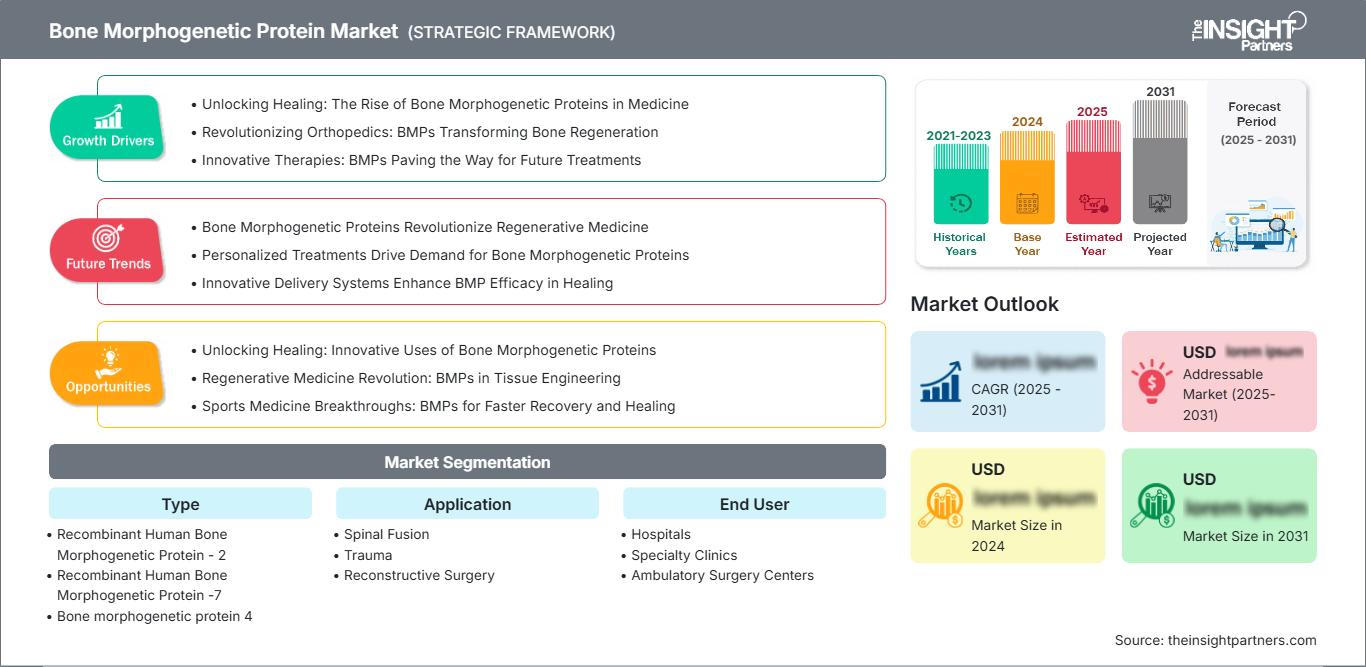
Regional Insights
North America Bone Morphogenetic Protein Market
Share in North America in the Bone Morphogenetic Protein market was 48-50% in 2025 and is expected to expand at a CAGR of 4.2-4.7% during 2034. High volumes of lumbar fusions, developed purchasing committees in hospitals, and familiarity of surgeons with biological products in complex degenerative disc diseases are the factors that contribute to the use of biologics.
The United States represents the core driver of the region, while Canada contributes via specialized orthopedic and maxillofacial clinics. Standardization of procedures, infection control, and transfer of suitable spine surgeries into ASCs positively impact the adoption of premium biologics. The growth of the market will be limited by payer scrutiny, monitoring of adverse events, and demonstration of value compared to autograft, DBMs, and synthetics.
U.S. Bone Morphogenetic Protein Market
The US represented 82–85% of North America in 2025 and is expected to grow at a CAGR range of 4.1–4.6% during 2026–2034. Demand is concentrated in spinal fusion, revision procedures, trauma reconstruction, and oral-maxillofacial applications. Medtronic plc has a significant commercial presence, while large orthopedic companies influence biologics selection through integrated implant relationships.
Procedure migration toward ASCs is reshaping purchasing behavior as surgeons seek predictable handling, compact kits, and evidence-backed dosing. The country also benefits from high sports and recreational injury treatment volumes, including 4.4 million emergency department visits for sports and recreation equipment-related injuries in 2024, supporting orthopedic repair demand. Cost containment remains a limiting factor in lower-risk cases.
Europe Bone Morphogenetic Protein Market
The Europe region had a share of 24-27% in 2025 and is forecasted to grow in the CAGR range of 3.8-4.3% through 2034. The most significant country in this market is Germany owing to advanced spine centers, orthopedic implants and presence of a robust hospital infrastructure. The United Kingdom market is very selective since HTA and NHS procurement focus on cost-effectiveness and clinical benefit.
Adoption in Germany is sustained with innovative surgical procedures for spinal fusion and reconstructive surgery done by surgeons. Other significant countries in Europe are France, Italy and Spain owing to trauma cases, maxillofacial reconstruction and degenerative spine surgery with aging, although hospital budgets differ. CE marking, generation of clinical evidence and distribution still matter, especially with the competition from biologics against synthetic grafts and allografts.
APAC Bone Morphogenetic Protein Market
The APAC region held 17–20% market share in 2025 and is estimated to register a CAGR of 5.8–6.3% during 2026–2034. China is the key country, owing to growing spine surgeries, upgraded hospitals, and access to high-end orthopedic implants. Meanwhile, Japan and South Korea benefit from aging populations and reconstruction surgery programs.
India and Australia are contributing through development of private hospitals, trauma cases, and specialized dental-maxillofacial programs. The factors driving adoption of regenerative medicine in the region include insurance penetration, medical device localization, and tertiary orthopedic infrastructure. Inconsistency in adoption of recombinant biologics is due to their pricing issues and country-specific regulations.
Middle East & Africa Bone Morphogenetic Protein Market
The Middle East & Africa market is projected to grow at a CAGR range of 4.8–5.3% during 2026–2034, with Saudi Arabia as the leading country. Saudi Arabia and the UAE are investing in tertiary hospitals, medical cities, and orthopedic centers as part of broader healthcare infrastructure modernization, creating room for advanced biologics.
South Africa supports demand through private hospital orthopedic and trauma services, while the rest of MEA remains selective due to reimbursement and supply-chain limitations. Energy-linked public investment in Gulf healthcare infrastructure is improving access to high-complexity spine and reconstructive procedures, but adoption remains concentrated in premium referral centers.
Segmentation Analysis
Type
The Type segment is projected to grow at a CAGR range of 4.4–4.9% during 2026–2034. Bone Morphogenetic Protein Market scope across type categories reflects commercial maturity in recombinant BMP-2, selective use of BMP-7 knowledge, and research-driven interest in BMP-4. Adoption depends on indication approval, dose control, carrier compatibility, and surgeon confidence in balancing osteoinduction with safety.
- Recombinant Human Bone Morphogenetic Protein - 2 remains the dominant type because of established use in spine fusion, trauma, and oral-maxillofacial indications where consistent osteoinductive signaling is clinically valuable.
- Recombinant Human Bone Morphogenetic Protein -7 is strategically relevant through legacy clinical knowledge and comparative research, although commercial availability is narrower than BMP-2 in many regulated markets.
- Bone morphogenetic protein 4 is mainly research-oriented, supporting regenerative medicine studies, developmental biology, and next-generation scaffold development rather than broad routine surgical commercialization.
Application
The Application segment is projected to grow at a CAGR range of 4.6–5.1% during 2026–2034. Demand is led by spinal fusion because BMP use can reduce dependence on iliac crest autograft and support fusion in complex cases. Trauma, reconstructive, and oral-maxillofacial procedures expand use where bone defects, healing challenges, and anatomical constraints require biologic support.
- Spinal Fusion is the largest application, supported by degenerative disc disease treatment, revision surgeries, interbody fusion procedures, and growing preference for biologics that simplify graft sourcing.
- Trauma demand is tied to fracture non-union risk, high-energy injuries, and complex bone defects where surgeons need osteoinductive support in addition to fixation hardware.
- Reconstructive Surgery uses BMPs selectively in orthopedic, craniofacial, and defect repair settings where bone regeneration must be coordinated with structural implants or graft matrices.
- Oral-maxillofacial is the high-growth application, driven by dental reconstruction, alveolar ridge augmentation, implant preparation, and rising use of biologics in specialist surgical practices.
End User
The End User segment is projected to grow at a CAGR range of 4.3–4.8% during 2026–2034. Hospitals remain primary users because complex spine, trauma, and reconstructive cases require multidisciplinary teams, imaging, sterile biologic handling, and implant inventories. Specialty clinics, ASCs, and academic research centers support faster adoption of targeted procedures, trials, and surgeon education.
- Hospitals generate the highest revenue contribution due to complex spine fusion, trauma management, reconstructive surgery, and procurement systems that can handle regulated biologic products.
- Specialty Clinics are important for outpatient orthopedic evaluation, dental-maxillofacial planning, and referral-driven biologics use, particularly in markets with strong private care delivery.
- Ambulatory Surgery Centers are scaling in select spine and oral-maxillofacial procedures where shorter stays, predictable case selection, and standardized biologic kits improve workflow efficiency.
- Academic Research supports translational BMP science, scaffold testing, dose response studies, and clinical evidence development that informs next-generation regenerative products.
Opportunity Snapshot
| Segment Name | Revenue Contribution | Trend Tag | Adoption Stage |
| Spinal Fusion | High | Fusion Support | Mature |
| Trauma | Medium | Nonunion Repair | Scaling |
| Reconstructive Surgery | Medium | Defect Healing | Scaling |
| Oral-maxillofacial | Medium | Dental Grafting | Emerging |
Bone Morphogenetic Protein Market Growth Drivers and Impact Analysis
Rising Burden of Degenerative Spine Conditions
Degenerative spine disease remains the strongest procedural driver for the Bone Morphogenetic Protein Market because fusion procedures need reliable bone formation in anatomically constrained sites. Low back pain is the leading cause of disability globally, and aging populations increase the pool of patients evaluated for surgical intervention after conservative therapies fail. BMP use is most valuable when autograft volume is limited, donor-site morbidity is undesirable, or revision risk is elevated. The market impact is visible in surgeon preference for biologics that can standardize fusion biology across variable patient profiles, especially smokers, elderly patients, and those with comorbidities. However, payer controls keep utilization focused on evidence-supported indications rather than routine low-risk procedures.
Expansion of Orthopedic Trauma and Reconstruction Capacity
Trauma networks, sports medicine pathways, and reconstructive surgery programs are increasing demand for biologic options that support healing in difficult bone defects. In high-energy fractures and non-union cases, fixation hardware alone may not address local biological deficits, creating a role for osteoinductive proteins. The driver is particularly relevant in countries investing in trauma centers, emergency care, and orthopedic subspecialty training. For manufacturers, this expands addressable demand beyond elective spine surgery into cases with higher medical necessity. The commercial impact depends on surgeon education, evidence of reduced reoperation risk, and hospital willingness to use premium biologics when total treatment costs may be lowered by faster healing and fewer secondary procedures.
Shift Toward Procedure-Specific Biologic Delivery
The market is moving from broad biologic use toward procedure-specific dosing, carrier selection, and implant compatibility. This shift matters because BMP performance depends heavily on how the protein is retained at the surgical site, how quickly it releases, and whether the carrier supports bone formation without excessive inflammation. Manufacturers that align biologics with interbody cages, collagen sponges, ceramics, or synthetic matrices can improve surgeon confidence and operating room efficiency. The impact is a more evidence-driven commercialization model, where products are evaluated by indication, dose, delivery format, and compatibility with minimally invasive workflows. This favors companies with strong regulatory, clinical, and implant ecosystem capabilities.
Bone Morphogenetic Protein Market Future Trends
Lower-Dose Regenerative Protocols
Future Bone Morphogenetic Protein Market trends will emphasize lower-dose protocols that preserve fusion efficacy while reducing inflammation, ectopic bone formation concerns, and cost exposure. Clinical programs are expected to test refined release kinetics, site-specific containment, and patient-risk stratification rather than uniform dosing. This trend can support broader payer acceptance if lower total biologic load achieves comparable outcomes. Companies that generate prospective clinical evidence, digital planning inputs, and surgeon-friendly dosing guides will be better positioned. Over time, lower-dose approaches may also improve adoption in ASCs, where cost predictability and complication avoidance are essential to case economics and patient pathway design.
Combination Carriers and Bioactive Scaffolds
Next-generation products are expected to combine BMPs with bioactive ceramics, collagen composites, synthetic polymers, or 3D-structured scaffolds that improve spatial control of bone formation. These platforms may help surgeons manage irregular defects in trauma, craniofacial reconstruction, and complex spine fusion. The commercial trend points toward biologic-device convergence, with value assessed through handling, imaging compatibility, storage, and reproducible healing. Research suppliers and orthopedic manufacturers are likely to collaborate more closely as scaffold chemistry and recombinant protein biology become integrated development challenges. Successful platforms will need regulatory paths that clearly define safety, manufacturing consistency, and performance advantages over existing graft substitutes.
Bone Morphogenetic Protein Market Opportunities
ASC-Ready Spine Fusion Biologic Kits
Ambulatory spine procedures create a practical opportunity for compact, standardized BMP kits that reduce preparation time and inventory complexity. Bone Morphogenetic Protein Market Forecasts indicate that growth will increasingly depend on settings where surgeons require predictable outcomes but purchasing teams demand simpler economics. Manufacturers can target ASC adoption with dose-matched packaging, clear storage protocols, compatible cage systems, and evidence demonstrating low complication rates in appropriately selected patients. Commercial success will require education for surgeons, nurses, and procurement teams because ASCs operate with tighter schedules and limited onsite resources. Companies that align biologics with outpatient workflow can capture incremental growth without relying only on large hospital accounts.
Emerging Market Specialist Centers
Emerging specialist orthopedic centers in China, India, Saudi Arabia, the UAE, and Southeast Asia offer an investment opportunity for companies willing to localize access strategies. These markets are expanding tertiary care capacity, private insurance participation, and surgeon training, but affordability and regulatory approval timelines remain decisive. Suppliers can build adoption through distributor partnerships, clinical workshops, local evidence generation, and tiered product positioning for complex cases. The opportunity is not mass-market penetration in the near term, but targeted use in spine, trauma, and maxillofacial centers treating high-value procedures. Long-term returns will favor companies that combine compliance, training, and supply reliability.
Recent Developments
- February 2026: Medtronic plc announced U.S. FDA Premarket Approval for INFUSE Bone Graft in one- and two-level Transforaminal Lumbar Interbody Fusion procedures from L2–S1 with PEEK and titanium interbody cages. The approval followed a randomized clinical study of 493 patients and expanded INFUSE beyond ALIF and OLIF into TLIF spine procedures.
- October 2025: Zimmer Biomet Holdings, Inc. highlighted robotics and musculoskeletal product innovations at the 2025 AAHKS Annual Meeting, including hip and knee portfolios and robotic technologies following its Monogram Technologies acquisition. The development is relevant to biologics suppliers because advanced reconstruction platforms can influence graft selection and procedural standardization.
- March 2025: Zimmer Biomet Holdings, Inc. showcased orthopedic and musculoskeletal innovations at the AAOS 2025 Annual Meeting, including hip reconstruction technologies, knee and upper extremity solutions, and ZBX Ambulatory Surgery Center Solutions. The launch emphasis reflected the broader shift toward orthopedic ecosystems that combine implants, digital tools, and outpatient procedure support.
Frequently Asked Questions

- Comprehensive Market Sizing and Forecast Analysis
- Detailed Segmentation Analysis
- In-Depth Market Dynamics Assessment
- Regional and Country-Level Insights
- Competitive Landscape and Company Benchmarking
- Strategic Business Intelligence
Recent Reports
Testimonials

The Insight Partners' SCADA System Market report is comprehensive, with valuable insights on current trends and future forecasts. The team was highly professional, responsive, and supportive throughout. We are very satisfied and highly recommend their services.
RAN KEDEM Partner, Reali Technologies LTDs
I requested a report on a very specific software market and the team produced the report in a few days. The information was very relevant and well presented. I then requested some changes and additions to the report. The team was again very responsive and I got the final report in less than a week.
JEAN-HERVE JENN Chairman, Future Analytica
We worked with The Insight Partners for an important market study and forecast. They gave us clear insights into opportunities and risks, which helped shape our plans. Their research was easy to use and based on solid data. It helped us make smart, confident decisions. We highly recommend them.
PIYUSH NAGPAL Sr. Vice President, High Beam Global
The Insight Partners delivered insightful, well-structured market research with strong domain expertise. Their team was professional and responsive throughout. The user-friendly website made accessing industry reports seamless. We highly recommend them for reliable, high-quality research services
YUKIHIKO ADACHI CEO, Deep Blue, LLC.
This is the first time I have purchased a market report from The Insight Partners.While I was unsure at first, I visited their web site and felt more comfortable to take the risk and purchase a market report.I am completely satisfied with the quality of the report and customer service. I had several questions and comments with the initial report, but after a couple of dialogs over email with their analyst I believe I have a report that I can use as input to our strategic planning process.Thank you so much for taking the extra time and making this a positive experience.I will definitely recommend your service to others and you will be my first call when we need further market data.
JOHN SUZUKI President and Chief Executive Officer, Board Director, BK Technologies
I wish to appreciate your support and the professionalism you displayed in the course of attending to my request for information regarding to infectious disease IVD market in Nigeria. I appreciate your patience, your guidance, and the fact that you were willing to offer a discount, which eventually made it possible for us to close a deal. I look forward to engaging The Insight Partners in the future, all thanks to the impression you have created in me as a result of this first encounter.
DR CHIJIOKE ONYIA MANAGING DIRECTOR, PineCrest Healthcare Ltd.Reason to Buy
- Informed Decision-Making
- Understanding Market Dynamics
- Competitive Analysis
- Identifying Emerging Markets
- Customer Insights
- Market Forecasts
- Risk Mitigation
- Boosting Operational Efficiency
- Strategic Planning
- Investment Justification
- Tracking Industry Innovations
- Aligning with Regulatory Trends





 Get Free Sample for