
Cardiac Equipment Market Trends, Share & Demand by 2034
Coverage: by Type (Balloon Pumps, Cardiopulmonary bypass pumps, Cardiac Ultrasound devices, Implantable Cardioverter Defibrillator, Cardiac Resynchronization Therapy, Defibrillators Pacemakers, Ventricular Assist Devices, total Artificial Heart, Counterpulsation Devices.); End User (Hospitals and Specialty Clinics, Ambulatory Surgical Centers and Others), and Geography (North America, Europe, Asia Pacific, and South and Central America)
- Status : Data Released
- Report Code : TIPRE00004565
- Category : Life Sciences
- No. of Pages : 150
- Available Report Formats :


- Last update date : September 08, 2026


2025 Market Size
US$ 50.90 Bn
Base year value
2034 Forecast
US$ 81.77 Bn
Projected by 2034
CAGR 2026-2034
5.41 %
Growth rate
Addressable Market
US$ 601.70 Bn
(2026-2034)
The Cardiac Equipment Market was valued at US$ 50.90 Billion in 2025 and is expected to reach US$ 81.77 Billion by 2034. The market is projected to register a CAGR of 5.41% during 2026–2034, supported by sustained requirements for cardiac imaging, rhythm management, circulatory support, resuscitation, and cardiopulmonary bypass technologies across acute, surgical, and long-term cardiovascular care settings.
Across North America, the Cardiac Equipment Market size is estimated to expand at a CAGR of 4.8–5.3% during 2026–2034. High procedure volumes, established reimbursement pathways, and early adoption of implantable rhythm management systems support demand. The Society of Thoracic Surgeons database encompasses more than 8.3 million procedures and over 1,000 participating institutions, illustrating the scale of the region’s cardiac surgery infrastructure.
Cardiac Equipment Market Assessment and Insights
- North America: The region represented 38–42% Cardiac Equipment Market share in 2025 and is projected to record a CAGR between 4.8–5.3% during 2026–2034, supported by advanced cardiac centers, reimbursement coverage, and replacement demand for implanted equipment.
- US: The country accounted for 84–88% of North American revenue in 2025 and is anticipated to grow at a CAGR between 4.9–5.4% during 2026–2034.
- Europe: Europe held 26–30% share in 2025 and is projected to expand at a CAGR between 4.6–5.1% during 2026–2034, led by Germany, the UK, France, Italy, and Spain.
- Asia Pacific: Asia Pacific represented 21–25% share in 2025 and is forecast to register a CAGR between 6.3–6.9% during 2026–2034, with China, Japan, India, and South Korea driving adoption.
- Largest Segment: Defibrillators Pacemakers accounted for 25–29% market share in 2025 and are projected to record a CAGR between 5.2–5.8% during 2026–2034.
- High Growth Segment: Ventricular Assist Devices represented 8–12% market share in 2025 and are expected to register a CAGR between 6.7–7.3% during 2026–2034.
- Key companies analyzed in detail: Medtronic plc, Boston Scientific Corporation, Abbott Laboratories, SynCardia Systems, LLC, enVVeno Medical Corporation, LivaNova PLC, BIOTRONIK SE & Co. KG, Berlin Heart GmbH, Getinge AB, and GE HealthCare Technologies Inc.
Source: The Insight Partners' analysis based on proprietary research, government publications, company annual reports, investor presentations, industry databases, and expert interviews.
The clinical demand trend has moved away from independent pieces of hardware towards integrated platforms of implanted devices, programmers, telemonitoring solutions, advanced data analysis, and even hospital information systems. Device manufacturers are focusing on miniaturizing leads and generators, enhancing the performance of batteries, imaging resolution, alarm accuracy, and hemocompatibility. The production environment is still influenced by the supply chain dynamics for semiconductors, medical-grade polymers, titanium parts, and special transducers. At the same time, requirements for cybersecurity, postmarket surveillance, and clinical evidence have increased the cost of development and helped to enhance differentiation of companies that possess integrated engineering and quality processes.
Further growth in the Cardiac Equipment Market will be driven by countries that enhance their capabilities in catheterization labs, cardiac surgeries, and emergency services. Infrastructure investments in Asia Pacific and Middle East regions have expanded the availability of cardiovascular care facilities beyond the big metropolitan hospitals. Breakthrough technology regulatory pathways and evidence-based procurement programs create another supportive factor. There were 243 breakthrough device designations in the US related to cardiovascular devices by August 2025.
Cardiac Equipment Market Report Scope
| Report Attribute | Details |
|---|---|
| Market size in 2025 | US$ 50.90 Billion |
| Market Size by 2034 | US$ 81.77 Billion |
| Global CAGR (2026 - 2034) | 5.41% |
| Historical Data | 2021-2024 |
| Forecast period | 2026-2034 |
Cardiac Equipment Market Analysis
Increasing incidences of cardiovascular disease continue to drive Cardiac Equipment Market expansion. According to the World Health Organization, 19.8 million people died in 2022 due to cardiovascular diseases, constituting about 32% of global deaths. Demand for cardiac equipment travels a supply chain consisting of component providers, contract manufacturers, original equipment manufacturers, distributors, hospitals, clinicians, and maintenance services. Implantable devices go through extensive clinical studies, whereas the demand for ultrasound and external defibrillation devices is more dependent on software improvements and service availability.
Supply resiliency in the Cardiac Equipment Market has become a strategic factor because of the unique characteristics of electronics, sterilized disposables, batteries, sensors, and precision-machined components that make up the cardiac equipment. Manufacturers are qualifying alternate suppliers and localizing final assembly processes without losing traceability. Hospitals are moving away from focusing on acquisition cost and toward evaluating the cost of ownership by looking at disposables, maintenance agreements, software security updates, battery replacements, and clinical training.
Analysis of the Cardiac Equipment Market suggests that competition is focused on implantable rhythm management and circulatory support equipment, while there is a much broader supplier base in the areas of cardiac ultrasound and external defibrillation. Medtronic plc, Boston Scientific Corporation, Abbott Laboratories, and BIOTRONIK SE & Co. KG are competing in product breadth, clinical proof, physicians' networks, and connected-care ecosystems. LivaNova PLC, Getinge AB, Berlin Heart GmbH, and SynCardia Systems, LLC have niche competitive positions in surgical and mechanical support categories.
Current investments in the Cardiac Equipment Market cover leadless pacing, physiologic pacing, predictive monitoring, miniature ventricular assist devices, and artificial intelligence-assisted imaging technologies. Examples of competing developments include the smallest-diameter lumenless OmniaSecure defibrillation lead from Medtronic, and the LivIQ leadless pacemaker trial from BIOTRONIK. Competitive positioning is increasingly reliant on longitudinal studies, indications, and data integration into clinical workflows rather than incremental improvements in hardware alone.
● REPORT CUSTOMIZATION
Tailor This Report To Align With Your Specific Business Requirements
This report can be customized to align precisely with your business objectives, scope, and target markets. Customization options include tailored segmentation, geography, competitive analysis, and strategic insights to support informed decision-making.
Customize This Report →WHAT YOU CAN ADJUST
- ● Segmentations
- ● Geography
- ● Competitive Analysis
- ● Language Preferences
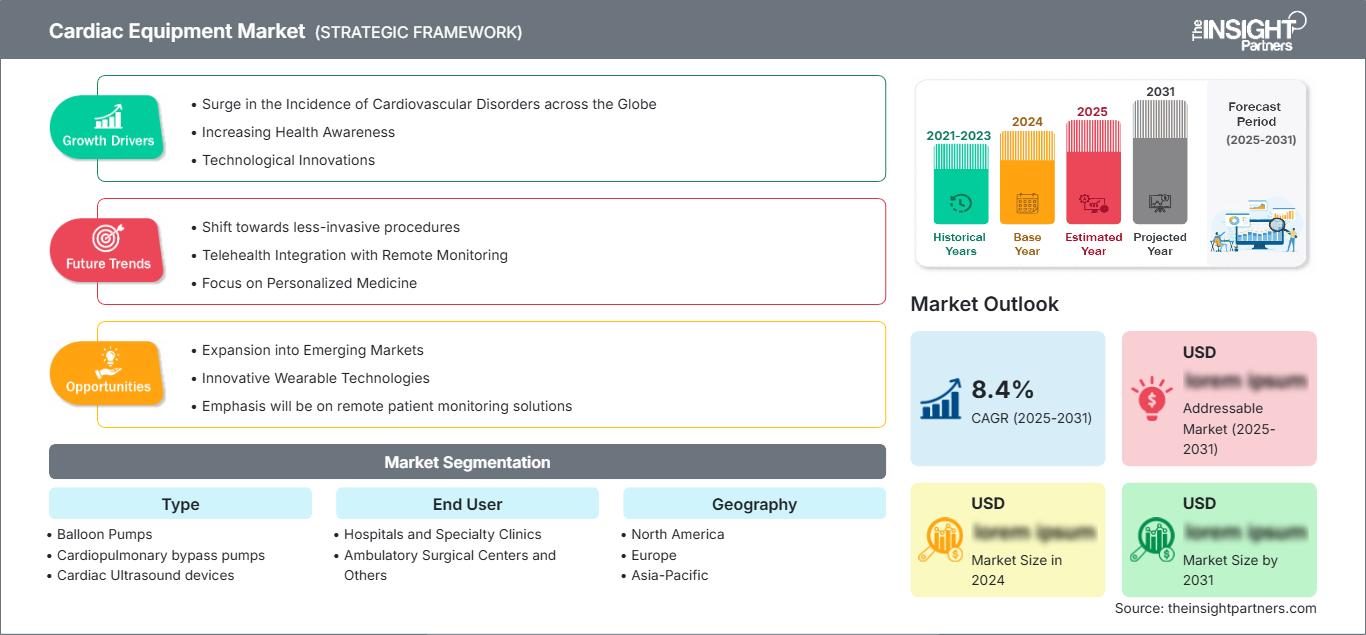
Cardiac Equipment Market: Strategic Insights
Regional Insights
North America Cardiac Equipment Market
North America held 38–42% of the Cardiac Equipment Market share in 2025 and is projected to expand at a CAGR of 4.8–5.3% during 2026–2034. The abundance of electrophysiological equipment, cardiac surgery, critical care services, and diagnostic imaging capabilities results in ongoing need for pacemakers, defibrillators, ultrasound equipment, balloon pumps, and extracorporeal circulation machinery. Repetitive replacement cycles and monitoring contracts generate consistent income.
Clinical pressure underpins purchase demands. 127.9 million US adults suffered from any type of cardiovascular disease between 2017 and 2020; the cost of direct and indirect cardiovascular care was estimated to reach $ 417.9 billion in 2020–2021. Canadian equipment acquisition focuses on interoperability and province-wide availability of care. Suppliers have to compete for clinical effectiveness, cybersecurity, uptime, and follow-up monitoring.
U.S. Cardiac Equipment Market
The US accounted for 84–88% of North American revenue in 2025 and is anticipated to register a CAGR of 4.9–5.4% during 2026–2034. High volumes of implants, presence of well-developed emergency services, and cardiac imaging help to lead in this category. Hospitals are investing in connected defibrillators, conduction system pacing, advanced echocardiography, as well as equipment that can decrease procedure time or patient complications.
Medtronic plc, Boston Scientific Corporation, Abbott Laboratories, GE HealthCare Technologies Inc., and BIOTRONIK SE & Co. KG are active in terms of commercial, clinical, and technical support in the country. Application developments focus on minimally invasive procedures and data-driven monitoring. In 2023, more than 100,000 transcatheter aortic valve replacements were performed in the US, whereas there were fewer than 60,000 surgical replacements.
Europe Cardiac Equipment Market
Europe captured 26–30% share in 2025 and is expected to expand at a CAGR of 4.6–5.1% during 2026–2034. Germany is the leader of the regional revenues due to its hospitals' density, engineering capability, and electrophysiology and cardiac surgery infrastructure. Purchasing is becoming more dependent on adherence to the Medical Device Regulation, evidence-based medicine, lifecycle services, and secure transfer of patient information.
The UK gains advantage from the centralized technology evaluation and replacement policy within public hospitals. France promotes the adoption through its cardiac specialist network. Italy and Spain create the demand with their aging populations and regional modernization programs. Germany stays the leader country, but purchasing may be delayed because of budget constraints. The cardiovascular burden in Europe stays high and drives the demand for diagnostics, rhythm management, assistance, and resuscitation devices.
APAC Cardiac Equipment Market
Asia Pacific represented 21–25% share in 2025 and is forecast to grow at a CAGR of 6.3–6.9% during 2026–2034. China leads regional revenue through hospital construction, domestic manufacturing, and expanded cardiovascular intervention capacity. Japan contributes high-value demand for rhythm management and ultrasound systems, while India is adding cardiac centers across metropolitan and secondary cities.
South Korea favors digitally integrated equipment, and Australia maintains mature procurement standards. Localization policies, medical insurance expansion, training partnerships, and higher capital expenditure on intensive care and surgical infrastructure are broadening the installed base.
Middle East & Africa Cardiac Equipment Market
The Middle East and Africa market is projected to register a CAGR of 5.5–6.1% during 2026–2034. Saudi Arabia leads adoption as healthcare transformation programs fund hospitals, specialist centers, emergency systems, and clinical workforce development. The UAE prioritizes digitally connected tertiary care and medical tourism, encouraging purchases of premium imaging and rhythm management equipment.
South Africa anchors sub-Saharan demand but faces procurement and servicing constraints. Across the Rest of MEA, energy-supported public investment, infrastructure partnerships, and distributor-led training improve access, although currency volatility and limited cardiac specialists constrain advanced implant adoption.
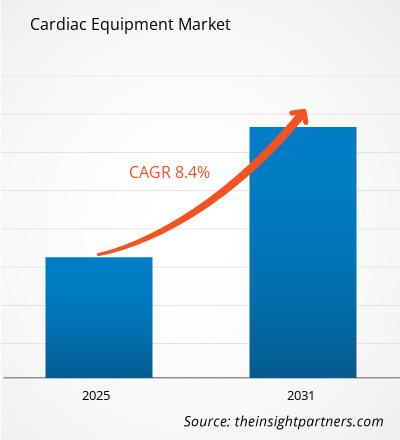
Segmentation Analysis
Type
The Type segment is projected to register a CAGR of 5.3–5.8% during 2026–2034. The Cardiac Equipment Market scope spans emergency stabilization, cardiovascular imaging, cardiac surgery, arrhythmia management, and advanced heart-failure support. Purchasing patterns differ by clinical risk, reusability, software integration, and required specialist training. Implantable categories generate recurring replacement and monitoring revenue, whereas capital equipment depends on hospital expansion and modernization cycles.
- Balloon Pumps: Balloon pumps retain strategic relevance for temporary hemodynamic stabilization in selected high-risk interventions and cardiogenic shock cases, with demand concentrated in tertiary hospitals and cardiac intensive care units.
- Cardiopulmonary bypass pumps: These pumps support open-heart procedures requiring controlled extracorporeal circulation. Demand is linked to cardiac surgery volumes, equipment replacement, perfusion safety, and precise flow-management capabilities.
- Cardiac Ultrasound devices: Cardiac ultrasound devices occupy an essential diagnostic position across hospitals and clinics, benefiting from portable platforms, improved image processing, automated measurements, and broader point-of-care echocardiography use.
- Implantable Cardioverter Defibrillator: ICDs address patients at risk of life-threatening ventricular arrhythmias. Clinical evidence, device longevity, lead reliability, remote monitoring, and accurate rhythm discrimination shape physician selection.
- Cardiac Resynchronization Therapy: CRT systems support eligible heart-failure patients through coordinated ventricular pacing. Adoption depends on patient selection, lead-placement success, physiologic pacing strategies, and longitudinal outcome evidence.
- Defibrillators Pacemakers: This leading category benefits from replacement procedures, aging populations, emergency preparedness, and continuing advances in leadless pacing, conduction-system pacing, battery performance, and connected monitoring.
- Ventricular Assist Devices: VAD adoption is increasing for bridge-to-transplant and destination therapy. Strategic importance reflects limited donor-heart availability, improving patient management, and demand for durable mechanical circulatory support.
- Total Artificial Heart: Total artificial hearts serve a highly specialized population with severe biventricular failure. Adoption remains centered in advanced transplant institutions with multidisciplinary surgical and post-implant support capabilities.
- Counterpulsation Devices: Counterpulsation equipment supports temporary circulatory assistance in carefully selected patients. Demand depends on clinical protocols, rapid deployment, staff familiarity, and integration with critical-care monitoring systems.
End User
The End User segment is expected to expand at a CAGR of 5.2–5.7% during 2026–2034. Hospitals and specialty clinics dominate because implantations, cardiac surgery, advanced imaging, and mechanical support require multidisciplinary teams and intensive monitoring. Ambulatory surgical centers are gaining relevance for suitable rhythm management procedures where reimbursement, patient risk, and discharge protocols permit lower-cost care delivery.
- Hospitals and Specialty Clinics: These institutions represent the primary purchasing channel due to their catheterization laboratories, operating rooms, intensive care capacity, specialist workforces, procurement scale, and ability to manage complex cardiac patients.
- Ambulatory Surgical Centers: Ambulatory centers support selected diagnostic and implantation procedures with shorter patient stays. Their strategic importance rises where standardized workflows, payer acceptance, and reliable emergency-transfer arrangements are established.
Opportunity Snapshot
| End User | Revenue Contribution (High/Medium/Low) | Trend Tag | Adoption Stage (Emerging/Scaling/Mature) |
| Hospitals and Specialty Clinics | High | Connected Care | Mature |
| Ambulatory Surgical Centers | Medium | Outpatient Implants | Scaling |
| Others | Low | Community Access | Emerging |
Cardiac Equipment Market Growth Drivers and Impact Analysis
Expanding Cardiovascular Disease Burden and Treatment Requirement
The prevalence of cardiovascular disease produces a demand that is ongoing in terms of diagnostics, emergency, surgery, and chronic care medical devices. As the number of individuals afflicted by cardiovascular disease, including coronary disease, arrhythmias, heart failure, and structural defects, rises, the use of echocardiograms, rhythm device implants, resuscitation capabilities, and circulation support is on the rise. The WHO states that there were 19.8 million deaths from cardiovascular diseases in 2022, with more than 3/4 of all cardiovascular deaths happening in low- and middle-income countries. This creates two markets for medical devices: advanced countries replace existing equipment and install high-end technology, while developing countries add to their capabilities.
Transition Toward Minimally Invasive and Physiologic Therapies
With cardiology moving towards catheter-based, leadless, and physiologic interventions that minimize the risk of surgical injury or lead or pocket problems, it is important that hospitals invest in imaging and navigation equipment, as well as programmers and monitors, which are compatible with the new devices, while manufacturers innovate on the platforms being implanted. The development of leadless pacemakers involves optimizing atrioventricular synchronicity, retrievability, battery longevity, and broadening indications. Conduction system pacing aims to mimic natural conduction of impulses more closely compared to conventional pacing. Commercially, the impact goes beyond implantation as each platform needs specific delivery tools, training for clinicians, software, follow-up mechanisms, and studies.
Modernization of Cardiac Surgery and Critical-Care Infrastructure
The purchase of operating theaters, intensive care facilities, transplant programs, and emergency facilities leads directly to the demand for such medical devices as bypass pumps, balloon pumps, defibrillators, ultrasound machines, ventricular assist devices, and artificial hearts. It is estimated that over one million cardiac surgery operations are done annually, but there are large differences between procedure availability based on the country’s level of development and the level of expertise of doctors in the field. While high-income countries carry out an average of 123.2 cardiac procedures per 100,000 people annually, it becomes evident what infrastructure challenges new healthcare systems face. For further development, procurement of equipment needs to be supplemented with perfusionist training, biomed engineers, maintenance services, consumables, and infection control.
Cardiac Equipment Market Future Trends
Predictive Monitoring Embedded in Implantable Systems
The Cardiac Equipment market trends are going to revolve more and more around algorithms that translate data from devices into early clinical alarms. Implantable defibrillators and resynchronizers can track heart rate, heart sounds, thoracic impedance, respiration, and activity data. Predictive algorithms are going to select patients who need intervention, which will allow doctors to adjust their medications or evaluate the patient’s condition before there is any deterioration. Boston Scientific claims that HeartLogic can detect 70 percent of deteriorating cases of heart failure with an average 34 days' lead time before the incident.
Personalized Pacing With Fewer Leads and Smaller Implants
Pacing technology in the coming decade will integrate leadless technologies, conduction system placement, atrioventricular synchronization, and customizable software to deliver treatments based on physiological needs. Companies are trying out systems which are designed for active users and expanded pacing indications, minimizing the hardware present within the body's vascular system. The proof available for 2-lead CRT devices and lumen-less defibrillator leads can change the choice of implants as well. The adoption process is expected to be evidence-based, considering the factors of explant options, battery change, long-term sensing capabilities, device-to-device communication, and learning process by operators.
Cardiac Equipment Market Opportunities
Localized Cardiac-Care Platforms for Emerging Hospital Networks
Hospitals expanding fast must be equipped with equipment sets suited for their budget levels, labor availability, system reliability, and maintenance ability. Cardiac Equipment Market Forecast can help in the purchase of scalable ultrasonic systems, automated external defibrillators, cardiopulmonary bypass machines, and rhythm management systems. The manufacturers may set up refurbishing, spare parts, training, and service centers in their regions to minimize the downtime and costs of ownership. Joint ventures with governments, hospital chains, distributors, and training centers can help fasten the process. Strategic actions should focus on metropolitan cities having well-developed catheterization and surgical programs, followed by secondary locations supported by tele-echocardiography.
Integrated Lifecycle Services and Outcome-Based Contracting
Equipment suppliers can expand recurring revenue by combining devices with maintenance, software, consumables, cybersecurity, remote monitoring, and clinical education. Hospitals face pressure to demonstrate utilization, uptime, safety, and patient outcomes, creating interest in contracts linked to performance rather than individual product purchases. Vendors should develop dashboards covering fleet status, battery condition, service schedules, implant follow-up, and alert escalation. Outcome-based models are particularly relevant for high-value VAD, CRT, ICD, and imaging platforms. Successful implementation requires transparent metrics, interoperable data, predictable service capacity, and agreements that allocate clinical, operational, and financial responsibilities among manufacturers and providers.
Recent Developments
- May 2026: BIOTRONIK SE & Co. KG announced the first European implantations of its LivIQ leadless pacemaker within the BIO-LivIQ study. The program is evaluating safety, efficacy, and atrioventricular synchronous pacing at rest and during exercise, with the objective of supporting broader use among younger and more active pacing patients.
- March 2026: Medtronic plc received US FDA approval for an expanded indication for the OmniaSecure defibrillation lead, enabling placement in the left bundle branch area for conduction-system pacing. The 4.7 French lumenless lead connects with ICD and CRT-D systems and supports physiologic pacing strategies for eligible patients.
- December 2025: Abbott Laboratories received US FDA approval for the Volt pulsed-field ablation system to treat patients with atrial fibrillation. The nonthermal platform uses electrical pulses to target cardiac tissue associated with abnormal rhythm pathways, extending Abbott’s electrophysiology offering for catheter-based arrhythmia treatment.
Frequently Asked Questions

- Comprehensive Market Sizing and Forecast Analysis
- Detailed Segmentation Analysis
- In-Depth Market Dynamics Assessment
- Regional and Country-Level Insights
- Competitive Landscape and Company Benchmarking
- Strategic Business Intelligence
Recent Reports
Testimonials

The Insight Partners' SCADA System Market report is comprehensive, with valuable insights on current trends and future forecasts. The team was highly professional, responsive, and supportive throughout. We are very satisfied and highly recommend their services.
RAN KEDEM Partner, Reali Technologies LTDs
I requested a report on a very specific software market and the team produced the report in a few days. The information was very relevant and well presented. I then requested some changes and additions to the report. The team was again very responsive and I got the final report in less than a week.
JEAN-HERVE JENN Chairman, Future Analytica
We worked with The Insight Partners for an important market study and forecast. They gave us clear insights into opportunities and risks, which helped shape our plans. Their research was easy to use and based on solid data. It helped us make smart, confident decisions. We highly recommend them.
PIYUSH NAGPAL Sr. Vice President, High Beam Global
The Insight Partners delivered insightful, well-structured market research with strong domain expertise. Their team was professional and responsive throughout. The user-friendly website made accessing industry reports seamless. We highly recommend them for reliable, high-quality research services
YUKIHIKO ADACHI CEO, Deep Blue, LLC.
This is the first time I have purchased a market report from The Insight Partners.While I was unsure at first, I visited their web site and felt more comfortable to take the risk and purchase a market report.I am completely satisfied with the quality of the report and customer service. I had several questions and comments with the initial report, but after a couple of dialogs over email with their analyst I believe I have a report that I can use as input to our strategic planning process.Thank you so much for taking the extra time and making this a positive experience.I will definitely recommend your service to others and you will be my first call when we need further market data.
JOHN SUZUKI President and Chief Executive Officer, Board Director, BK Technologies
I wish to appreciate your support and the professionalism you displayed in the course of attending to my request for information regarding to infectious disease IVD market in Nigeria. I appreciate your patience, your guidance, and the fact that you were willing to offer a discount, which eventually made it possible for us to close a deal. I look forward to engaging The Insight Partners in the future, all thanks to the impression you have created in me as a result of this first encounter.
DR CHIJIOKE ONYIA MANAGING DIRECTOR, PineCrest Healthcare Ltd.Reason to Buy
- Informed Decision-Making
- Understanding Market Dynamics
- Competitive Analysis
- Identifying Emerging Markets
- Customer Insights
- Market Forecasts
- Risk Mitigation
- Boosting Operational Efficiency
- Strategic Planning
- Investment Justification
- Tracking Industry Innovations
- Aligning with Regulatory Trends





 Get Free Sample for