
Catheter-related Bloodstream Infections Market Trends, Share & Demand by 2034
Coverage: Treatment Type (Anti-microbial Agents, Antibiotic Lock Therapy); Source of Infection (Coagulase-negative Staphylococcus, S.aureus, Enteric Gram-negative Bacilli, Yeasts, Enterococci and Streptococci, Pseudomonas, Others); Distribution Channel (Hospital Pharmacies, Retail Pharmacies, Online Pharmacies) and Geography (North America, Europe, Asia-Pacific, Middle East and Africa, South and Central America), and Geography (North America, Europe, Asia Pacific, and South and Central America)
- Status : Data Released
- Report Code : TIPRE00029989
- Category : Life Sciences
- No. of Pages : 150
- Available Report Formats :


- Last update date : September 07, 2026


2025 Market Size
US$ 1.75 Bn
Base year value
2034 Forecast
US$ 2.83 Bn
Projected by 2034
CAGR 2026-2034
5.48 %
Growth rate
Addressable Market
US$ 20.76 Bn
(2026-2034)
The Catheter-Related Bloodstream Infections Market was valued at US$ 1.75 Billion in 2025 and is projected to reach US$ 2.83 Billion by 2034, registering a CAGR of 5.48% during 2026–2034. Expansion is driven by the ongoing risks associated with infection in patients undergoing hemodialysis, oncology therapy, parenteral nutrition, and intensive care using central venous catheters, along with an increasing focus within the clinical setting on fast pathogen detection, salvaging catheters, and antimicrobial stewardship.
North America continues to be significant in the commercial application of the technology, with a forecast CAGR of 5.0-5.4% until 2034. The North American Catheter-Related Bloodstream Infections Market size is propelled by substantial dialysis infrastructure, standard infection surveillance, and payor coverage for catheter lock therapies. There were 18,165 CLABSI cases in 2024, but the standardized infection ratio was lower than the national baseline for the United States in 2024.
Catheter-related Bloodstream Infections Market Assessment and Insights
- North America: Accounted for an estimated 41–43% share in 2025 and is expected to grow at a CAGR of 5.0–5.4% during 2026–2034, supported by dialysis access, infection reporting, and specialty pharmaceutical reimbursement.
- US: Represented approximately 84–86% of North American revenue in 2025 and is projected to record a CAGR of 5.1–5.5%, reflecting extensive central venous catheter use.
- Europe: Held an estimated 28–30% share in 2025 and is forecast to expand at a CAGR of 4.7–5.1% during 2026–2034, led by Germany, the UK, France, Italy, and Spain.
- Asia Pacific: Captured an estimated 21–23% share in 2025 and is anticipated to register a CAGR of 6.0–6.4%, led by China, Japan, India, South Korea, and Australia.
- Largest Segment: Anti-microbial agents held an estimated 72–76% market share in 2025 and are expected to expand at a CAGR of 5.1–5.5% through 2034.
- High Growth Segment: Antibiotic lock therapy represented an estimated 24–28% market share in 2025 and is projected to record a CAGR of 6.2–6.6% during 2026–2034.
- Key companies analyzed in detail: Merck Sharp & Dohme LLC, CorMedix Inc., Geistlich Pharma AG, TauroPharm GmbH, Fresenius Medical Care AG, Pfizer Inc., Glenmark Pharmaceuticals Limited, Citius Pharmaceuticals, Inc., AstraZeneca Pharma India Limited, and Xellia Pharmaceuticals ApS.
Source: The Insight Partners' analysis based on proprietary research, government publications, company annual reports, investor presentations, industry databases, and expert interviews.
Clinically, antibiotic management has progressed from general empirical administration to pathogen-driven systemic therapy, antimicrobial lock therapy, biofilm eradication, and selective catheter salvage. The time taken to detect the organism is decreasing due to automated systems for blood cultures and molecular testing. In addition, there is electronic surveillance in clinical escalation. Manufacturing trends are changing as well due to the need to boost sterile fill finish facilities and resilience in sourcing for injectable antibiotics. Fermentation-based production of anti-infectives is technically complex, hence the risks of concentration in production for products such as vancomycin and daptomycin among others.
Future investments will focus on outpatient dialysis services, oncology infusion centers, and hospitals in Asia Pacific and the Middle East. The growing recognition by regulatory bodies of antimicrobial resistance and HAI reduction provides an opportunity to develop differentiated therapeutic agents that deliver catheter preservation or reduced hospitalization benefits. The WHO priority list of 2024 contains 24 pathogens in 15 families of antibiotic-resistant pathogens hence the interest in developing products targeting infections caused by Staphylococcus aureus, Pseudomonas aeruginosa, and Gram-negative pathogens.
Catheter-related Bloodstream Infections Market Report Scope
| Report Attribute | Details |
|---|---|
| Market size in 2025 | US$ 1.75 Billion |
| Market Size by 2034 | US$ 2.83 Billion |
| Global CAGR (2026 - 2034) | 5.48% |
| Historical Data | 2021-2024 |
| Forecast period | 2026-2034 |
Catheter-related Bloodstream Infections Market Analysis
The main factors that drive the growth of the Catheter-Related Bloodstream Infections Market include an ever-growing reliance on vascular access in hemodialysis, chemotherapy, critical care, and long-term parenteral nutrition. Each modality generates a consistent demand for blood cultures, systemic anti-infective therapy, lock solutions, and proper catheter management. The demand is limited through the use of prevention packages, but a decrease in incidence rate does not mean a decrease in the treatment demand due to catheter days, the acuity of patients, and the resistance of microorganisms.
The ecosystem involves the makers of APIs, the makers of sterile injectables, hospital pharmacies, microbiology laboratories, infectious disease services, nephrologists, and experts in vascular access. Supply security is essential for clinical purposes since many antibiotics have to be administered urgently intravenously. The procurement departments consider susceptibility, local antibiograms, formulation availability, ease of administration, and availability of stock, rather than the cost.
As per the Catheter-Related Bloodstream Infections Market report, the competitive landscape is a mix of companies. The competition for Merck Sharp & Dohme LLC, Pfizer Inc., AstraZeneca Pharma India Limited, Glenmark Pharmaceuticals Limited, and Xellia Pharmaceuticals ApS lies in their anti-infectives portfolio or manufacturing capacities. CorMedix Inc., TauroPharm GmbH, Geistlich Pharma AG, and Citius Pharmaceuticals, Inc. compete by providing catheter lock, biofilm management, or catheter-salvage products.
There is an increasing focus towards investing in evidence packs that showcase fewer infections, line replacements, reduced hospitalizations, and workflow compatibility. CorMedix launched FDA-approved taurolidine and heparin catheter lock in a specific hemodialysis population, whereas Citius Pharmaceuticals still works on the development of Mino-Lok to salvage infected catheters. The competitive position depends upon indications, payor access, antimicrobial stewardship synergy, sterile manufacturing capabilities, and real-world outcomes.
● REPORT CUSTOMIZATION
Tailor This Report To Align With Your Specific Business Requirements
This report can be customized to align precisely with your business objectives, scope, and target markets. Customization options include tailored segmentation, geography, competitive analysis, and strategic insights to support informed decision-making.
Customize This Report →WHAT YOU CAN ADJUST
- ● Segmentations
- ● Geography
- ● Competitive Analysis
- ● Language Preferences
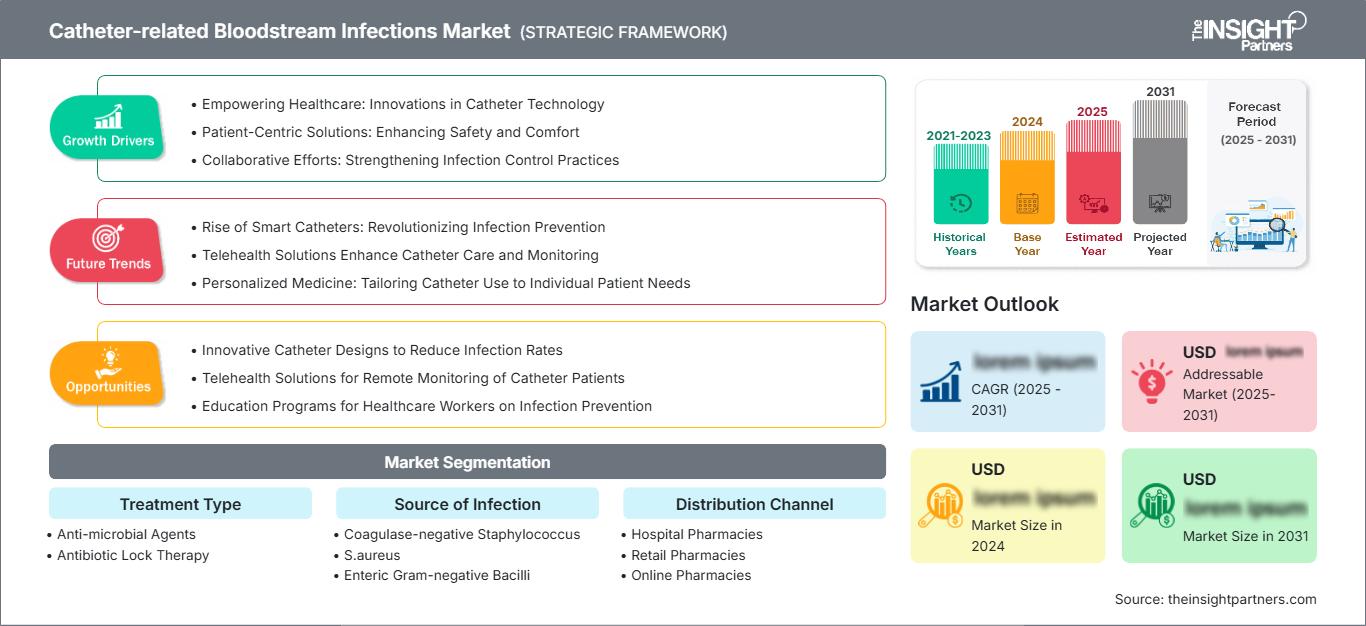
Catheter-related Bloodstream Infections Market: Strategic Insights
Regional Insights
North America Catheter-Related Bloodstream Infections Market
North America accounted for about 41–43% Catheter-Related Bloodstream Infections Market share in 2025 and will witness a CAGR of 5.0–5.4% over 2034. Widespread use of central venous catheters in dialysis, oncology, intensive care, and home infusions helps maintain a large patient population. Availability of microbiology infrastructure allows selecting appropriate antibiotics for the organism and rapid escalation in case of resistant infections.
Additionally, there is formal reporting of healthcare-associated infections, specialist skills in the field of infectious diseases, and commercial differentiation catheter lock solutions. The number of cases of central line-associated bloodstream infections in general acute care hospitals in 2024 was 18,165 based on US surveillance. Despite improvement in the standardized infection ratio, the occurrence of these cases highlights the need for systematic approach and catheter protection strategies. North American involvement includes the involvement of Canada due to universal hospital coverage, antimicrobial stewardship initiatives, and centralized procurement. Involvement of Mexico is attributed to the constant expansion of private hospitals and dialysis centers.
U.S. Catheter-Related Bloodstream Infections Market
The US held approximately 84–86% of North American revenue in 2025 and will witness growth at a CAGR of 5.1–5.5% up to 2034. The major drivers of demand include acute care hospitals, outpatient dialysis organizations, cancer centers, and infusion services. Approximately 1 in 38 US hospitalized patients suffered from at least one HAI on any day in 2023, highlighting the wider burden of infection management.
Market adoption of new solutions prefers those which have a demonstrated comparative clinical benefit and effective reimbursement models. CorMedix Inc. is already implementing DefenCath within inpatient and outpatient hemodialysis, whereas Citius Pharmaceuticals, Inc. is developing a catheter salvage approach. The use cases are gradually shifting from systemic therapy towards prevention, exposure of lumen with antimicrobial, breaking down biofilms, and protection of complex vascular access sites. There was a 9% decline in the performance of acute care hospitals for CLABSIs between 2023 and 2024, but still ongoing infections generate demand for reliable anti-infective therapy.
Europe Catheter-Related Bloodstream Infections Market
The region accounted for 28-30% market share in 2025 and is projected to grow at a CAGR of 4.7-5.1% till 2034. Germany takes the lead based on hospital capacities, dialysis, microbiology capabilities, and utilization of taurolidine-based catheter lock products. In the UK, the emphasis lies on infection control, antimicrobial stewardship, and evidence-based procedures concerning central lines within NHS organizations.
France benefits from existing intensive care and oncology networks, as well as drug evaluation system. Italy and Spain add to the market through growing demand for dialysis and procurement by regional hospitals, though differences in budgets determine the accessibility of high-end lock products. Companies such as TauroPharm GmbH, Geistlich Pharma AG, and Xellia Pharmaceuticals ApS provide anti-infective products and catheter locking.
Purchasing trends pay attention to factors such as antimicrobial resistance, drug shortages, and capacity of local production facilities. According to the WHO report, antimicrobial resistance accounts for 133,000 deaths yearly in the WHO European Region. These statistics justify the use of target antibiotics and catheters saving strategies, despite limitations associated with stewardship measures.
APAC Catheter-Related Bloodstream Infections Market
The Asia-Pacific region represented an estimated 21-23% market share in 2025 and is anticipated to register a CAGR of 6.0-6.4% until 2034. The growth is driven by the patient volume and hospital infrastructure growth in China, advanced dialysis access and infection control in Japan, and private hospital growth and domestic antibiotic production in India.
Rapid diagnostics will be supported in South Korea while Australia will provide a structured infection surveillance and stewardship program. Drivers of growth are critical care growth, oncology growth, dialysis growth, and insurance penetration. Availability and affordability of labs are the barriers, and the situation has led to generic and premium lock antibiotics.
Middle East & Africa Catheter-Related Bloodstream Infections Market
The Middle East & Africa region is estimated to grow at a CAGR of 5.2% to 5.6% till 2034. In the Middle East, Saudi Arabia takes the lead on account of hospital investments, dialysis network, and health localization, and the UAE focuses on premium tertiary care and logistics. South Africa continues to be the key sub-Saharan treatments provider.
Infrastructure development will increase intensive care, oncology, and renal care capacity, which in turn will help increase catheterized care capacity. Procurement decisions depend on import availability, cold chain capability, diagnostics capability, and budget constraints. Opportunities exist elsewhere on the basis of centralized procurement and hospital tie-ups internationally.
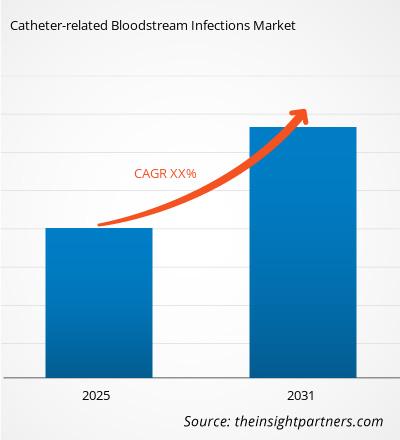
Segmentation Analysis
Treatment Type
The treatment type segment is projected to grow at a CAGR of 5.3–5.7% during 2026–2034. The Catheter-Related Bloodstream Infections Market scope covers systemic anti-microbial agents and antibiotic lock therapy, with selection determined by clinical stability, organism susceptibility, catheter necessity, metastatic complications, and biofilm risk. Systemic treatment remains foundational, while lock-based approaches gain attention where catheter preservation is clinically valuable.
- Anti-microbial Agents: These agents hold the leading position because bloodstream infection generally requires prompt systemic coverage followed by susceptibility-guided de-escalation, especially for staphylococcal, enterococcal, Gram-negative, and fungal infections.
- Antibiotic Lock Therapy: Concentrated intraluminal treatment addresses biofilm at the catheter interface and supports catheter salvage in selected patients, making the approach strategically important for oncology, dialysis, and parenteral nutrition.
Source of Infection
The source of infection segment in the Catheter-Related Bloodstream Infections Market is expected to record a CAGR of 5.2–5.6% through 2034. Organism mix determines empirical coverage, lock composition, treatment duration, catheter removal decisions, and follow-up blood cultures. Gram-positive organisms remain central to catheter-associated infection management, while resistant Gram-negative bacteria and yeasts create disproportionate clinical complexity and reinforce demand for microbiology-guided therapy.
- Coagulase-negative Staphylococcus: Frequent skin colonization and biofilm formation make these organisms common catheter-associated pathogens, although clinicians must distinguish genuine infection from blood-culture contamination before committing to prolonged treatment.
- S.aureus: Its potential for persistent bacteremia and metastatic complications encourages aggressive systemic therapy, catheter removal assessment, repeat cultures, and careful evaluation for endocarditis or other deep-seated infection.
- Enteric Gram-negative Bacilli: These pathogens require rapid susceptibility assessment because beta-lactamase-mediated resistance can narrow therapeutic choices, particularly among critically ill, immunocompromised, or extensively antibiotic-exposed patients.
- Yeasts: Candida-related infections carry substantial management complexity, typically increasing demand for systemic antifungal therapy, catheter removal, ophthalmologic assessment where appropriate, and clearance documentation through repeated blood cultures.
- Enterococci and Streptococci: Treatment depends on species identification and resistance patterns, with enterococcal disease creating particular challenges when vancomycin resistance or prolonged catheter exposure limits standard therapeutic options.
- Pseudomonas: Pseudomonas infections require dependable antipseudomonal activity and rapid source control because resistance, biofilm persistence, and clinical deterioration can compromise catheter retention and narrow effective treatment choices.
Distribution Channel
The distribution channel segment in the Catheter-Related Bloodstream Infections Market is forecast to expand at a CAGR of 5.1–5.5% during 2026–2034. Hospital pharmacies dominate because most confirmed infections require intravenous treatment, monitored dosing, microbiology support, and coordinated catheter decisions. Retail and online channels play narrower roles in step-down prescriptions, supportive medicines, and replenishment, subject to national prescribing and delivery regulations.
- Hospital Pharmacies: These pharmacies coordinate urgent injectable antibiotic and antifungal supply, antimicrobial stewardship review, renal dose adjustment, therapeutic drug monitoring, and access to catheter lock preparations within controlled clinical workflows.
- Retail Pharmacies: Retail outlets primarily support prescribed oral step-down therapy and post-discharge continuity, with participation depending on product formulation, local reimbursement, infectious disease follow-up, and outpatient treatment models.
- Online Pharmacies: Digital channels facilitate prescription fulfillment and home delivery for eligible medicines, but their role remains limited where sterile compounding, intravenous administration, refrigeration, or direct clinical monitoring is required.
Opportunity Snapshot
| Distribution Channel | Revenue Contribution (High/Medium/Low) | Trend Tag | Adoption Stage |
| Hospital Pharmacies | High | Stewardship Integration | Mature |
| Retail Pharmacies | Medium | Step-down Care | Scaling |
| Online Pharmacies | Low | Digital Fulfillment | Emerging |
Catheter-related Bloodstream Infections Market Growth Drivers and Impact Analysis
Expanding Catheter-Dependent Renal and Oncology Care
Growth in dialysis, chemotherapy, stem-cell transplantation, and parenteral nutrition increases cumulative central venous catheter exposure. These patients frequently require reliable vascular access despite elevated infection risk, making immediate catheter removal clinically difficult. Treatment demand consequently extends beyond conventional systemic antibiotics to organism-directed regimens, antimicrobial locks, and catheter-salvage protocols. In hemodialysis, recurring catheter access creates a particularly important commercial setting because therapy can be integrated into established treatment sessions. The resulting impact is higher demand for products that reduce infection recurrence, preserve access, and prevent hospitalization without adding extensive nursing complexity. Manufacturers able to support hospital and outpatient protocols with compatible packaging, reimbursement evidence, and reliable sterile supply are positioned to capture sustained institutional purchasing.
Rising Antimicrobial Resistance and Treatment Complexity
Resistance among Staphylococcus aureus, enterococci, Pseudomonas aeruginosa, and Enterobacterales complicates empirical treatment and raises the value of rapid susceptibility testing. WHO’s priority pathogen framework identifies resistant Gram-negative organisms, Pseudomonas aeruginosa, and Staphylococcus aureus as important targets for research and public health action. Clinically, resistance can extend hospitalization, increase reliance on costly reserve agents, and require infectious disease consultation. The market impact includes stronger demand for differentiated anti-infectives, dependable generic injectable supply, and localized therapies that reduce systemic antibiotic exposure. Commercial success, however, will require stewardship-compatible positioning. Suppliers must demonstrate appropriate patient selection, microbiological effectiveness, dosing clarity, and resistance monitoring rather than depend on broad utilization.
Greater Economic Focus on Catheter Preservation
Catheter replacement can involve procedural risk, interruption of therapy, imaging, operating resources, and new vascular access. Citius Pharmaceuticals reports that line removal and reinsertion studies show complication rates of 15–20%, supporting interest in catheter-salvage approaches for suitable patients. Economic evaluation increasingly compares medicine acquisition costs with avoided replacement procedures, hospital days, and treatment interruptions. This shift benefits lock therapies and biofilm-directed strategies where clinical guidelines permit retention. It also raises evidence expectations because salvage is inappropriate for certain organisms, unstable patients, tunnel infections, or persistent bacteremia. Companies must therefore combine product development with treatment algorithms, diagnostic support, and outcome tracking that help institutions identify patients who can safely retain catheters.
Catheter-related Bloodstream Infections Market Future Trends
Real-World Outcomes Will Shape Formulary Access
Catheter-Related Bloodstream Infections Market trends will increasingly be shaped by real-world evidence linking therapy use with fewer infections, hospitalizations, catheter replacements, and treatment interruptions. CorMedix reported interim observational findings from approximately 7,000 DefenCath recipients, with reductions in infection and related hospitalization compared with historical controls. Future procurement committees will expect similarly practical evidence across dialysis, oncology, and nutrition populations. Manufacturers will invest in registry partnerships, standardized infection definitions, and health-economic models. Products supported only by microbiological endpoints may face slower adoption than therapies that demonstrate measurable effects on resource utilization, vascular access preservation, and patient continuity.
Precision Management Will Replace Uniform Empirical Pathways
Treatment pathways will become increasingly individualized through rapid organism identification, resistance markers, catheter characteristics, infection severity, and patient-specific access constraints. Molecular diagnostics and automated susceptibility workflows will support earlier de-escalation from broad empirical coverage to targeted therapy. Digital surveillance may connect microbiology, pharmacy, and vascular access data, enabling faster recognition of persistent infections and recurrent catheter events. This transition will create opportunities for protocol-linked products and companion decision support. Suppliers will need evidence across clearly defined pathogen groups and patient settings, while hospitals will prioritize treatments compatible with stewardship targets, renal dosing requirements, outpatient administration, and existing electronic prescribing systems.
Catheter-related Bloodstream Infections Market Opportunities
Broaden Catheter Lock Use Beyond Adult Hemodialysis
Catheter-Related Bloodstream Infections Market Forecasts indicate an actionable opportunity in oncology, pediatric dialysis, and long-term parenteral nutrition, where vascular access preservation can be clinically important. CorMedix has reported development activity involving total parenteral nutrition and pediatric hemodialysis populations, illustrating the pathway toward broader labelled use. Investment priorities should include indication-specific trials, compatibility testing across catheter materials, dosing studies, and workflow assessments. Developers must distinguish prevention from treatment claims and select endpoints accepted by regulators and clinicians. Partnerships with infusion networks, children’s hospitals, and nutrition centers can accelerate enrollment while producing evidence relevant to specialized formularies and reimbursement decisions.
Develop Regionally Resilient Injectable Anti-Infective Supply
Antibiotic shortages and concentrated active ingredient production create investment opportunities in regional fermentation, sterile fill-finish capacity, and dual-source procurement. Xellia Pharmaceuticals reports that approximately 80% of active pharmaceutical ingredients used in Europe are imported and that 19 European Economic Area countries experienced winter antibiotic shortages in January 2024. Manufacturers can respond by securing critical starting materials, expanding validated production lines, and offering long-term supply agreements to hospitals. Governments and purchasing alliances may support local capacity where continuity has greater value than lowest-unit tender pricing. Strategic entrants should prioritize clinically essential agents, transparent inventory planning, and regulatory harmonization across multiple markets.
Recent Developments
- March 2026: CorMedix Inc. reported that continued DefenCath utilization among outpatient dialysis customers generated US$ 91.2 million in fourth-quarter 2025 net revenue. The company also stated that its Phase 3 taurolidine and heparin catheter lock study in total parenteral nutrition patients remained in enrollment, with completion targeted for the first half of 2027.
- December 2025: CorMedix Therapeutics announced interim real-world evidence involving approximately 7,000 patients who had received DefenCath. Compared with historical controls, the company reported a 72% reduction in catheter-related bloodstream infections and a 70% reduction in related hospitalizations, while noting that more than 3,000 patients per month were receiving the product at participating US Renal Care facilities.
- May 2024: Citius Pharmaceuticals, Inc. announced that its completed Phase 3 Mino-Lok trial met its primary endpoint by demonstrating a statistically significant improvement in time to catheter failure compared with the control arm. Mino-Lok is being developed as an antibiotic lock solution intended to treat catheter-related or central line-associated bloodstream infections while salvaging infected central venous catheters.
Frequently Asked Questions

- Comprehensive Market Sizing and Forecast Analysis
- Detailed Segmentation Analysis
- In-Depth Market Dynamics Assessment
- Regional and Country-Level Insights
- Competitive Landscape and Company Benchmarking
- Strategic Business Intelligence
Recent Reports
Testimonials

The Insight Partners provided valuable market intelligence that supported our global go-to-market strategy. Their team was professional, responsive, and attentive to our feedback, providing thoughtful analysis and helpful methodological clarifications throughout the project.
Junmo Kim Chief Financial Officer (CFO), Enertech Co., Ltd.
The Insight Partners' SCADA System Market report is comprehensive, with valuable insights on current trends and future forecasts. The team was highly professional, responsive, and supportive throughout. We are very satisfied and highly recommend their services.
RAN KEDEM Partner, Reali Technologies LTDs
I requested a report on a very specific software market and the team produced the report in a few days. The information was very relevant and well presented. I then requested some changes and additions to the report. The team was again very responsive and I got the final report in less than a week.
JEAN-HERVE JENN Chairman, Future Analytica
We worked with The Insight Partners for an important market study and forecast. They gave us clear insights into opportunities and risks, which helped shape our plans. Their research was easy to use and based on solid data. It helped us make smart, confident decisions. We highly recommend them.
PIYUSH NAGPAL Sr. Vice President, High Beam Global
The Insight Partners delivered insightful, well-structured market research with strong domain expertise. Their team was professional and responsive throughout. The user-friendly website made accessing industry reports seamless. We highly recommend them for reliable, high-quality research services
YUKIHIKO ADACHI CEO, Deep Blue, LLC.
This is the first time I have purchased a market report from The Insight Partners.While I was unsure at first, I visited their web site and felt more comfortable to take the risk and purchase a market report.I am completely satisfied with the quality of the report and customer service. I had several questions and comments with the initial report, but after a couple of dialogs over email with their analyst I believe I have a report that I can use as input to our strategic planning process.Thank you so much for taking the extra time and making this a positive experience.I will definitely recommend your service to others and you will be my first call when we need further market data.
JOHN SUZUKI President and Chief Executive Officer, Board Director, BK Technologies
I wish to appreciate your support and the professionalism you displayed in the course of attending to my request for information regarding to infectious disease IVD market in Nigeria. I appreciate your patience, your guidance, and the fact that you were willing to offer a discount, which eventually made it possible for us to close a deal. I look forward to engaging The Insight Partners in the future, all thanks to the impression you have created in me as a result of this first encounter.
DR CHIJIOKE ONYIA MANAGING DIRECTOR, PineCrest Healthcare Ltd.Reason to Buy
- Informed Decision-Making
- Understanding Market Dynamics
- Competitive Analysis
- Identifying Emerging Markets
- Customer Insights
- Market Forecasts
- Risk Mitigation
- Boosting Operational Efficiency
- Strategic Planning
- Investment Justification
- Tracking Industry Innovations
- Aligning with Regulatory Trends





 Get Free Sample for