
Diabetic Lancing Device Market Growth, Size & Forecast by 2034
Coverage: by Type (safety lancets, standard lancets); Gauge (17/18g, 21g, 23g, others); Penetration Depth (0.8 mm to 1.0 mm, 1.1 mm to 1.5 mm, 1.6 mm to 2.0 mm, others); End User (hospitals and clinics, home care and home diagnostics, diagnostic centers and medical institutions, research and academic laboratories, others), and Geography (North America, Europe, Asia Pacific, and South and Central America)
- Status : Data Released
- Report Code : TIPRE00011938
- Category : Life Sciences
- No. of Pages : 150
- Available Report Formats :


- Last update date : July 08, 2026


2025 Market Size
US$ 1.78 Bn
Base year value
2034 Forecast
US$ 3.02 Bn
Projected by 2034
CAGR 2026-2034
6.03 %
Growth rate
Addressable Market
US$ 21.71 Bn
(2026-2034)
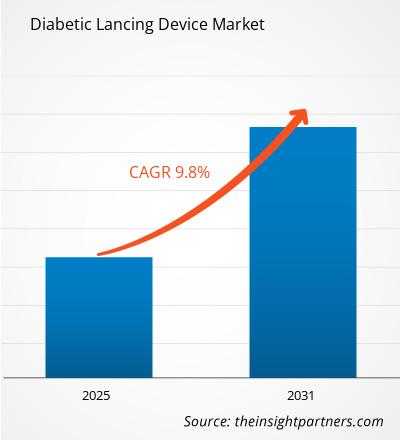
The Diabetic Lancing Device Market was valued at US$ 1.78 billion in 2025 and is projected to reach US$ 3.02 billion by 2034, expanding at a CAGR of 6.03% during 2026–2034. Market expansion is supported by the growing prevalence of diabetes, rising awareness regarding routine blood glucose monitoring, and continuous improvements in minimally invasive sampling technologies. Demand remains particularly strong among patients seeking reliable, convenient, and less painful blood collection solutions for self-monitoring and professional diagnostic applications.
North America represents a significant revenue-generating region for the Diabetic Lancing Device Market and is anticipated to advance at an estimated 5.8% CAGR through 2034. Growth is driven by widespread diabetes screening programs, strong adoption of home-based monitoring systems, and increasing integration of connected diabetes management platforms. Healthcare providers across the region continue to emphasize early intervention strategies, creating sustained demand for advanced lancing devices that improve patient compliance and testing frequency.
Diabetic Lancing Device Market Assessment and Insights
- North America: Holds 37–41% share in 2025, growing at a CAGR of 5.5–6.1% during 2026–2034, driven by the high prevalence of diabetes and widespread adoption of home glucose monitoring.
- US: Accounts for 78–82% of the North American diabetic lancing device market in 2025, expanding at a 5.6–6.2% CAGR due to increasing self-monitoring practices, advanced diabetes care infrastructure, and strong demand for safety lancets.
- Europe: Represents 24–28% share in 2025, growing at a 5.4–6.0% CAGR, led by Germany, the UK, and France through established diabetes management infrastructure and growing adoption of home-based monitoring solutions.
- Asia Pacific: Holds 23–27% share in 2025, expanding at a 6.8–7.4% CAGR, led by China, Japan, and India with expanding diabetic populations, improving healthcare access, and increasing awareness of diabetes management.
- Largest Segment: Safety Lancets hold the largest diabetic lancing device market share in 2025, growing at a 6.2–6.8% CAGR due to increasing preference for infection control, enhanced patient safety, and prevention of needlestick injuries.
- High Growth Segment: Home Care and Home Diagnostics are expected to witness the fastest growth, registering a CAGR of 7.1–7.7% during 2026–2034, fueled by increasing self-monitoring practices, expanding digital diabetes management solutions, growing preference for home-based care, and strengthening diabetic lancing device market demand.
- Key companies analyzed in detail: Abbott Laboratories; B. Braun Melsungen AG; Bayer AG; Becton, Dickinson and Company; Eli Lilly and Company; F. Hoffmann-La Roche Ltd; HTL-STREFA S.A.; Medtronic plc; Novo Nordisk A/S; Owen Mumford Ltd.; Sanofi S.A.; Sarstedt AG & Co. KG; Terumo Corporation; Ypsomed Holding AG.
Source: The Insight Partners' analysis based on proprietary research, government publications, company annual reports, investor presentations, industry databases, and expert interviews.
The Diabetic Lancing Device Market report has evolved from basic finger-prick tools toward sophisticated sampling systems designed to enhance comfort, safety, and consistency. Manufacturers are increasingly focusing on ergonomic designs, adjustable penetration settings, and infection-control features that address both clinical and home-use requirements. Growing acceptance of self-management practices has further accelerated product innovation across the value chain.
Future market development will be influenced by expanding diabetes populations, greater adoption of preventive healthcare practices, and technological convergence between glucose monitoring platforms and sampling devices. Competitive differentiation is expected to revolve around user experience, safety mechanisms, and compatibility with modern diabetes management ecosystems, creating opportunities for both established manufacturers and emerging device developers.
Diabetic Lancing Device Market Report Scope
| Report Attribute | Details |
|---|---|
| Market size in 2025 | US$ 1.78 Billion |
| Market Size by 2034 | US$ 3.02 Billion |
| Global CAGR (2026 - 2034) | 6.03% |
| Historical Data | 2021-2024 |
| Forecast period | 2026-2034 |
Diabetic Lancing Device Market Analysis
The Diabetic Lancing Device Market is shaped by rising diabetes incidence, increasing life expectancy, and the growing need for regular glucose monitoring. Despite advances in continuous glucose monitoring technologies, capillary blood testing remains an important component of diabetes management in many healthcare settings. Lancing devices continue to play a critical role in supporting diagnostic accuracy and patient monitoring routines.
Manufacturers, healthcare providers, distributors, and diagnostic service organizations collectively contribute to a well-established ecosystem. Product development efforts increasingly prioritize pain reduction, safety, and ease of use, reflecting patient preferences and healthcare quality standards. Demand is particularly strong in home-care environments where convenience and reliability directly influence testing adherence.
Competition remains concentrated among major healthcare technology companies including Abbott Laboratories, B. Braun Melsungen AG, Bayer AG, Becton Dickinson, Eli Lilly and Company, F. Hoffmann-La Roche AG, HTL-STREFA S.A., Medtronic, Novo Nordisk A/S, Owen Mumford Ltd, Sanofi, Sarstedt AG & Co., Terumo Corporation, and Ypsomed Holding AG. Strategic initiatives frequently involve product portfolio enhancement, geographic expansion, and integration with broader diabetes care solutions.
Investment activity increasingly targets patient-centric technologies that simplify diabetes management while supporting healthcare system efficiency. Companies are allocating resources toward advanced safety lancets, automated sampling mechanisms, and digital health compatibility. Such initiatives strengthen long-term positioning as healthcare systems encourage self-management and remote monitoring models.
● REPORT CUSTOMIZATION
Tailor This Report To Align With Your Specific Business Requirements
This report can be customized to align precisely with your business objectives, scope, and target markets. Customization options include tailored segmentation, geography, competitive analysis, and strategic insights to support informed decision-making.
Customize This Report →WHAT YOU CAN ADJUST
- ● Segmentations
- ● Geography
- ● Competitive Analysis
- ● Language Preferences
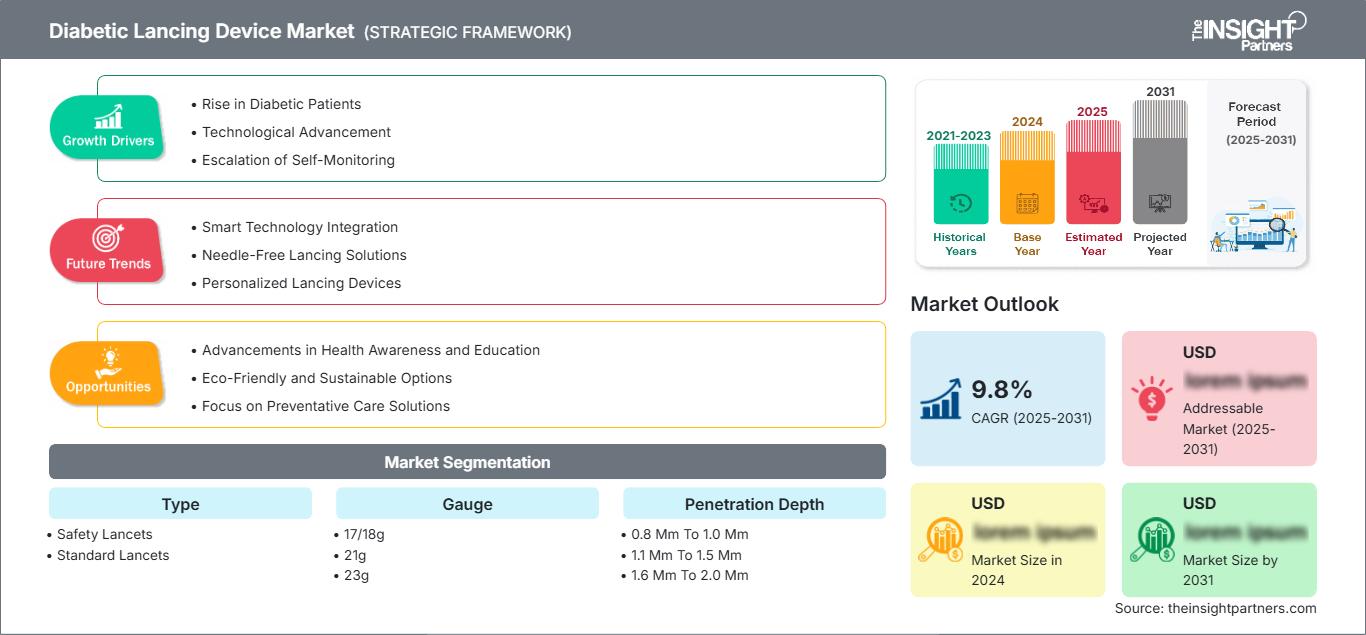
Diabetic Lancing Device Market: Strategic Insights
Regional Insights
North America Diabetic Lancing Device Market
North America leads the Diabetic Lancing Device Market with the largest market share and is expected to grow at a CAGR of approximately 5.8% through 2034. The region is characterized by a high rate of diabetes, a favorable reimbursement environment, and the need for glucose monitoring.
The availability of major players in diabetes care and the advanced healthcare framework positively impact market dynamics. The home diagnostics trend has been rising due to its ease, and the investment in the digital diabetes environment helps embrace new-age technology.
U.S. Diabetic Lancing Device Market
The United States represents roughly 75–80% of the North American Diabetic Lancing Device market size and is expected to record a CAGR of nearly 5.9% during the forecast period. The country has a substantial diabetic population that requires continuous monitoring and disease management. Strong physician engagement and widespread access to diagnostic services contribute to consistent product demand.
The top companies possess a well-developed network of distribution channels throughout the U.S., which facilitates the quick uptake of products that provide high-quality care for patients with diabetes. The demand for home-use test kits is especially high, although hospitals are increasingly interested in developing preventive monitoring programs. Demand for safety-enhanced lancets continues to rise as healthcare providers focus on infection control and patient comfort.
Europe Diabetic Lancing Device Market
The Europe segment accounts for roughly 25-30% of the global Diabetic Lancing Device market share and is expected to grow at a CAGR of about 5.5% through 2034. Good healthcare facilities, increasing focus on diabetes screening, and regulatory policies create a positive market growth environment. Germany is the top country in the Europe segment owing to the advanced medical devices industry and extensive diabetes treatment facilities.
The UK continues to experience steady adoption of home-monitoring solutions as healthcare systems encourage proactive disease management. Increasing awareness regarding diabetes complications and early intervention strategies supports continued demand for reliable lancing devices across both clinical and residential settings.
The German diabetic lancing device market holds a leadership position due to its superior manufacturing base, high healthcare spending, and wide availability of diabetes management products. The acceptance of safety-oriented devices has been very pronounced among hospitals, clinics, and specialty diagnostic centers.
Growth is significantly driven by France, Italy, and Spain, where healthcare administrations are launching more chronic care management programs. Increasing access to diagnostic facilities and the use of self-monitoring devices drive demand for devices.
APAC Diabetic Lancing Device Market
Asia-Pacific is anticipated to be the fastest-growing regional diabetic lancing device market, advancing at an estimated 7.2% CAGR through 2034 while accounting for approximately 22–27% of global revenue. Rapid urbanization, changing lifestyles, and increasing diabetes prevalence create a substantial patient base requiring regular glucose monitoring. China remains the largest contributor within the region.
For China, there will be an advantage in providing greater access to healthcare and more comprehensive diabetes management programs. The increase in knowledge concerning preventative healthcare services, as well as the availability of diagnostic techniques, will further enhance market demand.
Japan and South Korea show high penetration rates of technologically sophisticated diabetes products due to their developed healthcare systems and aging populations. Quality and convenience for the patients are major factors during the purchase process.
There are high growth prospects in India and Australia due to increased rates of diagnosis, healthcare infrastructure, and health programs. Increased awareness of diabetes complications leads to higher usage of self-management products.
Middle East & Africa Diabetic Lancing Device Market
The Middle East & Africa diabetic lancing device market is projected to grow at approximately 5.7% CAGR through 2034. Increasing diabetes prevalence, healthcare modernization efforts, and expanding diagnostic infrastructure support market development. Saudi Arabia remains the leading country within the region due to substantial healthcare investments and growing chronic disease management initiatives.
The UAE continues to strengthen healthcare capabilities through technology adoption and expanded preventive care programs. Growing emphasis on early diagnosis and disease monitoring supports demand for advanced diabetes management devices.
South Africa serves as an important regional market supported by improving access to healthcare services and growing awareness regarding diabetes management. Diagnostic centers and hospitals remain key end users.
The whole region of MEA benefits from investment in healthcare infrastructure, as well as from growing attention from authorities to the treatment of non-communicable diseases. Improvements in diagnostic availability will contribute to widespread use of lancing devices across both institutional and home-care settings.
Segmentation Analysis
Type
- Safety Lancets: Designed with integrated protective mechanisms that reduce accidental needle exposure and support infection-control protocols. Their convenience, consistency, and compliance advantages make them increasingly preferred in clinical and home-care environments.
- Standard Lancets: Widely utilized due to affordability, broad compatibility with lancing devices, and established clinical acceptance. They remain important in cost-sensitive healthcare settings and routine blood glucose testing applications.
Gauge
- 17/18g: Larger gauge options enable sufficient blood collection for specialized testing requirements while supporting rapid sample acquisition in controlled clinical environments.
- 21g: Commonly selected for balancing blood flow requirements with patient comfort, making them suitable for diverse diagnostic and monitoring applications.
- 23g: Smaller gauge designs prioritize reduced discomfort and improved patient acceptance during frequent glucose monitoring procedures.
Penetration Depth
- 0.8 Mm To 1.0 Mm: Preferred for sensitive skin and routine monitoring requirements where minimal discomfort and superficial sampling are desired.
- 1.1 Mm To 1.5 Mm: Provides a balanced approach between sample adequacy and patient comfort, supporting broad utilization across age groups.
- 1.6 Mm To 2.0 Mm: Utilized when deeper penetration is necessary to ensure adequate blood collection, particularly in specific clinical circumstances.
End User
- Hospitals and Clinics: Major consumers of lancing devices due to high patient volumes, routine glucose testing requirements, and infection-control priorities.
- Home Care And Home Diagnostics: Experiencing strong growth as diabetes self-management practices expand and patients increasingly perform monitoring independently.
- Diagnostic Centers And Medical Institutions: Utilize lancing devices extensively for screening, diagnostic assessments, and chronic disease management programs.
- Research And Academic Laboratories: Employ specialized lancing products for clinical studies, diabetes research initiatives, and healthcare training activities.
Opportunity Snapshot
| End User | Revenue Contribution | Trend Tag | Adoption Stage |
| Hospitals And Clinics | High | Screening Expansion | Mature |
| Home Care And Home Diagnostics | High | Self Monitoring | Scaling |
| Diagnostic Centers And Medical Institutions | Medium | Preventive Testing | Mature |
| Research And Academic Laboratories | Low | Clinical Research | Emerging |
| Others | Low | Niche Usage | Emerging |
Diabetic Lancing Device Market Growth Drivers and Impact Analysis
Rising Global Diabetes Burden and Monitoring Requirements
The continuing increase in diabetes prevalence across developed and emerging economies remains a fundamental growth driver for the Diabetic Lancing Device Market. Larger patient populations translate directly into higher testing volumes, particularly among individuals requiring frequent blood glucose assessments. Healthcare providers increasingly emphasize routine monitoring to reduce the risk of complications associated with uncontrolled diabetes. As diagnosis rates improve, a growing number of patients enter structured disease management programs that depend on reliable sampling tools.
Its effects span healthcare facilities, creating a constant need for hospitals, clinics, testing centers, and home care users. Manufacturers will appreciate the continual use of lancets and associated equipment, which necessitates frequent replacement. As the number of diabetics increases, there is bound to be growth and stability in the market.
Expansion of Home-Based Diabetes Management
Healthcare organizations around the world are urging patients to take responsibility for managing their condition effectively. Self-monitoring of blood glucose at home is an integral part of treatment for diabetes patients, which leads to a high demand for devices that provide accurate information about the patient’s health without causing pain.
The shift poses considerable market challenges. Firms able to provide effective solutions find themselves in more advantageous market positions while also building direct relationships with consumers. Increased testing frequency under home conditions also increases consumable consumption.
Advancements in Safety and Patient Comfort Technologies
Innovation in product development continues to shape users' expectations of blood sampling techniques. Safety devices for lancing equipped with automatic retraction mechanisms and precise penetration-depth settings address issues associated with injury, pain, and contamination. Healthcare institutions prefer such products because they meet their infection prevention goals and occupational health standards.
This results in market implications that extend beyond differentiation. The improvement in patient experience fosters adherence to the testing protocol, while health care providers benefit from enhanced safety features. Firms that commit to ergonomic design and safety advancements will be able to capitalize on increased market demand.
Diabetic Lancing Device Market Future Trends
Integration with Connected Diabetes Care Ecosystems
Future diabetes management solutions will increasingly integrate monitoring devices, apps, and analytics platforms into ecosystems. While lancing devices are still primarily mechanical instruments, companies are looking for ways to integrate them into the wider connected care strategy. Patients increasingly expect simple testing experiences and to base their decisions on data.
As healthcare organizations expand remote patient monitoring efforts, compatibility with digital diabetes management solutions will be one of the factors that distinguish among players. Those who can integrate their conventional sampling devices into new care pathways will achieve stronger brand loyalty and greater involvement in the ecosystem.
Greater Emphasis on Low-Pain and User-Centric Design
Patient experience during the procedure is gaining prominence as a key factor affecting adoption and compliance. Product makers are paying more attention to eliminating pain and tissue damage, as well as to convenience. Advances in needle technology, penetration control, and ergonomic design will define the future of innovation.
Leading diabetic lancing device market participants recognize that comfort enhancements directly influence testing and therapy adherence. Amid intensifying competition, differentiation through user experience has become equally important as performance. These diabetic lancing device market trends are expected to support continuous product innovation and strengthen demand for premium lancing devices.
Diabetic Lancing Device Market Opportunities
Untapped Potential Across Emerging Healthcare Markets
Many developing economies keep witnessing increasing rates of diabetes among growing healthcare facilities. Easy access to diagnosis, increased health consciousness, and government programs aimed at tackling chronic diseases offer a positive environment for gaining market access. The Diabetic Lancing Device Market forecast remains promising, as inadequate provision for a large number of patients across many regions creates opportunities for companies offering affordable products.
Involvement in investment initiatives based on local distribution channels, offering competitive prices, and educating healthcare professionals may help gain a strong position in the market. Companies that solve the accessibility challenges are likely to benefit from long-term volume growth and an expanding clientele in emerging economies.
Premium Safety Lancet Adoption in Clinical Settings
There is growing emphasis in healthcare organizations on infection control and workplace safety, which makes for a very promising market for advanced safety lancets. The current regulatory environment, along with quality initiatives, continues to foster the use of products that help prevent accidental needle pricks and cross-contamination.
These aspects can be utilized by manufacturers to differentiate their products, validate them clinically, and approach healthcare organizations accordingly. Higher margins could be possible through investments in premium safety technology while responding to the changing needs of healthcare organizations.
Recent Developments
- May 2026: Abbott announced it has secured CE Mark for the world's first dual glucose‑ketone sensing technology for people with diabetes. Branded as Libre Duo and Libre Duo 10 Day, the systems are designed to continuously measure glucose and ketone levels every minute, providing real-time visibility into both glucose levels needed for daily diabetes management and rising ketones that can lead to a diabetic ketoacidosis (DKA) emergency. This marks the first time people with diabetes will be able to monitor ketones without traditional blood or urine tests.
- November 2025: Roche announced that its Accu-Chek® SmartGuide continuous glucose monitoring (CGM) solution is now available in the Middle East - with the first rollout in Kuwait, Qatar, KSA, and other markets to follow, starting with the UAE in the very near future. This significant milestone means that people living with diabetes over the age of 18 can now benefit from the solution’s enhanced glucose monitoring and artificial intelligence (AI)-enabled predictive insights.
- June 2025: Abbott Laboratories and MSD announced a strategic collaboration in India to distribute oral anti-diabetic medicines. The agreement strengthens diabetes care access and supports broader disease management initiatives that indirectly drive demand for monitoring and sampling devices.
Frequently Asked Questions

- Comprehensive Market Sizing and Forecast Analysis
- Detailed Segmentation Analysis
- In-Depth Market Dynamics Assessment
- Regional and Country-Level Insights
- Competitive Landscape and Company Benchmarking
- Strategic Business Intelligence
Recent Reports
Testimonials

The Insight Partners provided valuable market intelligence that supported our global go-to-market strategy. Their team was professional, responsive, and attentive to our feedback, providing thoughtful analysis and helpful methodological clarifications throughout the project.
Junmo Kim Chief Financial Officer (CFO), Enertech Co., Ltd.
The Insight Partners' SCADA System Market report is comprehensive, with valuable insights on current trends and future forecasts. The team was highly professional, responsive, and supportive throughout. We are very satisfied and highly recommend their services.
RAN KEDEM Partner, Reali Technologies LTDs
I requested a report on a very specific software market and the team produced the report in a few days. The information was very relevant and well presented. I then requested some changes and additions to the report. The team was again very responsive and I got the final report in less than a week.
JEAN-HERVE JENN Chairman, Future Analytica
We worked with The Insight Partners for an important market study and forecast. They gave us clear insights into opportunities and risks, which helped shape our plans. Their research was easy to use and based on solid data. It helped us make smart, confident decisions. We highly recommend them.
PIYUSH NAGPAL Sr. Vice President, High Beam Global
The Insight Partners delivered insightful, well-structured market research with strong domain expertise. Their team was professional and responsive throughout. The user-friendly website made accessing industry reports seamless. We highly recommend them for reliable, high-quality research services
YUKIHIKO ADACHI CEO, Deep Blue, LLC.
This is the first time I have purchased a market report from The Insight Partners.While I was unsure at first, I visited their web site and felt more comfortable to take the risk and purchase a market report.I am completely satisfied with the quality of the report and customer service. I had several questions and comments with the initial report, but after a couple of dialogs over email with their analyst I believe I have a report that I can use as input to our strategic planning process.Thank you so much for taking the extra time and making this a positive experience.I will definitely recommend your service to others and you will be my first call when we need further market data.
JOHN SUZUKI President and Chief Executive Officer, Board Director, BK Technologies
I wish to appreciate your support and the professionalism you displayed in the course of attending to my request for information regarding to infectious disease IVD market in Nigeria. I appreciate your patience, your guidance, and the fact that you were willing to offer a discount, which eventually made it possible for us to close a deal. I look forward to engaging The Insight Partners in the future, all thanks to the impression you have created in me as a result of this first encounter.
DR CHIJIOKE ONYIA MANAGING DIRECTOR, PineCrest Healthcare Ltd.Reason to Buy
- Informed Decision-Making
- Understanding Market Dynamics
- Competitive Analysis
- Identifying Emerging Markets
- Customer Insights
- Market Forecasts
- Risk Mitigation
- Boosting Operational Efficiency
- Strategic Planning
- Investment Justification
- Tracking Industry Innovations
- Aligning with Regulatory Trends





 Get Free Sample for