
Choledocholithiasis Market Size, Growth & Demand by 2034
Coverage: By Type (Drug Treatment, Surgical Treatment) ; Application (Hospital, Specialist Clinic, Others), and Geography (North America, Europe, Asia Pacific, and South and Central America)
- Status : Data Released
- Report Code : TIPRE00008639
- Category : Life Sciences
- No. of Pages : 150
- Available Report Formats :


- Last update date : November 02, 2026


2025 Market Size
US$ 1.84 Bn
Base year value
2034 Forecast
US$ 2.93 Bn
Projected by 2034
CAGR 2026-2034
5.31 %
Growth rate
Addressable Market
US$ 21.64 Bn
(2026-2034)
The Choledocholithiasis Market was valued at US$ 1.84 Billion in 2025 and is projected to reach US$ 2.93 Billion by 2034, registering a CAGR of 5.31% during 2026–2034. Growth is supported by rising gallstone-related complications, expanding access to therapeutic endoscopy, greater use of noninvasive diagnostic imaging, and increasing preference for minimally invasive stone extraction. Aging populations and improving referral pathways are also increasing the number of patients receiving timely diagnosis and definitive treatment.
Across North America, the Choledocholithiasis Market size is expected to expand at a CAGR of ~5% through 2034. The region benefits from established gastroenterology networks, high utilization of endoscopic retrograde cholangiopancreatography, and broad availability of magnetic resonance cholangiopancreatography and endoscopic ultrasound. Investments in outpatient endoscopy facilities and advanced cholangioscopy platforms are supporting earlier intervention, while structured reimbursement and clinical guidelines encourage standardized risk assessment and treatment selection.
Choledocholithiasis Market Assessment and Insights
Regional Outlook
- North America: ~38% of the global market in 2025 | ~5% CAGR through 2034. Market position: North America holds the leading regional position because of high procedure volumes, established endoscopy infrastructure, favorable access to advanced imaging, and concentrated availability of trained gastroenterologists and hepatobiliary surgeons.
- US: ~82% of North American market revenue in 2025 | ~5% CAGR through 2034. Market position: The US leads North America through extensive hospital-based therapeutic endoscopy capacity, adoption of advanced biliary visualization systems, strong medical-device commercialization, and growing use of ambulatory facilities for appropriate gastrointestinal procedures.
- Europe: ~29% of the global market in 2025 | ~4% CAGR through 2034. Market position: Europe represents a mature treatment environment supported by universal healthcare systems and structured referral networks. Germany and the UK lead regional demand, while France, Italy, and Spain maintain substantial procedure volumes.
- Asia Pacific: ~24% of the global market in 2025 | ~7% CAGR through 2034. Market position: Asia Pacific is the fastest-growing region as expanding hospital capacity, rising diagnosis rates, public insurance coverage, and specialist training strengthen access. China and Japan lead, while India records rapid infrastructure development.
Segment Outlook
- Surgical Treatment: ~72% Share in 2025 | ~5% CAGR through 2034. Market position: Surgical treatment leads because confirmed or complicated common bile duct stones frequently require endoscopic extraction, duct clearance, stenting, or operative exploration rather than symptom management alone.
- Specialist Clinic: ~35% Share in 2025 | ~6% CAGR through 2034. Market position: Specialist clinics demonstrate the stronger growth outlook as ambulatory endoscopy networks expand, referral pathways improve, and selected diagnostic, follow-up, and minimally invasive procedures shift from inpatient environments.
Competitive Coverage
Abbott Laboratories, AstraZeneca plc, Eli Lilly and Company, GE HealthCare Technologies Inc., GSK plc, McKesson Corporation, Medtronic plc, Novartis AG, Pfizer Inc., Thermo Fisher Scientific Inc.
Methodology
The Insight Partners follows Data Collection & Secondary Research, Primary Research, Data Analysis, and Data Triangulation & Final Review to validate market estimates and insights.
Source: The Insight Partners' analysis based on proprietary research, government publications, company annual reports, investor presentations, industry databases, and expert interviews.
Management for the condition has shifted from open bile duct exploration to pathways stratified by risk and involving laboratory tests, ultrasonography, magnetic resonance cholangiopancreatography, endoscopic ultrasound, endoscopic treatments, and laparoscopic surgeries. Technological developments in the form of guidewires, extraction balloons, baskets, lithotripsy probes, stents, and visualization systems have made complex stones more amenable to treatment via minimally invasive methods. As a result, production has been moving towards imaging and endoscopy systems which offer compatibility and single-use accessories, making treatments faster and more effective at visualizing stones and clearing them.
Up to 2034, demand will increase from the Asia-Pacific region, select Middle Eastern nations, and urban centers of developing health care systems. Funding will focus on tertiary facilities, ambulatory endoscopy centers, training personnel, sterilization facilities, and delivery of single-use accessories. Device traceability, infection prevention, and clinical evidence will be important regulatory concerns that would make suppliers of integrated quality management systems attractive. Increased insurance coverages and government non-communicable disease programs could make it possible to diagnose gallstones before progressing to cholangitis or pancreatitis.
Choledocholithiasis Market Report Scope
| Report Attribute | Details |
|---|---|
| Market size in 2025 | US$ 1.84 Billion |
| Market Size by 2034 | US$ 2.93 Billion |
| Global CAGR (2026 - 2034) | 5.31% |
| Historical Data | 2021-2024 |
| Forecast period | 2026-2034 |
Choledocholithiasis Market Analysis
Increased gallstones, aging demographics, metabolic risks due to obesity, and improved diagnostic capabilities are the driving factors for Choledocholithiasis Market growth. The market demand will not be created only by the diagnostic process, since patients with obstruction symptoms require prompt assessment and management. Hospitals, imaging centers, laboratories, gastroenterologists, surgeons, anesthesiologists, and device providers constitute the ecosystem of the treatment process.
The value chain starts with biochemical and abdominal imaging tests, proceeds further to confirmatory MRI cholangiopancreatography or endoscopic ultrasonography, and ends with pharmaceuticals, endoscopy, or surgical intervention. The availability of the supply is especially crucial for contrast media, extraction devices, guidewires, stents, lithotripsy equipment, and sterilization services. Any delay in supply will result either in prolonged hospital stay or repeated procedures.
According to the Choledocholithiasis Market Report, the market features competition in more areas than those of disease-specific drugs and includes imaging technologies, endoscopy technology, diagnostic services, logistics, and other supportive treatments. Medtronic plc and GE HealthCare Technologies Inc. impact procedural and diagnostic procedures, whereas Abbott Laboratories and Thermo Fisher Scientific Inc. contribute through laboratory process management. McKesson Corporation impacts through pharmaceutical and medical-surgical distribution.
AstraZeneca plc, Eli Lilly and Company, GSK plc, Novartis AG, and Pfizer Inc. operate mostly due to hospital pharmaceuticals portfolio, research capability, and other products for related metabolic or acute care conditions. Investment focus now lies in visualizations, workflow process, disposables, and outpatient treatment. Positioning now becomes more dependent on clinical training, geographic coverage, procurement capability, and linking of diagnostic data with treatment efficiency.
● REPORT CUSTOMIZATION
Tailor This Report To Align With Your Specific Business Requirements
This report can be customized to align precisely with your business objectives, scope, and target markets. Customization options include tailored segmentation, geography, competitive analysis, and strategic insights to support informed decision-making.
Customize This Report →WHAT YOU CAN ADJUST
- ● Segmentations
- ● Geography
- ● Competitive Analysis
- ● Language Preferences
Choledocholithiasis Market: Strategic Insights
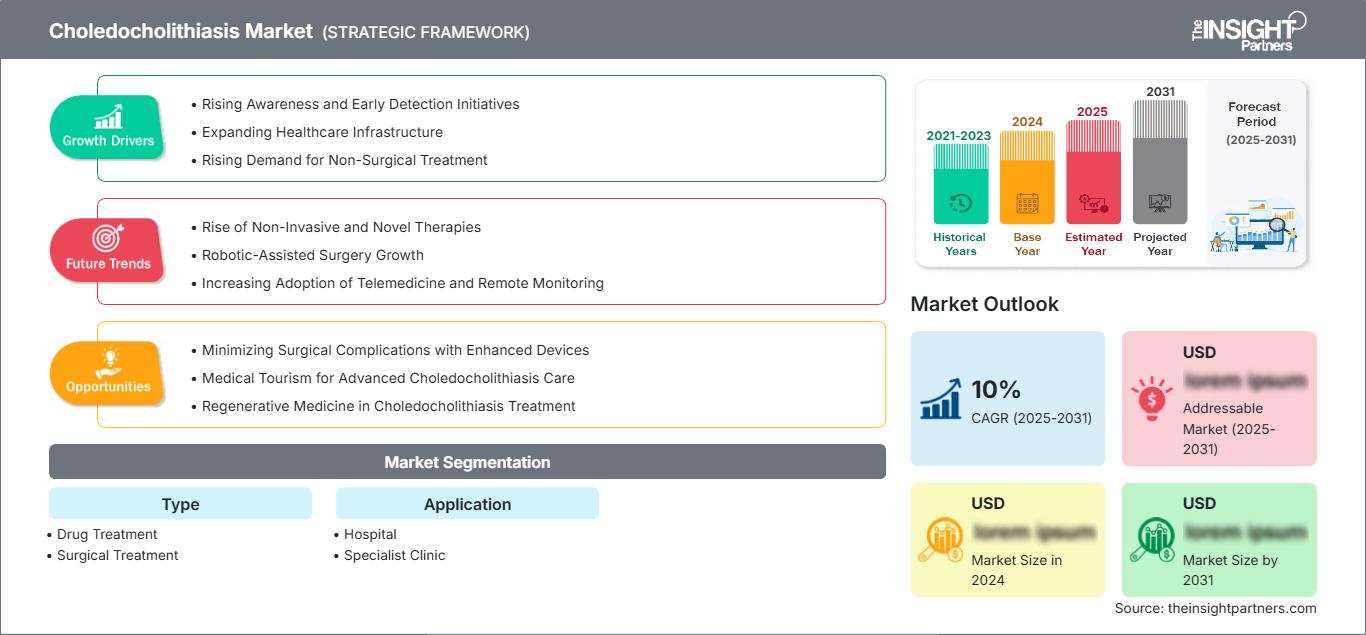
Regional Insights
North America Choledocholithiasis Market
North America is expected to record a CAGR of around 5% till 2034. Market position in North America is characterized by the presence of established diagnostic protocols, robust hospital network and availability of therapeutic endoscopy. Patients with symptoms such as biliary pain, jaundice, pancreatitis, and cholangitis can undergo assessment through laboratory testing, ultrasonography, MRI, CT, and EUS, thus helping in their identification for intervention.
Market in North America consists of matured demand along with replacement opportunities due to technological advancement. Endoscopy towers, imaging equipment, lithotripsy equipment and infection control procedures are getting upgraded in hospitals, whereas ambulatory centers are taking up appropriate procedures. Canada has organized provincial health system but is restricted with regards to referrals and capacity outside metropolitan areas. In case of Mexico, expansion opportunities exist with private hospitals and urban specialized networks; however, access to skilled endoscopists is inconsistent.
U.S. Choledocholithiasis Market
The US constituted around 82% of the North American revenues in 2025 and is projected to expand at around 5% up to 2034. The high cost of healthcare, strong presence of hospitals, availability of specialists, and endoscopic procedure capability help in sustaining the same. Academic centers also promote the use of direct cholangioscopy, electrohydraulic lithotripsy, laser lithotripsy, and multidisciplinary management in case of complicated and recalcitrant cases.
Medtronic plc holds a direct presence in the field of gastrointestinal endoscopy, whereas GE HealthCare Technologies Inc., Abbott Laboratories, Thermo Fisher Scientific Inc., and McKesson Corporation have a role to play in imaging, diagnostics, laboratory facilities, and distribution. The application in hospitals continues to be dominant due to the fact that cases of acute obstruction or cholangitis might require immediate drainage, anesthesia, monitoring, and surgery support.
Europe Choledocholithiasis Market
Europe accounted for ~29% of the total revenues in 2025 and is projected to witness a CAGR of ~4% till 2034. The Choledocholithiasis Market share has been influenced by developed public healthcare system, presence of gastroenterology centers, and extensive use of minimally invasive biliary surgeries. Growth in the region is impacted by budgetary constraints, periodic replacement of equipment, and staff shortage, but steady demand remains on account of aging population.
Germany is the dominant nation in Europe owing to the presence of a large number of hospitals, advanced diagnostics capabilities, and high usage of endoscopic and surgical tools. The UK uses well-defined clinical pathways and has specialist hepatobiliary centers, however, patients often have to wait for treatment due to long waiting lists for non-urgent cases. France has universal health care access and good public & private hospital networks.
The contributions from Italy and Spain come through volume-based hospitals in urban settings and through increased adoption of minimally invasive technologies. The procurement process now focuses more on the efficiency of the technology, its reprocessing needs, total cost of the procedure, and repeat procedures. Increased regulatory requirements by Europe to ensure product quality and traceability mean that suppliers who provide training and support along with regional distribution have an advantage over price-only competitors.
APAC Choledocholithiasis Market
Asia Pacific accounted for ~24% of global revenue in 2025 and is the fastest-growing region, with a projected CAGR of ~7% through 2034. China is the leading country in Asia Pacific because of its hospital scale, expanding endoscopy capacity, domestic device production, and large addressable patient population. Japan maintains mature adoption of advanced biliary endoscopy and imaging.
The growth of private hospitals and diagnostic capabilities is seen in India, while efforts on public insurance are making inpatient treatment more accessible. In South Korea, specialists combine with fast adoption of medical technology. Standardized healthcare remains in Australia but with geographical constraints. All these factors aid the expansion in the region through manufacturing, endoscopist training, urban hospitals, and medical device availability.
Middle East & Africa Choledocholithiasis Market
The Middle East & Africa market is projected to grow at a CAGR of ~6% through 2034. Saudi Arabia is the leading country in the Middle East & Africa, supported by hospital modernization, specialist-center investment, and health-system transformation. The UAE benefits from advanced private hospitals, medical tourism, and concentrated gastroenterology expertise.
Demand in sub-Saharan Africa is driven by South African public tertiary education institutions and private hospital groups. In the Rest of MEA region, low availability of imaging services, insufficient numbers of trained endoscopists, and reliance on imported devices limit the market. Infrastructural development projects funded by energy resources in Gulf nations allow for advanced facilities to be built, while other parts of the region depend on distributors.

Segmentation Analysis
Type
Type defines the therapeutic balance between symptom stabilization and definitive removal of obstructing stones. The Choledocholithiasis Market scope includes pharmaceutical management and interventional approaches selected according to stone size, location, infection status, anatomy, and procedural risk. Adoption favors therapies that prevent complications, shorten hospitalization, and reduce recurrence. Surgical Treatment is expected to register a CAGR of ~5% during 2026–2034 as minimally invasive endoscopic and operative techniques become more accessible across secondary and tertiary care systems.
- Drug Treatment: Drug therapy supports pain control, infection management, inflammation reduction, and stabilization before or after definitive intervention. Demand is linked to acute presentation pathways, inpatient prescribing protocols, antimicrobial stewardship, and management of patients temporarily unsuitable for invasive procedures.
- Surgical Treatment: Interventional management addresses duct obstruction through endoscopic extraction, sphincterotomy, lithotripsy, drainage, stenting, or operative exploration. Its strategic importance reflects the need for definitive clearance when stones create persistent obstruction, infection, pancreatitis, or recurrent symptoms.
Application
Application segmentation reflects differences in clinical acuity, capital requirements, specialist availability, and procedure complexity. The category is shaped by referrals between emergency departments, imaging facilities, gastroenterology practices, and surgical teams. The Choledocholithiasis Market benefits from coordinated care settings that can rapidly escalate patients from diagnosis to intervention. Specialist Clinic services are projected to expand at a CAGR of ~6% through 2034, supported by ambulatory investment, decentralized consultation, and greater availability of dedicated gastrointestinal expertise.
- Hospital: Hospitals manage acute jaundice, pancreatitis, cholangitis, complex anatomy, and patients requiring anesthesia or surgical backup. Their integrated imaging, laboratory, intensive-care, endoscopy, and operating-room capabilities make them central to emergency and high-risk treatment pathways.
- Specialist Clinic: Specialist clinics support early evaluation, risk stratification, elective referral, follow-up, and selected ambulatory procedures. Their growth is reinforced by shorter appointment pathways, focused gastroenterology expertise, efficient scheduling, and increasing payer interest in lower-cost care settings.
Opportunity Snapshot
| Application | Revenue Contribution | Trend Tag | Adoption Stage |
| Hospital | High | Integrated ERCP | Mature |
| Specialist Clinic | Medium | Ambulatory Endoscopy | Scaling |
Choledocholithiasis Market Growth Drivers and Impact Analysis
Rising Burden of Gallstone-Related Biliary Complications
An expanding population exposed to obesity, metabolic disorders, rapid weight change, and older age increases the clinical pool at risk of gallstones and common bile duct obstruction. Not every gallstone patient develops choledocholithiasis, but higher underlying gallstone prevalence raises the absolute number requiring biochemical testing, imaging, specialist assessment, and intervention. Delayed treatment can progress to pancreatitis, cholangitis, or obstructive jaundice, creating a strong clinical incentive for early referral. The market impact extends across laboratory assays, ultrasound, magnetic resonance imaging, endoscopic ultrasound, extraction devices, antimicrobials, and hospital services. Providers that connect diagnosis with rapid therapeutic access can reduce avoidable escalation while improving utilization of specialist infrastructure.
Expansion of Minimally Invasive Biliary Intervention
Therapeutic endoscopy has altered care by enabling duct visualization, sphincter intervention, stone extraction, drainage, and stent placement without routine open surgery. Continued improvements in guidewire control, balloon dilation, retrieval baskets, lithotripsy, and direct cholangioscopy broaden the treatable patient population, particularly for large, impacted, or anatomically difficult stones. The commercial effect is recurring demand for single-use accessories alongside capital equipment and service contracts. Hospitals also benefit from shorter recovery and reduced surgical trauma when minimally invasive clearance is clinically appropriate. Adoption nevertheless depends on trained operators, anesthesia support, fluoroscopy access, and complication-management protocols, making education and procedural support important components of vendor strategy.
Improved Diagnostic Stratification and Referral Pathways
Greater use of liver-function testing, high-quality ultrasonography, magnetic resonance cholangiopancreatography, and endoscopic ultrasound helps clinicians distinguish low-, intermediate-, and high-probability cases before therapeutic intervention. Better stratification reduces unnecessary invasive procedures while directing confirmed cases toward timely duct clearance. This creates demand across diagnostic and therapeutic categories rather than shifting value to one product group. Integrated referral protocols are especially influential in community hospitals that lack continuous advanced endoscopy coverage. Digital image transfer, centralized scheduling, and hub-and-spoke specialist networks can shorten decision cycles. Manufacturers and service providers capable of supporting interoperable workflows are likely to gain relevance as health systems measure outcomes, repeat procedures, length of stay, and avoidable complications.
Choledocholithiasis Market Future Trends
AI-Supported Imaging and Procedure Planning
Choledocholithiasis Market trends increasingly point toward software-assisted image acquisition, lesion recognition, workflow documentation, and procedural decision support. Artificial intelligence may improve ultrasound consistency, prioritize suspicious imaging studies, and help clinicians evaluate duct dilation or stone characteristics before intervention. During endoscopy, future platforms could combine real-time visualization with automated quality indicators and structured reporting. Adoption will depend on validation across diverse patients, compatibility with existing equipment, cybersecurity, and clear allocation of clinical responsibility. The primary market implication is a transition from isolated devices toward connected diagnostic and therapeutic ecosystems. Vendors able to integrate imaging, analytics, documentation, and training may create stronger institutional relationships than suppliers offering standalone hardware.
Single-Session and Outpatient Care Models
Health systems will increasingly evaluate same-session diagnosis and treatment, single-stage duct exploration, and outpatient pathways for clinically appropriate patients. The objective is not simply to move procedures outside hospitals, but to reduce duplicated imaging, repeated anesthesia, delayed cholecystectomy, and avoidable bed utilization. Wider adoption will require careful patient selection, standardized sedation protocols, recovery capacity, and immediate escalation arrangements. Specialist clinics with advanced endoscopy capability may capture more elective demand, while hospitals will remain essential for infection, pancreatitis, complex stones, and high-risk patients. This development should increase demand for compact equipment, disposable accessories, remote technical support, and digital coordination between referring physicians and intervention centers.
Choledocholithiasis Market Opportunities
Build Advanced Endoscopy Capacity in Underserved Cities
A significant opportunity exists in secondary cities where diagnostic imaging is available but therapeutic biliary endoscopy remains concentrated in major metropolitan hospitals. Investors can develop regional referral centers combining skilled endoscopists, anesthesia, fluoroscopy, sterilization, recovery facilities, and surgical backup. Choledocholithiasis Market Forecasts indicate that emerging demand will be influenced by access expansion as much as changes in disease incidence. Equipment suppliers can support this opportunity through modular procurement, leasing, training, preventive maintenance, and procedure-based accessory agreements. Health systems should prioritize locations with measurable referral leakage, long transfer distances, and sufficient surgical volume. A hub-and-spoke model can improve equipment utilization while extending specialist interpretation and follow-up to surrounding facilities.
Develop Integrated Diagnostic-to-Treatment Solutions
Commercial differentiation can be achieved by connecting laboratory assessment, imaging, endoscopy, accessories, data management, and post-procedure monitoring. Hospitals frequently procure these components separately, producing workflow gaps and variable compatibility. Vendors can respond with interoperable platforms, standardized procedure packs, inventory analytics, clinical education, and service-level commitments. Partnerships with distributors are particularly valuable in markets where imported devices face uncertain lead times or fragmented technical support. Pharmaceutical companies can contribute through evidence-based supportive-care pathways, while diagnostics and imaging companies can improve patient selection. The investment case is strongest when integrated offerings demonstrate fewer repeat procedures, reliable accessory availability, more efficient room turnover, and consistent documentation rather than relying solely on premium product positioning.
Recent Developments
- February 2026: Medtronic plc – The company received CE Mark approval for its next-generation GI Genius module and ColonPRO software. Although developed for colonoscopy, the platform demonstrates Medtronic’s broader investment in artificial intelligence-enabled endoscopy infrastructure, real-time procedural insights, and integrated workflow capabilities that may inform future innovation across gastrointestinal intervention.
- November 2025: GE HealthCare Technologies Inc. – GE HealthCare presented more than 40 imaging and digital innovations at RSNA 2025, emphasizing artificial intelligence-enabled imaging, cloud capabilities, and workflow automation. These investments are relevant to biliary diagnosis because ultrasound, computed tomography, and magnetic resonance imaging contribute to identifying obstruction and selecting patients for therapeutic intervention.
- April 2025: Medtronic plc – Medtronic announced a US distribution agreement with Dragonfly Endoscopy for an advanced pancreaticobiliary system designed to improve visualization, maneuverability, biopsy capability, and difficult-stone clearance. The system incorporates a rotatable flexible shaft and a larger working channel intended to accommodate robust electrohydraulic lithotripsy probes and interventional accessories.
Frequently Asked Questions

- Comprehensive Market Sizing and Forecast Analysis
- Detailed Segmentation Analysis
- In-Depth Market Dynamics Assessment
- Regional and Country-Level Insights
- Competitive Landscape and Company Benchmarking
- Strategic Business Intelligence
Recent Reports
Testimonials

The Insight Partners provided valuable market intelligence that supported our global go-to-market strategy. Their team was professional, responsive, and attentive to our feedback, providing thoughtful analysis and helpful methodological clarifications throughout the project.
Junmo Kim Chief Financial Officer (CFO), Enertech Co., Ltd.
The Insight Partners' SCADA System Market report is comprehensive, with valuable insights on current trends and future forecasts. The team was highly professional, responsive, and supportive throughout. We are very satisfied and highly recommend their services.
RAN KEDEM Partner, Reali Technologies LTDs
I requested a report on a very specific software market and the team produced the report in a few days. The information was very relevant and well presented. I then requested some changes and additions to the report. The team was again very responsive and I got the final report in less than a week.
JEAN-HERVE JENN Chairman, Future Analytica
We worked with The Insight Partners for an important market study and forecast. They gave us clear insights into opportunities and risks, which helped shape our plans. Their research was easy to use and based on solid data. It helped us make smart, confident decisions. We highly recommend them.
PIYUSH NAGPAL Sr. Vice President, High Beam Global
The Insight Partners delivered insightful, well-structured market research with strong domain expertise. Their team was professional and responsive throughout. The user-friendly website made accessing industry reports seamless. We highly recommend them for reliable, high-quality research services
YUKIHIKO ADACHI CEO, Deep Blue, LLC.
This is the first time I have purchased a market report from The Insight Partners.While I was unsure at first, I visited their web site and felt more comfortable to take the risk and purchase a market report.I am completely satisfied with the quality of the report and customer service. I had several questions and comments with the initial report, but after a couple of dialogs over email with their analyst I believe I have a report that I can use as input to our strategic planning process.Thank you so much for taking the extra time and making this a positive experience.I will definitely recommend your service to others and you will be my first call when we need further market data.
JOHN SUZUKI President and Chief Executive Officer, Board Director, BK Technologies
I wish to appreciate your support and the professionalism you displayed in the course of attending to my request for information regarding to infectious disease IVD market in Nigeria. I appreciate your patience, your guidance, and the fact that you were willing to offer a discount, which eventually made it possible for us to close a deal. I look forward to engaging The Insight Partners in the future, all thanks to the impression you have created in me as a result of this first encounter.
DR CHIJIOKE ONYIA MANAGING DIRECTOR, PineCrest Healthcare Ltd.Reason to Buy
- Informed Decision-Making
- Understanding Market Dynamics
- Competitive Analysis
- Identifying Emerging Markets
- Customer Insights
- Market Forecasts
- Risk Mitigation
- Boosting Operational Efficiency
- Strategic Planning
- Investment Justification
- Tracking Industry Innovations
- Aligning with Regulatory Trends





 Get Free Sample for