
Advanced Visualization Systems Market Size, Growth & Trends by 2034
Coverage: By Component (Hardware, Software, Service); Imaging Mode (Computed Tomography, Magnetic Resonance Imaging, X-ray and Fluoroscopy, Ultrasound, Positron Emission Tomography, Single Photon Emission Computed Tomography, Endoscopy, Others); Application (Radiology, Cardiology, Neurology and Orthopedic, Oncology, Others) , and Geography (North America, Europe, Asia Pacific, and South and Central America)
- Status : Data Released
- Report Code : TIPRE00004126
- Category : Electronics and Semiconductor
- No. of Pages : 150
- Available Report Formats :


- Last update date : July 10, 2026


2025 Market Size
US$ 1.44 Bn
Base year value
2034 Forecast
US$ 4.06 Bn
Projected by 2034
CAGR 2026-2034
12.21 %
Growth rate
Addressable Market
US$ 24.09 Bn
(2026-2034)
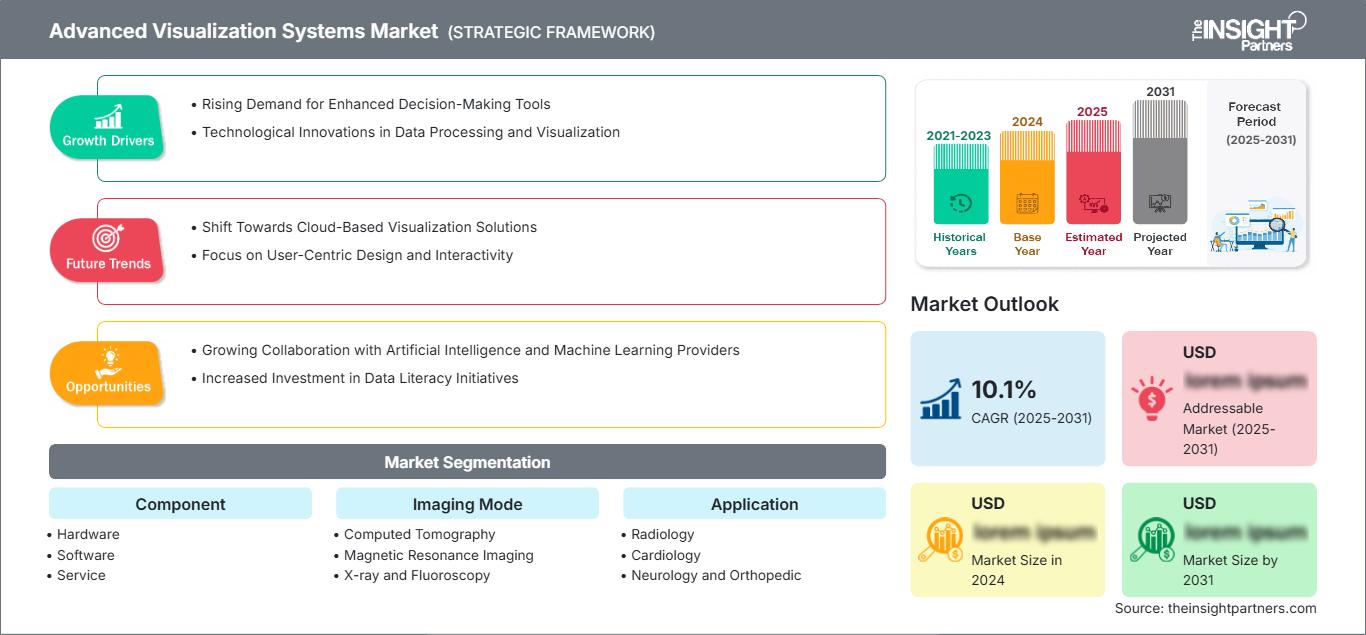
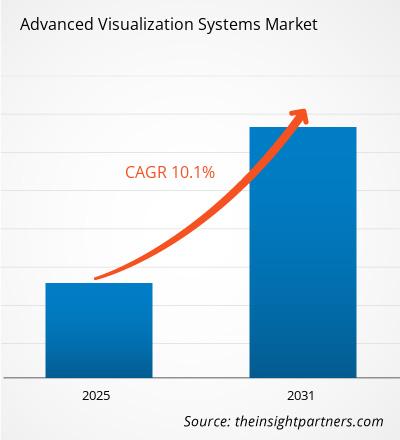
The Advanced Visualization Systems Market was valued at US$ 1.44 Billion in 2025 and is projected to reach US$ 4.06 Billion by 2034, advancing at a CAGR of 12.21% from 2026 to 2034. Growth is supported by rising multimodality imaging volumes, AI-assisted reconstruction, cloud-enabled reading, and clinical demand for actionable visualization across radiology, cardiology, oncology, neurology, orthopedics, and procedure planning workflows.
North America is expected to remain the highest-value regional market, expanding at an estimated 11.5%–12.5% CAGR through 2034. Demand is reinforced by high CT and MRI procedure intensity, hospital consolidation, enterprise imaging upgrades, and radiologist capacity constraints. The Advanced Visualization Systems Market report highlights that health systems are prioritizing AI-enabled visualization, secure remote access, and vendor-neutral platforms to improve turnaround time and multidisciplinary interpretation.
Advanced Visualization Systems Market Assessment and Insights
- North America: Share in 2025 is estimated at 38%–43%, growing at a CAGR of 11.5%–12.5% between 2026–2034, supported by enterprise imaging modernization, academic hospital demand, and AI-enabled post-processing adoption.
- US: Share in 2025 is estimated at 75%–80% of North America, growing at 11.8%–12.8%, led by multisite imaging networks and cloud reading models.
- Europe: Share in 2025 is estimated at 22%–27%, growing at 9.5%–10.5%, with Germany, the UK, France, Italy, and Spain leading enterprise radiology and oncology visualization demand.
- Asia Pacific: Share in 2025 is estimated at 24%–29%, growing at 13.5%–14.5%, led by China, Japan, South Korea, India, and Australia as imaging capacity expands.
- Largest Segment: Software held 48%–53% market share in 2025 and is growing at 12.8%–13.8% as hospitals standardize reconstruction, AI, and workflow tools.
- High Growth Segment: Service held 18%–23% market share in 2025 and is growing at 13.8%–14.8% through integration, cybersecurity, training, and cloud lifecycle support.
- Key companies analyzed in detail: Canon Medical Systems Corporation, FUJIFILM Holdings Corporation, GE HealthCare Technologies Inc., Koninklijke Philips N.V., Olympus Corporation, Agfa-Gevaert NV, Siemens Healthineers AG, TeraRecon, Inc., Thermo Fisher Scientific Inc., Toshiba International Corporation, INFINITT Healthcare Co., Ltd., and Visage Imaging GmbH.
Source: The Insight Partners' analysis based on proprietary research, government publications, company annual reports, investor presentations, industry databases, and expert interviews.
The advanced visualization systems market technology has evolved from standalone 3D workstations to an intelligent environment incorporating image acquisition, reconstruction, interpretation, and collaboration. Hospitals are shifting from basic viewing solutions to systems that enable quantitative assessment, segmentation, longitudinal evaluation, and procedural planning. The trend is particularly noticeable among large imaging centers that deal with complicated data sets from CT scans, MRIs, PET scans, and ultrasounds.
Market outlook is increasingly tied to enterprise imaging modernization, AI adoption, and multidisciplinary care models. Vendors that combine visualization software, cloud access, image management, service support, and modality-specific analytics are likely to gain stronger positions. The Advanced Visualization Systems Market forecast indicates that as healthcare systems standardize workflows across radiology, cardiology, oncology, and surgical specialties, advanced visualization systems are becoming essential infrastructure rather than optional post-processing tools.
Advanced Visualization Systems Market Report Scope
| Report Attribute | Details |
|---|---|
| Market size in 2025 | US$ 1.44 Billion |
| Market Size by 2034 | US$ 4.06 Billion |
| Global CAGR (2026 - 2034) | 12.21% |
| Historical Data | 2021-2024 |
| Forecast period | 2026-2034 |
Advanced Visualization Systems Market Analysis
Demand is being shaped by diagnostic imaging growth, chronic disease management, and the clinical need to convert complex datasets into reproducible decisions. Advanced Visualization Systems Market analysis shows value shifting from isolated workstations to connected platforms that support reconstruction, segmentation, longitudinal comparison, structured reporting, and multidisciplinary review across radiology, cardiology, oncology, neurology, and orthopedics.
The ecosystem includes modality vendors, imaging informatics providers, cloud infrastructure companies, AI developers, hospitals, diagnostic networks, and specialist departments. Hardware remains important for rendering performance, but software and services increasingly define Advanced Visualization Systems Market share because buyers prioritize interoperability, cybersecurity, uptime, training, and measurable workflow improvement.
The competition exists primarily among Canon Medical Systems Corporation, FUJIFILM Holdings Corporation, GE HealthCare Technologies Inc., Koninklijke Philips N.V., Siemens Healthineers AG, TeraRecon Inc., Agfa-Gevaert NV, Olympus Corporation, Thermo Fisher Scientific Inc., Toshiba International Corporation, INFINITT Healthcare Co., Ltd., and Visage Imaging GmbH. The competitive position is based on multimodal imaging depth, workflow of artificial intelligence technology, enterprise-level application, and specialty-specific visualization capabilities.
The investment opportunities lie in cloud-based visualization, subscription-based software, AI-supported measurements, cardiovascular and oncology applications, as well as neutral vendor image management systems. Those who can demonstrate clinical efficiency, minimize variability for readers, and offer compatibility with PACS, VNA, electronic health records, and reporting solutions will be able to take advantage of the Advanced Visualization Systems Market growth.
● REPORT CUSTOMIZATION
Tailor This Report To Align With Your Specific Business Requirements
This report can be customized to align precisely with your business objectives, scope, and target markets. Customization options include tailored segmentation, geography, competitive analysis, and strategic insights to support informed decision-making.
Customize This Report →WHAT YOU CAN ADJUST
- ● Segmentations
- ● Geography
- ● Competitive Analysis
- ● Language Preferences
Advanced Visualization Systems Market: Strategic Insights
Regional Insights
North America Advanced Visualization Systems
North America accounted for 38%–43% share in 2025 and is projected to grow at 11.5%–12.5% CAGR. Demand is supported by high imaging intensity, enterprise informatics adoption, AI workflow pilots, and large hospital networks seeking standardized post-processing across CT, MRI, PET, ultrasound, fluoroscopy, and endoscopy.
The U.S. and Canada are focusing on cloud reading solutions, CT imaging of the heart, oncology follow-ups, and neuroimaging applications. Strengths include good company representation, reimbursement mechanisms, and labor pressures, which collectively help generate demand for productivity-focused visualization systems.
U.S. Advanced Visualization Systems Market
The U.S. represented 75%–80% of North American demand in 2025 and is expected to expand at 11.8%–12.8% CAGR. Academic medical centers, integrated delivery networks, and private imaging groups are adopting advanced visualization for cardiac CT, oncology staging, stroke imaging, orthopedic planning, and interventional procedure preparation.
GE Healthcare Technologies Inc., Siemens Healthineers AG, Koninklijke Philips NV, FUJIFILM Holdings Corporation, Canon Medical Systems Corporation, TeraRecon Inc., and Visage Imaging GmbH possess high commercial significance. The areas of application focus on AI-based segmentation, enterprise adoption, cloud access, and quantification of multimodality investigations.
Europe Advanced Visualization Systems Market
Europe held 22%–27% share in 2025 and is expected to grow at 9.5%–10.5% CAGR. Germany leads due to advanced hospital infrastructure, specialist imaging capacity, and strong adoption of enterprise radiology, oncology, and cardiovascular visualization workflows.
The UK is characterized by imaging backlog reduction, teleradiology use, and digital health transformation. Providers require systems that will reduce dependence on workstations, allow for remote report generation, and increase the efficiency of reviewing CT, MRI, cardiology, oncology, and neurological imaging studies in both public and private networks.
France, Italy, and Spain help in developing the sector through the introduction of cancer treatment transformation, cardiac imaging, and the development of diagnostic networks. The procurement of systems is increasingly directed towards secure solutions that can satisfy data governance requirements.
APAC Advanced Visualization Systems Market
APAC accounted for 24%–29% share in 2025 and is forecast to grow at 13.5%–14.5% CAGR, making it the fastest-growing regional opportunity. China leads through hospital expansion, imaging procurement, AI policy support, and rising oncology, cardiovascular, and neuroimaging demand.
Japan and South Korea provide a mature penetration of modality, an aging population, and a good imaging ecosystem. India and Australia expand through private imaging chains, digital health initiatives, and cloud reporting. The industry drivers are the presence of local software, hospitals’ IT upgrades, and the availability of advanced imaging.
Middle East & Africa Advanced Visualization Systems Market
The Middle East & Africa market is projected to grow at 8.5%–9.5% CAGR, with Saudi Arabia leading regional adoption. Growth is linked to tertiary hospital expansion, oncology center development, smart hospital investment, and imaging upgrades connected to healthcare transformation programs.
In the UAE, South Africa, and MEA countries at large, there is selective adoption of technology in the private hospitals and referral centers. Diversification of energy sources and investments in infrastructure development facilitate the process of modernizing the health care sector; however, adoption is dependent on various factors.
Segmentation Analysis
Component
The component segment is expected to grow at 12.5%–13.5% CAGR between 2026–2034. Software is the strategic anchor, while hardware supports demanding rendering, and services enable deployment continuity. Buyers increasingly evaluate total workflow impact, not standalone functionality, expanding the Advanced Visualization Systems Market scope across enterprise imaging, AI operations, cybersecurity, training, and clinical protocol standardization.
- Hardware supports high-performance rendering, image acquisition interfaces, and workstation-grade processing where large CT, MRI, PET, and fluoroscopy datasets require rapid manipulation and reliable clinical display.
- Software held 48%–53% market share in 2025, enabling reconstruction, segmentation, quantitative analysis, AI workflows, vendor-neutral access, and enterprise deployment across radiology, cardiology, oncology, and surgical planning.
- Service held 18%–23% share in 2025, covering implementation, integration, training, upgrades, cybersecurity support, and workflow optimization as hospitals manage complex imaging networks and recurring software environments.
Imaging Mode
The imaging mode segment is expected to grow at 11.8%–12.8% CAGR between 2026–2034. CT and MRI generate the strongest visualization workload because they create large, complex datasets used in diagnosis, staging, intervention, and follow-up. PET, SPECT, ultrasound, fluoroscopy, and endoscopy expand the market through multimodality fusion and specialty workflows.
- Computed Tomography drives demand because cardiac, oncology, trauma, vascular, and lung imaging depend on fast multiplanar review, 3D reconstructions, lesion tracking, and procedural planning.
- Magnetic Resonance Imaging supports advanced neuro, cardiac, musculoskeletal, and oncology interpretation where soft-tissue contrast, motion correction, functional imaging, and quantitative review improve diagnostic confidence.
- X-ray and fluoroscopy support interventional guidance, orthopedic assessment, and procedural workflows where real-time image quality, dose efficiency, anatomical clarity, and rapid review remain clinically important.
- Ultrasound visualization expands through elastography, vascular analysis, cardiac imaging, and point-of-care applications requiring intuitive tools, automated measurements, and improved image standardization.
- Positron Emission Tomography supports oncology, cardiology, and neurology by combining metabolic and anatomical information, enabling staging, therapy response assessment, and theranostic workflow planning.
- Single Photon Emission Computed Tomography helps nuclear medicine teams interpret perfusion, cardiac, bone, and functional studies through fused datasets, attenuation correction, and quantitative analysis.
- Endoscopy visualization supports minimally invasive procedures through enhanced image display, documentation, navigation support, and integration with surgical planning and multidisciplinary review workflows.
Application
The application segment is expected to grow at 12.2%–13.2% CAGR between 2026–2034. Radiology remains the largest use case because it receives the broadest modality mix, while cardiology, oncology, neurology, and orthopedic workflows increasingly depend on quantitative visualization. Advanced Visualization Systems Market trends show applications expanding from diagnosis into procedure planning and treatment monitoring.
- Radiology remains the largest application as departments require advanced tools to interpret high-volume CT, MRI, PET, ultrasound, and X-ray studies across routine and complex cases.
- Cardiology adoption is rising with cardiac CT, MR, ultrasound, and nuclear imaging, where visualization supports coronary assessment, structural planning, perfusion review, and longitudinal disease management.
- Neurology and Orthopedic workflows rely on advanced visualization for stroke assessment, spine planning, joint evaluation, trauma review, surgical navigation, and quantitative follow-up of complex anatomy.
- Oncology use expands as tumor staging, radiotherapy planning, response monitoring, PET-CT review, and multidisciplinary boards require consistent visualization and measurable imaging biomarkers.
Opportunity Snapshot
| Application | Revenue Contribution | Trend Tag | Adoption Stage |
| Radiology | High | Workflow AI | Mature |
| Cardiology | Medium | Cardiac CT | Scaling |
| Neurology and Orthopedics | Medium | Surgical Planning | Scaling |
| Oncology | High | Tumor Tracking | Scaling |
| Others | Low | Specialty Care | Emerging |
Advanced Visualization Systems Market Growth Drivers and Impact Analysis
Rising Imaging Complexity Across Clinical Pathways
With increased use of medical imaging systems, which generate large multimodal data sets requiring image reconstruction, fusion, segmentation, and comparison to be used for any meaningful purpose, there is a need for better visualization in order to help doctors and other healthcare professionals in making their decisions. It helps hospitals standardize measures, minimize the need for manipulations, organize tumor boards, and prepare procedures. The effect on operations will also be significant as increased speed in case review may enhance the effectiveness of imaging equipment usage and minimize specialist overload.
Enterprise Imaging Modernization and Cloud Deployment
Hospitals are replacing isolated departmental workstations with enterprise imaging environments that allow studies to be accessed, interpreted, and shared across locations. Cloud and hybrid deployment strengthen this shift by supporting remote reading, subspecialty access, disaster recovery, and centralized software updates. The Advanced Visualization Systems Market size benefits as buyers move from capital workstation purchases toward recurring software and managed service models. Vendors that provide vendor-neutral integration, secure access, and measurable workflow outcomes can influence long-term procurement decisions across multisite hospital networks.
AI-Assisted Interpretation and Quantitative Imaging
AI will become practical in cases of increased workloads, difficult cases, and time pressures facing imaging departments. The application of AI to visualization includes automatic segmentation, vascular evaluation, motion correction, lesion tracking, cardiac measurements, organ volume quantification, and follow-up management. It is the degree to which AI is incorporated into the regular reading workflow that determines its effect. Visualization software that incorporates AI within its workspace and reporting tool can help ensure reader-to-reader and site-to-site consistency in the case of oncological, neurological, and cardiovascular imaging, where minor measurement discrepancies could determine treatment protocols.
Advanced Visualization Systems Market Future Trends
Unified Multimodality Workspaces Becoming Standard
Future systems will be designed to merge into a single multimodal workspace instead of separate systems for CT, MRI, PET, ultrasound, fluoroscopy, and endoscopy. Radiologists and clinicians demand consistency with navigation, measurements, hanging protocols, and reports in a single workflow across the entire patient journey. This is going to minimize training efforts and enhance the standardization of the enterprise. The competition will no longer lie in the number of features but rather in providing a single clinical workflow experience.
Visualization Expanding Into Treatment Planning
Visualization is progressing beyond diagnostic evaluation to therapeutic planning and procedural guidance. In oncology, visualization helps delineate the extent of tumors and evaluate patient response; in cardiovascular procedures, 3D models help in the structural heart and vascular procedures; while in orthopedics and neurology, reconstruction helps with both surgery and patient conditions. The future belongs to those products that are able to preserve the information gained from imaging through the stages of screening, diagnosis, therapeutic options, planning, and follow-up monitoring without additional effort.
Advanced Visualization Systems Market Opportunities
Cloud-Native Visualization for Distributed Imaging Networks
Distributed imaging networks create a strong opportunity for cloud-native visualization. Many providers operate across hospitals, outpatient centers, and virtual reading teams, making local workstation dependency inefficient. Suppliers can act by building secure subscription models, scalable rendering, hybrid deployment, and integration with PACS, VNA, reporting, and identity management. The most attractive opportunities will demonstrate lower IT complexity, consistent access to specialist tools, improved turnaround time, and reliable performance for cardiac, oncology, neuro, and emergency imaging use cases.
Disease-Specific AI Modules and Advanced Quantitative Imaging Solutions
AI modules for specialty imaging present the possibility of an investment, as clinicians require specific, reproducible results for each disease. There is a requirement for tumor measurement and follow-up in oncology, coronary, vascular, and functional imaging in cardiology, volumetric imaging and perfusion analysis in neurology, and segmentation and planning in orthopedic imaging. Modular clinical packages can be developed, and their outcome can be validated by hospitals, and the output can be correlated to the reporting.
Recent Developments
- May 2026: Siemens Healthineers AG — received FDA clearance for six Artis interventional imaging systems featuring Optiq AI, a deep-learning imaging chain that optimizes fluoroscopy, acquisition, and digital subtraction angiography in real time, strengthening visualization quality for image-guided therapy.
- December 2025: GE HealthCare Technologies Inc. — introduced imaging solutions powered by NVIDIA technology at RSNA 2025 across CT, PET, MRI, ultrasound, mammography, and workflow concepts, emphasizing accelerated computing, simulation, segmentation, and real-time image reconstruction for scalable clinical productivity.
- December 2025: Koninklijke Philips N.V. — showcased Advanced Visualization Workspace 16 at RSNA 2025 as a vendor-neutral multimodality platform with an expanded Cardiovascular Suite, AI-driven workflows, quantitative analysis, and cloud availability through Philips HealthSuite on AWS.
Frequently Asked Questions

- Comprehensive Market Sizing and Forecast Analysis
- Detailed Segmentation Analysis
- In-Depth Market Dynamics Assessment
- Regional and Country-Level Insights
- Competitive Landscape and Company Benchmarking
- Strategic Business Intelligence
Recent Reports
Testimonials

The Insight Partners provided valuable market intelligence that supported our global go-to-market strategy. Their team was professional, responsive, and attentive to our feedback, providing thoughtful analysis and helpful methodological clarifications throughout the project.
Junmo Kim Chief Financial Officer (CFO), Enertech Co., Ltd.
The Insight Partners' SCADA System Market report is comprehensive, with valuable insights on current trends and future forecasts. The team was highly professional, responsive, and supportive throughout. We are very satisfied and highly recommend their services.
RAN KEDEM Partner, Reali Technologies LTDs
I requested a report on a very specific software market and the team produced the report in a few days. The information was very relevant and well presented. I then requested some changes and additions to the report. The team was again very responsive and I got the final report in less than a week.
JEAN-HERVE JENN Chairman, Future Analytica
We worked with The Insight Partners for an important market study and forecast. They gave us clear insights into opportunities and risks, which helped shape our plans. Their research was easy to use and based on solid data. It helped us make smart, confident decisions. We highly recommend them.
PIYUSH NAGPAL Sr. Vice President, High Beam Global
The Insight Partners delivered insightful, well-structured market research with strong domain expertise. Their team was professional and responsive throughout. The user-friendly website made accessing industry reports seamless. We highly recommend them for reliable, high-quality research services
YUKIHIKO ADACHI CEO, Deep Blue, LLC.
This is the first time I have purchased a market report from The Insight Partners.While I was unsure at first, I visited their web site and felt more comfortable to take the risk and purchase a market report.I am completely satisfied with the quality of the report and customer service. I had several questions and comments with the initial report, but after a couple of dialogs over email with their analyst I believe I have a report that I can use as input to our strategic planning process.Thank you so much for taking the extra time and making this a positive experience.I will definitely recommend your service to others and you will be my first call when we need further market data.
JOHN SUZUKI President and Chief Executive Officer, Board Director, BK Technologies
I wish to appreciate your support and the professionalism you displayed in the course of attending to my request for information regarding to infectious disease IVD market in Nigeria. I appreciate your patience, your guidance, and the fact that you were willing to offer a discount, which eventually made it possible for us to close a deal. I look forward to engaging The Insight Partners in the future, all thanks to the impression you have created in me as a result of this first encounter.
DR CHIJIOKE ONYIA MANAGING DIRECTOR, PineCrest Healthcare Ltd.Reason to Buy
- Informed Decision-Making
- Understanding Market Dynamics
- Competitive Analysis
- Identifying Emerging Markets
- Customer Insights
- Market Forecasts
- Risk Mitigation
- Boosting Operational Efficiency
- Strategic Planning
- Investment Justification
- Tracking Industry Innovations
- Aligning with Regulatory Trends





 Get Free Sample for