
Aeroponics Market Size, Growth & Trends by 2034
Coverage: By Component (Irrigation Component, Lighting, Sensor, Climate Control System, Others); Application (Indoor Farming, Outdoor Farming) , and Geography (North America, Europe, Asia Pacific, and South and Central America)
- Status : Data Released
- Report Code : TIPRE00008027
- Category : Electronics and Semiconductor
- No. of Pages : 150
- Available Report Formats :


- Last update date : July 15, 2026


2025 Market Size
US$ 2.73 Bn
Base year value
2034 Forecast
US$ 7.09 Bn
Projected by 2034
CAGR 2026-2034
11.19 %
Growth rate
Addressable Market
US$ 43.34 Bn
(2026-2034)
The Aeroponics Market size is projected to grow from US$ 2.73 Billion in 2025 to US$ 7.09 Billion by 2034, registering a CAGR of 11.19% during 2026–2034. The market reflects rising adoption of soil-less cultivation, precision irrigation, climate-controlled farms, and high-density food production systems. Demand is supported by urban agriculture, water conservation priorities, and commercial interest in year-round production of leafy greens, herbs, microgreens, and premium fresh produce.
North America is expected to remain a leading revenue contributor, expanding at an estimated CAGR of 10.6–11.3% during 2026–2034. Growth is supported by commercial vertical farms, USDA-backed innovation programs, grocery demand for local supply chains, and investment in automation. The region’s controlled-environment farms are also using aeroponic misting, LED lighting, and data platforms to reduce water use while stabilizing crop quality across climate-variable locations. The Aeroponics Market share in North America is further supported by early technology adoption, strong investment activity, and the presence of advanced indoor farming operators.
Aeroponics Market Assessment and Insights
- North America: The region accounted for 31–34% share in 2025 and is expected to grow at a CAGR of 10.6–11.3% during 2026–2034, supported by mature indoor farming infrastructure, strong retail demand, and technology-led farm automation.
- US: The country represented 74–78% of North America in 2025 and is projected to grow at a CAGR of 10.4–11.1% during 2026–2034, led by microgreens, container farms, and grocery-linked local production.
- Europe: Europe held 24–27% share in 2025 and is likely to expand at a CAGR of 10.2–10.9% during 2026–2034, with the UK, Germany, France, the Netherlands, and Spain advancing greenhouse integration and water-efficient horticulture.
- Asia Pacific: Asia Pacific captured 25–29% share in 2025 and is expected to grow at a CAGR of 12.1–12.8% during 2026–2034, driven by China, Japan, South Korea, India, Singapore, and Australia.
- Largest Segment: Indoor Farming held 76–80% market share in 2025 and is projected to grow at a CAGR of 11.5–12.2% during 2026–2034 as farms prioritize predictable yields and controlled microclimates.
- High Growth Segment: Sensor systems represented 16–19% market share in 2025 and are expected to grow at a CAGR of 13.0–13.8% during 2026–2034 due to automation, nutrient analytics, and root-zone monitoring.
- Key companies analyzed in detail: AERO Development Corp., New AeroFarms, Inc., Altius Farms, CombaGroup SA, Evergreen Farm Oy, Growcer Inc., LettUs Grow Ltd, Living Greens Farm, Inc., Ponics Technologies LLC, Tower Garden by Juice Plus+, CleanGreens Solutions SA, ZipGrow Inc.
Source: The Insight Partners' analysis based on proprietary research, government publications, company annual reports, investor presentations, industry databases, and expert interviews.
The Aeroponics Market has moved from experimental vertical farming toward commercial systems focused on yield stability, labor productivity, and resource efficiency. Early installations relied on manual misting and basic nutrient delivery, while newer systems combine ultrasonic fogging, automated irrigation components, LED recipes, sensors, and climate control systems. Growers increasingly view aeroponics as a production platform rather than a single equipment purchase, linking hardware, crop science, facility design, and data-led operations.
Forward adoption will broaden across North America, Europe, and Asia Pacific as urban food strategies, drought adaptation, and protected cultivation policies improve project economics. Emerging geographies are likely to prioritize modular farms, greenhouse retrofits, and compact systems near foodservice and retail hubs. The Aeroponics Market report highlights that the market scope is also widening as investors evaluate resilience benefits, including reduced transport exposure, fewer weather-related disruptions, and consistent premium produce supply.
Aeroponics Market Report Scope
| Report Attribute | Details |
|---|---|
| Market size in 2025 | US$ 2.73 Billion |
| Market Size by 2034 | US$ 7.09 Billion |
| Global CAGR (2026 - 2034) | 11.19% |
| Historical Data | 2021-2024 |
| Forecast period | 2026-2034 |
Aeroponics Market Analysis
Demand in the Aeroponics Market is shaped by water scarcity, urbanization, food safety expectations, and the commercial need for shorter supply chains. FAO notes that agriculture accounts for 72% of global freshwater withdrawals, making water-efficient crop systems strategically important. Aeroponic systems recirculate nutrient solution and can reduce water intensity substantially when designed with closed-loop controls.
The value chain includes misting assemblies, pumps, reservoirs, LED lighting, sensors, climate equipment, farm management software, seeds, nutrients, growing towers, benches, and facility services. Supply dynamics remain mixed because specialized components are available globally, but integration expertise, crop protocols, energy management, and maintenance capability often determine farm profitability more than equipment cost alone. The Aeroponics Market forecast indicates that successful operators will increasingly differentiate through operational efficiency, crop consistency, and technology integration rather than hardware deployment alone.
The competitive landscape remains fragmented, with technology developers, vertical farm operators, greenhouse integrators, and modular system suppliers competing around reliability and unit economics. New AeroFarms, Inc. emphasizes patented aeroponic microgreens production, while LettUs Grow Ltd focuses on ultrasonic misting and rolling-bench integration. CombaGroup SA and CleanGreens Solutions SA address greenhouse-scale applications, and Growcer Inc. strengthens modular container farming through acquired assets. The Aeroponics Market share remains distributed across a diverse mix of technology providers and cultivation system developers focused on improving productivity, scalability, and operational efficiency.
Investment trends show a shift from growth-at-any-cost facility expansion to disciplined deployments tied to crop margins, energy strategy, and retailer offtake. Strategic positioning increasingly favors companies able to demonstrate yield uplift, lower maintenance risk, and resilient customer support. Aeroponics Market analysis indicates that hardware suppliers with agronomy services will command stronger adoption than equipment-only providers.
● REPORT CUSTOMIZATION
Tailor This Report To Align With Your Specific Business Requirements
This report can be customized to align precisely with your business objectives, scope, and target markets. Customization options include tailored segmentation, geography, competitive analysis, and strategic insights to support informed decision-making.
Customize This Report →WHAT YOU CAN ADJUST
- ● Segmentations
- ● Geography
- ● Competitive Analysis
- ● Language Preferences
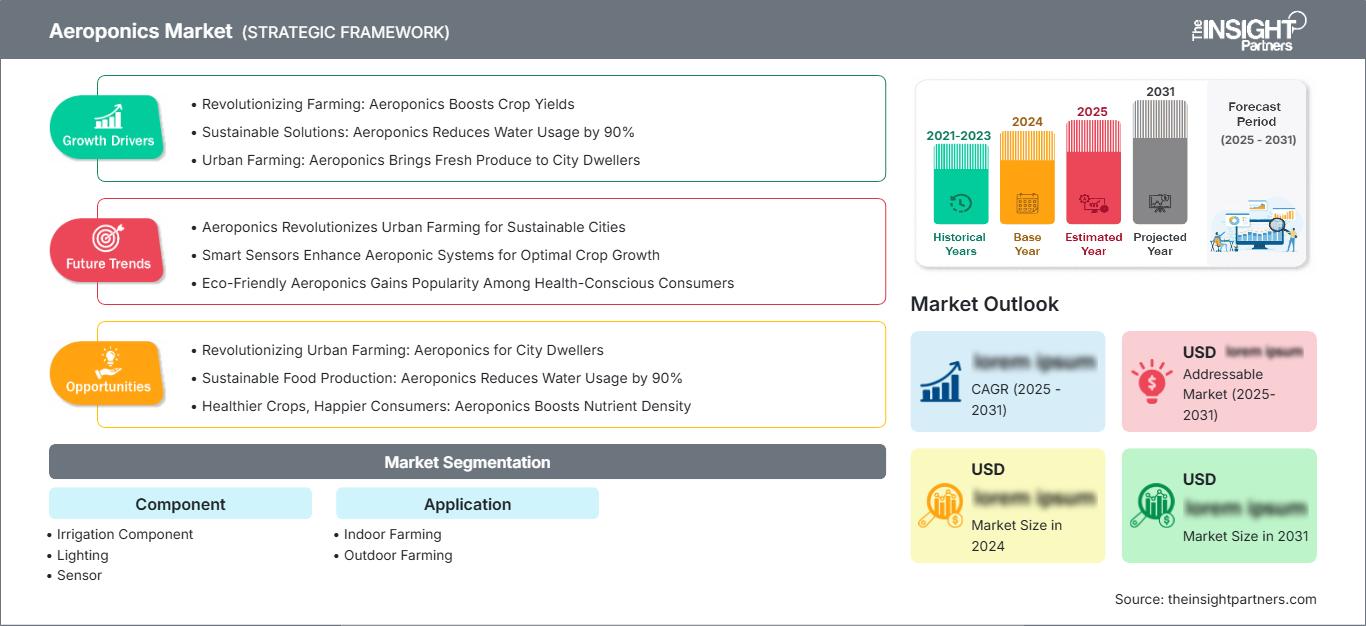
Aeroponics Market: Strategic Insights
Regional Insights
North America Aeroponics Market
North America held 31–34% share in 2025 and is forecast to grow at a CAGR of 10.6–11.3% during 2026–2034. The region benefits from mature controlled-environment agriculture, venture-backed farm technology, and retailers seeking local, pesticide-light leafy greens. USDA and congressional attention to urban and innovative production methods support knowledge diffusion.
Commercial adoption is strongest in the US and Canada, where container farms, vertical farms, and greenhouse retrofits address distribution distance and climate volatility. High labor costs encourage automation, while energy costs force growers to optimize lighting, climate control, and crop density. These factors shape Aeroponics trends across premium produce categories.
U.S. Aeroponics Market
The US represented 74–78% of North America in 2025 and is expected to expand at a CAGR of 10.4–11.1% during 2026–2034. Company presence is concentrated around microgreens, leafy greens, container farms, and controlled-environment technology providers. New AeroFarms, Inc. reported a dominant microgreens retail position, supporting domestic category visibility.
Application trends favor indoor farming because retailers, schools, healthcare operators, and foodservice buyers value stable local supply. Modular farms are also used in remote communities and institutional settings where logistics costs are high. The country’s aeroponic adoption is increasingly tied to automation, crop nutrition claims, and farm-level energy optimization.
Europe Aeroponics Market
Europe accounted for 24–27% share in 2025 and is projected to grow at a CAGR of 10.2–10.9% during 2026–2034. The UK is a leading innovation hub, supported by LettUs Grow Ltd’s commercial aeroponic systems and research facilities in Bristol. Growers are exploring aeroponics to improve spinach, herbs, and leafy greens. The Aeroponics Market is benefiting from these innovations as producers seek higher yields, resource efficiency, and sustainable indoor farming solutions.
The strategic importance of Germany lies in the areas of greenhouse engineering, automation technology, and the quality of food retailing. Energy efficiency plays an important role in project realization, which results in a preference for hybrid greenhouse technology, rolling bench systems, and data-based irrigation instead of completely isolated energy-intensive farms.
The development of France, Italy, and Spain is based on water efficiency, horticultural facilities, and quality local products. Water stress in Spain makes it attractive for implementing the recirculating systems, whereas France and Italy focus on controlled-quality herbs and salads. The most advanced country in the region is the United Kingdom due to technological specialization.
APAC Aeroponics Market
APAC held 25–29% share in 2025 and is forecast to grow at a CAGR of 12.1–12.8% during 2026–2034. China leads by scale potential, while Japan and South Korea emphasize automation, food safety, and urban farms. Singapore’s food-security strategy further validates controlled-environment production models. The Aeroponics Market is gaining momentum across the region as governments and growers invest in advanced cultivation technologies to improve food security, resource efficiency, and year-round crop production.
India and Australia present different adoption paths: India prioritizes compact farms, startups, and water-saving horticulture; Australia focuses on drought resilience, regional supply, and greenhouse modernization. Policy interest in food security, urban agriculture, and efficient water use strengthens the regional outlook.
Industrial drivers include LED cost improvements, IoT controls, and local manufacturing of sensors and farm equipment. APAC’s rapid urban growth makes aeroponics attractive where land is scarce, and logistics chains are long.
Middle East & Africa Aeroponics Market
The Middle East & Africa is expected to grow at a CAGR of 11.4–12.0% during 2026–2034, led by the UAE and Saudi Arabia. Food import dependence, desalinated water costs, and national food-security programs support controlled-environment agriculture investments in arid climates. The Aeroponics Market is benefiting from these trends as governments and private investors increasingly support resource-efficient farming technologies to improve domestic food production and supply chain resilience.
UAE is the leading country due to its well-developed infrastructure, high-end demands for retail, and governmental pilot programs using agritech. On the other hand, Saudi Arabia increases capacity for greenhouses and indoor agriculture, whereas South Africa demonstrates selectivity in adopting agritech in terms of produce production and institutions.
Adoption of agritech by the rest of the MEA countries still remains project-oriented due to the high price of electricity, lack of expertise, and capital intensity.
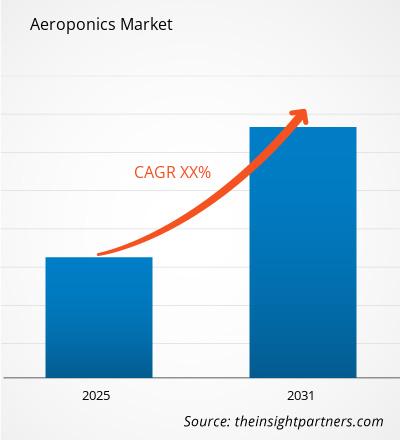
Segmentation Analysis
Component
The Component segment is expected to witness CAGR growth at 11.6-12.3% between 2026 and 2034 due to the upgrading of farm systems from standalone misting systems to complete farm solutions. The greatest demand is noted for robust irrigation components, efficient lighting, sensors for root zones, and climatic systems that ensure consistent crops. Suppliers of components are now offering agronomic solutions along with hardware.
- Irrigation Component demand is anchored in pumps, misting nozzles, reservoirs, filtration, and nutrient delivery hardware. Reliability is strategically important because root-zone interruptions can rapidly affect crop health and harvest schedules.
- Lighting remains a major capital and operating cost in indoor farms. Growers favor spectrum-tuned LEDs that improve biomass, color, and crop cycle predictability while reducing heat-management pressure.
- Sensor adoption is rising as farms monitor humidity, nutrient concentration, pH, temperature, root-zone performance, and crop stress. Data visibility supports automation, reduces labor reliance, and improves repeatability.
- Climate Control System demand is linked to ventilation, humidity control, cooling, heating, and carbon dioxide management. Effective control allows aeroponic farms to maintain quality across seasons and geographies.
Application
The Application market is expected to witness a CAGR of 11.2–11.9% from 2026 to 2034 owing to indoor agriculture and selective outdoor cultivation. The major reason behind the popularity of indoor farming includes cultivation throughout the year irrespective of season changes and better nutrient control. Outdoor cultivation still holds significance for use in tower gardens, educational farms, and low capital community gardens.
- Indoor Farming generates the highest revenue contribution because commercial growers prioritize consistency, premium crop quality, and proximity to urban buyers. It is also the strongest platform for automation-led scale.
- Outdoor Farming is used in rooftop gardens, demonstration sites, and small commercial settings. Adoption depends on climate suitability, water availability, and growers’ ability to protect misting systems from contamination.
Opportunity Snapshot
| Application | Revenue Contribution | Trend Tag | Adoption Stage |
| Indoor Farming | High | Urban Greens | Scaling |
| Outdoor Farming | Medium | Rooftop Produce | Emerging |
Aeroponics Market Growth Drivers and Impact Analysis
Water Scarcity Accelerates Soil-Less Production
Water constraints are pushing growers, governments, and investors toward systems that can produce more food with less withdrawal pressure. FAO reports that agriculture accounts for 72% of global freshwater withdrawals, while UNDP notes that controlled-environment agriculture can cut agricultural water use by 53–98% depending on design. This makes aeroponics strategically relevant in drought-prone regions, urban areas, and greenhouse clusters. The Aeroponics Market is expected to benefit most where water pricing, groundwater depletion, or import dependence changes the business case for protected production. Closed-loop misting also supports sustainability reporting, which is increasingly important for retailers and institutional buyers evaluating supply resilience.
Urban Food Systems Need Predictable Local Supply
Rapid urbanization is increasing demand for fresh produce grown close to consumers, especially leafy greens and herbs that lose quality during long distribution. Aeroponics enables compact production near grocery, foodservice, hospitals, campuses, and residential markets. The commercial impact is not only reduced mileage; it also includes higher freshness, shorter replenishment cycles, and improved category differentiation. Indoor aeroponic systems can operate in warehouses, containers, greenhouses, and rooftops, giving cities flexibility in land-constrained environments. As buyers shift from spot purchasing to planned local sourcing, suppliers that combine crop reliability with distribution partnerships are better positioned to capture the Aeroponics Market share.
Automation Improves Farm-Level Unit Economics
Labor, energy, and crop loss remain major barriers for controlled-environment agriculture, but automation is improving the economics of aeroponic operations. Sensors, cloud dashboards, automated dosing, robotics, and AI-based crop monitoring help growers reduce manual inspection, stabilize nutrient delivery, and detect stress earlier. The impact is strongest in commercial farms where small improvements in cycle time, saleable yield, and labor productivity compound across repeated harvests. Companies offering integrated systems can differentiate through uptime, agronomy services, and remote support. As capital providers demand clearer payback, automation-backed reliability will be a decisive purchasing factor.
Aeroponics Market Future Trends
Greenhouse Aeroponics Moves Beyond Vertical Farms
One of the key future trends will be the implementation of aeroponic benches and irrigation tables in commercial greenhouses instead of being restricted to vertical farms only. Such technology would allow using natural light, structures, and processes typical of horticulture, along with oxygenation of roots and nutrition with mist. The example of using aeroponics within greenhouse automation without replacing the whole farm infrastructure is given by LettUs Grow Ltd, which uses rolling benches. It might have a strong effect on the Aeroponics Market future since farmers growing crops in greenhouses know about crop timing, labor requirements, and demands from retailers.
Crop Portfolios Expand Toward High-Value Produce
Aeroponic farms are forecast to expand into berries, herbs, medicinal plants, starter plants, and seedling growing since there is potential for more premium pricing due to health of roots and precise nutritional delivery. This transition is likely to be gradual since each crop type needs protocol development, harvesting practices, and consumer acceptance. Nonetheless, the higher margins can help increase profitability from capital investment and reduce risk associated with commoditized salads. Controlled environment agriculture research shows the importance of improved energy efficiency and crop diversity. As protocols evolve, specialized aeroponic farms can become preferred sources for uniform quality produce without residues.
Aeroponics Market Opportunities
Modular Farms for Institutions and Remote Communities
Modular aeroponics and containerized farming systems provide a viable investment case for institutions like schools, hospitals, universities, military installations, islands, and remote locations with high logistical costs of fresh produce delivery. Such clients prioritize reliability of supply, educational aspects, and food safety over acreage scalability. The acquisition of Freight Farms assets by Growcer Inc. is an example of market movement toward providing services for modular farmers, software development, and existing customer bases. Manufacturers should promote modular farming through financing, training, maintenance, and planting programs instead of selling machinery alone.
Sensor-Led Service Models for Commercial Growers
The sensor solution provides a chance to earn recurring service revenue from the Aeroponics market. Growers require constant insights regarding nutrient levels, pH levels, misting efficiency, humidity, temperature, light intensity, and plant stress levels. Companies that will provide such services by analyzing data provided by sensors can use subscription models for providing services related to diagnosis, benchmarking, predictive maintenance, and agronomic services. This is because farms face a lot more problems in being consistent in their operations, rather than having equipment ready for use. Farm data solutions may become as strategic as pumps, towers, and fixtures in the long run.
Recent Developments
- April 2025: Valley partner CleanGreens Solutions and GreenLife Company, a leading agricultural innovator in the Middle East, have signed an agreement to expand their collaboration and develop the world's largest aeroponics greenhouse farm in Abdali, Kuwait.
- March 2026: The partnership between the John Innes Center and the Quadram Institute, based at the Norwich Research Park, the University of Bristol, and indoor farming specialist LettUs Grow used the latest aeroponic techniques to successfully deliver the recommended daily allowance (RDA) of Vitamin B12 in a 15-gram portion of pea shoots. The fortified salad crop not only surpassed expectations by providing more than the RDA of Vitamin B12 in a single serving of salad, but the team also found that the pea shoots retained their shelf life and that the Vitamin B12 content remained stable during an extended period of cold storage—key factors for the crop's commercial success.
- April 2025: The GreenLife Company, a leading agricultural innovator in the Middle East, and CleanGreens Solutions, a Swiss scale-up specializing in aeroponics systems, have signed an agreement to expand their collaboration and develop the world's largest aeroponics greenhouse farm in Abdali, Kuwait.
Frequently Asked Questions

- Comprehensive Market Sizing and Forecast Analysis
- Detailed Segmentation Analysis
- In-Depth Market Dynamics Assessment
- Regional and Country-Level Insights
- Competitive Landscape and Company Benchmarking
- Strategic Business Intelligence
Recent Reports
Testimonials

The Insight Partners provided valuable market intelligence that supported our global go-to-market strategy. Their team was professional, responsive, and attentive to our feedback, providing thoughtful analysis and helpful methodological clarifications throughout the project.
Junmo Kim Chief Financial Officer (CFO), Enertech Co., Ltd.
The Insight Partners' SCADA System Market report is comprehensive, with valuable insights on current trends and future forecasts. The team was highly professional, responsive, and supportive throughout. We are very satisfied and highly recommend their services.
RAN KEDEM Partner, Reali Technologies LTDs
I requested a report on a very specific software market and the team produced the report in a few days. The information was very relevant and well presented. I then requested some changes and additions to the report. The team was again very responsive and I got the final report in less than a week.
JEAN-HERVE JENN Chairman, Future Analytica
We worked with The Insight Partners for an important market study and forecast. They gave us clear insights into opportunities and risks, which helped shape our plans. Their research was easy to use and based on solid data. It helped us make smart, confident decisions. We highly recommend them.
PIYUSH NAGPAL Sr. Vice President, High Beam Global
The Insight Partners delivered insightful, well-structured market research with strong domain expertise. Their team was professional and responsive throughout. The user-friendly website made accessing industry reports seamless. We highly recommend them for reliable, high-quality research services
YUKIHIKO ADACHI CEO, Deep Blue, LLC.
This is the first time I have purchased a market report from The Insight Partners.While I was unsure at first, I visited their web site and felt more comfortable to take the risk and purchase a market report.I am completely satisfied with the quality of the report and customer service. I had several questions and comments with the initial report, but after a couple of dialogs over email with their analyst I believe I have a report that I can use as input to our strategic planning process.Thank you so much for taking the extra time and making this a positive experience.I will definitely recommend your service to others and you will be my first call when we need further market data.
JOHN SUZUKI President and Chief Executive Officer, Board Director, BK Technologies
I wish to appreciate your support and the professionalism you displayed in the course of attending to my request for information regarding to infectious disease IVD market in Nigeria. I appreciate your patience, your guidance, and the fact that you were willing to offer a discount, which eventually made it possible for us to close a deal. I look forward to engaging The Insight Partners in the future, all thanks to the impression you have created in me as a result of this first encounter.
DR CHIJIOKE ONYIA MANAGING DIRECTOR, PineCrest Healthcare Ltd.Reason to Buy
- Informed Decision-Making
- Understanding Market Dynamics
- Competitive Analysis
- Identifying Emerging Markets
- Customer Insights
- Market Forecasts
- Risk Mitigation
- Boosting Operational Efficiency
- Strategic Planning
- Investment Justification
- Tracking Industry Innovations
- Aligning with Regulatory Trends





 Get Free Sample for