
Ambulatory EHR Market Size, Growth & Demand by 2034
Coverage: By Delivery Mode (Cloud-based Solutions and On-premise Solutions), Applications (Practice Management, Patient Management, E-prescribing, Referral Management, and Other Applications), Practice Size (Large Practices, Medium-sized Practices, Small Practices and Solo Practices), End-user (Hospital-owned Ambulatory Centers and Independent Ambulatory Centers) and Geography (North America, Europe, Asia Pacific, Middle East & Africa, and South & Central America)
- Status : Data Released
- Report Code : TIPHE100001116
- Category : Technology, Media and Telecommunications
- No. of Pages : 150
- Available Report Formats :


- Last update date : August 18, 2026


2025 Market Size
US$ 6.73 Bn
Base year value
2034 Forecast
US$ 12.56 Bn
Projected by 2034
CAGR 2026-2034
7.18 %
Growth rate
Addressable Market
US$ 87.05 Bn
(2026-2034)
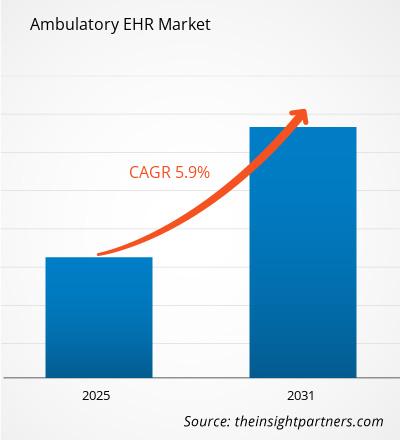
The ambulatory EHR market was valued at US$ 6.73 Billion in 2025 and is projected to reach US$ 12.56 Billion by 2034, registering a CAGR of 7.18% during 2026–2034. Demand is being shaped by outpatient care expansion, clinical data digitization, and the need for connected workflows across physician practices, ambulatory centers, and hospital-owned outpatient networks.
North America remains the most mature regional base, supported by high office-based physician EHR adoption, value-based care reporting, interoperability mandates, and the shift of procedures into outpatient settings. The ambulatory EHR market size in the region is expected to expand steadily as practices prioritize cloud access, analytics, patient engagement, and compliance-ready documentation tools.
Ambulatory EHR Market Assessment and Insights
- North America held an estimated 46–49% share in 2025 and is expected to grow at a 6.4–7.0% CAGR between 2026–2034, driven by mature digital health infrastructure, outpatient procedure migration, and certified EHR penetration.
- US accounted for nearly 78–82% of North America in 2025 and is expected to grow at a 6.2–6.8% CAGR, supported by interoperability, billing automation, and AI-enabled workflow tools.
- Europe represented about 23–26% share in 2025 and is projected to grow at a 6.8–7.4% CAGR, led by Germany, the UK, France, Italy, and Spain.
- Asia Pacific accounted for about 17–20% share in 2025 and is forecast to grow at a 8.2–9.0% CAGR, led by China, Japan, India, South Korea, and Australia.
- Largest Segment Cloud-based Solutions held an estimated 58–62% market share in 2025 and is expected to grow at a 7.8–8.5% CAGR, supported by scalable deployment and lower infrastructure burden.
- High Growth Segment Health Analytics held an estimated 13–16% market share in 2025 and is expected to grow at a 9.0–10.2% CAGR as practices use data for quality reporting and risk stratification.
- Key companies analyzed in detail: Oracle Health, eClinicalWorks, Amazing Charts, LLC, Veradigm LLC, GE HealthCare Technologies Inc., athenahealth, Inc., CompuGroup Medical SE and Co. KGaA, Greenway Health, LLC, Medical Information Technology, Inc., TruBridge, Inc., NextGen Healthcare, Inc., CureMD Healthcare, Epic Systems Corporation, CareCloud, Inc., and Netsmart Technologies, Inc.
Source: The Insight Partners' analysis based on proprietary research, government publications, company annual reports, investor presentations, industry databases, and expert interviews.
Digital transformation in ambulatory care has moved from basic record keeping to longitudinal care coordination. The ambulatory EHR market growth is now tied to integrated scheduling, claims workflows, population health analytics, e-prescribing, and patient communication. Also, vendors are tailoring platforms for specialty practices on the basis of configurable templates, mobile compatibility, and interoperability.
Going forward, investments will be made into cloud-based architecture, automation, and secure data sharing. Outpatient health IT for practices in developing economies has become necessary in order to promote insurance coverage and increase the delivery of private health care. Replacement demand in developed countries is driven by documentation load, cybersecurity risks, and interoperability with hospital/payer/laboratory systems.
Ambulatory EHR Market Report Scope
| Report Attribute | Details |
|---|---|
| Market size in 2025 | US$ 6.73 Billion |
| Market Size by 2034 | US$ 12.56 Billion |
| Global CAGR (2026 - 2034) | 7.18% |
| Historical Data | 2021-2024 |
| Forecast period | 2026-2034 |
Ambulatory EHR Market Analysis
Demand is rising because ambulatory providers need systems that reduce administrative friction while improving continuity of care. The ambulatory EHR market trends reflect a shift toward software that combines scheduling, clinical documentation, e-prescribing, billing support, referrals, and analytics in a single workflow. Cloud delivery improves access across multisite practices, while interoperability standards make outpatient records more useful across care networks.
The supply side is affected by factors such as platform consolidation, cybersecurity considerations, and modernization of application programming interfaces. Software providers have been incorporating AI documentation, intake process automation, and reporting of quality measures to facilitate handling of staff shortages in practices. On the other hand, the demand side is based on usability, integration, implementation capabilities, and total cost of ownership rather than just the core functionalities of EHR systems.
According to the market analysis, there are several strong competitors offering software solutions for EHRs. Epic Systems Corporation, Oracle Health, athenahealth, Inc., eClinicalWorks, NextGen Healthcare, Inc., Greenway Health, LLC, Medical Information Technology, Inc., and Veradigm LLC are competing on grounds of interoperability, specialty workflow support, cloud modernization, and partner ecosystems.
The trend is shifting to modular solutions, which work for standalone clinics as well as hospitals’ ambulatory facilities. The vendors who have revenue cycle management, claims connectivity, and analytics would be the preferred ones when there are value-based care arrangements. Small practices want price predictability and quick onboarding, but the larger networks are focused more on enterprise governance and cross-facility consistency.
● REPORT CUSTOMIZATION
Tailor This Report To Align With Your Specific Business Requirements
This report can be customized to align precisely with your business objectives, scope, and target markets. Customization options include tailored segmentation, geography, competitive analysis, and strategic insights to support informed decision-making.
Customize This Report →WHAT YOU CAN ADJUST
- ● Segmentations
- ● Geography
- ● Competitive Analysis
- ● Language Preferences
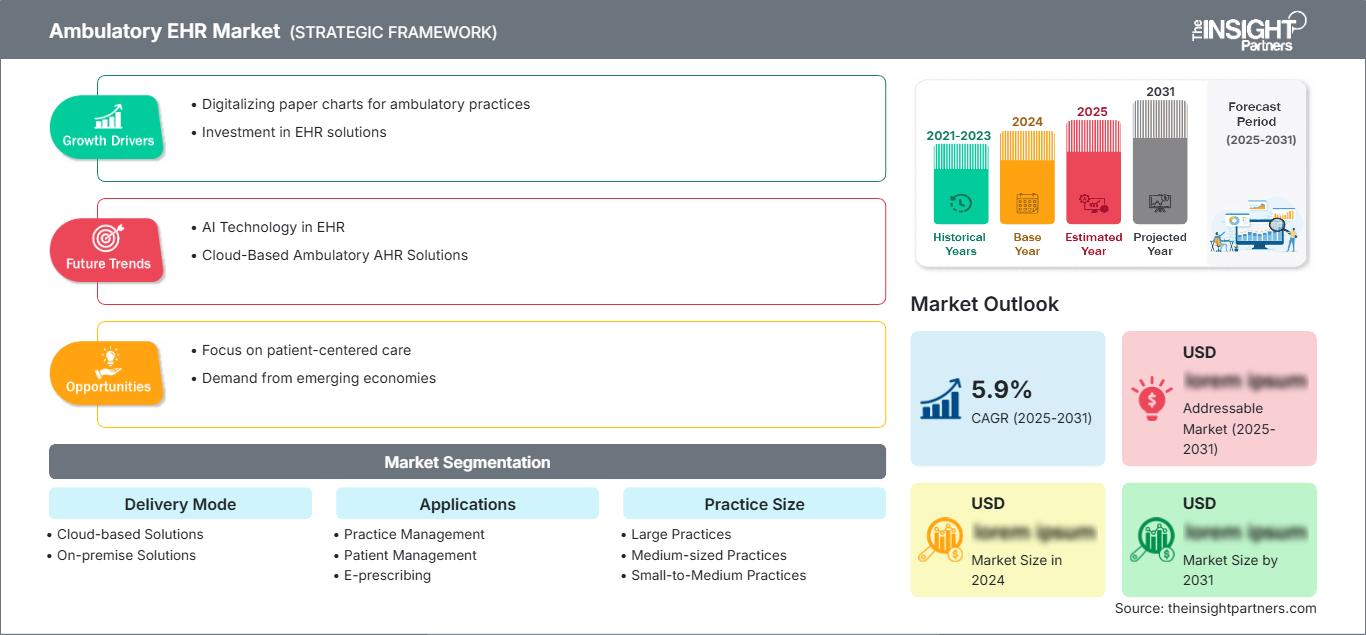
Ambulatory EHR Market: Strategic Insights
Regional Insights
North America ambulatory EHR market
North America held a 46–49% ambulatory EHR market share in 2025, reflecting high physician EHR penetration, established reimbursement digitization, and strong demand from hospital-owned outpatient networks. Certified EHR use among US office-based physicians reached more than nine in ten in 2024, creating a mature foundation for upgrades, analytics, and interoperability-focused replacement cycles.
Regional CAGR is expected at 6.4–7.0% during 2026–2034. Growth is driven by outpatient procedure migration, value-based care reporting, and rising demand for secure cloud platforms. Buyers increasingly evaluate vendor roadmaps for AI documentation, FHIR-enabled data exchange, and integrated revenue cycle functions that reduce administrative burden.
U.S. ambulatory EHR Market
The US accounted for 78–82% of North America in 2025 and is expected to grow at a 6.2–6.8% CAGR. Demand is driven by growth in ambulatory surgeries, quality reporting through technology, modernizing prior authorizations, and connecting physician practices with the rest of the hospital, payer, pharmacy, and laboratory systems.
The vendor landscape is extensive, and the vendors include: Epic Systems Corporation, Oracle Health, athenahealth, Inc., eClinicalWorks, NextGen Healthcare, Inc., Greenway Health, LLC, and Veradigm LLC for various practice sizes. The adoption of cloud-based EHR is mostly prevalent among independent practices and small to medium practices, whereas enterprise buyers focus on interoperability, governance, security, and patient record sharing.
Europe ambulatory EHR Market
Europe held a 23–26% share in 2025 and is expected to grow at a 6.8–7.4% CAGR. The UK and Germany lead demand through national health digitization programs, hospital outpatient integration, and data-sharing initiatives. France, Italy, and Spain are expanding outpatient IT investment as care coordination and reimbursement transparency become stronger policy priorities.
European procurement cycles often favor platforms that meet data protection, localization, and interoperability requirements. The region’s ambulatory EHR market share is expected to remain stable as cloud migration accelerates gradually. Vendors with multilingual support, secure hosting options, and configurable specialty workflows are positioned to benefit from public-private care delivery modernization.
APAC ambulatory EHR Market
APAC represented 17–20% share in 2025 and is projected to grow at an 8.2–9.0% CAGR. According to the Ambulatory EHR Market Report, China, Japan, India, South Korea, and Australia are expanding digital health infrastructure, outpatient insurance coverage, and hospital-affiliated ambulatory networks, creating demand for scalable platforms. Increasing adoption of cloud-based healthcare technologies, government-led digital health initiatives, and the growing need for efficient patient data management are further supporting market growth across the region.
China is the leading country by volume, while India offers high growth potential through private provider networks and digital health initiatives. Regional buyers prioritize affordability, mobile access, cloud deployment, and analytics for patient management. Implementation services and local integration capability remain decisive factors.
Middle East & Africa ambulatory EHR Market
The Middle East and Africa are expected to grow at a 7.5–8.3% CAGR during the forecast period. According to the Ambulatory EHR Market Forecast, Saudi Arabia, the UAE, and South Africa are leading regional adoption through investments in digital hospitals, outpatient clinics, insurance-linked care models, and national health data strategies. Ongoing healthcare modernization efforts, increasing digitization of patient records, and expanding access to outpatient services are expected to further support demand for ambulatory EHR solutions across the region.
Adoption remains uneven outside major urban healthcare systems, but the opportunity is expanding as private providers modernize records, billing, and referral workflows. Cloud-based tools appeal to new clinics because they reduce infrastructure spending and support standardized patient records across multisite ambulatory networks.
Segmentation Analysis
Delivery Mode
Delivery Mode is expected to grow at a 7.2–7.8% CAGR as providers compare cloud flexibility with control-oriented on-premise systems. The market scope is widening because deployment choice affects implementation cost, cybersecurity responsibility, upgrade cycles, and access across multisite outpatient operations.
- Cloud-based Solutions dominate demand as practices seek lower capital spending, faster upgrades, remote accessibility, and easier multisite coordination. They are particularly attractive to independent centers and expanding physician groups.
- On-premise Solutions remain relevant for organizations requiring direct infrastructure control, custom integrations, or strict internal governance. Adoption is concentrated among larger providers with established IT teams.
Applications
Applications are expected to grow at a 7.4–8.0% CAGR as ambulatory providers demand tools that combine clinical, administrative, and financial workflows. Practice management and patient management remain core, while analytics and e-prescribing gain importance in quality reporting and medication safety.
- Practice Management supports scheduling, claims, billing, and front-office productivity. It remains essential for practices seeking fewer manual steps and stronger revenue cycle visibility.
- Patient Management improves longitudinal records, care coordination, and follow-up processes. Demand increases as outpatient providers manage chronic disease, preventive care, and specialist referrals.
- E-prescribing is important for medication safety, refill efficiency, formulary visibility, and compliance. It also strengthens connectivity between physicians, pharmacies, and patients.
- Referral Management helps practices track specialist transitions, reduce leakage, and improve communication. It is valuable when outpatient networks depend on coordinated care pathways.
- Health Analytics is a high-growth application, supporting risk stratification, quality measures, population health management, and performance dashboards for value-based care.
Practice Size
Practice Size is expected to grow at a 6.9–7.5% CAGR during the forecast period. According to Ambulatory EHR Market Trends, large practices require enterprise integration, advanced analytics, and interoperability capabilities, while solo and small-to-medium practices prioritize usability, rapid implementation, and lower total cost of ownership. Vendor differentiation increasingly depends on scalable packaging, flexible deployment models, and the ability to address evolving requirements across different practice maturity levels.
- Large Practices require governance, multispecialty templates, advanced analytics, and integration with hospital and payer networks. Their purchasing cycles emphasize reliability and enterprise interoperability.
- Medium-sized Practices balance cost control with broader workflow functionality. They often adopt cloud-based platforms that support growth without large infrastructure investments.
- Small-to-Medium Practices prefer intuitive systems, bundled services, and predictable pricing. They value vendor support during migration, training, and early optimization.
- Solo Practices focus on ease of use, billing support, mobility, and minimal IT burden. Adoption depends heavily on affordability and implementation simplicity.
End-user
End-user is expected to grow at a 7.0–7.6% CAGR as hospital-owned and independent ambulatory centers digitize care delivery. Hospital-owned centers emphasize system integration, while independent centers focus on flexible operations, patient access, and faster administrative workflows.
- Hospital-owned Ambulatory Centers seek connected records, referral visibility, and enterprise reporting. Their technology choices often align with parent health system platforms and governance requirements.
- Independent Ambulatory Centers prioritize affordability, cloud access, faster deployment, and revenue cycle functionality. These centers use EHR systems to compete on efficiency and patient experience.
Opportunity Snapshot
| Applications | Revenue Contribution | Trend Tag | Adoption Stage |
| Practice Management | High | Workflow Automation | Mature |
| Patient Management | High | Care Access | Scaling |
| E-prescribing | Medium | Medication Safety | Mature |
| Referral Management | Medium | Network Coordination | Scaling |
| Health Analytics | Medium | Risk Scoring | Emerging |
Ambulatory EHR Market Growth Drivers and Impact Analysis
Shift of Care Delivery Toward Outpatient Settings
The growth of outpatient care delivery is creating greater demand for electronic infrastructure that will be able to handle more patients, referrals, documentation, scheduling, and billing while maintaining simplicity in administration. With procedures and subsequent visits shifting out of hospitals, there is a need for electronic systems that will be able to integrate clinical data with eligibility, prescription, labs, and payor reporting. This trend is creating both replacement and adoption demand. The greatest effect is felt by hospitals-affiliated outpatient centers and multi-facility physician practices.
Interoperability and Compliance Requirements
Regulatory forces are forcing practices to upgrade their systems to accommodate secure exchange of information, patient access, and electronic submission capabilities. Interoperability is no longer an added option, but a requirement when making purchases since ambulatory organizations deal with hospitals, pharmacies, laboratories, and insurance carriers, as well as public health systems. Compliance-related upgrades will also drive the need for vendor support, security measures, audits, and certifications. The driver will be beneficial to those vendors who can ensure smooth implementation, API-based connections, and documentation features.
Demand for Administrative Efficiency and AI Support
There is a need for physician practices to save time in documentation, ensure claim accuracy, and communicate with patients in an environment that is understaffed. The features of artificial intelligence, note generation, automated intake, coding assistance, and analytics dashboard are some of the areas where the vendor should differentiate itself. Such features will enable the provider to deliver care efficiently while saving time and increasing financial insights. The market significance is high since the buyer now assesses the extent to which the EHR system automates the process even after deployment.
Ambulatory EHR Market Future Trends
AI-Native Clinical Documentation
AI-native documentation will reshape ambulatory EHR market trends as practices seek relief from physician burnout and after-hours charting.Such features as ambient listening, structured summaries, coding suggestions, and automated follow-up reminders will become part of core platforms and not be offered as add-on products. Acceptance will be based on the criteria of accuracy, auditing, consent management, and platform integration. Product vendors who will prove to save physicians time while meeting the required clinical review criteria will win more acceptance.
FHIR-Based Data Exchange and Patient Access
Interoperability via FHIR will shift from a necessity of compliance to an advantage of competition. The ambulatory software system will allow for the capability of real-time data sharing between payers, hospitals, pharmacies, laboratories, and even consumer apps. This will help with better referrals, prior authorization processes, and chronic disease management. It will also increase the openness of vendor eco-systems, enabling practices to integrate any specific application without much customization.
Ambulatory EHR Market Opportunities
Analytics for Value-Based Ambulatory Care
Healthcare analytics represents a definite area for investment because of the growing responsibility of ambulatory providers in relation to quality, risk, and outcomes. What is needed now are dashboard tools that will allow practices to see care gaps, patient stratification, disease management, and tracking of their own performance against payer standards. The biggest opportunity lies in those cases when payment mechanisms favor prevention, coordinated follow-ups, and results. Vendors can win here through analytics integrated in the workflow of doctors, not just of administrators.
Cloud Platforms for Independent and Small Practices
Independent and small practices represent an attractive opportunity because they need modern records, billing, and patient engagement tools without large IT teams. Cloud-based systems can reduce upfront spending, simplify upgrades, and support mobile access for physicians and staff. Vendors that offer transparent pricing, migration assistance, specialty templates, and responsive support can capture replacement demand from dissatisfied legacy users. The opportunity expands further as practices seek integrated telehealth, e-prescribing, claims, and patient communication tools within one platform.
Frequently Asked Questions

- Comprehensive Market Sizing and Forecast Analysis
- Detailed Segmentation Analysis
- In-Depth Market Dynamics Assessment
- Regional and Country-Level Insights
- Competitive Landscape and Company Benchmarking
- Strategic Business Intelligence
Recent Reports
Testimonials

The Insight Partners provided valuable market intelligence that supported our global go-to-market strategy. Their team was professional, responsive, and attentive to our feedback, providing thoughtful analysis and helpful methodological clarifications throughout the project.
Junmo Kim Chief Financial Officer (CFO), Enertech Co., Ltd.
The Insight Partners' SCADA System Market report is comprehensive, with valuable insights on current trends and future forecasts. The team was highly professional, responsive, and supportive throughout. We are very satisfied and highly recommend their services.
RAN KEDEM Partner, Reali Technologies LTDs
I requested a report on a very specific software market and the team produced the report in a few days. The information was very relevant and well presented. I then requested some changes and additions to the report. The team was again very responsive and I got the final report in less than a week.
JEAN-HERVE JENN Chairman, Future Analytica
We worked with The Insight Partners for an important market study and forecast. They gave us clear insights into opportunities and risks, which helped shape our plans. Their research was easy to use and based on solid data. It helped us make smart, confident decisions. We highly recommend them.
PIYUSH NAGPAL Sr. Vice President, High Beam Global
The Insight Partners delivered insightful, well-structured market research with strong domain expertise. Their team was professional and responsive throughout. The user-friendly website made accessing industry reports seamless. We highly recommend them for reliable, high-quality research services
YUKIHIKO ADACHI CEO, Deep Blue, LLC.
This is the first time I have purchased a market report from The Insight Partners.While I was unsure at first, I visited their web site and felt more comfortable to take the risk and purchase a market report.I am completely satisfied with the quality of the report and customer service. I had several questions and comments with the initial report, but after a couple of dialogs over email with their analyst I believe I have a report that I can use as input to our strategic planning process.Thank you so much for taking the extra time and making this a positive experience.I will definitely recommend your service to others and you will be my first call when we need further market data.
JOHN SUZUKI President and Chief Executive Officer, Board Director, BK Technologies
I wish to appreciate your support and the professionalism you displayed in the course of attending to my request for information regarding to infectious disease IVD market in Nigeria. I appreciate your patience, your guidance, and the fact that you were willing to offer a discount, which eventually made it possible for us to close a deal. I look forward to engaging The Insight Partners in the future, all thanks to the impression you have created in me as a result of this first encounter.
DR CHIJIOKE ONYIA MANAGING DIRECTOR, PineCrest Healthcare Ltd.Reason to Buy
- Informed Decision-Making
- Understanding Market Dynamics
- Competitive Analysis
- Identifying Emerging Markets
- Customer Insights
- Market Forecasts
- Risk Mitigation
- Boosting Operational Efficiency
- Strategic Planning
- Investment Justification
- Tracking Industry Innovations
- Aligning with Regulatory Trends





 Get Free Sample for