
Anti-PCSK9 Monoclonal Antibody Market Share, Growth & Forecast by 2034
Coverage: By Type (Alizumab, Evolocumab); Application (Hypercholesterolemia, Atherosclerotic Cardiovascular Disease, Others) , and Geography (North America, Europe, Asia Pacific, and South and Central America)
- Status : Data Released
- Report Code : TIPRE00023268
- Category : Life Sciences
- No. of Pages : 150
- Available Report Formats :


- Last update date : August 27, 2026


2025 Market Size
US$ 4.85 Bn
Base year value
2034 Forecast
US$ 10.93 Bn
Projected by 2034
CAGR 2026-2034
9.46 %
Growth rate
Addressable Market
US$ 70.47 Bn
(2026-2034)
The anti-PCSK9 monoclonal antibody market was valued at US$ 4.85 Billion in 2025 and is projected to reach US$ 10.93 Billion by 2034, registering a CAGR of 9.46% during 2026–2034. Expansion is supported by increasing clinical emphasis on intensive LDL-C reduction, broader cardiovascular-risk management, and continued adoption of biologic lipid-lowering therapies among patients inadequately controlled through conventional treatment approaches.
North American demand is expected to expand at an estimated 10–12% CAGR during 2026–2034, supported by broad reimbursement infrastructure and growing use of PCSK9 inhibition in high-risk cardiovascular populations. The anti-PCSK9 monoclonal antibody market size is also influenced by expanded prescribing eligibility, stronger clinical evidence, and increasing physician familiarity with injectable lipid-lowering therapies.
Anti-PCSK9 Monoclonal Antibody Market Assessment and Insights
- North America: North America is expected to account for a 43–47% anti-PCSK9 monoclonal antibody market share in 2025, supported by established cardiovascular treatment pathways and reimbursement coverage, while the market grows at a 10–12% CAGR between 2026–2034 as treatment eligibility broadens.
- US: The US is projected to represent 88–92% of North America's 2025 value, with growth of 10–12% CAGR during 2026–2034 driven by wider cardiovascular-risk reduction use and evolving access criteria.
- Europe: Europe is estimated at a 26–30% share in 2025 and is expected to grow at a 9–11% CAGR during 2026–2034. Germany, the UK, France, Italy, and Spain remain important markets due to structured lipid-management pathways.
- Asia Pacific: Asia Pacific is estimated to hold a 20–24% share in 2025 and expand at a 12–14% CAGR during 2026–2034. China, Japan, South Korea, India, and Australia provide the principal regional demand base through expanding cardiovascular care capacity.
- Largest Segment: Monoclonal products represent the largest segment, with a 92–96% market share in 2025 and an estimated 9–11% CAGR through 2034, reflecting established therapeutic use.
- High Growth Segment: Polyclonal products represent a smaller base but are estimated at a 4–8% share in 2025, with a 12–15% CAGR supported primarily by research applications.
- Key companies analyzed in detail: Sanofi and Regeneron Pharmaceuticals, Inc., Amgen Inc., Creative Diagnostics, Thermo Fisher Scientific Inc., Abnova Corporation, Dr. Reddy's Laboratories Limited, Merck KGaA, GeneTex, Inc., Novartis AG, PerkinElmer, Inc.
Source: The Insight Partners' analysis based on proprietary research, government publications, company annual reports, investor presentations, industry databases, and expert interviews.
Development within the anti-PCSK9 monoclonal antibody market has transformed this biologic specialty into an established part of intensive lipid management. Development efforts have focused on highly specific inhibition of PCSK9, dependable subcutaneous delivery, and data proving cardiovascular event reduction. Manufacturing expertise for this biologic has remained highly focused within producers who have the expertise for cell-culture, purification, formulation, and cold chain logistics. Competition is more and more defined by quality of evidence, access, convenience of dosing, and manufacturing efficiency.
Going forward, growth within the anti-PCSK9 monoclonal antibody market will be driven by the early recognition of high-risk individuals, use within primary prevention populations, and expansion into developing healthcare systems. New regulatory guidance clarifying eligible populations for cardiovascular disease may expand the number of eligible patients, while payer discussions and price management will impact adoption rates. Future investment will therefore likely focus on lifecycle management, manufacturing efficiency, differentiated devices, and evidence generation for use earlier along the cardiovascular risk spectrum.
Anti-PCSK9 Monoclonal Antibody Market Report Scope
| Report Attribute | Details |
|---|---|
| Market size in 2025 | US$ 4.85 Billion |
| Market Size by 2034 | US$ 10.93 Billion |
| Global CAGR (2026 - 2034) | 9.46% |
| Historical Data | 2021-2024 |
| Forecast period | 2026-2034 |
Anti-PCSK9 Monoclonal Antibody Market Analysis
Demand trends in the Anti-PCSK9 Monoclonal Antibody Market are determined by the persisting residual risk of cardiovascular disease in patients who continue to have LDL-C levels higher than target values despite statin or combination therapy. Anti-PCSK9 monoclonal antibodies market growth trends, as a result, would be closely tied to treatment intensification, familial hypercholesterolemia treatment, and secondary prevention. Value chain components include antibody development, manufacture in mammalian cells, purification, sterile filling, device assembly, logistics, reimbursement, and specialized prescriptions. Supply conditions continue to depend on biological drugs manufacturing capabilities and cold chain.
Commercial success in the Anti-PCSK9 Monoclonal Antibody Market would require involvement of a number of stakeholders, including drug manufacturers, wholesalers, specialty pharmacies, hospitals, cardiologists, lipidologists, general practitioners, payers, and patient support services. The results obtained during cardiovascular outcomes trials would dramatically change prescribing practices through changing the emphasis from LDL-C lowering to actual event prevention. From a supply standpoint, manufacture capability, batch consistency, device availability, and international regulations compliance continue to play the key role.
As per the competitive analysis in the anti-PCSK9 monoclonal antibody market report, competitive pressure is centered on existing drugs of Amgen and the collaboration of Sanofi and Regeneron, whereas research organizations and suppliers of antibodies including Creative Diagnostics, Abnova Corporation, GeneTex, Inc. and Thermo Fisher Scientific Inc. feature more significantly in research related applications of antibodies. Competitive assessment and evaluation of revenue opportunity in the market, thus, needs to consider differentiation between commercial therapeutic products and research antibodies ecosystems.
In terms of anti-PCSK9 monoclonal antibody market forecast, investment considerations are becoming focused on evidence, productivity, access, and life-cycle. Merck KGaA, Novartis AG, PerkinElmer, Inc. and Dr. Reddy's Laboratories Limited can contribute complementary strengths in biopharmaceuticals, diagnostics, research products, and pharmaceuticals commercialization. Competitive strategy, thus, is a function of clinical evidence, regulatory presence, manufacturing economics, channel connections, and capability to assist physicians and patients in long-term lipid management programs.
● REPORT CUSTOMIZATION
Tailor This Report To Align With Your Specific Business Requirements
This report can be customized to align precisely with your business objectives, scope, and target markets. Customization options include tailored segmentation, geography, competitive analysis, and strategic insights to support informed decision-making.
Customize This Report →WHAT YOU CAN ADJUST
- ● Segmentations
- ● Geography
- ● Competitive Analysis
- ● Language Preferences
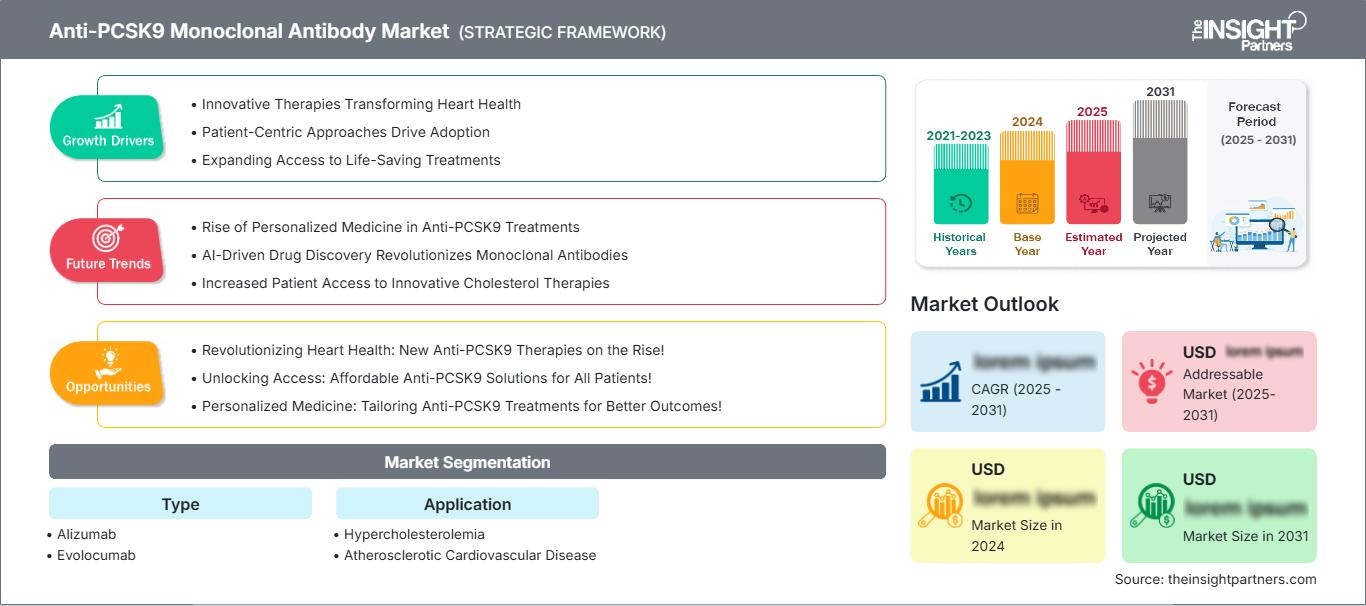
Anti-PCSK9 Monoclonal Antibody Market: Strategic Insights
Regional Insights
North America Anti-PCSK9 Monoclonal Antibody Market
North America is estimated to hold 43–47% of global value in 2025 and grow at a 10–12% CAGR through 2034. United States leads the regional demand due to the expertise in using PCSK9 inhibitors by the cardiologists, and the payer environment appreciates high-risk populations that need further lowering of their LDL-C levels. The Canadian contribution is through the cardiovascular management driven by the specialists and reimbursement structures for the public.
The regional ecosystem is enabled by the advanced manufacturing of biologics, specialty pharmacy capability, and extensive outcome data. There is also an influence on the adoption of the therapy from the perspective of the primary prevention evidence and access tools. Commercial strength of Amgen, Sanofi, and Regeneron is enabling the product availability, while research vendors augment the antibody ecosystem.
U.S. Anti-PCSK9 Monoclonal Antibody Market
The US represents approximately 88–92% of North America's 2025 anti-PCSK9 monoclonal antibody market value and is expected to expand at a 10–12% CAGR during 2026–2034. Product availability, networks of specialists, coverage, and changing FDA labeling facilitate adoption. Amgen’s Repatha and Sanofi-Regeneron’s Praluent represent the main competitive landscape for therapy.
Use case demand is mainly focused on hypercholesterolemia, familial hypercholesterolemia, and prevention of cardiovascular risk. The regulatory aspect is particularly relevant since modification of indications could change the patient population without having to have a different mechanism. Performance of a product is additionally influenced by prior authorization, patient cost-sharing, specialty pharmacy fulfillment, and physicians’ trust in long-term treatment compliance. This makes the US the most strategically significant market in North America.
Europe Anti-PCSK9 Monoclonal Antibody Market
Europe is estimated to represent 26–30% of global anti-PCSK9 monoclonal antibody market value in 2025 and expand at a 9–11% CAGR through 2034, with Germany serving as the leading country. National reimbursement policies, lipid-management guidelines, and health-technology assessment processes strongly influence access. Germany, the UK, France, Italy, and Spain collectively form the principal European demand centers.
While the UK has cardiovascular prevention pathways and evidence assessment that is centrally coordinated, Germany has both specialist infrastructure and considerable capability for buying pharmaceuticals. France, Italy, and Spain have cardiology infrastructure in place, although there is more variability regarding their funding and geographic distribution. In Europe overall, pricing and budget impact analysis are still key commercial issues affecting how quickly innovations make it to the prescription stage.
APAC Anti-PCSK9 Monoclonal Antibody Market
APAC is estimated at a 20–24% anti-PCSK9 monoclonal antibody market share in 2025 and is projected to grow at a 12–14% CAGR through 2034. The major market is China, with Japan and South Korea in second and third places respectively. Additional markets include India and Australia. The growth drivers include increasing prevalence of cardiovascular disease, increased specialist capabilities, and increased biologics access.
The pharmaceutical industry in China, along with the advanced cardiovascular system in Japan, provides demand for the region. South Korea integrates advanced hospitals and biologics, whereas India has potential for long-term volumes due to increasing specialty care. Australia has well-developed reimbursement structure. Policy changes related to cardiovascular screening and treatments will help identify more patients; however, affordability and reimbursement still are critical factors.
Middle East & Africa Anti-PCSK9 Monoclonal Antibody Market
Middle East and Africa is expected to grow at a 7–9% CAGR during 2026–2034, with Saudi Arabia representing the leading country. The UAE provides a sophisticated private healthcare environment, while South Africa remains an important regional pharmaceutical and specialist-care hub. Rest-of-MEA markets remain more dependent on tertiary centers and imported biologics.
Healthcare infrastructure investment, rising noncommunicable-disease management priorities, and expanding specialist networks provide a foundation for adoption. Energy-sector revenues in Gulf economies can support hospital modernization and high-cost medicine procurement, while access remains more constrained across lower-income African markets. Distribution reliability, cold-chain infrastructure, procurement models, and specialist awareness will determine the pace of regional expansion.
Segmentation Analysis
Type
The Type segment is expected to grow at a 9–11% CAGR during 2026–2034. Monoclonal antibodies dominate therapeutic applications because PCSK9 inhibition requires highly specific target binding and clinically validated pharmacological activity. Polyclonal products primarily support research and assay development, creating a smaller commercial base. Differentiation within this segment increasingly depends on purity, specificity, formulation, reproducibility, and application suitability.
- Monoclonal: Monoclonal products maintain the principal commercial position because defined target specificity supports therapeutic development, standardized manufacturing, regulatory characterization, and consistent pharmacological performance across cardiovascular treatment settings.
- Polyclonal: Polyclonal products serve research workflows requiring broader epitope recognition, including assay development and exploratory studies, making them strategically relevant to laboratories investigating PCSK9 biology and lipid metabolism.
Application
The Application segment is projected to expand at a 10–12% CAGR during 2026–2034. Hypercholesterolemia remains central because LDL-C reduction is the immediate therapeutic objective, while atherosclerotic cardiovascular disease increasingly influences adoption through outcomes-based treatment decisions. Application growth is therefore connected to risk stratification, treatment intensification, specialist referral, and the availability of evidence supporting broader patient eligibility.
- Hypercholesterolemia: Demand is anchored by patients inadequately controlled with conventional lipid-lowering therapy, including individuals with familial hypercholesterolemia and persistent LDL-C elevation requiring additional pharmacological intervention.
- Atherosclerotic Cardiovascular Disease: This application is strategically important because PCSK9 inhibition can complement established secondary-prevention pathways, particularly when residual LDL-C exposure remains clinically significant after standard therapy.
Opportunity Snapshot
| Application | Revenue Contribution (High/Medium/Low) | Trend Tag | Adoption Stage |
| Hypercholesterolemia | High | LDL Intensification | Mature |
| Atherosclerotic Cardiovascular Disease | High | Event Prevention | Scaling |
Anti-PCSK9 Monoclonal Antibody Market Growth Drivers and Impact Analysis
Broader treatment eligibility and earlier cardiovascular intervention
Extension of patient populations deemed high-risk makes the commercial opportunity associated with PCSK9 inhibitors grow beyond the secondary-prevention patient groups. Prescribing decisions based on regulatory approval and clinical data that would warrant treatment for those who face an elevated cardiovascular risk can move the start of treatment along the disease journey. Thereby, a new wave of patients will arise who were previously on statins or ezetimibe but faced persistent LDL-C levels. The commercial implication goes further than the number of prescriptions since the earlier treatment start increases the period of therapy required and emphasizes the importance of adherence programs. Payers at the same time evaluate whether a more liberal eligibility criterion brings enough reduction in cardiovascular incidents to compensate for the cost of biologicals.
Growing burden of cardiovascular risk and persistent LDL-C exposure
The problem of cardiovascular disease persists, while high LDL-C stands out as a modifiable risk factor, which requires proper management. The ongoing presence of obesity, diabetes, hypertension, familial hypercholesterolemia, and preexisting atherosclerotic disease makes for a wide pool of people in which intensification of therapy might be justified. In terms of sales, the situation arises when physicians start recognizing the cases of people who are unable to achieve their target level of LDL-C with the help of statin and/or combined therapy. This applies especially to healthcare systems that already have lipid clinics and referral programs for specialists. Meanwhile, the increased understanding of lifelong exposure to high LDL-C levels helps recognize risks at an early stage.
Expansion of biologic manufacturing and delivery capabilities
Commercial availability depends on reliable production of complex biologics, sterile filling capacity, cold-chain distribution, and convenient administration systems. Manufacturing investments can reduce supply constraints while supporting geographic expansion and consistent product availability. Improvements in prefilled-device technology also reduce administration complexity, particularly for patients receiving long-term injectable therapy outside hospitals. These changes influence the total treatment experience rather than only the drug itself. Manufacturers with integrated biologics production, quality-control systems, device partnerships, and established distribution networks can respond more efficiently to demand changes. For emerging markets, local pharmaceutical partnerships and regional distribution agreements may become increasingly important as governments seek to improve access while controlling procurement costs. Supply resilience therefore represents both an operational requirement and a strategic competitive differentiator.
Anti-PCSK9 Monoclonal Antibody Market Future Trends
Outcome-based prescribing will increasingly shape product differentiation
The anti-PCSK9 monoclonal antibody market trends indicate that future competition is likely to move beyond LDL-C reduction toward demonstrated cardiovascular outcomes, treatment persistence, and real-world effectiveness. Payers and physicians will increasingly compare products according to the strength of evidence across primary and secondary prevention populations, rather than relying solely on biomarker reduction. This could favor therapies supported by long-duration outcomes studies and diverse patient datasets. Real-world evidence may also become more important in demonstrating adherence, persistence, healthcare-resource utilization, and event avoidance outside controlled trials. As evidence accumulates, manufacturers may segment commercial strategies around specific risk profiles and care pathways. The result could be a more outcomes-oriented purchasing environment in which clinical differentiation, evidence quality, and patient access programs collectively determine product positioning.
Integrated lipid-management pathways will support broader specialty adoption
The next phase of market development is expected to involve greater integration of lipid testing, cardiovascular risk assessment, specialist referral, and injectable treatment initiation. Digital health tools and electronic health records can identify patients whose LDL-C remains above treatment thresholds and prompt clinician review. Hospitals may increasingly use multidisciplinary pathways linking cardiology, endocrinology, primary care, and pharmacy services. Such integration can reduce missed treatment opportunities while improving monitoring after initiation. In parallel, patient-support services may emphasize injection education, adherence reminders, affordability navigation, and follow-up lipid testing. These capabilities could be especially important as treatment expands into larger patient populations where specialist capacity alone may not be sufficient to manage every eligible patient.
Anti-PCSK9 Monoclonal Antibody Market Opportunities
Expansion into underdiagnosed familial hypercholesterolemia populations
Familial hypercholesterolemia represents an attractive opportunity because delayed diagnosis can result in prolonged LDL-C exposure and premature cardiovascular disease. Investment in screening, cascade testing, lipid clinics, and specialist referral can enlarge the diagnosed treatment population. Commercial strategies can focus on partnerships with diagnostic laboratories and cardiovascular centers that improve identification of genetically or clinically suspected patients. Educational programs for primary-care physicians can further reduce referral delays. In emerging economies, simplified screening protocols and centralized specialist hubs may provide practical routes to diagnosis. Companies that connect diagnostic identification with treatment initiation, reimbursement support, and long-term follow-up can build a more integrated patient pathway. This opportunity is particularly relevant where high-risk patients remain underdiagnosed despite increasing cardiovascular-care capacity.
Localized access strategies across emerging cardiovascular markets
Emerging markets offer an opportunity to combine biologic commercialization with localized pricing, procurement, distribution, and patient-support models. India, China, Southeast Asia, Latin America, and selected Middle Eastern economies are developing specialist cardiovascular infrastructure while managing substantial cost constraints. Companies can pursue differentiated access strategies involving local distributors, hospital partnerships, regional pharmacovigilance capabilities, and tender participation. Manufacturing or packaging partnerships may also improve supply economics where regulatory requirements permit. The anti-PCSK9 monoclonal antibody market Forecasts indicate that geographic expansion will depend less on product availability alone and more on the ability to align pricing with reimbursement systems and clinical evidence. Targeted investment in high-volume cardiovascular centers can provide a controlled route toward broader adoption.
Recent Developments
- June 2026: New VESALIUS-CV subgroup data presented at the American Diabetes Association Scientific Sessions showed that Repatha reduced the risk of the composite major cardiovascular endpoint by 29% among 6,002 high-risk patients with diabetes, strengthening evidence for earlier LDL-C management.
- January 2026: Sanofi reported 2025 Praluent net sales of €526 million, representing 9.3% growth at constant exchange rates. European sales increased 25.0% at constant exchange rates, highlighting continued commercial traction for alirocumab in established cardiovascular markets.
- May 2025: A US federal jury found Amgen liable in an antitrust case involving alleged bundled rebates affecting competition between Repatha and Praluent. Regeneron was awarded US$135.6 million in compensatory damages and US$271.2 million in punitive damages.
Frequently Asked Questions

- Comprehensive Market Sizing and Forecast Analysis
- Detailed Segmentation Analysis
- In-Depth Market Dynamics Assessment
- Regional and Country-Level Insights
- Competitive Landscape and Company Benchmarking
- Strategic Business Intelligence
Recent Reports
Testimonials

The Insight Partners provided valuable market intelligence that supported our global go-to-market strategy. Their team was professional, responsive, and attentive to our feedback, providing thoughtful analysis and helpful methodological clarifications throughout the project.
Junmo Kim Chief Financial Officer (CFO), Enertech Co., Ltd.
The Insight Partners' SCADA System Market report is comprehensive, with valuable insights on current trends and future forecasts. The team was highly professional, responsive, and supportive throughout. We are very satisfied and highly recommend their services.
RAN KEDEM Partner, Reali Technologies LTDs
I requested a report on a very specific software market and the team produced the report in a few days. The information was very relevant and well presented. I then requested some changes and additions to the report. The team was again very responsive and I got the final report in less than a week.
JEAN-HERVE JENN Chairman, Future Analytica
We worked with The Insight Partners for an important market study and forecast. They gave us clear insights into opportunities and risks, which helped shape our plans. Their research was easy to use and based on solid data. It helped us make smart, confident decisions. We highly recommend them.
PIYUSH NAGPAL Sr. Vice President, High Beam Global
The Insight Partners delivered insightful, well-structured market research with strong domain expertise. Their team was professional and responsive throughout. The user-friendly website made accessing industry reports seamless. We highly recommend them for reliable, high-quality research services
YUKIHIKO ADACHI CEO, Deep Blue, LLC.
This is the first time I have purchased a market report from The Insight Partners.While I was unsure at first, I visited their web site and felt more comfortable to take the risk and purchase a market report.I am completely satisfied with the quality of the report and customer service. I had several questions and comments with the initial report, but after a couple of dialogs over email with their analyst I believe I have a report that I can use as input to our strategic planning process.Thank you so much for taking the extra time and making this a positive experience.I will definitely recommend your service to others and you will be my first call when we need further market data.
JOHN SUZUKI President and Chief Executive Officer, Board Director, BK Technologies
I wish to appreciate your support and the professionalism you displayed in the course of attending to my request for information regarding to infectious disease IVD market in Nigeria. I appreciate your patience, your guidance, and the fact that you were willing to offer a discount, which eventually made it possible for us to close a deal. I look forward to engaging The Insight Partners in the future, all thanks to the impression you have created in me as a result of this first encounter.
DR CHIJIOKE ONYIA MANAGING DIRECTOR, PineCrest Healthcare Ltd.Reason to Buy
- Informed Decision-Making
- Understanding Market Dynamics
- Competitive Analysis
- Identifying Emerging Markets
- Customer Insights
- Market Forecasts
- Risk Mitigation
- Boosting Operational Efficiency
- Strategic Planning
- Investment Justification
- Tracking Industry Innovations
- Aligning with Regulatory Trends





 Get Free Sample for