
Antifungal Treatment Market Growth, Trends & Forecast by 2034
Coverage: By Drug Class (Azoles, Pyrimidines, Echinocandins, Polyenes, Allylamines, Others); Therapeutic Indication (Systemic, Candidiasis, Coccidioidomycosis, Cryptococcosis, Prophylactic); Pathogen (Candida, Aspergillus, Cryptococcus, Coccidioides Immitis, Zygomycetes, Trichophyton, Others); End Users (Hospitals and Clinics, Dermatology Clinics, Others) , and Geography (North America, Europe, Asia Pacific, and South and Central America)
- Status : Data Released
- Report Code : TIPRE00018089
- Category : Life Sciences
- No. of Pages : 150
- Available Report Formats :


- Last update date : August 24, 2026


2025 Market Size
US$ 16.97 Bn
Base year value
2034 Forecast
US$ 29.02 Bn
Projected by 2034
CAGR 2026-2034
6.14 %
Growth rate
Addressable Market
US$ 208.18 Bn
(2026-2034)
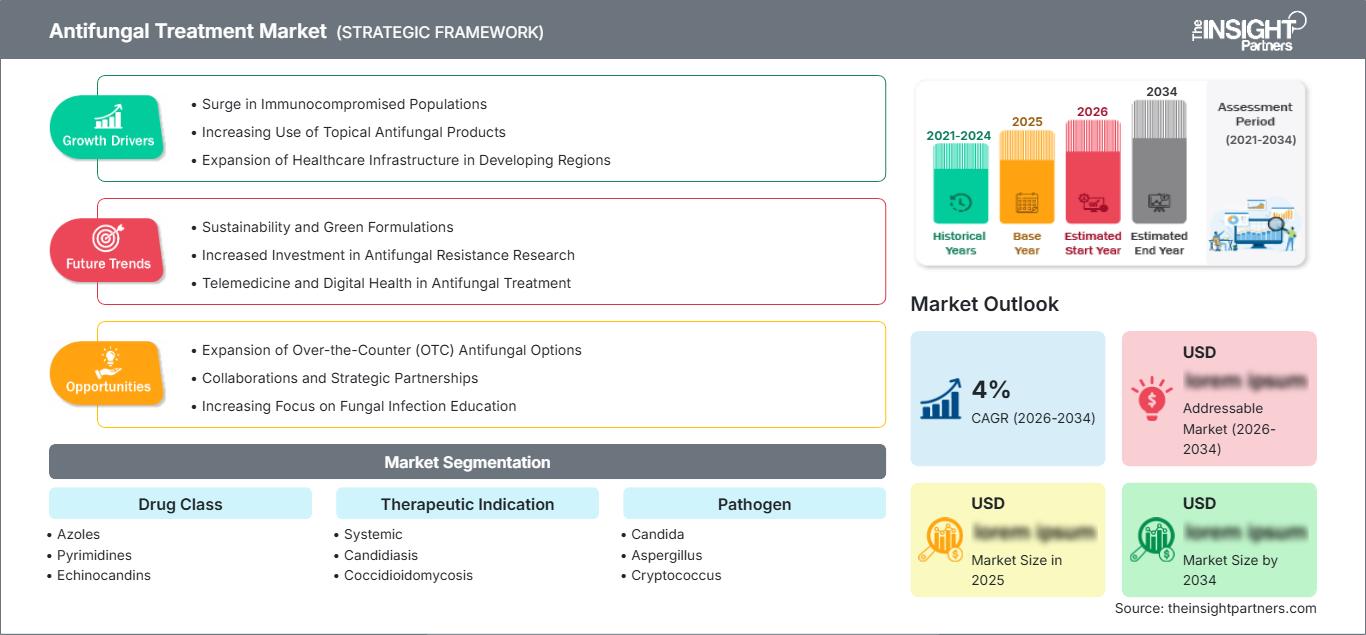
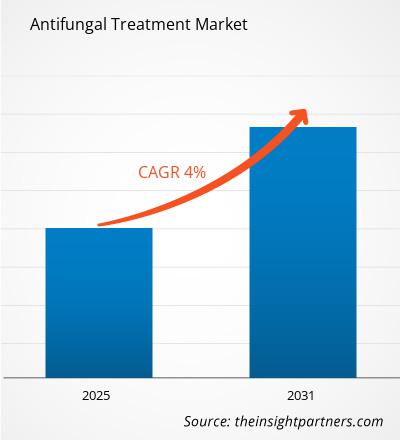
The antifungal treatment market size is estimated to be worth US$ 16.97 billion in 2025 and is anticipated to grow to US$ 29.02 billion by 2034, growing at a CAGR of 6.14% between 2026 and 2034. This market includes both systemic and localized treatment of opportunistic, invasive, and superficial fungal infections using azoles, echinocandins, polyenes, and other different classes of drugs for various clinical needs.
North America is predicted to continue its contribution in generating revenues, considering its advanced infectious disease diagnosis, high prescription use of antifungal treatments, and large patient pool of immunocompromised patients. Some other factors that affect the size of the antifungal treatment market in the region include antimicrobial stewardship in hospitals, oncology, transplantations, and continued innovation in resistant Candida and invasive molds.
Antifungal Treatment Market Assessment and Insights
- North America is expected to command a 40–44% antifungal treatment market share in 2025 and expand at a 5.8–6.4% CAGR between 2026–2034, supported by sophisticated infectious-disease infrastructure and high-value hospital antifungal utilization.
- US accounts for approximately 82–86% of North American revenue in 2025 and is projected to grow at a 5.7–6.3% CAGR during 2026–2034, led by hospital-based treatment and specialty care.
- Europe is estimated at a 27–31% share in 2025 and is expected to grow at a 5.8–6.4% CAGR between 2026–2034, with Germany, the UK, France, Italy, and Spain representing important markets.
- Asia Pacific represents approximately 20–24% of 2025 revenue and is projected to grow at a 6.8–7.5% CAGR during 2026–2034, led by China, Japan, South Korea, India, and Australia.
- Largest Segment is Azoles, estimated at a 44–48% market share in 2025 and projected to grow at a 5.6–6.2% CAGR through 2034 because of broad-spectrum use and established prescribing pathways.
- High Growth Segment is Echinocandins, representing an estimated 8–12% share in 2025 and expanding at a 7.0–8.0% CAGR during 2026–2034, supported by invasive candidiasis management and resistance concerns.
- Key companies analyzed in detail: Sanofi S.A., Gilead Sciences, Inc., Pfizer Inc., Merck & Co., Inc., Abbott Laboratories, Bayer AG, SCYNEXIS, Inc., Enzon Pharmaceuticals, Inc., Novartis International AG, GlaxoSmithKline plc.
Source: The Insight Partners' analysis based on proprietary research, government publications, company annual reports, investor presentations, industry databases, and expert interviews.
The antifungal treatment market is moving away from the use of broad spectrum azoles to a more differentiated approach in relation to the pathogen, the severity of infection, drug resistance, immune status of the patient and route of administration. In the hospitals, there is more focus on reliable exposure, tolerability, and treatment of hard to treat fungi. The manufacturing environment also involves highly specialized sterile manufacture of the intravenous formulation as well as established networks for both generic and branded oral antifungal agents. WHO has identified 19 fungi as priority pathogens.
Future growth will most probably be driven by resistant fungal infections, increased differentiation of diagnosis and demand for step down or prophylactic treatments. There will also be more developed health care systems in Asian Pacific region and certain Middle Eastern markets with regards to hospital antifungals. Regulatory authorities have offered continued incentives for treating serious infections and the investments will be made into differentiated modes of action, pharmacokinetics and patients who have few alternative treatment options.
Antifungal Treatment Market Report Scope
| Report Attribute | Details |
|---|---|
| Market size in 2025 | US$ 16.97 Billion |
| Market Size by 2034 | US$ 29.02 Billion |
| Global CAGR (2026 - 2034) | 6.14% |
| Historical Data | 2021-2024 |
| Forecast period | 2026-2034 |
Antifungal Treatment Market Analysis
The demand is driven by invasive candidiasis, aspergillosis, dermatological infections, and other fungal diseases in the context of patients undergoing chemotherapy, transplantation, critical care, and long-term immunosuppressive therapy. Market growth in the antifungal drug development is facilitated by the ecosystem comprising API producers, formulators, hospitals, labs, specialty pharmacies, and distributors. Increasingly, clinical need for antifungals is being associated with pathogen detection since treatment choice is contingent on susceptibility, site of infection, organ function, and resistance potential.
Class-specific supply dynamics are quite diverse. Generic azoles enjoy relative abundance in production capacity compared to sterile injectables and new drugs. Therefore, echinocandins and novel triazoles occupy a separate niche in commercial terms from highly prevalent topical or oral generics. WHO has been advocating for increasing laboratory capacity, monitoring, sustainable research funding, and equal access to diagnostic tools and medicines, so supply security is an important part of healthcare readiness.
Competitive Environment: Diverse pharmaceutical organizations compete alongside antifungal specialists. Pfizer Inc. continues to maintain its positioning through voriconazole, while Gilead Sciences, Inc. competes using antifungals and hospital networks. Merck & Co., Inc., Astellas Pharma products, and GlaxoSmithKline plc provide both branded and developmental expertise, while SCYNEXIS, Inc. distinguishes itself through fungerp. Hence, market analysis of antifungal therapy shows that there is competition based on products that have been developed, hospital access, convenience of formulations, and innovative technology.
Strategic positioning is increasingly becoming dependent on resistance coverage, product differentiation, and lifecycle management. SCYNEXIS has developed SCY-247 as a next generation fungerp drug, while established organizations continue to improve access and indications for their drugs. Additionally, Pfizer continues to research invasive mold disease in China in 2025.
● REPORT CUSTOMIZATION
Tailor This Report To Align With Your Specific Business Requirements
This report can be customized to align precisely with your business objectives, scope, and target markets. Customization options include tailored segmentation, geography, competitive analysis, and strategic insights to support informed decision-making.
Customize This Report →WHAT YOU CAN ADJUST
- ● Segmentations
- ● Geography
- ● Competitive Analysis
- ● Language Preferences
Antifungal Treatment Market: Strategic Insights
Regional Insights
North America antifungal treatment market
North America is estimated to hold a 40–44% share in 2025 and is projected to expand at a 5.8–6.4% CAGR through 2034. The region benefits from advanced hospitals, transplant centers, oncology infrastructure, infectious-disease specialists, and established diagnostic laboratories. High clinical awareness of invasive fungal disease also supports earlier treatment initiation and susceptibility-guided therapy.
The US constitutes the leading regional market, and Canada adds to this through hospital purchasing and infection disease services. Demand is especially focused on invasive candidiasis, aspergillosis, prophylaxis for high-risk individuals, and dermatologic infections. There are growing efforts by antimicrobial stewardship programs to promote selective prescription, which could improve product selection towards those that have efficacy against resistant bacteria and not just increase prescriptions.
U.S. antifungal treatment Market
The United States is predicted to contribute 82-86% towards the revenue generation in North America by 2025 and will grow with a 5.7-6.3% CAGR until 2034. It represents the current state owing to its vast hospital infrastructure, intensive activity in oncology and transplantation, advanced system of reimbursement, and availability of both branded and generic anti-fungals. The following companies have business involvement in the area: Pfizer Inc., Gilead Sciences, Inc., Merck & Co., Inc., and SCYNEXIS, Inc.
Uses include invasive candidiasis, invasive aspergillosis, prophylaxis, dermatological conditions, and resistant forms of infections. Hospital setting continues to be the main market for systemic products while dermatological outpatients and primary care clinics drive demand for topical and oral drugs. Raising awareness about diagnosis will positively impact pathogen-based therapy while payers' demands will give an edge to differentiated products if efficacy, resistance profile, safety, or administration provides it.
Europe antifungal treatment Market
Europe holds an approximate 27–31% market share in 2025 and expected to grow at a 5.8–6.4% CAGR. Germany leads the country category, owing to its vast hospital infrastructure and specialty infectious disease care services. The UK, France, Italy, and Spain continue their importance, where the driver is the aging population, cancers, transplantation, and the issue of antimicrobial resistance in public health.
The UK leads in antimicrobial stewardship programs and control of prescriptions from hospitals, whereas Germany has the best infrastructure of tertiary care as well as drug availability. The French market is driven by oncology and hospital infection management. Italy and Spain continue using the drug in hospital and dermatological applications, including candidiasis and superficial fungal infections.
APAC antifungal treatment Market
APAC represents approximately 20–24% of 2025 revenue and is expected to grow at a 6.8–7.5% CAGR through 2034, with China serving as the leading market. Japan, South Korea, India, and Australia provide additional demand through hospital, oncology, transplant, and dermatology applications.
China combines a large patient base with expanding pharmaceutical manufacturing and hospital capacity. Japan emphasizes advanced clinical management, while India benefits from strong generic manufacturing and broad availability. South Korea and Australia contribute through developed hospital systems and infectious-disease capabilities. Industrial production, improving diagnostics, healthcare investment, and policy attention to antimicrobial resistance support regional expansion.
Middle East & Africa antifungal treatment Market
Middle East and Africa are expected to expand at a 6.0–6.8% CAGR through 2034, with Saudi Arabia representing a leading market. The UAE provides an important specialty-care hub, while South Africa has significant infectious-disease and hospital demand. Rest-of-MEA remains more fragmented because access and diagnostic infrastructure vary considerably.
Healthcare infrastructure investment in Gulf economies is supporting specialty hospitals and pharmaceutical procurement, while energy-sector revenues enable broader healthcare modernization. In Africa, access remains influenced by medicine affordability, laboratory capacity, and supply reliability. Expansion therefore depends less on high-volume premium products and more on dependable availability, appropriate diagnostics, and partnerships that improve distribution into underserved healthcare systems.
Segmentation Analysis
Drug Class
Drug Class remains a central determinant of prescribing, with the overall segment projected to grow at a 6.0–6.5% CAGR from 2026–2034. Azoles retain broad utilization across superficial and systemic infections, while echinocandins occupy an important hospital position for invasive Candida infections. Polyenes remain clinically relevant for severe disease, and newer mechanisms can gain adoption when resistance, toxicity, or treatment failure limits established options. The antifungal treatment market scope is consequently shaped by clinical spectrum, route of administration, resistance profile, and treatment setting.
- Azoles remain the dominant class because oral and intravenous options cover multiple fungal infections and include widely established therapies used across hospital and outpatient settings.
- Pyrimidines maintain a specialized role, particularly in combination strategies for serious infections where synergistic activity and pathogen-specific treatment considerations influence clinical selection.
- Echinocandins are important hospital therapies for invasive candidiasis, with strong positioning where resistance or intolerance limits conventional azole-based treatment.
- Polyenes retain strategic importance for severe systemic infections because amphotericin-based therapies provide broad activity despite toxicity and administration considerations.
- Allylamines are primarily associated with dermatological and superficial fungal infections, benefiting from established treatment pathways and substantial outpatient utilization.
Therapeutic Indication
Therapeutic Indication is projected to expand at a 6.1–6.6% CAGR during 2026–2034 as systemic disease management, candidiasis treatment, endemic mycoses, cryptococcosis, and prophylaxis generate differentiated therapeutic requirements. The segment is influenced by patient immune status, infection severity, pathogen identification, treatment duration, and the need for empiric therapy. Hospital-based systemic infections generally require higher clinical intensity than superficial disease, creating meaningful differences in product selection and value realization.
- Systemic infections require rapid, effective therapy and frequently involve hospitalized or immunocompromised patients, making intravenous formulations, susceptibility testing, and step-down treatment strategically important.
- Candidiasis represents a major treatment area spanning superficial disease to invasive infections, requiring differentiated regimens based on infection site, species, resistance profile, and patient risk.
- Coccidioidomycosis generates regionally concentrated demand, particularly where endemic exposure increases diagnosis and clinicians require prolonged systemic therapy for clinically significant disease.
- Cryptococcosis is closely associated with immunocompromised populations and requires sustained antifungal management, supporting demand for combination and maintenance treatment approaches.
- Prophylactic therapy supports high-risk populations such as transplant and oncology patients, with product selection influenced by exposure risk, drug interactions, tolerability, and resistance considerations.
Pathogen
Pathogen is expected to advance at a 6.2–6.7% CAGR during 2026–2034 as clinical practice increasingly prioritizes organism-specific treatment and resistance surveillance. Candida and Aspergillus remain major commercial drivers, while Cryptococcus, Coccidioides Immitis, Zygomycetes, and Trichophyton create differentiated therapeutic requirements. WHO classifies Candida auris, Candida albicans, Aspergillus fumigatus, and Cryptococcus neoformans among critical-priority fungal pathogens, reinforcing the importance of targeted R&D.
- Candida generates broad demand from mucosal, bloodstream, and invasive infections, with rising attention to resistant species and hospital transmission influencing therapy selection.
- Aspergillus is particularly important in immunocompromised populations, where invasive disease can require prolonged systemic treatment and specialized hospital management.
- Cryptococcus is associated with serious disease among immunocompromised patients, creating demand for therapies capable of supporting induction, consolidation, and maintenance treatment.
- Coccidioides Immitis contributes to geographically concentrated endemic disease demand, particularly across areas where environmental exposure increases clinical incidence.
- Zygomycetes represent severe mold infections requiring aggressive management, often involving immunocompromised patients and specialized hospital treatment pathways.
- Trichophyton is primarily associated with dermatological infections, supporting recurring outpatient demand for oral and topical antifungal therapies.
End Users
End Users are projected to grow at a 5.8–6.4% CAGR through 2034. Hospitals and clinics remain central because severe fungal infections require specialist diagnosis, intravenous treatment, monitoring, and multidisciplinary care. Dermatology clinics support a different demand profile characterized by high outpatient volumes, recurring superficial infections, and preference for convenient topical or oral regimens. Purchasing behavior consequently varies according to disease severity and treatment setting.
- Hospitals and Clinics represent the principal setting for systemic antifungal utilization, especially among intensive-care, oncology, transplant, and immunocompromised populations requiring monitored treatment.
- Dermatology Clinics generate recurring demand for therapies addressing superficial fungal conditions, with treatment decisions strongly influenced by convenience, tolerability, treatment duration, and recurrence.
Opportunity Snapshot
| Segment Name | Revenue Contribution | Trend Tag | Adoption Stage |
|---|---|---|---|
| Systemic | High | Hospital Therapy | Mature |
| Candidiasis | High | Candida Control | Scaling |
| Coccidioidomycosis | Medium | Endemic Care | Scaling |
| Cryptococcosis | Medium | Immune Care | Mature |
| Prophylactic | Medium | Risk Prevention | Scaling |
Antifungal Treatment Market Growth Drivers and Impact Analysis
Rising Antifungal Resistance and Difficult-to-Treat Infections
Antifungal resistance is increasing the clinical value of therapies with differentiated mechanisms and reliable activity against resistant organisms. According to WHO, antifungal resistance is one of the key parameters to be considered while identifying priority fungal pathogens, with a weighting factor of 38.5%. This factor influences the hospital formulary directly since drug resistance may lead to a longer duration of hospital stay, need for more tests, and different treatments. Candida auris and resistant Aspergillus play an important role in this respect, since they pose a challenge to the traditional drug prescription strategy. Commercial implications of this problem cannot be considered just in terms of increased treatment load. In contrast, resistant pathogens may drive profits towards new drugs, drug combinations, drug selection based on susceptibility testing, or broader spectrum of action.
Expansion of Immunocompromised Patient Populations
Advancements in treatment of cancer, transplantation, intensification of immunosuppression, and hospitalization increase the number of people susceptible to invasive fungal disease. Individuals receiving chemotherapy or hematopoietic stem-cell transplantation need prophylaxis or treatment for an antifungal infection, whereas intensive-care patients suffer from invasive candidiasis along with other opportunistic infections. The effect will change the revenue structure of the market since high-risk individuals will need system-based treatment, monitoring, and prolonged treatment period compared to low-risk superficial infections. The effect will be most pronounced at tertiary hospitals with infectious-disease and oncology facilities because decisions related to the use of antifungal drugs will be more and more aligned with laboratory investigations. The market can take advantage of this development by using drugs that have characteristics like step-down therapy, predictable pharmacokinetics, lower toxicity, and are compatible with complex drug regimens.
Improving Fungal Diagnostics and Surveillance Infrastructure
Improved diagnostic capacity can increase both appropriate treatment and the commercial differentiation of antifungal products. WHO has identified inadequate rapid and sensitive fungal diagnostics as a major global challenge, particularly in settings where existing tools remain unavailable or unaffordable. Better culture methods, molecular assays, susceptibility testing, and surveillance systems enable clinicians to distinguish fungal species and identify resistance earlier. The market impact can be significant because empirical treatment may shift toward targeted therapy once pathogen information becomes available. Manufacturers can also benefit indirectly when diagnostic partnerships improve disease recognition and referral. Over time, broader laboratory coverage should support more rational utilization, reduce inappropriate prescribing, and increase demand for products specifically suited to identified pathogens, especially in hospitals managing invasive Candida, Aspergillus, and emerging resistant fungi.
Antifungal Treatment Market Future Trends
Movement Toward Oral-First and Oral Step-Down Therapy
The antifungal treatment market trends are expected to increasingly favor treatment models that combine hospital initiation with convenient oral continuation. This approach can reduce dependence on prolonged intravenous administration, simplify discharge planning, and potentially improve treatment continuity. Newer agents are being evaluated for pharmacokinetic characteristics that permit meaningful systemic exposure through oral dosing while maintaining activity against difficult pathogens. Development programs may therefore prioritize molecules capable of supporting both oral and intravenous strategies. This could change hospital purchasing because formulary decisions may increasingly consider the full treatment pathway rather than the acquisition price of an individual dose. Products offering reliable transitions between settings may gain strategic value across tertiary hospitals, specialty clinics, and outpatient infectious-disease services. Regulatory evidence supporting safety, tolerability, and pathogen coverage will remain decisive.
Greater Integration of Resistance Surveillance With Treatment Selection
Over the forecast period, treatment selection is likely to become more closely connected with local resistance surveillance and laboratory data. Hospitals can increasingly combine microbiology results, susceptibility profiles, patient history, and epidemiological information to select therapies with greater precision. Digital laboratory systems may facilitate earlier identification of resistant Candida or mold infections and support antimicrobial stewardship decisions. This development could favor manufacturers able to demonstrate activity against priority pathogens while supplying dependable formulations for acute treatment. Regional surveillance will also become more valuable because resistance patterns vary by pathogen, healthcare setting, geography, and prescribing practice. As data quality improves, product positioning may shift from broad claims of antifungal activity toward evidence linked to specific organisms, resistance phenotypes, patient populations, and clinical pathways.
Antifungal Treatment Market Opportunities
Expansion of Differentiated Antifungals in Emerging Healthcare Systems
Emerging healthcare systems provide an opportunity to broaden access to systemic antifungal therapies through local manufacturing, licensing, distribution partnerships, and hospital procurement programs. Asia Pacific offers particularly attractive conditions because pharmaceutical production capabilities are expanding alongside tertiary-care infrastructure. Companies can pursue differentiated strategies combining affordable established products with selected premium therapies for severe infections. The opportunity is strongest where diagnostic infrastructure is improving but access to advanced antifungal agents remains inconsistent. Partnerships with regional distributors and hospital networks can reduce supply gaps while allowing manufacturers to tailor packaging, pricing, and formulation portfolios to local requirements. Investment should prioritize countries where oncology, transplantation, and critical-care capacity is expanding because these settings generate greater need for systemic antifungal management and specialist infectious-disease services.
Development of Therapies Targeting Resistant Priority Pathogens
The antifungal treatment market Forecasts indicate an attractive strategic opportunity in therapies designed specifically for pathogens where existing options are constrained by resistance, toxicity, or limited clinical utility. WHO's priority list creates a practical framework for identifying areas with substantial unmet need, including Candida auris, Aspergillus fumigatus, Cryptococcus neoformans, and Candida albicans. Developers can target novel mechanisms, improved tissue penetration, oral and intravenous formulations, or combinations that address resistant disease. Investment decisions should emphasize clinical differentiation rather than simply adding another broad-spectrum product. Companion diagnostics, susceptibility testing, and evidence generation can further strengthen commercialization. Companies with specialist infectious-disease capabilities may also pursue licensing or co-development to reduce development risk while accelerating access to promising antifungal candidates.
Recent Developments
- March 2026: SCYNEXIS, Inc. announced first-patient dosing with the intravenous formulation of SCY-247 in a Phase 1 study, with topline data expected in the second half of 2026. The company also outlined plans for a Phase 2 invasive candidiasis study and an expanded-access program, supporting continued development of its second-generation fungerp platform for difficult-to-treat fungal infections.
- March 2025: Pfizer Inc. issued a research grant request focused on invasive mold disease in China. The program highlighted challenges associated with invasive Aspergillus and mucormycosis, including high mortality, diagnostic limitations, adverse events, and treatment burden. The initiative demonstrates continued industry attention to improving diagnosis and management of serious invasive mold infections in high-risk populations.
- May 2025: SCYNEXIS, Inc. resumed patient dosing in the Phase 3 MARIO study after the FDA lifted a clinical hold. The trial evaluated oral ibrexafungerp as potential step-down therapy following intravenous echinocandin treatment for invasive candidiasis. The development highlighted industry efforts to provide oral alternatives for severe fungal disease and expand treatment options where existing therapies have limitations.
Frequently Asked Questions

- Comprehensive Market Sizing and Forecast Analysis
- Detailed Segmentation Analysis
- In-Depth Market Dynamics Assessment
- Regional and Country-Level Insights
- Competitive Landscape and Company Benchmarking
- Strategic Business Intelligence
Recent Reports
Testimonials

The Insight Partners' SCADA System Market report is comprehensive, with valuable insights on current trends and future forecasts. The team was highly professional, responsive, and supportive throughout. We are very satisfied and highly recommend their services.
RAN KEDEM Partner, Reali Technologies LTDs
I requested a report on a very specific software market and the team produced the report in a few days. The information was very relevant and well presented. I then requested some changes and additions to the report. The team was again very responsive and I got the final report in less than a week.
JEAN-HERVE JENN Chairman, Future Analytica
We worked with The Insight Partners for an important market study and forecast. They gave us clear insights into opportunities and risks, which helped shape our plans. Their research was easy to use and based on solid data. It helped us make smart, confident decisions. We highly recommend them.
PIYUSH NAGPAL Sr. Vice President, High Beam Global
The Insight Partners delivered insightful, well-structured market research with strong domain expertise. Their team was professional and responsive throughout. The user-friendly website made accessing industry reports seamless. We highly recommend them for reliable, high-quality research services
YUKIHIKO ADACHI CEO, Deep Blue, LLC.
This is the first time I have purchased a market report from The Insight Partners.While I was unsure at first, I visited their web site and felt more comfortable to take the risk and purchase a market report.I am completely satisfied with the quality of the report and customer service. I had several questions and comments with the initial report, but after a couple of dialogs over email with their analyst I believe I have a report that I can use as input to our strategic planning process.Thank you so much for taking the extra time and making this a positive experience.I will definitely recommend your service to others and you will be my first call when we need further market data.
JOHN SUZUKI President and Chief Executive Officer, Board Director, BK Technologies
I wish to appreciate your support and the professionalism you displayed in the course of attending to my request for information regarding to infectious disease IVD market in Nigeria. I appreciate your patience, your guidance, and the fact that you were willing to offer a discount, which eventually made it possible for us to close a deal. I look forward to engaging The Insight Partners in the future, all thanks to the impression you have created in me as a result of this first encounter.
DR CHIJIOKE ONYIA MANAGING DIRECTOR, PineCrest Healthcare Ltd.Reason to Buy
- Informed Decision-Making
- Understanding Market Dynamics
- Competitive Analysis
- Identifying Emerging Markets
- Customer Insights
- Market Forecasts
- Risk Mitigation
- Boosting Operational Efficiency
- Strategic Planning
- Investment Justification
- Tracking Industry Innovations
- Aligning with Regulatory Trends





 Get Free Sample for