
Aortic Heart Valve Market Size, Trends & Demand by 2034
Coverage: by Product (Valve Type, Suture Type); Procedure (Minimally Invasive Surgery, Open Surgery, Others); End-User (Hospitals, Ambulatory Surgery Centers), and Geography (North America, Europe, Asia Pacific, and South and Central America)
- Status : Data Released
- Report Code : TIPRE00013449
- Category : Life Sciences
- No. of Pages : 150
- Available Report Formats :


- Last update date : August 21, 2026


2025 Market Size
US$ 6.68 Bn
Base year value
2034 Forecast
US$ 13.77 Bn
Projected by 2034
CAGR 2026-2034
8.37 %
Growth rate
Addressable Market
US$ 91.81 Bn
(2026-2034)
The aortic heart valve market was valued at US$ 6.68 Billion in 2025 and is projected to reach US$ 13.77 Billion by 2034, expanding at a CAGR of 8.37% during 2026–2034. The market encompasses replacement valves used across surgical and catheter-based interventions, with product innovation increasingly focused on durability, hemodynamic performance, delivery-system flexibility, and lifetime management of patients with aortic valve disease.
North America remains a structurally important market in the Aortic Heart Valve Market Size analysis, supported by established structural-heart programs, high diagnosis rates, specialist cardiac centers, and broad reimbursement pathways. The region is expected to expand at approximately 7.5–8.5% CAGR during 2026–2034, while earlier intervention, expanding TAVR eligibility, and clinical evidence supporting treatment of broader patient populations underpin sustained procedure growth.
Aortic Heart Valve Market Assessment and Insights
- North America: North America accounted for a 2025 share of 40–44% and is projected to grow at a 7.5–8.5% CAGR between 2026–2034, supported by advanced cardiac infrastructure, reimbursement maturity, and expanding transcatheter procedures.
- US: The US represented 74–78% of North American revenue in 2025 and is expected to grow at a 7.6–8.6% CAGR during 2026–2034, led by TAVR adoption and specialist referral networks.
- Europe: Europe held a 2025 share of 27–31% and is projected to expand at a 7.8–8.8% CAGR during 2026–2034, with Germany, France, the UK, Italy, and Spain representing major procedure and technology-adoption centers.
- Asia Pacific: Asia Pacific represented a 2025 share of 18–22% and is expected to register a 9.5–10.5% CAGR during 2026–2034, with China, Japan, South Korea, India, and Australia driving procedure expansion.
- Largest Segment: Valve Type held a market share of 58–63% in 2025 and is expected to grow at a 7.8–8.8% CAGR during 2026–2034, reflecting differentiated biological and transcatheter valve portfolios.
- High Growth Segment: Minimally Invasive Surgery represented a market share of 48–53% in 2025 and is forecast to grow at a 9.5–10.5% CAGR during 2026–2034, supported by shorter recovery requirements and procedural adoption.
- Key companies analyzed in detail: Edwards Lifesciences Corporation, Artivion, Inc., Medtronic plc, Abbott Laboratories, LivaNova PLC, Venus MedTech (Hangzhou) Inc., LifeNet Health, St. Jude Medical, Inc., Boston Scientific Corporation, and Symetis SA.
Source: The Insight Partners' analysis based on proprietary research, government publications, company annual reports, investor presentations, industry databases, and expert interviews.
The aortic heart valve market has evolved from predominantly open surgical replacement toward a broader structural-heart ecosystem incorporating transcatheter implantation, tissue engineering, advanced imaging, delivery-system refinement, and lifetime valve-management strategies. Dynamic production trends include focus on bioprosthetic tissue treatment, frame design, leaflet durability, catheter flexibility, and manufacturing reliability. The value proposition, therefore, will be more driven by clinical results and procedure efficacy than valve availability.
Future growth will go beyond the mature Western markets as heart centers in Asia-Pacific and certain Middle-Eastern countries improve their structural heart capabilities through regulatory frameworks favoring minimally invasive technology, clinical data generation, physician education, and catheter platforms. There is also a trend towards smaller delivery systems, improved coronary access, better durability, and valve-in-valve technologies.
Aortic Heart Valve Market Report Scope
| Report Attribute | Details |
|---|---|
| Market size in 2025 | US$ 6.68 Billion |
| Market Size by 2034 | US$ 13.77 Billion |
| Global CAGR (2026 - 2034) | 8.37% |
| Historical Data | 2021-2024 |
| Forecast period | 2026-2034 |
Aortic Heart Valve Market Analysis
The aortic heart valve market is shaped by the growing clinical burden of aortic stenosis, aging populations, improved echocardiographic diagnosis, and increasing referral of patients to multidisciplinary heart teams. The demand is split between surgical valves, transcatheter valves, delivery systems, and the technologies used in procedures. The hospital continues to be the primary buyer, although cardiac centers have become more influential in choosing technology based on its results.
In the value chain, the biological tissues, polymers, metals, delivery system parts, coating technologies, and precision machining required to build the implantable system are acquired. Supply robustness requires sterilization validation, tissue processing, quality control systems, specific manufacturing capabilities, and regulation. Economies of scale continue to be important, as clinical validation, production robustness, and post-market surveillance are high barriers to entry.
Aortic heart valve market analysis indicates that competition is increasingly concentrated around clinical evidence, durability, ease of implantation, coronary access, and lifetime treatment planning. Edwards Lifesciences Corporation is well-positioned with its transcatheter technology and surgical technologies, whereas Medtronic plc is competing with its Evolut platform as well as its structural heart technologies infrastructure. Abbott Laboratories and Boston Scientific Corporation, among others, add to increased competition via their cardiovascular offerings.
There is a shift in strategic investments toward indication extension, delivery system advancements, clinical data, and geographical commercialization. Artivion, Inc., LivaNova PLC, Venus MedTech (Hangzhou) Inc., LifeNet Health, St. Jude Medical, Inc., and Symetis SA provide specialized technologies or cardiovascular expertise. Competitive advantage is increasingly based on procedural workflows, durability data, physician familiarity, manufacturing capability, and lifetime management capabilities.
● REPORT CUSTOMIZATION
Tailor This Report To Align With Your Specific Business Requirements
This report can be customized to align precisely with your business objectives, scope, and target markets. Customization options include tailored segmentation, geography, competitive analysis, and strategic insights to support informed decision-making.
Customize This Report →WHAT YOU CAN ADJUST
- ● Segmentations
- ● Geography
- ● Competitive Analysis
- ● Language Preferences
Aortic Heart Valve Market: Strategic Insights
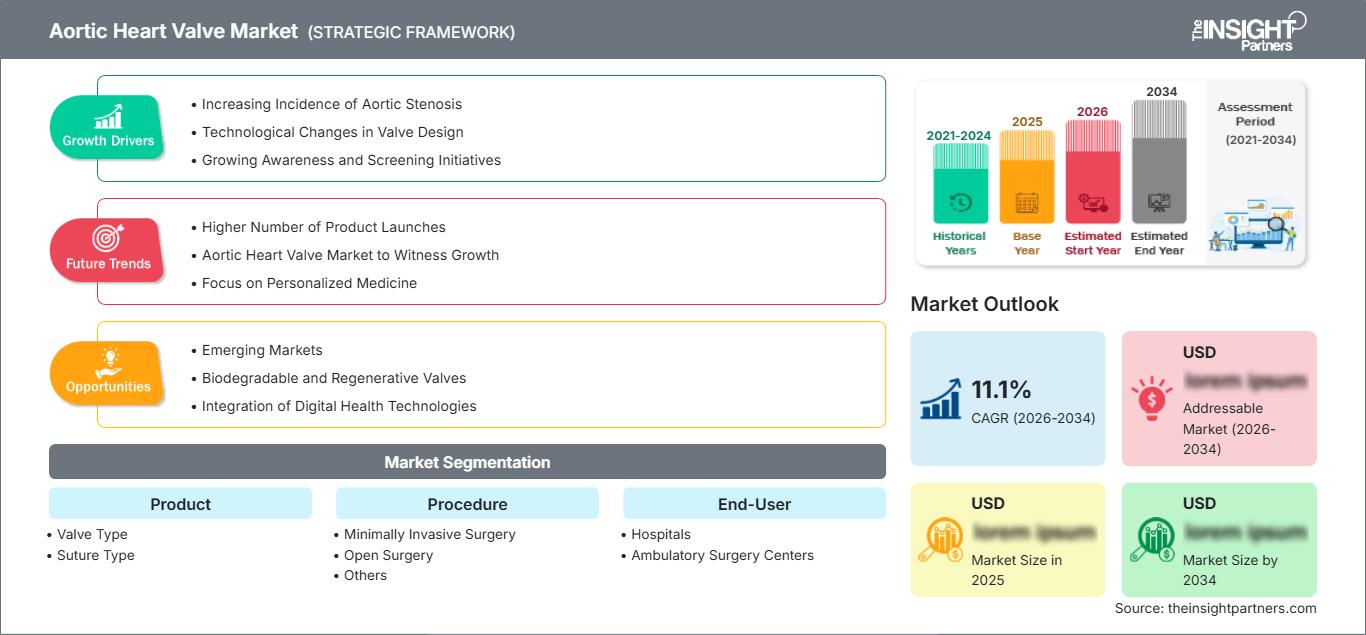
Regional Insights
North America aortic heart valve market
North America held a 40–44% of the aortic heart valve Market share in 2025 and is projected to grow at a 7.5–8.5% CAGR through 2034. This area enjoys the advantage of having concentrated cardiovascular know-how, advanced imaging capabilities, proven heart team approaches, and relatively developed reimbursement processes. The United States is responsible for generating the majority of revenue in this region, while Canada adds revenue through cardiac centers and government-sponsored valve replacement. Early diagnosis and expanding use of catheter-based treatment options keep increasing procedure volumes.
In terms of competition in this region, some of the companies include Edwards Lifesciences Corporation, Medtronic plc, Abbott Laboratories, Boston Scientific Corporation, among others. Procedure volume has become increasingly dependent on coronary access, durability of valves, delivery of procedures, age of patients, anatomy of patients, as well as the potential need for future re-interventions.
U.S. aortic heart valve Market
The US represented 74–78% of North American revenue in 2025 and is projected to grow at a 7.6–8.6% CAGR during 2026–2034, according to the Aortic Heart Valve Market Report. The placement is due to the presence of robust TAVR infrastructure, significant density of specialists, reimbursement paths, and procedure volumes. Edwards Lifesciences Corporation and Medtronic plc have dominant market placements, while Abbott Laboratories and Boston Scientific Corporation take part in a broader structural heart competitive landscape.
Trends in applications are moving towards more minimally invasive treatment, earlier referrals, and lifelong care. Hospitals are measuring valves based on procedural outcomes, LOS, complication rates, coronary access, and longevity. Ambulatory and lower-complexity procedures may potentially become more relevant if patient selection and infrastructure allow so, but complex valve replacements are performed at hospitals and cardiology centers only.
Europe aortic heart valve Market
Europe represented 27–31% of global revenue in 2025 and is expected to grow at a 7.8–8.8% CAGR through 2034. Germany emerges as a major player, driven by advanced cardiac infrastructure, whereas the UK, France, Italy, and Spain contribute to procedure volume. Harmonization of regulations and guidelines continues to impact market uptake, but there are significant differences in reimbursement models.
In the UK, well-developed structural heart programs go along with healthcare procurement and the growing importance of evidence-based interventions. Germany enjoys an advanced cardiac center infrastructure and relatively high procedure accessibility. France boasts a robust tertiary care system, whereas Italy and Spain are working towards expanded procedure accessibility through specialization and healthcare investments at the regional level.
APAC aortic heart valve Market
APAC accounted for an 18–22% share in 2025 and is projected to grow at a 9.5–10.5% CAGR through 2034. China leads regional expansion, followed by Japan, South Korea, India, and Australia. Increasing cardiovascular screening, specialist training, domestic manufacturing, and expanding structural-heart centers support adoption. Japan remains technologically mature, while China and India offer substantial expansion opportunities.
Policy support and hospital modernization are particularly important in emerging markets. Local manufacturing can improve affordability and supply availability, while physician-training programs accelerate the adoption of minimally invasive techniques. Rising awareness of aortic stenosis and broader access to echocardiography should support earlier diagnosis. Competitive activity is expected to increase as domestic and multinational companies seek regulatory approvals and partnerships.
Middle East & Africa aortic heart valve Market
The Middle East and Africa aortic heart valve Market is expected to expand at a 7.0–8.0% CAGR during 2026–2034, with Saudi Arabia leading regional adoption, followed by the UAE and South Africa. Investment in tertiary hospitals, cardiovascular centers, and medical infrastructure supports procedure availability, particularly in major urban areas and government-backed healthcare systems.
Saudi Arabia and the UAE are developing advanced cardiac capabilities through hospital modernization and specialist recruitment. South Africa remains a key gateway for sophisticated cardiovascular care in sub-Saharan Africa, while the rest of MEA faces greater infrastructure and affordability constraints. Energy-sector investment in Gulf economies indirectly supports healthcare modernization, creating favorable conditions for premium cardiac technologies.
Segmentation Analysis
Product
Product is the principal segment of the aortic heart valve Market, with a projected 7.8–8.8% CAGR during 2026–2034. Product differentiation is increasingly based on valve architecture, tissue durability, delivery profile, hemodynamics, and procedural compatibility. Manufacturers are prioritizing technologies that improve implantation precision while supporting future interventions and long-term patient management. Procurement decisions increasingly balance clinical evidence, procedural efficiency, replacement frequency, and total treatment economics.
- Valve Type: Bioprosthetic valves and transcatheter valves represent strategically important product categories because many patients and clinicians favor tissue-based solutions that reduce long-term anticoagulation requirements. Demand is shaped by age, anatomy, surgical risk, durability expectations, and future intervention planning.
- Suture Type: Sutured and sutureless configurations serve different procedural requirements, with sutured valves remaining established in conventional surgery while suture-minimizing designs address procedure-time reduction. Their strategic relevance depends on surgeon preference, anatomical suitability, implantation workflow, and institutional experience.
Procedure
The procedure segment of the aortic heart valve Market is expected to grow at a 8.8–9.8% CAGR during 2026–2034, reflecting continuing migration toward catheter-based and less invasive interventions. Procedural selection depends on surgical risk, age, anatomy, valve pathology, expected durability, and heart-team assessment. Hospitals increasingly organize structural-heart pathways around imaging, intervention, anesthesia, and post-procedure monitoring, supporting standardized treatment decisions.
- Minimally Invasive Surgery: Minimally invasive approaches are gaining strategic importance because shorter recovery periods and reduced procedural trauma can improve patient acceptance. Adoption is strongest where catheter laboratories, imaging systems, trained teams, and reimbursement mechanisms support high-volume structural-heart programs.
- Open Surgery: Open surgery remains essential for younger patients, complex anatomy, concomitant cardiac procedures, and cases requiring durable surgical solutions. Its role remains strategically important because not all patients are anatomically or clinically appropriate for transcatheter intervention.
End-User
End-User is forecast to grow at a 7.5–8.5% CAGR during 2026–2034, with hospitals retaining the dominant role because complex valve replacement requires advanced imaging, cardiac surgery, intensive monitoring, and multidisciplinary expertise. Purchasing decisions increasingly incorporate procedure volume, clinical outcomes, equipment compatibility, training requirements, and total cost of ownership across institutional networks.
- Hospitals: Hospitals remain the principal end users because they provide multidisciplinary heart teams, surgical backup, catheter laboratories, advanced imaging, and intensive postoperative care. High-volume institutions are particularly influential in clinical adoption and physician training.
- Ambulatory Surgery Centers: Ambulatory Surgery Centers represent an emerging setting where carefully selected lower-risk interventions can be performed with shorter observation requirements. Adoption depends on procedure complexity, regulatory conditions, anesthesia capabilities, emergency backup, and local reimbursement frameworks.
Opportunity Snapshot
| Segment Name | Revenue Contribution | Trend Tag | Adoption Stage |
| Hospitals | High | Heart-Team Care | Mature |
| Ambulatory Surgery Centers | Low | Short-Stay Care | Emerging |
Aortic Heart Valve Market Growth Drivers and Impact Analysis
Growing prevalence of age-related aortic valve disease
As the population continues to age, there are more patients who are prone to calcific aortic stenosis, coupled with improved echocardiography screening before the deterioration of their health status. In this way, there will be an expansion of the addressable treatment population, as well as prompting healthcare organizations to create referral pathways. The business effect goes beyond valve replacement since diagnosis expansion will involve imaging, referrals, catheterization, anesthesia, and follow-up after surgery. The companies benefit when early diagnosis leads to standardized procedural referrals. On the other hand, increased life expectancy sets high standards for longevity and lifetime management, pushing companies to invest in tissue engineering, enhanced leaflet functioning, and valve-in-valve technology.
Shift toward less invasive valve replacement
The rise in minimally invasive approaches is influencing the economics and workflows of aortic valve replacement. TAVR may help reduce the number of hospitalizations and recovery needs among the right patient population. There would be a need for hospitals to set up dedicated programs for their structural heart program as a result. Greater numbers of procedures performed would help improve the proficiency of physicians and the operations, helping increase the adoption rate. The commercial impact is especially important when the clinical evidence allows greater access to the technology by expanding the population that is eligible for the procedure. There is an element of competitive positioning in terms of delivery system, accuracy of deployment, coronary access, hemodynamic performance, and re-interventions.
Expansion of structural-heart infrastructure in emerging economies
The growing investment in state-of-the-art cardiac hospitals within the Asia Pacific and the Middle East region has opened up opportunities for valve replacement devices. Countries such as China, India, South Korea, Saudi Arabia, and the UAE are developing their expertise in terms of specialist services, imaging facilities, and physician training that allow complex interventions to be performed outside a few tertiary hospitals. This has been made possible by local production capabilities, which will help mitigate the problem of supply as well as make it more affordable. However, those companies willing to enter these markets should take into account the unique reimbursement, regulatory, procurement, and training systems of each individual country. Collaboration with hospitals, distributors, and clinicians in these countries could accelerate adoption.
Aortic Heart Valve Market Future Trends
Greater emphasis on lifetime valve management
The aortic heart valve market trends are increasingly centered on lifetime management rather than a single replacement episode. Patients who are younger and healthier pose more challenges when it comes to durability, further valve-in-valve interventions, coronary access, and reoperation risks. Thus, device makers should be prepared to develop platforms that are compatible with further interventions and produce long-term data on their safety and effectiveness. Device selection may take into account imaging-based treatment planning, patient-specific anatomic assessment, and long-term registry. Hospitals may consider devices not only in terms of their procedural efficacy but also based on their performance after several years of the procedure. It will give advantages to those manufacturers who have a variety of devices and the ability to produce clinical data.
AI-supported diagnosis and procedure planning
The potential impact areas in which artificial intelligence will play a role include patient selection, imaging interpretation, procedural planning, and post-procedure monitoring. Automated analyses of echocardiography and computed tomography imaging could assist physicians in identifying patients who need further specialist evaluation and characterization before valve replacement procedures. In the long run, such decision support tools might be expected to contribute toward consistency in referrals and decrease variability between facilities. For procedural planning, there will be software assistance for annular sizing, access assessment, coronary risk evaluation, and choice of devices. Valves from companies with interoperable digital infrastructure might be differentiated by combining software with their procedures for implantable devices. Therefore, there is a commercial value beyond pure software revenues, because digital solutions increase the uptake of appropriate valves.
Aortic Heart Valve Market Opportunities
Expanding treatment for previously underserved patient groups
Aortic heart valve market Forecasts indicate an opportunity to address patient populations historically managed through surveillance because of age, symptoms, anatomy, or uncertain intervention thresholds. Clinical research examining earlier intervention can expand the number of patients referred for structural-heart evaluation if evidence demonstrates meaningful outcome benefits. Manufacturers can capture this opportunity by developing valves with strong durability profiles, predictable deployment, and favorable hemodynamics. Healthcare systems may also benefit from earlier intervention if it reduces downstream hospitalization and disease progression. Strategic priorities should include evidence generation, health-economic analysis, physician education, and partnerships with referral networks. Companies that establish credible treatment pathways before formal indication expansion may be better positioned to convert emerging clinical evidence into sustainable procedure growth.
Localized manufacturing and market-access partnerships
Emerging economies provide an opportunity to combine local manufacturing with international clinical expertise to improve valve affordability and availability. Domestic production can reduce logistics exposure, shorten supply chains, and support public-sector procurement, particularly where governments seek greater healthcare manufacturing resilience. Companies can pursue licensing, contract manufacturing, distribution partnerships, or localized assembly depending on regulatory requirements and market scale. Successful strategies should retain rigorous quality systems while adapting pricing and service models to local reimbursement conditions. Training partnerships with leading cardiac hospitals can also accelerate physician confidence and establish reference centers. The opportunity is especially relevant in the Asia Pacific, where large patient populations, expanding cardiovascular infrastructure, and government interest in advanced medical-device manufacturing can support long-term market development.
Recent Developments
- July 2026: Edwards Lifesciences Corporation reported second-quarter 2026 results, with TAVR sales of US$1.26 billion, representing 11.3% growth year over year. The company also raised its 2026 TAVR constant-currency sales-growth guidance to 8–9%, reflecting continued demand for its structural-heart portfolio and sustained procedural adoption across the US and international markets.
- May 2026: Medtronic plc released three-year SMART Trial results comparing Evolut TAVR with SAPIEN in patients with small aortic annuli. The company reported continued superiority across individual and composite hemodynamic measures for Evolut at three years, strengthening clinical evidence around treatment of anatomically challenging aortic stenosis patients.
- September 2025: Medtronic plc launched the Evolut FX+ TAVI system in India following CDSCO approval. The system incorporates larger frame windows intended to facilitate coronary access during subsequent procedures while retaining the established Evolut platform. The launch strengthened Medtronic's transcatheter aortic valve offering in a rapidly developing structural-heart market.
Frequently Asked Questions

- Comprehensive Market Sizing and Forecast Analysis
- Detailed Segmentation Analysis
- In-Depth Market Dynamics Assessment
- Regional and Country-Level Insights
- Competitive Landscape and Company Benchmarking
- Strategic Business Intelligence
Recent Reports
Testimonials

The Insight Partners provided valuable market intelligence that supported our global go-to-market strategy. Their team was professional, responsive, and attentive to our feedback, providing thoughtful analysis and helpful methodological clarifications throughout the project.
Junmo Kim Chief Financial Officer (CFO), Enertech Co., Ltd.
The Insight Partners' SCADA System Market report is comprehensive, with valuable insights on current trends and future forecasts. The team was highly professional, responsive, and supportive throughout. We are very satisfied and highly recommend their services.
RAN KEDEM Partner, Reali Technologies LTDs
I requested a report on a very specific software market and the team produced the report in a few days. The information was very relevant and well presented. I then requested some changes and additions to the report. The team was again very responsive and I got the final report in less than a week.
JEAN-HERVE JENN Chairman, Future Analytica
We worked with The Insight Partners for an important market study and forecast. They gave us clear insights into opportunities and risks, which helped shape our plans. Their research was easy to use and based on solid data. It helped us make smart, confident decisions. We highly recommend them.
PIYUSH NAGPAL Sr. Vice President, High Beam Global
The Insight Partners delivered insightful, well-structured market research with strong domain expertise. Their team was professional and responsive throughout. The user-friendly website made accessing industry reports seamless. We highly recommend them for reliable, high-quality research services
YUKIHIKO ADACHI CEO, Deep Blue, LLC.
This is the first time I have purchased a market report from The Insight Partners.While I was unsure at first, I visited their web site and felt more comfortable to take the risk and purchase a market report.I am completely satisfied with the quality of the report and customer service. I had several questions and comments with the initial report, but after a couple of dialogs over email with their analyst I believe I have a report that I can use as input to our strategic planning process.Thank you so much for taking the extra time and making this a positive experience.I will definitely recommend your service to others and you will be my first call when we need further market data.
JOHN SUZUKI President and Chief Executive Officer, Board Director, BK Technologies
I wish to appreciate your support and the professionalism you displayed in the course of attending to my request for information regarding to infectious disease IVD market in Nigeria. I appreciate your patience, your guidance, and the fact that you were willing to offer a discount, which eventually made it possible for us to close a deal. I look forward to engaging The Insight Partners in the future, all thanks to the impression you have created in me as a result of this first encounter.
DR CHIJIOKE ONYIA MANAGING DIRECTOR, PineCrest Healthcare Ltd.Reason to Buy
- Informed Decision-Making
- Understanding Market Dynamics
- Competitive Analysis
- Identifying Emerging Markets
- Customer Insights
- Market Forecasts
- Risk Mitigation
- Boosting Operational Efficiency
- Strategic Planning
- Investment Justification
- Tracking Industry Innovations
- Aligning with Regulatory Trends





 Get Free Sample for