
Asia Pacific System on Module (SoM) Market Outlook and Strategic Insights by 2028
Asia Pacific System on Module (SoM) Market Forecast to 2028 - COVID-19 Impact and Regional Analysis By Processor Type (ARM, X86, POWER, FPGA, GPU, and DSP), Application (Industrial Automation, Entertainment, Medical, Transportation, Test and Measurement, and Others), and Standard (Qseven, SMARC, and COMExpress)
- Status : Published
- Report Code : TIPRE00025842
- Category : Electronics and Semiconductor
- No. of Pages : 125
- Available Report Formats :


- Last update date : November 13, 2021


2021 Market Size
US$ 591.45 Mn
Base year value
2028 Forecast
US$ 1,068.98 Mn
Projected by 2028
CAGR 2022-2028
8.8 %
Growth rate
Addressable Market
US$ 5,884.26 Mn
(2022-2028)
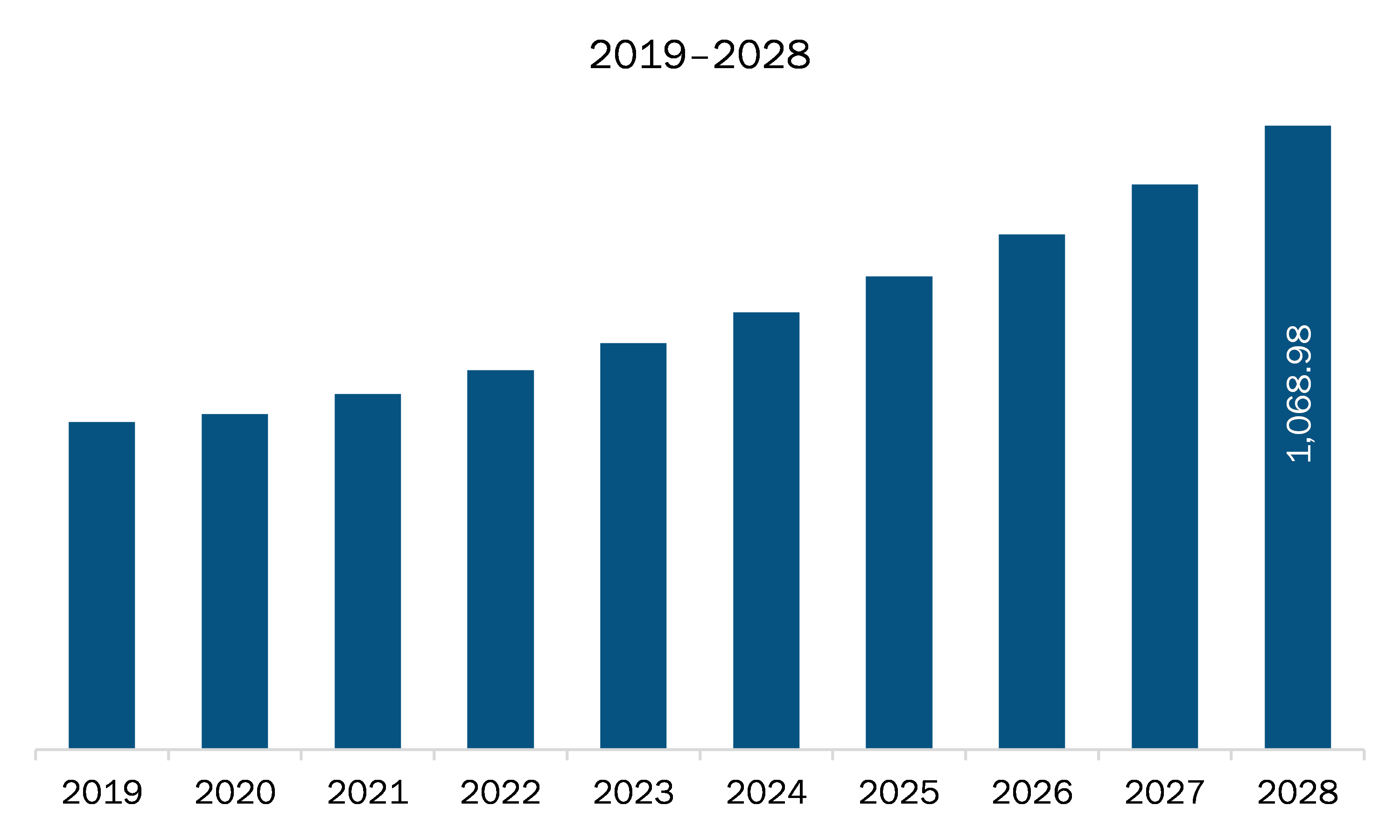
The Asia Pacific system on module (SoM) market is expected to grow from US$ 591.45 million in 2021 to US$ 1,068.98 million by 2028; it is estimated to grow at a CAGR of 8.8% from 2021 to 2028.
A system on module (SoM) is a small-form-factor computing solution that consists of a hardware and software for developing embedded products. It is a single physical module that incorporates many computing components such as a central processing unit (CPU), random access memory (RAM), flash memory, power management unit, an Ethernet bus, and Wi-Fi and Bluetooth radios. This availability of hardware components as a single unit reduces the complexity of final product designs. The integration of system on module with ready-to-use operating systems, and integrated support for development environments, frameworks, and other third-party software are providing lucrative growth opportunities for industry participants. Many players in the system on module market are providing off-the-shelf carrier boards that can be used for development in a wide range of applications. Further, system on module benefit through reduced complexity while maintaining high flexibility in the form factor, further supporting the market growth.
The COVID-19 pandemic has forced governments, suppliers, and manufacturers in Asia Pacific to review their supply chain operations and identify gaps. To recover from the economic impact and modernize the regional semiconductor sector, most Asian nations increased their budgets of 2021. A few of the initiatives that are anticipated to drive the growth and agility in the Asia Pacific system on module manufacturing sector are investing in manufacturing flexibility to help drive future growth, focusing on profitable products and eliminate complexity, working closely with struggling suppliers, strengthening ties to customers, and rebuilding customer confidence. Major semiconductor suppliers, such as Taiwan Semiconductor Manufacturing and United Microelectronics, announced investment plans to increase production capacities of the semiconductor chips. China pledged to boost spending and drive research into cutting-edge chips as part of its new five-year economic blueprint. The Semiconductor Manufacturing International Corporation has already announced plans for a US$ 2.35 billion plant with funding from the government of Shenzhen. The Indian Government announced to offer around US$ 1 billion to every company that sets up a chip manufacturing unit in India, which is projected to boost the Asia Pacific system on module market growth in the coming years.
- This FREE sample will include data analysis, ranging from market trends to estimates and forecasts.
Asia Pacific System on Module (SoM) Market Segmentation
- Asia Pacific System on Module (SoM) Market – By Processor Type
- ARM
- X86
- POWER
- FPGA
- GPU
- DSP
- Asia Pacific System on Module (SoM) Market – By Application
- Industrial Automation
- Entertainment
- Medical
- Transportation
- Test and Measurement
- Others
- Asia Pacific System on Module (SoM) Market – By Standard
- Qseven
- SMARC
- COMExpress
- Asia Pacific System on module (SoM) Market – By Country
- Australia
- China
- India
- Japan
- South Korea
- Rest of Asia Pacific
Asia Pacific System on Module (SoM) Report Scope
| Report Attribute | Details |
|---|---|
| Market size in 2021 | US$ 591.45 Million |
| Market Size by 2028 | US$ 1,068.98 Million |
| CAGR (2021 - 2028) | 8.8% |
| Historical Data | 2019-2020 |
| Forecast period | 2022-2028 |
| Segments Covered |
By Processor Type
|
| Regions and Countries Covered |
Asia-Pacific
|
| Market leaders and key company profiles |
|

- Comprehensive Market Sizing and Forecast Analysis
- Detailed Segmentation Analysis
- In-Depth Market Dynamics Assessment
- Regional and Country-Level Insights
- Competitive Landscape and Company Benchmarking
- Strategic Business Intelligence
Recent Reports
Testimonials

The Insight Partners provided valuable market intelligence that supported our global go-to-market strategy. Their team was professional, responsive, and attentive to our feedback, providing thoughtful analysis and helpful methodological clarifications throughout the project.
Junmo Kim Chief Financial Officer (CFO), Enertech Co., Ltd.
The Insight Partners' SCADA System Market report is comprehensive, with valuable insights on current trends and future forecasts. The team was highly professional, responsive, and supportive throughout. We are very satisfied and highly recommend their services.
RAN KEDEM Partner, Reali Technologies LTDs
I requested a report on a very specific software market and the team produced the report in a few days. The information was very relevant and well presented. I then requested some changes and additions to the report. The team was again very responsive and I got the final report in less than a week.
JEAN-HERVE JENN Chairman, Future Analytica
We worked with The Insight Partners for an important market study and forecast. They gave us clear insights into opportunities and risks, which helped shape our plans. Their research was easy to use and based on solid data. It helped us make smart, confident decisions. We highly recommend them.
PIYUSH NAGPAL Sr. Vice President, High Beam Global
The Insight Partners delivered insightful, well-structured market research with strong domain expertise. Their team was professional and responsive throughout. The user-friendly website made accessing industry reports seamless. We highly recommend them for reliable, high-quality research services
YUKIHIKO ADACHI CEO, Deep Blue, LLC.
This is the first time I have purchased a market report from The Insight Partners.While I was unsure at first, I visited their web site and felt more comfortable to take the risk and purchase a market report.I am completely satisfied with the quality of the report and customer service. I had several questions and comments with the initial report, but after a couple of dialogs over email with their analyst I believe I have a report that I can use as input to our strategic planning process.Thank you so much for taking the extra time and making this a positive experience.I will definitely recommend your service to others and you will be my first call when we need further market data.
JOHN SUZUKI President and Chief Executive Officer, Board Director, BK Technologies
I wish to appreciate your support and the professionalism you displayed in the course of attending to my request for information regarding to infectious disease IVD market in Nigeria. I appreciate your patience, your guidance, and the fact that you were willing to offer a discount, which eventually made it possible for us to close a deal. I look forward to engaging The Insight Partners in the future, all thanks to the impression you have created in me as a result of this first encounter.
DR CHIJIOKE ONYIA MANAGING DIRECTOR, PineCrest Healthcare Ltd.Reason to Buy
- Informed Decision-Making
- Understanding Market Dynamics
- Competitive Analysis
- Identifying Emerging Markets
- Customer Insights
- Market Forecasts
- Risk Mitigation
- Boosting Operational Efficiency
- Strategic Planning
- Investment Justification
- Tracking Industry Innovations
- Aligning with Regulatory Trends





 Get Free Sample for