
At-Home Lab Testing Market Share, Growth & Forecast by 2034
At-Home Lab Testing Market Size and Forecasts (2021–2034), Global and Regional Share, Trends, and Growth Opportunity Analysis Report Coverage : by Test Type (Glucose Test Kits, Infectious Diseases Test Kits, Pregnancy Test Kits, Cholesterol Test Strips, Drugs of Abuse Test Kits, Coagulation Monitoring Tests, Other Test Types); Distribution Channel (Hospital Pharmacies, Retail Pharmacies/Drug Stores, Online Pharmacies); and Geography (North America, Europe, Asia Pacific, and South and Central America)
- Status : Data Released
- Report Code : TIPRE00039960
- Category : Life Sciences
- No. of Pages : 150
- Available Report Formats :


- Last update date : September 07, 2026


2025 Market Size
US$ 15.77 Bn
Base year value
2034 Forecast
US$ 38.2 Bn
Projected by 2034
CAGR 2026-2034
10.33 %
Growth rate
Addressable Market
US$ 239.57 Bn
(2026-2034)
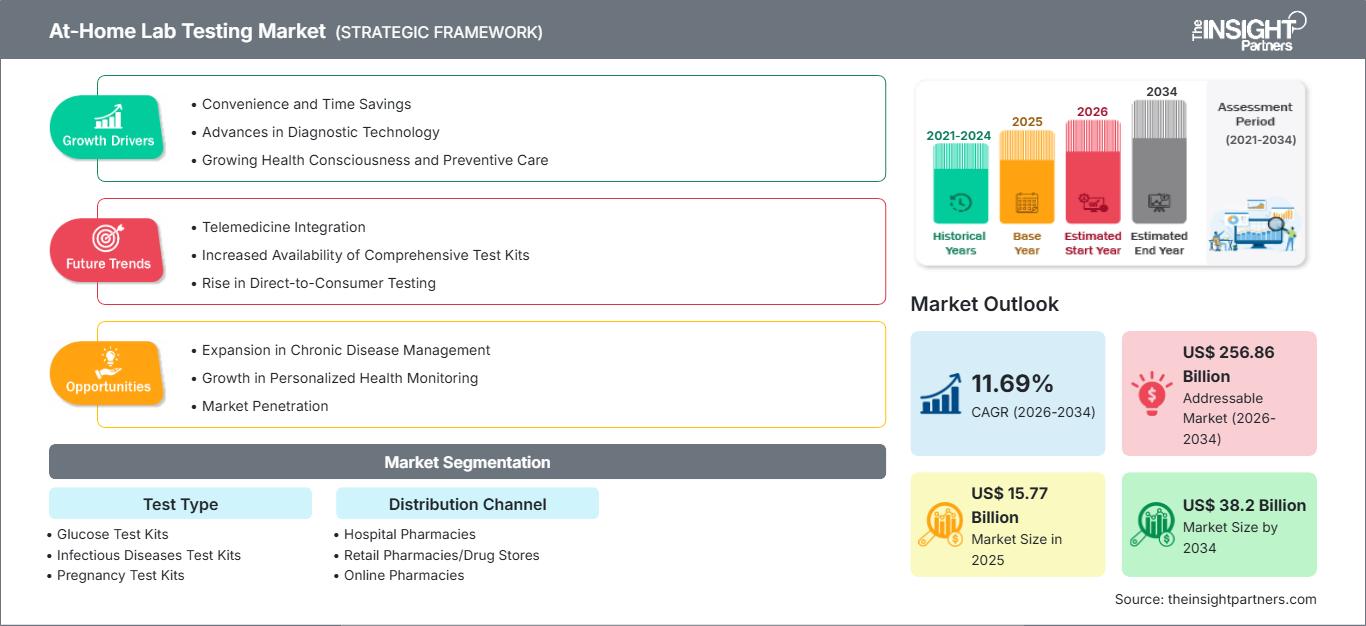
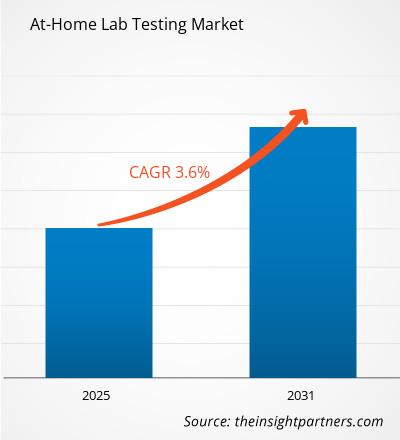
The At-Home Lab Testing market was valued at US$ 15.77 billion in 2025 and is expected to reach US$ 38.2 billion by 2034; it is estimated to record a CAGR of 10.33% during 2026-2034.
At-Home Lab Testing Market Assessment and Insights
- North America: North America is estimated to account for a 38–42% share in 2025 and is projected to grow at a CAGR of 10.5–11.5% between 2026–2034, supported by established diagnostics infrastructure, consumer testing awareness, and expanding home-collection pathways.
- US: The US represents approximately 76–80% of North America's 2025 market share and is expected to expand at a CAGR of 10.4–11.4% during 2026–2034, driven by digital ordering and decentralized specimen collection.
- Europe: Europe is estimated to hold a 25–29% share in 2025 and grow at a CAGR of 10.8–11.8% through 2034. Germany, the UK, France, Italy, and Spain remain key markets because of preventive healthcare programs and pharmacy-based access.
- Asia Pacific: Asia Pacific is estimated to represent a 20–24% share in 2025 and expand at a CAGR of 13.0–14.0% through 2034. China, Japan, South Korea, India, and Australia provide diverse opportunities as healthcare access becomes increasingly decentralized.
- Largest Segment: Glucose Test Kits represent the largest segment, with an estimated 30–34% market share in 2025 and a 10.0–11.0% CAGR between 2026–2034, reflecting recurring monitoring requirements.
- High Growth Segment: Online Pharmacies are projected to hold a 24–28% market share in 2025 and expand at a 14.0–15.0% CAGR through 2034 as digital ordering improves accessibility.
- Key companies analyzed in detail: Everly Health, Inc., Laboratory Corporation of America Holdings, 23andMe Holding Co., LetsGetChecked, MyLabBox, Quest Diagnostics Incorporated, Ceresti Health, Thorne HealthTech, Inc., Freenome Holdings, Inc., and Verisana.
Source: The Insight Partners' analysis based on proprietary research, government publications, company annual reports, investor presentations, industry databases, and expert interviews.
Development in the market for in-home lab tests is moving from traditional one-assay kits to digitally-driven workflows that include specimen collection, laboratory testing, electronic ordering, and online interpretation. The use of finger-stick blood, urine, saliva, and other non-invasive specimen collection methods is on the rise for conducting laboratory quality testing outside of traditional laboratories. Improvements in packaging stability, specimen preservation, user-friendly instruction manuals, and digital results reporting are expected to decrease pre-analytical mistakes and increase usability.
During the forecast period, investment trends will lean towards multiplex tests, molecular diagnostic testing outside laboratories, monitoring, and consumer healthcare applications. The advantages of emerging markets lie in reduced infrastructural needs, while the emphasis in mature economies may be put on prevention and managing chronic diseases. FDA and other regulatory authorities' attention will increase in areas of assay performance, labeling, data management, usability, and proper follow-up.
At-Home Lab Testing Market Report Scope
| Report Attribute | Details |
|---|---|
| Market size in 2025 | US$ 15.77 Billion |
| Market Size by 2034 | US$ 38.2 Billion |
| Global CAGR (2026 - 2034) | 10.33% |
| Historical Data | 2021-2024 |
| Forecast period | 2026-2034 |
At-Home Lab Testing Market Analysis
The growing demand for laboratory testing solutions in the home environment is supported by convenience factors, increasing awareness of preventive health care practices, and the requirement to keep track of their chronic conditions without regular visits to facilities. The particular relevance of the at-home lab testing market growth concerns situations when repeated measurements are clinically important, such as in the case of glucose and cholesterol testing. Home testing allows to increase the reach of services for people experiencing difficulties with access due to transport, time limitations, lack of mobility, confidentiality issues, or geographic location.
The value chain participants can be identified as the producers of assays, device producers, laboratory organizations, logistics, digital platforms, pharmacy services, and healthcare professionals. Sample stabilization and logistics are vital for laboratory-tested solutions, while direct-to-read tests need usability features. Competition is more and more becoming an issue of breadth of test menu, lab reliability, speed of delivery, interface technology, regulatory positioning, and ability to distribute.
Regarding consumer tests, Everly Health, Inc. is taking the lead in integration with digital platforms, while Laboratory Corporation of America Holdings and Quest Diagnostics Incorporated rely on their network of laboratories to provide an interface between home sampling and diagnostic solutions. Thus, the competitive positioning in the at-home lab testing market report is described as platform vs. laboratory company.
The investment focus, meanwhile, is expanding beyond individual test kits. Here, 23andMe Holding Co., LetsGetChecked, MyLabBox, Ceresti Health, Thorne HealthTech, Inc., Freenome Holdings, Inc., and Verisana provide a variety of options in genetics, sexual health, wellness, preventive diagnostics, and specialty testing. The at-home lab testing industry report can hence increasingly be written off for companies that combine testing, interpretation, digital engagement, and referrals rather than simply cheap kits.
● REPORT CUSTOMIZATION
Tailor This Report To Align With Your Specific Business Requirements
This report can be customized to align precisely with your business objectives, scope, and target markets. Customization options include tailored segmentation, geography, competitive analysis, and strategic insights to support informed decision-making.
Customize This Report →WHAT YOU CAN ADJUST
- ● Segmentations
- ● Geography
- ● Competitive Analysis
- ● Language Preferences
At-Home Lab Testing Market: Strategic Insights
Regional Insights
North America at-home lab testing market
The North American region is predicted to account for 38–42% of the total 2025 market and is forecasted to grow at 10.5–11.5% CAGR during 2024-2034. The United States leads in the regional demand; however, Canada offers a lesser but growing market opportunity through its pharmacy network, telehealth capabilities, and digital ordering. Growth drivers include excellent lab infrastructure, high internet connectivity, consumer acceptance of self-testing kits, and growing home sample collection. This regional market leverages existing reimbursements and employer health programs ecosystems.
In addition to infectious disease testing, this regional market will offer opportunities for metabolic, reproductive health, genetic testing, colorectal testing, and wellness diagnostics. FDA regulation of DTC diagnostics continues to influence product design and required communications. Further integration of labs, healthcare, digital channels, and pharmacies will drive increased adoption and innovations around sample stability and logistics, allowing for more complex tests. The North American providers thus have an opportunity to move from isolated test purchases to regular diagnostics.
U.S. at-home lab testing Market
The US represents about 76–80% of the market for North America's 2025 market and is expected to witness growth at a CAGR of 10.4–11.4% from 2024 to 2034. Driving demand will include consumer-driven testing, robust laboratory infrastructure, employee wellness initiatives, and increased uptake of self-collection. Applications include metabolism tests, reproductive health tests, sexual health tests, infectious disease tests, genetic tests, and preventive cancer tests.
Lab providers and digital health companies are leveraging online ordering and specimen collection at homes to expand access. Everly Health, Inc., Laboratory Corporation of America Holdings, Quest Diagnostics Incorporated, and 23andMe Holding Co. are examples of differentiation models in consumer diagnostics, laboratory testing services, and genetic tests. Regulatory guidance, payer involvement, health savings account eligibility, and physician connections will play important roles. North America, and particularly the US, will continue to be the innovation hub due to the availability of venture capital funding, laboratory infrastructure, adoption of digital health, and wide consumer access channels.
Europe at-home lab testing Market
It has an estimated 25%–29% of the at-home lab testing market share in 2025 and is forecasted to grow at a 10.8%–11.8% CAGR till 2034 with Germany, the UK, France, Italy, and Spain being the key countries in the market. Its growth can be attributed to the prioritization of preventive care, well-developed pharmacy networks, and growing demand for decentralized diagnostics.
The UK enjoys an advanced consumer health landscape with digital health care services and the use of the pharmacy channel for testing. Germany boasts good laboratory infrastructure and a huge target population for chronic disease testing. France, Italy, and Spain offer more avenues through the use of pharmacies, reproductive tests, wellness tests, and telemedicine practices. The harmonization of regulation due to European IVD regulation is critical for market access while differences in national reimbursement policies lead to variability in commercialization. Germany is considered the most prominent European market for diagnostics.
APAC at-home lab testing Market
APAC accounts for an estimated 20-24% market share in 2025, with a forecast growth of 13.0%-14.0% CAGR up to 2034. Among countries within this region, China is the biggest market, followed by Japan, South Korea, India, and Australia. Decentralized testing is encouraged by industrial localization, growing adoption of digital health solutions, and lack of convenient laboratory facilities.
Both China and India represent considerable potential in terms of scale; Japan and South Korea have matured healthcare markets with advanced technological uptake; finally, in case of Australia, we can see a combination of geographic diversity and existing telehealth capabilities. Thus, policy initiatives targeting broader access to diagnostics may facilitate at-home testing, especially in case when conventional laboratory services are not conveniently located.
Middle East & Africa at-home lab testing Market
The growth of the Middle East and Africa region market is expected at a rate of 12.0–13.0% CAGR till 2034 driven by Saudi Arabia and UAE, whereas South Africa presents a significant opportunity for the African region. Modernizing of healthcare, development of digital infrastructure, and increasing number of private diagnostics drive adoption in the major urban areas.
Healthcare transformation drives the growth in Saudi Arabia, whereas technology-enabled environment in the UAE enables the adoption of digital health solutions. South Africa is an opportunity due to private laboratories and de-centralized healthcare approach. Rest of MEA represents less developed infrastructure, where low-complex self-tests and drugstore distribution make sense.
Segmentation Analysis
Test Type
Test Type segment in the at-home lab testing market is projected to expand at a 10.9–11.7% CAGR between 2026–2034. The segment encompasses glucose, infectious diseases, pregnancy, cholesterol, drugs of abuse, coagulation, and other testing formats. Demand varies from recurring chronic disease monitoring to episodic screening, creating different purchasing frequencies. Glucose testing remains structurally important because repeat monitoring generates predictable utilization, while infectious disease and reproductive testing support episodic consumer demand.
- Glucose Test Kits: These products have a strong recurring-use profile because patients require repeated glucose measurements. Their established clinical role, broad availability, and familiarity with consumers make them strategically important for sustained household testing demand.
- Infectious Diseases Test Kits: Demand is influenced by seasonal outbreaks, exposure concerns, and the need for rapid decisions. Multiplex formats and improved specimen collection can broaden utility beyond single-pathogen testing.
- Pregnancy Test Kits: Pregnancy testing remains a mature consumer category characterized by rapid results, privacy, and extensive retail availability. Digital result interpretation and improved sensitivity continue to influence product differentiation.
- Cholesterol Test Strips: Cholesterol testing supports preventive health and cardiovascular risk awareness. Its strategic importance is increasing as consumers seek convenient monitoring between physician visits and broader wellness assessments.
- Drugs of Abuse Test Kits: These tests serve household, workplace, clinical, and compliance-related applications. Multi-panel formats can increase testing efficiency, while interpretation requirements make confirmatory laboratory pathways important.
- Coagulation Monitoring Tests: Coagulation testing addresses patients requiring repeated monitoring and therefore offers recurring-use potential. Device simplicity, result reliability, and integration with clinician oversight are central adoption considerations.
- Other Test Types: Other test categories include emerging and specialty assays that can expand the addressable market as collection technologies improve and regulatory pathways become more established.
Distribution Channel
Distribution Channel segment in the at-home lab testing market is projected to grow at a 12.0–12.8% CAGR between 2026–2034. Digital purchasing is reshaping consumer access, although hospital and retail pharmacies remain important for trust, immediate availability, counseling, and healthcare integration. The at-home lab testing market scope is consequently expanding from physical product distribution toward digitally orchestrated diagnostic journeys.
- Hospital Pharmacies: Hospital pharmacies provide a trusted healthcare environment and can support testing associated with treatment pathways, discharge programs, and chronic disease management. Their strategic role is strongest where clinical oversight influences product selection.
- Retail Pharmacies/Drug Stores: Retail pharmacies combine physical availability, consumer familiarity, and pharmacist support. They remain important for pregnancy, glucose, infectious disease, and other rapid-use categories requiring immediate purchase.
- Online Pharmacies: Online pharmacies provide broad geographic reach, discreet purchasing, digital education, and recurring ordering capabilities. Their strategic importance is increasing as consumers combine diagnostic purchases with telehealth and electronic health records.
Opportunity Snapshot
| Distribution Channel | Revenue Contribution | Trend Tag | Adoption Stage |
|---|---|---|---|
| Hospital Pharmacies | Medium | Clinical Access | Scaling |
| Retail Pharmacies/Drug Stores | High | Pharmacy Reach | Mature |
| Online Pharmacies | High | Digital Ordering | Scaling |
At-Home Lab Testing Market Growth Drivers and Impact Analysis
Expansion of decentralized chronic disease monitoring
Management of chronic diseases is increasingly relying on more regular measures beyond the conventional clinical setting, thus creating a regular need for portable testing tools. Glucose testing offers the most compelling example since patients might be required to test multiple times to make informed treatment choices and live healthily. The same applies to cholesterol, coagulation, and certain metabolites as well. There are advantages for the providers in terms of decreased workload at facilities and greater continuity after the appointment. Recurring usage products offer an opportunity to have stable consumption patterns and subscription-style business models for the manufacturers. The economic benefit goes along the entire supply chain because fewer unnecessary facility visits will compensate for some collection expenses, and laboratories will have more chances to work with decentralized samples.
Consumer preference for convenience, privacy, and flexible access
Consumer behavior is increasingly being affected by online shopping, telemedicine, and on-demand healthcare services. Home testing may help decrease travel, wait time, schedule limitations, and confidentiality issues, especially in reproductive health, sexual health, and drugs of abuse tests. Convenience could affect buying behavior by motivating people to perform tests that would otherwise be delayed. Distribution strategy plays an important role in the competition, since online platforms offer discrete purchasing and automatic resupply, whereas retail pharmacy allows immediate access to products. Companies could increase conversion through user-friendly instructions, price transparency, result communication, and optional clinical counseling. Such market effect is crucial among digitally savvy consumers, remote users, and those who wish to have more control over their health care choices.
Advances in specimen collection and digital diagnostic workflows
Advances in specimen collection techniques have expanded the possibilities of conducting laboratory tests with specimens collected away from traditional laboratory facilities. Technologies such as dried blood spot analysis, stabilized saliva sampling, urine sample collections, and simpler finger sticks may help overcome limitations related to specimen transportation. Additionally, digital registration, barcodes, e-ordering, alerts, and patient portals establish connected processes from collection to test result analysis. Such innovations could help reduce bureaucracy and increase traceability during the diagnostic process. Laboratory facilities may extend their geographic area of operations without having to expand the physical location of their facilities. Technology companies should focus on integrating diagnostic equipment, software solutions, logistics services, and clinical services into one platform to take advantage of the trend.
At-Home Lab Testing Market Future Trends
Multiplex testing and consolidated consumer diagnostic panels
Future product development is likely to emphasize multiplex assays that consolidate several biomarkers or pathogens into a single consumer workflow. This approach can improve information density while reducing repeated specimen collection, shipping, and purchasing decisions. Multiplexing will be particularly relevant for infectious disease panels, metabolic assessments, sexual health testing, and preventive screening packages. Developers will need to balance broader information with understandable reporting, because excessive complexity can reduce consumer comprehension. Digital interfaces may increasingly translate laboratory findings into structured next steps, including repeat testing, physician consultation, or referral. As assay menus expand, the commercial advantage may shift from selling individual tests toward building recurring diagnostic programs. Companies with laboratory infrastructure and validated assay portfolios should have advantages in developing consolidated panels while maintaining analytical and clinical credibility.
AI-enabled interpretation and longitudinal health monitoring
Artificial intelligence in the at-home lab testing market trends is expected to become more influential in organizing repeated test results, identifying changes over time, and prioritizing information for consumers and clinicians. Rather than replacing laboratory measurement, AI can provide a layer of longitudinal interpretation that connects multiple results with relevant health history and behavioral information. This could support risk stratification, personalized testing intervals, and automated alerts when results change materially. The commercial opportunity extends to subscription services in which consumers receive periodic testing combined with digital monitoring and professional review. However, responsible implementation will require strong validation, transparent communication, privacy controls, and clear separation between screening information and clinical diagnosis. Companies that establish trusted data governance alongside analytical capabilities are likely to differentiate more effectively as home diagnostics become increasingly data-driven.
At-Home Lab Testing Market Opportunities
Partnerships between laboratories, pharmacies, and digital health platforms
Partnership models can accelerate distribution without requiring every diagnostic provider to build a complete consumer infrastructure. Laboratories can contribute analytical capacity and clinical credibility, pharmacies can provide trusted access points, and digital health platforms can manage ordering, engagement, and follow-up. Such partnerships may be particularly effective for chronic disease monitoring and preventive screening, where repeat testing benefits from structured reminders. Investors can prioritize companies that demonstrate scalable interoperability, validated collection workflows, and established healthcare relationships. Commercial arrangements may include white-label testing, employer programs, pharmacy bundles, and integrated telehealth pathways. The strategic objective in the at-home lab testing market forecast is to reduce customer acquisition costs while increasing retention through recurring diagnostic journeys. Companies that successfully connect physical and digital channels can build defensible ecosystems rather than relying exclusively on individual kit sales.
Localized platforms for emerging and underserved markets
Emerging markets present opportunities for localized diagnostic models designed around affordability, logistics, language, and infrastructure constraints. Developers can adapt collection devices and packaging to withstand longer transportation intervals while using regional laboratories for processing. Mobile-first ordering can help reach consumers where conventional laboratory networks are limited, and pharmacy partnerships can provide trusted physical access. Investors should assess regulatory requirements, reimbursement conditions, cold-chain dependence, courier availability, and laboratory accreditation before scaling. India, Southeast Asia, the Middle East, and selected African markets can support differentiated models because diagnostic access remains uneven across urban and rural populations. The strongest opportunities are likely to involve simple tests initially, followed by laboratory-analyzed assays as sample logistics and digital connectivity improve.
Recent Developments
- June 2026: Laboratory Corporation of America Holdings announced nationwide availability of ColoSense, an FDA-approved RNA-based at-home colorectal cancer screening test developed through collaboration with Geneoscopy. The product expands the laboratory's home-screening portfolio and uses simplified collection to reduce barriers associated with conventional colorectal cancer screening.
- December 2025: Laboratory Corporation of America Holdings highlighted its at-home collection program in a health-system collaboration designed to improve engagement with diabetes and colorectal cancer screening. The initiative integrated digital patient outreach with home collection, demonstrating how decentralized testing can be incorporated into population-health and value-based care workflows.
- June 2025: Everly Health, Inc. announced a collaboration with GRAIL to expand access to the Galleri multi-cancer early detection test through Everlywell. The offering enabled consumers to request the prescription-based test through the company's digital platform, extending its consumer diagnostic portfolio into advanced cancer screening.
Frequently Asked Questions

- Comprehensive Market Sizing and Forecast Analysis
- Detailed Segmentation Analysis
- In-Depth Market Dynamics Assessment
- Regional and Country-Level Insights
- Competitive Landscape and Company Benchmarking
- Strategic Business Intelligence
Recent Reports
Testimonials

The Insight Partners' SCADA System Market report is comprehensive, with valuable insights on current trends and future forecasts. The team was highly professional, responsive, and supportive throughout. We are very satisfied and highly recommend their services.
RAN KEDEM Partner, Reali Technologies LTDs
I requested a report on a very specific software market and the team produced the report in a few days. The information was very relevant and well presented. I then requested some changes and additions to the report. The team was again very responsive and I got the final report in less than a week.
JEAN-HERVE JENN Chairman, Future Analytica
We worked with The Insight Partners for an important market study and forecast. They gave us clear insights into opportunities and risks, which helped shape our plans. Their research was easy to use and based on solid data. It helped us make smart, confident decisions. We highly recommend them.
PIYUSH NAGPAL Sr. Vice President, High Beam Global
The Insight Partners delivered insightful, well-structured market research with strong domain expertise. Their team was professional and responsive throughout. The user-friendly website made accessing industry reports seamless. We highly recommend them for reliable, high-quality research services
YUKIHIKO ADACHI CEO, Deep Blue, LLC.
This is the first time I have purchased a market report from The Insight Partners.While I was unsure at first, I visited their web site and felt more comfortable to take the risk and purchase a market report.I am completely satisfied with the quality of the report and customer service. I had several questions and comments with the initial report, but after a couple of dialogs over email with their analyst I believe I have a report that I can use as input to our strategic planning process.Thank you so much for taking the extra time and making this a positive experience.I will definitely recommend your service to others and you will be my first call when we need further market data.
JOHN SUZUKI President and Chief Executive Officer, Board Director, BK Technologies
I wish to appreciate your support and the professionalism you displayed in the course of attending to my request for information regarding to infectious disease IVD market in Nigeria. I appreciate your patience, your guidance, and the fact that you were willing to offer a discount, which eventually made it possible for us to close a deal. I look forward to engaging The Insight Partners in the future, all thanks to the impression you have created in me as a result of this first encounter.
DR CHIJIOKE ONYIA MANAGING DIRECTOR, PineCrest Healthcare Ltd.Reason to Buy
- Informed Decision-Making
- Understanding Market Dynamics
- Competitive Analysis
- Identifying Emerging Markets
- Customer Insights
- Market Forecasts
- Risk Mitigation
- Boosting Operational Efficiency
- Strategic Planning
- Investment Justification
- Tracking Industry Innovations
- Aligning with Regulatory Trends





 Get Free Sample for