
Bioactive Materials Market Analysis, Size, and Share by 2034
Coverage: by Type (Bioactive Glass, Bioactive Ceramics, Bioactive Composites, and Others), Application (Orthopaedic, Dental Care, Bioengineering, and Others), and Geography (North America, Europe, Asia Pacific, and South and Central America)
- Status : Data Released
- Report Code : TIPRE00003221
- Category : Chemicals and Materials
- No. of Pages : 150
- Available Report Formats :


- Last update date : August 28, 2026


2025 Market Size
US$ 2.92 Bn
Base year value
2034 Forecast
US$ 8.56 Bn
Projected by 2034
CAGR 2026-2034
14.5 %
Growth rate
Addressable Market
US$ 54.94 Bn
(2026-2034)
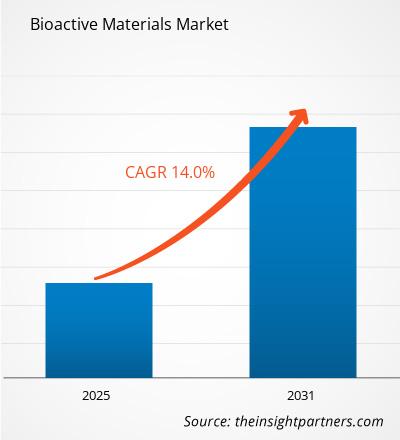
The Bioactive Materials market size was US$ 2.92 Billion in 2025 and is projected to reach US$ 8.56 Billion by 2034, registering a CAGR of 14.5% during 2026–2034. Expansion is supported by increasing use of regenerative biomaterials in orthopedic reconstruction, dental procedures, bone defect management, and tissue engineering. Material advances in bioactive glass, ceramics, and composites are improving osteoconductivity, controlled ion release, resorption behavior, and compatibility with biological tissues.
North America remains a major innovation center, supported by orthopedic procedure volumes, dental implant adoption, regenerative medicine research, and established medical-device manufacturing. The Bioactive Materials Market size is influenced by clinical evidence, regulatory approvals, hospital procurement, surgeon adoption, and product differentiation. Demand is increasingly shifting toward materials that combine biological activity with controlled degradation, structural integrity, antimicrobial performance, and minimally invasive delivery characteristics.
Bioactive Materials Market Assessment and Insights
- North America: North America represented an estimated 38–42% share in 2025 and is projected to grow at a 10.0–11.5% CAGR during 2026–2034, supported by orthopedic innovation, dental procedures, clinical research, and advanced biomaterial commercialization.
- U.S.: The U.S. accounted for approximately 84–87% of North American demand in 2025 and is forecast to expand at a 10.2–11.7% CAGR through 2034, supported by orthopedic reconstruction and dental applications.
- Europe: Europe represented an estimated 25–28% share in 2025 and is projected to grow at a 10.5–12.0% CAGR, led by Germany, the UK, France, Italy, and Switzerland through regenerative medicine and implant technologies.
- Asia Pacific: Asia Pacific accounted for approximately 20–23% of global demand in 2025 and is projected to grow at a 13.0–14.5% CAGR, led by China, Japan, South Korea, and India.
- Largest Segment: Bioactive Glass represented an estimated 45–50% market share in 2025 and is projected to grow at a 10.8–12.0% CAGR during 2026–2034, maintaining its leading position.
- High Growth Segment: Bioengineering represented approximately 15–20% market share in 2025 and is projected to grow at a 13.5–15.0% CAGR through 2034, supported by tissue-engineering applications.
- Key companies analyzed in detail: Stryker Corporation, Zimmer Biomet Holdings, Inc., Bonalive Biomaterials Ltd., SCHOTT AG, Medtronic plc, Dentsply Sirona Inc., NovaBone Products, LLC, Synergy Biomedical, LLC, Bioventus Inc., and Cerapedics Inc.
Source: The Insight Partners' analysis based on proprietary research, government publications, company annual reports, investor presentations, industry databases, and expert interviews.
Development of Bioactive Materials has been driven by advanced glass compositions, porous ceramic structures, composite scaffolding, additive manufacturing technologies, surface modifications, and controlled degradation. Design of such materials to promote bone development without compromising physical and biological properties is becoming common among the developers. Reproducible particle sizes, porous structures, and ion release characteristics are being achieved, enabling materials to evolve from research materials to clinically proven devices.
There will be future growth within evolving healthcare systems that are experiencing increased capabilities for orthopedic and dental surgeries. Regulatory requirement of clinical proof and safety will be an advantage to biomaterial manufacturers who have platforms for biomaterials and quality control systems. There will also be investments for minimally invasive implants, personalized scaffolds, antimicrobial materials, and hybrid ceramics, glasses, polymers, and biological substances.
Bioactive Materials Market Report Scope
| Report Attribute | Details |
|---|---|
| Market size in 2025 | US$ 2.92 Billion |
| Market Size by 2034 | US$ 8.56 Billion |
| Global CAGR (2026 - 2034) | 14.5% |
| Historical Data | 2021-2024 |
| Forecast period | 2026-2034 |
Bioactive Materials Market Analysis
The factors responsible for the Bioactive Materials Market growth include high demand for synthetic substitutes for autografts and allografts, growing orthopedic surgery, dental implants, and regenerative medicine advancements. The value chain includes raw material suppliers, biomaterial producers, medical device producers, contract manufacturers, hospitals, dental clinics, research facilities, and regulatory agencies. Bioactive glass and calcium phosphate ceramics are still highly significant since they have the ability to react with the physiological environment and aid in the formation of mineralized tissues. Composite materials give more options through the use of both biological properties and mechanical properties. The supply chain includes specialty glass and ceramics processing, powder production, sintering, coating, molding, and sterilization.
The competitive environment in the Bioactive Materials Market is divided between the big names in medical devices and the small specialized biomaterial firms. Stryker Corporation produces a synthetic bone graft substitute known as Vitoss BA with the help of bioactive glass, whereas Zimmer Biomet Holdings, Inc. possesses a diverse collection of synthetic and biologic bone grafting products. Bonalive Biomaterials Ltd. is a firm that produces S53P4 bioactive glass, while SCHOTT AG provides bioactive glass for healthcare purposes. Medtronic plc and Dentsply Sirona Inc. operate within the realms of regenerative medicine and dental material ecosystems, respectively.
The Bioactive Materials Market analysis shows that competitive positioning is becoming increasingly based on clinical data, regulatory approvals, manufacturing reproducibility, surgeon experience, and biological performance of the products themselves. Differention occurs through the use of pores' structure, resorption characteristics, antimicrobial capacity, injectable systems, as well as combination with collagen, peptides, polymers, and ion therapy. The strategic positioning is hence shifting from pure material provision to clinical integration and addressing specific defects of bone, dentistry, and tissue engineering.
More and more investment is being channeled into platform technologies which can handle multiple indications rather than single-product applications. Firms with well-developed clinical networks can expand materials to related orthopedic, dental, spine, trauma, and craniofacial procedures. Collaborations with hospitals and research organizations can be crucial as clinical proof increases adoption rate. Advanced manufacturing techniques such as additive manufacturing and controlled sintering open up possibilities for customization of scaffold design and reproducibility while lowering barriers to the development of future generations of biomaterials.
● REPORT CUSTOMIZATION
Tailor This Report To Align With Your Specific Business Requirements
This report can be customized to align precisely with your business objectives, scope, and target markets. Customization options include tailored segmentation, geography, competitive analysis, and strategic insights to support informed decision-making.
Customize This Report →WHAT YOU CAN ADJUST
- ● Segmentations
- ● Geography
- ● Competitive Analysis
- ● Language Preferences
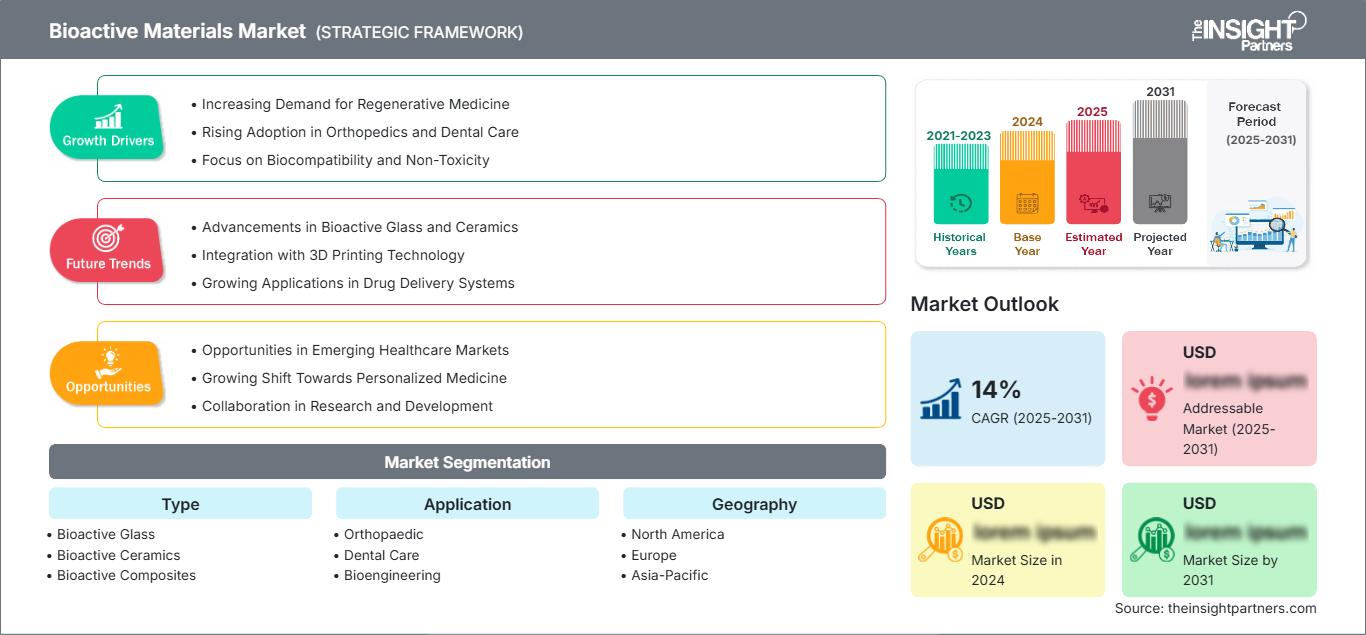
Bioactive Materials Market: Strategic Insights
Regional Insights
North America Bioactive Materials Market
North America accounted for about 38-42% of global consumption in 2025 and is expected to grow at a 10.0-11.5% CAGR during 2025-2034. Bioactive Materials Market share in the region is still significant due to advanced orthopedic infrastructure, dental surgeries, regenerative medicine development, and medical devices production. The U.S. leads in consumption in the region owing to clinical research, regulatory abilities, and biomaterial developers.
Regional market is driven by demand for synthetic bone substitutes, dental regeneration solutions, spinal implants, and tissue engineering solutions. Stryker Corporation, Zimmer Biomet Holdings, Inc., Medtronic plc, Bioventus Inc., and Cerapedics Inc. have relevant product portfolios. Clinical data still is an important purchasing criterion; meanwhile, hospitals analyze products on the basis of their procedure effectiveness, handling, safety, and outcome for patients. The U.S. accounts for approximately 84-87% of North American consumption and is forecasted to grow at a 10.2-11.7% CAGR.
U.S. Bioactive Materials Market
The US constitutes roughly 84–87% of North American demand and is expected to register CAGR of 10.2–11.7% till 2034. Drivers of growth include orthopedic reconstruction, dental implants, spinal surgeries, trauma surgery, and regenerative medicine. Increasing need for predictable handling, resorbability, and clinically proven performance of tissues regeneration in hospitals and ASCs.
Major participants such as Stryker Corporation, Zimmer Biomet Holdings, Inc., Medtronic plc, Bioventus Inc., and Cerapedics Inc. facilitate competitive growth in the areas of bone grafting and active healing. Usage of product is driven by surgeon preferences, clinical evidences, reimbursement, regulatory approval, ease of delivery, and procedural efficiency. The demand for injectable and minimally invasive products is increasing as health care facilities look for shorter procedures and predictable handling properties.
Europe Bioactive Materials Market
Europe was estimated to be 25-28% of total global demand in 2025 and is expected to record a 10.5-12.0% CAGR through 2034. Germany is the market leader, driven by medical devices manufacturing, orthopedic skills, research facilities, and industrial strengths. The UK leverages biomaterials research and development in regenerative medicine, whereas France, Italy, and Switzerland add value to the market through their dental, orthopedic, and medical devices applications.
Germany has an extensive engineering base for processing ceramics, manufacturing of medical devices, and research on biomaterials. The UK leverages university-based tissue engineering research and clinical research networks. France and Italy have significant orthopedic and dental procedures which drive the market for synthetic grafts and regenerative materials. Switzerland adds value to the market through precise medical devices manufacturing, biomaterials research, and dental technology. Harmonization of regulations under the European medical devices framework emphasizes clinical evaluation, traceability, quality systems, and post-market surveillance.
APAC Bioactive Materials Market
APAC accounted for approximately 20–23% of global demand in 2025 and is projected to grow at a 13.0–14.5% CAGR through 2034. China leads the region, followed by Japan, South Korea, India, and Australia. Expanding healthcare infrastructure, orthopedic procedures, dental treatment capacity, domestic medical-device manufacturing, and research investment support demand. China and Japan are particularly important for biomaterial research and advanced manufacturing.
Middle East & Africa Bioactive Materials Market
The Middle East and Africa demand is projected to expand at approximately 9.0–11.0% CAGR through 2034. Saudi Arabia and the UAE are leading markets because of healthcare infrastructure investment, specialist hospitals, medical-tourism development, and orthopedic capacity. South Africa provides a developed regional medical-device ecosystem, while the rest of MEA's demand is linked to improving healthcare access and hospital infrastructure.
Segmentation Analysis
Type
The Bioactive Materials Market scope across material types is shaped by biological activity, mechanical requirements, degradation behavior, processing capability, and clinical indication. Bioactive Glass maintains the largest position, while Bioactive Composites are gaining importance where mechanical reinforcement and biological functionality must coexist. The type segment is projected to grow at a 11.0–12.2% CAGR during 2026–2034.
- Bioactive Glass: Bioactive glass remains widely used in bone regeneration because controlled ion release can stimulate mineral formation and biological interaction. Its versatility supports granules, particles, coatings, and composite applications.
- Bioactive Ceramics: Bioactive ceramics provide calcium-phosphate chemistry and structural characteristics compatible with mineralized tissue. They are important in bone void filling, coatings, scaffolds, and dental applications requiring controlled resorption.
- Bioactive Composites: Bioactive composites combine ceramics or glass with polymers, collagen, or other matrices to improve handling, mechanical properties, degradation control, and suitability for complex regenerative applications.
Application
Application demand is expanding as healthcare providers increasingly use synthetic and regenerative materials for tissue repair. Orthopedic procedures remain the largest application base, while dental care benefits from implant growth and bone augmentation. Bioengineering represents the fastest-growing area as scaffold technologies advance. The application segment is projected to grow at a 11.5–12.8% CAGR during 2026–2034.
- Orthopedic: Orthopedic applications represent the principal demand base because synthetic biomaterials are used for bone defects, spinal procedures, trauma reconstruction, and bone-graft substitution where predictable regeneration is required.
- Dental Care: Dental care applications include bone augmentation, periodontal regeneration, implant-site preparation, and other procedures where biomaterials help restore adequate bone volume and support successful implant placement.
- Bioengineering: Bioengineering applications are expanding through tissue-engineering scaffolds, three-dimensional structures, controlled ion release, cell-interactive materials, and customized architectures designed for regenerative medicine research and future clinical translation.
Opportunity Snapshot
| Application | Revenue Contribution | Trend Tag | Adoption Stage |
|---|---|---|---|
| Orthopaedic | High | Bone Regeneration | Mature |
| Dental Care | Medium | Implant Support | Scaling |
| Bioengineering | Medium | Scaffold Design | Emerging |
Bioactive Materials Market Growth Drivers and Impact Analysis
Increasing Orthopedic Procedures and Demand for Synthetic Bone Substitutes
Growing orthopedic procedure volumes are creating demand for materials that can fill bone defects while reducing dependence on autograft harvesting. Synthetic biomaterials can provide controlled handling, standardized composition, and predictable availability, addressing several limitations associated with biological graft sources. Aging populations, trauma cases, spinal procedures, and revision surgeries are expanding the potential clinical base. Bioactive glass and calcium-phosphate ceramics are particularly relevant because their surfaces can support mineral deposition and interaction with surrounding tissue. Hospitals increasingly consider ease of preparation, delivery method, resorption behavior, and clinical evidence when selecting products. Manufacturers that provide procedure-specific solutions can strengthen adoption by addressing surgeon workflow and patient outcomes. This driver is increasing the commercial importance of scalable biomaterial manufacturing and clinical validation.
Growing Adoption of Regenerative Dental Procedures
Dental implant procedures and bone augmentation are expanding the addressable market for bioactive materials. Insufficient bone volume can complicate implant placement, creating demand for grafting and regenerative materials capable of supporting mineralized tissue formation. Bioactive ceramics and glass-based materials offer alternatives to conventional grafting approaches and can be supplied in forms suitable for particulate placement, putties, granules, or specialized delivery systems. Dental professionals increasingly evaluate materials according to handling, resorption, particle characteristics, integration, and clinical evidence. Digital dentistry is further strengthening demand for predictable regenerative materials because treatment planning can increasingly integrate implant positioning with bone-volume assessment. Manufacturers can benefit by developing products designed for specific dental indications, combining biomaterial performance with delivery convenience and evidence generated through controlled clinical studies.
Advances in Biomaterial Engineering and Manufacturing Technologies
Material-engineering advances are expanding the functionality of bioactive products beyond conventional bone fillers. Researchers are developing mesoporous glasses, ion-doped ceramics, polymer-ceramic composites, antimicrobial surfaces, and scaffolds with controlled porosity. Additive manufacturing is enabling more precise architectures, while improved sintering and powder-processing techniques can enhance reproducibility. These developments can support tissue-engineering applications where pore size, interconnected geometry, degradation, and mechanical properties must be carefully balanced. Manufacturing improvements also help address one of the major barriers to commercialization, namely, consistent production at a clinically relevant scale. As companies move from research-stage materials toward regulated medical devices, robust quality systems and reproducible processing will become increasingly important. This technological progress is expanding the range of applications available to biomaterial developers.
Bioactive Materials Market Future Trends
Development of Ion-Doped and Multifunctional Bioactive Materials
Bioactive Materials Market trends are moving toward multifunctional formulations that combine tissue regeneration with antimicrobial activity, angiogenic signaling, immunomodulation, or controlled therapeutic-ion release. Strontium, zinc, copper, magnesium, and other ions are being investigated to influence cellular behavior and mineral formation. Mesoporous structures can further increase surface area and create opportunities for controlled delivery of therapeutic agents. The commercial value of these materials will depend on achieving predictable biological effects without compromising safety, degradation, mechanical integrity, or manufacturing reproducibility. Future products are therefore likely to focus on application-specific compositions rather than universal formulations. Developers who establish clear relationships between composition, processing, ion release, biological response, and clinical performance will be better positioned to move advanced materials from research programs toward regulated medical applications.
Greater Integration of Additive Manufacturing and Personalized Scaffolds
Three-dimensional manufacturing is expected to become increasingly relevant as clinicians and developers seek scaffolds that reproduce patient-specific defect geometries. Additive manufacturing can control pore architecture, external dimensions, internal channels, and material distribution more precisely than many conventional processes. Combining bioactive ceramics or glasses with printable polymers can provide additional flexibility in mechanical behavior and degradation. The next stage of development will require reliable production workflows, validated sterilization methods, repeatable material properties, and regulatory pathways suitable for patient-specific products. Digital imaging can support the design process by converting clinical data into customized scaffold structures. As manufacturing economics improve, personalized biomaterial solutions may initially concentrate on complex craniofacial, orthopedic, and tissue-engineering procedures before expanding into broader clinical applications.
Bioactive Materials Market Opportunities
Expansion of Regional Manufacturing and Clinical Partnerships
Bioactive Materials Market Forecasts indicate attractive opportunities for suppliers that establish manufacturing and clinical partnerships in the Asia Pacific. China, Japan, South Korea, and India combine expanding healthcare infrastructure with growing research capabilities, creating opportunities for localized biomaterial development. Regional manufacturing can reduce logistics costs, improve supply responsiveness, and support customization for local clinical requirements. Partnerships with universities, hospitals, dental networks, and orthopedic centers can generate clinical evidence while accelerating surgeon familiarity. Investors should prioritize facilities capable of producing multiple material formats, including powders, granules, scaffolds, and composites. Quality laboratories and regulatory expertise are equally important because biomaterial commercialization depends on consistent composition and validated performance. A regional strategy can therefore combine manufacturing efficiency with clinical-market development.
Commercialization of Advanced Composite and Bioengineering Platforms
Advanced composite platforms offer an opportunity to bridge the gap between conventional bone fillers and sophisticated tissue-engineering systems. Combining bioactive glass or ceramics with collagen, polymers, peptides, or therapeutic ions can improve mechanical properties, handling, degradation control, and biological functionality. Commercialization opportunities are strongest where products solve specific clinical problems rather than offering incremental material improvements. Companies can prioritize non-load-bearing bone defects, dental regeneration, craniofacial repair, and selected tissue-engineering applications where controlled scaffold architecture has clinical value. Investment should focus on reproducible manufacturing, sterilization compatibility, long-term stability, and evidence generation. Strategic licensing and co-development agreements can further accelerate commercialization by combining biomaterial expertise with established medical-device distribution and regulatory capabilities.
Recent Developments
- June 2026: The International Atomic Energy Agency (IAEA) launched a five-year Coordinated Research Project on Smart Biomaterials for Next Generation Health Care Products, focusing on multifunctional and high-performance biomaterials, including 3D-printed scaffolds, responsive biomaterials, biosensors, and advanced implant coatings. The initiative will use radiation technologies such as gamma radiation, X-rays, and electron beams to precisely modify biomaterial properties, including cross-linking, degradation, mechanical strength, and biological interactions. The project also aims to generate preclinical evidence and establish standardized radiation-processing protocols, supporting the transition of advanced biomaterials from laboratory research toward scalable healthcare applications.
- May 2026: CJ Biomaterials and Yuhan-Kimberly launched the Kleenex Biodegradable Reusable Dishtowel in South Korea, described as the world's first reusable nonwoven paper towel made using amorphous PHA. The product combines cellulose with CJ Biomaterials' PHACT A1000P technology and can be washed and reused multiple times before disposal. The companies' collaboration originated from a 2022 partnership focused on developing sustainable products using PHA technology.
Frequently Asked Questions

- Comprehensive Market Sizing and Forecast Analysis
- Detailed Segmentation Analysis
- In-Depth Market Dynamics Assessment
- Regional and Country-Level Insights
- Competitive Landscape and Company Benchmarking
- Strategic Business Intelligence
Recent Reports
Testimonials

The Insight Partners' SCADA System Market report is comprehensive, with valuable insights on current trends and future forecasts. The team was highly professional, responsive, and supportive throughout. We are very satisfied and highly recommend their services.
RAN KEDEM Partner, Reali Technologies LTDs
I requested a report on a very specific software market and the team produced the report in a few days. The information was very relevant and well presented. I then requested some changes and additions to the report. The team was again very responsive and I got the final report in less than a week.
JEAN-HERVE JENN Chairman, Future Analytica
We worked with The Insight Partners for an important market study and forecast. They gave us clear insights into opportunities and risks, which helped shape our plans. Their research was easy to use and based on solid data. It helped us make smart, confident decisions. We highly recommend them.
PIYUSH NAGPAL Sr. Vice President, High Beam Global
The Insight Partners delivered insightful, well-structured market research with strong domain expertise. Their team was professional and responsive throughout. The user-friendly website made accessing industry reports seamless. We highly recommend them for reliable, high-quality research services
YUKIHIKO ADACHI CEO, Deep Blue, LLC.
This is the first time I have purchased a market report from The Insight Partners.While I was unsure at first, I visited their web site and felt more comfortable to take the risk and purchase a market report.I am completely satisfied with the quality of the report and customer service. I had several questions and comments with the initial report, but after a couple of dialogs over email with their analyst I believe I have a report that I can use as input to our strategic planning process.Thank you so much for taking the extra time and making this a positive experience.I will definitely recommend your service to others and you will be my first call when we need further market data.
JOHN SUZUKI President and Chief Executive Officer, Board Director, BK Technologies
I wish to appreciate your support and the professionalism you displayed in the course of attending to my request for information regarding to infectious disease IVD market in Nigeria. I appreciate your patience, your guidance, and the fact that you were willing to offer a discount, which eventually made it possible for us to close a deal. I look forward to engaging The Insight Partners in the future, all thanks to the impression you have created in me as a result of this first encounter.
DR CHIJIOKE ONYIA MANAGING DIRECTOR, PineCrest Healthcare Ltd.Reason to Buy
- Informed Decision-Making
- Understanding Market Dynamics
- Competitive Analysis
- Identifying Emerging Markets
- Customer Insights
- Market Forecasts
- Risk Mitigation
- Boosting Operational Efficiency
- Strategic Planning
- Investment Justification
- Tracking Industry Innovations
- Aligning with Regulatory Trends





 Get Free Sample for