
Bipolar Ionization Equipment Market Size, Trends & Demand by 2034
Coverage: By Type (Power Less than 50W, Power Greater Than 50W); Application (Office Space, Health Care, Manufacturing, Others) , and Geography (North America, Europe, Asia Pacific, and South and Central America)
- Status : Data Released
- Report Code : TIPRE00024428
- Category : Electronics and Semiconductor
- No. of Pages : 150
- Available Report Formats :


- Last update date : July 20, 2026


2025 Market Size
US$ 1.35 Bn
Base year value
2034 Forecast
US$ 2.77 Bn
Projected by 2034
CAGR 2026-2034
8.34 %
Growth rate
Addressable Market
US$ 18.53 Bn
(2026-2034)
The Bipolar Ionization Equipment Market is projected to grow from US$ 1.35 Billion in 2025 to US$ 2.77 Billion by 2034, registering a CAGR of 8.34% during 2026–2034. The market is expanding as commercial facilities, hospitals, and manufacturing sites integrate active air-treatment systems with HVAC platforms to improve indoor air quality, reduce particulate load, and support occupant health requirements.
Across North America, the Bipolar Ionization Equipment Market size is supported by retrofit activity in offices, hospitals, schools, and controlled manufacturing spaces. The region is expected to expand at a CAGR range of 7.8–8.6% through 2034, driven by ASHRAE ventilation updates, high HVAC replacement spending, and facility-level demand for low-energy air cleaning that complements filtration and outdoor-air strategies.
Bipolar Ionization Equipment Market Assessment and Insights
- North America held 36–39% share in 2025 and is forecast to grow at a CAGR range of 7.8–8.6% during 2026–2034, supported by healthcare upgrades, commercial retrofit cycles, and IAQ compliance programs.
- US represented 78–82% of North America in 2025 and is expected to grow at a CAGR range of 7.9–8.7% during 2026–2034.
- Europe accounted for 25–28% share in 2025 and is projected to grow at a CAGR range of 7.2–8.0% during 2026–2034, led by Germany, the UK, France, Italy, and Spain.
- Asia Pacific captured 22–25% share in 2025 and is expected to grow at a CAGR range of 9.0–10.2% during 2026–2034, led by China, Japan, South Korea, India, and Australia.
- Largest Segment Power Less than 50W held 57–61% market share in 2025 and is expected to grow at a CAGR range of 7.6–8.4% during 2026–2034.
- High-Growth Segment Health Care held 28–32% market share in 2025 and is expected to grow at a CAGR range of 9.1–10.4% during 2026–2034.
- Key companies analyzed in detail: Pure Air Control Services, Inc.; Global Plasma Solutions, Inc.; Plasma Air International, Inc.; Modine Manufacturing Company; Airionex, Inc.; AtmosAir Solutions; AMV Systems, LLC; Gibbons Group Ltd.; Filt Air Ltd.; Air+ Solutions.
Source: The Insight Partners' analysis based on proprietary research, government publications, company annual reports, investor presentations, industry databases, and expert interviews.
Technology development in the Bipolar Ionization Equipment Market has moved from standalone ion generators toward HVAC-integrated modules with sensor feedback, ozone-control validation, and building-management connectivity. Production dynamics are shaped by electrode design, power electronics, safety certification, and distributor access to mechanical contractors. Suppliers are also refining low-wattage products for terminal units while higher-capacity systems are being specified for air-handling units in healthcare, office, and manufacturing facilities.
Future demand is expected to broaden beyond early North American adopters as Asia Pacific commercial construction, Middle Eastern healthcare investment, and European energy-efficiency programs create new specification channels. Regulatory emphasis on infectious aerosol control, acceptable indoor air quality, and lower HVAC energy use is strengthening the business case. Investors are prioritizing validated performance data, serviceable components, and scalable channel partnerships.
Bipolar Ionization Equipment Market Report Scope
| Report Attribute | Details |
|---|---|
| Market size in 2025 | US$ 1.35 Billion |
| Market Size by 2034 | US$ 2.77 Billion |
| Global CAGR (2026 - 2034) | 8.34% |
| Historical Data | 2021-2024 |
| Forecast period | 2026-2034 |
Bipolar Ionization Equipment Market Analysis
The market growth is being driven by the convergence of workplace wellness, infection-control planning, and energy-efficient ventilation. Building owners are under pressure to improve indoor air quality without materially increasing outdoor-air loads. This creates demand for active air-cleaning devices that can be installed in ducts, air handlers, fan coils, and compact commercial systems.
The value chain spans electrode suppliers, electronics manufacturers, HVAC integrators, testing laboratories, and facility-service contractors. Supply dynamics favor vendors with UL 2998-style ozone validation, ASHRAE-aligned documentation, and flexible mounting formats. Demand is strongest where maintenance teams can justify lifecycle savings from reduced filter burden, lower ventilation penalties, and centralized IAQ monitoring.
Bipolar Ionization Equipment Market analysis indicates a competitive field led by IAQ specialists and HVAC platform companies. Pure Air Control Services, Global Plasma Solutions, Plasma Air International, Modine Manufacturing Company, AtmosAir Solutions, and Airionex compete through performance evidence, retrofit simplicity, and channel depth. At the same time, AMV Systems, Gibbons Group, Filt Air, and Air+ Solutions address regional project demand.
Investment is shifting toward connected devices, lower power consumption, and documentation that supports engineer specifications. Strategic positioning depends less on broad product catalogs and more on credible contaminant-reduction data, service networks, and compatibility with existing HVAC assets. Companies that combine ionization with monitoring, filtration, and commissioning support are better placed to win institutional projects.
● REPORT CUSTOMIZATION
Tailor This Report To Align With Your Specific Business Requirements
This report can be customized to align precisely with your business objectives, scope, and target markets. Customization options include tailored segmentation, geography, competitive analysis, and strategic insights to support informed decision-making.
Customize This Report →WHAT YOU CAN ADJUST
- ● Segmentations
- ● Geography
- ● Competitive Analysis
- ● Language Preferences
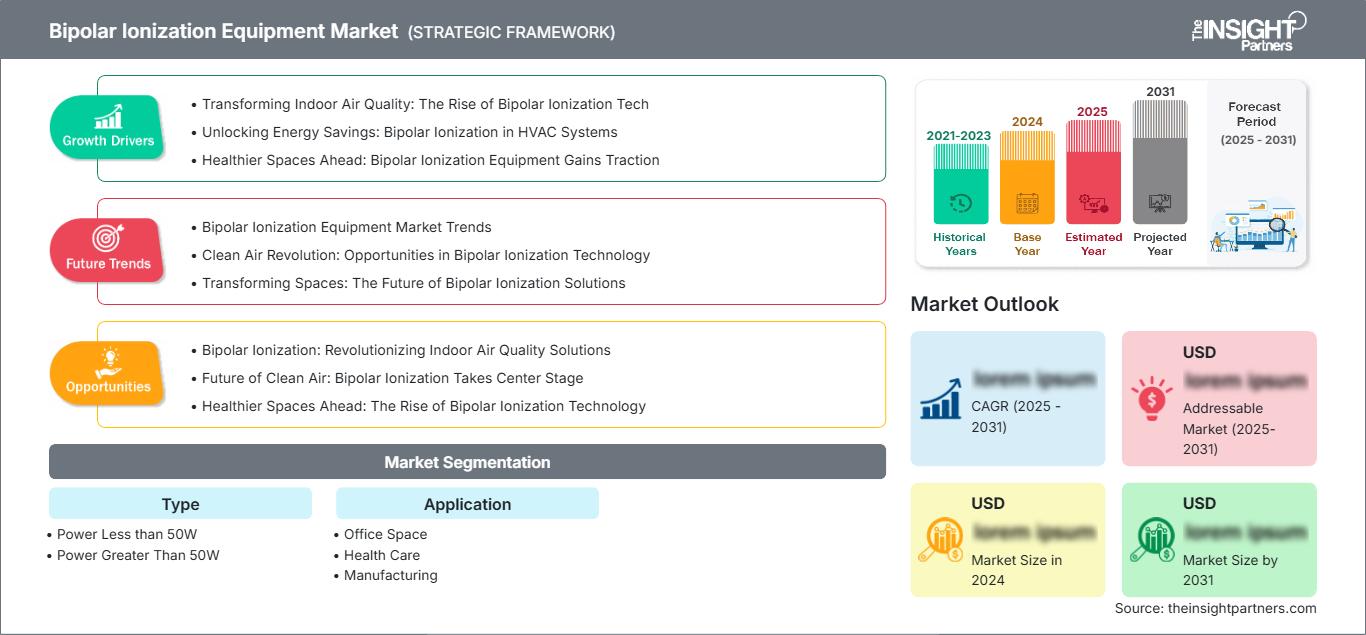
Bipolar Ionization Equipment Market: Strategic Insights
Regional Insights
North America Bipolar Ionization Equipment Market
North America held 36–39% share in 2025 and is projected to grow at a CAGR range of 7.8–8.6% during 2026–2034. The Bipolar Ionization Equipment Market share is supported by a large installed base of commercial HVAC systems, healthcare compliance spending, and facility operators seeking lower-energy methods to complement filtration and ventilation.
ASHRAE Standard 62.1 and Standard 241 discussions have strengthened buyer scrutiny around performance testing, ozone limits, and equivalent clean airflow. Airports, universities, hospitals, and office landlords are important adopters because they manage dense occupancy and variable ventilation loads. Retrofitting remains the dominant route, as duct-mounted and fan-coil products avoid major mechanical redesign.
U.S. Bipolar Ionization Equipment Market
The US represented 78–82% of North America in 2025 and is expected to grow at a CAGR range of 7.9–8.7% through 2034. Large healthcare networks, office REITs, education campuses, and public facilities are specifying bipolar ionization where validated low-ozone operation and maintainable installation reduce procurement risk.
Company presence is concentrated around HVAC channel partnerships and IAQ service providers. Global Plasma Solutions, Plasma Air International, Pure Air Control Services, AtmosAir Solutions, and Airionex benefit from domestic reference projects and engineering documentation. Applications are strongest in offices and hospitals, while manufacturing demand is rising in electronics, food processing, and pharmaceutical clean operations.
Europe Bipolar Ionization Equipment Market
Europe accounted for 25–28% share in 2025 and is projected to grow at a CAGR range of 7.2–8.0% during 2026–2034. Germany leads adoption through manufacturing, healthcare, engineering standards, and energy-conscious building upgrades. The UK follows with strong office retrofit activity and public-sector IAQ projects across education, transport, and healthcare estates.
France, Italy, and Spain are developing demand through hospital modernization, hospitality refurbishment, and industrial ventilation upgrades. European buyers place a high weight on ozone emissions, documented contaminant reduction, and compatibility with energy performance rules. Suppliers with localized technical support and installation partnerships are better positioned than product-only exporters.
APAC Bipolar Ionization Equipment Market
APAC held 22–25% share in 2025 and is forecast to grow at a CAGR range of 9.0–10.2% during 2026–2034. China is the leading country, supported by hospital construction, electronics manufacturing, and commercial HVAC upgrades. Japan, South Korea, India, and Australia add demand through healthcare, laboratories, offices, and public infrastructure.
Policy attention to urban air quality, energy-efficient buildings, and infection resilience is widening procurement. Manufacturing users value continuous air treatment where particulate and microbial control can support quality assurance. Local distributors are important because facility engineers require commissioning, sensor integration, and maintenance training.
Middle East & Africa Bipolar Ionization Equipment Market
The Middle East & Africa is expected to grow at a CAGR range of 8.2–9.4% during 2026–2034. Saudi Arabia leads regional demand as healthcare, hospitality, airports, and mixed-use megaprojects adopt advanced HVAC specifications. The UAE follows through with commercial real estate, hotels, and premium healthcare facilities.
South Africa and the Rest of MEA remain selective markets, with adoption linked to hospitals, laboratories, and high-value manufacturing. Hot climates raise outdoor-air cooling costs, making low-energy purification attractive when validated by engineers. Infrastructure investment and IAQ awareness will determine procurement pace.
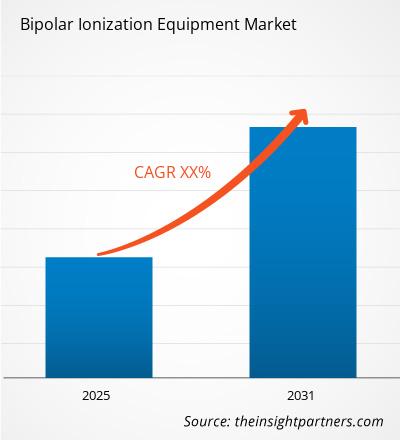
Segmentation Analysis
Type
The Type segment is expected to grow at a CAGR range of 7.9–8.8% during 2026–2034. The market scope by type is shaped by installation scale, airflow volume, energy limits, and control requirements. Low-wattage systems dominate distributed commercial spaces, while higher-power equipment is specified for larger air-handling units and manufacturing environments.
- Power Less than 50W products hold the strongest position in compact offices, clinics, classrooms, and fan-coil units because they support lower electrical load, easier retrofits, and distributed deployment across multiple zones.
- Power Greater Than 50W systems are strategically important for central air handlers, large healthcare facilities, manufacturing halls, and high-airflow HVAC systems requiring stronger ion output and centralized treatment.
Application
The Application segment is projected to grow at a CAGR range of 8.1–9.2% during 2026–2034. Adoption differs by risk profile: offices seek occupant confidence and energy savings, healthcare requires infection-control support, and manufacturing values contaminant reduction for process reliability. Procurement increasingly depends on engineering validation and maintenance simplicity.
- Office Space remains a mature application where landlords and corporate occupiers use bipolar ionization to improve perceived air quality, support hybrid-work occupancy, and reduce ventilation-related energy penalties.
- Health Care is the fastest-growing application because hospitals, clinics, and laboratories require layered air-treatment strategies that supplement filtration, ventilation, and infection-prevention protocols.
- Manufacturing adoption is rising in electronics, pharmaceuticals, food processing, and precision assembly, where particulate, odor, and microbial control can support worker safety and quality assurance.
Opportunity Snapshot
| Application | Revenue Contribution | Trend Tag | Adoption Stage |
| Office Space | High | Smart Retrofit | Mature |
| Health Care | High | Clinical IAQ | Scaling |
| Manufacturing | Medium | Clean Process | Scaling |
Bipolar Ionization Equipment Market Growth Drivers and Impact Analysis
Indoor Air Quality Compliance Moves Into Capital Planning
IAQ is moving from being an operations issue to becoming a consideration in capital planning because of the increasing emphasis on ventilation, filtration, air cleaning, and control of infectious aerosols in building standards. Changes in the 2025 updates of ASHRAE standards and the use of 241 framework have made it necessary for engineers to show plans of contaminant control strategies. The advantages of duct-mounted equipment are that it can be installed when replacing the HVAC system and not necessarily when the entire building is being refurbished. The effects of these changes will have a significant effect on hospitals, educational institutions, airports, and office buildings because of the occupancy rate, liabilities, and the cost of energy in the buildings. Moreover, the awareness of the health and production results of indoor air quality is making facility owners put more emphasis on air quality than just mitigation.
Energy Penalties From Outdoor Air Increase Retrofit Demand
The cost of cooling, heating, and dehumidification of commercial buildings is greater when indoor air focuses on higher intake rates of outside air. The energy used for HVAC could be one of the significant parts of the electrical consumption of a building, depending on its climate and humidity levels. The use of bipolar ionization is considered as one of the layers of the new IAQ approaches that help reduce the contaminants in the air without significantly increasing energy-consuming ventilation. It becomes evident when we look at the retrofit projects where the aim of the owners is to have lower fan pressure, less maintenance of filters, and better comfort without enlarging the equipment. Facility management is becoming more concerned about providing healthy indoor air quality without wasting energy and utilities.
Healthcare and Manufacturing Require Continuous Air Treatment
For healthcare and manufacturing, there is a need for continuous air treatment technologies that can be used in all occupied areas and manufacturing processes. While hospitals look to control pathogens in the air, eliminate odors, and improve infection prevention procedures, manufacturers need to control particles, microbiological contamination, and the consistency of their manufacturing operations. In addition, this driver will increase the need for premium products, monitoring, and servicing because organizations will pay premium prices for superior equipment, monitoring, and services. Moreover, this driver increases the need for independent testing, safe ozone generation, and maintenance documentation since procurement staff need to have reliable evidence for implementing active air cleaning technologies in various locations. On the other hand, regulations, employee safety programs, and more stringent requirements regarding indoor air quality are pushing companies to implement systems with proven performance records and monitoring capabilities.
Bipolar Ionization Equipment Market Future Trends
Sensor-Linked Ionization Platforms
Bipolar Ionization Equipment Market trends are moving toward sensor-linked platforms that adjust operating intensity according to occupancy, particulate load, VOC levels, and ventilation status. This transition will transform ionization from being an investment in a piece of equipment into being an intelligent IAQ system. Companies providing a combination of ionization technology with dashboards, alerts, analytics of commissioning, and cloud-based monitoring solutions can assist facility managers in quantifying and optimizing air quality performance. This movement also opens up potential for recurring revenues through monitoring subscriptions, component replacements, preventative maintenance services and verification services. The rapid rise in popularity of smart buildings leads to the need for integrating ionizers with building management systems, HVAC control systems and energy management systems.
Specification Based on Verified Low-Ozone Performance
In future specifications, there will be an increased focus on proven low ozone emissions, clarity regarding testing procedures, and application-specific proof rather than blanket statements of disinfection capabilities. Building engineers will have to evaluate the technologies based on air delivery cleanliness, contaminants reduced, maintenance considerations, and safety information. This will promote companies with independently tested products and prevent the use of untested devices. Gradually, procurement language will become more specific, calling for performance under real-world conditions.
Bipolar Ionization Equipment Market Opportunities
Healthcare Retrofit Programs in Existing Facilities
Healthcare retrofits create a high-value opportunity because many hospitals operate aging air-handling assets that cannot be replaced quickly. Bipolar Ionization Equipment Market Forecasts indicate that hospitals, outpatient centers, and diagnostic laboratories will prioritize modular devices that can be deployed ward by ward. Suppliers can win by offering engineering support, infection-control documentation, maintenance training, and post-installation verification. This opportunity is especially attractive in regions expanding healthcare capacity while managing energy intensity and staffing constraints.
Manufacturing Quality Assurance and Worker Safety Upgrades
Manufacturing sites present a largely untapped market for air treatment that can play a role in quality assurance, odor control, and the safety of workers. Electronics, pharmaceutical, food manufacturing, and precision assembly sites need consistent indoor environments and controlled contamination. The key is to approach facility engineers with pilot projects, maintenance considerations, and integration with current ventilation systems. The importance of channel partners who are industrial HVAC contractors cannot be overstressed because uptime, validation, and service matter more than price alone.
Recent Developments
- February 2026: CHARLOTTE, N.C. GPS Air, a leading provider of indoor air quality (IAQ) solutions, announced the launch of smartIAQ GridSet, an air purification system designed to help building owners and designers lower HVAC equipment costs and reduce energy consumption by cleaning air directly within occupied areas.
- June 2025: CHARLOTTE, N.C.--(BUSINESS WIRE)--GPS Air announced a major expansion of its smartIAQ platform, available in three unique configurations, each designed to provide targeted air purification, measurable outcomes and significant HVAC energy savings. By decreasing outdoor air requirements and streamlining ventilation system design, the expanded lineup helps reduce the total cost of ownership while addressing the specific requirements of various building types, including classrooms, offices, healthcare facilities, and auditoriums.
- June 2022: GPS Air has announced the launch of its new CI-2 compact ionization system, expanding its portfolio of Needlepoint Bipolar Ionization (NPBI) air-cleaning solutions designed for indoor air quality improvement. The new device is engineered for installation in a wide range of HVAC applications where space is limited, including heat pumps, ductless systems, fan coils, and air handlers.
Frequently Asked Questions

- Comprehensive Market Sizing and Forecast Analysis
- Detailed Segmentation Analysis
- In-Depth Market Dynamics Assessment
- Regional and Country-Level Insights
- Competitive Landscape and Company Benchmarking
- Strategic Business Intelligence
Recent Reports
Testimonials

The Insight Partners' SCADA System Market report is comprehensive, with valuable insights on current trends and future forecasts. The team was highly professional, responsive, and supportive throughout. We are very satisfied and highly recommend their services.
RAN KEDEM Partner, Reali Technologies LTDs
I requested a report on a very specific software market and the team produced the report in a few days. The information was very relevant and well presented. I then requested some changes and additions to the report. The team was again very responsive and I got the final report in less than a week.
JEAN-HERVE JENN Chairman, Future Analytica
We worked with The Insight Partners for an important market study and forecast. They gave us clear insights into opportunities and risks, which helped shape our plans. Their research was easy to use and based on solid data. It helped us make smart, confident decisions. We highly recommend them.
PIYUSH NAGPAL Sr. Vice President, High Beam Global
The Insight Partners delivered insightful, well-structured market research with strong domain expertise. Their team was professional and responsive throughout. The user-friendly website made accessing industry reports seamless. We highly recommend them for reliable, high-quality research services
YUKIHIKO ADACHI CEO, Deep Blue, LLC.
This is the first time I have purchased a market report from The Insight Partners.While I was unsure at first, I visited their web site and felt more comfortable to take the risk and purchase a market report.I am completely satisfied with the quality of the report and customer service. I had several questions and comments with the initial report, but after a couple of dialogs over email with their analyst I believe I have a report that I can use as input to our strategic planning process.Thank you so much for taking the extra time and making this a positive experience.I will definitely recommend your service to others and you will be my first call when we need further market data.
JOHN SUZUKI President and Chief Executive Officer, Board Director, BK Technologies
I wish to appreciate your support and the professionalism you displayed in the course of attending to my request for information regarding to infectious disease IVD market in Nigeria. I appreciate your patience, your guidance, and the fact that you were willing to offer a discount, which eventually made it possible for us to close a deal. I look forward to engaging The Insight Partners in the future, all thanks to the impression you have created in me as a result of this first encounter.
DR CHIJIOKE ONYIA MANAGING DIRECTOR, PineCrest Healthcare Ltd.Reason to Buy
- Informed Decision-Making
- Understanding Market Dynamics
- Competitive Analysis
- Identifying Emerging Markets
- Customer Insights
- Market Forecasts
- Risk Mitigation
- Boosting Operational Efficiency
- Strategic Planning
- Investment Justification
- Tracking Industry Innovations
- Aligning with Regulatory Trends





 Get Free Sample for