
Capsule Endoscopy Market Trends, Demand & Growth by 2034
Coverage: By Product (Endoscopy Capsule and Components), Formulation (Tablets and Capsules), Application [Obscure Gastrointestinal Bleeding (OGIB), Crohn’s Disease, Small Bowel Diseases, and Other Diseases], and End Users (Hospitals, Clinics, Research Centers, and Other End Users), and Geography (North America, Europe, Asia Pacific, and South and Central America)
- Status : Data Released
- Report Code : TIPRE00006873
- Category : Life Sciences
- No. of Pages : 178
- Available Report Formats :


- Last update date : August 24, 2026


2025 Market Size
US$ 348.14 Mn
Base year value
2034 Forecast
US$ 995.85 Mn
Projected by 2034
CAGR 2026-2034
14.04 %
Growth rate
Addressable Market
US$ 6,397.07 Mn
(2026-2034)
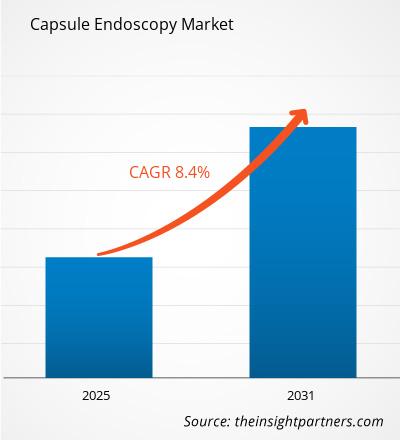
The Capsule Endoscopy Market is projected to grow from US$ 348.14 Million in 2025 to US$ 995.85 Million by 2034, recording a CAGR of 14.04% during 2026–2034. Demand is being shaped by wider use of minimally invasive gastrointestinal diagnostics, broader small bowel visualization needs, and the continued shift toward patient-friendly procedures that reduce sedation, facility time, and post-procedure recovery burden.
Across North America, the Capsule Endoscopy Market size is supported by a 2026–2034 estimated CAGR range of 13.8–14.5%, driven by high gastrointestinal procedure volumes and early adoption of remote-capable diagnostic workflows. Structural growth is reinforced by hospital investment in digestive disease programs, payer acceptance of non-invasive testing pathways, and specialist availability across the US and Canada.
Capsule Endoscopy Market Assessment and Insights
- North America held a 39–42% share in 2025 and is expected to grow at a CAGR of 13.8–14.5% during 2026–2034, supported by mature GI diagnostics, reimbursement depth, and rapid uptake of home-enabled capsule procedures.
- US accounted for 82–85% of North America in 2025 and is expected to grow at a CAGR of 13.9–14.6% during 2026–2034, led by specialist gastroenterology networks and digital procedure management.
- Europe represented a 26–29% share in 2025 and is projected to grow at a CAGR of 12.5–13.2% during 2026–2034, with Germany, the UK, and France leading adoption through organized digestive disease pathways.
- Asia Pacific captured a 21–24% share in 2025 and is expected to grow at a CAGR of 15.6–16.4% during 2026–2034, led by China, Japan, South Korea, and India as screening access expands.
- Largest Segment: Endoscopy Capsule held a 71–74% market share in 2025 and is expected to grow at a CAGR of 13.7–14.3% during 2026–2034 due to repeat procedural demand.
- High Growth Segment: Components held a 26–29% market share in 2025 and is expected to grow at a CAGR of 15.4–16.1% during 2026–2034 as software, recorders, and AI-enabled readers improve workflow economics.
- Key companies analyzed in detail: RF Co., Ltd.; Chongqing Jinshan Science & Technology (Group) Co., Ltd.; Shangxian Minimal Invasive Inc.; CapsoVision, Inc.; Check-Cap Ltd.; IntroMedic Co., Ltd.; Medtronic plc; Olympus Corporation; AnX Robotica Corp.; Fujifilm Holdings Corporation; Boston Scientific Corporation.
Source: The Insight Partners' analysis based on proprietary research, government publications, company annual reports, investor presentations, industry databases, and expert interviews.
In contrast to the previous generation of technologies, which were concerned mainly with image capture and physician assessment, newer platforms have an increased focus on a wide field of views, increased frame reliability, wireless transmission of information and minimized use of heavy external hardware. The production trends are undergoing changes as the suppliers incorporate optics, batteries, transmitters, cloud-based software and disposable accessories into integrated validated systems.
Over the forecast period, the funding would be directed towards developing hospital networks in emerging Asian countries, ambulatory GI centers and ingestion technologies with telemedicine capabilities. Regulatory approvals that will take into account remote monitoring, pediatric applications and AI-driven analysis will facilitate increased application of capsule technology. There is increased awareness regarding the public health concerns related to colorectal cancer, inflammatory bowel diseases and obscure GI bleeding, which will boost the diagnostic volumes.
Capsule Endoscopy Market Report Scope
| Report Attribute | Details |
|---|---|
| Market size in 2025 | US$ 348.14 Million |
| Market Size by 2034 | US$ 995.85 Million |
| Global CAGR (2026 - 2034) | 14.04% |
| Historical Data | 2021-2024 |
| Forecast period | 2026-2034 |
Capsule Endoscopy Market Analysis
The growth potential in the Capsule Endoscopy Market is driven by the demand to visualize intestinal areas that are hard to examine with traditional upper or lower endoscopy. It is most pronounced in cases of obscure gastrointestinal bleeding, Crohn’s disease management, iron-deficiency anemia evaluation, and small bowel lesions.
Value chain in suppliers includes components such as micro-imaging sensors, battery system, capsule housing, receiver, image viewer, storage system and analysis for doctors. Manufacturers have more power now as the speed of image examination and its sorting play an important role in their use. The hospital prefers systems with fast procedure time and no repeat exams and good integration with EMR.
The Capsule Endoscopy Market analysis indicates a competitive structure led by global endoscopy leaders and specialist capsule developers. Medtronic plc and Olympus Corporation benefit from broad hospital relationships, while CapsoVision, Inc., IntroMedic Co., Ltd., Chongqing Jinshan Science & Technology (Group) Co., Ltd., and RF Co., Ltd. compete through imaging architecture and system design.
Positioning strategies are gradually moving away from hardware-based differences towards accessibility solutions, pediatric applications, artificial intelligence, and remote procedures support. CapsoVision Inc., Medtronic plc, and Olympus Corp. are focusing on wire-free processes, expanding the usage of PillCam, and creating intelligent endoscopy ecosystems, respectively. AnX Robotica Corp., Fujifilm Holdings Corporation, Boston Scientific Corp., and Shangxian Minimal Invasive Inc. provide an innovation backbone for the industry.
● REPORT CUSTOMIZATION
Tailor This Report To Align With Your Specific Business Requirements
This report can be customized to align precisely with your business objectives, scope, and target markets. Customization options include tailored segmentation, geography, competitive analysis, and strategic insights to support informed decision-making.
Customize This Report →WHAT YOU CAN ADJUST
- ● Segmentations
- ● Geography
- ● Competitive Analysis
- ● Language Preferences
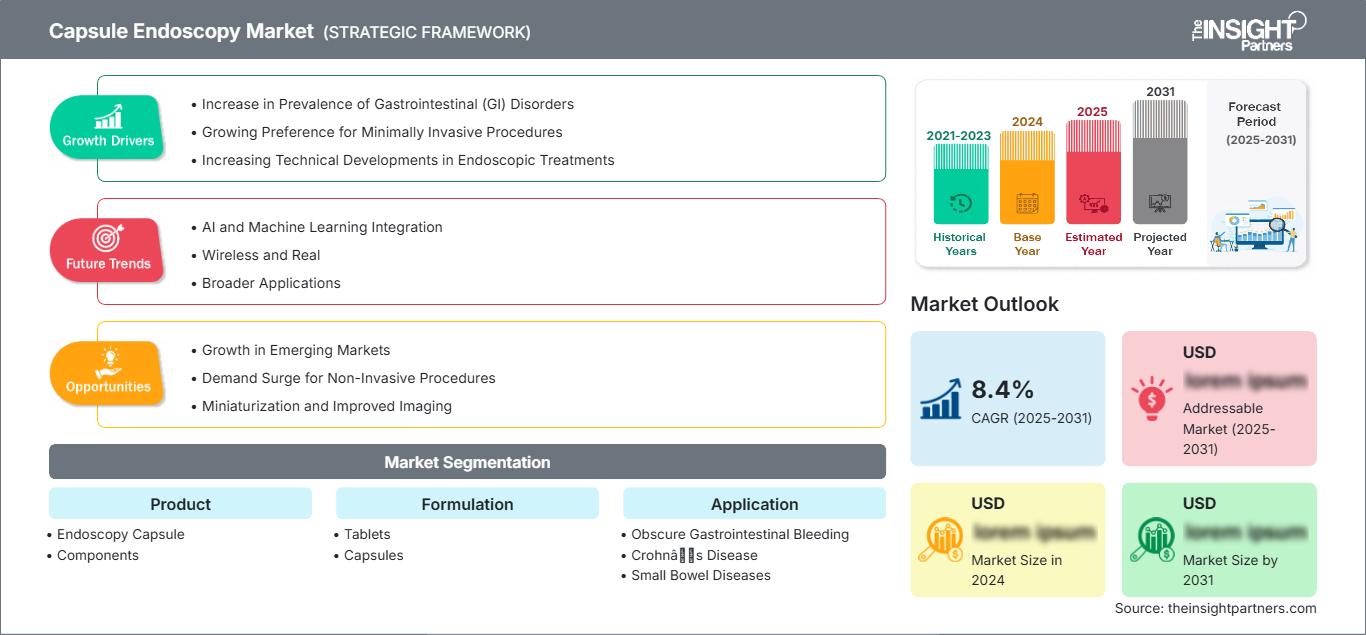
Capsule Endoscopy Market: Strategic Insights
Regional Insights
North America Capsule Endoscopy Market
North America held a 39–42% share in 2025 and is projected to expand at a CAGR of 13.8–14.5% during 2026–2034. The Capsule Endoscopy Market share in the region reflects dense gastroenterology capacity, advanced hospital infrastructure, and payer coverage for small bowel evaluation when standard endoscopy is inconclusive. Adoption is also supported by higher diagnosis rates for inflammatory bowel disease.
Remote ingestion, pediatric use, and single-use workflow innovation are increasing procedure flexibility in the US and Canada. Hospitals are using capsule systems to reduce bottlenecks in endoscopy suites, while clinics are building outpatient diagnostic models. The region remains attractive for launches because regulatory clarity and specialist training can accelerate product uptake.
U.S. Capsule Endoscopy Market
The US represented 82–85% of North America in 2025 and is expected to grow at a CAGR of 13.9–14.6% during 2026–2034. Procedure demand is concentrated in large GI practices, academic hospitals, ambulatory surgery networks, and integrated delivery systems that manage chronic digestive disease populations. Company presence is strong across Medtronic plc, CapsoVision, Inc., Olympus Corporation, and Boston Scientific Corporation.
Application trends are moving beyond obscure bleeding into Crohn’s disease surveillance, iron-deficiency anemia assessment, and pediatric small bowel visualization. Clinical users prioritize capsule retention risk management, faster reader software, and fewer patient visits. The US market also benefits from telehealth familiarity, which supports home-based ingestion models when protocols allow physician supervision and structured follow-up.
Europe Capsule Endoscopy Market
Europe accounted for a 26–29% share in 2025 and is projected to grow at a CAGR of 12.5–13.2% during 2026–2034. Germany is the leading country due to specialist availability, hospital purchasing capacity, and strong adoption of evidence-based GI pathways. The UK is expanding use through capacity management in the National Health Service digestive disease services.
Germany benefits from advanced endoscopy units and clinical familiarity with small bowel capsule use. The UK shows demand where capsule diagnostics can help manage waiting lists and reduce avoidable conventional procedures. Both markets prioritize cost-effectiveness, reading efficiency, and integration with established referral pathways.
France, Italy, and Spain add scale through organized gastroenterology networks and increasing attention to inflammatory bowel disease management. France emphasizes hospital-based diagnostics, Italy has strong specialist center adoption, and Spain is expanding outpatient GI capacity. Across Europe, procurement remains evidence-driven, with reimbursement and guideline alignment shaping adoption pace.
APAC Capsule Endoscopy Market
APAC held a 21–24% share in 2025 and is expected to grow at a CAGR of 15.6–16.4% during 2026–2034. China is the leading country, supported by domestic capsule manufacturers, hospital expansion, and rising demand for non-invasive digestive diagnostics. Japan and South Korea contribute through advanced imaging adoption and aging populations.
India and Australia are also expanding procedural access, albeit through different channels. India’s opportunity lies in private hospitals and urban GI centers, while Australia benefits from structured specialty care and remote healthcare needs. Policy investment in hospital modernization, digital health, and cancer screening awareness supports regional expansion.
Middle East & Africa Capsule Endoscopy Market
The Middle East & Africa market is expected to grow at a CAGR of 11.8–12.6% during 2026–2034. Saudi Arabia is the leading country due to hospital infrastructure investment and specialty care expansion under healthcare transformation programs. The UAE follows with premium private hospitals and medical tourism-linked diagnostics.
South Africa leads adoption in sub-Saharan Africa, while the Rest of MEA remains uneven because specialist access, reimbursement, and device affordability vary sharply. Energy-linked fiscal capacity in Gulf countries supports hospital modernization, yet training and procurement centralization remain essential for wider use of capsule-based GI diagnostics.
Segmentation Analysis
Product
The Product segment is expected to grow at a CAGR of 14.0–14.6% during 2026–2034. The Capsule Endoscopy Market scope across product categories is defined by the interaction of disposable capsules, receivers, software, workstations, and data management components. Hospitals increasingly evaluate full-platform economics, including reading time, image quality, service support, and patient throughput.
- Endoscopy Capsule remains the revenue anchor because each procedure requires a capsule and clinical demand is repeatable across bleeding, Crohn’s disease, and small bowel evaluation.
- Components are strategically important as receivers, software, batteries, sensors, and cloud tools influence diagnostic efficiency, procurement lock-in, workflow scalability, and total cost of ownership.
Formulation
The Formulation segment is expected to grow at a CAGR of 13.2–14.0% during 2026–2034. Product acceptance is influenced by swallowability, patient comfort, retention risk screening, and physician confidence in complete transit. Formulation design also affects pediatric use, adult tolerance, packaging, and procedural consistency across hospitals and clinics.
- Tablets represent a narrower but useful design concept where compact ingestible formats support patient familiarity, transit predictability, and potential integration with diagnostic or sensing features.
- Capsules dominate clinical usage because the format accommodates optics, lighting, power, storage, and transmission systems while remaining acceptable for most adult diagnostic procedures.
Application
The Application segment is expected to grow at a CAGR of 14.1–14.8% during 2026–2034. Demand is strongest where capsule visualization answers questions that conventional procedures cannot address efficiently. Growth is supported by rising inflammatory bowel disease prevalence, persistent evaluation of obscure bleeding, and the need for patient-friendly small bowel assessment.
- Obscure Gastrointestinal Bleeding is a core indication because capsule imaging helps identify small bowel sources after negative upper and lower endoscopy.
- Crohn’s Disease use is increasing as clinicians seek mucosal assessment, disease extent evaluation, and monitoring support in patients requiring repeated investigations.
- Small Bowel Diseases create broad demand across suspected tumors, ulcers, vascular lesions, celiac-related complications, and unexplained symptoms requiring complete intestinal visualization.
End Users
The End Users segment is expected to grow at a CAGR of 13.9–14.7% during 2026–2034. Hospitals remain the primary channel, but clinics and research centers are gaining influence as software-enabled workflows reduce procedural complexity. End users increasingly assess platform choice through staff burden, diagnostic yield, reimbursement fit, and follow-up coordination.
- Hospitals lead adoption because they manage complex GI referrals, retain specialist readers, and have infrastructure for handling capsule retention risk and follow-up interventions.
- Clinics are scaling as outpatient GI practices use capsule diagnostics to reduce patient inconvenience, accelerate evaluation, and free conventional endoscopy capacity.
- Research Centers support innovation by validating AI readers, pediatric protocols, remote ingestion models, and comparative diagnostic performance in defined patient groups.
Opportunity Snapshot
| Segment Name | Revenue Contribution (High/Medium/Low) | Trend Tag (MAX 2 words, specific) | Adoption Stage (Emerging/Scaling/Mature) |
| Obscure Gastrointestinal Bleeding | High | Bleed Mapping | Mature |
| Crohn’s Disease | Medium | IBD Monitoring | Scaling |
| Small Bowel Diseases | High | Lesion Detection | Scaling |
Capsule Endoscopy Market Growth Drivers and Impact Analysis
Rising burden of gastrointestinal disorders
Procedure needs for the diagnosis of gastrointestinal conditions is rising due to the rising prevalence, with patients whose conditions do not yield results through regular endoscopy requiring additional diagnostic support. Capsule-based systems provide a valuable diagnostic solution for obscure bleeding, inflammation in small bowels, and lesion presence without the need for sedation and the invasiveness involved with scope movement. The impact of this market in terms of planning of hospital workflow is clear, as capsule-based procedures allow scheduling of fewer room requirements compared with endoscopy procedures. This increases patient capacity and renders the Capsule Endoscopy Market immune to staff shortages. Recurring need for diagnosis due to chronicity of digestive problems is important for repeat capsule usage.
Shift toward remote and outpatient diagnostic pathways
There is increasing pressure on the medical practitioners to relocate suitable processes from a costly hospital-based environment, and this is possible in capsule endoscopy, where proper patient selection is considered. The remote ingest models, compact receivers, and access to analysis via the cloud eliminate frequent visits to facilities without sacrificing the expertise of specialists. The tangible result is the reduction in administrative overhead for clinics and increased convenience for patients who have to visit the clinic several times for diagnosis. The importance of this trend is especially noticeable in North America, Australia, and rural parts of Europe, where the physical distance and scheduling make the process difficult to complete.
Improving imaging, software, and AI-assisted reading efficiency
Clinical usefulness of capsule endoscopy goes beyond imaging but includes rapid interpretation by physicians. With advancements in technology, the future is promising in terms of a wider field of vision, increased frame capturing efficiency, increased lesion visibility, improved data transmission and reduced number of images through the process of redundancy removal. Such an advancement solves the problem of prolonged reading time by gastroenterologists, which was among the obstacles to the adoption of the procedure. AI-based prioritization of images will allow identifying images with suspected bleeding, ulcers, polyps, and inflammation and will increase the efficiency of high-volume facilities. The economic impact of the development is the change in procurement criteria for capsule endoscopy.
Capsule Endoscopy Market Future Trends
AI-enabled capsule interpretation platforms
The next competitive phase will center on software that transforms capsule studies from long video reviews into structured diagnostic workflows. Capsule Endoscopy Market trends indicate that providers will increasingly expect automated image filtering, suspected-lesion flagging, severity scoring, and integration with clinical documentation. This will not remove physician judgment, but it can reduce variability and shorten reporting times. Vendors able to validate AI across diverse populations will gain trust from hospitals, regulators, and payers. Over time, AI-enabled platforms may become a differentiator equal to optics or battery life because the main economic constraint in capsule programs is specialist reading capacity.
Expansion of pediatric and pan-enteric applications
The usage in pediatrics and overall analysis of the digestive system will dictate the directions of development in future generations of products. Pediatric patients require procedures that focus on comfort and are conducted without sedation, whereas physicians need enough picture quality in order to be able to make an appropriate diagnosis. Additionally, the development of the pan-enteric capsule seems to be quite probable, since doctors need a less invasive method of examining small intestine and colon diseases. Further growth will rely upon protective measures, appropriate swallowing techniques, and evidence of clinical usefulness.
Capsule Endoscopy Market Opportunities
Remote ingestion programs for distributed GI care
Remote ingestion creates an actionable opportunity for health systems that need to expand diagnostic access without adding endoscopy suite capacity. Capsule Endoscopy Market Forecasts point to stronger uptake where vendors can provide patient kits, virtual supervision protocols, logistics support, and secure data upload. Investor and device companies would have to focus more on working with integrated delivery systems, rural hospitals, and gastroenterologists’ specialty groups that are using telemedicine services. For a business to be successful, it will need well-developed criteria of patient selection, patient education, and an easy process for moving to regular medicine when necessary.
Software-led differentiation in clinic-based purchasing
Specialty clinics provide an increasing area of opportunity since capsule procedures can be done under fewer infrastructure constraints than traditional endoscopy. Nevertheless, clinics require systems that make scheduling, ingestion, transmission, interpretation, and reporting easier. Vendors can take advantage of such an opportunity by providing subscription-based software, cloud viewers, AI-assisted workflows, and service packs, which reduce initial complexity. This is particularly true for monitoring Crohn’s disease and assessment of recurrent bleeding. Companies that will help clinics train their staff and create proper documentation for payers will have higher conversion rates. The opportunity exists not only in selling devices but also in earning money from the platform repeatedly.
Recent Developments
- September 2025: Olympus Corporation launched its OLYSENSE CAD/AI portfolio in the US and Europe, introducing cloud-based AI applications for gastrointestinal endoscopy workflows, including tools for colorectal polyp detection, Barrett’s esophagus dysplasia support, and ulcerative colitis assessment, reinforcing its strategic move toward intelligent endoscopy ecosystems.
- January 2025: CapsoVision, Inc. received US FDA clearance for CapsoCam Plus pediatric use in patients aged two years and older, expanding its 360-degree panoramic capsule endoscopy platform into child-friendly small bowel visualization and reducing reliance on wearable recorders or adhesive equipment during the diagnostic experience.
- December 2024: Medtronic plc announced the first successful patient procedure ingestion using its next-generation PillCam Genius SB capsule endoscopy kit at the University of Miami Health System, highlighting simplified equipment management and the ability to complete procedures in clinic, hospital, or home-based telehealth settings.
Frequently Asked Questions

- Comprehensive Market Sizing and Forecast Analysis
- Detailed Segmentation Analysis
- In-Depth Market Dynamics Assessment
- Regional and Country-Level Insights
- Competitive Landscape and Company Benchmarking
- Strategic Business Intelligence
Recent Reports
Testimonials

The Insight Partners' SCADA System Market report is comprehensive, with valuable insights on current trends and future forecasts. The team was highly professional, responsive, and supportive throughout. We are very satisfied and highly recommend their services.
RAN KEDEM Partner, Reali Technologies LTDs
I requested a report on a very specific software market and the team produced the report in a few days. The information was very relevant and well presented. I then requested some changes and additions to the report. The team was again very responsive and I got the final report in less than a week.
JEAN-HERVE JENN Chairman, Future Analytica
We worked with The Insight Partners for an important market study and forecast. They gave us clear insights into opportunities and risks, which helped shape our plans. Their research was easy to use and based on solid data. It helped us make smart, confident decisions. We highly recommend them.
PIYUSH NAGPAL Sr. Vice President, High Beam Global
The Insight Partners delivered insightful, well-structured market research with strong domain expertise. Their team was professional and responsive throughout. The user-friendly website made accessing industry reports seamless. We highly recommend them for reliable, high-quality research services
YUKIHIKO ADACHI CEO, Deep Blue, LLC.
This is the first time I have purchased a market report from The Insight Partners.While I was unsure at first, I visited their web site and felt more comfortable to take the risk and purchase a market report.I am completely satisfied with the quality of the report and customer service. I had several questions and comments with the initial report, but after a couple of dialogs over email with their analyst I believe I have a report that I can use as input to our strategic planning process.Thank you so much for taking the extra time and making this a positive experience.I will definitely recommend your service to others and you will be my first call when we need further market data.
JOHN SUZUKI President and Chief Executive Officer, Board Director, BK Technologies
I wish to appreciate your support and the professionalism you displayed in the course of attending to my request for information regarding to infectious disease IVD market in Nigeria. I appreciate your patience, your guidance, and the fact that you were willing to offer a discount, which eventually made it possible for us to close a deal. I look forward to engaging The Insight Partners in the future, all thanks to the impression you have created in me as a result of this first encounter.
DR CHIJIOKE ONYIA MANAGING DIRECTOR, PineCrest Healthcare Ltd.Reason to Buy
- Informed Decision-Making
- Understanding Market Dynamics
- Competitive Analysis
- Identifying Emerging Markets
- Customer Insights
- Market Forecasts
- Risk Mitigation
- Boosting Operational Efficiency
- Strategic Planning
- Investment Justification
- Tracking Industry Innovations
- Aligning with Regulatory Trends





 Get Free Sample for