
Cardiovascular Drugs Market Trends, Demand & Growth by 2034
Coverage: by Drug Class (Anti-Hypertensive, Anti-Hyperlipidemics, Anti-Coagulants, Anti-Arrhythmic, Anti-Fibrinolytic, Others); Distribution Channel (Hospital Pharmacies, Retail Pharmacies, Online Pharmacies) , and Geography (North America, Europe, Asia Pacific, and South and Central America)
- Status : Data Released
- Report Code : TIPRE00004427
- Category : Life Sciences
- No. of Pages : 150
- Available Report Formats :


- Last update date : September 08, 2026


2025 Market Size
US$ 166.99 Bn
Base year value
2034 Forecast
US$ 218.12 Bn
Projected by 2034
CAGR 2026-2034
3.01 %
Growth rate
Addressable Market
US$ 1,748.25 Bn
(2026-2034)
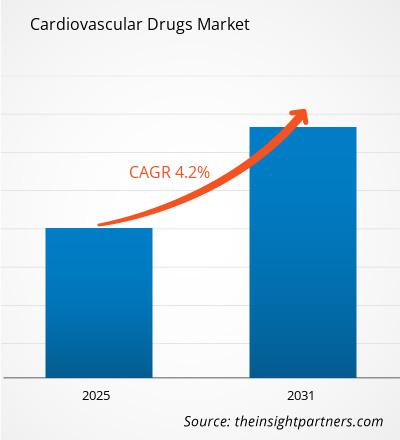
The Cardiovascular Drugs Market was valued at US$ 166.99 Billion in 2025 and is projected to reach US$ 218.12 Billion by 2034, registering a CAGR of 3.01% during 2026–2034.The expansion is driven by continuous needs for managing hypertension, dyslipidemia, thrombosis, and arrhythmia. Growing aging population, re-prescriptions, increasing preventive screening, and improving accessibility of treatments drive demand, while generics limit growth in matured indications.
North America continues to be the key market, having CAGR of 2.6-3.0% till 2034. The Cardiovascular Drugs Market size is boosted by organized screening, insurance, and rapid adoption of specialty lipid-lowering and anticoagulation treatments. Large cardiovascular disease prevalence creates a solid prescription base: 127.9 million Americans were affected by any form of cardiovascular disease between 2017 and 2020, based on American Heart Association data.
Cardiovascular Drugs Market Assessment and Insights
- North America: The region accounted for 38–40% share in 2025 and is expected to record a 2.6–3.0% CAGR during 2026–2034, supported by routine cardiovascular screening, broad reimbursement, specialty prescribing, and established pharmaceutical distribution.
- US: The country represented 86–88% of North American revenue in 2025 and is projected to expand at a 2.5–2.9% CAGR through 2034, supported by substantial chronic prescription volumes.
- Europe: Europe held 27–29% share in 2025 and is expected to register a 2.5–2.9% CAGR during 2026–2034. Germany leads regional demand, followed by the UK, France, Italy, and Spain.
- Asia Pacific: Asia Pacific represented 23–25% share in 2025 and is forecast to grow at a 4.0–4.5% CAGR through 2034. China leads, while India, Japan, South Korea, and Australia sustain adoption.
- Largest Segment: Anti-Hypertensive drugs accounted for a 30–33% market share in 2025 and are expected to register a 2.7–3.1% CAGR during 2026–2034, reflecting recurring, long-duration treatment.
- High Growth Segment: Anti-Hyperlipidemics represented 24–27% market share in 2025 and are projected to expand at a 3.5–4.0% CAGR through 2034 as intensive lipid management gains clinical priority.
- Key companies analyzed in detail: Pfizer Inc., Bayer AG, Novartis AG, Merck KGaA, Abbott Laboratories, Sun Pharmaceutical Industries Limited, Gilead Sciences, Inc., Takeda Pharmaceutical Company Limited, Eli Lilly and Company, and Johnson & Johnson Services, Inc.
Source: The Insight Partners' analysis based on proprietary research, government publications, company annual reports, investor presentations, industry databases, and expert interviews.
The focus in therapy development has moved from bulk production of small molecules to the combination of existing generics, targeted biologics, RNA-based therapies, and drugs targeting co-morbid conditions related to cardiac, renal, and metabolic diseases. Flexible production models become increasingly necessary because APIs, sterile injectables, and specialty devices are produced under different production requirements. The development of digital compliance technologies, decentralized trials, and real-world data analysis improves patient identification and post-launch surveillance, while payers' interests push companies towards outcome-oriented and de-hospitalization product differentiation.
During the forecast period, new patient population coming from developing countries will make up for a more significant share because of the growing incidence of hypertension and increasing insurance penetration. Pathways that promote generic drugs based on evidence will help reduce costs, and accelerated review process will be beneficial for therapies that aim at residual cardiovascular risk. Research and development will focus on long-acting formulations, factor XI inhibitors, cardiometabolic combination drugs, and scalable manufacturing.
Cardiovascular Drugs Market Report Scope
| Report Attribute | Details |
|---|---|
| Market size in 2025 | US$ 166.99 Billion |
| Market Size by 2034 | US$ 218.12 Billion |
| Global CAGR (2026 - 2034) | 3.01% |
| Historical Data | 2021-2024 |
| Forecast period | 2026-2034 |
Cardiovascular Drugs Market Analysis
The drivers of Cardiovascular Drugs Market development include constant exposure to hypertension, increased levels of cholesterol, diabetes, obesity, and age-related vascular problems. According to the WHO statistics for 2022, about 19.8 million people died from cardiovascular diseases; this equals to 32% of all deaths worldwide, and the majority of those fatalities (75%) happen in low- and middle-income countries. Physicians, hospitals, retail pharmacy chains, diagnostic labs, distributors, and benefit managers build a complex network that transforms tests' outcomes into repeated prescriptions.
Supply characteristics differ for each product and specialty. Standard anti-hypertensive medications are produced in a competitive sector where there is a strong emphasis on economies of scale, purchasing, and access to active ingredients. In turn, injectable lipophilic medicines and novel anti-coagulants depend on specific production, cold chain delivery, physician education, and insurance coverage. Therefore, it is important to balance regional sourcing with inventory management not to have shortages without growing working capital.
The Cardiovascular Drugs Market Report has highlighted a competitive structure that includes diversifying pharmaceutical players and players focused on cost-effective chronic drugs. There are anticoagulant franchises belonging to Pfizer Inc. and Bayer AG, heart failure and lipid management drugs from Novartis AG, generic drugs by Sun Pharmaceutical Industries Limited, and metabolic intervention for the cardiovascular disease market from Eli Lilly and Company.
More investment goes to those therapies that can prove to have low levels of hospitalizations, better compliance, and multisystemic effects. Johnson & Johnson Services, Inc. offers cardiovascular care along with the pharmaceutical business, Abbott Laboratories provides diagnostics and interventions which have an impact on drug choice. Merck KGaA, Gilead Sciences, Inc., and Takeda Pharmaceutical Company Limited remain strategically positioned through their regional portfolios, R&D capabilities, collaboration, and lifecycle management.
● REPORT CUSTOMIZATION
Tailor This Report To Align With Your Specific Business Requirements
This report can be customized to align precisely with your business objectives, scope, and target markets. Customization options include tailored segmentation, geography, competitive analysis, and strategic insights to support informed decision-making.
Customize This Report →WHAT YOU CAN ADJUST
- ● Segmentations
- ● Geography
- ● Competitive Analysis
- ● Language Preferences
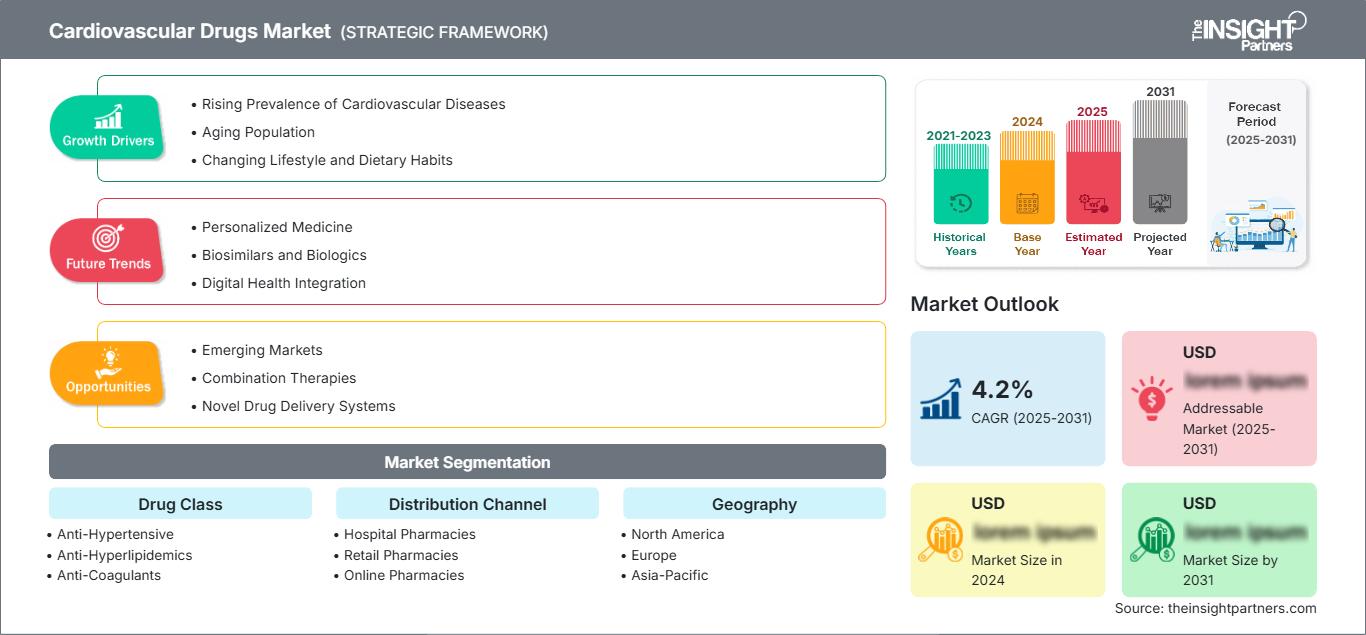
Cardiovascular Drugs Market: Strategic Insights
Regional Insights
North America Cardiovascular Drugs Market
North America comprised 38-40% of worldwide revenue in 2025 and is forecasted to register a CAGR of 2.6-3.0% between 2026-2034. The Cardiovascular Drugs Market Share has witnessed robust diagnosis, clear treatment guidelines, good prescribing adherence, and wide availability through employer-based, government, and private insurance. Specialty pharmacies also help manage prior authorizations and patients' treatment for injectable or expensive cardiovascular drugs.
North America has strong generic drug usage as well as rapid uptake of differentiation drugs in the category of anticoagulant drugs, heart failure drugs, and lipid lowering drugs. Clinical decision support systems are increasing, identifying uncontrolled risk factors during regular treatment, thus expanding the number of eligible patients. Canada takes advantage of public funding of formulary lists and coordinated primary care while Mexico is growing through better screening and facilities for managing diseases in its urban centers.
U.S. Cardiovascular Drugs Market
The US contributed 86-88% of the North America market revenue in 2025, and is projected to grow at a CAGR of 2.5-2.9% up until 2034. In 2022, heart disease was the underlying cause of 941,652 US deaths, illustrating the long-term medical necessity that underpins the need for preventative and secondary treatments. The large insured populations, specialist networks, and organized pharmacy benefits systems facilitate prescription persistence.
The major players include Pfizer Inc., Novartis AG, Eli Lilly and Company, Johnson & Johnson Services, Inc., and Abbott Laboratories that have commercial, research, or cardiovascular care presence in the market. The trend in application of treatment is moving towards a risk-based intensification strategy, home monitoring of blood pressure, and medicine reconciliation after discharge from the hospital. However, formulary management, generic substitution, and co-payments restrict pricing ability.
Europe Cardiovascular Drugs Market
Europe accounted for 27–29% of worldwide revenue in 2025, and the region is set to grow by a 2.5–2.9% CAGR until 2034. Germany drives through having a big insured patient population, specific infrastructure, and relatively early adoption of new treatments. Centralized reimbursement evaluation generates strict evidence demands yet ensures a clear path to coverage once clinical value has been shown.
In the UK, cost-effectiveness, consistent prescribing practices, and preventive medicine within general practices are important. In France, the national system of remuneration ensures the widespread availability of medications, but regional procurement and generic drugs are increasingly common in Italy and Spain. Ageing populations guarantee stable demand for prescriptions regardless of the existence of reference prices.
APAC Cardiovascular Drugs Market
The Asia Pacific held a market share of 23-25% in 2025 and is expected to gain at a CAGR of 4.0-4.5% during 2026-2034. China is the revenue leader in the region on account of buying from hospitals, manufacture locally, and increase in chronic diseases' coverage. Japan is the source of mature demand, whereas India is the source of volume potential due to improved diagnostics and generics.
South Korea and Australia provide due to the developed insurance coverage and guidelines. Incentives for manufacturing, central buying, digital pharmacies, and screening programs are contributing to the availability of drugs, though rural diagnostics and reimbursement challenges still exist.
Middle East & Africa Cardiovascular Drugs Market
Middle East & Africa is expected to achieve a 3.2–3.7% CAGR between 2026 and 2034. Saudi Arabia will take the lead, thanks to investments in hospitals, localization, and chronic disease management programs. The UAE integrates insurance cover with a network of pharmacies connected through technology, while South Africa drives the sub-Saharan market through healthcare and private channels.
Rest of MEA will continue to remain fragmented owing to variations in terms of infrastructure and availability of drugs. Energy-driven health sector upgrade in Gulf nations provides an edge in procurement, but distribution capabilities drive the adoption process.
Segmentation Analysis
Drug Class
The Drug Class segment is projected to record a 2.7–3.1% CAGR during 2026–2034. The Cardiovascular Drugs Market scope includes preventive and therapeutic products addressing blood pressure, lipids, coagulation, rhythm disorders, and bleeding control. Recurring oral prescriptions sustain volume, while differentiated injectables and targeted treatments provide incremental value. Treatment selection depends on comorbidities, event risk, monitoring requirements, contraindications, and formulary coverage.
- Anti-Hypertensive: These medicines hold the leading position because hypertension frequently requires lifelong management. Combination tablets, routine primary-care prescribing, and broad generic availability make this category strategically important for population-scale prevention.
- Anti-Hyperlipidemics: Statins sustain prescription volume, while PCSK9-targeting and other advanced therapies serve high-risk or treatment-resistant patients. Greater attention to LDL control supports strategic investment in differentiated, adherence-oriented products.
- Anti-Coagulants: Demand is driven by atrial fibrillation, venous thromboembolism, and post-procedure care. Convenience, bleeding profile, renal considerations, reversal options, and monitoring requirements strongly influence physician and formulary selection.
- Anti-Arrhythmic: These products address clinically diverse rhythm disorders and often require specialist oversight. Their strategic role reflects persistent demand among patients unsuitable for, awaiting, or continuing therapy after interventional procedures.
- Anti-Fibrinolytic: Anti-fibrinolytic medicines occupy a specialized position in controlling excessive bleeding. Hospital protocols, surgical workflows, trauma care, and careful thrombosis-risk assessment shape demand and institutional procurement decisions.
Distribution Channel
The Distribution Channel segment is expected to expand at a 3.0–3.4% CAGR during 2026–2034. Hospital pharmacies remain essential for acute and specialist-initiated treatment, retail pharmacies manage recurring community prescriptions, and online pharmacies improve refill convenience. Channel competition increasingly depends on inventory availability, reimbursement processing, counseling, delivery reliability, and integration with electronic prescriptions rather than medicine supply alone.
- Hospital Pharmacies: Hospital pharmacies lead access for acute cardiovascular events, complex anticoagulation, and specialist therapies. Their formulary committees strongly influence initiation, therapeutic interchange, discharge prescriptions, and subsequent community-care pathways.
- Retail Pharmacies: Retail outlets manage most recurring oral prescriptions and provide adherence support, blood-pressure services, and generic substitution. Their accessibility makes them commercially important for stable patients requiring long-term therapy.
- Online Pharmacies: Digital channels are scaling through automated refills, home delivery, electronic prescriptions, and price comparison. Their strategic importance is strongest for predictable maintenance therapies and digitally engaged chronic-care populations.
Opportunity Snapshot
| Distribution Channel | Revenue Contribution (High/Medium/Low) | Trend Tag | Adoption Stage |
| Hospital Pharmacies | High | Specialist Initiation | Mature |
| Retail Pharmacies | High | Chronic Refills | Mature |
| Online Pharmacies | Medium | Digital Fulfillment | Scaling |
Cardiovascular Drugs Market Growth Drivers and Impact Analysis
Expanding Detection of Hypertension and Dyslipidemia
Screening expansion converts previously unidentified cardiovascular risk into treatable demand. Blood-pressure measurement, lipid testing, diabetes monitoring, and automated risk scoring are increasingly embedded in primary-care and pharmacy workflows. Once high-risk individuals are identified, treatment commonly continues for years, creating durable prescription volumes rather than episodic demand. The commercial impact is strongest where governments combine screening with affordable generics and reliable follow-up. Manufacturers can respond with fixed-dose combinations, simplified titration, and adherence packaging. The CDC recognizes statins, bile acid sequestrants, fibrates, niacin, and injectable medicines as established cholesterol-lowering options, highlighting the breadth of treatment pathways available after diagnosis.
Population Aging and Multimorbidity Management
Older populations have higher exposure to hypertension, atrial fibrillation, coronary disease, heart failure, and thromboembolic events. They also frequently present with diabetes or chronic kidney disease, requiring coordinated treatment rather than isolated cardiovascular prescribing. This creates demand for medicines supported by evidence across interconnected conditions and for formulations that reduce regimen complexity. Commercially, aging increases recurring volume but also raises safety, interaction, and adherence requirements. Companies able to generate evidence in older adults, clarify renal dosing, and support medication reconciliation can improve formulary positioning. Health systems benefit when effective pharmacotherapy delays hospitalization, stroke, myocardial infarction, or functional decline.
Guideline-Based Prevention and Treatment Intensification
Clinical guidelines increasingly encourage risk-stratified prevention, lower lipid targets for high-risk patients, and timely treatment of uncontrolled blood pressure. This shifts prescribing from passive maintenance toward measurable target achievement. Laboratories, electronic records, and clinical alerts help identify patients requiring dose escalation or an additional therapy. Manufacturers benefit when products offer predictable efficacy, convenient administration, manageable safety, and outcome evidence. Payers, however, may require step therapy before covering premium options. The resulting impact is a tiered market: high-volume generics address most patients, while specialty products are concentrated among familial, recurrent-event, intolerant, or inadequately controlled populations.
Cardiovascular Drugs Market Future Trends
Long-Acting and Infrequently Administered Therapies
Cardiovascular Drugs Market trends will increasingly favor regimens that reduce daily adherence dependence. Infrequently administered injectables, durable RNA-based mechanisms, implant-assisted delivery, and eventually gene-editing approaches could complement established tablets for selected high-risk populations. Commercial adoption will depend on durability, reversibility, safety surveillance, administration capacity, and total treatment cost. Eli Lilly and Company’s 2025 agreement to acquire Verve Therapeutics highlighted industry interest in one-time gene-editing programs targeting PCSK9-linked cardiovascular risk. Such approaches could shift value from repeated dispensing toward treatment episodes supported by specialist infrastructure and extended outcomes monitoring.
Integrated Cardiometabolic Treatment Strategies
Future product positioning will increasingly connect cardiovascular outcomes with weight, glucose, kidney function, and inflammation. Clinical development programs are likely to measure composite outcomes relevant to several specialties, enabling coordinated prescribing by cardiologists, endocrinologists, nephrologists, and primary-care physicians. Eli Lilly and Company reported that SURPASS-CVOT enrolled more than 13,000 participants across 30 countries to compare cardiovascular outcomes between two incretin therapies. This evidence model will encourage portfolios built around patient risk profiles rather than single biomarkers, while intensifying competition for reimbursement across overlapping therapeutic budgets.
Cardiovascular Drugs Market Opportunities
Expand Affordable Chronic Therapy Access in Emerging Economies
Cardiovascular Drugs Market Forecasts indicate meaningful opportunity in countries where disease prevalence is high but treatment penetration remains constrained by diagnosis, affordability, and distribution. Manufacturers should prioritize quality-assured generics, stable active-ingredient sourcing, compact pack sizes, and partnerships with public procurement agencies. Local packaging or manufacturing can improve tender competitiveness and supply continuity. Digital refill systems and community pharmacy programs can reduce treatment interruption after diagnosis. The opportunity is commercially attractive because modest revenue per prescription can aggregate across large patient populations, provided companies control production costs and maintain dependable availability across urban and secondary healthcare networks.
Develop Evidence-Linked Adherence and Outcomes Services
Drug manufacturers can differentiate mature products by pairing them with services that improve persistence, monitoring, and measurable outcomes. Potential investments include refill reminders, pharmacist interventions, home blood-pressure integration, dose-support programs, and analytics identifying patients who discontinue therapy. These capabilities are particularly relevant for anticoagulants and lipid treatments, where missed doses or suboptimal persistence may undermine expected benefit. Partnerships with pharmacies, insurers, and health systems can create scalable service models without requiring ownership of the full care pathway. Success should be measured through refill continuity, target attainment, hospitalization trends, and documented patient engagement rather than application downloads alone.
Recent Developments
- August 2026: Novartis AG announced plans to present 10 cardiovascular abstracts at the European Society of Cardiology Congress 2026, including Phase IV VICTORION-CHALLENGE findings comparing inclisiran with bempedoic acid, additional abelacimab bleeding analyses, and evidence concerning lipoprotein(a) testing implementation. The program reflects continued investment in lipid management, anticoagulation, and residual cardiovascular risk.
- July 2025: Eli Lilly and Company reported topline SURPASS-CVOT results showing that tirzepatide met the primary non-inferiority objective against dulaglutide for major adverse cardiovascular events among adults with type 2 diabetes and established atherosclerotic cardiovascular disease. The trial enrolled more than 13,000 participants across 30 countries and lasted over four and a half years.
- January 2025: Bayer AG submitted a supplemental new drug application to the US FDA seeking a heart failure indication for finerenone in patients with left ventricular ejection fraction of at least 40%. The submission was supported by FINEARTS-HF findings showing a 16% reduction in the composite of cardiovascular death and total heart failure events.
Frequently Asked Questions

- Comprehensive Market Sizing and Forecast Analysis
- Detailed Segmentation Analysis
- In-Depth Market Dynamics Assessment
- Regional and Country-Level Insights
- Competitive Landscape and Company Benchmarking
- Strategic Business Intelligence
Recent Reports
Testimonials

The Insight Partners provided valuable market intelligence that supported our global go-to-market strategy. Their team was professional, responsive, and attentive to our feedback, providing thoughtful analysis and helpful methodological clarifications throughout the project.
Junmo Kim Chief Financial Officer (CFO), Enertech Co., Ltd.
The Insight Partners' SCADA System Market report is comprehensive, with valuable insights on current trends and future forecasts. The team was highly professional, responsive, and supportive throughout. We are very satisfied and highly recommend their services.
RAN KEDEM Partner, Reali Technologies LTDs
I requested a report on a very specific software market and the team produced the report in a few days. The information was very relevant and well presented. I then requested some changes and additions to the report. The team was again very responsive and I got the final report in less than a week.
JEAN-HERVE JENN Chairman, Future Analytica
We worked with The Insight Partners for an important market study and forecast. They gave us clear insights into opportunities and risks, which helped shape our plans. Their research was easy to use and based on solid data. It helped us make smart, confident decisions. We highly recommend them.
PIYUSH NAGPAL Sr. Vice President, High Beam Global
The Insight Partners delivered insightful, well-structured market research with strong domain expertise. Their team was professional and responsive throughout. The user-friendly website made accessing industry reports seamless. We highly recommend them for reliable, high-quality research services
YUKIHIKO ADACHI CEO, Deep Blue, LLC.
This is the first time I have purchased a market report from The Insight Partners.While I was unsure at first, I visited their web site and felt more comfortable to take the risk and purchase a market report.I am completely satisfied with the quality of the report and customer service. I had several questions and comments with the initial report, but after a couple of dialogs over email with their analyst I believe I have a report that I can use as input to our strategic planning process.Thank you so much for taking the extra time and making this a positive experience.I will definitely recommend your service to others and you will be my first call when we need further market data.
JOHN SUZUKI President and Chief Executive Officer, Board Director, BK Technologies
I wish to appreciate your support and the professionalism you displayed in the course of attending to my request for information regarding to infectious disease IVD market in Nigeria. I appreciate your patience, your guidance, and the fact that you were willing to offer a discount, which eventually made it possible for us to close a deal. I look forward to engaging The Insight Partners in the future, all thanks to the impression you have created in me as a result of this first encounter.
DR CHIJIOKE ONYIA MANAGING DIRECTOR, PineCrest Healthcare Ltd.Reason to Buy
- Informed Decision-Making
- Understanding Market Dynamics
- Competitive Analysis
- Identifying Emerging Markets
- Customer Insights
- Market Forecasts
- Risk Mitigation
- Boosting Operational Efficiency
- Strategic Planning
- Investment Justification
- Tracking Industry Innovations
- Aligning with Regulatory Trends





 Get Free Sample for