
Castration-Resistant Prostate Cancer (CRPC) Therapeutics Market Size, Growth & Trends by 2034
Coverage: By Therapy (Chemotherapy, Hormonal Therapy, Immunotherapy, Radiotherapy); Route of Administration (Injectable, Oral); Distribution Channel (Hospital and Retail Pharmacies, Online Distribution), and Geography (North America, Europe, Asia Pacific, and South and Central America)
- Status : Data Released
- Report Code : TIPRE00016400
- Category : Life Sciences
- No. of Pages : 150
- Available Report Formats :


- Last update date : September 07, 2026


2025 Market Size
US$ 10.89 Bn
Base year value
2034 Forecast
US$ 22.04 Bn
Projected by 2034
CAGR 2026-2034
8.15 %
Growth rate
Addressable Market
US$ 148.00 Bn
(2026-2034)
The Castration-Resistant Prostate Cancer Therapeutics Market is projected to expand from US$ 10.89 Billion in 2025 to US$ 22.04 Billion by 2034, registering a CAGR of 8.15% from 2026 to 2034. Expansion in the market is a consequence of the continued requirement for treatment options capable of delaying progression, increasing survival rates, managing skeletal complications, and overcoming resistance after androgen-deprivation therapy in nonmetastatic and metastatic scenarios.
North America is the main geographical hub and it is estimated to exhibit a CAGR of 7.5–8.0% from 2026 to 2034. Factors driving the Castration-Resistant Prostate Cancer Therapeutics Market Size include extensive molecular testing capabilities, high adoption of androgen receptor inhibitors, well-developed oncology pharmacy services, and increasing usage of PSMA-targeting radiopharmaceuticals. Increasing incidence of advanced stages is a factor as well, since the incidence of distant stage prostate cancer has been rising in the United States in several age brackets.
Castration-Resistant Prostate Cancer (CRPC) Therapeutics Market Assessment and Insights
- North America: The region held a 44–48% share in 2025 and is anticipated to record a 7.5–8.0% CAGR between 2026–2034, supported by biomarker testing, specialty oncology infrastructure, and rapid integration of combination regimens.
- US: The country represented 86–90% of North American revenue in 2025 and is projected to grow at a 7.6–8.1% CAGR between 2026–2034 as advanced-disease diagnoses and treatment sequencing increase.
- Europe: Europe accounted for a 25–29% share in 2025 and is expected to register a 7.7–8.2% CAGR between 2026–2034. Germany leads, while the UK, France, Italy, and Spain sustain institutional demand.
- Asia Pacific: The region generated a 17–21% share in 2025 and is forecast to expand at a 9.3–9.8% CAGR between 2026–2034, led by Japan, China, South Korea, Australia, and improving access in India.
- Largest Segment: Hormonal Therapy held a 39–43% market share in 2025 and is expected to achieve a 7.8–8.3% CAGR between 2026–2034 because of established androgen-receptor pathway use.
- High Growth Segment: Radiotherapy represented an 11–15% market share in 2025 and is projected to register a 10.0–10.5% CAGR between 2026–2034 as PSMA-targeted radioligand treatment expands.
- Key companies analyzed in detail: Bayer AG, AbbVie Inc., Johnson & Johnson, Sanofi, Amgen Inc., Novartis AG, OncoGenex Technologies Inc., Pfizer Inc., GSK plc, and Astellas Pharma Inc.
Source: The Insight Partners' analysis based on proprietary research, government publications, company annual reports, investor presentations, industry databases, and expert interviews.
Castration-Resistant Prostate Cancer Therapeutics Market evolution towards stratified androgen-receptor inhibition, genomic selection, immunomodulation, and radiopharmaceuticals has transitioned the market away from a reliance on cytotoxic chemotherapy. Whereas oral drugs have de-centralized some elements of treatment, radioligands are contingent on integrated isotope generation, imaging, treatment center licensing, and supply chain management. This has created an eco-system that incorporates pharmaceutical production, molecular diagnostics, nuclear medicine capability, specialty logistics, and multi-faceted patient selection after exposure to multiple previous regimens.
In the coming years, investment is expected to be made in Asian clinical trials network, decentralized genomics testing, radiopharmaceutical manufacture, and therapeutics that can overcome androgen-receptor resistance. Biomarker-defined population will enhance the regulatory approval of smaller and evidence-driven development programs. At the same time, collaboration between pharmaceutical companies, diagnostics laboratories, hospitals, and isotope providers will help avoid treatment barriers. This will result in improved access outside of academic centers of excellence as well as unique opportunities in those countries that expand reimbursement of oncology and precision medicine infrastructure.
Castration-Resistant Prostate Cancer (CRPC) Therapeutics Market Report Scope
| Report Attribute | Details |
|---|---|
| Market size in 2025 | US$ 10.89 Billion |
| Market Size by 2034 | US$ 22.04 Billion |
| Global CAGR (2026 - 2034) | 8.15% |
| Historical Data | 2021-2024 |
| Forecast period | 2026-2034 |
Castration-Resistant Prostate Cancer (CRPC) Therapeutics Market Analysis
Growth in Castration Resistant Prostate Cancer Therapeutics Market is attributed to longer survival rates at early stages of prostate cancer, resistance development, and greater use of PSA screening and imaging. The market demand comes via a highly interconnected network which consists of oncologists, urologists, pathologists, nuclear medicine departments, specialty pharmacies, payers, diagnostics laboratories, and patient support services. The U.S. surveillance information shows an increasing trend of advanced prostate cancer patients, indicating the need for late-stage drugs.
There are significant differences between supply dynamics depending on modality. While oral hormone therapies have access to well-established production and pharmacy infrastructure, injectable chemotherapy and radiopharmaceuticals rely on infusion capacity, radiation safety, and appointment-based distribution. Thus, besides being authorized by regulators, treatment availability depends on the speed of tests, availability of specialists, reimbursement and readiness of facilities.
Competition in the Castration-Resistant Prostate Cancer Therapeutics Market Report includes branded drugs, lifecycle extensions, combination products, and novel platform technologies. The companies with scale and oncology business include Bayer AG, Johnson & Johnson, Pfizer Inc., Astellas Pharma Inc., Novartis AG, and Sanofi. Competition includes contributions made by AbbVie Inc., Amgen Inc., GSK plc, and OncoGenex Technologies Inc. via their oncology product portfolios, research capabilities, licensing efforts, or specific expertise in development.
More and more strategic positioning revolves around bringing new drugs further upfront, creating sequence comparisons, and tying treatments to predictive biomarkers. Funding trends point towards oral targeted therapies, antibody drug conjugates, radioligands, and resistance busting platforms. The recent acquisition of Halda Therapeutics by Johnson & Johnson provided both a pipeline oral prostate cancer drug and RIPTAC platform technology.
● REPORT CUSTOMIZATION
Tailor This Report To Align With Your Specific Business Requirements
This report can be customized to align precisely with your business objectives, scope, and target markets. Customization options include tailored segmentation, geography, competitive analysis, and strategic insights to support informed decision-making.
Customize This Report →WHAT YOU CAN ADJUST
- ● Segmentations
- ● Geography
- ● Competitive Analysis
- ● Language Preferences
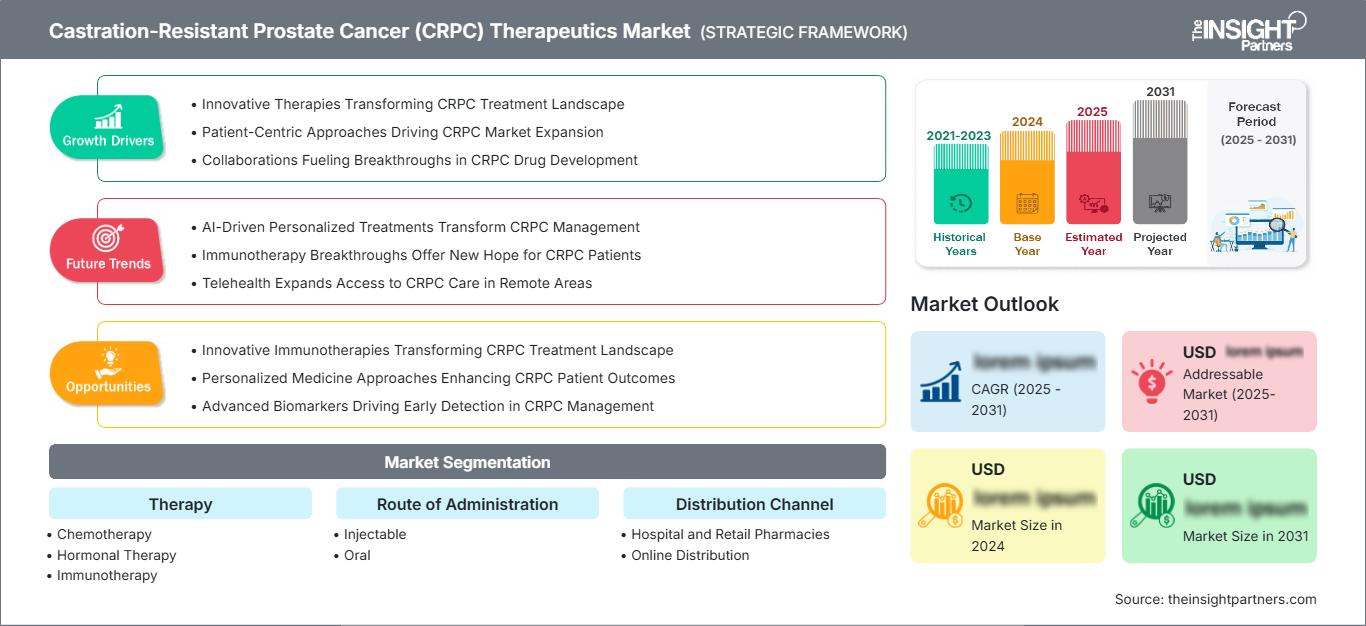
Castration-Resistant Prostate Cancer (CRPC) Therapeutics Market: Strategic Insights
Regional Insights
North America Castration-Resistant Prostate Cancer Therapeutics Market
North America held a 44–48% share in 2025 and is projected to record a 7.5–8.0% CAGR through 2034. The Castration-Resistant Prostate Cancer Therapeutics Market share reflects high oncology expenditure, broad specialty-pharmacy coverage, routine molecular profiling, established clinical-trial networks, and access to chemotherapy, androgen-receptor inhibitors, immunotherapy, and radioligand treatment.
The growth in the rate of disease is stimulated by the increase in the incidence of advanced disease, early detection of biochemical progression, and large numbers of people getting long-term androgen deprivation. Racial inequalities lead to a requirement for equal screening and referrals. In the United States, Black men suffer from prostate cancer in far greater numbers than white men.
U.S. Castration-Resistant Prostate Cancer Therapeutics Market
The U.S. represented 86–90% of North American revenue in 2025 and is expected to expand at a 7.6–8.1% CAGR. Market depth is supported by National Comprehensive Cancer Network-guided sequencing, Medicare coverage, genomic testing, major comprehensive cancer centers, and a sizeable community-oncology network. Prostate cancer remains among the most common cancers affecting American men.
Relevant business activities, research collaborations, or institutional relations are maintained by Bayer AG, Johnson & Johnson, Novartis AG, Pfizer Inc., Astellas Pharma Inc., Sanofi, and Amgen Inc. Application trends include biomarker-guided combination therapy, oral androgen receptor signaling inhibitors, and PSMA-targeted treatment following prior defined exposure. Increased incidence of distant-stage prostate cancer among older men grows the need for complex sequence treatment.
Europe Castration-Resistant Prostate Cancer Therapeutics Market
The Europe region contributed 25-29% in 2025 and is expected to exhibit a 7.7-8.2% CAGR, with Germany dominating regional revenues. The reasons for Germany's dominance in terms of revenues are that it has well-developed facilities for nuclear medicine, and also specialist reimbursement. The UK utilizes centralized health-technology assessment and also has its own genomics program, though funding is an issue which makes the process of premium combination and radioligands difficult to implement.
In France, the adoption of oncology is by the hospitals, whereas Italy and Spain have increased regional access to precision treatments and nuclear medicines. The procurement of radiopharmaceuticals is country-specific, and thus the evidence in terms of survival rates, quality of life, and resource use becomes very critical from commercial perspectives.
APAC Castration-Resistant Prostate Cancer Therapeutics Market
Asia Pacific accounted for a 17–21% share in 2025 and is expected to deliver a 9.3–9.8% CAGR, the fastest regional range. Japan leads through established oncology reimbursement and an aging population, while China is expanding hospital capacity, domestic innovation, genomic testing, and clinical-trial participation.
South Korea and Australia provide specialist infrastructure. The situation in India is promising from a long-term perspective due to better diagnosis and insurance. Policies encouraging local manufacturing, cancer screening, and establishment of radiopharmaceutical facilities will gradually make countries less dependent on imported drugs.
Middle East & Africa Castration-Resistant Prostate Cancer Therapeutics Market
This region will achieve CAGR of 6.4-6.9% up until 2034, with investment in specialized hospitals, centers of oncology, and diagnostics from Saudi Arabia. Access and referrals for private sector in UAE is supported, as well as the most developed ecosystem of sub-Saharan oncology in South Africa.
For Rest of MEA, lack of molecular diagnostics, nuclear medicine, reimbursement, and specialists are hindering the adoption. Diversified economy through energy and hospital infrastructure programs in Gulf countries will enhance access to high-end therapies.

Segmentation Analysis
Therapy
Therapy is projected to record a 7.9–8.4% CAGR during 2026–2034. The Castration-Resistant Prostate Cancer Therapeutics Market scope covers established cytotoxic and hormonal products alongside immune-based and radiation-delivery approaches. Selection depends on metastatic status, symptoms, prior exposure, genomic alterations, performance status, and treatment availability. Combination strategies and resistance-focused sequencing will raise the strategic value of differentiated efficacy and safety evidence.
- Chemotherapy: Docetaxel- and cabazitaxel-based treatment remains important for rapidly progressive, symptomatic, high-volume, or visceral disease, particularly where clinicians seek a treatment response not dependent solely on androgen-receptor signaling.
- Hormonal Therapy: Androgen-receptor pathway treatments retain the leading position because oral administration, extensive clinical experience, and broad prescribing familiarity support use across resistant-disease settings and multiple treatment sequences.
- Immunotherapy: Adoption remains concentrated in clinically or biomarker-defined patients, making diagnostic selection essential. Future importance depends on combinations that improve immune responsiveness within prostate cancer’s comparatively resistant tumor microenvironment.
- Radiotherapy: Conventional radiation provides localized symptom control, while systemic radiopharmaceuticals increasingly address metastatic disease. Expansion requires PSMA imaging, nuclear medicine expertise, radiation-safety processes, dependable isotope logistics, and appropriate patient selection.
Route of Administration
Route of Administration is expected to expand at a 7.9–8.4% CAGR between 2026 and 2034. Prescribing patterns balance convenience against the clinical monitoring required for advanced disease. Oral regimens enable community-based management and reduce infusion visits, while injectable products remain indispensable for chemotherapy, supportive treatment, immune therapy, and radiopharmaceutical delivery. Adherence systems, toxicity surveillance, and coordinated prescribing influence real-world effectiveness.
- Injectable: Injectable delivery remains strategically essential for cytotoxic agents, selected biologics, bone-supportive medicines, and radiopharmaceuticals. Demand is concentrated in hospitals and infusion centers with trained staff and monitoring capabilities.
- Oral: Oral therapy occupies a strong position through patient convenience and extensive use of androgen-receptor pathway inhibitors. Specialty pharmacies increasingly support authorization, adherence, interaction management, and toxicity follow-up.
Distribution Channel
Distribution Channel is projected to register a 7.8–8.3% CAGR during 2026–2034. Product complexity determines channel selection. Hospitals control infusion therapies and radiopharmaceutical administration, while retail and specialty pharmacies manage recurring oral prescriptions. Online distribution is gaining relevance for refill coordination and remote adherence support, although temperature control, reimbursement authorization, prescription governance, and patient counseling remain critical.
- Hospital and Retail Pharmacies: This channel retains the leading role by combining institutional procurement for administered medicines with community dispensing for oral products, supportive care, repeat prescriptions, and pharmacist-led medication review.
- Online Distribution: Online models are scaling through home delivery, digital refill management, benefits verification, and adherence communication, particularly for stable patients receiving orally administered long-duration therapy under specialist supervision.
Opportunity Snapshot
| Distribution Channel | Revenue Contribution (High/Medium/Low) | Trend Tag | Adoption Stage (Emerging/Scaling/Mature) |
| Hospital and Retail Pharmacies | High | Specialty Access | Mature |
| Online Distribution | Medium | Digital Refills | Scaling |
Castration-Resistant Prostate Cancer (CRPC) Therapeutics Market Growth Drivers and Impact Analysis
Rising Advanced-Disease Burden and Longer Treatment Duration
Improved survival following localized and hormone-sensitive prostate cancer treatment increases the number of patients living long enough to develop resistant disease. In parallel, U.S. incidence trends have shifted toward more advanced presentations, with distant-stage incidence increasing across age groups. This combination expands both the eligible population and cumulative treatment duration. Patients commonly move through androgen-receptor inhibitors, chemotherapy, precision combinations, and radiopharmaceuticals, creating demand across several modalities rather than a single product class. Commercial impact is strongest for therapies demonstrating survival benefit after prior exposure, manageable cumulative toxicity, and practical sequencing. Health systems consequently require multidisciplinary pathways capable of monitoring progression, selecting treatment, managing adverse effects, and coordinating supportive care.
Expansion of Biomarker-Guided Precision Treatment
Routine testing for homologous recombination repair alterations and PSMA expression is converting advanced prostate cancer into more clearly defined therapeutic populations. Biomarker selection can improve the probability of benefit, support combination development, and reduce indiscriminate treatment. Johnson & Johnson’s 2025 U.S. approval for a BRCA2-defined prostate cancer population illustrates how molecular segmentation is influencing clinical and regulatory strategies. For the Castration-Resistant Prostate Cancer Therapeutics Market, the practical impact extends beyond medicine sales to companion diagnostics, pathology workflows, imaging, genetic counseling, and treatment authorization. Companies that integrate testing evidence into development and commercialization can differentiate products more effectively, while healthcare systems must shorten diagnostic turnaround to prevent clinically significant treatment delays.
Broader Use of Targeted Radiopharmaceutical Treatment
PSMA-targeted radiopharmaceuticals link molecular imaging with systemic radiation delivery, addressing metastatic lesions through a mechanism distinct from hormonal therapy and chemotherapy. Their adoption broadens treatment choice for appropriately selected patients and increases investment in nuclear medicine centers, isotope manufacturing, radiopharmacy operations, and radiation-trained personnel. Novartis reported Phase III evidence in 2025 showing that Pluvicto plus standard care reduced radiographic progression or death in an earlier metastatic prostate cancer setting, indicating continued movement toward earlier use. Market impact will depend on site capacity, scheduling reliability, reimbursement, and isotope supply. Successful scale-up can expand radiotherapy revenue while creating operational barriers for health systems without specialized infrastructure.
Castration-Resistant Prostate Cancer (CRPC) Therapeutics Market Future Trends
Next-Generation Resistance-Targeting Platforms
The Castration-Resistant Prostate Cancer Therapeutics Market trends increasingly favor mechanisms intended to eliminate resistant cells rather than repeatedly suppress androgen signaling. Emerging approaches include protein degraders, induced-proximity platforms, antibody-drug conjugates, bispecific immune engagers, and alpha-emitting radiopharmaceuticals. Johnson & Johnson’s acquisition of Halda Therapeutics and GSK plc’s prostate cancer antibody-drug conjugate licensing agreement illustrate strategic interest in differentiated platforms. Development programs will prioritize activity following multiple prior therapies, tumor-selective delivery, oral convenience where feasible, and combinations with established agents. Over time, platform flexibility and biomarker strategies may become as important as individual lead assets in determining partnership value and competitive durability.
Data-Guided Sequencing Across Multiple Modalities
Treatment sequencing will become more evidence-driven as patients gain access to hormonal agents, chemotherapy, PARP combinations, immunotherapy, and radiopharmaceuticals. Longitudinal clinical and real-world datasets should clarify how prior androgen-receptor exposure, genomic status, PSMA expression, disease tempo, and comorbidity influence subsequent outcomes. Decision-support tools may help clinicians identify when to switch mechanisms instead of continuing within the same therapeutic class. This trend will favor companies generating comparative, post-progression, and quality-of-life evidence rather than relying exclusively on registration endpoints. Payers will also use sequencing data to evaluate total treatment cost, downstream hospitalization, and duration of clinical benefit across increasingly complex care pathways.
Castration-Resistant Prostate Cancer (CRPC) Therapeutics Market Opportunities
Build Integrated Radioligand Treatment Networks
Investment in regional radioligand networks offers a scalable route to address capacity constraints outside major academic hospitals. The Castration-Resistant Prostate Cancer Therapeutics Market Forecasts support coordinated investment in isotope production, radiopharmacies, PSMA imaging, licensed administration facilities, dosimetry, and referral management. Pharmaceutical companies can partner with hospital groups and diagnostic providers to standardize patient identification and appointment scheduling. Regional hubs may serve several community-oncology practices, improving utilization while limiting unnecessary capital duplication. The strongest opportunities exist in underserved U.S. territories, selected European health systems, Japan, China, Australia, and Gulf countries where oncology infrastructure is expanding but radioligand capacity remains geographically concentrated.
Expand Precision-Treatment Access in Asia Pacific
Asia Pacific offers investment potential through localized genomic testing, country-specific evidence generation, clinical-trial expansion, and tiered patient-support programs. Japan provides near-term value through mature specialist care, while China combines a large patient base with growing domestic innovation and hospital investment. South Korea and Australia can support early adoption and regional trials, whereas India requires affordability-focused models and concentrated specialist networks. Companies should align regulatory submissions with companion-diagnostic availability and develop local evidence reflecting treatment patterns, body composition, comorbidities, and prior therapy. Partnerships with laboratories and cancer centers can reduce testing delays, improve patient identification, and establish commercially sustainable access beyond major metropolitan institutions.
Recent Developments
- December 2025: Johnson & Johnson completed its US$3.05 billion acquisition of Halda Therapeutics OpCo, Inc., adding the RIPTAC platform and HLD-0915, a once-daily oral clinical-stage prostate cancer candidate designed to address resistance through targeted tumor-cell eradication. The transaction strengthened the company’s oral oncology pipeline and resistance-focused development capabilities.
- October 2025: GSK plc obtained exclusive worldwide rights from Syndivia to develop and commercialize a preclinical antibody-drug conjugate for metastatic castration-resistant prostate cancer. The candidate uses Syndivia’s GeminiMab conjugation technology and complements GSK’s broader prostate cancer pipeline, which includes separate tumor-targeted antibody-drug conjugate research.
- May 2025: Pfizer Inc. and Astellas Pharma Inc. reported five-year Phase III ARCHES follow-up results for enzalutamide plus androgen-deprivation therapy in metastatic hormone-sensitive prostate cancer. The regimen reduced the risk of death by 30%, providing longer-term evidence relevant to earlier treatment intensification and future resistant-disease sequencing.
Frequently Asked Questions

- Comprehensive Market Sizing and Forecast Analysis
- Detailed Segmentation Analysis
- In-Depth Market Dynamics Assessment
- Regional and Country-Level Insights
- Competitive Landscape and Company Benchmarking
- Strategic Business Intelligence
Recent Reports
Testimonials

The Insight Partners provided valuable market intelligence that supported our global go-to-market strategy. Their team was professional, responsive, and attentive to our feedback, providing thoughtful analysis and helpful methodological clarifications throughout the project.
Junmo Kim Chief Financial Officer (CFO), Enertech Co., Ltd.
The Insight Partners' SCADA System Market report is comprehensive, with valuable insights on current trends and future forecasts. The team was highly professional, responsive, and supportive throughout. We are very satisfied and highly recommend their services.
RAN KEDEM Partner, Reali Technologies LTDs
I requested a report on a very specific software market and the team produced the report in a few days. The information was very relevant and well presented. I then requested some changes and additions to the report. The team was again very responsive and I got the final report in less than a week.
JEAN-HERVE JENN Chairman, Future Analytica
We worked with The Insight Partners for an important market study and forecast. They gave us clear insights into opportunities and risks, which helped shape our plans. Their research was easy to use and based on solid data. It helped us make smart, confident decisions. We highly recommend them.
PIYUSH NAGPAL Sr. Vice President, High Beam Global
The Insight Partners delivered insightful, well-structured market research with strong domain expertise. Their team was professional and responsive throughout. The user-friendly website made accessing industry reports seamless. We highly recommend them for reliable, high-quality research services
YUKIHIKO ADACHI CEO, Deep Blue, LLC.
This is the first time I have purchased a market report from The Insight Partners.While I was unsure at first, I visited their web site and felt more comfortable to take the risk and purchase a market report.I am completely satisfied with the quality of the report and customer service. I had several questions and comments with the initial report, but after a couple of dialogs over email with their analyst I believe I have a report that I can use as input to our strategic planning process.Thank you so much for taking the extra time and making this a positive experience.I will definitely recommend your service to others and you will be my first call when we need further market data.
JOHN SUZUKI President and Chief Executive Officer, Board Director, BK Technologies
I wish to appreciate your support and the professionalism you displayed in the course of attending to my request for information regarding to infectious disease IVD market in Nigeria. I appreciate your patience, your guidance, and the fact that you were willing to offer a discount, which eventually made it possible for us to close a deal. I look forward to engaging The Insight Partners in the future, all thanks to the impression you have created in me as a result of this first encounter.
DR CHIJIOKE ONYIA MANAGING DIRECTOR, PineCrest Healthcare Ltd.Reason to Buy
- Informed Decision-Making
- Understanding Market Dynamics
- Competitive Analysis
- Identifying Emerging Markets
- Customer Insights
- Market Forecasts
- Risk Mitigation
- Boosting Operational Efficiency
- Strategic Planning
- Investment Justification
- Tracking Industry Innovations
- Aligning with Regulatory Trends





 Get Free Sample for