
Dehydrating Breather Market Size, Growth & Trends by 2034
Coverage: By Type (Self-Dehydrating Breather, Conventional Breather); Desiccant Volume (Less than 2 kg, 2-4 kg, More than 4 kg); Application (Industrial, Utilities, Heavy-Duty Vehicles, Others) , and Geography (North America, Europe, Asia Pacific, and South and Central America)
- Status : Data Released
- Report Code : TIPRE00008816
- Category : Electronics and Semiconductor
- No. of Pages : 150
- Available Report Formats :


- Last update date : August 12, 2026


2025 Market Size
US$ 548.30 Mn
Base year value
2034 Forecast
US$ 773.66 Mn
Projected by 2034
CAGR 2026-2034
3.90 %
Growth rate
Addressable Market
US$ 6,004.20 Mn
(2026-2034)
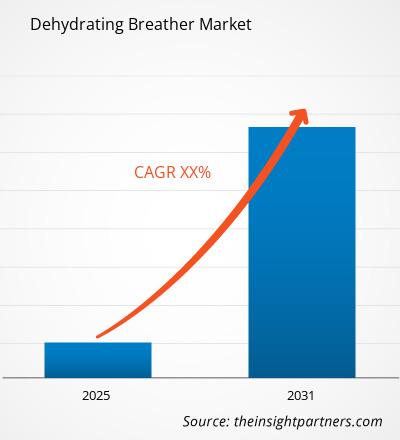
The Dehydrating Breather market size in 2025 was US$ 548.30 Million and is expected to be US$ 773.66 Million in 2034, growing at a CAGR of 3.90% between 2026 and 2034. The market includes dehumidifying devices that provide protection to electrical transformers, switchgear, and other industrial equipment from the ingress of atmospheric moisture through controlled breathing process. The devices include desiccant materials which act to absorb the moisture from the incoming air so that the fluid insulation does not get contaminated.
North America is expected to expand at a CAGR of 3.2–3.9% during 2026–2034, supported by grid infrastructure modernization, transformer replacement programs, and industrial equipment protection requirements across the US and Canada. Demand is reinforced by utility reliability programs, aging infrastructure replacement cycles, and procurement preferences for moisture protection solutions in power and industrial applications.
Dehydrating Breather Market Assessment and Insights
- North America held 25–28% share in 2025 and is growing at a CAGR of 3.2–3.9% during 2026–2034, led by grid modernization, transformer protection, and industrial applications across the US and Canada.
- US represented 82–85% of North American revenue in 2025 and is growing at a CAGR of 3.4–4.1% during 2026–2034.
- Europe accounted for 24–27% share in 2025 and is growing at a CAGR of 3.0–3.7% during 2026–2034, led by Germany, the UK, France, Italy, and Spain.
- Asia Pacific held 35–38% share in 2025 and is growing at a CAGR of 4.5–5.2% during 2026–2034, led by China, India, Japan, South Korea, and Australia.
- Largest Segment Self-Dehydrating Breather held 58–62% market share in 2025 and is growing at a CAGR of 4.2–4.9% during 2026–2034.
- High Growth Segment Conventional Breather represented 38–42% market share in 2025 and is growing at a CAGR of 3.5–4.2% during 2026–2034.
- Key companies analyzed in detail: ABB Ltd.; AGM Container Controls, Inc.; Des-Case Corporation; Drytech, Inc.; Eaton Corporation; Hubbell Incorporated; HYDAC Pty Ltd; Maschinenfabrik Reinhausen GmbH; Qualitrol Company LLC (Fortive); Whitmore Manufacturing, LLC; Parker Hannifin Corporation; Siemens Energy.
Source: The Insight Partners' analysis based on proprietary research, government publications, company annual reports, investor presentations, industry databases, and expert interviews.
The dehydrating breather technology has moved on from basic desiccant chambers to more advanced technology which has self-dehydrating capability, moisture sensors and ability to communicate in order to monitor the protection of transformers and equipment remotely. The dynamics of production involve efficiency of the desiccant, the number of regeneration cycles, durable housing, and tested performance of the device in varied weather conditions. According to the dehydrating Breather market report, demand is also driven by equipment operators who have breather technology synchronized with the transformer protection program and reliability needs.
Future investments are being made in the power grid markets of Asia Pacific, North America, and Europe where the need to upgrade the power grids, accommodate new sources of energy, and replace old transformer fleets is driving the need for better moisture protecting breathers with better performance and less maintenance. Regulations that are aligned with grid reliability standards and equipment protection requirements drive the breather adoption.
Dehydrating Breather Market Report Scope
| Report Attribute | Details |
|---|---|
| Market size in 2025 | US$ 548.30 Million |
| Market Size by 2034 | US$ 773.66 Million |
| Global CAGR (2026 - 2034) | 3.90% |
| Historical Data | 2021-2024 |
| Forecast period | 2026-2034 |
Dehydrating Breather Market Analysis
The Growth Factors include modernized grids, transformer protection, reliable industrial equipment, and asset life extension. The supply chain involves manufacturers of desiccant materials, makers of breathers, OEMs for transformers, and asset managers of utilities. The supply chain is influenced by desiccant availability, equipment replacement cycles, and procurement programs of utilities. Market analysis suggests that self-dehydrating breathers receive a favorable status due to lesser maintenance needs, while conventional breathers cater to applications with cost concerns. Serviceability plays a critical role in deciding on this matter.
Competition is led by electrical equipment protection specialists and transformer component suppliers. ABB Ltd., Eaton Corporation, Maschinenfabrik Reinhausen GmbH, Qualitrol Company LLC (Fortive), Hubbell Incorporated, Des-Case Corporation, Whitmore Manufacturing, LLC, AGM Container Controls, Inc., HYDAC Pty Ltd, Drytech, Inc., Parker Hannifin Corporation, and Siemens Energy compete on desiccant performance, maintenance requirements, reliability, and installed-base relationships. Investment trends favor self-dehydrating designs, remote monitoring, and extended service intervals. ABB Ltd. and Maschinenfabrik Reinhausen GmbH maintain leadership through comprehensive transformer component portfolios and utility relationships, while Qualitrol and Des-Case benefit from equipment protection expertise. Strategic positioning depends on certified performance, maintenance reduction, and service support.
There is the increasing utilization of intelligent and maintenance-friendly dehydrating breathers by utility companies and industrial operators in the attempt to increase reliability of transformers while lowering operating costs. Self-regenerating and self-dehydrating breathers with moisture detection indicators, automatic desiccant regeneration system, and remote condition monitoring ability have become popular in power transmission, distribution, renewable energy generation, and heavy industry sectors. These innovative solutions require less maintenance, lower transformer downtime, and offer increased protection from the infiltration of moisture in the transformer oil, therefore increasing its lifespan and dielectric strength. There is a trend toward designing the products using more durable housing materials, more efficient desiccants, corrosion-proof materials, and compatibility with digital asset management systems in order to increase the longevity of the product and simplify maintenance scheduling.
From a regional perspective, Asia-Pacific accounts for a substantial share of the Dehydrating Breather Market due to rapid expansion of power transmission and distribution infrastructure, increasing electricity demand, and significant investments in transformer installations across countries such as China, India, Japan, and South Korea. North America remains a major market, supported by ongoing grid modernization initiatives, replacement of aging electrical infrastructure, and increasing adoption of condition-based maintenance practices by utilities and industrial operators. Europe also maintains a strong market position through investments in renewable energy integration, smart grid development, and stringent reliability standards for electrical equipment. Meanwhile, emerging economies in Latin America, the Middle East, and Africa are expanding transmission networks and industrial facilities, creating additional demand for transformer protection solutions that improve operational reliability and reduce maintenance costs. Rising investments in utility asset management, renewable energy projects, and critical electrical infrastructure are expected to support sustained long-term growth for dehydrating breather manufacturers and component suppliers worldwide.
● REPORT CUSTOMIZATION
Tailor This Report To Align With Your Specific Business Requirements
This report can be customized to align precisely with your business objectives, scope, and target markets. Customization options include tailored segmentation, geography, competitive analysis, and strategic insights to support informed decision-making.
Customize This Report →WHAT YOU CAN ADJUST
- ● Segmentations
- ● Geography
- ● Competitive Analysis
- ● Language Preferences
Dehydrating Breather Market: Strategic Insights

Regional Insights
North America Dehydrating Breather Market
North America accounted for 25–28% of Dehydrating Breather Market share in 2025 and is projected to grow at a CAGR of 3.2–3.9% during 2026–2034. Demand is supported by grid modernization, transformer replacement programs, industrial equipment protection, and utility reliability requirements across the US and Canada. The region's extensive transformer fleet and utility investment drive consistent demand for breathers. ABB Ltd., Eaton Corporation, Qualitrol Company LLC (Fortive), Hubbell Incorporated, and Des-Case Corporation support installed bases across utility transformer fleets and industrial equipment in the US and Canada.
U.S. Dehydrating Breather Market
The U.S. represented 82–85% of North American revenue in 2025 and is forecast to grow at a CAGR of 3.4–4.1% during 2026–2034. Application demand is concentrated in utility transformers, industrial equipment, and substation assets requiring moisture protection. Company presence is reinforced by ABB Ltd., Eaton Corporation, Qualitrol Company LLC (Fortive), Hubbell Incorporated, and Parker Hannifin Corporation. Buyers prioritize desiccant efficiency, maintenance requirements, reliability, and monitoring capability, plus integration that simplifies maintenance and improves confidence in asset protection.
Europe Dehydrating Breather Market
Europe held 24–27% share in 2025 and is expected to grow at a CAGR of 3.0–3.7% during 2026–2034. Germany leads through grid modernization and transformer protection requirements, while the UK supports demand from utility infrastructure and industrial applications. France, Italy, and Spain add demand through power infrastructure and industrial equipment protection. Grid reliability and equipment standards favor suppliers with documented performance and quality. ABB Ltd., Maschinenfabrik Reinhausen GmbH, Eaton Corporation, and Siemens Energy remain visible across utility and industrial projects.
APAC Dehydrating Breather Market
Asia Pacific accounted for 35–38% share in 2025 and is projected to grow at a CAGR of 4.5–5.2% during 2026–2034. China leads through grid expansion and transformer fleet growth, while India expands through power infrastructure and reliability improvement. Japan and South Korea prioritize transformer protection and reliability for mature power systems, while Australia adds utility and industrial equipment protection. Policy support for grid investment and equipment reliability strengthen Dehydrating Breather Market adoption where asset protection carries significant value.
Middle East & Africa Dehydrating Breather Market
The Middle East & Africa market is projected to grow at a CAGR of 3.0–3.7% during 2026–2034. Saudi Arabia leads through grid expansion and industrial development, while the UAE adds power infrastructure and equipment protection requirements. South Africa and Rest of MEA rely on utility grid and industrial equipment needs. Grid development and infrastructure investment create demand for breather solutions. Suppliers succeed when they combine product quality, reliability, and technical support for utility requirements.
Segmentation Analysis
Type
Type is projected to grow at a CAGR of 3.8–4.5% during 2026–2034. Dehydrating Breather Market scope covers Self-Dehydrating Breather and Conventional Breather. Selection depends on maintenance requirements, application criticality, and cost considerations. Self-Dehydrating leads through reduced maintenance and improved protection capability.
- Self-Dehydrating Breather systems automatically regenerate desiccant material through heating cycles, extending service intervals and reducing maintenance requirements.
- Conventional Breather devices provide basic moisture absorption with desiccant replacement required upon saturation, addressing cost-sensitive applications.
Desiccant Volume
Desiccant Volume is forecast to grow at a CAGR of 3.5–4.2% during 2026–2034. Less than 2 kg, 2-4 kg, and More than 4 kg categories address varying equipment sizes and moisture load requirements. Volume selection reflects transformer capacity and application requirements.
- Less than 2 kg breathers serve small transformers and equipment with limited moisture protection requirements.
- 2-4 kg breathers address medium transformers and industrial equipment with moderate moisture load conditions.
- More than 4 kg breathers serve large power transformers and critical applications with high moisture protection requirements.
Application
Application is expected to grow at a CAGR of 3.6–4.3% during 2026–2034. Industrial, Utilities, and Heavy-Duty Vehicles represent distinct operating environments with varying equipment protection requirements. Application adoption grows when asset protection and reliability requirements drive breather investment.
- Industrial applications include manufacturing, processing, and power system equipment requiring moisture protection for reliable operation.
- Utilities applications encompass power transformers and substation equipment with critical reliability requirements.
- Heavy-Duty Vehicles applications include mobile equipment and vehicles requiring moisture protection for electrical systems.
Opportunity Snapshot
| Application | Revenue Contribution | Trend Tag | Adoption Stage |
|---|---|---|---|
| Industrial | High | Equipment Protection | Mature |
| Utilities | High | Transformer Fleet | Mature |
| Heavy-Duty Vehicles | Medium | Mobile Equipment | Scaling |
Dehydrating Breather Market Growth Drivers and Impact Analysis
Grid Modernization Drives Transformer Protection Investment
Power grid modernization and infrastructure investment across global markets create demand for transformer protection solutions including dehydrating breathers. New installations and existing transformer upgrades require moisture management to maintain reliability and extend asset life. Utility reliability programs drive consistent demand for breather equipment. The practical impact is continued demand for moisture protection solutions supporting grid modernization and transformer fleet management programs.
Aging Transformer Fleet Requires Protection Upgrades
The global installed base of power transformers with aging assets requires protection upgrades to maintain reliability and extend operational life. Dehydrating breather replacement and upgrade programs address moisture management needs. Asset life extension programs create consistent demand for breather equipment. This driver benefits suppliers that can deliver reliable, low-maintenance solutions supporting transformer protection requirements.
Industrial Equipment Reliability Standards Drive Protection Adoption
Industrial equipment reliability requirements and maintenance standards increasingly include moisture protection for critical electrical equipment. Manufacturers and facility operators invest in protection solutions to reduce downtime and maintenance costs. Industrial standards and reliability programs drive breather adoption. The market impact is demand for reliable, cost-effective moisture protection solutions supporting industrial equipment reliability.
Dehydrating Breather Market Future Trends
Remote Monitoring Integration Enables Predictive Maintenance
Dehydrating Breather Market trends point toward remote monitoring integration enabling predictive maintenance through real-time desiccant condition and moisture load data. The next product cycle will combine breather systems with communication capability for asset management integration. This shift matters because asset managers increasingly value predictive maintenance and condition monitoring. Vendors with monitoring expertise will be better positioned as reliability requirements evolve.
Extended Service Interval Designs Reduce Maintenance Costs
Extended service interval breather designs with improved desiccant capacity and regeneration capability are emerging as solutions for reducing maintenance costs and operational disruption. Next-generation systems will incorporate enhanced desiccant materials and optimized designs for extended service life. This evolution supports reduced maintenance frequency and improved asset availability. Suppliers that can deliver extended interval capability with established protection performance will gain credibility with asset managers.
Dehydrating Breather Market Opportunities
Transformer Fleet Upgrade Programs for Aging Infrastructure
Dehydrating Breather Market Forecasts support investment in transformer fleet upgrade programs requiring breather replacement and protection improvement for aging assets. Utilities need solutions meeting reliability requirements with reduced maintenance. Providers can create opportunities by offering upgrade solutions for transformer fleets. The opportunity is strongest where aging infrastructure creates demand for protection upgrades.
Emerging Market Grid Expansion Creating Protection Demand
Emerging market grid expansion and infrastructure development create demand for moisture protection solutions for new transformer installations. Power system developers need reliable protection solutions for growing infrastructure. Suppliers with proven products can capture opportunities in developing markets. This opportunity rewards companies that can deliver reliability, cost-effectiveness, and technical support for grid expansion requirements.
Recent Developments
- July 2026: ABB announces the completion of its acquisition of Specialtrasfo S.p.A., an Italy-based manufacturer of specialized medium voltage transformers, including converter and rectifier transformers. The acquisition includes three production sites in Italy and over 130 employees. In 2025, the company generated revenues of approximately 80 million euros, with ABB representing around half through its integrated offering. The increase in global electricity demand is a key driver for the growing need for transformers, a critical component in industrial power conversion. By acquiring Specialtrasfo, ABB strengthens its extensive portfolio with converter and rectifier transformers, whilst Specialtrasfo will continue to serve its existing customers as a transformer supplier. This increases supply chain resilience to meet customer needs across a wide variety of industries including energy, metals, mining, industrial processing and offshore applications.
- June 2026: Hitachi Energy, a global leader in electrification, has entered into an agreement with Fingrid, Finland's transmission system operator, to deliver seven large power transformers, each with a capacity of 400 MVA and operating at 400 kV. This contract is a pivotal part of reinforcing the Finnish electricity grid and includes the option to supply two additional transformers. These transformers will be manufactured at Hitachi Energy's up-building transformer factory in the Vaasa region. The new factory, scheduled for completion by 2027, will double Finland's transformer production capacity, marking also the return of large power transformer manufacturing to the Vaasa region.
- May 2025: GE Vernova Inc. (NYSE: GEV) announced it has been chosen by Power Grid Corporation of India Limited (POWERGRID) to supply over 70 extra high-voltage transformers and shunt reactors for key transmission projects across India. The 765 kV class units will support transmission infrastructure for renewable power evacuation projects under India’s Tariff-Based Competitive Bidding (TBCB) framework. The order has been booked through GE Vernova T&D India Limited, listed entity of GE Vernova’s Electrification business in India. GE Vernova’s scope includes the supply, erection, testing, and commissioning of the equipment. Manufacturing will be carried out at GE Vernova’s power transformer facility in Vadodara, India. Deliveries are expected to begin in 2026 and continue through the end of 2027.
Frequently Asked Questions

- Comprehensive Market Sizing and Forecast Analysis
- Detailed Segmentation Analysis
- In-Depth Market Dynamics Assessment
- Regional and Country-Level Insights
- Competitive Landscape and Company Benchmarking
- Strategic Business Intelligence
Recent Reports
Testimonials

The Insight Partners' SCADA System Market report is comprehensive, with valuable insights on current trends and future forecasts. The team was highly professional, responsive, and supportive throughout. We are very satisfied and highly recommend their services.
RAN KEDEM Partner, Reali Technologies LTDs
I requested a report on a very specific software market and the team produced the report in a few days. The information was very relevant and well presented. I then requested some changes and additions to the report. The team was again very responsive and I got the final report in less than a week.
JEAN-HERVE JENN Chairman, Future Analytica
We worked with The Insight Partners for an important market study and forecast. They gave us clear insights into opportunities and risks, which helped shape our plans. Their research was easy to use and based on solid data. It helped us make smart, confident decisions. We highly recommend them.
PIYUSH NAGPAL Sr. Vice President, High Beam Global
The Insight Partners delivered insightful, well-structured market research with strong domain expertise. Their team was professional and responsive throughout. The user-friendly website made accessing industry reports seamless. We highly recommend them for reliable, high-quality research services
YUKIHIKO ADACHI CEO, Deep Blue, LLC.
This is the first time I have purchased a market report from The Insight Partners.While I was unsure at first, I visited their web site and felt more comfortable to take the risk and purchase a market report.I am completely satisfied with the quality of the report and customer service. I had several questions and comments with the initial report, but after a couple of dialogs over email with their analyst I believe I have a report that I can use as input to our strategic planning process.Thank you so much for taking the extra time and making this a positive experience.I will definitely recommend your service to others and you will be my first call when we need further market data.
JOHN SUZUKI President and Chief Executive Officer, Board Director, BK Technologies
I wish to appreciate your support and the professionalism you displayed in the course of attending to my request for information regarding to infectious disease IVD market in Nigeria. I appreciate your patience, your guidance, and the fact that you were willing to offer a discount, which eventually made it possible for us to close a deal. I look forward to engaging The Insight Partners in the future, all thanks to the impression you have created in me as a result of this first encounter.
DR CHIJIOKE ONYIA MANAGING DIRECTOR, PineCrest Healthcare Ltd.Reason to Buy
- Informed Decision-Making
- Understanding Market Dynamics
- Competitive Analysis
- Identifying Emerging Markets
- Customer Insights
- Market Forecasts
- Risk Mitigation
- Boosting Operational Efficiency
- Strategic Planning
- Investment Justification
- Tracking Industry Innovations
- Aligning with Regulatory Trends





 Get Free Sample for