
Flat Steel Market Size, Share & Trends by 2034
Coverage: by Process (Basic Oxygen Furnace, Electric Arc Furnace); Product (Hot Rolled Flat Sheets, Hot Rolled Coils, Electrical Sheet and Strip, Metallic Coated Sheet and Strip, Non-Metallic Coated Sheet and Strip, Tin Plates, Others); End-Use (Building and Infrastructure, Automotive and Transportation, Mechanical Equipment, Electrical Appliances, Agriculture Equipment, Others) , and Geography (North America, Europe, Asia Pacific, and South and Central America)
- Status : Data Released
- Report Code : TIPRE00009458
- Category : Chemicals and Materials
- No. of Pages : 150
- Available Report Formats :


- Last update date : September 17, 2026


2025 Market Size
US$ 709.05 Bn
Base year value
2034 Forecast
US$ 1,125.39 Bn
Projected by 2034
CAGR 2026-2034
5.27 %
Growth rate
Addressable Market
US$ 8,322.50 Bn
(2026-2034)
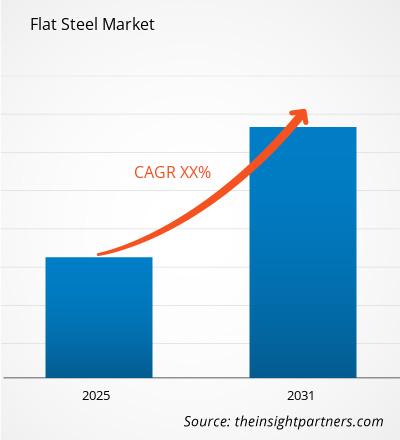
The Flat Steel Market size was valued at US$ 709.05 Billion in 2025 and is projected to reach US$ 1,125.39 Billion by 2034, registering a CAGR of 5.27% during 2026–2034. Expansion is supported by infrastructure investment, automotive manufacturing, appliance production, industrial equipment demand, and continued substitution toward higher-value flat products. Process modernization, product specialization, energy-efficiency requirements, and regional capacity additions are also reshaping production economics and procurement strategies across major steel-consuming industries.
North America is positioned for steady expansion, with an estimated CAGR of 3.8–4.5% during 2026–2034. Replacement of aging infrastructure, domestic manufacturing incentives, automotive localization, and investment in energy-efficient steelmaking are supporting demand. The region is also benefiting from increased adoption of advanced high-strength steels, electrical steels, galvanized products, and other value-added flat products required for vehicles, appliances, energy infrastructure, and industrial equipment.
Flat Steel Market Assessment and Insights
- North America: The region represented a 10–13% Flat Steel Market share in 2025 and is projected to grow at a CAGR of 3.8–4.5% between 2026–2034, supported by infrastructure renewal, automotive localization, reshoring, and higher-value manufacturing requirements.
- US: The US accounted for 68–74% of North American demand in 2025 and is expected to expand at a CAGR of 3.9–4.6% during 2026–2034, led by construction, vehicles, appliances, and industrial investment.
- Europe: Europe held a 13–16% share in 2025 and is anticipated to register a CAGR of 3.5–4.2% through 2034. Germany, Italy, France, Spain, and the UK remain important centers for automotive, machinery, construction, and engineered steel consumption.
- Asia Pacific: Asia Pacific represented the dominant 68–72% share in 2025 and is forecast to grow at a CAGR of 5.8–6.6% during 2026–2034. China, India, Japan, and South Korea lead regional consumption, supported by manufacturing and infrastructure investment.
- Largest Segment: Building and Infrastructure held a 38–42% share in 2025 and is estimated to expand at a CAGR of 5.0–5.6%, reflecting sustained structural steel, roofing, cladding, and infrastructure requirements.
- High Growth Segment: Electrical Sheet and Strip held a 6–9% share in 2025 and is projected to grow at a CAGR of 6.4–7.2%, driven by motors, transformers, electrification, and energy-efficiency applications.
- Key companies analyzed in detail: Ansteel Group Corporation Limited, ArcelorMittal S.A., China Baowu Steel Group Corporation Limited, Gerdau S.A., JFE Steel Corporation, Nippon Steel Corporation, POSCO Holdings Inc., Tata Steel Limited, thyssenkrupp AG, United States Steel Corporation.
Source: The Insight Partners' analysis based on proprietary research, government publications, company annual reports, investor presentations, industry databases, and expert interviews.
Economies of production in the Flat Steel Market have moved from volume-based commodity production to more specialized and high-quality flat products with better control over dimensions, surfaces, strength, and metallurgy suited for specific applications. The Basic Oxygen Furnace continues to be the core component of integrated production processes, although usage of the Electric Arc Furnace process is growing in situations where availability of scrap, favorable economics of electricity, and emissions targets make the route attractive. Competitive advantages will come from continuous casting, advanced rolling, coating, annealing, and other finishing technologies.
With respect to future developments, growth areas for steel consumption are anticipated to include India, Southeast Asia, the Middle East, and some selected African countries. Infrastructure development, automobile industry expansion, appliance manufacturing, wind power equipment, and localization of industries could provide opportunities for investments in steel production capacity. In parallel, stricter regulations regarding emissions and material traceability will create demand for environmentally friendly production and materials. European policies on carbon emissions, domestic manufacturing benefits, and procurement policies will add to the importance of efficient steel production, recycling, and specialty products.
Flat Steel Market Report Scope
| Report Attribute | Details |
|---|---|
| Market size in 2025 | US$ 709.05 Billion |
| Market Size by 2034 | US$ 1,125.39 Billion |
| Global CAGR (2026 - 2034) | 5.27% |
| Historical Data | 2021-2024 |
| Forecast period | 2026-2034 |
Flat Steel Market Analysis
The demand side of the Flat Steel Market is centered on construction and infrastructure uses, where hot-rolled sheets and coils are used for strength and formability and scalability. In terms of auto-manufacturing, an increasing number of manufacturers are demanding advanced grades that combine strength with low weight, while in the case of appliances and machinery, consistent surface finish is what is needed. The value chain includes iron ore, coking coal, scrap, alloys, steel manufacturing, casting, rolling, coating, service centers, fabricators and OEMs. The Flat Steel Market is affected by demand from primary steel makers and conversion capabilities.
On the supply side, factors include raw material security, energy costs, furnace capability, logistics and producing special grades. Large scale integrated producers have the edge in scale economies and access to raw materials, while EAF producers benefit from their flexible production processes and the use of scrap. The coated, electrical, high-strength and specialty products require higher finishing facilities and customer qualification than regular products. This means higher switching costs and more supplier relations, especially for applications in automobiles, electrical equipment and machinery.
Increasingly, competition in the Flat Steel Market will revolve around product mix, regional capacity, decarbonization preparedness, and proximity to customers. Differentiated capabilities in flat products are being enhanced by ArcelorMittal S.A., Nippon Steel Corporation, Tata Steel Limited, JFE Steel Corporation, POSCO Holdings Inc., and United States Steel Corporation, whereas China Baowu Steel Group Corporation Limited and Ansteel Group Corporation Limited remain dominant due to their scale in China. Gerdau S.A. and thyssenkrupp AG provide complementary capabilities across regional markets and specialized applications. Analysis of the Market therefore entails taking account of capacity and downstream value capture.
Investment in the Flat Steel Market is now flowing into EAF capacity, thin-slab casting, electrical steel, galvanizing, advanced high-strength steels, and integrated finishing lines. Producers are also making investments in automation, energy management, quality management via digital technology, and environmentally friendly feedstocks. Competitive advantage will increasingly lie in the combination of cost efficiency, reliable logistics, and environmental performance. Companies with geographic diversification can leverage regional cycle management, whereas specialized producers have margin protection through specialized product offerings, technical service, and qualification programs with key customers.
● REPORT CUSTOMIZATION
Tailor This Report To Align With Your Specific Business Requirements
This report can be customized to align precisely with your business objectives, scope, and target markets. Customization options include tailored segmentation, geography, competitive analysis, and strategic insights to support informed decision-making.
Customize This Report →WHAT YOU CAN ADJUST
- ● Segmentations
- ● Geography
- ● Competitive Analysis
- ● Language Preferences
Flat Steel Market: Strategic Insights
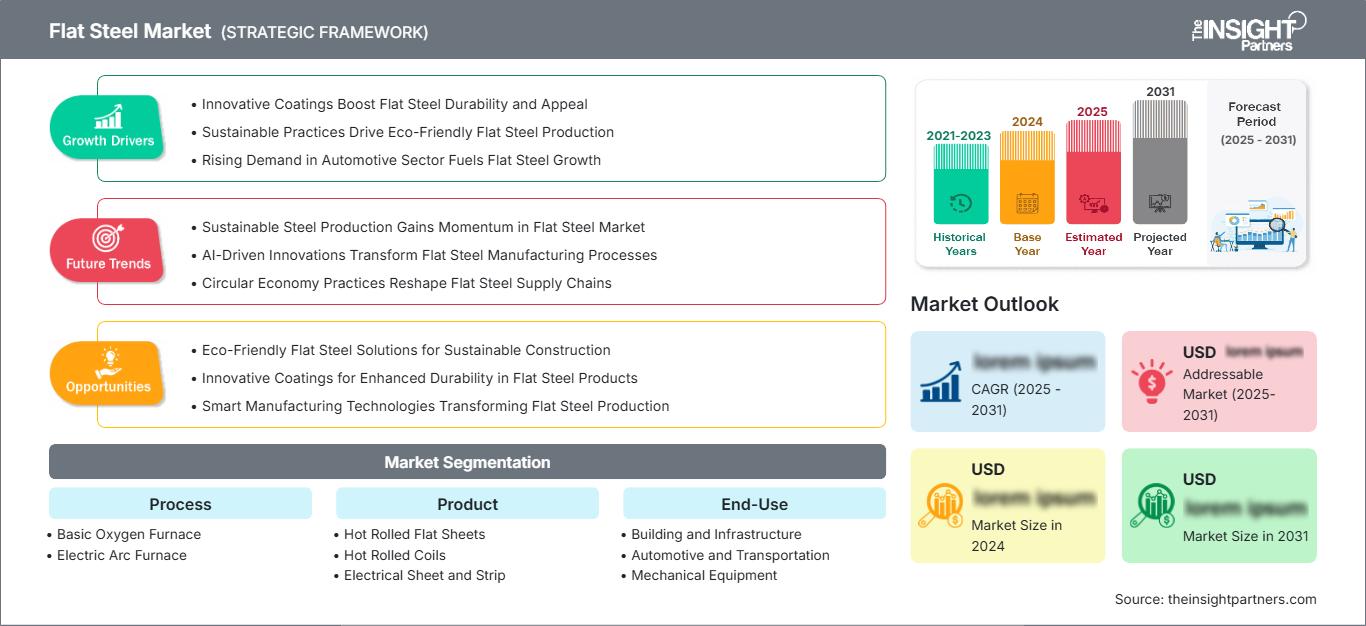
Regional Insights
North America Flat Steel Market
North America accounted for 10–13% of global demand in 2025 and is projected to register a CAGR of 3.8–4.5% through 2034. The US leads in regional consumption, backed by manufacturing investments, infrastructure rebuild, auto manufacturing, energy projects, and appliance manufacturing. The contributions of Canada come from construction, transportation equipment, energy infrastructure, and industrial fabrication. Mexico enjoys localized auto and manufacturing.
Increasingly, the regional supply will depend on EAF capacity, domestic preference for sourcing, and investments in value-added flat products. Advanced automotive grades, galvanized steel sheets, electrical steels, and engineered coils have become important, especially as the manufacturers look for lightweight and efficient materials. Domestic infrastructure and supply chain resilience campaigns are also driving customers towards reliable regional suppliers. The US is the dominant country in the region, thanks to its large industrial footprint and increasing modern flat-rolled steel capacity.
U.S. Flat Steel Market
The US represented 68–74% of North American demand in 2025 and is forecast to grow at a CAGR of 3.9–4.6% through 2034. The market derives an advantage from the investments made on infrastructure development, reshoring of manufacturing, automotive industry, energy sector, and the demand for domestic flat-rolled steel. United States Steel Corporation, ArcelorMittal S.A., and Nippon Steel Corporation are some examples of strategically relevant companies within domestic supply chain operations.
Application in the automotive sector, construction industry, home appliances, machinery, and energy industry makes up the major demand of flat steel. The capacity expansion of electric arc furnace is enhancing production flexibility whereas the use of advanced steel is contributing towards the lightweight vehicles and efficient equipment. The flat steel market in North America is driven by the size of US-based manufacturing and service center operations.
Europe Flat Steel Market
Europe represented a 13–16% share in 2025 and is expected to grow at a CAGR of 3.5–4.2% through 2034. Germany is the most dominant market, fueled by demand from the automotive and industrial machinery sectors. There is also demand in the UK and France for construction, engineering, energy, and transportation needs. Other European countries such as Italy and Spain also contribute to demand from manufacturing and infrastructure projects.
Germany continues to be the core market due to its automotive and machinery industry, even as cost pressure and energy-intensive processes remain key issues. In France, there are infrastructure and energy investment projects, while manufacturing, construction, and transportation needs are prevalent in Italy and Spain. The UK also helps out through construction, automotive, energy, and industrial use. Increasingly, European demand has been influenced by decarbonization needs, import competition, carbon bordering, and low emission steel needs.
APAC Flat Steel Market
APAC held a 68–72% share in 2025 and is expected to expand at a CAGR of 5.8–6.6% through 2034. China is still the biggest market, while India represents the fastest growing major economy. Japan and South Korea still have strong automotive and electrical steel industry capabilities, whereas Australia supports via industrial and resource-related demand.
China enjoys economies of scale in manufacturing, as well as steel processing infrastructure. India receives support via infrastructure, automobile, capital goods, and urbanization. Japan and South Korea focus on high-end products, electrical steels, and export-oriented manufacturing, while Australia still supports construction, mining equipment, and infrastructure. Industrialization-driven policies, energy transition investments, transport networks, and local manufacturing initiatives will likely continue supporting regional consumption. Flat Steel Market share in Asia is highly concentrated due to extensive manufacturing capabilities in this region.
Middle East & Africa Flat Steel Market
Middle East & Africa is projected to grow at a CAGR of 4.3–5.1% during 2026–2034. Saudi Arabia is the largest regionally demanding market, followed by the UAE and South Africa, and Rest of MEA makes its contribution via construction, industrial, transport, and manufacturing activities.
Diversification, urbanization, logistics, and energy are driving the growth of the Saudi Arabian and the UAE market, while South Africa remains significant due to its automotive manufacturing, construction, mining equipment, and industrial fabrication. Urbanization and development of infrastructure in the Rest of MEA region drives incremental consumption of sheets and coils in this market segment. Projects related to the transition to energy, as well as policies on manufacturing, have also started driving processing and procurement in the region.
Segmentation Analysis
Process
Process selection influences production scale, emissions profile, raw-material flexibility, and product economics. Basic Oxygen Furnace remains dominant for integrated high-volume production, while Electric Arc Furnace is gaining strategic importance because of flexible operation, scrap utilization, and lower potential emissions. The process segment is expected to register a CAGR of 5.0–5.7% during 2026–2034 as producers modernize assets and balance cost, quality, and environmental objectives.
- Basic Oxygen Furnace: Remains strategically important for integrated producers requiring large-scale output, consistent chemistry, and broad flat-product portfolios. Its competitive position is strongest where iron ore integration and high utilization rates support efficient production.
- Electric Arc Furnace: Gains importance through flexible production, scrap utilization, and decarbonization potential. Adoption is strongest where electricity supply, scrap availability, and customer demand support modern mini-mill economics.
Product
Product differentiation is becoming increasingly important as customers demand tighter tolerances, improved surface characteristics, higher strength, corrosion resistance, and specialized magnetic properties. The product segment is projected to grow at a CAGR of 5.3–6.0% during 2026–2034, supported by automotive, construction, electrical, appliance, and industrial applications.
- Hot Rolled Flat Sheets: Serve construction, machinery, fabrication, and general industrial applications requiring strength and formability. Demand remains closely connected to infrastructure investment and downstream fabrication activity.
- Hot Rolled Coils: Represent a core flat-product format because they enable efficient transportation, storage, processing, and further rolling. Automotive, construction, machinery, and service-center customers remain key demand sources.
- Electrical Sheet and Strip: Supports transformers, motors, generators, and other electrical equipment. Its strategic importance is increasing as electrification, grid investment, energy efficiency, and electric mobility raise demand for magnetic steel grades.
- Metallic Coated Sheet and Strip: Galvanized and related products benefit from corrosion protection requirements in vehicles, construction, appliances, and industrial equipment. Their value proposition combines durability with reduced maintenance requirements.
- Non-Metallic Coated Sheet and Strip: Supports architectural, appliance, and specialized industrial applications where appearance, corrosion resistance, insulation, or functional surface characteristics are important purchasing criteria.
- Tin Plates: Remain strategically important for packaging and selected industrial applications requiring corrosion resistance, formability, and controlled surface performance. Demand follows packaged-food, beverage, and container manufacturing activity.
End-Use
End-use demand determines grade selection, processing requirements, and purchasing specifications across the value chain. Building and infrastructure remains the largest application base, while automotive and transportation, machinery, appliances, and agricultural equipment create opportunities for higher-value grades. The segment is forecast to expand at a CAGR of 5.1–5.8% during 2026–2034, reflecting broad industrial utilization.
- Building and Infrastructure: Remains the principal consumption base because sheets and coils support structural systems, roofing, cladding, bridges, transport infrastructure, and fabricated construction components.
- Automotive and Transportation: Requires increasingly sophisticated high-strength, galvanized, and formable grades to reduce vehicle weight, improve safety, and support corrosion resistance across passenger and commercial vehicles.
- Mechanical Equipment: Uses flat products for machinery housings, components, fabricated structures, agricultural machinery, and industrial equipment where strength, weldability, and dimensional consistency influence procurement.
- Electrical Appliances: Demand is supported by refrigerators, washing machines, air conditioners, ovens, and other appliances requiring formable, coated, or specialty flat steel with consistent surface quality.
- Agriculture Equipment: Tractors, harvesters, irrigation equipment, storage systems, and fabricated agricultural machinery create demand for durable flat products capable of handling demanding operating environments.
Opportunity Snapshot
| End Use | Revenue Contribution | Trend Tag | Adoption Stage |
| Building and Infrastructure | High | Urban Infrastructure | Mature |
| Automotive and Transportation | High | Vehicle Lightweighting | Mature |
| Mechanical Equipment | Medium | Industrial Automation | Mature |
| Electrical Appliances | Medium | Smart Appliances | Scaling |
| Agriculture Equipment | Low | Farm Mechanization | Scaling |
Flat Steel Market Growth Drivers and Impact Analysis
Infrastructure renewal and industrial localization
The Flat Steel Market forecast shows that government-backed infrastructure programs are creating a durable demand base for structural sheets, hot rolled coils, coated products, and fabricated components. Flat products in large quantities are required for transport corridors, bridges, ports, utility installations, warehouses, industrial estates, and urban renewal projects. On the other hand, manufacturers are trying to localize their operations in order to build resilient supply chains by reducing procurement distance and creating demand for steel in different regions. This situation increases capacity efficiency and creates opportunities for investments in finishing facilities closer to the centers of consumption. The trend holds particularly true in India, Southeast Asia, North America, and some Middle Eastern countries where the process of industrialization is occurring along with that of infrastructure development.
Automotive lightweighting and higher-value steel grades
Automotive manufacturers are increasing the use of advanced high-strength and coated flat products to improve crash performance, reduce vehicle mass, and control corrosion. This is due to the fact that electric vehicles highlight the need to have lightweight vehicles, which may result into efficiency, as well as increased mileage in these vehicles. Battery components have specific requirements regarding formability, as well as dimensional precision. In such a case, specifications will favor companies having higher capabilities of rolling, annealing, coating, and metallurgy, instead of companies dealing with the production of commodity volumes. Such a shift in product mix will help in realizing value even when production of cars increase slightly. It is due to the reason that it leads to more collaboration between steel mills and OEMs in the development of grades.
Electrification and expansion of electrical equipment manufacturing
According to the Flat Steel Market report, investment in grids, renewable generation, transformers, motors, industrial drives, and electric mobility is expanding the addressable market for electrical steel and related precision flat products. Demand is influenced not only by electricity consumption but also by replacement of aging transmission infrastructure and increasing deployment of energy-efficient equipment. Electrical grades require specialized processing, controlled magnetic properties, and stringent quality assurance, creating higher entry barriers than standard hot rolled products. Producers are therefore directing capital toward dedicated lines, improved annealing technologies, and specialized finishing capabilities. The commercial impact extends across utilities, transformer manufacturers, motor producers, industrial equipment companies, and vehicle supply chains. As electrification expands, the strategic importance of electrical sheet and strip should increase faster than that of several conventional flat-product applications.
Flat Steel Market Future Trends
Digitalized production and predictive quality control
The Flat Steel Market trends show that steelmakers are expected to increase the use of artificial intelligence, advanced sensors, digital twins, and automated inspection across rolling and finishing operations. These systems can identify surface defects, monitor dimensional tolerances, predict equipment failures, and optimize production schedules using real-time operating data. Over the forecast period, digitalization should shift quality management from reactive inspection toward predictive intervention. Integration across steelmaking, rolling, coating, logistics, and customer-service systems will also improve traceability and enable producers to respond more rapidly to changing specifications. This trend is particularly relevant for automotive, electrical, and appliance customers, where small deviations can create significant downstream costs. Producers combining automation with skilled metallurgical expertise are likely to achieve stronger yields, more stable quality, and improved asset utilization.
Low-emission flat steel and differentiated procurement
Procurement practices in the Flat Steel Market are expected to increasingly distinguish steel according to embedded emissions, recycled content, production route, and traceability. Carbon-border mechanisms, customer decarbonization targets, and public procurement policies are creating incentives for producers to document emissions intensity and offer lower-carbon product pathways. Electric Arc Furnace production, hydrogen-based direct reduction, renewable electricity, scrap optimization, and improved energy efficiency will therefore influence competitive positioning. The transition will not eliminate conventional production quickly because integrated BF-BOF assets remain extensive and economically important, but it will encourage gradual portfolio diversification. Buyers with measurable environmental targets are likely to develop preferred-supplier frameworks that reward verified emissions performance. This could create new pricing differentiation between conventional commodity grades and certified lower-emission flat products.
Flat Steel Market Opportunities
Expansion of downstream finishing capacity
Investment opportunities are emerging in galvanizing, pickling, electrical steel, color coating, thin-gauge rolling, and other downstream processes that capture additional value beyond primary steelmaking. Regional manufacturers can reduce dependence on imported specialty products by developing localized finishing capabilities near automotive, appliance, electrical, and construction clusters. Such investments also allow producers to tailor grades and surface characteristics to customer specifications while reducing logistics costs and qualification barriers. The strongest opportunities are likely to occur in India, Southeast Asia, North America, and selected Middle Eastern markets where manufacturing capacity is expanding. Strategic partnerships between steelmakers, processors, and OEMs can reduce commercialization risk by aligning capacity development with contracted demand. Downstream integration can therefore improve margins, strengthen customer relationships, and increase resilience against commodity price volatility.
Localized low-carbon steel supply chains
A second opportunity lies in creating regional supply chains for lower-emission flat products using scrap, direct reduced iron, renewable electricity, and advanced EAF technologies. Customers in automotive, appliances, machinery, and infrastructure increasingly need credible pathways to reduce Scope 3 emissions without compromising material performance. Producers can respond by establishing certified product lines, entering long-term offtake agreements, and coordinating raw-material sourcing with low-carbon power procurement. Emerging hubs may develop around regions combining renewable energy, suitable scrap availability, industrial demand, and supportive policy frameworks. Commercial models can include differentiated contracts based on verified emissions intensity rather than only conventional steel prices. Early movers can build technical qualifications and customer relationships before low-emission procurement becomes a mainstream purchasing requirement across industrial value chains.
Recent Developments
- June 2025: ArcelorMittal Nippon Steel India (AM/NS India) launched Optigal® Prime and Optigal® Pinnacle, two patented premium colour-coated steel products for high-end infrastructure and construction applications. The products offer 15-year and 25-year warranties, respectively, and use advanced Zinc-Aluminium-Magnesium coating technology. The launch expands AM/NS India’s value-added flat steel portfolio for airports, railways, highways, warehouses, and other demanding projects.
- December 2025: JSW Steel commissioned the world’s first RH ladle rocker featuring fast vessel exchange technology supplied by SMS group. The 350-ton RH plant at JSW Vijayanagar Metallics is designed to improve secondary-metallurgy flexibility, accelerate vessel changes, and support efficient production of high-quality steel. The installation strengthens JSW Steel’s capabilities in advanced refining and supports higher productivity in large-scale steelmaking operations.
Frequently Asked Questions

- Comprehensive Market Sizing and Forecast Analysis
- Detailed Segmentation Analysis
- In-Depth Market Dynamics Assessment
- Regional and Country-Level Insights
- Competitive Landscape and Company Benchmarking
- Strategic Business Intelligence
Recent Reports
Testimonials

The Insight Partners' SCADA System Market report is comprehensive, with valuable insights on current trends and future forecasts. The team was highly professional, responsive, and supportive throughout. We are very satisfied and highly recommend their services.
RAN KEDEM Partner, Reali Technologies LTDs
I requested a report on a very specific software market and the team produced the report in a few days. The information was very relevant and well presented. I then requested some changes and additions to the report. The team was again very responsive and I got the final report in less than a week.
JEAN-HERVE JENN Chairman, Future Analytica
We worked with The Insight Partners for an important market study and forecast. They gave us clear insights into opportunities and risks, which helped shape our plans. Their research was easy to use and based on solid data. It helped us make smart, confident decisions. We highly recommend them.
PIYUSH NAGPAL Sr. Vice President, High Beam Global
The Insight Partners delivered insightful, well-structured market research with strong domain expertise. Their team was professional and responsive throughout. The user-friendly website made accessing industry reports seamless. We highly recommend them for reliable, high-quality research services
YUKIHIKO ADACHI CEO, Deep Blue, LLC.
This is the first time I have purchased a market report from The Insight Partners.While I was unsure at first, I visited their web site and felt more comfortable to take the risk and purchase a market report.I am completely satisfied with the quality of the report and customer service. I had several questions and comments with the initial report, but after a couple of dialogs over email with their analyst I believe I have a report that I can use as input to our strategic planning process.Thank you so much for taking the extra time and making this a positive experience.I will definitely recommend your service to others and you will be my first call when we need further market data.
JOHN SUZUKI President and Chief Executive Officer, Board Director, BK Technologies
I wish to appreciate your support and the professionalism you displayed in the course of attending to my request for information regarding to infectious disease IVD market in Nigeria. I appreciate your patience, your guidance, and the fact that you were willing to offer a discount, which eventually made it possible for us to close a deal. I look forward to engaging The Insight Partners in the future, all thanks to the impression you have created in me as a result of this first encounter.
DR CHIJIOKE ONYIA MANAGING DIRECTOR, PineCrest Healthcare Ltd.Reason to Buy
- Informed Decision-Making
- Understanding Market Dynamics
- Competitive Analysis
- Identifying Emerging Markets
- Customer Insights
- Market Forecasts
- Risk Mitigation
- Boosting Operational Efficiency
- Strategic Planning
- Investment Justification
- Tracking Industry Innovations
- Aligning with Regulatory Trends





 Get Free Sample for