
Heat Stress Monitor Market Size, Trends & Growth by 2034
Coverage: by Offering ( Hardware & Software, and Services ); Product Type (Handheld HSM and Fix/Portable HSM); WBGT Technology (Wet Bulb and Without Wet Bulb) ; Application (Manufacturing plants, Mining and Oil & Gas, Military, Athletics and Sports, and Other), and Geography (North America, Europe, Asia Pacific, and South and Central America)
- Status : Data Released
- Report Code : TIPRE00003352
- Category : Electronics and Semiconductor
- No. of Pages : 150
- Available Report Formats :


- Last update date : August 19, 2026


2025 Market Size
US$ 69.11 Mn
Base year value
2034 Forecast
US$ 139.54 Mn
Projected by 2034
CAGR 2026-2034
8.12 %
Growth rate
Addressable Market
US$ 937.78 Mn
(2026-2034)
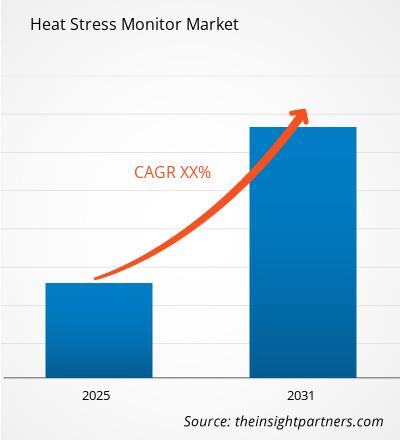
The global Heat Stress Monitor Market was valued at US$ 69.11 Million in 2025 and is projected to reach US$ 139.54 Million by 2034, registering a compound annual growth rate (CAGR) of 8.12% from 2026 to 2034. The market comprises an extensive range of devices that monitor environmental heat levels as well as the risks of suffering from heat stress injuries among employees, athletes, and the military personnel. Monitoring systems comprise wet bulb globe temperature sensors, real-time data analysis tools, and alert systems to facilitate effective heat stress management in various working environments.
North America continues to be the key regional market for Heat Stress Monitor Market Size and will generate about 28-32% of total global revenues in 2025 at a CAGR of 8-10%. The leading position of the regional market will be driven by the presence of strict occupational safety standards and increased frequency of heat waves in the industrial areas. Awareness of the health effects of heat exposure and the adoption of WBGT monitoring systems in construction and mining industries will also support regional demand.
Heat Stress Monitor Market Assessment and Insights
- North America: North America held a significant share of approximately 28-32% in 2025 and is projected to grow at a CAGR of 8-10% during 2026-2034. The region benefits from stringent heat safety regulations, rising heatwave occurrences, and strong adoption of WBGT-based monitoring in construction and manufacturing sectors.
- US: The United States accounted for approximately 70-75% of the North American Market in 2025 and is expected to grow at a CAGR of 9-11% through 2034. Strong regulatory enforcement, extensive industrial infrastructure, and growing workplace safety investments drive US market growth.
- Europe: Europe represented approximately 22-26% of the global Market in 2025, with a projected CAGR of 7-9% during 2026-2034. Leading countries include Germany, the United Kingdom, and France, where worker health directives and climate adaptation policies sustain steady demand for industrial continuous monitoring systems.
- Asia Pacific: Asia Pacific accounted for approximately 35-40% of the global Market in 2025 and is projected to grow at a CAGR of 9-11% during 2026-2034. China, Japan, South Korea, India, and Australia are key contributors, driven by industrial expansion, rising heatwave frequency, and growing occupational safety awareness.
- Largest Segment: The Hardware & Software segment held the largest market share of approximately 72-76% in 2025 and is projected to grow at a CAGR of 7-9% during 2026-2034. Hardware solutions dominate due to their essential role in capturing accurate real-time environmental and physiological data in industrial settings.
- High Growth Segment: The Services segment is the fastest-growing offering category, with a projected CAGR of 10-12% during 2026-2034. Growing demand for calibration, maintenance, data analytics, and cloud-based monitoring platforms drives this segment's accelerated growth trajectory.
- Key companies analyzed in detail: Extech (Teledyne FLIR), LSI LASTEM s.r.l., Nielsen-Kellerman Co., PCE Instruments, REED Instruments, Romteck Australia, Runrite Electronics (Pty) LTD., Sato Keiryoki Mfg. Co., Ltd, TES Electrical Electronic Corp., TSI Incorporated.
Source: The Insight Partners' analysis based on proprietary research, government publications, company annual reports, investor presentations, industry databases, and expert interviews.
The Heat Stress Monitor Market has undergone a significant transition, moving away from simple handheld thermometers to multi-dimensional monitoring systems that include both environmental monitoring sensors and physiological tracking. It was brought about through advancements in technology such as sensor miniaturization, wireless connectivity and real-time risk assessment and analysis, and the ability to send alerts to concerned persons. Manufacturing dynamics in the industry have also changed, with the focus being more on software integrations and the use of cloud-based platforms in order to conduct monitoring at several places at once. On the other hand, hardware manufacturers have paid attention to device durability, precision, and usability under harsh environmental conditions.
The Market is set for continuous growth due to rising threats to human health as a result of climate change. Companies continue to invest in research and development, with major players putting a lot of effort into developing AI-enabled predictive analytics, wearable physiological sensors and IoT-powered monitoring platforms. Favorable regulatory landscape, such as heat injury prevention rule proposals and similar regulatory frameworks in Europe and Asia, is expected to contribute to increased penetration of the market into underpenetrated sectors.
Heat Stress Monitor Market Report Scope
| Report Attribute | Details |
|---|---|
| Market size in 2025 | US$ 69.11 Million |
| Market Size by 2034 | US$ 139.54 Million |
| Global CAGR (2026 - 2034) | 8.12% |
| Historical Data | 2021-2024 |
| Forecast period | 2026-2034 |
Heat Stress Monitor Market Analysis
The Heat Stress Monitor Market operates on a number of interlinked demand factors, which define the growth pattern. With the increase in the number and severity of heatwaves around the world due to global warming, the risk of heat illness among outdoor and indoor workers in different industries has increased substantially. Companies in the construction industry, mining industry, manufacturing sector, agricultural industry, and the oil and gas industry are under increasing pressure to implement their heat stress management programs. There have been some changes in the regulatory scenario with federal agencies holding hearings on proposed regulations to prevent heat injuries. This regulatory momentum is helping the to grow rapidly. The supply chain of the market consists of various companies related to sensors, electronics components, software companies and distributors. While production happens mainly in Asia Pacific regions, the technology development happens in North America and Europe.
The Competitive Dynamics of the Heat Stress Monitor Market Report involves the interaction between companies providing instrumentation and those that specialize in technology. TSI Incorporated has dominated the market in 2025 with an estimated 21.2% market share due to its QUESTemp line of WBGT heat stress monitors. The leading companies, which include TSI Incorporated, LSI LASTEM, Casella, Delta OHM S.r.l., and Nielsen-Kellerman, had accounted for 66.5% of the market share in 2025. The main competition comes from Nielsen-Kellerman through the provision of the Kestrel brand of the 5400 Heat Stress Tracker. It is mainly used by athletic trainers and sports medicine professionals in WBGT monitoring. Extech (Teledyne FLIR) is a company that has a strong market position due to its heat stress meter lineup. The current investment trends point towards a concentration on internet-of-things (IoT)-based monitoring systems, artificial intelligence (AI) driven prediction systems, and physiological sensors that monitor worker health metrics continuously.
● REPORT CUSTOMIZATION
Tailor This Report To Align With Your Specific Business Requirements
This report can be customized to align precisely with your business objectives, scope, and target markets. Customization options include tailored segmentation, geography, competitive analysis, and strategic insights to support informed decision-making.
Customize This Report →WHAT YOU CAN ADJUST
- ● Segmentations
- ● Geography
- ● Competitive Analysis
- ● Language Preferences
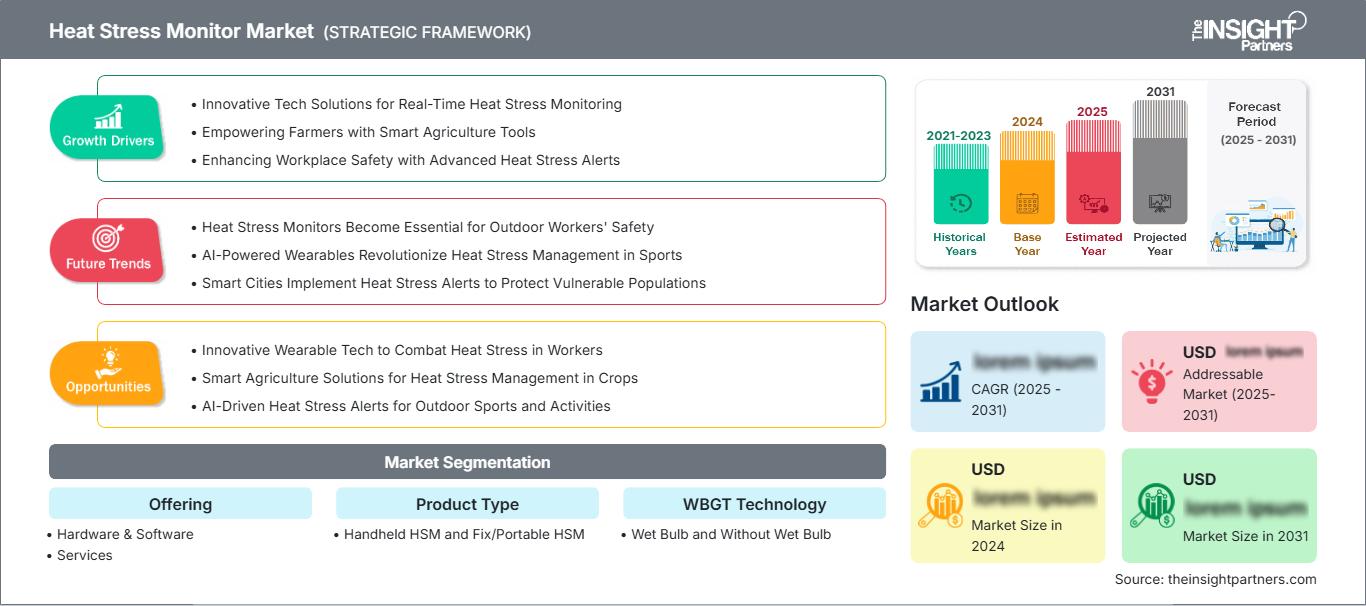
Heat Stress Monitor Market: Strategic Insights
Regional Insights
North America Heat Stress Monitor Market
North America offers an advanced and well-regulated market for heat stress monitoring devices, contributing around 28-32% of worldwide revenues in 2025, with a CAGR of 8-10% estimated between 2026 and 2034. The market leadership in this region is primarily attributed to the strict regulations concerning occupational safety in addition to increasing awareness about heat-related hazards in industries. In the US, the increased implementation of WBGT monitoring systems in construction, manufacturing, and logistics can be primarily attributed to stringent regulations and frequent heatwaves. On the other hand, Canada provides a supportive environment for this market in terms of consistent demands due to regulatory compliance and focus on industrial safety measures. The competition in North America consists of a few major companies like TSI Incorporated, Extech (Teledyne FLIR), and Nielsen-Kellerman, capturing considerable shares of the market through their product innovation and distribution channels.
U.S. Heat Stress Monitor Market
The United States leads in North America’s Heat Stress Monitor Market Share, having an estimated 70-75% share of the region’s revenues in 2025, with the forecasted CAGR of 9-11% for the period of 2026-2034. The U.S. market has a good industrial base, strong enforcement of workplace safety regulations, and corporate headquarters leading to innovations in the industry. Federal guidelines for preventing heat injuries have increased the number of businesses willing to comply by acquiring heat stress monitors. The construction, manufacturing, and logistics industries are all looking into this technology for their employees’ safety needs. The U.S. market is also leading in terms of innovations; many new technologies are introduced in this country first, and then exported. Wellness programs and insurance services are other distribution channels to consider.
Europe Heat Stress Monitor Market
The Europe Heat Stress Monitor Market is estimated to hold 22-26% share of the global market, growing at a CAGR of 7-9% from 2026 to 2034. Germany is the leading country in Europe in terms of market value due to high industrial engineering background, strict regulations on occupational health and presence of manufacturing industries. It is followed by the UK, which has stringent regulations regarding industrial technology and adoption rates of industrial safety measures. France, Italy, and Spain have significant shares in the regional market due to worker health directives and climate change adaptations, which require monitoring of heat exposure in hazardous working conditions. In the European region, the market comprises of sophisticated buyers with high preference for accuracy and reliability in products along with adherence to international standards like ISO 7243. The occupational safety and climate adaptation policies of the EU affect the products developed and strategies adopted in the market. Companies like TSI Incorporated, LSI LASTEM, and Casella are the major players in the region along with specialists offering products in specific segments.
APAC Heat Stress Monitor Market
The Asia Pacific was the largest regional market of heat stress monitors with a share of around 35-40% of the overall revenue in 2025, and the CAGR for 2026-2034 is expected to be 9-11%. Being the biggest producer of products worldwide and a rapidly developing consumer base, China is a dominant player in the regional market due to its growing industries, urbanization, and increasing awareness of heat hazards at the workplaces. The contribution of Japan and South Korea is noteworthy owing to their highly developed industries and use of advanced technologies for monitoring. India and Australia are fast-developing markets for heat stress monitors owing to their increasing number of industries and frequent heatwaves. The presence of favorable industrial policies for occupational health, efficient infrastructure, and governmental initiatives to maintain occupational safety standards makes the region a significant player in the market. The regional meteorological organizations have issued many warnings of heatwaves in the industrial regions due to the abnormal temperature forecasts.
Middle East & Africa Heat Stress Monitor Market
The Middle East and Africa is another smaller but rising market with a forecasted CAGR of 8-10% from 2026 to 2034. Saudi Arabia and the United Arab Emirates are two major buyers in this region due to massive infrastructure works, harsh climatic conditions, and increasing focus on safety regulation in the construction sector and the oil and gas industry. South Africa acts as the key market in Sub-Saharan Africa thanks to mandatory usage in the mining industry and adoption of occupational safety solutions. Rising need for heat stress monitors in the energy and infrastructure development projects has been driving their demand in the construction, oil and gas, and manufacturing industries for workers' safety and compliance with regulations. The Rest of MEA category includes various countries with different adoption rates where extreme temperature conditions and infrastructure development act as major drivers of heat stress monitor usage.
Segmentation Analysis
Offering
The Offering segment encompasses hardware and software solutions, along with associated services, each addressing distinct aspects of heat stress monitoring and management. This segment is projected to grow at a CAGR of approximately 7-9% from 2026 to 2034, driven by continuous technological advancement across hardware platforms and expanding software capabilities for data analytics and compliance reporting.
- Hardware & Software: Hardware solutions dominate the offering category, including WBGT meters, portable monitoring systems, and wearable sensors essential for capturing accurate real-time environmental and physiological data in industrial settings. Software platforms enable data analytics, reporting, and integration with broader occupational health management systems.
- Services: Services encompass calibration, maintenance, training, data analytics, and cloud-based monitoring platforms that support comprehensive heat stress management programs. Growing demand for managed monitoring services and predictive analytics drives expansion in this category.
Product Type
The Product Type segment categorizes heat stress monitors by their form factor and deployment configuration, encompassing handheld devices and fixed or portable systems. This segment is projected to grow at a CAGR of approximately 7-10% from 2026 to 2034, with handheld monitors maintaining dominance due to their versatility and ease of use in field operations.
- Handheld HSM: Handheld heat stress monitors are widely used for spot checks and situational assessment in construction, mining, oil and gas, and athletics applications. Their portability, rapid deployment capability, and real-time data measurement make them suitable for dynamic and high-risk environments.
- Fix/Portable HSM: Fixed and portable heat stress monitors are typically installed in specific locations within industrial plants, sports facilities, or outdoor environments for continuous ambient measurement. These systems provide ongoing monitoring and automated alerting for proactive risk management.
WBGT Technology
The WBGT Technology segment distinguishes between monitors that incorporate wet bulb sensing and those that calculate heat stress without direct wet bulb measurement. This segment is projected to grow at a CAGR of approximately 7-9% from 2026 to 2034, with wet bulb-based monitors maintaining dominance due to their accuracy and industry acceptance.
- Wet Bulb: Wet bulb-based WBGT monitors directly measure natural wet bulb temperature, globe temperature, and dry bulb temperature to provide comprehensive heat stress assessment. These devices are widely utilized in high-risk work environments and are celebrated for their accuracy in evaluating environmental conditions contributing to heat stress.
- Without Wet Bulb: Monitors without wet bulb functionality calculate heat stress indices using alternative methodologies such as heat index or thermal work limit. These devices offer cost advantages and simplified operation for applications where full WBGT measurement is not required.
Application
The Application segment categorizes heat stress monitor adoption across manufacturing plants, mining and oil and gas, military, and athletics and sports. This segment is projected to grow at a CAGR of approximately 8-11% from 2026 to 2034, with manufacturing plants emerging as the fastest-growing application category.
- Manufacturing Plants: Manufacturing plants represent the fastest-growing application segment, driven by the presence of heavy machinery and hot processes that elevate heat illness risk. Deployment of effective monitoring systems creates safer workplaces while maintaining operational productivity.
- Mining and Oil & Gas: Mining and oil and gas operations involve extreme environmental conditions and physically demanding work, making heat stress monitoring essential for worker safety. Adoption is driven by regulatory compliance requirements and industry best practices.
- Military: Military applications require heat stress monitoring for training and operational requirements in extreme climates. Armed forces across North America and other regions utilize WBGT monitors to protect personnel during physical training and deployment.
- Athletics and Sports: Athletics and sports represent a rapidly growing application area for heat stress monitors. Athletic trainers and sports medicine professionals use devices such as the Kestrel 5400 Heat Stress Tracker to monitor environmental heat conditions and ensure athlete safety.
Opportunity Snapshot
| Application Segment | Revenue Contribution | Trend Tag | Adoption Stage |
| Manufacturing Plants | High | Industrial Safety | Scaling |
| Mining and Oil & Gas | High | Extreme Ops | Mature |
| Military | Medium | Force Protection | Mature |
| Athletics and Sports | Medium | Athlete Safety | Emerging |
Heat Stress Monitor Market Growth Drivers and Impact Analysis
Stringent Occupational Heat Safety Regulations
Governments and regulatory bodies across developed and developing economies are enforcing stricter workplace safety standards to prevent heat-related illnesses. Proposed federal heat injury prevention rules have expanded employer obligations for monitoring and protection, creating significant compliance-driven demand for heat stress monitoring systems. Organizations face substantial penalties and liability risks for non-compliance, driving investment in both fixed monitoring infrastructure and portable wearable solutions. This regulatory push has made heat stress monitoring a mandatory component of occupational safety programs across construction, manufacturing, agriculture, and logistics sectors. The regulatory momentum is expected to intensify as climate change increases heat exposure risks, further accelerating market adoption.
Increasing Global Temperature and Heatwave Frequency
Rising global temperatures and frequent heatwaves have significantly increased the risk of heat stress among workers and athletes. Climate change has intensified heat waves globally, extending the duration of extreme heat seasons and increasing the incidence of heat-related illnesses in outdoor and indoor industrial settings. Workers in construction, agriculture, and outdoor logistics sectors now face thermal exposure hazards during previously temperate months, expanding the addressable market beyond traditionally hot-weather regions. Regional meteorological bodies have issued multiple heatwave alerts across key industrial regions, highlighting above-normal temperature projections. Organizations are adopting preventive measures, including monitoring systems, to mitigate health risks and maintain productivity.
Technological Advancements in Monitoring Solutions
Technological advancements in sensor miniaturization, wireless connectivity, and data analytics have reduced the total cost of ownership for heat stress monitoring systems while improving user experience and real-time alert capabilities. Wearable heat monitoring devices have evolved from bulky specialized instruments to lightweight, unobtrusive patches and bands that can be integrated into standard personal protective equipment. Integration of IoT platforms with cloud-based analytics enables organizations to aggregate heat exposure data across entire workforces, identify high-risk work environments, and implement targeted interventions. The convergence of heat stress monitoring with broader occupational health platforms has created cross-selling opportunities and increased attachment rates for heat monitoring modules within enterprise health and safety software ecosystems.
Heat Stress Monitor Market Future Trends
AI-Powered Predictive Heat Stress Analytics
Artificial intelligence is increasingly central to delivering predictive heat stress analytics that enable proactive risk management rather than reactive monitoring. AI algorithms analyze historical heat exposure data, weather forecasts, and worker physiological parameters to predict high-risk periods and recommend preventive actions. The Heat Stress Monitor Market trend is being accelerated by the integration of machine learning capabilities into monitoring platforms, enabling continuous improvement in risk prediction accuracy. The development of AI-powered analytics creates opportunities for manufacturers to differentiate through software capabilities and data-driven insights, transforming heat stress monitors from measurement devices into comprehensive risk management platforms.
Wearable Physiological Monitoring Integration
The integration of wearable physiological sensors into heat stress monitoring systems is rapidly expanding capabilities beyond environmental measurement. Wearable devices capable of tracking body temperature, heart rate, and hydration levels provide continuous monitoring of individual worker health status, enabling personalized risk assessment and intervention. These devices are increasingly used in sports, military training, and outdoor labor-intensive industries. The convergence of wearable technology with mobile applications is enhancing user engagement and enabling personalized health insights, contributing to market expansion. Future developments are expected to include integration with smart personal protective equipment and real-time alerting systems that automatically notify supervisors when workers approach dangerous heat exposure thresholds.
Heat Stress Monitor Market Opportunities
AI-Based Predictive Heat Stress Analytics Integration
The integration of AI-based predictive analytics into heat stress monitoring platforms represents a significant growth opportunity for market participants. Organizations increasingly seek solutions that not only measure current conditions but also forecast future heat exposure risks based on weather patterns, work schedules, and worker profiles. This opportunity extends to software-as-a-service models that provide continuous monitoring, automated reporting, and compliance documentation. Manufacturers can differentiate through advanced analytics capabilities, creating recurring revenue streams and strengthening customer relationships. The Heat Stress Monitor Market Forecasts indicate strong potential for analytics-driven solutions as organizations prioritize proactive risk management over reactive compliance.
Smart PPE Adoption Across Logistics and Warehousing
The adoption of smart personal protective equipment incorporating heat stress monitoring capabilities represents an emerging opportunity across logistics, warehousing, and other labor-intensive sectors. Integration of heat stress sensors into standard PPE enables continuous monitoring without requiring separate devices or additional worker compliance burdens. This opportunity is particularly relevant for sectors where workers are distributed across large facilities or outdoor areas, making centralized monitoring challenging. Partnerships between heat stress monitor manufacturers and PPE producers can accelerate adoption by embedding monitoring capabilities into essential safety equipment, reducing barriers to deployment and expanding market reach into previously underserved segments.
Recent Developments
- October 2025: Gill Instruments — the company launched the MaxiMet GMX552, a compact weather station integrating a black globe sensor for real-time heat-stress monitoring. The solution provides accurate WBGT data to help businesses, governments, and event organizers monitor heat exposure and improve worker safety.
- May 2026: Zackat Labs — the company launched the W3 wearable, combining physiological heat-stress monitoring with Bluetooth-connected gas detection and AT&T cellular IoT connectivity. The system tracks indicators such as core body temperature and heart-rate variability and sends alerts to supervisors to support real-time industrial worker safety.
- May 2026: Zackat Labs — the company, together with AT&T Business and RCW Energy Services, launched a connected worker-safety platform featuring the W3 wearable and integrated gas monitoring. The system monitors core body temperature, heart-rate variability, fatigue, and dehydration indicators, while Bluetooth-connected single- and four-gas monitors provide environmental hazard alerts. AT&T’s cellular IoT connectivity enables near-real-time data transmission to supervisors and safety teams.
Frequently Asked Questions

- Comprehensive Market Sizing and Forecast Analysis
- Detailed Segmentation Analysis
- In-Depth Market Dynamics Assessment
- Regional and Country-Level Insights
- Competitive Landscape and Company Benchmarking
- Strategic Business Intelligence
Recent Reports
Testimonials

The Insight Partners provided valuable market intelligence that supported our global go-to-market strategy. Their team was professional, responsive, and attentive to our feedback, providing thoughtful analysis and helpful methodological clarifications throughout the project.
Junmo Kim Chief Financial Officer (CFO), Enertech Co., Ltd.
The Insight Partners' SCADA System Market report is comprehensive, with valuable insights on current trends and future forecasts. The team was highly professional, responsive, and supportive throughout. We are very satisfied and highly recommend their services.
RAN KEDEM Partner, Reali Technologies LTDs
I requested a report on a very specific software market and the team produced the report in a few days. The information was very relevant and well presented. I then requested some changes and additions to the report. The team was again very responsive and I got the final report in less than a week.
JEAN-HERVE JENN Chairman, Future Analytica
We worked with The Insight Partners for an important market study and forecast. They gave us clear insights into opportunities and risks, which helped shape our plans. Their research was easy to use and based on solid data. It helped us make smart, confident decisions. We highly recommend them.
PIYUSH NAGPAL Sr. Vice President, High Beam Global
The Insight Partners delivered insightful, well-structured market research with strong domain expertise. Their team was professional and responsive throughout. The user-friendly website made accessing industry reports seamless. We highly recommend them for reliable, high-quality research services
YUKIHIKO ADACHI CEO, Deep Blue, LLC.
This is the first time I have purchased a market report from The Insight Partners.While I was unsure at first, I visited their web site and felt more comfortable to take the risk and purchase a market report.I am completely satisfied with the quality of the report and customer service. I had several questions and comments with the initial report, but after a couple of dialogs over email with their analyst I believe I have a report that I can use as input to our strategic planning process.Thank you so much for taking the extra time and making this a positive experience.I will definitely recommend your service to others and you will be my first call when we need further market data.
JOHN SUZUKI President and Chief Executive Officer, Board Director, BK Technologies
I wish to appreciate your support and the professionalism you displayed in the course of attending to my request for information regarding to infectious disease IVD market in Nigeria. I appreciate your patience, your guidance, and the fact that you were willing to offer a discount, which eventually made it possible for us to close a deal. I look forward to engaging The Insight Partners in the future, all thanks to the impression you have created in me as a result of this first encounter.
DR CHIJIOKE ONYIA MANAGING DIRECTOR, PineCrest Healthcare Ltd.Reason to Buy
- Informed Decision-Making
- Understanding Market Dynamics
- Competitive Analysis
- Identifying Emerging Markets
- Customer Insights
- Market Forecasts
- Risk Mitigation
- Boosting Operational Efficiency
- Strategic Planning
- Investment Justification
- Tracking Industry Innovations
- Aligning with Regulatory Trends





 Get Free Sample for