
Marine Communication Systems Market Demand, Size & Forecast by 2034
Coverage: By Type (Ship-to-ship Marine Communication Systems, Ship-to-shore Marine Communication Systems, Others); Application (Leisure Ships, Commercial Ships, Military Ships) , and Geography (North America, Europe, Asia Pacific, and South and Central America)
- Status : Data Released
- Report Code : TIPRE00006226
- Category : Electronics and Semiconductor
- No. of Pages : 150
- Available Report Formats :


- Last update date : October 13, 2026


2025 Market Size
US$ 53.88 Bn
Base year value
2034 Forecast
US$ 111.14 Bn
Projected by 2034
CAGR 2026-2034
8.38 %
Growth rate
Addressable Market
US$ 740.88 Bn
(2026-2034)
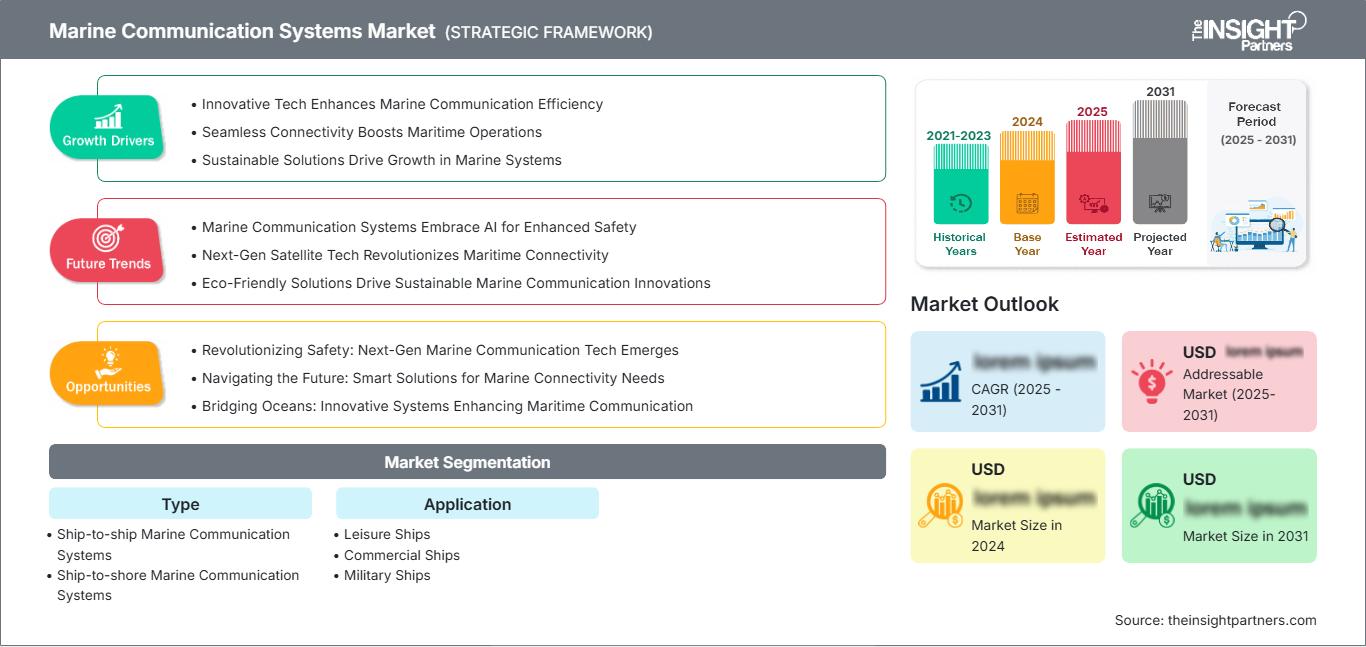
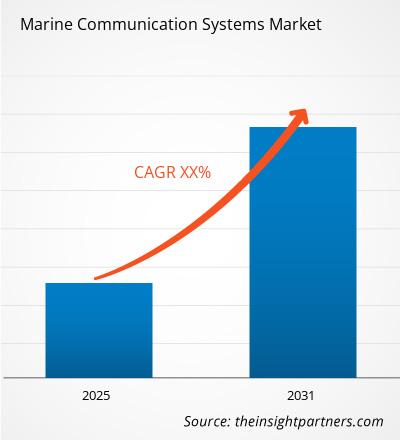
The marine communication systems market was valued at US$ 53.88 Billion in 2025 and is projected to reach US$ 111.14 Billion by 2034, expanding at a CAGR of 8.38% during 2026–2034. With increased shipping of goods, modernization of ships and the use of satellite communication services are driving the demand for secure ship-to-shore connectivity services among various vessels that sail within and outside domestic jurisdictions.
Maritime digitalization efforts in North America marine communication systems market size are constantly contributing towards the growth in investment in the development of modern maritime communication systems on ships. Factors like fleet modernization, offshore energy exploration activities and increasing regulations for maritime safety from local bodies. The region is projected to record a CAGR of 7.8–8.3% between 2026 and 2034.
Marine Communication Systems Market Assessment and Insights
- North America: North America accounted for 31–34% share in 2025 and is anticipated to expand at a CAGR of 7.8–8.3% during 2026–2034. Demand is supported by naval modernization, offshore energy activities, advanced port infrastructure, and widespread adoption of satellite communication technologies.
- US: The U.S. represented 76–80% of the North American market in 2025 and is projected to register a CAGR of 7.9–8.4% during 2026–2034, driven by commercial fleet upgrades, defense investments, and maritime cybersecurity initiatives.
- Europe: Europe held 26–29% share in 2025 and is expected to witness a CAGR of 7.5–8.1% during 2026–2034. Norway, Germany, the UK, France, and Italy continue investing in maritime digitalization, offshore industries, and vessel safety technologies.
- Asia Pacific: Asia Pacific accounted for 28–31% share in 2025 and is anticipated to grow at a CAGR of 9.2–9.8% during 2026–2034, supported by shipbuilding activities across China, South Korea, Japan, and India alongside expanding regional maritime trade.
- Largest Segment: Ship-to-shore Marine Communication Systems represented a 56–60% market share in 2025 and is projected to expand at a CAGR of 8.2–8.7% during 2026–2034, supported by increasing requirements for uninterrupted vessel-to-port connectivity.
- High Growth Segment: Military Ships accounted for 20–24% market share in 2025 and are anticipated to record a CAGR of 9.5–10.1% during 2026–2034, owing to growing naval modernization programs and secure communication requirements.
- Key companies analyzed in detail: Highland Wireless, Inmarsat plc, Leonardo S.p.A., Orbit Communications Systems Ltd., Rice Electronics, Rohde & Schwarz GmbH & Co. KG, Saab AB, Telemar S.p.A., XSAT Group, Zenitel Group, Cobham Satcom.
Source: The Insight Partners' analysis based on proprietary research, government publications, company annual reports, investor presentations, industry databases, and expert interviews.
The development of digital technologies in the maritime industry over the last ten years has dramatically changed the communication infrastructure in the industry. Contemporary ships utilize satellite communication, broadband services, IP radio technology, and cloud-based fleet management systems in order to enhance operational visibility and improve navigation security. Increased ship automation, new regulations regarding Global Maritime Distress and Safety Systems standards, and investments in digital ports have been driving modernization efforts in commercial shipping, offshore industry, and naval forces. These trends support the growth of the market for marine communication systems as well as create good prospects for equipment producers, software vendors, and satellite networks operators.
In the future, additional investment into the development of smart ports, autonomous ship solutions, and maritime cybersecurity systems will change the competitive landscape. Countries from emerging economies in Southeast Asia, the Middle East, and Latin America are investing more money into the development of marine infrastructure and maritime surveillance systems. Development of low-earth-orbit satellite constellations, increased bandwidth availability, and integrated communication systems will lead to better connectivity, which will be supportive for the implementation of innovative marine communication systems in commercial and military fleets around the world.
Marine Communication Systems Market Report Scope
| Report Attribute | Details |
|---|---|
| Market size in 2025 | US$ 53.88 Billion |
| Market Size by 2034 | US$ 111.14 Billion |
| Global CAGR (2026 - 2034) | 8.38% |
| Historical Data | 2021-2024 |
| Forecast period | 2026-2034 |
Marine Communication Systems Market Analysis
Maritime transport continues to dominate the landscape of international logistics, transporting more than four out of five goods via ships. Fleet owners tend to favor constant connectivity solutions that can help them optimize routes, improve fuel consumption, track cargo condition, and maintain compliance with regulations. Thus, market development depends on investment in satellite communication terminals, integrated bridge systems, digital navigation systems, and robust communication networks aboard the ships.
Industry landscape continues to evolve thanks to the increased cooperation between satellite companies, communication equipment vendors, navigation solutions providers, and maritime software providers. Technological innovations like the emergence of new low earth orbit satellites, hybrid communication solutions, and digital fleet management solutions help increase the reliability of the connection while decreasing latencies in the operations. This allows for improving the well-being of the crews and increasing safety.
Increasingly fierce competition continues as existing companies develop digital capabilities through strategic investments, technology partnerships, and innovations of their products. According to the marine communication systems market report, companies are focusing on integrated communication solutions that feature satellite connectivity, VHF equipment, cybersecurity tools, and monitoring via the cloud platform. Existing organizations, such as Inmarsat plc, Leonardo S.p.A., Saab AB, Rohde & Schwarz GmbH & Co. KG, Orbit Communications Systems Ltd., and Cobham Satcom, continue developing their portfolios using advanced maritime communication systems designed for commercial shipping and navy.
There are more investment flows into maritime communication infrastructure as governments update their coast guard services, navy, and ports. Highland Wireless, Telemar S.p.A., XSAT Group, Zenitel Group, and Rice Electronics continue growing their portfolios of specialized maritime communication equipment and solutions aimed at offshore energy sector, maritime security, and vessel communication. Emphasis on software-defined communication systems, secure digital networks, artificial intelligence-powered monitoring, and robust satellite communication capabilities should facilitate sustainable growth of the market and improved efficiency.
● REPORT CUSTOMIZATION
Tailor This Report To Align With Your Specific Business Requirements
This report can be customized to align precisely with your business objectives, scope, and target markets. Customization options include tailored segmentation, geography, competitive analysis, and strategic insights to support informed decision-making.
Customize This Report →WHAT YOU CAN ADJUST
- ● Segmentations
- ● Geography
- ● Competitive Analysis
- ● Language Preferences
Marine Communication Systems Market: Strategic Insights
Regional Insights
North America Marine Communication Systems Market
North America had a 31-34% market share in 2025 and will register a CAGR of 7.8-8.3% from 2026-2034. The marine communication systems market share in North America is driven by extensive commercial shipping routes, offshore energy exploration, naval force upgrading, and continuous investment in digital maritime infrastructure. Regulations set by the U.S. Coast Guard and Transport Canada also keep encouraging vessels to install interoperable communication systems that enhance navigational safety and emergency response.
Commercial shipping companies have been adopting satellite communications, broadband communications, and cybersecurity onboard systems to increase efficiency. Adoption of advanced technology, along with advanced port digitization projects and public investments to enhance maritime resilience, continues to drive regional demand for advanced communication systems.
U.S. Marine Communication Systems Market
The U.S. accounted for 76–80% of the total North American market share in 2025 and is expected to grow at a CAGR of 7.9–8.4% in 2026–2034. This country enjoys one of the largest commercial shipping industries in the world along with extensive naval activities and consistent investment in maritime surveillance technologies. Satellite communication network deployment is increasing in cargo ships, offshore installations, and naval ships, which is driving technology adoption in the maritime ecosystem.
Leading players operating communication technologies have large-scale operations in the U.S., driving innovations in secure communication technologies in vessels. Adoption of fleet management systems using the cloud, bridge technologies, digital navigation, and reliable broadband communications is allowing operators to manage fleet performance, regulation compliance, efficiency, and wellbeing of crews.
Europe Marine Communication Systems Market
The Europe region has accounted for 26-29% of the global market in 2025 and will record a CAGR of 7.5-8.1% in 2026-2034. Germany dominates the regional market owing to its high-quality production of maritime equipment and export-driven shipping industry, along with the investment in modernizing ships. Moreover, the region has been witnessing strict safety laws for maritime vessels that promote next-generation communication systems.
There are notable investments being made by the UK in naval modernization, offshore wind farms, and port digitization to cater to the need for secure communication solutions for commercial and defense requirements. The efforts undertaken by France, Italy, and Spain are in regard to maritime digitization in form of smart ports, coast guard modernization, and cruise tourism.
APAC Marine Communication Systems Market
Asia Pacific was contributing about 28%-31% share of the global market in 2025 and estimated to grow at a CAGR of 9.2%-9.8% from 2026 to 2034. China is the largest regional demand driver owing to the strong shipbuilding industry, while Japan and South Korea are making strides in marine electronics manufacturing and intelligent ships.
Increasing spending by India and Australia on naval upgrades, port development, and maritime surveillance is anticipated. The growth in international trade, government-driven maritime programs, and rising commercial shipping operations will drive the adoption of advanced marine communication technologies in the region.
Middle East & Africa Marine Communication Systems Market
It is expected that the Middle East & Africa would register a CAGR between 8.0% and 8.6% between 2026 and 2034, owing to the increased number of offshore energy projects, improvements made to ports, and increased maritime security investments.
The two key countries, namely Saudi Arabia and the UAE, are enhancing their maritime logistics infrastructure through port expansion and digitalization efforts. South Africa is a significant maritime node, providing connectivity for global trade lanes, whereas the Rest of the Middle East & Africa are investing in coastal surveillance, offshore exploration, and commercial shipping infrastructure.
Segmentation Analysis
Type
The Type segment represents a fundamental component of the marine communication systems market scope, as vessel operators increasingly require reliable communication technologies capable of supporting navigation, safety, operational coordination, and regulatory compliance. The segment is projected to expand at a CAGR of 8.3–8.8% during 2026–2034, supported by continuous technological innovation, satellite communication adoption, and modernization of commercial and defense fleets.
- Ship-to-ship Marine Communication Systems – These systems enable direct communication between vessels for collision avoidance, coordinated navigation, emergency response, and operational efficiency. Growing international shipping activity and stricter maritime safety regulations continue supporting stable demand across commercial and naval fleets.
- Ship-to-shore Marine Communication Systems – This sub-segment supports continuous connectivity between vessels and coastal infrastructure, enabling fleet monitoring, weather updates, cargo management, regulatory reporting, and emergency communications while improving overall operational visibility across global maritime routes.
Application
Application requirements continue evolving as commercial operators, naval organizations, and recreational vessel owners seek higher bandwidth, secure connectivity, and integrated digital communication capabilities. The Application segment is expected to register a CAGR of 8.6–9.1% during 2026–2034, supported by growing maritime digitalization, autonomous vessel development, and expanding investments in secure communication infrastructure.
- Leisure Ships – Recreational vessels increasingly deploy broadband satellite connectivity, onboard Wi-Fi, emergency communication equipment, and integrated navigation technologies to enhance passenger experience, operational safety, and compliance with maritime communication standards.
- Commercial Ships – Commercial vessels remain the largest application segment owing to extensive global shipping operations, increasing fleet digitalization, cargo monitoring requirements, and continuous investments in satellite-enabled fleet communication platforms supporting operational efficiency.
- Military Ships – Naval fleets continue expanding adoption of encrypted communication systems, integrated tactical networks, advanced satellite communications, and resilient command-and-control technologies to strengthen maritime surveillance, defense readiness, and mission-critical operational capabilities.
Opportunity Snapshot
| Application | Revenue Contribution | Trend Tag | Adoption Stage |
|---|---|---|---|
| Leisure Ships | Medium | Passenger Connectivity | Scaling |
| Commercial Ships | High | Fleet Digitalization | Mature |
| Military Ships | Medium | Secure Networks | Scaling |
Marine Communication Systems Market Growth Drivers and Impact Analysis
Expansion of Maritime Digitalization and Smart Shipping Initiatives
The maritime industry has started embracing various digital technologies that increase fleet efficiency, navigational accuracy, and operational safety, leading to constant growth in the demand for sophisticated communication systems. With the deployment of satellite communications, cloud-based fleet management, AI-based monitoring tools, and digital navigation solutions, shipping companies can ensure optimal route planning, minimize fuel usage, and maximize asset utilization. Smart ports with reliable vessel-to-shore communication solutions are being developed and maintained by governments and port authorities for real-time exchange of data. Such trends will further increase the demand for innovative solutions from commercial, defense, and offshore industries, while encouraging manufacturers to come up with integrated communication products that comply with the new regulations.
Growing Naval Modernization and Maritime Security Investments
National governments still spend sizable amounts on programs that aim to modernize their navies, monitor their coastlines, and conduct maritime domain awareness. The new generation of naval ships needs advanced encryption capabilities, satellite communications with higher bandwidth, command-and-control communication systems, and robust communication architectures that can survive in challenging circumstances. Similarly, coast guard agencies are improving their communication systems to enhance their capability for emergency situations, search and rescue activities, and monitoring of borders. Procurement initiatives in defense industries of North America, Europe, and Asia Pacific will generate sustained demand for secure marine communication systems along with pushing manufacturers to come up with next generation technology.
Increasing Dependence on Satellite-Based Maritime Connectivity
Satellite communication technologies are becoming indispensable for vessels operating across international waters where terrestrial communication networks remain unavailable. Advancements in high-throughput satellites and low-Earth-orbit constellations are improving bandwidth availability, reducing latency, and enabling continuous connectivity for commercial shipping, offshore energy platforms, cruise vessels, and fishing fleets. These capabilities support applications such as predictive maintenance, remote diagnostics, weather intelligence, cargo tracking, crew welfare services, and regulatory reporting. As satellite service providers expand global coverage and communication equipment becomes more sophisticated, vessel owners are accelerating modernization programs to improve operational continuity. Growing availability of hybrid satellite communication architectures is expected to further strengthen adoption across diverse maritime applications.
Marine Communication Systems Market Future Trends
Integration of Artificial Intelligence with Connected Vessel Operations
Artificial intelligence is becoming an essential component of next-generation maritime communication platforms by enabling predictive decision-making, intelligent bandwidth allocation, automated fault detection, and real-time operational analytics. The marine communication systems market trends increasingly reflect demand for integrated digital ecosystems where communication equipment exchanges information with navigation systems, engine monitoring platforms, weather intelligence services, and fleet management software. AI-supported communication platforms improve situational awareness while reducing manual intervention and enhancing operational efficiency. As autonomous navigation technologies continue evolving, intelligent communication systems are expected to become a foundational requirement for commercial shipping companies and naval organizations seeking safer, data-driven maritime operations.
Hybrid Satellite Communication Networks Supporting Global Connectivity
Future marine communication infrastructure is expected to combine geostationary satellites, low-Earth-orbit satellite constellations, terrestrial coastal networks, and software-defined communication technologies into unified connectivity platforms. Hybrid architectures provide improved redundancy, lower latency, greater bandwidth flexibility, and enhanced service continuity for vessels operating across different maritime environments. Commercial fleet operators increasingly value communication systems capable of automatically selecting the most efficient transmission path while maintaining uninterrupted connectivity. Continued investments in satellite infrastructure, digital maritime ecosystems, and secure network management are anticipated to accelerate adoption of hybrid communication platforms, enabling higher operational efficiency, stronger cybersecurity resilience, and improved communication reliability across international shipping routes.
Marine Communication Systems Market Opportunities
Expansion of Connected Commercial Fleet Modernization
Commercial shipping companies are accelerating investments in connected vessel technologies to improve operational efficiency, regulatory compliance, and crew welfare, creating significant opportunities for communication system providers. Marine communication systems market Forecasts indicate that fleet modernization programs will increasingly prioritize integrated satellite communication, cloud-based fleet management, cybersecurity, and real-time analytics platforms. Shipping operators are also seeking scalable communication architectures capable of supporting autonomous navigation, predictive maintenance, emissions reporting, and digital cargo management. Equipment manufacturers that deliver interoperable solutions compatible with multiple satellite networks and onboard digital ecosystems are expected to strengthen their competitive positioning. Strategic collaborations among communication equipment providers, satellite operators, and maritime software developers will further expand deployment opportunities across merchant fleets, offshore support vessels, and specialized cargo ships worldwide.
Growing Demand Across Emerging Maritime Economies
Emerging maritime economies continue investing heavily in port modernization, coastal surveillance, naval expansion, and offshore energy infrastructure, creating attractive long-term opportunities for marine communication technology suppliers. Countries across Southeast Asia, the Middle East, Africa, and Latin America are strengthening maritime connectivity to support international trade growth and improve navigational safety. Expanding shipbuilding activities, increasing container traffic, and greater adoption of digital maritime services are encouraging procurement of advanced communication equipment. Suppliers offering cost-effective, software-upgradable, and cybersecurity-enabled communication platforms are well positioned to address evolving customer requirements. Continued public investment in smart ports and integrated maritime infrastructure is expected to generate sustained demand for next-generation communication solutions throughout the forecast period.
Frequently Asked Questions

- Comprehensive Market Sizing and Forecast Analysis
- Detailed Segmentation Analysis
- In-Depth Market Dynamics Assessment
- Regional and Country-Level Insights
- Competitive Landscape and Company Benchmarking
- Strategic Business Intelligence
Recent Reports
Testimonials

The Insight Partners provided valuable market intelligence that supported our global go-to-market strategy. Their team was professional, responsive, and attentive to our feedback, providing thoughtful analysis and helpful methodological clarifications throughout the project.
Junmo Kim Chief Financial Officer (CFO), Enertech Co., Ltd.
The Insight Partners' SCADA System Market report is comprehensive, with valuable insights on current trends and future forecasts. The team was highly professional, responsive, and supportive throughout. We are very satisfied and highly recommend their services.
RAN KEDEM Partner, Reali Technologies LTDs
I requested a report on a very specific software market and the team produced the report in a few days. The information was very relevant and well presented. I then requested some changes and additions to the report. The team was again very responsive and I got the final report in less than a week.
JEAN-HERVE JENN Chairman, Future Analytica
We worked with The Insight Partners for an important market study and forecast. They gave us clear insights into opportunities and risks, which helped shape our plans. Their research was easy to use and based on solid data. It helped us make smart, confident decisions. We highly recommend them.
PIYUSH NAGPAL Sr. Vice President, High Beam Global
The Insight Partners delivered insightful, well-structured market research with strong domain expertise. Their team was professional and responsive throughout. The user-friendly website made accessing industry reports seamless. We highly recommend them for reliable, high-quality research services
YUKIHIKO ADACHI CEO, Deep Blue, LLC.
This is the first time I have purchased a market report from The Insight Partners.While I was unsure at first, I visited their web site and felt more comfortable to take the risk and purchase a market report.I am completely satisfied with the quality of the report and customer service. I had several questions and comments with the initial report, but after a couple of dialogs over email with their analyst I believe I have a report that I can use as input to our strategic planning process.Thank you so much for taking the extra time and making this a positive experience.I will definitely recommend your service to others and you will be my first call when we need further market data.
JOHN SUZUKI President and Chief Executive Officer, Board Director, BK Technologies
I wish to appreciate your support and the professionalism you displayed in the course of attending to my request for information regarding to infectious disease IVD market in Nigeria. I appreciate your patience, your guidance, and the fact that you were willing to offer a discount, which eventually made it possible for us to close a deal. I look forward to engaging The Insight Partners in the future, all thanks to the impression you have created in me as a result of this first encounter.
DR CHIJIOKE ONYIA MANAGING DIRECTOR, PineCrest Healthcare Ltd.Reason to Buy
- Informed Decision-Making
- Understanding Market Dynamics
- Competitive Analysis
- Identifying Emerging Markets
- Customer Insights
- Market Forecasts
- Risk Mitigation
- Boosting Operational Efficiency
- Strategic Planning
- Investment Justification
- Tracking Industry Innovations
- Aligning with Regulatory Trends





 Get Free Sample for