
Marine Fire-fighting Equipment Market Growth, Trends & Demand by 2034
Coverage: By Type (Portable, Fixed); Product Type (Portable Fire Extinguishers, Fire Doors, Fire Dampers, Fire Pumps, Fire Main Piping and Valves, Fire Hose and Nozzles, Fire Hydrants, Fixed Fire Extinguishers, Fire Detectors and Alarms, Others.) , and Geography (North America, Europe, Asia Pacific, and South and Central America)
- Status : Data Released
- Report Code : TIPRE00018545
- Category : Electronics and Semiconductor
- No. of Pages : 150
- Available Report Formats :


- Last update date : October 13, 2026


2025 Market Size
US$ 3.62 Bn
Base year value
2034 Forecast
US$ 5.88 Bn
Projected by 2034
CAGR 2026-2034
5.54 %
Growth rate
Addressable Market
US$ 43.08 Bn
(2026-2034)
The marine fire-fighting equipment market was valued at US$ 3.62 Billion in 2025 and is projected to reach US$ 5.88 Billion by 2034, registering a CAGR of 5.54% during 2026–2034. Market expansion is supported by mandatory compliance with international marine fire safety regulations, continuous fleet modernization, and increasing investments in advanced fire detection and suppression technologies across commercial shipping, offshore platforms, naval vessels, and passenger ships. The International Maritime Organization's SOLAS Convention and Fire Safety Systems Code continue to shape equipment specifications and replacement demand worldwide.
Across North America, sustained shipbuilding investments, offshore energy activities, and stringent inspection requirements are creating favorable conditions for equipment suppliers. The marine fire-fighting equipment market size in the region is supported by ongoing retrofit programs for commercial fleets, modernization of naval assets, and increased deployment of intelligent fire monitoring systems. The regional market is expected to expand at a CAGR in the range of 4.8%–5.3% between 2026 and 2034, driven by regulatory compliance and growing emphasis on vessel safety.
Marine Fire-fighting Equipment Market Assessment and Insights
- North America: Strong regulatory oversight, extensive commercial shipping operations, and naval modernization support steady demand. Share in 2025: 30%–34% and CAGR between 2026–2034: 4.8%–5.3%.
- US: Fleet refurbishment, offshore infrastructure, and advanced marine safety standards continue to stimulate equipment replacement. Share in 2025: 72%–76% of North America and CAGR between 2026–2034: 4.9%–5.4%.
- Europe: Mature maritime infrastructure, supported by Germany, Norway, the UK, Italy, and the Netherlands, sustains technology upgrades and regulatory compliance. Share in 2025: 26%–30% and CAGR between 2026–2034: 4.7%–5.2%.
- Asia Pacific: China, Japan, South Korea, and India continue expanding commercial shipbuilding and port infrastructure, strengthening long-term demand. Share in 2025: 34%–38% and CAGR between 2026–2034: 6.2%–6.8%.
- Largest Segment: Fixed systems remain the leading segment because SOLAS-compliant vessels require integrated suppression infrastructure. Market share in 2025: 56%–60% and CAGR between 2026–2034: 5.1%–5.6%.
- High Growth Segment: Fire Detectors and Alarms benefit from digital monitoring, intelligent sensing, and predictive maintenance adoption. Market share in 2025: 10%–14% and CAGR between 2026–2034: 6.8%–7.4%.
- Key companies analyzed in detail: Akron Brass Company; Amerex Fire International; Asiatic Fire System Pte. Ltd.; Fireboy-Xintex; Sea-Fire Marine; BRK Brands, Inc.; Danfoss Semco A/S; Delta Fire Ltd.; Elkhart Brass Manufacturing Company, Inc.; Fluid Global Solutions.
Source: The Insight Partners' analysis based on proprietary research, government publications, company annual reports, investor presentations, industry databases, and expert interviews.
The marine fire-fighting equipment market has evolved alongside rapid advancements in maritime safety engineering, digital vessel management, and increasingly stringent international regulations. Growing adoption of automated fire detection, water mist suppression, and environmentally compliant extinguishing agents has transformed onboard fire protection systems. Shipowners are prioritizing integrated solutions capable of reducing response time while meeting the International Maritime Organization's SOLAS and Fire Safety Systems Code requirements. Equipment manufacturers are also strengthening production capabilities through automation, modular system designs, and strategic supplier partnerships to ensure consistent product quality, shorter lead times, and improved lifecycle performance across commercial, naval, and offshore marine applications.
Looking ahead, expansion of the Marine Fire-Fighting Equipment Market report is expected to be supported by investments in next-generation shipbuilding programs across the Asia Pacific and the Middle East, together with modernization initiatives for aging fleets in North America and Europe. Increasing deployment of digital monitoring platforms, remote diagnostics, and predictive maintenance solutions will further enhance fire protection capabilities. Regulatory emphasis on sustainable suppression technologies with lower environmental impact is encouraging innovation, while expanding offshore renewable energy projects, LNG-powered vessels, and autonomous shipping concepts are expected to create additional opportunities for advanced marine fire-fighting equipment suppliers.
Marine Fire-fighting Equipment Market Report Scope
| Report Attribute | Details |
|---|---|
| Market size in 2025 | US$ 3.62 Billion |
| Market Size by 2034 | US$ 5.88 Billion |
| Global CAGR (2026 - 2034) | 5.54% |
| Historical Data | 2021-2024 |
| Forecast period | 2026-2034 |
Marine Fire-fighting Equipment Market Analysis
Increasing international maritime trade, fleet expansion, and stricter vessel safety regulations continue to support marine fire-fighting equipment market growth across commercial shipping, offshore platforms, naval fleets, and passenger vessels. Increased demand is augmented by mandatory SOLAS regulations compliance, regular inspection of equipment, and replacement of obsolete fire suppression systems. Today, companies are more actively purchasing integrated safety systems incorporating intelligent detection and suppression with centralized monitoring to lower risks and improve the safety of personnel and compliance with regulations.
The value chain in the industry keeps evolving as a result of cooperation between raw materials providers, components producers, system integrators, shipbuilding companies, classification societies, and after-sales service companies. Increased digitalization has made the supply chains more visible, and it allows manufacturers to decrease downtime and improve equipment performance. Environmentally friendly extinguishing media and compact suppression technologies are additional areas of innovation in the industry.
Competitive intensity remains moderate to high, with established manufacturers focusing on product innovation, certification compliance, and expansion of global distribution networks. This marine fire-fighting equipment market analysis indicates that strategic collaborations with shipyards, naval authorities, offshore energy operators, and marine engineering firms are becoming increasingly important for strengthening market presence. The firms are making their mark through smart fire detection systems, modular firefighting solutions, and full life cycle maintenance services, which help increase efficiency for the operators of vessels.
Top market players such as Akron Brass Company, Amerex Fire International, Asiatic Fire System Pte. Ltd., Fireboy-Xintex, Sea-Fire Marine, BRK Brands, Inc., Danfoss Semco A/S, Delta Fire Ltd., Elkhart Brass Manufacturing Company, Inc., and Fluid Global Solutions are focused on product innovation and international certifications to keep up with the changing safety needs of the marine industry. The Marine Fire-Fighting Equipment Market forecast is influenced by strategic acquisitions, expanded regional manufacturing capabilities, and digitization of services, helping companies gain a competitive advantage as the construction of ships and offshore facilities grows worldwide.
● REPORT CUSTOMIZATION
Tailor This Report To Align With Your Specific Business Requirements
This report can be customized to align precisely with your business objectives, scope, and target markets. Customization options include tailored segmentation, geography, competitive analysis, and strategic insights to support informed decision-making.
Customize This Report →WHAT YOU CAN ADJUST
- ● Segmentations
- ● Geography
- ● Competitive Analysis
- ● Language Preferences
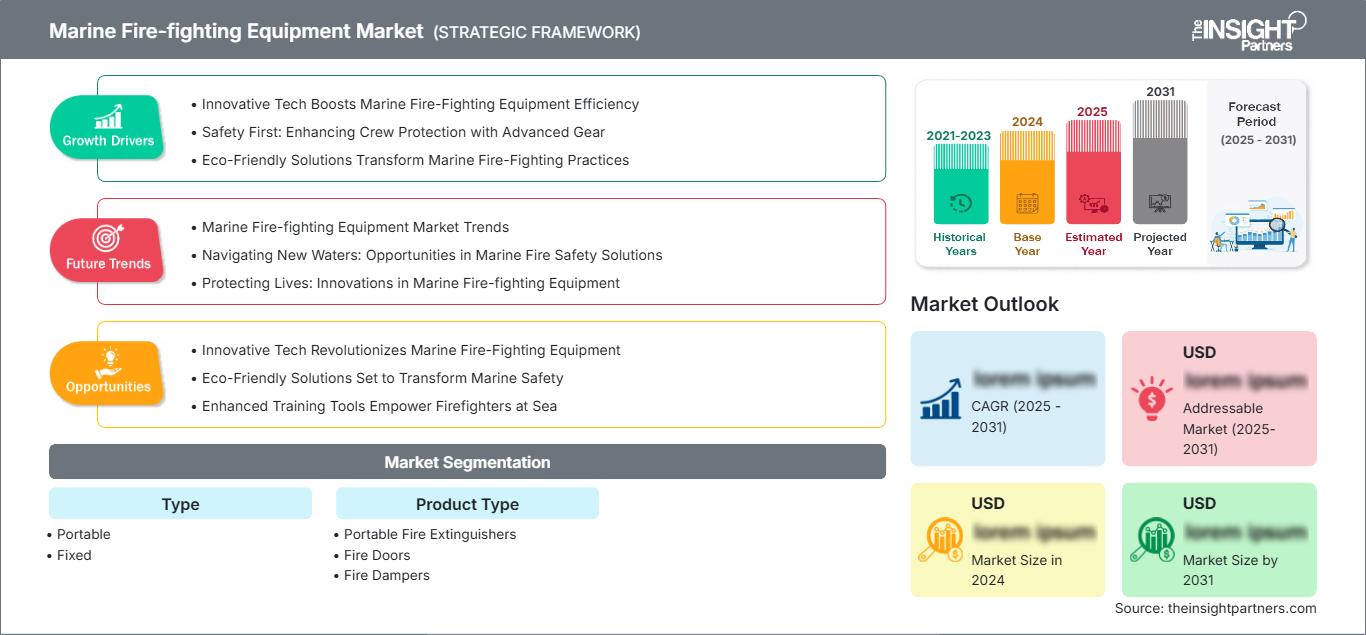
Marine Fire-fighting Equipment Market: Strategic Insights
Regional Insights
North America Marine Fire-Fighting Equipment Market
North America accounted for 30%–34% marine fire-fighting equipment market share in 2025 and is projected to register a CAGR of 4.8%–5.3% during 2026–2034. The demand will be driven by stringent regulations on marine safety provided by the U.S. Coast Guard and Transport Canada, as well as constant investments in ship modernization and offshore energy infrastructure. Fleet owners are switching from traditional systems of fire suppression to intelligent fire detection, water mist technology, and eco-friendly extinguishing products to meet the demands of the changing market.
The market will profit from the developed aftermarket environment, ensuring regular inspection, maintenance, and retrofitting of marine fire safety equipment. Marine yards and engineering businesses continue to incorporate digital monitoring systems that can improve the reaction time and minimize operational risks. Investments in LNG carriers, offshore wind support vessels, and coast guard fleets will ensure stable growth of the demand for certified marine fire safety systems in the years ahead.
U.S. Marine Fire-Fighting Equipment Market
The U.S. represented 72%–76% of the North American marine fire-fighting equipment market in 2025 and is anticipated to expand at a CAGR of 4.9%–5.4% through 2026–2034. The significant investment in the defense budget, shipbuilding activities, and regular renewal of the obsolete commercial vessels have been crucial for generating demand. Major harbors found along the coasts of the Gulf, Atlantic, and Pacific enable a large number of marine activities, which require advanced firefighting equipment onboard as well as proper inspection.
The leading companies have their sales, engineering, and service centers spread across the entire country, thereby enabling prompt installation and maintenance services of equipment. Increasing adoption of smart fire detection systems, automatic fire suppression systems, and predictive maintenance systems has increased vessel safety and reduced downtime. Marine vessel building projects and specialty marine vessels will be responsible for significant equipment procurement in the forecast period.
Europe Marine Fire-Fighting Equipment Market
Europe accounted for 26%–30% of the global marine fire-fighting equipment market in 2025 and is forecast to grow at a CAGR of 4.7%–5.2% during the assessment period. Germany remains ahead of regional demand by virtue of its marine engineering excellence and commercial shipbuilding industry. The UK sustains steady demand for fire protection devices due to naval modernization and offshore energy developments, with the help of European maritime standards on equipment replacement in commercial ships.
France, Italy, and Spain together enhance regional demand due to ferry services, naval shipbuilding, cruise tourism, and shipping in the Mediterranean. Sustainable technology investments for vessels and port modernizations encourage the use of integrated fire detection and suppression systems. Ship owners are increasingly interested in compact and interconnected fire protection systems in Europe.
APAC Marine Fire-Fighting Equipment Market
Asia Pacific held 34%–38% of the global market in 2025 and is expected to record the fastest regional expansion with a CAGR of 6.2%–6.8%. China remains the leading contributor, followed by South Korea, Japan, and India, owing to their large commercial shipbuilding industries and expanding maritime trade.
Government support for domestic shipbuilding, modernization of naval fleets, expansion of port infrastructure, and increasing exports of commercial vessels continue to accelerate the adoption of advanced marine fire-fighting equipment. Australia also contributes through offshore energy projects and maritime safety investments.
Middle East & Africa Marine Fire-Fighting Equipment Market
The Middle East & Africa market is projected to grow at a CAGR of 5.3%–5.8% during 2026–2034. Saudi Arabia and the UAE are fueling regional demand by making investments in commercial ports, offshore oil and gas facilities, and naval upgrading programs. South Africa continues to be a significant maritime center that facilitates equipment replacements on cargo and service ships.
Development of logistics corridors, energy facilities, and coastal industries is generating new business opportunities for manufacturers of marine safety equipment with international certifications. Increased adherence to international shipping norms and rising investments in ship upgrade activities are anticipated to fuel continued market growth in the RoMEA region.
Segmentation Analysis
Type
The Type segment is projected to expand at a CAGR of 5.4%–5.8% during 2026–2034, supported by continuous regulatory compliance requirements, fleet modernization initiatives, and rising investments in integrated vessel safety systems. The marine fire-fighting equipment market scope continues to widen as commercial ship operators, naval fleets, and offshore facilities increasingly adopt advanced suppression technologies that improve operational safety while meeting evolving international maritime fire protection standards.
- Portable: Portable fire-fighting equipment remains essential for immediate response to localized onboard fire incidents. Its ease of deployment, routine inspection requirements, and mandatory installation across diverse vessel categories support consistent replacement demand throughout the marine industry.
- Fixed: Fixed systems account for the larger share of installations due to mandatory deployment in engine rooms, cargo spaces, machinery compartments, and accommodation areas. Their ability to provide automated fire suppression enhances vessel safety while ensuring compliance with international regulations.
Product Type
The Product Type segment is anticipated to register a CAGR of 5.6%–6.1% during 2026–2034, driven by technological advancements in fire detection, suppression efficiency, and digital monitoring capabilities. Manufacturers continue introducing environmentally compliant suppression agents, intelligent alarm systems, and modular equipment designs that improve installation flexibility, maintenance efficiency, and lifecycle performance across commercial and naval marine applications.
- Portable Fire Extinguishers: Portable fire extinguishers remain indispensable across all vessel categories, offering rapid first-response capability for small onboard fires. Periodic inspection and replacement requirements ensure stable long-term demand across commercial, passenger, and defense fleets.
- Fire Doors: Fire doors are designed to contain flames and smoke between vessel compartments, minimizing fire propagation. Increasing emphasis on passenger safety and stricter shipbuilding regulations continues supporting adoption in both newbuild and retrofit projects.
- Fire Dampers: Fire dampers help prevent the spread of smoke and fire through ventilation systems while maintaining compartment integrity. Their strategic role in modern vessel HVAC systems strengthens demand across commercial shipping and offshore installations.
- Fire Pumps: Fire pumps provide the water pressure necessary for onboard suppression systems and emergency response operations. Continuous upgrades to marine safety infrastructure and compliance with international standards sustain demand for reliable pumping solutions.
- Fire Main Piping and Valves: Fire main piping and valves form the backbone of onboard water distribution systems, ensuring dependable flow during emergency operations. Their durability and regulatory significance make them fundamental components in marine fire protection architecture.
- Fire Hose and Nozzles: Fire hoses and nozzles enable effective manual firefighting by delivering controlled water flow under challenging marine conditions. Product innovation increasingly focuses on lightweight materials, corrosion resistance, and improved operational efficiency.
- Fire Hydrants: Marine fire hydrants provide readily accessible water supply points throughout vessels, supporting coordinated emergency response. Their installation remains mandatory across numerous ship classes operating under international maritime safety regulations.
- Fixed Fire Extinguishers: Fixed fire extinguishing systems protect enclosed high-risk spaces through automatic deployment of suppression agents. Growing adoption of clean-agent and water mist technologies is improving fire control effectiveness while minimizing equipment damage.
- Fire Detectors and Alarms: Fire detectors and alarms represent the fastest-evolving product category, driven by intelligent sensing technologies, networked monitoring platforms, and real-time diagnostics. Their integration with automated suppression systems significantly enhances onboard fire detection accuracy and response speed.
Opportunity Snapshot
| Product Type | Revenue Contribution | Trend Tag | Adoption Stage |
| Portable Fire Extinguishers | High | Fleet Renewal | Mature |
| Fire Doors | Medium | Compartment Safety | Mature |
| Fire Dampers | Medium | Smart Ventilation | Scaling |
| Fire Pumps | High | Water Mist | Mature |
| Fire Main Piping and Valves | High | System Retrofit | Mature |
| Fire Hose and Nozzles | Medium | Lightweight Design | Mature |
| Fire Hydrants | Medium | Port Compliance | Mature |
| Fixed Fire Extinguishers | High | Clean Agents | Scaling |
| Fire Detectors and Alarms | High | AI Detection | Scaling |
Marine Fire-fighting Equipment Market Growth Drivers and Impact Analysis
Stringent International Maritime Fire Safety Regulations
The enforcement of international maritime safety regulations continues to be the most influential growth driver for the marine fire-fighting equipment market. Regulatory frameworks established under the International Maritime Organization (IMO), including the Safety of Life at Sea (SOLAS) Convention and the Fire Safety Systems (FSS) Code, require vessels to install, inspect, and periodically replace certified fire protection equipment. Classification societies and flag state authorities also conduct regular compliance assessments, encouraging shipowners to modernize aging systems. These requirements generate consistent demand across commercial cargo ships, passenger vessels, naval fleets, and offshore platforms. As environmental standards evolve, operators are increasingly replacing legacy suppression systems with clean-agent technologies and advanced detection solutions, creating sustained revenue opportunities for equipment manufacturers and marine service providers.
Expansion of Global Commercial Shipping and Offshore Activities
The increasing global demand for seaborne cargo transport, energy discovery, and marine logistics leads to an increase in the amount of vessels that need to be equipped with fire suppression systems that have been certified. The growing financial resources being invested in containerships, LNG carriers, offshore support vessels, and other special vessels increase the demand for fixed suppression systems, fire pumps, hydrants, detectors, and equipment for emergency situations. At the same time, offshore exploration of oil, gas, and energy sources requires high-quality fire safety systems that would work effectively in marine conditions. Ship owners invest in refits of their fleets, thus ensuring operational efficiency and safety.
Digitalization and Smart Fire Protection Technologies
Fast-paced developments in vessel digitalization are contributing to innovations in fire safety systems aboard. Increasingly, ship owners utilize intelligent fire detectors, advanced alarm systems, remote monitoring capabilities, and maintenance solutions. The integration of fire safety devices into the vessel monitoring system allows for the assessment of system conditions, identification of potential malfunctions, and timely maintenance planning. Innovations in fire safety system technology development include the creation of modular fire suppression systems, IoT-enabled sensors, and software monitoring systems. The development of autonomous and digitized vessels will lead to increased usage of intelligent fire safety systems, promoting further innovations and high-demand products.
Marine Fire-fighting Equipment Market Future Trends
Intelligent Fire Monitoring and Predictive Safety Systems
Future adoption of intelligent maritime safety platforms will reshape the industry as vessel operators increasingly integrate connected sensors, analytics, and automated response mechanisms into fire protection frameworks. The marine fire-fighting equipment market trends indicate a shift toward predictive monitoring solutions that can identify risks before incidents occur and improve emergency preparedness. Manufacturers are expected to focus on interoperable systems compatible with digital ship management platforms and autonomous vessel technologies. These developments may encourage innovation in detection, suppression, and communication equipment while supporting safer maritime operations globally through enhanced reliability and faster decision making capabilities across commercial and specialized marine fleets.
Sustainable Fire Protection Technologies for Next Generation Vessels
Future product development is anticipated to be impacted by sustainability considerations, whereby fire suppression chemicals and energy-efficient machinery will be developed to facilitate compliance. Future vessel-building programs involving the use of alternative fuels such as LNG, as well as other innovative technologies, will need innovative solutions to cater to emerging circumstances. The industry will be forced to invest in R&D to provide safety solutions in response to emerging fire threats posed by alternative fuel systems. Collaboration between shipbuilders, innovators, and regulators will increasingly be needed to come up with cutting-edge solutions in the marine industry.
Marine Fire-fighting Equipment Market Opportunities
Expansion of Retrofit Programs for Aging Global Fleets
The modernization and replacement of old vessel safety systems create a great chance for equipment suppliers. The need to upgrade many of the commercial and specialized vessels in order to adhere to changing regulations creates demand for more sophisticated suppression systems and intelligent detection systems. Vessel owners are currently considering ways of increasing the lifespan of their vessels while at the same time improving their safety performance. Firms that offer installation, maintenance, and customized solutions according to different vessel types stand to benefit from this chance. This chance is most applicable to mature markets of the maritime industry, where fleets need to be modernized and inspections conducted regularly.
Growth Potential from Emerging Maritime Infrastructure Investments
The growing amount of investments in port facilities, offshore facilities, shipyard capacity, and related logistics infrastructure in developing countries provides new market opportunities for manufacturers of marine safety equipment. The growth in shipyard facilities and the number of commercial vessels in the Asia Pacific, the Middle East, and other emerging markets is driving the demand for qualified fire protection equipment. The marine fire-fighting equipment market forecasts highlight that future opportunities will be shaped by infrastructure expansion, advanced vessel construction, and increasing adoption of international safety practices across developing maritime ecosystems. These factors are expected to support long-term demand for reliable and technologically advanced fire protection systems.
Frequently Asked Questions

- Comprehensive Market Sizing and Forecast Analysis
- Detailed Segmentation Analysis
- In-Depth Market Dynamics Assessment
- Regional and Country-Level Insights
- Competitive Landscape and Company Benchmarking
- Strategic Business Intelligence
Recent Reports
Testimonials

The Insight Partners provided valuable market intelligence that supported our global go-to-market strategy. Their team was professional, responsive, and attentive to our feedback, providing thoughtful analysis and helpful methodological clarifications throughout the project.
Junmo Kim Chief Financial Officer (CFO), Enertech Co., Ltd.
The Insight Partners' SCADA System Market report is comprehensive, with valuable insights on current trends and future forecasts. The team was highly professional, responsive, and supportive throughout. We are very satisfied and highly recommend their services.
RAN KEDEM Partner, Reali Technologies LTDs
I requested a report on a very specific software market and the team produced the report in a few days. The information was very relevant and well presented. I then requested some changes and additions to the report. The team was again very responsive and I got the final report in less than a week.
JEAN-HERVE JENN Chairman, Future Analytica
We worked with The Insight Partners for an important market study and forecast. They gave us clear insights into opportunities and risks, which helped shape our plans. Their research was easy to use and based on solid data. It helped us make smart, confident decisions. We highly recommend them.
PIYUSH NAGPAL Sr. Vice President, High Beam Global
The Insight Partners delivered insightful, well-structured market research with strong domain expertise. Their team was professional and responsive throughout. The user-friendly website made accessing industry reports seamless. We highly recommend them for reliable, high-quality research services
YUKIHIKO ADACHI CEO, Deep Blue, LLC.
This is the first time I have purchased a market report from The Insight Partners.While I was unsure at first, I visited their web site and felt more comfortable to take the risk and purchase a market report.I am completely satisfied with the quality of the report and customer service. I had several questions and comments with the initial report, but after a couple of dialogs over email with their analyst I believe I have a report that I can use as input to our strategic planning process.Thank you so much for taking the extra time and making this a positive experience.I will definitely recommend your service to others and you will be my first call when we need further market data.
JOHN SUZUKI President and Chief Executive Officer, Board Director, BK Technologies
I wish to appreciate your support and the professionalism you displayed in the course of attending to my request for information regarding to infectious disease IVD market in Nigeria. I appreciate your patience, your guidance, and the fact that you were willing to offer a discount, which eventually made it possible for us to close a deal. I look forward to engaging The Insight Partners in the future, all thanks to the impression you have created in me as a result of this first encounter.
DR CHIJIOKE ONYIA MANAGING DIRECTOR, PineCrest Healthcare Ltd.Reason to Buy
- Informed Decision-Making
- Understanding Market Dynamics
- Competitive Analysis
- Identifying Emerging Markets
- Customer Insights
- Market Forecasts
- Risk Mitigation
- Boosting Operational Efficiency
- Strategic Planning
- Investment Justification
- Tracking Industry Innovations
- Aligning with Regulatory Trends





 Get Free Sample for