
Marine Propeller Market Growth, Size & Forecast by 2034
Coverage: by Propulsion (Sterndrive, Inboard, Outboard, and Others); Number of Blades (3-Blade, 4-Blade, 5-Blade, and Others); Type (Controllable Pitch Propeller (CPP), Fixed Pitch Propeller (FPP), Tunnel Thrusters, Azimuth Thrusters, and Others); Application (Recreational Boats, Merchant Ships, Naval Ships, and Others); Sales Channel (OEM and Aftermarket), and Geography (North America, Europe, Asia Pacific, and South and Central America)
- Status : Data Released
- Report Code : TIPEL00002275
- Category : Electronics and Semiconductor
- No. of Pages : 150
- Available Report Formats :


- Last update date : October 07, 2026


2025 Market Size
US$ 4.78 Bn
Base year value
2034 Forecast
US$ 9.47 Bn
Projected by 2034
CAGR 2026-2034
7.90 %
Growth rate
Addressable Market
US$ 64.14 Bn
(2026-2034)
The Marine Propeller Market was valued at US$ 4.78 Billion in 2025 and is projected to reach US$ 9.47 Billion by 2034, expanding at a CAGR of 7.90% during 2026–2034. Growing international seaborne trade, fleet modernization programs, increasing demand for fuel-efficient propulsion systems, and rising investments in commercial and naval vessel construction continue to support long-term industry expansion. Technological advancements in hydrodynamic design, lightweight materials, and digitally optimized propulsion solutions are further strengthening the competitive landscape.
Across North America, demand continues to benefit from vessel modernization, naval procurement programs, and recreational boating activities. The marine propeller market size is supported by investments in advanced manufacturing capabilities and marine aftermarket services, while increasing adoption of corrosion-resistant alloys and precision-engineered propulsion systems is expected to maintain a regional CAGR of approximately 6.8–7.4% through the forecast period.
Marine Propeller Market Assessment and Insights
- North America: The region benefits from established shipbuilding capabilities, defense modernization, and a strong recreational boating industry. Marine Propeller Market Share in 2025: 27–31%. CAGR between 2026–2034: 6.8–7.4%.
- US: Extensive naval investments, commercial vessel upgrades, and a mature marine equipment supply chain support market expansion. Share in 2025: 73–77% of North America. CAGR between 2026–2034: 6.9–7.5%.
- Europe: Germany, Norway, Italy, and the Netherlands continue investing in sustainable marine propulsion and high-performance vessels. Share in 2025: 24–28%. CAGR between 2026–2034: 6.9–7.6%.
- Asia Pacific: China, South Korea, and Japan dominate commercial shipbuilding, while India is expanding maritime infrastructure. Share in 2025: 35–39%. CAGR between 2026–2034: 8.8–9.5%.
- Largest Segment: Fixed Pitch Propeller remains the leading segment owing to broad deployment across merchant shipping and fishing fleets. Marine Propeller Market Share in 2025: 42–46%. CAGR between 2026–2034: 7.3–7.9%.
- High Growth Segment: Controllable Pitch Propeller is witnessing rapid adoption for naval and offshore vessels requiring operational flexibility. Market share in 2025: 24–28%. CAGR between 2026–2034: 8.8–9.4%.
- Key companies analyzed in detail: Kawasaki Heavy Industries, Ltd.; Rolls-Royce plc; HD Hyundai Heavy Industries Co., Ltd.; Caterpillar Inc.; Wärtsilä Corporation; MAN Energy Solutions SE; Brunswick Corporation; Nakashima Propeller Co., Ltd.; Volvo Penta; SCHOTTEL GmbH.
Source: The Insight Partners' analysis based on proprietary research, government publications, company annual reports, investor presentations, industry databases, and expert interviews.
The continuous development of innovative technology in the propulsion systems of vessels has led to changes in the marine industry from traditional bronze propellers to precise engineering in the fabrication of propellers made of stainless steel, nickel aluminum bronze, and composite material. The use of digital design, computational fluid dynamics, and additive manufacturing in propeller design has increased efficiency by minimizing cavitation and noise underwater. Increasing environmental laws set by the International Maritime Organization have led to increased innovation in energy-efficient propulsion systems that decrease fuel usage and carbon footprint emissions.
As per future expectations, there will be growth in investment options in Asia Pacific, the Middle East, and some Latin American countries due to focus of the authorities on the modernization of ports and capability of domestic shipbuilding. The trend of electrification of fleets, hybrid drive systems, and construction of autonomous ships is anticipated to affect procurement decisions for the next decade. The regulatory support for low emission of shipping along with investments in offshore energy infrastructure and maritime security will benefit the demand for high-end propulsion machinery.
Marine Propeller Market Report Scope
| Report Attribute | Details |
|---|---|
| Market size in 2025 | US$ 4.78 Billion |
| Market Size by 2034 | US$ 9.47 Billion |
| Global CAGR (2026 - 2034) | 7.90% |
| Historical Data | 2021-2024 |
| Forecast period | 2026-2034 |
Marine Propeller Market Analysis
Rising global maritime trade is driving growth in the marine propeller market. Offshore energy projects are also boosting demand. At the time continuous investments in modernizing commercial fleets are helping the industry expand. These trends are supporting growth across types of vessels from cargo ships to offshore support boats. Demand is especially strong for propulsion systems that improve fuel efficiency. This is because emission regulations are becoming stricter around the world. Shipowners want to reduce their fuel consumption and meet standards. Propeller manufacturers are responding by developing systems that deliver performance. They are also ensuring that their products meet compliance rules.
Advanced manufacturing techniques are playing a role in this progress. Precision casting and computer-aided blade optimization are helping suppliers build propellers. These technologies allow for accurate designs and higher quality materials. As a result propellers are more durable. They also vibrate less. Require less maintenance. These improvements help reduce operating costs and increase reliability. The entire marine propulsion ecosystem is benefiting from these advancements. Suppliers are now able to create higher-value products. This is improving performance across the board. The value creation chain includes engineers, manufacturers and service providers. The result is a more resilient industry. The supply chain in this market is now highly integrated. It connects material suppliers with precision foundries. It also includes machining experts, propulsion system makers, shipyards, distributors and after-sales service teams. This integration helps ensure delivery and better coordination.
Predictive maintenance technologies are also becoming more common. Digital monitoring solutions help vessel operators track performance in time. These tools predict when repairs might be needed. This reduces downtime and lowers maintenance costs. However challenges remain. The price of specialty metals like nickel and titanium keeps fluctuating. These materials are essential for high-performance propellers. Unstable prices can affect production costs. Also large commercial vessels often have delivery timelines. This makes planning and procurement more difficult. To manage these risks manufacturers are diversifying their sourcing strategies. They are also expanding production capabilities in regions. This helps reduce dependency on any one supplier or location. It also improves delivery speed. Reduces supply chain disruption.
The competitive landscape highlighted in the Marine Propeller Market Report is dynamic. Companies are focusing on engineering innovation. They are building partnerships to stay ahead. Expanding service networks is another priority. This helps ensure support is available to customers wherever their vessels operate. Leading companies in the market include Wärtsilä Corporation, Rolls-Royce plc, Kawasaki Heavy Industries, Ltd. HD Hyundai Heavy Industries Co., Ltd. MAN Energy Solutions SE and Nakashima Propeller Co., Ltd. These firms are investing heavily in research and development. Their goal is to improve propulsion efficiency and reduce lifecycle costs. They are also supporting decarbonization efforts for both naval customers. Strategic investments are now moving toward manufacturing. Advanced metallurgy is being used to create lighter materials. Intelligent propulsion control systems are being developed to optimize performance. Regional production expansion is also a focus.
Other major players like Caterpillar Inc., Brunswick Corporation, Volvo Penta and SCHOTTEL GmbH are also stepping up. They are expanding their product portfolios. They are strengthening aftermarket support. They are also forming projects with shipbuilders and naval organizations. These efforts help differentiate their products. They also allow manufacturers to meet changing needs across markets. These markets include merchant shipping, offshore operations, defense applications and recreational boating. Each sector has demands and manufacturers are adapting accordingly. The future of the propeller market looks promising. Continued innovation and strategic investment will keep driving growth. As environmental rules tighten the need, for reliable propulsion systems will only increase. Manufacturers who keep adapting will remain competitive in this evolving industry.
● REPORT CUSTOMIZATION
Tailor This Report To Align With Your Specific Business Requirements
This report can be customized to align precisely with your business objectives, scope, and target markets. Customization options include tailored segmentation, geography, competitive analysis, and strategic insights to support informed decision-making.
Customize This Report →WHAT YOU CAN ADJUST
- ● Segmentations
- ● Geography
- ● Competitive Analysis
- ● Language Preferences
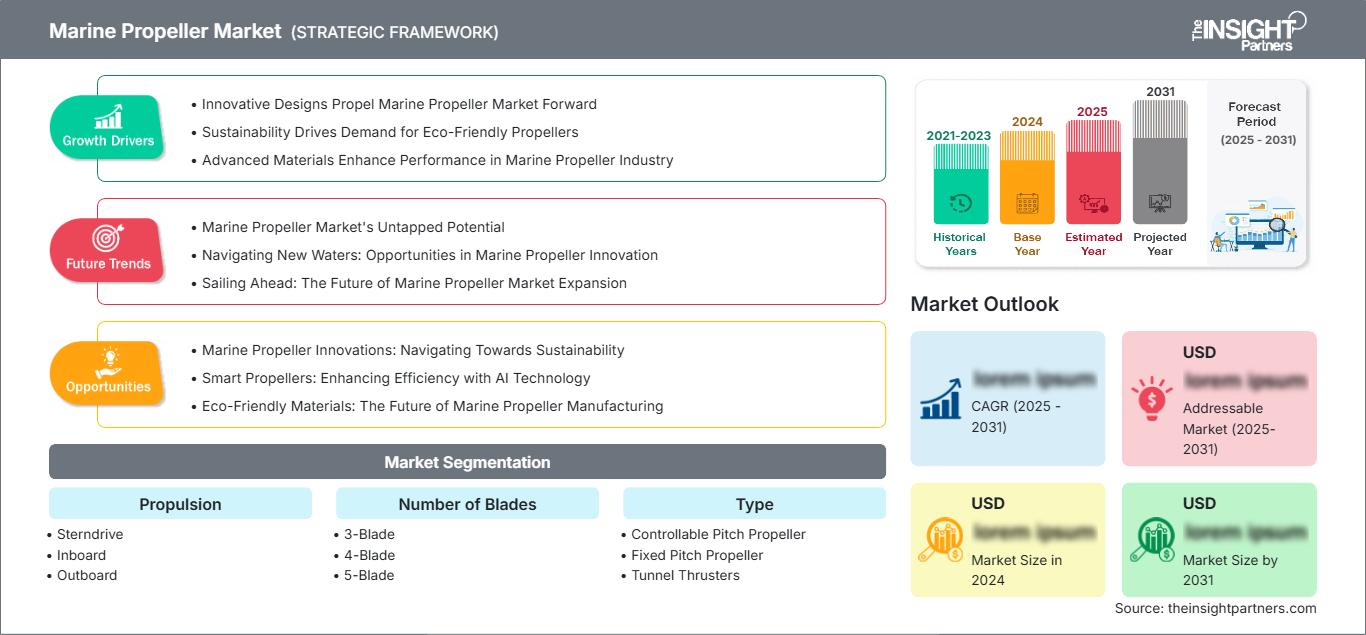
Marine Propeller Market: Strategic Insights
Regional Insights
North America Marine Propeller Market
North America accounted for 27–31% of the global market in 2025 and is projected to expand at a CAGR of 6.8–7.4% through 2034. The marine propeller market share in the region is supported by consistent investments in naval fleet modernization, replacement of aging commercial vessels, and a well-established recreational boating industry. Demand is also strengthened by advanced manufacturing capabilities, extensive marine aftermarket services, and increasing deployment of high-efficiency propulsion technologies designed to improve fuel economy and reduce emissions.
Both the US and Canada have been making progress in upgrading their shipyards and marine infrastructure through increased research on quieter and more efficient propulsion methods. Offshore energy exploration, the modernization of coast guard fleets, and the design of digital propellers are likely to create new opportunities for local companies. The focus on sustainability, coupled with stringent environmental regulations and advances in technology, will further strengthen their competitiveness in the region.
U.S. Marine Propeller Market
The United States accounted for 73–77% of the North American market in 2025 and is projected to witness a CAGR of 6.9–7.5% between 2026 and 2034. High defense budgets, procurement of naval ships, and a well-developed recreational boating industry drive continuous demand for state-of-the-art marine propulsion systems. The domestic market also receives an impetus from the presence of strong research organizations, precise engineering, and developed supply chain infrastructure to cater to commercial as well as military applications.
The high investment in autonomous ships, hybrid drive technologies, and offshore ships is fueling the adoption of highly efficient propellers. The construction of shipyard facilities and retrofitting would also drive the aftermarket demand. The innovative techniques for digital design, corrosion resistance, and predictive maintenance would improve the competitive edge of the nation in the global marine propulsion market.
Europe Marine Propeller Market
Europe was holding a share of 24-28% in the global market in 2025 and is projected to grow at a CAGR of 6.9-7.6% till 2034. Germany is considered the regional leader due to its expertise in marine engineering, an export-oriented manufacturing industry, and a large number of companies specializing in propulsion technologies. The country keeps making efforts in the field of sustainable shipbuilding and energy-efficient propulsion systems to be able to meet strict environmental requirements.
Growing investments in the construction of naval fleets, vessels to support offshore wind and marine engineering development are observed in the United Kingdom. Countries like Italy and Spain keep improving their commercial shipbuilding and production of luxury yachts, while France concentrates on modernizing the navy and launching innovative maritime programs. All these factors help to stimulate the demand for technologically advanced fixed and variable pitch propellers in the region.
APAC Marine Propeller Market
The Asia Pacific region contributed 35-39% to the world market and is expected to grow at a CAGR of 8.8-9.5%, which is the highest growth rate amongst all regions. In the Asia Pacific, China leads the regional demand due to its prominent commercial shipbuilding industry, whereas Japan and South Korea are prominent hubs of technological advancement in vessel building.
The Indian and Australian governments are undertaking significant measures for developing maritime infrastructure, naval modernization, and ports. Government support to domestic shipbuilding, along with the increasing trade and offshore oil and gas operations, is expected to keep the regional demand strong during the forecast period.
Middle East & Africa Marine Propeller Market
Middle East & Africa will witness a CAGR of 7.2%-7.8% over the forecast period. The Saudi Arabia and the UAE have been investing in maritime logistics, commercial port operations, and naval power to enhance their shipping competitiveness in the region. Offshore energy projects are another factor that drives the need for quality propulsion equipment.
South Africa is one of the key marine service centers in the region, thanks to its ship repairing services and strategic location for trade purposes. Infrastructure development and growing focus on maritime security in the region are anticipated to drive the adoption of modern marine propulsion equipment in the Rest of Middle East & Africa.
Segmentation Analysis
Propulsion
The Propulsion segment is projected to expand at a CAGR of 7.8–8.4% during 2026–2034. The marine propeller market scope continues to broaden as vessel operators prioritize propulsion systems that improve maneuverability, fuel efficiency, and lifecycle performance. Increasing commercial ship deliveries, fleet modernization, and technological advancements in propulsion integration are encouraging demand across both conventional and hybrid marine platforms. Manufacturers are also investing in precision engineering and digital simulation to optimize propulsion efficiency for different vessel classes.
- Sterndrive: Widely used in recreational and leisure boats because of its balance between speed, maneuverability, and maintenance efficiency. Manufacturers continue enhancing durability and corrosion resistance to improve long-term operational performance.
- Inboard: Preferred for merchant ships, fishing vessels, and larger recreational craft due to higher power output and operational reliability. Continuous improvements in propulsion integration support increasing adoption across commercial marine applications.
- Outboard: Commonly deployed in small recreational boats and patrol vessels where lightweight construction and simplified maintenance are essential. Product innovations focusing on efficiency and emissions compliance continue supporting steady market demand.
Number of Blades
The Number of Blades segment is expected to register a CAGR of 7.4–8.0% during the forecast period. Selection depends on vessel size, propulsion efficiency requirements, operating environment, and desired balance between speed, thrust, vibration control, and fuel economy. Continuous improvements in hydrodynamic modeling enable manufacturers to optimize blade geometry for diverse marine applications.
- 3-Blade: Frequently selected for recreational boats because of its efficient balance between speed, affordability, and overall operating performance. It remains a preferred configuration for lightweight vessels operating under moderate propulsion requirements.
- 4-Blade: Offers improved acceleration, smoother vessel handling, and reduced vibration compared with three-blade configurations. Commercial operators increasingly adopt these propellers where stability and fuel efficiency are important operational priorities.
- 5-Blade: Primarily utilized in high-performance commercial, offshore, and naval vessels requiring superior thrust, reduced cavitation, and quieter operation. Growing deployment supports advanced propulsion systems designed for demanding maritime environments.
Type
The Type segment is anticipated to grow at a CAGR of 8.1–8.7% throughout 2026–2034. Demand is influenced by vessel application, maneuverability requirements, propulsion flexibility, and operational efficiency. Advancements in intelligent propulsion control systems and high-strength materials continue improving reliability and performance across multiple vessel categories.
- Controllable Pitch Propeller: Increasingly adopted by naval, offshore, and specialized commercial vessels because adjustable blade pitch enables greater operational flexibility, fuel optimization, and enhanced maneuverability across varying sailing conditions.
- Fixed Pitch Propeller: Maintains the largest installed base owing to its simple design, lower maintenance requirements, high mechanical reliability, and broad adoption across merchant shipping, fishing vessels, and recreational marine applications.
- Tunnel Thrusters: Extensively used for harbor maneuvering and docking operations, providing additional lateral control that enhances vessel safety and operational efficiency in confined waterways and port environments.
- Azimuth Thrusters: Gaining importance across offshore support vessels, tugboats, and dynamic positioning applications because they deliver exceptional maneuverability, precise directional control, and improved propulsion efficiency.
Application
The Application segment in the Marine Propeller Market is forecast to record a CAGR of 7.9–8.5% between 2026 and 2034. Growing global maritime trade, naval fleet expansion, and increasing recreational boating activities continue driving demand across all application categories. Vessel modernization and investments in fuel-efficient propulsion technologies further strengthen long-term market opportunities.
- Recreational Boats: Demand is supported by rising marine tourism, higher disposable incomes, and increasing participation in boating activities. Premium propulsion systems emphasizing performance, efficiency, and low maintenance continue gaining popularity.
- Merchant Ships: Represent the largest application owing to sustained international seaborne trade and continuous fleet replacement. Shipowners increasingly invest in optimized propulsion solutions that improve fuel efficiency while supporting environmental compliance.
- Naval Ships: Procurement programs emphasizing operational readiness, reduced acoustic signatures, and advanced maneuverability are encouraging adoption of sophisticated marine propulsion technologies across modern defense fleets.
Opportunity Snapshot
| Application | Revenue Contribution | Trend Tag | Adoption Stage |
|---|---|---|---|
| Recreational Boats | Medium | Leisure Marine | Mature |
| Merchant Ships | High | Fleet Renewal | Mature |
| Naval Ships | Medium | Defense Modernization | Scaling |
Marine Propeller Market Growth Drivers and Impact Analysis
Expansion of Global Seaborne Trade and Commercial Fleet Modernization
Maritime transport plays a critical role in international trade, where over four-fifths of all international shipments carried by volume are transported via sea transport. With ship owners upgrading their old vessels with energy-efficient models, the need for modern propulsion systems is becoming greater. Modern marine propellers engineered using computational fluid dynamics and precision metallurgy help save on fuel use and decrease maintenance expenses at the same time. Significant investment into the construction of container ships, bulk carriers, LNG carriers, and other specialized vessels pushes manufacturers to incorporate advanced propulsion systems in the construction process. Retrofit initiatives are providing further impetus to the growth of the market for propulsion systems as well.
Rising Naval Procurement and Maritime Security Investments
Countries around the world are embarking on initiatives related to naval modernization in order to increase the security of their maritime operations, protect their trade routes and offshore assets. The increasing procurement of frigates, patrol craft, submarines and amphibious assault ships is resulting in an increased demand for reliable propulsion systems that can meet the demands of a wide range of operations. In modern navies, a lot of emphasis is being placed on developing quiet propellers, improved maneuverability and operational efficiency, which is resulting in innovations in hydrodynamic designs. In addition, investments in domestic shipbuilding efforts in the Asia Pacific, Europe and North America are fostering regional production capabilities.
Stringent Environmental Regulations Accelerating Efficient Propulsion
The current trend in global environmental standards is to push shipping companies to decrease their emission of greenhouse gases and optimize their vessel’s efficiency in terms of energy consumption. The compliance with the latest efficiency measures developed by the International Maritime Organization has made the optimization of the blade shape of marine propellers, their lightweight design, and modern propulsion system crucial aspects. Research efforts of manufacturers of propellers are aimed at decreasing cavitation, underwater noise, and hydrodynamic drag. In addition to that, digital modeling, precise casting, and high-tech coating of blades will increase the effectiveness of propellers over their lifecycle.
Marine Propeller Market Future Trends
Integration of Smart Propulsion Systems with Digital Vessel Management
Digital transformation is reshaping marine propulsion through the integration of intelligent monitoring systems, onboard analytics, and predictive maintenance platforms. The marine propeller market trends indicate growing adoption of sensors that continuously monitor vibration, thrust, shaft alignment, and propeller performance under varying operating conditions. These systems enable vessel operators to optimize fuel consumption, reduce unplanned maintenance, and improve fleet availability. Integration with digital twins and artificial intelligence-based voyage optimization platforms will further enhance propulsion efficiency. As autonomous and remotely operated vessels become more common, smart propulsion technologies are expected to become a standard feature across commercial, naval, and offshore fleets.
Growing Adoption of Advanced Materials and Additive Manufacturing
Material innovation is becoming a key differentiator for propulsion equipment manufacturers. High-strength nickel-aluminum-bronze alloys, stainless steel, composite materials, and specialized coatings are improving corrosion resistance, fatigue strength, and operational durability. At the same time, additive manufacturing is enabling faster prototyping and production of complex blade geometries that were previously difficult to manufacture using conventional casting methods. These capabilities reduce production lead times while allowing customized propeller designs for specific vessel applications. Continued investment in advanced manufacturing technologies is expected to improve performance, reduce lifecycle costs, and support the maritime industry's transition toward more sustainable operations.
Marine Propeller Market Opportunities
Expansion of Green Shipbuilding and Sustainable Maritime Projects
Growing emphasis on decarbonization is creating substantial investment opportunities for propulsion manufacturers developing energy-efficient products for next-generation vessels. Marine propeller market Forecasts increasingly reflect stronger demand from shipyards constructing LNG-powered, hybrid-electric, methanol-powered, and ammonia-ready vessels designed to meet future environmental requirements. Optimized propeller systems capable of reducing fuel consumption and improving propulsion efficiency are expected to become an essential component of sustainable shipbuilding strategies. Manufacturers investing in advanced hydrodynamic research, digital engineering, and environmentally friendly production methods are likely to strengthen their competitive positions as shipping companies accelerate fleet modernization programs across global markets.
Increasing Demand from Offshore Renewable Energy Support Fleets
Rapid expansion of offshore wind farms and other marine renewable energy projects is generating new demand for specialized support vessels equipped with advanced propulsion technologies. Installation ships, service operation vessels, cable-laying ships, and maintenance fleets require highly maneuverable propulsion systems capable of operating efficiently in challenging offshore environments. This trend presents attractive opportunities for manufacturers specializing in controllable pitch propellers, azimuth thrusters, and integrated propulsion solutions. Companies that expand production capacity, strengthen aftermarket service networks, and collaborate with offshore vessel builders are expected to benefit from the long-term growth of the global offshore renewable energy sector.
Frequently Asked Questions

- Comprehensive Market Sizing and Forecast Analysis
- Detailed Segmentation Analysis
- In-Depth Market Dynamics Assessment
- Regional and Country-Level Insights
- Competitive Landscape and Company Benchmarking
- Strategic Business Intelligence
Recent Reports
Testimonials

The Insight Partners provided valuable market intelligence that supported our global go-to-market strategy. Their team was professional, responsive, and attentive to our feedback, providing thoughtful analysis and helpful methodological clarifications throughout the project.
Junmo Kim Chief Financial Officer (CFO), Enertech Co., Ltd.
The Insight Partners' SCADA System Market report is comprehensive, with valuable insights on current trends and future forecasts. The team was highly professional, responsive, and supportive throughout. We are very satisfied and highly recommend their services.
RAN KEDEM Partner, Reali Technologies LTDs
I requested a report on a very specific software market and the team produced the report in a few days. The information was very relevant and well presented. I then requested some changes and additions to the report. The team was again very responsive and I got the final report in less than a week.
JEAN-HERVE JENN Chairman, Future Analytica
We worked with The Insight Partners for an important market study and forecast. They gave us clear insights into opportunities and risks, which helped shape our plans. Their research was easy to use and based on solid data. It helped us make smart, confident decisions. We highly recommend them.
PIYUSH NAGPAL Sr. Vice President, High Beam Global
The Insight Partners delivered insightful, well-structured market research with strong domain expertise. Their team was professional and responsive throughout. The user-friendly website made accessing industry reports seamless. We highly recommend them for reliable, high-quality research services
YUKIHIKO ADACHI CEO, Deep Blue, LLC.
This is the first time I have purchased a market report from The Insight Partners.While I was unsure at first, I visited their web site and felt more comfortable to take the risk and purchase a market report.I am completely satisfied with the quality of the report and customer service. I had several questions and comments with the initial report, but after a couple of dialogs over email with their analyst I believe I have a report that I can use as input to our strategic planning process.Thank you so much for taking the extra time and making this a positive experience.I will definitely recommend your service to others and you will be my first call when we need further market data.
JOHN SUZUKI President and Chief Executive Officer, Board Director, BK Technologies
I wish to appreciate your support and the professionalism you displayed in the course of attending to my request for information regarding to infectious disease IVD market in Nigeria. I appreciate your patience, your guidance, and the fact that you were willing to offer a discount, which eventually made it possible for us to close a deal. I look forward to engaging The Insight Partners in the future, all thanks to the impression you have created in me as a result of this first encounter.
DR CHIJIOKE ONYIA MANAGING DIRECTOR, PineCrest Healthcare Ltd.Reason to Buy
- Informed Decision-Making
- Understanding Market Dynamics
- Competitive Analysis
- Identifying Emerging Markets
- Customer Insights
- Market Forecasts
- Risk Mitigation
- Boosting Operational Efficiency
- Strategic Planning
- Investment Justification
- Tracking Industry Innovations
- Aligning with Regulatory Trends





 Get Free Sample for