
Thermoelectric Modules Market Size, Trends & Demand by 2034
Coverage: By Type (Single Stage, Multi Stage); Type (Bulk, Micro, Thin); Application (Aerospace and Defense, Medical, Industrial, Telecommunications, Others) , and Geography (North America, Europe, Asia Pacific, and South and Central America)
- Status : Data Released
- Report Code : TIPRE00006136
- Category : Electronics and Semiconductor
- No. of Pages : 150
- Available Report Formats :


- Last update date : July 15, 2026


2025 Market Size
US$ 748.6 Mn
Base year value
2034 Forecast
US$ 2,191.16 Mn
Projected by 2034
CAGR 2026-2034
12.67 %
Growth rate
Addressable Market
US$ 12,821.48 Mn
(2026-2034)
The Thermoelectric Modules Market was valued at US$ 748.6 Million in 2025 and is projected to reach US$ 2,191.16 Million by 2034, expanding at a CAGR of 12.67% during 2026–2034. Market expansion is supported by increasing deployment of solid-state thermal management systems across medical devices, telecom infrastructure, aerospace electronics, and industrial automation environments. Continuous improvements in thermoelectric materials and miniaturized module architectures are further strengthening commercial adoption across temperature-sensitive applications.
North America remains a strategically important revenue center due to advanced semiconductor manufacturing, defense modernization programs, and strong medical device innovation. The regional outlook for the Thermoelectric Modules Market size is supported by the rising deployment of precision cooling technologies in optical communication, laboratory instrumentation, and high-performance electronics. Regional growth is estimated in the low-to-mid double-digit range through 2034, supported by expanding investments in photonics, data centers, and advanced thermal management systems.
Thermoelectric Modules Market Assessment and Insights
- North America: Share in 2025 estimated at 32–36%, supported by medical technology, aerospace electronics, and telecom infrastructure. CAGR between 11.5–13.0% during 2026–2034.
- US: Accounts for 76–80% of North American demand in 2025, driven by defense, healthcare, and semiconductor applications. CAGR between 11.8–13.2% during 2026–2034.
- Europe: Share in 2025 estimated at 24–28%, led by Germany, France, and the UK. CAGR between 11.0–12.5% during 2026–2034.
- Asia Pacific: Share in 2025 estimated at 34–38%, with China, Japan, South Korea, and India leading manufacturing and electronics demand. CAGR between 13.5–15.0% during 2026–2034.
- Largest Segment: Single-stage modules account for 62–66% market share in 2025, owing to broad industrial and commercial applicability. CAGR 11.5–12.5% during 2026–2034.
- High Growth Segment: The medical application segment holds 14–18% market share in 2025 and is projected to grow at 14.0–15.5% CAGR during 2026–2034.
- Key companies analyzed in detail: Crystal Ltd., Ferrotec (USA) Corporation, Coherent Corp. (formerly II-VI Incorporated), KELK Ltd., Kryotherm Industries, Laird Thermal Systems (Tark Thermal Solutions), RMT Ltd., TE Technology, Inc., TEC Microsystems GmbH, Thermonamic Electronics (Jiangxi) Corp., Ltd.
Source: The Insight Partners' analysis based on proprietary research, government publications, company annual reports, investor presentations, industry databases, and expert interviews.
In production ecosystems, there has been a continuous movement towards high-performing materials such as bismuth telluride, smaller coolers, and optical communication modules. The emphasis on reliability, thermal stability, and smaller designs has increased among manufacturers. With the growth in AI data infrastructure, sensors, laser technologies, and portable medical devices, the markets are expanding into new end-user segments.
Looking ahead, investments are expected to accelerate in Asia-Pacific manufacturing hubs and specialized medical technology clusters. Supportive energy-efficiency policies, industrial decarbonization initiatives, and growing deployment of precision temperature control systems are creating favorable conditions for sustained commercialization, according to the Thermoelectric Modules Market report. Supply chain localization efforts are also encouraging regional production capabilities for advanced thermal management components.
Thermoelectric Modules Market Report Scope
| Report Attribute | Details |
|---|---|
| Market size in 2025 | US$ 748.6 Million |
| Market Size by 2034 | US$ 2,191.16 Million |
| Global CAGR (2026 - 2034) | 12.67% |
| Historical Data | 2021-2024 |
| Forecast period | 2026-2034 |
Thermoelectric Modules Market Analysis
Increased adoption in laser systems, diagnostic devices, telecommunications equipment, and aerospace electronics is expanding addressable market opportunities. The thermoelectric modules market share is increasingly influenced by applications requiring higher energy efficiency and improved thermal stability, as thermoelectric solutions are selected for precise temperature control and low maintenance requirements.
Semiconductor material suppliers, module producers, electronics integration firms, and systems developers have connected activities in the entire value chain. The supply chain situation is getting better due to increased capacity in Asian factories, and higher-performance products are being offered by companies in North America and Europe. More funds are being put into R&D work for increasing thermoelectric efficiency.
The thermoelectric modules market forecast indicates that the industry is characterized by a combination of vertically integrated manufacturers and niche thermal management specialists. Coherent Corp., Ferrotec (USA) Corporation, Laird Thermal Systems, and TE Technology maintain strong positioning through product innovation, customization capability, and application-specific solutions. Several participants are increasingly targeting medical, aerospace, and photonics markets where performance requirements create higher barriers to entry.
Strategic investments are centered on miniaturization, lifecycle performance, and advanced packaging technologies. Companies such as KELK Ltd., TEC Microsystems GmbH, RMT Ltd., and Thermonamic Electronics continue expanding application portfolios. Partnerships with electronics manufacturers and optical component suppliers are becoming increasingly important as customers demand integrated thermal management solutions rather than standalone modules.
● REPORT CUSTOMIZATION
Tailor This Report To Align With Your Specific Business Requirements
This report can be customized to align precisely with your business objectives, scope, and target markets. Customization options include tailored segmentation, geography, competitive analysis, and strategic insights to support informed decision-making.
Customize This Report →WHAT YOU CAN ADJUST
- ● Segmentations
- ● Geography
- ● Competitive Analysis
- ● Language Preferences
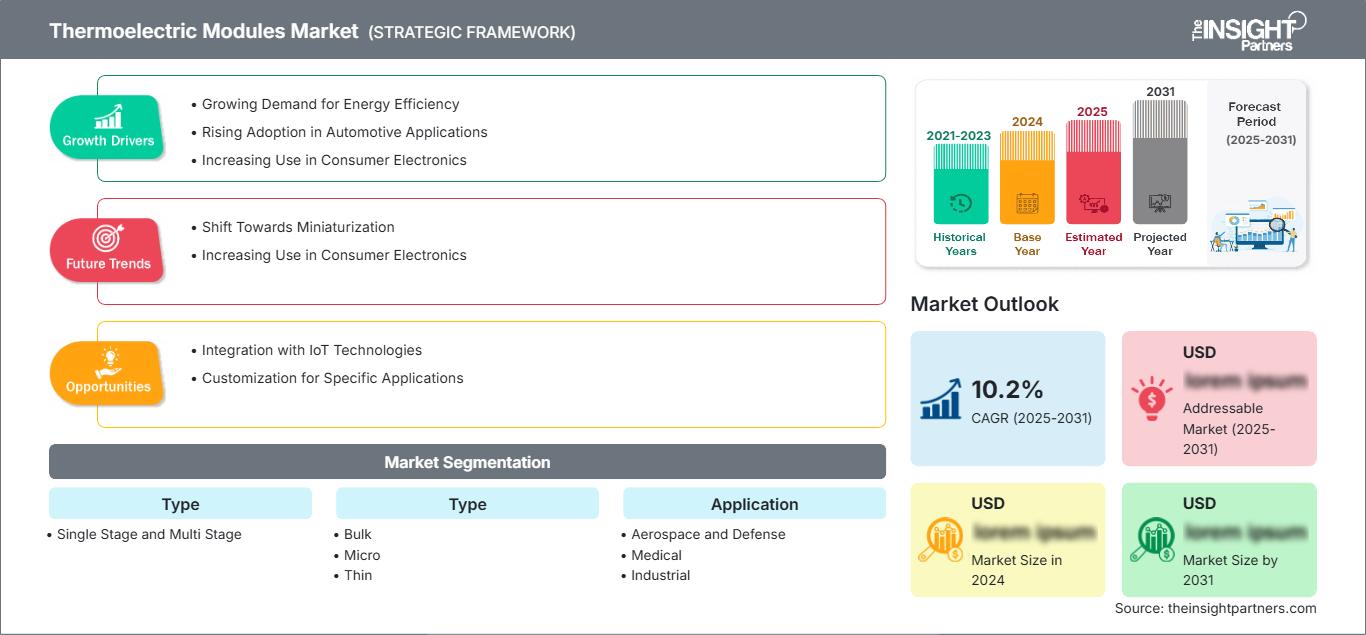
Thermoelectric Modules Market: Strategic Insights
Regional Insights
North America Thermoelectric Modules
North America represented approximately 32–36% share in 2025 and is projected to expand at a 11.5–13.0% CAGR during 2026–2034. Growth is supported by strong demand from aerospace platforms, diagnostic equipment, defense electronics, and advanced communication infrastructure. The region benefits from high levels of innovation spending and established research capabilities in photonics and semiconductor technologies. North America remains strengthened by the increasing deployment of precision cooling components in AI-related computing infrastructure and laboratory automation systems. Medical equipment makers and telecom operators continue to adopt thermoelectric technologies for reliable temperature control. Expansion of domestic semiconductor manufacturing initiatives is expected to create additional demand through the forecast period, reflecting key Thermoelectric Modules market trends.
U.S. Thermoelectric Modules Market
The United States accounts for approximately 76–80% of North American demand in 2025 and is expected to register a 11.8–13.2% CAGR through 2034. Major demand originates from defense systems, healthcare equipment, industrial automation, and optical communication networks. Domestic technology development capabilities continue to support early adoption of advanced cooling solutions in the Thermoelectric Modules market. The presence of companies, including Ferrotec (USA) Corporation, TE Technology, and Coherent Corp., supports product availability and application development. Growth opportunities are tied to laser stabilization, medical storage systems, imaging equipment, and next-generation semiconductor manufacturing. Continued investments in high-performance computing infrastructure are expected to reinforce long-term demand patterns.
Europe Thermoelectric Modules Market
Europe held an estimated 24–28% market share in 2025 and is projected to record a 11.0–12.5% CAGR during 2026–2034. Germany remains the leading country due to its industrial automation, automotive engineering, and photonics capabilities. The United Kingdom benefits from strong medical research infrastructure and aerospace technology development activities in the Thermoelectric Modules market. Germany leads regional adoption through advanced manufacturing industries and industrial cooling applications. The UK demonstrates growing demand from life sciences, laboratory instrumentation, and telecommunications infrastructure. France, Italy, and Spain collectively contribute through aerospace, medical device production, and industrial modernization programs. Demand for energy-efficient thermal management systems remains a common growth factor across regional markets.
APAC Thermoelectric Modules Market
Asia Pacific accounted for approximately 34–38% share in 2025 and is anticipated to grow at a 13.5–15.0% CAGR during 2026–2034, making it the fastest-expanding regional market in the Thermoelectric Modules market. China remains the leading contributor due to extensive electronics manufacturing capacity and supply-chain integration. Japan and South Korea continue driving innovation in electronics and photonics applications, while India benefits from expanding manufacturing investment. Australia provides demand from specialized industrial and healthcare sectors. Strong government support for advanced manufacturing and semiconductor development supports regional expansion.
Middle East & Africa Thermoelectric Modules Market
The Middle East & Africa market is expected to expand at a 10.0–11.5% CAGR during 2026–2034. Infrastructure modernization and industrial diversification programs are creating opportunities for temperature-control technologies. Demand remains concentrated in industrial, telecommunications, and healthcare applications within the Thermoelectric Modules market. Saudi Arabia and the UAE lead regional investment activity, while South Africa maintains demand from industrial facilities and specialized electronics applications. Increasing attention toward energy management and infrastructure reliability is gradually supporting wider adoption of thermoelectric solutions.
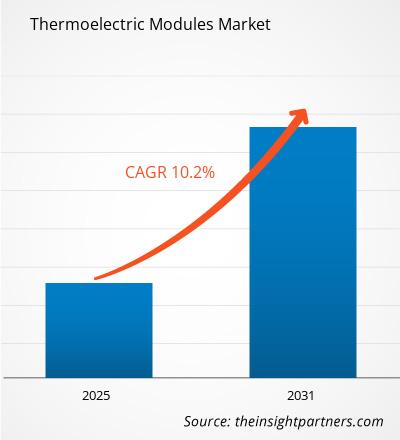
Segmentation Analysis
Stage
The Stage segment is expected to grow at 11.8–12.8% CAGR during 2026–2034 in the Thermoelectric Modules market. Market demand is influenced by application-specific cooling requirements, operating temperature differentials, and reliability considerations. Diverse industrial and commercial use cases continue supporting adoption across both standard and advanced module configurations. The scope of the Thermoelectric Modules continues expanding as thermal management requirements become more precise.
- Single Stage: Largest category due to broad suitability across electronics, medical equipment, and industrial applications. Simpler design, lower cost, and widespread availability support extensive deployment across numerous end-use industries.
- Multi Stage: Preferred for applications requiring deeper cooling performance and enhanced temperature differentials, and commonly deployed in scientific instruments, infrared sensors, and specialized photonics systems.
Type
The Type segment is expected to grow at 12.0–13.5% CAGR during 2026–2034 in the Thermoelectric Modules market. Material innovation and device miniaturization continue influencing product selection patterns. Market participants increasingly focus on performance optimization, reduced power consumption, and compatibility with advanced electronics environments.
- Bulk: Maintains strong market presence due to established manufacturing processes and dependable thermal performance across industrial, medical, and telecom applications.
- Micro: Gains adoption in compact electronics and photonics systems where space limitations and precise thermal regulation are critical operational requirements.
- Thin: Emerging category supported by advanced packaging technologies, lightweight electronics, sensor systems, and next-generation integrated device architectures.
Application
The Application segment is expected to grow at 12.5–13.8% CAGR during 2026–2034. Expanding use across healthcare, communications infrastructure, industrial automation, and defense technologies is broadening revenue opportunities for manufacturers and solution providers.
- Aerospace and Defense: Utilized in infrared imaging, avionics, and mission-critical electronics requiring reliable thermal regulation under demanding operating conditions.
- Medical: High-growth category benefiting from diagnostic systems, laboratory equipment, temperature-sensitive transport solutions, and precision thermal control requirements.
- Industrial: Supports automation equipment, process monitoring systems, sensors, and industrial electronics where durability and energy efficiency remain priorities.
- Telecommunications: Increasingly important for optical transceivers, laser stabilization, and advanced network infrastructure supporting higher data transmission volumes.
Opportunity Snapshot
| Segment Name | Revenue Contribution | Trend Tag | Adoption Stage |
| Aerospace and Defense | Medium | Infrared Cooling | Mature |
| Medical | High | Diagnostics Cooling | Scaling |
| Industrial | High | Waste Heat | Mature |
| Telecommunications | High | Optical Modules | Scaling |
| Others | Low | Sensor Control | Emerging |
Thermoelectric Modules Market Growth Drivers and Impact Analysis
Expansion of Precision Medical Thermal Management
Temperature control is now being demanded in healthcare settings for purposes of diagnostics, imaging systems, lab equipment, biologics storage, and molecular testing platforms. Thermoelectric products are known to have very high levels of precision when controlling temperatures without using any refrigerants or mechanical assemblies. Portable medical devices are currently being developed, and there is an inclusion of cooling systems within such devices to enhance their reliability and effectiveness. There is considerable demand in the market as a result of growing healthcare spending.
Growing Optical Communication Infrastructure
Growth in the transmission of information at high data rates, as well as increased use of cloud services and AI applications, has led to interest in optical communications. Lasers and optical transceivers typically need to be kept at specific temperatures to ensure proper functioning. Thermoelectric cooling devices have been proven to work effectively despite having small sizes, and thus have become attractive for telecommunication companies.
Industrial Energy Efficiency Initiatives
Energy optimization and thermal efficiency have become important considerations for manufacturers. Thermoelectric materials have proven to be effective in temperature-controlled operations and even allow the harnessing of waste heat in certain applications. The solid-state nature, robustness, and minimal maintenance of these materials are important attributes to the industrial sector. Automation and sensing in industries are likely to increase future usage.
Thermoelectric Modules Market Future Trends
Miniaturized Cooling for Advanced Electronics
Among the most important Thermoelectric Modules trends is the shift toward ultra-compact thermal management solutions for advanced electronics, sensors, and photonics systems. Future product development is expected to emphasize smaller footprints, lower power consumption, improved thermal cycling reliability, and greater integration capabilities. Demand from wearable devices, compact medical equipment, and high-density communication platforms will support continued innovation across micro and thin module categories.
Advanced Material Innovation
Competitiveness in the future would rely on innovations in thermoelectric materials that can generate efficiencies and stability in operations. Studies on nanostructured materials, better semiconductors, and more advanced manufacturing technologies would provide improvements in performance characteristics. This could help facilitate wider adoption of the technology in different sectors such as industries and transport.
Thermoelectric Modules Market Opportunities
Medical Device Manufacturing Expansion
Healthcare technology production continues to expand across Asia, North America, and Europe. Manufacturers are increasingly seeking compact cooling solutions for diagnostic platforms, imaging systems, laboratory automation equipment, and temperature-sensitive transport applications. Thermoelectric Modules Market Forecasts indicate that specialized healthcare uses will remain among the most attractive investment areas as precision temperature control becomes a critical product requirement. Suppliers capable of delivering certified, high-reliability solutions may benefit from long-term customer relationships and higher-margin opportunities.
AI and Photonics Infrastructure Development
The growing deployment of AI infrastructure and advanced optical communication systems creates opportunities for specialized thermal management suppliers. High-performance photonics platforms require reliable temperature stabilization to ensure operational consistency. Companies investing in micro-scale modules, advanced packaging, and custom engineering services are positioned to address increasing demand from network equipment manufacturers, cloud-service providers, and photonics developers.
Recent Developments
- May 2025: Laird Thermal Systems, a global leader in active thermal management solutions with more than 60 years of application expertise, today announced its rebrand to Tark Thermal Solutions. This name change marks a significant new chapter for the company following the expiration of the previous Laird Name License Agreement. This was the perfect time for a new name and brand design that elevates our identity to match the excellence of our work.
- January 2025: Coherent Corp. (NYSE: COHR), a global leader in materials and photonics innovation, announces the launch of its CT-Series thermoelectric coolers. This new product line delivers exceptional thermal performance, reliability, and cost-efficiency for demanding applications in life sciences, medical, and industrial markets.
- April 2025: Ferrotec Holdings Corporation marked a major milestone today with the groundbreaking of its second high-tech manufacturing facility at Kulim, Kedah, with an investment of RM1 billion (USD226 million). This reinforces its long-term commitment to Malaysia and its growing role in the global semiconductor industry. Set for completion within a year, the second facility will strengthen Ferrotec’s Southeast Asian footprint, enabling faster delivery, enhanced customer service, and greater innovation for global markets across Asia, Europe, and the Americas, bringing the company’s total Malaysian investment to RM1.9 billion.
Frequently Asked Questions

- Comprehensive Market Sizing and Forecast Analysis
- Detailed Segmentation Analysis
- In-Depth Market Dynamics Assessment
- Regional and Country-Level Insights
- Competitive Landscape and Company Benchmarking
- Strategic Business Intelligence
Recent Reports
Testimonials

The Insight Partners provided valuable market intelligence that supported our global go-to-market strategy. Their team was professional, responsive, and attentive to our feedback, providing thoughtful analysis and helpful methodological clarifications throughout the project.
Junmo Kim Chief Financial Officer (CFO), Enertech Co., Ltd.
The Insight Partners' SCADA System Market report is comprehensive, with valuable insights on current trends and future forecasts. The team was highly professional, responsive, and supportive throughout. We are very satisfied and highly recommend their services.
RAN KEDEM Partner, Reali Technologies LTDs
I requested a report on a very specific software market and the team produced the report in a few days. The information was very relevant and well presented. I then requested some changes and additions to the report. The team was again very responsive and I got the final report in less than a week.
JEAN-HERVE JENN Chairman, Future Analytica
We worked with The Insight Partners for an important market study and forecast. They gave us clear insights into opportunities and risks, which helped shape our plans. Their research was easy to use and based on solid data. It helped us make smart, confident decisions. We highly recommend them.
PIYUSH NAGPAL Sr. Vice President, High Beam Global
The Insight Partners delivered insightful, well-structured market research with strong domain expertise. Their team was professional and responsive throughout. The user-friendly website made accessing industry reports seamless. We highly recommend them for reliable, high-quality research services
YUKIHIKO ADACHI CEO, Deep Blue, LLC.
This is the first time I have purchased a market report from The Insight Partners.While I was unsure at first, I visited their web site and felt more comfortable to take the risk and purchase a market report.I am completely satisfied with the quality of the report and customer service. I had several questions and comments with the initial report, but after a couple of dialogs over email with their analyst I believe I have a report that I can use as input to our strategic planning process.Thank you so much for taking the extra time and making this a positive experience.I will definitely recommend your service to others and you will be my first call when we need further market data.
JOHN SUZUKI President and Chief Executive Officer, Board Director, BK Technologies
I wish to appreciate your support and the professionalism you displayed in the course of attending to my request for information regarding to infectious disease IVD market in Nigeria. I appreciate your patience, your guidance, and the fact that you were willing to offer a discount, which eventually made it possible for us to close a deal. I look forward to engaging The Insight Partners in the future, all thanks to the impression you have created in me as a result of this first encounter.
DR CHIJIOKE ONYIA MANAGING DIRECTOR, PineCrest Healthcare Ltd.Reason to Buy
- Informed Decision-Making
- Understanding Market Dynamics
- Competitive Analysis
- Identifying Emerging Markets
- Customer Insights
- Market Forecasts
- Risk Mitigation
- Boosting Operational Efficiency
- Strategic Planning
- Investment Justification
- Tracking Industry Innovations
- Aligning with Regulatory Trends





 Get Free Sample for