
USB HSMs Market Growth, Demand & Size by 2034
Coverage: By Type (General Purpose HSMs, Payment HSMs, Others); End Users (Industrial and Manufacturing, BFSI, Government, Others) , and Geography (North America, Europe, Asia Pacific, and South and Central America)
- Status : Data Released
- Report Code : TIPRE00023773
- Category : Electronics and Semiconductor
- No. of Pages : 150
- Available Report Formats :


- Last update date : September 18, 2026


2025 Market Size
US$ 242.34 Mn
Base year value
2034 Forecast
US$ 547.79 Mn
Projected by 2034
CAGR 2026-2034
9.48 %
Growth rate
Addressable Market
US$ 3,524.93 Mn
(2026-2034)
The USB HSMs market was valued at US$ 242.34 million in 2025 and is expected to reach US$ 547.79 million by 2034; it is estimated to record a CAGR of 9.48% during 2026-2034.
USB HSMs Market Assessment and Insights
- North America: North America is estimated to hold 34–38% share in 2025 and grow at a CAGR of 9.8–11.4% during 2026–2034, supported by PCI DSS, FIPS-oriented procurement, and enterprise cryptographic modernization.
- US: The US is expected to represent 72–78% of North America in 2025, with a CAGR of 9.9–11.5% as federal, banking, and technology buyers expand secure key management.
- Europe: Europe is estimated at 25–29% share in 2025 and a CAGR of 9.1–10.8%, led by Germany, the UK, France, and Italy through eIDAS, GDPR, PSD2, and public infrastructure security programs.
- Asia Pacific: Asia Pacific is estimated at 23–27% share in 2025 and a CAGR of 11.8–13.5%, with China, Japan, South Korea, India, and Australia driving adoption in payments, telecom, manufacturing, and government identity.
- Largest Segment: General Purpose HSMs are estimated to hold 58–63% market share in 2025 and grow at a CAGR of 9.7–11.2% through broad enterprise and industrial cryptographic use cases.
- High Growth Segment: Payment HSMs are estimated to hold 37–42% market share in 2025 and grow at a CAGR of 11.5–13.2% as payment networks, fintechs, and banks harden transaction security.
- Key companies analyzed in detail: Thales Group, Utimaco GmbH, Atos SE, Futurex, JN UNION, JN TASS, Beijing Sansec Technology Co., Ltd., SPYRUS Inc., OpenText Corporation, and Entrust Corporation.
Source: The Insight Partners' analysis based on proprietary research, government publications, company annual reports, investor presentations, industry databases, and expert interviews.
The market has moved from specialized portable cryptographic tokens to high-assurance hardware modules employed in regulated workflows, remote management, firmware signing, transactional operations, and industrial identity. Removable and compact hardware security modules have started being recognized by enterprises as effective control measures in branch locations, remote settings, secure development labs, and key backups. The production processes of the hardware security module market are becoming more sophisticated with increased tamper resistance, advanced API capabilities, and quantum readiness.
During the forecast period, adoption is projected to grow in the Asia Pacific region, the Middle East, and the regulated economies of Europe due to the growth of digital identities, real-time payments, and industrial connectivity. The investments made during the forecast period will go toward crypto-agile hardware, automation of certificates’ life cycle, compliance with FIPS 140-3, and hybrid deployment solutions. These factors support usb hsms market growth beyond traditional banking into smart infrastructure, connected manufacturing, and sovereign digital services.
USB HSMs Market Report Scope
| Report Attribute | Details |
|---|---|
| Market size in 2025 | US$ 242.34 Million |
| Market Size by 2034 | US$ 547.79 Million |
| Global CAGR (2026 - 2034) | 9.48% |
| Historical Data | 2021-2024 |
| Forecast period | 2026-2034 |
USB HSMs Market Analysis
Demand drivers are anchored in the need to protect cryptographic keys outside general-purpose software environments. The usb hsms market growth is reinforced by rising digital transaction volumes, stricter audit expectations, and wider use of PKI for devices, applications, and users. USB-attached modules remain attractive where organizations need hardware-backed security without the cost, footprint, or operational complexity of network appliances.
The value chain consists of chip providers, secure firmware providers, HSM providers, systems integrators, payment processors, and compliance experts. Product differentiation on the supply side involves certifications, supported algorithms, physical tamper protection, APIs, and lifecycle management capabilities. Customers are more often comparing products based on their ability to integrate with current applications, secure backup processes, policy management capabilities, and support for new cryptographic standards.
Market positioning is driven by trust, the extent of certification, and the range of offerings. Thales Group and Utimaco GmbH have good reputations in enterprise and government implementations; Futurex provides solutions for payments and enterprise cryptography. Atos SE, Beijing Sansec Technology Co., Ltd., SPYRUS Inc., JN UNION, JN TASS, OpenText Corporation, and Entrust Corporation serve specific security needs, regional markets, and identity management.
The usb hsms market analysis indicates that vendors are moving from standalone hardware sales toward managed cryptographic ecosystems. Investments in cloud HSM integration, post-quantum algorithms, automated key rotation, and multi-tenant administration are changing buyer expectations. Suppliers that combine portable hardware assurance with software orchestration are positioned to capture demand from organizations modernizing fragmented key management environments.
● REPORT CUSTOMIZATION
Tailor This Report To Align With Your Specific Business Requirements
This report can be customized to align precisely with your business objectives, scope, and target markets. Customization options include tailored segmentation, geography, competitive analysis, and strategic insights to support informed decision-making.
Customize This Report →WHAT YOU CAN ADJUST
- ● Segmentations
- ● Geography
- ● Competitive Analysis
- ● Language Preferences
USB HSMs Market: Strategic Insights
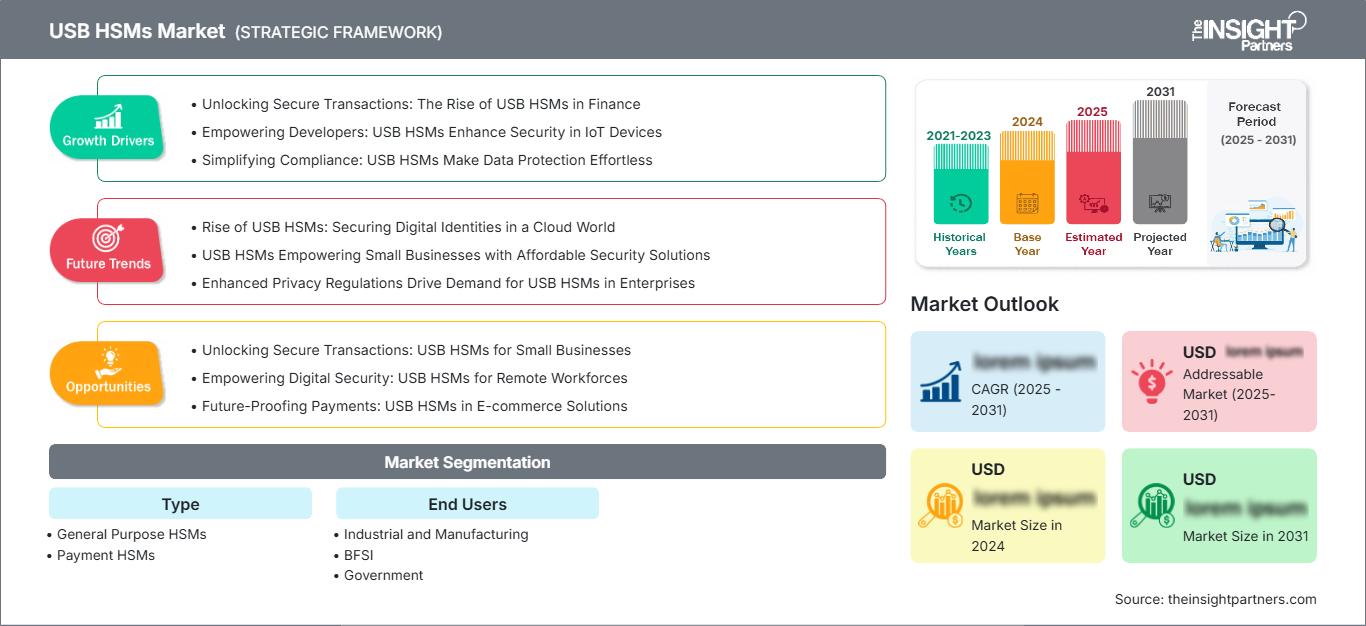
Regional Insights
North America usb hsms market
North America is estimated to account for 34–38% usb hsms market share in 2025 and grow at a CAGR of 9.8–11.4% from 2026 to 2034. Demand is concentrated in banking, payments, cloud service operations, defense contractors, and healthcare organizations that require stronger identity, signing, and encryption controls.
The region benefits from mature cybersecurity budgets and long-standing use of hardware-backed key storage. The shift toward zero-trust architectures, certificate automation, and post-quantum migration planning is increasing the relevance of compact HSMs for distributed operations, resilient backup keys, secure code signing, and local cryptographic control.
U.S. usb hsms Market
The US is projected to represent 72–78% of the North America usb hsms Market in 2025 and expand at a CAGR of 9.9–11.5%. Adoption is strongest across federal systems, card payment infrastructure, cloud security teams, and enterprises operating under PCI DSS, HIPAA, and sector-specific cybersecurity mandates.
Company presence is high because leading global and domestic vendors maintain sales, certification, and support capabilities in the US. Application trends include payment PIN protection, certificate authority root key custody, secure DevOps signing, healthcare data encryption, and manufacturing device authentication.
Europe usb hsms Market
Europe is estimated to hold 25–29% share of the usb hsms Market in 2025 and grow at a CAGR of 9.1–10.8%. Germany and the UK lead adoption due to advanced industrial security requirements, financial infrastructure modernization, eID programs, and enterprise data-protection compliance. France, Italy, and Spain show steady demand through public-sector digitization and regulated payment ecosystems.
European buyers emphasize certification, sovereignty, auditability, and long lifecycle support. GDPR, PSD2, eIDAS, and national cybersecurity frameworks create a favorable environment for hardware-backed key management. Demand is also supported by smart metering, automotive software signing, telecom identity, and government trust-service infrastructures.
APAC usb hsms Market
APAC is estimated to hold 23–27% share in 2025 and expand at a CAGR of 11.8–13.5%. China is expected to lead regional demand, while Japan, South Korea, India, and Australia support growth through payments, telecom security, electronics manufacturing, and public digital identity programs.
Industrial digitization and policy-driven cybersecurity investment are accelerating deployment. Local payment schemes, cloud expansion, smart manufacturing, and critical infrastructure protection are creating a wider base of use cases for compact HSMs, especially where distributed sites need protected local key operations.
Middle East & Africa usb hsms Market
The Middle East & Africa market is expected to grow at a CAGR of 8.7–10.4% during 2026–2034. Saudi Arabia and the UAE are leading demand through digital government programs, financial infrastructure modernization, energy-sector cybersecurity, and cloud data-center investment.
South Africa contributes through banking, telecom, and retail payment security, while the rest of MEA is gradually adopting HSMs for identity, payment, and infrastructure protection. Energy operators and public agencies increasingly require hardware-based cryptography to secure field assets, certificates, and sensitive operational data.
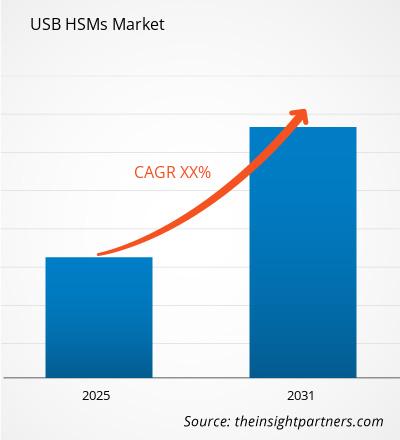
Segmentation Analysis
Type
The Type segment is expected to grow at a CAGR of 10.0–11.6% during 2026–2034. General Purpose HSMs account for the larger revenue base due to broad use in PKI, code signing, authentication, and database encryption. The usb hsms market scope is also widening as Payment HSMs gain momentum in financial transaction security and merchant infrastructure.
- General Purpose HSMs: These devices support broad cryptographic functions across enterprises, governments, and industrial users, offering secure key generation, signing, authentication, and encryption for distributed operational environments.
- Payment HSMs: Payment-focused modules protect PINs, card transactions, issuer keys, and payment-network operations, making them strategically important for banks, processors, fintech platforms, and retail payment systems.
End Users
The End Users segment is expected to grow at a CAGR of 10.4–12.0% during 2026–2034. BFSI remains the leading adoption vertical, while government usage is expanding with digital identity and secure service delivery. Industrial and manufacturing users are increasingly adopting USB HSMs for device trust, firmware signing, and operational technology security.
- Industrial and Manufacturing: Manufacturers use USB HSMs for device authentication, machine identity, firmware signing, and secure production workflows as connected equipment and software-defined operations expand.
- BFSI: Banks, payment processors, and fintech firms rely on HSMs to protect card transactions, digital certificates, payment keys, and regulated cryptographic operations.
- Government: Public agencies deploy hardware-backed key security for identity programs, citizen services, secure communication, defense systems, and digital trust infrastructure.
Opportunity Snapshot
| End Users | Revenue Contribution | Trend Tag | Adoption Stage |
| Industrial and Manufacturing | Medium | Device Trust | Scaling |
| BFSI | High | Payment Keys | Mature |
| Government | Medium | Digital Identity | Scaling |
USB HSMs Market Growth Drivers and Impact Analysis
Rising Need for Hardware-Backed Key Protection
There is a growing trend toward reviewing software-based key management amid a rising incidence of cyberattacks on credentials, certificates, signatures, and privileged access management systems. The use of USB HSM presents an effective hardware root of trust solution for small businesses, isolated workflows, secure development environments, and regulated departments. The portability feature ensures secure custody and tamper-proof cryptography processes. This factor is highly significant for BFSI, government, and manufacturing clients looking for key management without the implementation of network HSM across all locations.
Payment Security and Compliance Modernization
The payment ecosystem has been evolving towards a more distributed nature as banks, processors, financial technology companies, and merchants offer capabilities for real-time payments, tokenization, digital wallets, and cross-border transactions. The importance of Payment HSMs will not diminish since they provide security for PIN translation, card issuance, transaction authorization, and encryption keys for payments. In order to facilitate security discipline as well as compliance with PCI standards, it makes sense to consider HSM solutions that can be easily connected via USB or that are compact enough. The consequence of such an evolution includes a wider purchasing pool beyond big acquiring banks to include fintech solutions, regional processors, and payment service providers.
Post-Quantum Readiness and Crypto-Agility
Post-quantum thinking is becoming a realistic procurement consideration and no longer just a research consideration. Organizations are looking at where their data, identity solutions, and signatures may be at risk of decryption in the future. Vendors of USB-based HSMs have reacted by offering crypto-agile products, roadmapping for future algorithms, and firmware routes that mitigate migration impact. This driver impacts purchasing in that organizations wish to have products that can run existing RSA and ECC applications but be ready for future-proof NIST-certified quantum-resistant algorithms.
USB HSMs Market Future Trends
Compact HSMs Integrated with Centralized Orchestration
The USB HSMs market trends point toward devices that operate as managed endpoints within broader cryptographic platforms. However, while there is growing demand for localized and tamper-resistant key custody, buyers also need centralized visibility, compliance control, automation, auditing, and key lifecycle management. It will make vendors invest more into developing their orchestration capabilities and better integrate their systems with identity, certificate management, and cloud security solutions. In the long run, it will help minimize deployment challenges and increase audit-readiness. Eventually, miniature HSM devices might become an integral part of hybrid encryption setups combining portable hardware and cloud HSM services.
Growing Role in Industrial and Device Identity
Industrial organizations will be encouraged to embrace more HSMs as their sizes continue to grow due to connectivity in terms of devices, robotics, energy systems, and manufacturing. Signing of the firmware, credentials, and certificates of applications is becoming increasingly important when it comes to OT security. USB HSMs have the potential of facilitating local key handling in industrial environments such as labs and factories, where network access might not always be available. In this regard, there will be an increased need for durable and easy-to-administer devices as well as integration with MES.
USB HSMs Market Opportunities
Secure DevOps and Code-Signing Expansion
Software supply chain risks are creating a strong opportunity for HSM-backed code-signing workflows. Development teams need protected signing keys for firmware, applications, containers, scripts, and update packages, especially as customers and regulators demand stronger provenance controls. USB HSMs can serve secure build environments, offline release approvals, and distributed engineering teams that require physical custody of signing credentials. The usb hsms Market forecasts indicate that vendors can capture this opportunity by offering developer-friendly interfaces, CI/CD integrations, detailed audit trails, and policies that prevent unauthorized signing. This creates a bridge between cybersecurity governance and faster software delivery.
Regional Payment Infrastructure and Digital Identity Projects
Developing countries are upgrading payment channels, digital public infrastructure, e-government websites, and national ID cards. Such initiatives call for hardware encryption but also demand scalable and affordable methods for implementation within different agencies, banks, and service providers. USB HSMs may be used for certificate creation, authentication, payment key injection, and cryptography in controlled environments. The vendors have the possibility to collaborate with systems integrators, government technology providers, and regional payment network organizations. The success will be based on correct certifications, local presence, documentation in different languages, and products suitable for sovereign security standards.
Frequently Asked Questions

- Comprehensive Market Sizing and Forecast Analysis
- Detailed Segmentation Analysis
- In-Depth Market Dynamics Assessment
- Regional and Country-Level Insights
- Competitive Landscape and Company Benchmarking
- Strategic Business Intelligence
Recent Reports
Testimonials

The Insight Partners' SCADA System Market report is comprehensive, with valuable insights on current trends and future forecasts. The team was highly professional, responsive, and supportive throughout. We are very satisfied and highly recommend their services.
RAN KEDEM Partner, Reali Technologies LTDs
I requested a report on a very specific software market and the team produced the report in a few days. The information was very relevant and well presented. I then requested some changes and additions to the report. The team was again very responsive and I got the final report in less than a week.
JEAN-HERVE JENN Chairman, Future Analytica
We worked with The Insight Partners for an important market study and forecast. They gave us clear insights into opportunities and risks, which helped shape our plans. Their research was easy to use and based on solid data. It helped us make smart, confident decisions. We highly recommend them.
PIYUSH NAGPAL Sr. Vice President, High Beam Global
The Insight Partners delivered insightful, well-structured market research with strong domain expertise. Their team was professional and responsive throughout. The user-friendly website made accessing industry reports seamless. We highly recommend them for reliable, high-quality research services
YUKIHIKO ADACHI CEO, Deep Blue, LLC.
This is the first time I have purchased a market report from The Insight Partners.While I was unsure at first, I visited their web site and felt more comfortable to take the risk and purchase a market report.I am completely satisfied with the quality of the report and customer service. I had several questions and comments with the initial report, but after a couple of dialogs over email with their analyst I believe I have a report that I can use as input to our strategic planning process.Thank you so much for taking the extra time and making this a positive experience.I will definitely recommend your service to others and you will be my first call when we need further market data.
JOHN SUZUKI President and Chief Executive Officer, Board Director, BK Technologies
I wish to appreciate your support and the professionalism you displayed in the course of attending to my request for information regarding to infectious disease IVD market in Nigeria. I appreciate your patience, your guidance, and the fact that you were willing to offer a discount, which eventually made it possible for us to close a deal. I look forward to engaging The Insight Partners in the future, all thanks to the impression you have created in me as a result of this first encounter.
DR CHIJIOKE ONYIA MANAGING DIRECTOR, PineCrest Healthcare Ltd.Reason to Buy
- Informed Decision-Making
- Understanding Market Dynamics
- Competitive Analysis
- Identifying Emerging Markets
- Customer Insights
- Market Forecasts
- Risk Mitigation
- Boosting Operational Efficiency
- Strategic Planning
- Investment Justification
- Tracking Industry Innovations
- Aligning with Regulatory Trends





 Get Free Sample for