
Visual Fault Locator Market Size, Growth & Demand by 2034
Coverage: By Type (Fiber Tracers, Visual Fault Finder, Visual Fault Indicator, Visual Fault Identifier, Visual Fault Detector, Visual Fault Light, Visual Fault Locator Pen); Application (Installation, Fault Finding, Continuity Checking, Polarity Checking) , and Geography (North America, Europe, Asia Pacific, and South and Central America)
- Status : Data Released
- Report Code : TIPRE00017743
- Category : Electronics and Semiconductor
- No. of Pages : 150
- Available Report Formats :


- Last update date : September 22, 2026


2025 Market Size
US$ 186.21 Mn
Base year value
2034 Forecast
US$ 317.91 Mn
Projected by 2034
CAGR 2026-2034
6.12 %
Growth rate
Addressable Market
US$ 2,282.06 Mn
(2026-2034)
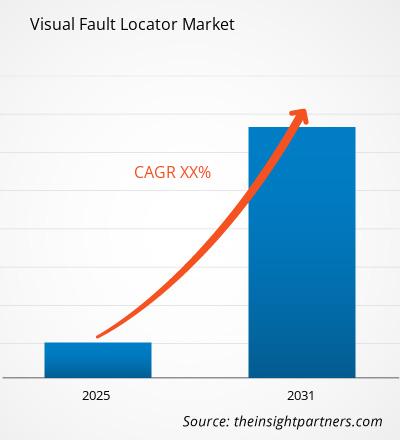
The visual fault locator market is projected to grow from US$ 186.21 Million in 2025 to US$ 317.91 Million by 2034, registering a CAGR of 6.12% during 2026–2034. Demand is supported by expanding fiber optic networks, rising field-testing requirements, and the need for compact tools that help technicians identify breaks, bends, connector faults, continuity issues, and polarity errors across single-mode and multimode fiber links.
North America remains a priority revenue region because broadband expansion, enterprise fiber upgrades, hyperscale data center construction, and 5G transport networks continue to increase field inspection workloads. The regional visual fault locator market size is supported by high technician penetration, mature distribution channels, and strong replacement demand for portable, ruggedized instruments used in installation, activation, and maintenance workflows.
Visual Fault Locator Market Assessment and Insights
- North America: The region accounted for an estimated 31–34% share in 2025 and is expected to grow at a CAGR of 5.8–6.4% during 2026–2034, supported by fiber broadband, 5G backhaul, and data center connectivity programs.
- US: The US represented about 78–82% of North America revenue in 2025 and is projected to expand at a CAGR of 5.9–6.5%, led by telecom maintenance and enterprise cabling demand.
- Europe: Europe held an estimated 24–27% share in 2025 and is forecast to grow at a CAGR of 5.3–5.9%, with Germany, the UK, France, Italy, and Spain driving fiber rollout activity.
- Asia Pacific: Asia Pacific represented around 29–32% share in 2025 and is expected to grow at a CAGR of 6.7–7.4%, led by China, Japan, South Korea, India, and Australia.
- Largest Segment: Visual fault locator pen products held an estimated 28–32% market share in 2025 and are expected to grow at a CAGR of 5.8–6.3% due to portability and low-cost field adoption.
- High Growth Segment: Fault finding applications held roughly 26–29% share in 2025 and are projected to grow at a CAGR of 6.6–7.2% as dense fiber networks raise troubleshooting frequency.
- Key companies analyzed in detail: AFL, Anixter Inc., Fluke Corporation, Fujikura Ltd., IDEAL Networks, Jonard Tools, Siemon, Softing IT Networks GmbH, Specialized Products Company, and TE Connectivity.
Source: The Insight Partners' analysis based on proprietary research, government publications, company annual reports, investor presentations, industry databases, and expert interviews.
Market evolution has been shaped by the transition from manual inspection toward faster, portable, laser-based field tools that complement optical time-domain reflectometers and optical loss test sets. The visual fault locator market growth is increasingly linked to dense fiber architectures, where technicians need fast confirmation of continuity, polarity, connector quality, and visible leakage points before advanced certification or service activation.
Looking ahead, demand will broaden across emerging fiber-to-the-home networks, private enterprise campuses, edge data centers, utility communications, and industrial sites. Investment in digital infrastructure and government-supported broadband programs will keep replacement cycles active, while rugged form factors, longer battery life, and compatibility with multiple connector types will influence supplier competitiveness, according to the Visual Fault Locator Market report.
Visual Fault Locator Market Report Scope
| Report Attribute | Details |
|---|---|
| Market size in 2025 | US$ 186.21 Million |
| Market Size by 2034 | US$ 317.91 Million |
| Global CAGR (2026 - 2034) | 6.12% |
| Historical Data | 2021-2024 |
| Forecast period | 2026-2034 |
Visual Fault Locator Market Analysis
Fiber expansion is the main demand factor since operators install increasing amounts of feeder, distribution, and access fibers to cater to the needs of broadband, 5G, and cloud connectivity. Visual fault locators save on field time as they mark out tight curves, breaks, improper connections, and connectors via red light emissions visible to the naked eye. The value chain includes optical components producers, test instrument producers, telecom contractors, distributors, and enterprise cabling installers.
The competitive landscape benefits the players with an existing range of test equipment, wide channels, and robust products able to withstand field conditions. According to the visual fault locator market report, there is sustained demand for continuous and pulsed operation models, universal adapters, reliable battery power, and ability to work with SC, ST, FC, LC, and MU connectors.
The competition is focused on reliability, product bundling, services, and technician usability instead of radical changes in specifications. Among the companies competing by developing portable tools and kits along with a portfolio of fiber inspection equipment are Fluke Corporation, AFL, Fujikura Ltd., Jonard Tools, Siemon, Softing IT Networks GmbH, and IDEAL Networks, while Anixter Inc. and other distributors facilitate market reach.
Strategic positioning increasingly relies on the ability to target both specialized fiber technicians and general network installers. Those suppliers that provide their customers with visual fault locator capabilities combined with cleaning, inspection, power measuring and training are able to boost account stickiness. The same applies to TE Connectivity and Specialized Products Company due to the ecosystem they enjoy.
● REPORT CUSTOMIZATION
Tailor This Report To Align With Your Specific Business Requirements
This report can be customized to align precisely with your business objectives, scope, and target markets. Customization options include tailored segmentation, geography, competitive analysis, and strategic insights to support informed decision-making.
Customize This Report →WHAT YOU CAN ADJUST
- ● Segmentations
- ● Geography
- ● Competitive Analysis
- ● Language Preferences
Visual Fault Locator Market: Strategic Insights

Regional Insights
North America visual fault locator market
North America is estimated to account for 31–34% of global revenue in 2025 and is forecast to grow at a CAGR of 5.8–6.4% during 2026–2034. Fiber broadband expansion, 5G transport densification, data center interconnects, and structured cabling refreshes are increasing demand for fast first-line fault detection. The visual fault locator market share in the region is supported by high tool adoption among contractors and network owners.
The procurement process in the region prefers tough construction, well-known brands, and products that have distributors who support their availability. Telecom companies, Cable MSOs, Cloud providers, and Enterprises' networking divisions prefer the use of visual locators to conduct installation checks, polarity tests, and troubleshooting of connectorized networks. There is constant demand for replacement of the products due to tough operating conditions.
U.S. visual fault locator market
The US represented an estimated 78–82% of North America Visual Fault Locator Market revenue in 2025 and is forecast to grow at a CAGR of 5.9–6.5% through 2034. The growing list of activities associated with broadband, rural fiber deployments, data transport by enterprises, and campus hyperscale constructions contributes to the increased workload for the field staff. The field staff uses compact VFL devices to pinpoint any visible fault prior to the official certification.
The company has substantial coverage within the domains of testing, distribution, and cabling. This includes such companies as Fluke Corporation, AFL, Jonard Tools, Siemon, Anixter Inc., and Specialized Products Company providing their support through direct sales, e-commerce, electrical distribution, and telecom contractors. Uses of the devices are largely focused on installation, continuity testing, and polarity verification.
Europe visual fault locator market
Europe accounted for an estimated 24–27% share in 2025 and is expected to expand at a CAGR of 5.3–5.9% during 2026–2034. The market in Germany is at the forefront because of its industrial connectedness, high-speed broadband technology and fiber upgrades among businesses. The United Kingdom has benefited from the use of alternative networks, whereas France still advocates for fiber connectivity density in urban and suburban areas.
Both Italy and Spain play their part in terms of telecommunication upgrade programs, public broadband projects and increasing data center operations. Europe’s buyers look for compliance, efficient repairs, use of multi-connectors and reliable performance in diverse network conditions. The leading players in this market are Softing IT Networks GmbH, IDEAL Networks, Fujikura Ltd., AFL and Fluke Corporation.
APAC visual fault locator market
APAC held an estimated 29–32% share of the Visual Fault Locator Market in 2025 and is projected to grow at a CAGR of 6.7–7.4% during 2026–2034. China leads the region due to the presence of major fiber optics infrastructure, data center operations, and manufacturing facilities. The needs of Japan and South Korea include advanced telecom networks and enterprise upgrades.
The fast-growing economies are India and Australia, where the needs include broadband fiber, mobile backhaul, metro networks, and industrial digitalization. The reason for high growth in the region is the development of networks, not just the replacement of one. Wide availability of technicians and low prices favor the visual fault locator pen and handheld devices.
Middle East & Africa visual fault locator market
The Middle East & Africa Visual Fault Locator Market is forecast to grow at a CAGR of 5.6–6.2% during 2026–2034, with Saudi Arabia and the UAE leading regional demand. Fiber-optic deployment solutions are also required for smart cities initiatives, communication within the energy sector, data centers, and investments in national broadband.
Demand is generated from South Africa and the Rest of MEA through metro fiber, enterprise network upgrades, and telecommunications network modernizations. While adoption is project-based, the process of field testing is standardizing due to applications such as cloud connectivity, security systems, utilities, and industrial automation.
Segmentation Analysis
Type
Type is expected to grow at a CAGR of 5.9–6.5% during 2026–2034. The visual fault locator market scope across fiber tracers, visual fault finders, indicators, identifiers, detectors, lights, and locator pens reflects different naming conventions and field-use preferences rather than entirely separate demand pools. Product choice is influenced by range, light output, adapter support, ruggedness, and technician familiarity.
- Fiber Tracers: Fiber tracers support identification in crowded panels and routes, helping technicians confirm link paths before connection changes, repair work, or service activation in enterprise and telecom environments.
- Visual Fault Finder: Visual fault finders are used for quick fault confirmation, where red light leakage can reveal bends, breaks, poor splices, and connector defects before deeper diagnostic testing.
- Visual Fault Indicator: Visual fault indicators serve routine continuity and installation checks, especially where technicians require simple visual confirmation without complex measurement or reporting functionality.
- Visual Fault Identifier: Visual fault identifiers are valued in field maintenance because they help locate defects and confirm fiber identity across patch panels, cabinets, splice trays, and short-to-medium cable runs.
- Visual Fault Detector: Visual fault detectors support preventative maintenance and troubleshooting workflows by detecting visible light escape points associated with mechanical stress or poor connector seating.
- Visual Fault Light: Visual fault lights are simple, portable tools suited to contractors and installers needing low-cost confirmation of continuity, polarity, and visible fiber path integrity.
- Visual Fault Locator Pen: Visual fault locator pens remain the largest format because they combine portability, familiar handling, and affordability for daily installation and troubleshooting tasks.
Application
Application is forecast to grow at a CAGR of 6.1–6.7% during 2026–2034. Installation remains a core revenue contributor, while fault finding is the fastest-growing use case as networks become denser and more connectorized. Continuity checking and polarity checking remain essential for quality assurance before commissioning and handoff.
- Installation: Installation applications provide continuous usage due to the usage of visual locators to test fiber pathway, connector fitment, continuity, and basic link verification while installing the network.
- Fault Finding: The role of fault finding is very important due to the increased demand to localize bends, breaks, poor connector and splice problems due to pressure on time and dense patching area.
- Continuity Testing: Continuity testing helps in conducting acceptance testing and maintenance by checking whether light can pass through the correct fiber pathway before going for further certification process.
- Polarity Testing: Polarity testing is very important in duplex and multi-fiber configurations as wrong polarity can cause problems in network activation and troubleshooting.
Opportunity Snapshot
| Application | Revenue Contribution | Trend Tag | Adoption Stage |
| Installation | High | Fiber Buildout | Mature |
| Fault Finding | High | Rapid Repair | Scaling |
| Continuity Checking | Medium | Link Validation | Mature |
| Polarity Checking | Medium | Connector QA | Scaling |
Visual Fault Locator Market Growth Drivers and Impact Analysis
Expansion of Fiber Broadband and 5G Backhaul
Deploying optical fibers is now more pervasive in access networks, business parks, cell tower networks, and data center interconnects. Every new fiber optic cable deployed creates the demand for testing and troubleshooting, and hence the necessity for field tools. Visual fault detectors aid field technicians in detecting any faults that are visible without going through measurement processes. It helps to reduce the time spent on truck rolls, increase first-time fix rates, and serve networks that must maintain their quality of service while increasing fiber density.
Rising Complexity of Connectorized Network Environments
Fiber systems of today utilize dense patch panels, pre-terminated cables, distribution centers, splice trays, and multiple types of connectors. This type of environment makes the occurrence of polarity problems, sharp turns, poor alignment, and improper routing highly likely. Visual fault locators immediately give visual feedback, allowing for easier troubleshooting of the problem at the physical layer level prior to using any sophisticated equipment.
Growth in Data Centers and Enterprise Fiber Cabling
More and more fiber is being used in data centers and campus environments to facilitate cloud applications, AI technology, storage infrastructures, and fast switching capabilities. The installers will have to prove large numbers of fiber links within limited periods, while the operations teams will need fast methods to perform maintenance and relocations. Visual Fault Locators help to meet these needs by proving the continuity, detecting stressed points, and locating the fibers in the patching environment.
Visual Fault Locator Market Future Trends
Integration with Broader Fiber Inspection Kits
The visual fault locator market trends indicate stronger bundling with fiber inspection scopes, cleaning tools, power meters, and optical loss test kits. Buyers seek technician-friendly bundles that enhance workflow standardization and simplify procurement. Suppliers that match up VFLs with complementary products, reporting systems, training, and distribution capability could enhance recurring demand. This strategy will serve portfolio competition, whereby the fault locator becomes the vehicle for access to the larger field-maintenance environment.
Demand for Rugged, Multi-Connector Portable Designs
Field technicians will be focusing more on equipment that can withstand falls, vibrations, dust, and connector replacements. The differentiating factors in future products will include universal connectors, better battery life, better visibility, smaller sizes, and adaptability to both old and new connectors. As the number of people working in fiber optics grows in both developing and established countries, the challenge for the suppliers will be to provide affordable and durable equipment.
Visual Fault Locator Market Opportunities
Contractor-Focused Distribution and Training Programs
The visual fault locator market forecasts point to growing demand from independent installers and telecom contractors, especially as broadband and enterprise fiber projects increase. The suppliers could take advantage of this opportunity by incorporating these products with training, start-up guidance, connection kits, backup batteries, and inspection tools. Bundles offered by the distributors may enhance visibility and reduce purchasing complexities in small field teams. The opportunity is realistic since contractor use relies on availability and ease of use.
Emerging Market Fiber Rollout Support
Fiber networks are being developed in emerging markets for broadband, mobile backhaul, industrial applications, and public infrastructure. Such markets require low-cost, rugged, and easy-to-operate instruments capable of supporting a significant number of technicians. Vendors can grow by expanding through regional distributors and offering local packages with lower-cost models of equipment with preserved basic functionality. The potential for growth is even more compelling if the network build-out is still at the stage of development, as both adoption and replacement cycles can evolve simultaneously.
Frequently Asked Questions

- Comprehensive Market Sizing and Forecast Analysis
- Detailed Segmentation Analysis
- In-Depth Market Dynamics Assessment
- Regional and Country-Level Insights
- Competitive Landscape and Company Benchmarking
- Strategic Business Intelligence
Recent Reports
Testimonials

The Insight Partners provided valuable market intelligence that supported our global go-to-market strategy. Their team was professional, responsive, and attentive to our feedback, providing thoughtful analysis and helpful methodological clarifications throughout the project.
Junmo Kim Chief Financial Officer (CFO), Enertech Co., Ltd.
The Insight Partners' SCADA System Market report is comprehensive, with valuable insights on current trends and future forecasts. The team was highly professional, responsive, and supportive throughout. We are very satisfied and highly recommend their services.
RAN KEDEM Partner, Reali Technologies LTDs
I requested a report on a very specific software market and the team produced the report in a few days. The information was very relevant and well presented. I then requested some changes and additions to the report. The team was again very responsive and I got the final report in less than a week.
JEAN-HERVE JENN Chairman, Future Analytica
We worked with The Insight Partners for an important market study and forecast. They gave us clear insights into opportunities and risks, which helped shape our plans. Their research was easy to use and based on solid data. It helped us make smart, confident decisions. We highly recommend them.
PIYUSH NAGPAL Sr. Vice President, High Beam Global
The Insight Partners delivered insightful, well-structured market research with strong domain expertise. Their team was professional and responsive throughout. The user-friendly website made accessing industry reports seamless. We highly recommend them for reliable, high-quality research services
YUKIHIKO ADACHI CEO, Deep Blue, LLC.
This is the first time I have purchased a market report from The Insight Partners.While I was unsure at first, I visited their web site and felt more comfortable to take the risk and purchase a market report.I am completely satisfied with the quality of the report and customer service. I had several questions and comments with the initial report, but after a couple of dialogs over email with their analyst I believe I have a report that I can use as input to our strategic planning process.Thank you so much for taking the extra time and making this a positive experience.I will definitely recommend your service to others and you will be my first call when we need further market data.
JOHN SUZUKI President and Chief Executive Officer, Board Director, BK Technologies
I wish to appreciate your support and the professionalism you displayed in the course of attending to my request for information regarding to infectious disease IVD market in Nigeria. I appreciate your patience, your guidance, and the fact that you were willing to offer a discount, which eventually made it possible for us to close a deal. I look forward to engaging The Insight Partners in the future, all thanks to the impression you have created in me as a result of this first encounter.
DR CHIJIOKE ONYIA MANAGING DIRECTOR, PineCrest Healthcare Ltd.Reason to Buy
- Informed Decision-Making
- Understanding Market Dynamics
- Competitive Analysis
- Identifying Emerging Markets
- Customer Insights
- Market Forecasts
- Risk Mitigation
- Boosting Operational Efficiency
- Strategic Planning
- Investment Justification
- Tracking Industry Innovations
- Aligning with Regulatory Trends





 Get Free Sample for