
Wireless Mesh Networking Devices Market Growth, Size & Forecast by 2034
Coverage: by Type (Network-based, Wi-Fi-based and Bluetooth-based); Components (Smart meters, Smart thermostats, Set-top boxes (STBs), Remotes and Others); and End-User (Industrial, Commercial and Consumer Applications), and Geography (North America, Europe, Asia Pacific, and South and Central America)
- Status : Data Released
- Report Code : TIPTE100001300
- Category : Electronics and Semiconductor
- No. of Pages : 150
- Available Report Formats :


- Last update date : September 28, 2026


2025 Market Size
US$ 5.68 Bn
Base year value
2034 Forecast
US$ 13.95 Bn
Projected by 2034
CAGR 2026-2034
10.50 %
Growth rate
Addressable Market
US$ 87.04 Bn
(2026-2034)
The Wireless mesh networking devices market was valued at US$ 5.68 Billion in 2025 and is projected to reach US$ 13.95 Billion by 2034, registering a CAGR of 10.50% during 2026–2034. The market encompasses network-based, Wi-Fi-based, and Bluetooth-based architectures supporting connected devices across industrial, commercial, and consumer environments. Demand is increasingly shaped by requirements for resilient connectivity, distributed device management, low-power operation, and scalable communications across smart infrastructure and connected-building deployments.
Across North America, the Wireless Mesh Networking Devices Market size expansion is supported by smart-grid modernization, connected-building programs, and industrial digitization. The regional market is expected to advance at approximately 9.2–10.4% CAGR between 2026 and 2034. Utility automation, distributed energy resources, building controls, and interoperability initiatives are encouraging organizations to deploy self-healing networks that reduce dependence on centralized connectivity architectures.
Wireless Mesh Networking Devices Market Assessment and Insights
- North America: North America represented approximately 29–33% share in 2025 and is expected to grow at a 9.2–10.4% CAGR between 2026–2034, supported by utility modernization, smart-building deployments, and industrial IoT investments.
- US: The US accounted for approximately 66–70% of North America's 2025 market and is projected to expand at a 9.4–10.6% CAGR during 2026–2034, led by smart infrastructure and connected-building programs.
- Europe: Europe held approximately 24–28% share in 2025 and is expected to register an 8.8–10.0% CAGR through 2034. Germany, the UK, France, Italy, and Spain are important adoption markets because of grid digitization, energy efficiency requirements, and building automation.
- Asia Pacific: Asia Pacific represented approximately 27–31% share in 2025 and is forecast to grow at a 11.4–12.8% CAGR during 2026–2034. China, Japan, South Korea, and India are major demand centers, with manufacturing digitization and smart-meter deployment strengthening adoption.
- Largest Segment: Network-based solutions represented approximately 43–47% market share in 2025 and are projected to grow at a 9.8–10.9% CAGR between 2026–2034, reflecting broad industrial and utility applicability.
- High Growth Segment: Bluetooth-based solutions accounted for approximately 21–25% market share in 2025 and are projected to expand at a 12.0–13.5% CAGR during 2026–2034, supported by smart-building and consumer-device interoperability.
- Key companies analyzed in detail: Digi International Inc.; HPL Electric & Power Limited; Computime Group Limited; Energate Inc.; Aclara Technologies LLC; Microchip Technology Incorporated; Renesas Electronics Corporation; Silicon Laboratories, Inc.; Itron, Inc.; Autani Corporation; Qualcomm Incorporated; Nordic Semiconductor ASA.
Source: The Insight Partners' analysis based on proprietary research, government publications, company annual reports, investor presentations, industry databases, and expert interviews.
From proprietary point-to-point connections, the market is shifting towards distributed networks that will allow for the routing of traffic between multiple devices. With low-power mesh network capabilities, IPv6 connectivity, software-defined radio, and multiprotocol chips, the number of deployment possibilities continues to grow. Increasingly, manufacturers' focus on production is shifting towards system-on-a-chip technology, pre-certified protocol stacks, and modular gateways that will speed up the time to market.
The future growth of the market will likely be driven by investments into infrastructure, the need for interoperability, and energy-transition programs on a regional level. Manufacturers are looking increasingly at a combination of radio performance, cybersecurity, power efficiency, and software longevity when choosing their mesh networking solutions. New deployments in India, Southeast Asia, the Middle East, and Latin America may help increase the opportunity size. The Wireless Mesh Networking Devices Market report highlights that regulatory emphasis on device security and interoperability should also influence architecture decisions.
Wireless Mesh Networking Devices Market Report Scope
| Report Attribute | Details |
|---|---|
| Market size in 2025 | US$ 5.68 Billion |
| Market Size by 2034 | US$ 13.95 Billion |
| Global CAGR (2026 - 2034) | 10.50% |
| Historical Data | 2021-2024 |
| Forecast period | 2026-2034 |
Wireless Mesh Networking Devices Market Analysis
The wireless mesh networking devices market growth is closely linked to the increasing number of connected endpoints that require dependable local communications. Utilities require distribution-based networks of meters and grid sensors, whereas buildings require connectivity of thermostats, lights, access control systems, and environmental sensors. Mesh networks distribute the communication across nodes for increased resilience and coverage. The ecosystem includes semiconductor companies, module makers, networking software vendors, gateway makers, integrators, and infrastructure operators.
Changes in supply are moving towards multi-protocol platforms capable of supporting both Thread, Bluetooth Mesh, Wi-SUN, Wi-Fi, and proprietary radios. It allows decreasing the diversity of hardware while giving original equipment manufacturers flexibility to cover various applications through a common design. Integration in semiconductors enables making smaller modules, more efficient power use, security features, and over-the-air software updates. Hence, buying decisions are considering lifecycle and interoperability along with the performance of the radio, not just the cost of hardware anymore.
Competitive positioning in the wireless mesh networking devices market analysis increasingly depends on protocol breadth, certification, software tooling, security architecture, and deployment experience. Digi International Inc. has connectivity hardware and IoT solutions, whereas Silicon Laboratories, Inc. focuses on low-power wireless platforms and mesh networks. Competitiveness of Microchip Technology Incorporated and Renesas Electronics Corporation lies in their multiprotocol semiconductor portfolio, whereas that of Itron, Inc. and Aclara Technologies LLC in their utility focus.
There is increasing interest in platforms for combining connectivity, edge computing and cloud management. Computime Group Limited and HPL Electric & Power Limited could gain from their applications for construction and energy management, whereas Autani Corporation and Energate Inc. meet the demands of connected buildings and energy control systems. Qualcomm Incorporated and Nordic Semiconductor ASA diversify the competition by providing wireless silicon solutions. Thus, differentiation is changing from standalone radio products to integrated solutions enabling device certification, lifecycle management, interoperability and scalability.
● REPORT CUSTOMIZATION
Tailor This Report To Align With Your Specific Business Requirements
This report can be customized to align precisely with your business objectives, scope, and target markets. Customization options include tailored segmentation, geography, competitive analysis, and strategic insights to support informed decision-making.
Customize This Report →WHAT YOU CAN ADJUST
- ● Segmentations
- ● Geography
- ● Competitive Analysis
- ● Language Preferences
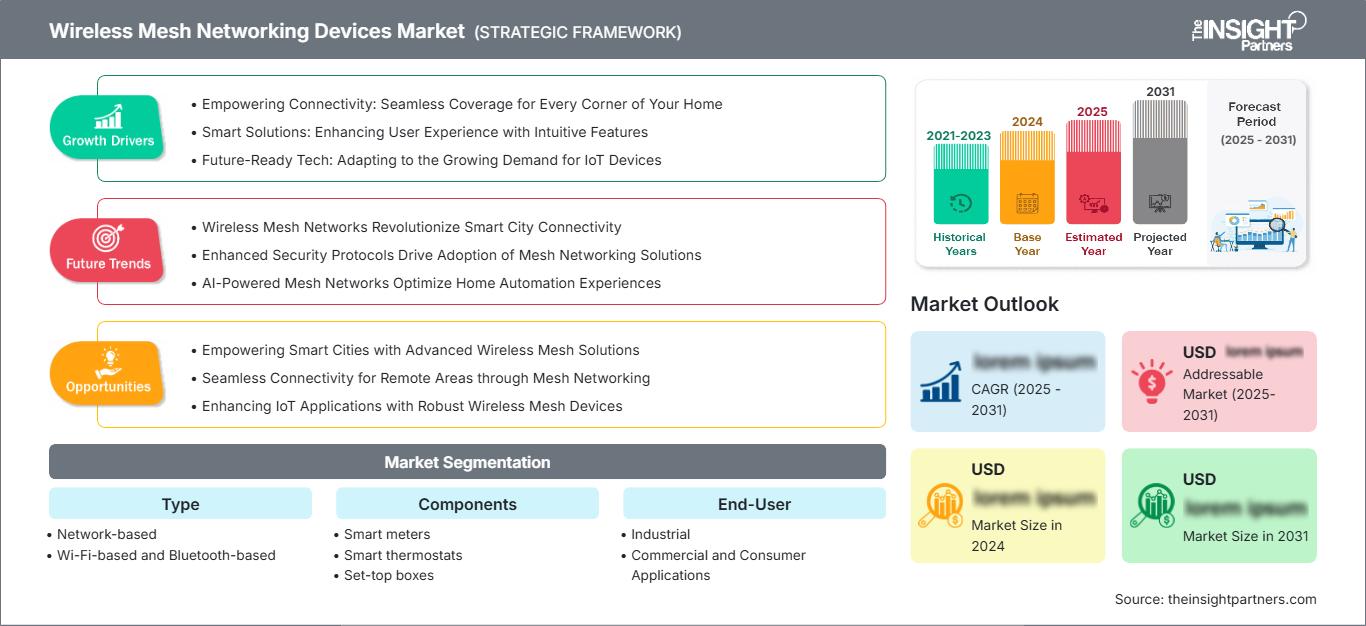
Wireless Mesh Networking Devices Market: Strategic Insights
Regional Insights
North America Wireless Mesh Networking Devices Market
North America accounted for approximately 29–33% of the Wireless Mesh Networking Devices Market share in 2025 and is expected to grow at a 9.2–10.4% CAGR through 2034. Strengths include the region's well-developed utility infrastructure, well-established building automation ecosystem, and the strong industrial Internet of Things (IoT) penetration. US utilities are adopting distributed sensing capabilities and automated grid systems, while commercial building operators continue to link HVAC, lighting, occupancy, and security systems via resilient wireless networks.
Market dynamics create an opportunity for vendors to offer their products with capabilities that include security, interoperability, and remote management. In Canada, market growth will be fueled by smart community and utility modernization projects, with the US being the dominant revenue-generating region. Key deployment needs include devices with low-power consumption, multi-hop networking capabilities, edge gateways, and centralized fleet management systems. Increasingly popular Thread and Bluetooth Mesh in buildings is complemented by longer-range solutions used for utilities and outdoor infrastructures.
U.S. Wireless Mesh Networking Devices Market
The U.S. represented approximately 66–70% of North America's 2025 Wireless Mesh Networking Devices Market and is forecast to grow at a 9.4–10.6% CAGR during 2026–2034. Modernization of utilities, investments in smart buildings, industrial automation, and device proliferation facilitate demand. Federal and state energy policies continue to motivate digital monitoring and distributed systems.
The applications include smart meters, thermostats, building automation devices, industrial sensors, and connected home appliances. Major technology and semiconductor players have good market presence, but vertical integration vendors cater to specialized needs. Interoperability continues to be of growing importance as corporations integrate legacy wireless systems with new IP-based systems. Security considerations also play a role as mesh networking can support many endpoint devices. The United States thus continues to be a significant innovation hub for scalable connectivity platforms and smart infrastructure deployments.
Europe Wireless Mesh Networking Devices Market
Europe held approximately 24–28% share of the Wireless Mesh Networking Devices Market in 2025 and is expected to expand at an 8.8–10.0% CAGR through 2034. For the United Kingdom, the focus lies on smart buildings and energy management, whereas for Germany, advantages come from industrial automation and distributed energy modernization. For France, the advantage comes from digitization and utility networks, while for Italy and Spain, the development of new opportunities will happen through smart city initiatives, building efficiency, and energy monitoring projects. Germany is forecasted to continue being the leader in Europe because of its strong industrial foundation and automation environment.
APAC Wireless Mesh Networking Devices Market
APAC represented approximately 27–31% share of the Wireless Mesh Networking Devices Market in 2025 and is projected to grow at an 11.4–12.8% CAGR. China is the leader in regional demand via the digitalization of manufacturing and intelligent infrastructure. Japan and South Korea get their benefits through their highly advanced electronics environment. India develops smart-meter and smart buildings applications. Australia is contributing due to its utility modernization and distributed energy management systems. All these factors combined contribute to the adoption of the solution. China will remain the largest regional market up to 2034.
Middle East & Africa Wireless Mesh Networking Devices Market
The Middle East and Africa Wireless Mesh Networking Devices Market is expected to grow at a 9.0–10.5% CAGR during 2026–2034. Saudi Arabia and the UAE are developing smart-city and connected-infrastructure programs, while South Africa presents opportunities in utility monitoring and industrial connectivity. Energy management and infrastructure modernization remain central adoption themes. The Rest of MEA market is comparatively fragmented, but wireless architectures can address connectivity constraints where wired deployment is expensive. Saudi Arabia is positioned as a leading regional opportunity because of large-scale digital infrastructure and smart-city investment.
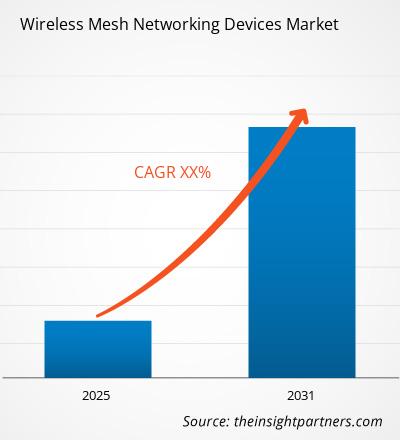
Segmentation Analysis
Type
Type is divided into Network-based, Wi-Fi-based, and Bluetooth-based solutions. Network-based architectures are expected to record a 9.8–10.9% CAGR during 2026–2034, supported by utility, industrial, and infrastructure applications requiring extensive coverage. Wi-Fi-based solutions remain important where higher throughput and established infrastructure reduce installation complexity, while Bluetooth-based networking is gaining relevance for dense, low-power device environments.
- Network-based: Network-based architectures support multi-hop communication, distributed routing, and resilient connectivity. They are strategically important for utility, industrial, and outdoor deployments where coverage, redundancy, and network continuity outweigh the need for very high throughput.
- Wi-Fi-based: Wi-Fi-based mesh solutions benefit from widespread installed infrastructure and high user familiarity. Demand is strongest where connected devices require comparatively higher bandwidth and direct integration with enterprise or residential broadband environments.
- Bluetooth-based: Bluetooth-based mesh technology supports dense device populations and low-power communications. Its strategic role is expanding in lighting, building automation, asset tracking, and consumer ecosystems requiring many coordinated endpoints.
Components
Components include Smart meters, Smart thermostats, Set-top boxes, and Remotes. The component segment is projected to grow at a 10.1–11.2% CAGR between 2026–2034 as connected endpoints become more distributed and manufacturers seek reliable local communications. Smart meters remain strategically significant because networked measurement creates recurring infrastructure requirements.
- Smart meters: Smart meters require dependable bidirectional communications for measurement, remote configuration, outage awareness, and operational analytics. Their strategic importance is increasing as utilities digitize distribution networks and introduce more automated grid functions.
- Smart thermostats: Smart thermostats use wireless connectivity to coordinate temperature control, occupancy information, and energy-management functions. Demand benefits from building efficiency initiatives and the expansion of connected residential and commercial control systems.
- Set-top boxes: Set-top boxes increasingly operate within connected home ecosystems and can serve as communication or gateway points. Mesh capability can support interactions with household devices while reducing dependence on dedicated connectivity infrastructure.
- Remotes: Connected remotes benefit from low-power wireless communication and simplified device pairing. Their strategic importance is tied to broader consumer electronics ecosystems in which controllers increasingly interact with multiple connected endpoints.
End-User
End-User comprises Industrial, Commercial, and Consumer Applications. The segment is projected to grow at a 10.4–11.6% CAGR during 2026–2034. Commercial applications are expected to gain momentum as buildings connect more controls, sensors, and energy-management devices, while industrial deployments emphasize resilience and operational continuity.
- Industrial: Industrial users prioritize reliable communications for monitoring, automation, asset visibility, and distributed sensing. Mesh networks are valuable where physical layouts, machinery, and installation costs make extensive cabling impractical.
- Commercial: Commercial deployments connect building controls, lighting, HVAC, security, and occupancy systems. Adoption is supported by energy-efficiency initiatives and the need to coordinate increasingly diverse devices through manageable local networks.
- Consumer Applications: Consumer applications benefit from interoperable low-power connectivity across household devices. Demand is shaped by smart-home platforms, simplified installation, device interoperability, and the ability to maintain reliable connections across multiple rooms.
Opportunity Snapshot
| End-User | Revenue Contribution (High/Medium/Low) | Trend Tag (MAX 2 words) | Adoption Stage (Emerging/Scaling/Mature) |
| Industrial | High | Utility Automation | Scaling |
| Commercial | High | Building Controls | Scaling |
| Consumer Applications | Medium | Smart Home | Mature |
Wireless Mesh Networking Devices Market Growth Drivers and Impact Analysis
Expansion of Smart Utility Networks
The deployment of smart meters, distribution sensors, and automated grid equipment is giving rise to an underlying need for communication networks that have geographic coverage capability. Wireless mesh technology enables utilities to create multi-hop networks by not requiring the deployment of dedicated wired connections to each device in some chosen settings. Wi-SUN technology deployments highlight the scalability aspect of this kind of technology, with Wi-SUN Alliance stating that tens of millions of Wi-SUN-enabled devices have been deployed worldwide and these devices are being used in meters, sensors, and monitors. There is, therefore a business opportunity for wireless chip makers, module providers, gateways, and network management companies. Demand created by this is not only limited to initial device deployment but also extends to maintenance and replacements as well.
Interoperability Across Connected Buildings
Property managers often manage multiple types of devices for HVAC, lighting, access control, occupancy sensors, energy management, and safety systems. Interoperable mesh solutions may help decrease the reliance on standalone connectivity systems and make inter-device communication easy, even when each device comes from a separate supplier. The thread becomes especially relevant as an interoperable solution for low-power mesh networking with an IP-based technology that works in the application layer with Matter. According to The Thread Group, there were over 1,000 certified products by November 2025, proving that the ecosystem is becoming wider. For the equipment producers, the interoperable solutions may lower certification obstacles and help to create more compatible products. For the integrators, the connectivity standardization will help to design the network and maintain it.
Growth of Distributed Industrial Sensing
Industrial operators are deploying increasing numbers of sensors to monitor equipment condition, energy consumption, environmental parameters, and production processes. Mesh networking can support these distributed endpoints where cable installation is disruptive or costly, particularly across large facilities and changing production environments. Bluetooth Mesh and other low-power architectures can accommodate dense sensor populations, while longer-range technologies address outdoor and utility-linked applications. The impact extends beyond connectivity hardware because industrial customers increasingly evaluate network resilience, device authentication, edge processing, and remote diagnostics as a combined solution. Suppliers capable of integrating radio connectivity with processing, memory, security, and software tools can therefore capture more value per deployment. This shift also encourages equipment manufacturers to adopt modular wireless designs that can be adapted across multiple industrial applications and geographic markets.
Wireless Mesh Networking Devices Market Future Trends
Convergence of Mesh Protocols With Matter and IP Networks
The wireless mesh networking devices market trends increasingly point toward convergence between low-power mesh technologies and common IP-based application frameworks. Matter is encouraging manufacturers to separate application interoperability from underlying connectivity, enabling products to operate across different network environments. The thread provides a low-power mesh layer, while Wi-Fi remains suitable for higher-throughput devices and Bluetooth supports local provisioning and interaction. This layered architecture can reduce ecosystem fragmentation and make connected products easier to integrate. Over the next several years, product developers are likely to prioritize multiprotocol chipsets, common security frameworks, border routers, and software-defined connectivity. Vendors that provide flexible silicon and certified development environments should be better positioned to support products whose connectivity requirements evolve after launch. The result will be greater emphasis on software longevity rather than fixed radio specifications.
Embedded Intelligence in Distributed Mesh Nodes
Future architectures are likely to incorporate greater edge intelligence directly into mesh endpoints and gateways. Instead of transmitting every measurement to a centralized cloud, devices can increasingly filter, classify, compress, or prioritize information locally. This approach can reduce communication overhead and improve responsiveness for industrial controls, building automation, and energy-management applications. Advances in microcontroller performance and integrated wireless subsystems are making it more practical to combine connectivity, local processing, security functions, and over-the-air update capability within compact designs. As networks grow, intelligent routing can also improve resilience by selecting communication paths according to interference, battery status, congestion, or node availability. This evolution may shift procurement criteria toward platforms that combine radio performance with computing capability, lifecycle management, and embedded security. Such convergence can expand the role of mesh devices from communication endpoints to distributed infrastructure nodes.
Wireless Mesh Networking Devices Market Opportunities
Utility-Grade Mesh Platforms for Emerging Economies
The Wireless Mesh Networking Devices Market forecasts indicate a substantial opportunity in emerging economies where utilities are modernizing metering and distribution infrastructure while seeking alternatives to extensive wired communication networks. Vendors can develop regionally adaptable platforms supporting local frequency requirements, multilingual management software, secure device provisioning, and flexible gateway architectures. India, Southeast Asia, Latin America, and selected Middle Eastern markets offer particularly relevant use cases because large-scale metering programs can create dense endpoint populations. Strategic investment should focus on interoperable modules that can support multiple utility applications rather than single-purpose devices. Partnerships with meter manufacturers, utilities, system integrators, and telecommunications providers can reduce deployment barriers. Local assembly and certification capabilities may further improve competitiveness by addressing procurement requirements, supply-chain considerations, and regulatory conditions that vary substantially between countries.
Integrated Building Connectivity Platforms
Commercial buildings provide another opportunity because owners increasingly seek unified platforms for energy management, occupancy monitoring, lighting, HVAC, and access control. Suppliers can differentiate by combining mesh connectivity with gateways, cloud dashboards, cybersecurity functions, and device-management software. The opportunity is strongest in buildings where legacy systems must coexist with newer interoperable devices. Rather than replacing every installed component, integrated platforms can use bridges and multiprotocol gateways to connect different communication layers. This approach can reduce migration costs and support phased modernization. Technology providers can also create recurring revenue through software subscriptions, remote diagnostics, analytics, and lifecycle support. Investment priorities should therefore favor solutions that simplify deployment for building integrators and facility managers. Long-term value will depend on interoperability, security, network visibility, and the ability to add devices without redesigning the underlying infrastructure.
Frequently Asked Questions

- Comprehensive Market Sizing and Forecast Analysis
- Detailed Segmentation Analysis
- In-Depth Market Dynamics Assessment
- Regional and Country-Level Insights
- Competitive Landscape and Company Benchmarking
- Strategic Business Intelligence
Recent Reports
Testimonials

The Insight Partners provided valuable market intelligence that supported our global go-to-market strategy. Their team was professional, responsive, and attentive to our feedback, providing thoughtful analysis and helpful methodological clarifications throughout the project.
Junmo Kim Chief Financial Officer (CFO), Enertech Co., Ltd.
The Insight Partners' SCADA System Market report is comprehensive, with valuable insights on current trends and future forecasts. The team was highly professional, responsive, and supportive throughout. We are very satisfied and highly recommend their services.
RAN KEDEM Partner, Reali Technologies LTDs
I requested a report on a very specific software market and the team produced the report in a few days. The information was very relevant and well presented. I then requested some changes and additions to the report. The team was again very responsive and I got the final report in less than a week.
JEAN-HERVE JENN Chairman, Future Analytica
We worked with The Insight Partners for an important market study and forecast. They gave us clear insights into opportunities and risks, which helped shape our plans. Their research was easy to use and based on solid data. It helped us make smart, confident decisions. We highly recommend them.
PIYUSH NAGPAL Sr. Vice President, High Beam Global
The Insight Partners delivered insightful, well-structured market research with strong domain expertise. Their team was professional and responsive throughout. The user-friendly website made accessing industry reports seamless. We highly recommend them for reliable, high-quality research services
YUKIHIKO ADACHI CEO, Deep Blue, LLC.
This is the first time I have purchased a market report from The Insight Partners.While I was unsure at first, I visited their web site and felt more comfortable to take the risk and purchase a market report.I am completely satisfied with the quality of the report and customer service. I had several questions and comments with the initial report, but after a couple of dialogs over email with their analyst I believe I have a report that I can use as input to our strategic planning process.Thank you so much for taking the extra time and making this a positive experience.I will definitely recommend your service to others and you will be my first call when we need further market data.
JOHN SUZUKI President and Chief Executive Officer, Board Director, BK Technologies
I wish to appreciate your support and the professionalism you displayed in the course of attending to my request for information regarding to infectious disease IVD market in Nigeria. I appreciate your patience, your guidance, and the fact that you were willing to offer a discount, which eventually made it possible for us to close a deal. I look forward to engaging The Insight Partners in the future, all thanks to the impression you have created in me as a result of this first encounter.
DR CHIJIOKE ONYIA MANAGING DIRECTOR, PineCrest Healthcare Ltd.Reason to Buy
- Informed Decision-Making
- Understanding Market Dynamics
- Competitive Analysis
- Identifying Emerging Markets
- Customer Insights
- Market Forecasts
- Risk Mitigation
- Boosting Operational Efficiency
- Strategic Planning
- Investment Justification
- Tracking Industry Innovations
- Aligning with Regulatory Trends





 Get Free Sample for