
Aptamer Market Size, Share & Trends by 2034
Coverage: By Type (DNA-Based Aptamers, RNA-Based Aptamers, XNA-Based Aptamers); Application (Diagnostics, Therapeutics Development, Research and Development, Other Applications); Technology (Selex, X-Aptamer, MARS Technique); End User (Academic and Government Research Institutes, Biotechnology and Pharmaceutical Companies, Contract Research Organizations, Other End Users), and Geography (North America, Europe, Asia Pacific, and South and Central America)
- Status : Data Released
- Report Code : TIPRE00007553
- Category : Life Sciences
- No. of Pages : 150
- Available Report Formats :


- Last update date : September 09, 2026


2025 Market Size
US$ 3.81 Bn
Base year value
2034 Forecast
US$ 26.57 Bn
Projected by 2034
CAGR 2026-2034
24.08 %
Growth rate
Addressable Market
US$ 117.23 Bn
(2026-2034)
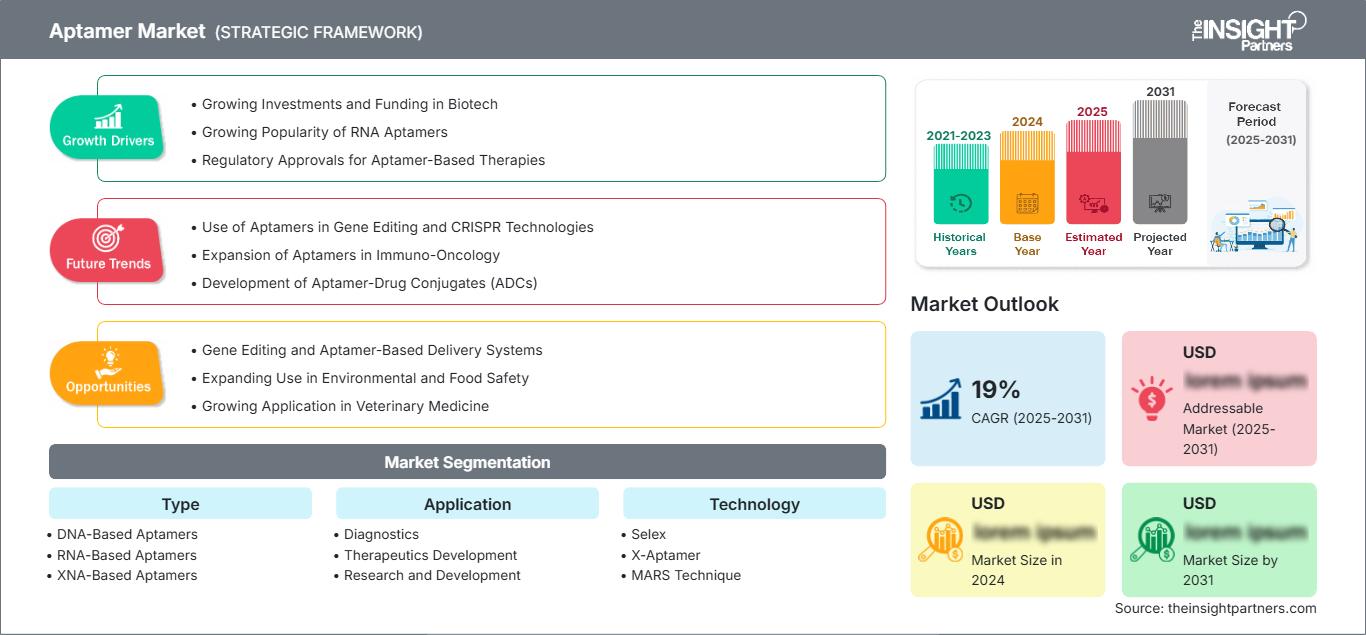
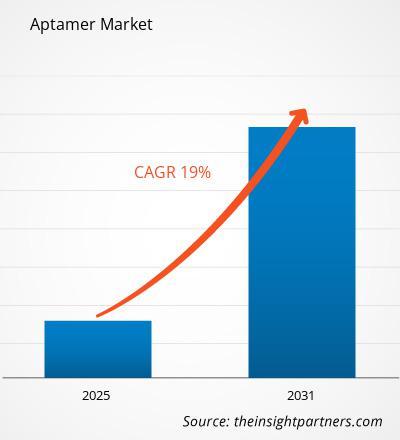
The Aptamer Market size is expanding from established affinity-reagent applications into diagnostics, therapeutic development, biomarker discovery, and advanced research workflows. The market size is projected at US$ 3.81 Billion in 2025 and is expected to reach US$ 26.57 Billion by 2034, registering a CAGR of 24.08% during 2026–2034. Expansion is supported by advances in nucleic-acid engineering, selection technologies, synthetic biology, and growing demand for highly specific molecular recognition tools.
North America is expected to maintain a strong position in the Aptamer Market through 2034, supported by established biotechnology infrastructure, pharmaceutical R&D expenditure, and extensive academic research activity. The regional growth outlook is estimated at 23.0–25.0% CAGR during 2026–2034. Increasing adoption of affinity binders in biomarker research, assay development, proteomics, and targeted therapeutic programs provides a structurally favorable environment for continued investment.
Aptamer Market Assessment and Insights
- North America: North America is expected to account for 42–46% Aptamer Market share in 2025 and grow at a 23.0–25.0% CAGR between 2026–2034, supported by biotechnology investment, pharmaceutical discovery programs, and established research infrastructure.
- US: The US is expected to represent 88–92% of North America's 2025 share and expand at a 23.0–25.0% CAGR during 2026–2034, led by pharmaceutical and academic R&D.
- Europe: Europe is projected to hold 23–27% share in 2025 and grow at 22.0–24.0% CAGR through 2034. The UK, Germany, France, and Italy provide strong research and translational capabilities.
- Asia Pacific: Asia Pacific is estimated at 17–21% share in 2025 and is projected to grow at 26.0–28.0% CAGR during 2026–2034, with China, Japan, South Korea, and India leading regional expansion.
- Largest Segment: DNA-Based Aptamers represent an estimated 54–59% market share in 2025 and are projected to grow at 23.0–25.0% CAGR through 2034 due to synthesis flexibility and broad research use.
- High Growth Segment: Therapeutics Development is estimated at 20–24% share in 2025 and is expected to grow at 26.0–28.0% CAGR during 2026–2034 as targeted delivery and precision therapies advance.
- Key companies analyzed in detail: Aptagen, LLC; Aptamer Sciences Inc.; Aptamer Solutions Ltd.; Aptus Biotech S.L.; Base Pair Biotechnologies, Inc.; NeoVentures Biotechnology Inc.; SomaLogic, Inc.; TriLink Biotechnologies, Inc.; Vivonics, Inc.; AM Biotechnologies, LLC; Aptamer Group plc.
Source: The Insight Partners' analysis based on proprietary research, government publications, company annual reports, investor presentations, industry databases, and expert interviews.
Technological advancements are changing the landscape of the market from traditional approaches of target selection to automated, high throughput, and application-focused platforms. Advancements in SELEX optimization, chemical modification of nucleotides, computational screening, and microfluidic selection are helping decrease the developmental barriers. The production process is also becoming standardized due to advancements in synthetic oligonucleotide technology, whereas specialized binders are being developed for diagnostics, proteomics, imaging, and drug delivery rather than only for laboratory experiments.
During the forecast period, commercialization of the product is anticipated to expand into developing biotechnology ecosystems of Asia Pacific and some selected European regions. The investment would be targeted toward the platforms integrating selection, optimization, validation, and downstream development of applications. The knowledge of regulatory authorities regarding the use of nucleic acid-based therapeutics and diagnostics would add to the investor’s confidence, whereas the platform developers could enter into partnerships with pharmaceutical companies.
Aptamer Market Report Scope
| Report Attribute | Details |
|---|---|
| Market size in 2025 | US$ 3.81 Billion |
| Market Size by 2034 | US$ 26.57 Billion |
| Global CAGR (2026 - 2034) | 24.08% |
| Historical Data | 2021-2024 |
| Forecast period | 2026-2034 |
Aptamer Market Analysis
Growing demand is driven by the rising need for molecular recognition methods that operate in environments where traditional antibodies have limited application. Suppliers include oligonucleotide synthesis services, discovery-platform developers, assay developers, diagnostic companies, pharmaceutical developers, CROs, and academic laboratories. Companies that are capable of offering reliable sequence selection, chemical modification, validation and optimization processes are in favor when it comes to the supply side.
Another Aptamer Market trend in the value chain is a growing shift towards service-based business models where customers order custom target-specific binders from providers and do not have to conduct target discovery themselves. It provides additional opportunities for companies to charge customers for binder development fees, licensing, royalties and reagents. Increasingly wide range of applications of binders, including proteomics, biomarker discovery, companion diagnostics and targeted delivery increases the customer base beyond traditional research laboratories.
The market is characterized by fragmentation and different competitive positions, which are determined by selection process, target library, IP, assay skills and commercialization ability. Companies such as Aptagen, LLC, Aptamer Sciences Inc., Aptamer Solutions Ltd., Aptus Biotech S.L. and Base Pair Biotechnologies, Inc. are involved in specialized discovery and development activities, whereas NeoVentures Biotechnology Inc., SomaLogic, Inc., TriLink Biotechnologies, Inc., Vivonics, Inc. and AM Biotechnologies, LLC serve different research and application requirements.
According to the Aptamer Market report, companies invest more in platforms capable of reducing the discovery cycle and translating binders into commercial products. Strategic partnerships allow gaining access to pharmaceutical targets, diagnostic channels and high-level analytical equipment. In this way, the example of Aptamer Group plc demonstrates the strategy of platform owners in terms of licensing and repeat development agreements, showing how platform owners keep the IP rights and participate in further commercialization.
● REPORT CUSTOMIZATION
Tailor This Report To Align With Your Specific Business Requirements
This report can be customized to align precisely with your business objectives, scope, and target markets. Customization options include tailored segmentation, geography, competitive analysis, and strategic insights to support informed decision-making.
Customize This Report →WHAT YOU CAN ADJUST
- ● Segmentations
- ● Geography
- ● Competitive Analysis
- ● Language Preferences
Aptamer Market: Strategic Insights
Regional Insights
North America Aptamer Market
North America is expected to hold 42–46% share in 2025 and expand at a 23.0–25.0% CAGR through 2034. The US accounts for the overwhelming majority of regional activity because of its biotechnology ecosystem, pharmaceutical discovery base, venture funding, and extensive academic research network. Canada contributes through university-led molecular research and specialized biotechnology programs.
Demand for affinity reagents in areas like proteomics, biomarker discovery, diagnostics, and drug development is quite high in this region. Big pharmaceutical players are increasingly assessing the performance of synthetically developed binders in cases where specific binding or engineered stability is required. Research outsourcers also play their role in facilitating the process of external selection and validation. Investment in synthetic biology, nucleic-acid chemistry, and precision medicine will ensure the leadership of North America.
U.S. Aptamer Market Market
The U.S. represents approximately 88–92% of North America's 2025 share and is projected to grow at a 23.0–25.0% CAGR during 2026–2034. Its leadership reflects concentrated pharmaceutical R&D, mature biotechnology clusters, federal research funding, and extensive clinical research infrastructure.
The areas in which applications can now be found have grown to include proteomic profiling, development of diagnostics, drug discovery, delivery and therapy research. Among the companies participating in the local network are SomaLogic, Inc., Aptagen, LLC, Base Pair Biotechnologies, Inc., and AM Biotechnologies, LLC. Universities continue to develop new binder selection methods, whereas partnerships with the pharmaceutical industry increasingly confirm binders in application-specific settings.
Europe Aptamer Market
Europe is estimated to account for 23–27% share in 2025 and is expected to grow at 22.0–24.0% CAGR through 2034. The United Kingdom is one of the leading countries thanks to biotech commercialization and translational research. Germany brings molecular biology and pharmaceutical expertise to the table, whereas France is contributing to the efforts via academic research and biotechnology. Italy and Spain are setting up specialized research and diagnostic programs that allow greater involvement of the region.
Increasingly, the demand from Europe is associated with the concept of personalized medicine, biomarkers research, and diagnostics. The UK offers an especially vibrant environment for platform developers and licensing-based commercialization. Germany has industrial research facilities that help to develop reagents and validate their use. Additional opportunities in France, Italy, and Spain can be found via university research, clinical labs, and biotechnology clusters.
APAC Aptamer Market
APAC is estimated at 17–21% Aptamer Market share in 2025 and is expected to achieve a 26.0–28.0% CAGR through 2034, making it the fastest-growing major region. The largest research scale belongs to China, then comes Japan and South Korea, while India and Australia have an increasing number of research bases.
Investments in industrial biotechnology, localization of pharmaceutical industries, academic research, and advancements in synthetic biology will facilitate the process. In particular, China plays a key role here due to its big research environment and increasing biotechnology manufacturing base. Japan and South Korea focus on diagnostics and molecular research, while India develops its biotechnology infrastructure.
Middle East & Africa Aptamer Market Market
Middle East and Africa Aptamer Market is expected to grow at approximately 19.0–22.0% CAGR through 2034. Saudi Arabia and the UAE are emerging as regional leaders because of healthcare modernization, biotechnology investment, and national diversification initiatives. South Africa remains important for academic research and diagnostic development, while the Rest of MEA represents an earlier-stage opportunity.
Healthcare infrastructure expansion and biotechnology localization are gradually creating demand for advanced molecular tools. Gulf countries are investing in genomics, precision medicine, and research infrastructure as part of broader knowledge-economy strategies. South Africa provides a comparatively established scientific base. Adoption across the wider region will depend on laboratory infrastructure, specialized skills, reimbursement conditions, and access to high-quality oligonucleotide manufacturing.
Segmentation Analysis
Type
DNA-Based Aptamers are expected to remain the leading type, with a 23.0–25.0% CAGR during 2026–2034. Their established synthesis workflows, chemical stability, sequence flexibility, and extensive research literature support broad use. RNA-Based Aptamers benefit from therapeutic and intracellular applications, while XNA-Based Aptamers provide opportunities where enhanced nuclease resistance or specialized chemical properties are required.
- DNA-Based Aptamers: The leading type benefits from mature synthesis infrastructure, broad target compatibility, and extensive use in diagnostics, research, biosensors, and affinity-based assays.
- RNA-Based Aptamers: RNA-based formats remain strategically important for therapeutic development and applications requiring structural versatility, although stability and manufacturing considerations influence adoption.
- XNA-Based Aptamers: XNA-based platforms offer differentiated chemical stability and nuclease resistance, supporting specialized applications where conventional DNA or RNA performance is insufficient.
Application
The Application segment is projected to grow at a 24.0–26.0% CAGR during 2026–2034. Diagnostics and research currently provide substantial demand, while therapeutics development is gaining strategic importance because engineered binders can support targeted delivery, molecular recognition, and precision treatment concepts.
- Diagnostics: Diagnostic applications use aptamers as selective recognition elements in assays, biosensors, and emerging point-of-care formats requiring stability and reproducible target binding.
- Therapeutics Development: Therapeutic development focuses on targeted recognition, delivery vehicles, and therapeutic candidates, creating opportunities for high-value partnerships with pharmaceutical developers.
- Research and Development: Research remains a core demand center because laboratories use aptamers for target validation, proteomics, assay development, molecular biology, and discovery workflows.
- Other Applications: Other applications include environmental monitoring, industrial biotechnology, food analysis, and specialized sensing where synthetic binders can provide selective molecular recognition.
Technology
The Technology segment is expected to expand at a 23.0–25.0% CAGR during 2026–2034. SELEX remains the principal discovery framework, while X-Aptamer and MARS Technique approaches provide alternative or complementary pathways for target-specific binder generation and optimization.
- Selex: SELEX remains the foundational technology because iterative selection can generate high-affinity binders against diverse molecular targets and remains adaptable to automation and advanced screening.
- X-Aptamer: X-Aptamer approaches provide differentiated target-selection capabilities and can support discovery programs seeking broader chemical diversity or specialized binding characteristics.
- MARS Technique: MARS Technique supports targeted discovery workflows and contributes to technology diversification as developers seek improved selection efficiency and application-specific performance.
End User
The End User segment is forecast to grow at a 24.0–26.0% CAGR during 2026–2034. Biotechnology and pharmaceutical companies are increasingly important because commercial development requires application validation, while academic institutions and CROs continue supporting early discovery and specialized testing.
- Academic and Government Research Institutes: These organizations provide foundational research, target discovery, method development, and validation that expand the scientific base for commercial applications.
- Biotechnology and Pharmaceutical Companies: These users represent high-value demand because they evaluate binders for diagnostics, drug discovery, therapeutic development, biomarker analysis, and targeted delivery.
- Contract Research Organizations: CROs support outsourced selection, optimization, assay development, and validation, enabling smaller biotechnology companies to access specialized capabilities without building internal platforms.
- Other End Users: Other users include specialized laboratories and industrial organizations applying aptamers to environmental, analytical, food, and emerging molecular sensing requirements.
Opportunity Snapshot
| End User | Revenue Contribution (High/Medium/Low) | Trend Tag (MAX 2 words) | Adoption Stage |
| Academic and Government Research Institutes | Medium | Discovery Platforms | Mature |
| Biotechnology and Pharmaceutical Companies | High | Targeted Therapeutics | Scaling |
| Contract Research Organizations | Medium | Outsourced Selection | Scaling |
| Other End Users | Low | Applied Sensing | Emerging |
Aptamer Market Growth Drivers and Impact Analysis
Expansion of Precision Diagnostics and Biomarker Discovery
The increasing use of biomarker-based diagnostics in the Aptamer Market is creating demand for recognition technologies that combine selectivity with chemical stability and manufacturing flexibility. As aptamers can be developed for targeting proteins, metabolites, cells, and various other targets, this provides the manufacturers with the ability to target the analytes which might be tough to tackle using traditional recognition reagents. The commercial significance of this factor will be high in cases when the assay manufacturers need reproducible reagents which are amendable with chemistry and can fit into compact sensing systems. The rise in the field of proteomics is increasing the number of targets that need affinity reagents. With the shift towards decentralized and multiplexed diagnostics, the suppliers which can show their performance in complex biological matrices would have better access to customers.
Rising Pharmaceutical Interest in Synthetic Targeting Molecules
Drug companies are developing artificial binders that are used in various fields from targeted therapy, drug delivery, imaging to treatment monitoring. With their programmable structures, the optimization of binders can be achieved at a sequence level. In addition, chemical modifications can be done to increase stability and functionality. The commercial success will come gradually since therapeutic products are first tested to confirm their safety and efficiency. However, partnership with biotechnology firms can help spread development risk and access to specific research technologies. Moreover, with the increasing number of targeted delivery programs, there are more opportunities to use binders. The commercial models have changed from the development of only discovery platforms to milestone payments, licensing, and royalties.
Automation and Computational Optimization of Selection Workflows
Automation is improving the economics and reproducibility of aptamer discovery by reducing manual selection steps and enabling larger numbers of candidate sequences to be evaluated. The processes of microfluidics, computational modeling, next generation sequencing and optimization could reduce the time to find potential binders. It would affect the whole market of drug development providers as well as newcomers as the effectiveness of their technologies would become an advantage that doesn’t depend on possession of subsequent therapeutics. It becomes easier to use customized discovery due to automation in biotech firms and CROs. The bigger is the size of datasets used for selection, the greater is the importance of computational techniques in ranking of candidates according to their binding, stability and applicability features.
Aptamer Market Future Trends
Integration of Aptamer Discovery With Multiomics
The next phase of development in the Aptamer Market is expected to involve closer integration between aptamer selection and multiomics datasets. Proteomics, transcriptomics, metabolomics, and genomic information can identify disease-associated targets and help prioritize molecules for validation. This integration should encourage platform providers to combine discovery libraries with computational target ranking and high-throughput screening. In commercial settings, customers may increasingly seek a single workflow covering biomarker identification, binder generation, assay validation, and translational testing. Such integration can improve project economics by reducing handoffs between specialized suppliers. It may also strengthen intellectual-property positions because developers can create proprietary datasets linking target characteristics, sequence features, and application performance. Over time, multiomics-enabled discovery could make aptamer development more predictive and less dependent on lengthy empirical optimization.
Greater Use of Synthetic Binders in Portable Testing
According to the Aptamer Market forecast, portable and decentralized testing is expected to create new opportunities for aptamer-enabled biosensors. Their stability, small molecular structure, and compatibility with multiple sensing mechanisms make them suitable for integration into compact analytical devices. Future platforms are likely to combine aptamers with electrochemical, optical, microfluidic, and wearable technologies. Continuous monitoring could become particularly relevant for biomarkers where repeated sampling provides clinically useful information. Developers will increasingly prioritize binders that retain performance in complex matrices, tolerate environmental variation, and support scalable manufacturing. The trend could broaden the customer base from specialized laboratories toward device manufacturers and diagnostic companies. Commercial success will depend on demonstrating analytical accuracy, reproducibility, shelf stability, and cost advantages relative to established recognition technologies.
Aptamer Market Opportunities
Licensing Models for Application-Ready Binder Assets
An attractive opportunity exists in developing binders beyond the discovery stage and packaging validated molecules as licensable assets. Platform companies can target high-value applications such as therapeutic delivery, companion diagnostics, biomarker testing, and specialized assay reagents. Retaining intellectual property while licensing validated binders can create recurring revenue without requiring the platform developer to commercialize every downstream product. Investors should prioritize companies with differentiated libraries, application data, and partnerships that establish commercial validation. The strongest opportunities are likely to involve targets with clear clinical or analytical value and limited availability of high-performing recognition reagents. This approach also allows pharmaceutical and diagnostic companies to reduce internal discovery requirements while gaining access to specialized synthetic-binder expertise.
Expansion Into Environmental and Industrial Detection
Environmental monitoring, food safety, industrial biotechnology, and water-quality testing provide opportunities outside conventional healthcare applications. Aptamers can be developed against pathogens, toxins, contaminants, and chemical analytes, enabling integration into portable and continuous sensing systems. These markets can offer shorter commercialization pathways than therapeutic development when regulatory requirements are more manageable and performance can be demonstrated through field testing. Strategic investors should evaluate platforms capable of producing robust binders against non-biomedical targets and supporting multiplexed detection. Partnerships with sensor manufacturers can accelerate commercialization by combining molecular recognition expertise with established hardware and distribution channels. Expansion into these applications can also diversify revenue streams and reduce dependence on pharmaceutical development cycles.
Recent Developments
- March 2026: Aptamer Group plc launched a targeted radiopharmaceutical program with Radiopharmium Ltd. The program initially selected three therapeutic targets and is intended to expand the company's radiotherapy pipeline to four assets, with in vivo data targeted by the end of 2026. The program also highlighted stability results for Lu-177 Optimer radioligands compared with peptide comparators.
- December 2025: Aptamer Group plc entered a non-exclusive licensing agreement with Twist Bioscience for an enzyme-modulating Optimer binder targeting hot-start PCR and next-generation sequencing applications. The agreement enables Aptamer Group to supply the binder while participating in downstream commercial value through its intellectual property.
- November 2025: Aptamer Group plc secured a repeat contract worth up to £617,000 with a top-five pharmaceutical company for a multi-target Optimer development program. The company reported that the program covers three drug targets and includes support for ELISA assay development, demonstrating progression from proof-of-concept work toward broader pharmaceutical deployment.
Frequently Asked Questions

- Comprehensive Market Sizing and Forecast Analysis
- Detailed Segmentation Analysis
- In-Depth Market Dynamics Assessment
- Regional and Country-Level Insights
- Competitive Landscape and Company Benchmarking
- Strategic Business Intelligence
Recent Reports
Testimonials

The Insight Partners' SCADA System Market report is comprehensive, with valuable insights on current trends and future forecasts. The team was highly professional, responsive, and supportive throughout. We are very satisfied and highly recommend their services.
RAN KEDEM Partner, Reali Technologies LTDs
I requested a report on a very specific software market and the team produced the report in a few days. The information was very relevant and well presented. I then requested some changes and additions to the report. The team was again very responsive and I got the final report in less than a week.
JEAN-HERVE JENN Chairman, Future Analytica
We worked with The Insight Partners for an important market study and forecast. They gave us clear insights into opportunities and risks, which helped shape our plans. Their research was easy to use and based on solid data. It helped us make smart, confident decisions. We highly recommend them.
PIYUSH NAGPAL Sr. Vice President, High Beam Global
The Insight Partners delivered insightful, well-structured market research with strong domain expertise. Their team was professional and responsive throughout. The user-friendly website made accessing industry reports seamless. We highly recommend them for reliable, high-quality research services
YUKIHIKO ADACHI CEO, Deep Blue, LLC.
This is the first time I have purchased a market report from The Insight Partners.While I was unsure at first, I visited their web site and felt more comfortable to take the risk and purchase a market report.I am completely satisfied with the quality of the report and customer service. I had several questions and comments with the initial report, but after a couple of dialogs over email with their analyst I believe I have a report that I can use as input to our strategic planning process.Thank you so much for taking the extra time and making this a positive experience.I will definitely recommend your service to others and you will be my first call when we need further market data.
JOHN SUZUKI President and Chief Executive Officer, Board Director, BK Technologies
I wish to appreciate your support and the professionalism you displayed in the course of attending to my request for information regarding to infectious disease IVD market in Nigeria. I appreciate your patience, your guidance, and the fact that you were willing to offer a discount, which eventually made it possible for us to close a deal. I look forward to engaging The Insight Partners in the future, all thanks to the impression you have created in me as a result of this first encounter.
DR CHIJIOKE ONYIA MANAGING DIRECTOR, PineCrest Healthcare Ltd.Reason to Buy
- Informed Decision-Making
- Understanding Market Dynamics
- Competitive Analysis
- Identifying Emerging Markets
- Customer Insights
- Market Forecasts
- Risk Mitigation
- Boosting Operational Efficiency
- Strategic Planning
- Investment Justification
- Tracking Industry Innovations
- Aligning with Regulatory Trends





 Get Free Sample for