Plant Extracts Market Trends, Share & Demand by 2034
Plant Extracts Market Size and Forecast (2021 - 2034), Global and Regional Share, Trend, and Growth Opportunity Analysis Report Coverage: By Form (Powder, Liquid, and Paste), Source (Fruits & Vegetables, Herbs & Spices, Flowers, and Others), and Application (Food & Beverages, Pharmaceuticals & Nutraceuticals, Personal Care, and Others)
Historic Data: 2021-2024 | Base Year: 2025 | Forecast Period: 2026-2034- Report Date : Apr 2026
- Report Code : TIPRE00017876
- Category : Consumer Goods
- Status : Upcoming
- Available Report Formats :


- No. of Pages : 150

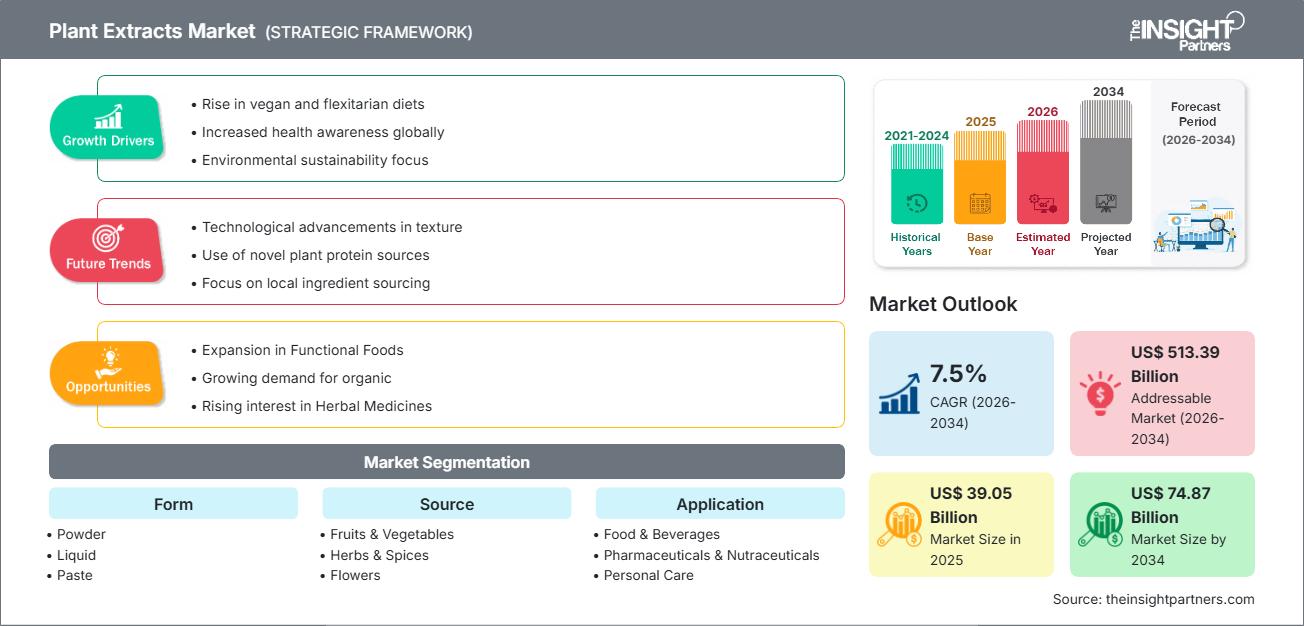
The global Plant Extracts market size is projected to reach US$ 74.87 billion by 2034 from US$ 39.05 billion in 2025. The market is anticipated to register a CAGR of 7.5% during the forecast period 2026–2034. Key market dynamics include an intensifying global shift toward "clean-label" ingredients, rising consumer demand for natural alternatives to synthetic additives, and a heightened focus on the therapeutic benefits of phytonutrients. Additionally, the market is expected to benefit from the rapid expansion of the vegan and plant-based food sectors, increasing R&D investments in bioactive compound isolation, and the growing integration of botanical extracts in preventive healthcare and functional skincare.
Plant Extracts Market Analysis
The plant extracts market analysis reveals a strategic pivot toward standardized extracts as manufacturers seek to ensure potency and consistency in high-value applications. Current procurement trends indicate that the market is bifurcating into bulk-volume commodity extracts for food coloring and high-margin, standardized extracts for the nutraceutical and pharmaceutical industries. Strategic opportunities are emerging in the development of "clean-label" preservatives and natural antioxidants, where botanical sources like rosemary and green tea offer a clear competitive advantage over synthetic BHA and BHT. The analysis also underscores that long-term market leadership depends on the adoption of advanced extraction technologies, such as supercritical CO2 and ultrasound-assisted extraction, which maximize yield while preserving the integrity of heat-sensitive compounds. Competitive differentiation is increasingly defined by "traceable sourcing" and "eco-friendly processing," allowing vendors to command premium pricing from sustainability-minded global brands.
Plant Extracts Market Overview
Plant extracts are evolving from a traditional herbal niche into a cornerstone of the modern bio-economy. Historically centered on flavorings and basic medicinal herbs, plant extracts now span a vast array of high-tech derivatives used in everything from bio-pesticides to anti-aging serums. The market comprises a complex network of raw material cultivators, specialized extraction houses, and global distributors. As health-conscious consumers across Europe and North America reject artificial ingredients, plant extracts have become the primary solution for natural fortification. Furthermore, the rise of personalized nutrition and "beauty-from-within" trends has propelled demand for specific polyphenols and alkaloids. While Asia-Pacific remains a dominant sourcing hub due to its rich biodiversity, North America and Europe are leading the way in innovative applications, particularly in the fusion of traditional botanical wisdom with modern pharmaceutical precision. For instance, the market in the US is characterized by a robust demand for high-potency botanical ingredients driven by the mature nutraceutical and functional beverage sectors. Domestic expansion focuses on transparency and rigorous quality standards. Increased interest in holistic wellness and "green" personal care continues to push manufacturers toward innovative, locally sourced organic plant derivatives.
Customize This Report To Suit Your Requirement
Get FREE CUSTOMIZATIONPlant Extracts Market: Strategic Insights
-
Get Top Key Market Trends of this report.This FREE sample will include data analysis, ranging from market trends to estimates and forecasts.
Plant Extracts Market Drivers and Opportunities
Market Drivers:
- Rising Consumer Preference for Clean-Label and Natural Ingredients: The most influential driver in the global market is the "clean-label" movement, where consumers demand transparency and simplicity in ingredient lists. This trend has forced food, beverage, and cosmetic manufacturers to replace synthetic chemicals, such as artificial dyes and preservatives, with plant-derived alternatives, like rosemary extract for preservation and beetroot for coloring. This shift is not merely aesthetic; it is a fundamental change in procurement strategies across the FMCG (Fast-Moving Consumer Goods) sector to satisfy a demographic that increasingly equates "natural" with "safe."
- Growing Awareness of Preventive Healthcare and Holistic Wellness: As global healthcare costs rise and chronic lifestyle diseases become more prevalent, there is a marked transition toward preventive health. Consumers are increasingly turning to plant-extract-based nutraceuticals and dietary supplements, such as turmeric for its anti-inflammatory properties and green tea for its antioxidant benefits, to maintain long-term health. This proactive approach to wellness, often referred to as "self-care," is expanding the market for functional foods and medicinal herbs, particularly among aging populations and health-conscious younger generations.
- Expansion of the Plant-Based and Vegan Food Industries: The global surge in plant-based diets has created a massive demand for extracts that can replicate the sensory experiences of meat and dairy. Plant extracts are critical in these formulations, providing the natural flavors, stabilizing textures, and nutritional fortification required to make plant-based alternatives competitive with traditional animal products. As the "flexitarian" demographic grows, the reliance on specialized botanical extracts to bridge the gap between health and indulgence is accelerating market volume.
Market Opportunities
- Technological Advancements in Extraction Processes: One of the most significant opportunities for competitive advantage lies in the adoption of "Green Extraction" technologies. Advanced methods such as Supercritical CO2 Extraction and Ultrasound-Assisted Extraction (UAE) are revolutionizing the industry by allowing for the isolation of specific bioactive compounds without the use of toxic solvents. These technologies not only improve the purity and potency of the final extract but also appeal to environmentally conscious brands looking to reduce their industrial footprint, offering a high-margin opportunity for early adopters.
- Integration into Personalized Nutrition and Bio-Hacking: The emerging field of personalized nutrition presents a lucrative opportunity for plant extract suppliers. By utilizing AI and health data, companies can now create tailored botanical blends designed for an individual's specific needs, such as cognitive focus (nootropics) or metabolic support. This shift toward "precision wellness" allows extract producers to move away from bulk commodity selling and toward high-value, specialized formulations that command premium pricing in the sports and professional performance segments.
- Growth in the Cosmeceutical and Clean-Beauty Sectors: The personal care industry is rapidly shifting toward "clean beauty," where botanical extracts are used for their functional dermatological benefits rather than just scent. There is a massive opportunity for producers to supply standardized extracts like Bakuchiol (a natural retinol alternative) or specialized marine extracts that offer proven anti-aging and anti-microbial properties. As consumers move away from harsh synthetic skincare, the demand for high-potency, plant-based "active ingredients" in cosmetics is expected to reach record highs.
Plant Extracts Market Report Segmentation Analysis
The Plant Extracts Market share is analyzed across various segments to provide a clearer understanding of its structure, growth potential, and emerging trends. Below is the standard segmentation approach used in most industry reports:
By Form:
- Powder: The most widely used format due to its long shelf life, ease of transport, and versatile application in capsules, tablets, and dry food mixes.
- Liquid: Preferred for beverages, tinctures, and personal care products where solubility and immediate integration are required.
- Paste: A specialized form often used in traditional medicines and specific industrial food applications requiring high concentration.
By Source:
- Fruits & Vegetables: Widely utilized for natural coloring and nutritional fortification in the food and beverage industry.
- Herbs & Spices: A dominant segment driven by the demand for flavor enhancement and therapeutic bioactive compounds in nutraceuticals.
- Flowers: Increasingly popular in the personal care and aromatherapy sectors for their fragrance and skin-soothing properties.
By Application:
- Food & Beverages: The largest application segment, utilizing extracts for natural flavoring, coloring, and preservation.
- Pharmaceuticals & Nutraceuticals: A high-growth area focused on the medicinal properties of plants for dietary supplements and drug formulation.
- Personal Care: Incorporates botanical extracts into skincare, haircare, and cosmetics to meet the demand for "green" beauty solutions.
By Geography:
- North America
- Europe
- Asia Pacific
- South & Central America
- Middle East & Africa
Plant Extracts Market Report Scope
| Report Attribute | Details |
|---|---|
| Market size in 2025 | US$ 39.05 Billion |
| Market Size by 2034 | US$ 74.87 Billion |
| Global CAGR (2026 - 2034) | 7.5% |
| Historical Data | 2021-2024 |
| Forecast period | 2026-2034 |
| Segments Covered |
By Form
|
| Regions and Countries Covered |
North America
|
| Market leaders and key company profiles |
|
Plant Extracts Market Players Density: Understanding Its Impact on Business Dynamics
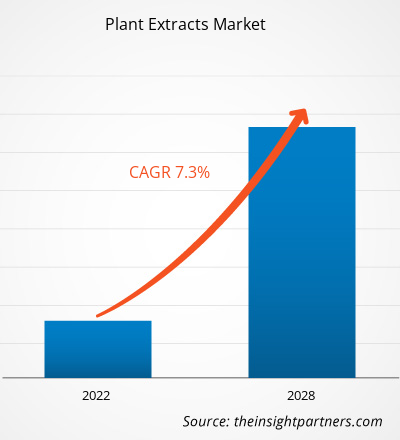
The Plant Extracts Market is growing rapidly, driven by increasing end-user demand due to factors such as evolving consumer preferences, technological advancements, and greater awareness of the product's benefits. As demand rises, businesses are expanding their offerings, innovating to meet consumer needs, and capitalizing on emerging trends, which further fuels market growth.
Plant Extracts Market Share Analysis by Geography
Asia-Pacific is expected to grow fastest in the coming years. Emerging markets in South & Central America, the Middle East, and Africa also have many untapped opportunities for natural ingredient suppliers and pharmaceutical manufacturers to expand.
The plant extracts market is undergoing a significant transformation, moving from traditional herbalism to a science-backed industrial sector. Growth is driven by the global "back-to-nature" movement and the industrialization of traditional medicine. Below is a summary of market share and trends by region:
North America
- Market Share: Holds a substantial share, characterized by a high concentration of nutraceutical and functional food companies.
- Key Drivers:
- Strong consumer inclination toward dietary supplements for weight management and immunity.
- Strict regulatory environments favoring standardized, high-quality botanical ingredients.
- Mainstreaming of botanical-infused premium beverages.
- Trends: Rapid adoption of hemp and CBD extracts following regulatory shifts, and a surge in "adaptogenic" herbs like Ashwagandha in retail wellness products.
Europe
- Market Share: A mature and dominant market, particularly in the personal care and pharmaceutical sectors.
- Key Drivers:
- European "Clean Beauty" standards drive high demand for natural cosmetic ingredients.
- Established phytopharmaceutical industry with a long history of botanical medicine.
- Stringent EU regulations ban various synthetic additives in food.
- Trends: A shift toward "upcycled" extracts, deriving bioactives from food industry by-products to support circular economy goals.
Asia-Pacific
- Market Share: The fastest-growing region and the primary global supplier of raw botanical materials.
- Key Drivers:
- Rich heritage in Traditional Chinese Medicine (TCM) and Ayurveda is driving domestic and export demand.
- A growing middle-class population in China and India is seeking natural health products.
- Expansion of local manufacturing capabilities for cost-effective extraction.
- Trends: Increasing investment in high-tech extraction facilities to move up the value chain from raw herbs to high-purity standardized powders.
South and Central America
- Market Share: An emerging market with vast untapped biodiversity, particularly in the Amazonian region.
- Key Drivers:
- An abundance of exotic botanical sources (e.g., Acai, Guarana) is popular in global export markets.
- Rising domestic interest in natural personal care products.
- Modernization of agricultural practices for sustainable wild-harvesting.
- Trends: Growth of "Bio-prospected" ingredients and strategic partnerships with international cosmetic giants for exclusive botanical sourcing.
Middle East and Africa
- Market Share: A developing market with a focus on traditional aromatic and medicinal plants.
- Key Drivers:
- Cultural preference for natural and herbal remedies.
- The expanding food processing industry in the GCC region is looking for natural preservatives.
- Strategic focus on "Smart Agriculture" to cultivate high-value medicinal plants in arid climates.
- Trends: Implementation of international quality standards to boost the export of indigenous extracts like Hibiscus and Frankincense to Western markets.
High Market Density and Competition
Competition is intensifying due to the presence of established leaders such as Sensient Technologies Corporation, Givaudan S.A., Symrise, Dohler, Indesso, Synergy Flavors, International Flavors & Fragrances, Inc., Kerry Group Plc, and Ingredion Inc., which also contribute to a diverse and rapidly expanding market landscape.
This competitive environment pushes vendors to differentiate through:
- Technological Superiority: Companies are moving away from traditional solvent-based extraction toward advanced platforms like Supercritical CO2 Extraction and Precision Solvent Systems. These methods provide higher-purity concentrates and targeted fractionation of bioactive compounds, meeting the rigorous standards of the pharmaceutical and high-end cosmetic industries.
- Vertical Integration and Traceability: Leading players are securing their supply chains by managing the process from "seed to shelf." By partnering directly with growers or maintaining their own botanical farms, they ensure quality, transparency, and adherence to Ethical Sourcing and Clean-Label standards, which are critical for retail partnerships.
- Evidence-Based Efficacy: Differentiation is increasingly achieved through scientific validation. Top-tier vendors invest heavily in clinical trials and peer-reviewed research to support specific health claims, such as stress reduction or cognitive enhancement, giving their ingredients a significant edge in the regulated nutraceutical market.
- Strategic Product Diversification: Beyond basic powders, firms are launching innovative delivery systems, including micro-encapsulated extracts, water-soluble formulations for functional beverages, and highly concentrated liquid pastes for professional personal care applications.
Opportunities and Strategic Moves
- Target High-Growth Specialized Niches: Formulate strategic entry plans into the Sports Nutrition and Geriatric Care segments. Plant extracts that offer recovery benefits, such as Tart Cherry or Curcumin, represent significant opportunities for high-margin growth as these consumer groups seek natural alternatives to synthetic supplements.
- Invest in Green and Sustainable Infrastructure: Adopt regenerative agricultural practices and pursue Organic and Non-GMO certifications. Strategic shifts toward eco-friendly extraction facilities can reduce the environmental footprint by up to 80%, appealing to the sustainability mandates of Millennial and Gen Z consumers.
Major Companies operating in the Plant Extracts Market are:
- Sensient Technologies Corporation
- Givaudan S.A.
- Symrise
- Dohler
- Indesso
- Synergy Flavors
- International Flavors & Fragrances, Inc.
- Kerry Group Plc
- Ingredion Inc.
Disclaimer: The companies listed above are not ranked in any particular order.
Plant Extracts Market News and Recent Developments
- In October 2025, Symrise announced a strategic equity investment in Cellibre, a U.S.-based biotechnology company specializing in sustainable biomanufacturing. This partnership positioned Symrise at the forefront of fermentation-derived plant extracts and ingredients that were designed to be better for both people and the planet. The collaboration initially focused on innovation across taste solutions and cosmetic actives, reinforcing the company's long-term competitiveness and sustainability leadership. By partnering with Cellibre, Symrise gained preferred access to proprietary, fermentation-based technology, which enabled the scalable production of high-value plant extracts across the food, beverage, cosmetics, and nutraceutical sectors. Through this investment, Symrise leveraged Cellibre's world-class biotechnology platform to create a more resilient supply chain, effectively mitigating the seasonal and cultivation variability typically associated with traditional plant extracts.
- In May 2025, Roquette completed its acquisition of IFF Pharma Solutions. This strategic milestone marked a significant step forward in the company's ambition to become a leader in the global pharma markets. With this acquisition, and following that of Qualicaps in 2023, Roquette decisively strengthened its position as a key player in the health industry by integrating IFF Pharma Solutions' expertise and innovative product portfolio, which included a wide array of specialized plant extracts and excipients. The transaction enhanced Roquette's ability to deliver high-value drug delivery solutions to pharmaceutical customers worldwide while reinforcing its commitment to innovation. The acquisition aligned perfectly with Roquette's long-term strategy of investing in high-growth markets across the globe and providing cutting-edge solutions, particularly those involving advanced plant extracts, to meet evolving industry needs.
Plant Extracts Market Report Coverage and Deliverables
The "Plant Extracts Market Size and Forecast (2021–2034)" report provides a detailed analysis of the market covering below areas:
- Plant Extracts Market size and forecast at global, regional, and country levels for all the key market segments covered under the scope
- Plant Extracts Market trends, as well as market dynamics such as drivers, restraints, and key opportunities
- Detailed PEST and SWOT analysis
- Plant Extracts Market analysis covering key market trends, global and regional framework, major players, regulations, and recent market developments.
- Industry landscape and competition analysis covering market concentration, heat map analysis, prominent players, and recent developments in the Plant Extracts Market.
- Detailed company profiles
Frequently Asked Questions

- Historical Analysis (2 Years), Base Year, Forecast (7 Years) with CAGR
- PEST and SWOT Analysis
- Market Size Value / Volume - Global, Regional, Country
- Industry and Competitive Landscape
- Excel Dataset
Recent Reports
Testimonials

The Insight Partners' SCADA System Market report is comprehensive, with valuable insights on current trends and future forecasts. The team was highly professional, responsive, and supportive throughout. We are very satisfied and highly recommend their services.
RAN KEDEM Partner, Reali Technologies LTDs
I requested a report on a very specific software market and the team produced the report in a few days. The information was very relevant and well presented. I then requested some changes and additions to the report. The team was again very responsive and I got the final report in less than a week.
JEAN-HERVE JENN Chairman, Future Analytica
We worked with The Insight Partners for an important market study and forecast. They gave us clear insights into opportunities and risks, which helped shape our plans. Their research was easy to use and based on solid data. It helped us make smart, confident decisions. We highly recommend them.
PIYUSH NAGPAL Sr. Vice President, High Beam Global
The Insight Partners delivered insightful, well-structured market research with strong domain expertise. Their team was professional and responsive throughout. The user-friendly website made accessing industry reports seamless. We highly recommend them for reliable, high-quality research services
YUKIHIKO ADACHI CEO, Deep Blue, LLC.
This is the first time I have purchased a market report from The Insight Partners.While I was unsure at first, I visited their web site and felt more comfortable to take the risk and purchase a market report.I am completely satisfied with the quality of the report and customer service. I had several questions and comments with the initial report, but after a couple of dialogs over email with their analyst I believe I have a report that I can use as input to our strategic planning process.Thank you so much for taking the extra time and making this a positive experience.I will definitely recommend your service to others and you will be my first call when we need further market data.
JOHN SUZUKI President and Chief Executive Officer, Board Director, BK Technologies
I wish to appreciate your support and the professionalism you displayed in the course of attending to my request for information regarding to infectious disease IVD market in Nigeria. I appreciate your patience, your guidance, and the fact that you were willing to offer a discount, which eventually made it possible for us to close a deal. I look forward to engaging The Insight Partners in the future, all thanks to the impression you have created in me as a result of this first encounter.
DR CHIJIOKE ONYIA MANAGING DIRECTOR, PineCrest Healthcare Ltd.Reason to Buy
- Informed Decision-Making
- Understanding Market Dynamics
- Competitive Analysis
- Identifying Emerging Markets
- Customer Insights
- Market Forecasts
- Risk Mitigation
- Boosting Operational Efficiency
- Strategic Planning
- Investment Justification
- Tracking Industry Innovations
- Aligning with Regulatory Trends




 Get Free Sample For