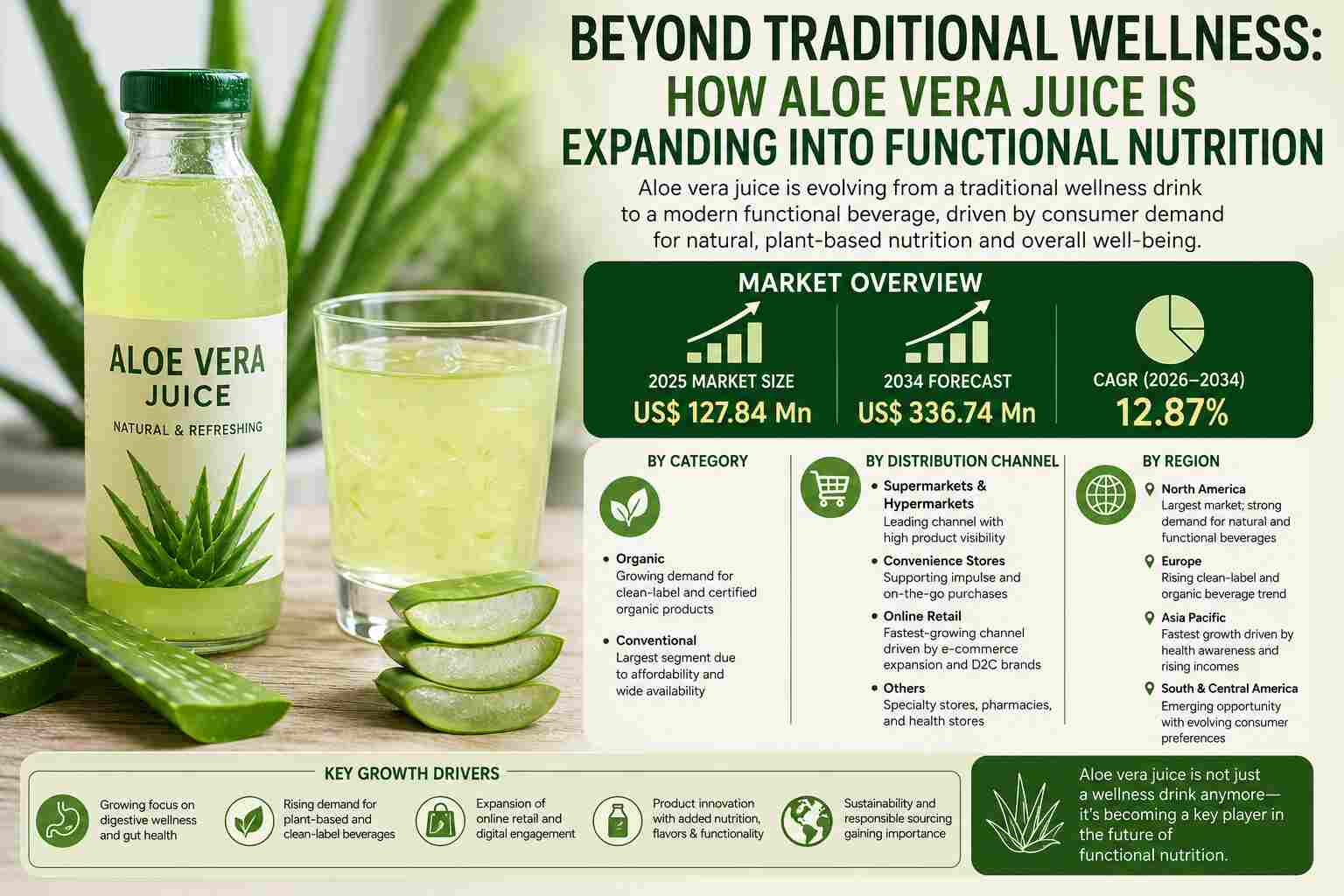
The Aloe Vera Juice Market is moving beyond its traditional association with natural wellness and entering a broader era of functional nutrition. As consumers increasingly look for beverages that combine convenience, natural ingredients, hydration, and wellness-oriented benefits, aloe vera juice is gaining visibility as a functional beverage option. The market was valued at US$ 127.84 million in 2025 and is projected to reach US$ 336.74 million by 2034, expanding at a 12.87% CAGR from 2026 to 2034. This growth reflects changing consumer preferences, product innovation, expanding retail availability, and rising interest in plant-based nutrition.
The category is also benefiting from the wider shift toward beverages perceived as healthier alternatives to conventional soft drinks. Consumers are paying greater attention to ingredients, sugar content, sourcing practices, and nutritional positioning. As a result, aloe vera juice manufacturers are exploring new formulations, packaging formats, flavors, and distribution strategies to reach increasingly health-conscious audiences.
From Traditional Wellness to Functional Nutrition
Aloe vera has long been associated with natural wellness and is widely recognized as a plant-derived ingredient. However, the modern beverage market is changing how consumers perceive aloe vera juice. Rather than being positioned solely as a traditional wellness drink, aloe-based beverages are increasingly becoming part of broader functional nutrition routines.
Digestive wellness, hydration, natural nutrition, and clean-label consumption are among the themes influencing purchasing decisions. Consumers seeking convenient ways to incorporate plant-based ingredients into their everyday lifestyles are creating opportunities for aloe vera juice brands to expand beyond specialized health stores and enter mainstream beverage channels.
This transition is particularly important as functional beverages become more diversified. Instead of offering products based only on basic hydration, manufacturers are increasingly exploring combinations of aloe vera with vitamins, minerals, botanicals, fruit extracts, and other value-added ingredients. Such innovation can help brands create differentiated products while addressing specific consumer preferences.
Digestive Wellness Strengthens Market Demand
Growing attention toward digestive wellness is one of the important factors supporting the aloe vera juice market. Consumers are becoming more interested in nutrition products that fit into preventive and wellness-oriented lifestyles. This has increased interest in beverages containing recognizable plant-derived ingredients.
Aloe vera juice can benefit from this trend because its natural positioning aligns with consumer interest in wellness beverages. Manufacturers are therefore focusing on formulations that emphasize ingredient transparency and convenient consumption.
The opportunity extends beyond consumers already familiar with aloe vera. As functional nutrition becomes more mainstream, brands can introduce aloe vera juice through modern retail, online platforms, and targeted digital marketing campaigns. This can help broaden awareness and encourage new consumption occasions.
Clean-Label and Organic Products Gain Importance
The shift toward clean-label consumption is another major trend influencing the category. Consumers increasingly want to understand where beverage ingredients come from and how products are processed. This is encouraging manufacturers to focus on sourcing transparency, organic cultivation, certifications, and simplified ingredient lists.
The organic segment is positioned to benefit from consumers willing to prioritize certified cultivation practices and natural product attributes. Organic aloe vera juice can appeal particularly to premium wellness consumers who place greater emphasis on ingredient sourcing and sustainable agricultural practices.
At the same time, conventional aloe vera juice remains the largest category, accounting for approximately 62–66% of the market in 2025. Its affordability, availability, and extensive retail presence make it important for mainstream consumers. Manufacturers serving this segment are also improving quality standards and exploring better formulations to maintain competitiveness.
Therefore, the market is developing along two complementary paths: premiumization through organic and value-added products, and volume expansion through affordable conventional offerings.
Product Innovation Creates New Functional Opportunities
Product innovation is expected to become increasingly important as competition intensifies. Aloe vera juice manufacturers are exploring ways to make products more attractive through flavor development, nutritional enhancement, packaging innovation, and improved shelf life.
Future products may increasingly combine aloe vera with fruit extracts, vitamins, botanicals, minerals, and other functional ingredients. These combinations can create differentiated product propositions and allow companies to address multiple wellness-oriented consumption occasions.
Taste is equally important. Although consumers may be attracted by functional positioning, flavor and convenience remain essential factors in repeat purchases. Fruit-infused and flavored aloe vera beverages can therefore help manufacturers appeal to consumers who may not prefer the traditional taste of aloe-based drinks.
Premium packaging is also becoming part of product differentiation. Clear ingredient communication, sustainable packaging materials, and convenient formats can strengthen a brand's positioning among environmentally and health-conscious consumers.
Online Retail Becomes a Major Growth Engine
The transformation of retail is another factor reshaping the aloe vera juice market. Supermarkets and hypermarkets continue to provide high visibility and remain important distribution channels. Their extensive product displays, promotional activities, and established customer bases make them particularly valuable for mainstream market penetration.
However, online retail is emerging as one of the fastest-growing distribution channels. The segment represented approximately 15–19% of the market in 2025 and is projected to grow at a CAGR of 15.0–17.5% during 2026–2034.
E-commerce offers several advantages for aloe vera juice brands. Consumers can compare different formulations, read reviews, explore ingredient information, and purchase specialized products without depending on local store availability. Subscription models and direct-to-consumer platforms can also encourage repeat purchases.
For manufacturers, digital channels provide opportunities to build direct relationships with customers and gather insights into purchasing behavior. Personalized promotions, educational content, wellness communities, and targeted campaigns can help brands establish stronger consumer engagement.
Regional Markets Present Diverse Growth Opportunities
Regional dynamics will play an important role in the industry's expansion through 2034.
North America accounted for approximately 34–38% of the global market in 2025. The region benefits from strong demand for natural wellness beverages, established retail infrastructure, organic product adoption, and high e-commerce penetration. The US represented approximately 72–76% of North American demand, supported by functional beverage innovation and strong consumer interest in convenient wellness products.
Europe held approximately 24–28% market share in 2025. Germany, the UK, France, Italy, and Spain are important markets, with growth supported by clean-label preferences, organic beverage demand, and increasing awareness of plant-derived ingredients. Consumers' emphasis on ingredient transparency and premium nutrition products could continue creating opportunities for aloe vera juice manufacturers.
Asia Pacific represents one of the most dynamic growth opportunities. The region accounted for approximately 28–32% of the market in 2025 and is forecast to grow at a CAGR of 13.5–15.0% through 2034. China, Japan, India, and South Korea are important markets, supported by established interest in functional foods, rising disposable incomes, expanding modern retail, and increasing health awareness.
South and Central America also offer opportunities as urbanization, changing consumption patterns, and growing interest in natural beverages support category development.
Sustainability Moves Up the Value Chain
Sustainability is becoming increasingly relevant to aloe vera juice production. Manufacturers are paying greater attention to responsible cultivation, ingredient traceability, water-efficient processing, recyclable packaging, and supply-chain transparency.
Vertically integrated supply chains can help companies improve control over raw materials and maintain consistent quality. Investments in certified farming practices and modern filtration systems may also support product consistency while helping manufacturers preserve desirable characteristics during processing.
Sustainable sourcing can become more than an environmental initiative. As consumers increasingly evaluate brands based on transparency and responsible production, companies that can demonstrate credible sustainability practices may strengthen customer trust and differentiation.
What the Future Holds for Aloe Vera Juice
The future of the aloe vera juice industry is likely to be defined by the convergence of functional nutrition, clean-label consumption, digital commerce, premiumization, and sustainability. The market's projected expansion from US$ 127.84 million in 2025 to US$ 336.74 million by 2034 highlights the scale of the opportunity.
Manufacturers that successfully balance functionality with taste, affordability, convenience, and transparent sourcing could be better positioned to capture emerging demand. Organic products can address premium wellness consumers, while conventional offerings can continue driving mainstream volume. Meanwhile, online retail can provide brands with a scalable route to reach consumers beyond traditional physical stores.
As functional nutrition becomes increasingly integrated into everyday lifestyles, aloe vera juice has the potential to evolve from a niche wellness beverage into a more broadly recognized component of modern nutrition. Innovation across formulations, distribution, packaging, and sourcing will ultimately determine how successfully brands capitalize on this expanding opportunity.