
Alzheimers Disease Diagnostics and Therapeutics Market Overview, Growth, Trends, Analysis, Research Report (2025-2031)
Coverage: By Product Type (Therapeutics, Diagnostics); End User (Hospitals, Clinics) , and Geography (North America, Europe, Asia Pacific, and South and Central America)
- Status : Data Released
- Report Code : TIPRE00004836
- Category : Life Sciences
- No. of Pages : 150
- Available Report Formats :


- Last update date : July 16, 2026


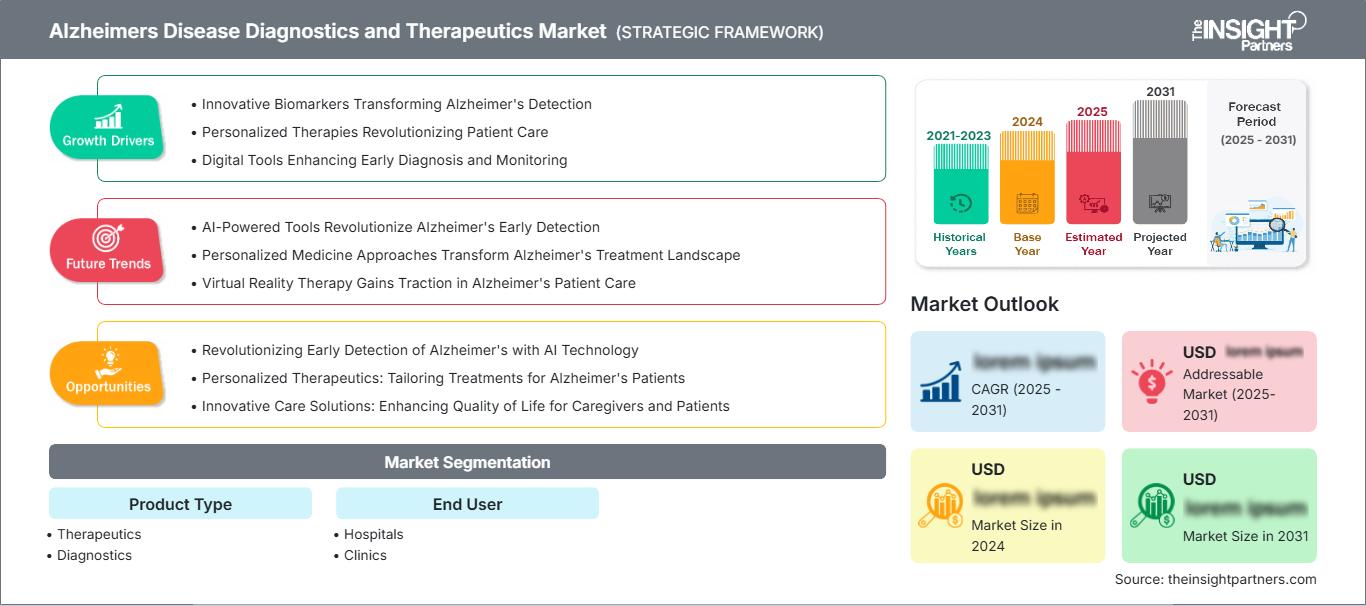
2024 Market Size
US$ 8.99 Bn
Base year value
2031 Forecast
US$ 16.23 Bn
Projected by 2031
CAGR 2025-2031
8.8 %
Growth rate
Addressable Market
US$ 89.44 Bn
(2025-2031)
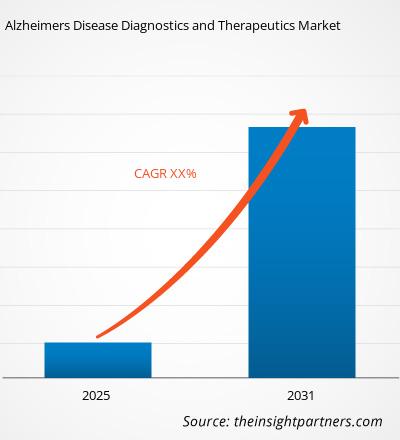
The Alzheimer’s Disease Diagnostics and Therapeutics Market size is projected to increase from US$ 8.99 Billion in 2025 to US$ 16.23 Billion by 2034, registering a CAGR of 8.8% during 2026–2034. Clinical trends are shifting towards using biomarkers in order to diagnose and treat the disease. The market will be driven by hospitals, memory centers, neurological centers, and long-term care referral networks.
The most developed area for commercialization is North America due to the existence of programs for dementia screening and amyloid confirmation. The Alzheimer’s Disease Diagnostics and Therapeutics Market size in the region is expected to advance at a CAGR range of 8.4–9.0% during 2026–2034, driven by earlier diagnosis, Medicare coverage evolution, and specialist center readiness for anti-amyloid treatment delivery.
Alzheimers Disease Diagnostics and Therapeutics Market Assessment and Insights
- North America held a 38–41% share in 2025 and is growing at a CAGR between 2026–2034 of 8.4–9.0%, supported by biomarker adoption, memory-care networks, infusion capacity, and payer alignment for early-stage treatment.
- US accounted for 84–87% of North America in 2025 and is growing at a CAGR between 2026–2034 of 8.2–8.8%, reflecting strong clinical trial activity and rapid therapy uptake.
- Europe represented a 27–30% share in 2025 and is expanding at a CAGR between 2026–2034 of 8.0–8.6%, led by Germany, the UK, France, Italy, and Spain through structured neurology pathways.
- Asia Pacific held a 21–24% share in 2025 and is growing at a CAGR between 2026–2034 of 9.8–10.6%, with China, Japan, South Korea, India, and Australia expanding dementia diagnosis capacity.
- Largest Segment is therapeutics, with a 61–65% market share in 2025 and CAGR range 2026–2034 of 8.2–8.8%, supported by approved disease-modifying therapies and symptomatic medicines.
- High Growth Segment is diagnostics, with a 35–39% market share in 2025 and CAGR range 2026–2034 of 9.6–10.4%, supported by blood biomarkers, PET confirmation, and treatment eligibility testing.
- Key companies analyzed in detail: Pfizer Inc., Eisai Co., Ltd., Novartis AG, H. Lundbeck A/S, Allergan, an AbbVie company, TauRx Therapeutics Ltd., AC Immune SA, Johnson & Johnson, AbbVie Inc., Eli Lilly and Company.
Source: The Insight Partners' analysis based on proprietary research, government publications, company annual reports, investor presentations, industry databases, and expert interviews.
The evolution of clinical practice has moved from later stage cognitive assessments to biomarker-driven early care, enabling large patient pools for diagnostics and treatments. The Alzheimer’s Disease Diagnostics and Therapeutics Market is seeing change driven by anti-amyloid antibodies, blood based biomarkers, MRI tracking, and treatment registry data. Manufacturing considerations have expanded to include biologics manufacturing, cold chain logistics, diagnostics test kit production, imaging tracers, and hospital infusions.
During the forecast period, new regions will be important as more aged populations arise and dementia takes a health policy focus. Spending will be made on neurology practices, diagnostic labs, PET imaging services, infusion centers, and digital cognitive assessments. Tailwinds from regulatory agencies with regard to biomarker qualified diagnosis, expedited treatment approval, and post-market evidence gathering should benefit long term adoption.
Alzheimers Disease Diagnostics and Therapeutics Market Report Scope
| Report Attribute | Details |
|---|---|
| Market size in 2024 | US$ 8.99 Billion |
| Market Size by 2031 | US$ 16.23 Billion |
| Global CAGR (2025 - 2031) | 8.8% |
| Historical Data | 2021-2023 |
| Forecast period | 2025-2031 |
Alzheimers Disease Diagnostics and Therapeutics Market Analysis
Alzheimer’s Disease Diagnostics and Therapeutics Market growth is driven by rising dementia prevalence, greater physician recognition of mild cognitive impairment, and new treatment eligibility requirements. WHO identifies dementia as one of the world’s biggest health problems, with many new cases each year and Alzheimer’s disease being the major cause of dementia. Growing demand is based not on individual prescriptions, but on integrated diagnostics and treatments.
Ecosystem components include screening in general practice, neurology referrals, cognitive assessments, tests for blood biomarkers, cerebrospinal fluid biomarker tests, PET scans, MRI safety monitoring, administration of infusions, and follow-up of chronic patients. Suppliers’ competition will get more complicated because biological products need consistent manufacturing, specialized administration, and reporting of adverse reactions. Diagnostic products will find growing opportunities due to the need of doctors to prove that there is amyloid pathogenesis before treatment starts.
Alzheimer’s Disease Diagnostics and Therapeutics Market analysis shows a competitive landscape divided between approved therapies, late-stage candidates, biomarker platforms, and legacy symptomatic products. The companies Eisai Co., Ltd. and Eli Lilly and Company form the core of anti-amyloid commercialization efforts, while Pfizer Inc., H. Lundbeck A/S, AbbVie Inc., and Johnson & Johnson remain relevant because of their capabilities in the field of neuroscience, psychiatry, and neurology in general.
Positioning strategy is more and more determined by the quality of evidence, patient convenience, and diagnostic integration. The Swiss company Novartis AG continues advancing its efforts in next-generation neurodegeneration, while AC Immune SA and TauRx Therapeutics Ltd. concentrate their efforts on precision medicine, specifically in the area of tau-targeting approach. Allergan, subsidiary of AbbVie Inc., contributes to positioning the companies in the field of neurology as a whole.
● REPORT CUSTOMIZATION
Tailor This Report To Align With Your Specific Business Requirements
This report can be customized to align precisely with your business objectives, scope, and target markets. Customization options include tailored segmentation, geography, competitive analysis, and strategic insights to support informed decision-making.
Customize This Report →WHAT YOU CAN ADJUST
- ● Segmentations
- ● Geography
- ● Competitive Analysis
- ● Language Preferences
Alzheimers Disease Diagnostics and Therapeutics Market: Strategic Insights
Regional Insights
North America Alzheimer’s Disease Diagnostics and Therapeutics Market
North America held a 38–41% share in 2025 and is projected to grow at a CAGR of 8.4–9.0% during 2026–2034. The region benefits from specialist memory centers, amyloid PET access, clinical trial networks, and more established reimbursement discussions for disease-modifying treatment. Alzheimer’s Disease Diagnostics and Therapeutics Market share remains strongest here because biologic therapy adoption requires integrated diagnosis, MRI monitoring, infusion capacity, and adverse-event management.
There is also high public awareness and advocacy from caregivers coupled with healthcare investments in cognitive screening. Hospitals and clinics are increasingly conducting assessments for mild cognitive impairment while laboratories are using blood biomarkers to identify patients for further confirmatory procedures such as imaging or cerebrospinal fluid tests. Canada is contributing to the market via its dementia strategies while the US leads in revenue generation.
U.S. Alzheimer’s Disease Diagnostics and Therapeutics Market
The U.S. accounted for 84–87% of North America in 2025 and is growing at a CAGR of 8.2–8.8% during 2026–2034. Its leadership reflects a deep neurology provider base, strong specialty pharmacy infrastructure, advanced imaging availability, and active adoption of anti-amyloid therapies among eligible early-stage patients. Eisai Co., Ltd., Eli Lilly and Company, Pfizer Inc., and Johnson & Johnson maintain significant U.S. neuroscience engagement.
Trends in application have seen an increase in the number of blood tests being used to diagnose whether a patient needs a confirmed diagnosis of amyloid disease, then therapy selection and monitoring for safety purposes. The infusion therapy still takes place largely in the hospital setting, though innovation in maintenance therapy will help lessen the patient’s load in the future. Insurers are keenly observing outcomes and cost of care.
Europe Alzheimer’s Disease Diagnostics and Therapeutics Market
Europe's share stood at 27–30%, and its growth rate is forecasted at a CAGR of 8.0–8.6% between 2026 and 2034. The advantage of the UK is that it has dementia strategies by NHS and memory clinics; however, limitations on capacity in terms of imaging and infusion services affect the development of treatment. Germany occupies the first position as there are university hospitals, specialists, diagnostic laboratories and reimbursement models for evaluation of advanced level.
In addition, France, Italy, and Spain contribute to regional demand with aging population and access to public health care systems. France is characterized by good clinical research and biomarker analysis, Italy by improvement of dementia pathways through regional centers, and Spain by increased referrals of specialists for cognitive disorders. Health technology assessment discipline in Europe can slow down the application of expensive biologics, while diagnostics will increase.
APAC Alzheimer’s Disease Diagnostics and Therapeutics Market
In 2025, Asia Pacific accounted for a market share of 21–24%, which is expected to record a CAGR of 9.8–10.6% between 2026 and 2034. Japan will be leading in this region owing to demographic aging, neurological healthcare infrastructure, and the adoption of innovative therapeutics in the country. China, South Korea, and Australia are increasing their diagnostic capacity, whereas India is seeing increasing demand from the private sector.
Healthy aging and dementia care policies have gained traction in all the major economies. China is focusing on hospital renovation and in-house diagnostics, whereas India is working towards increasing neurology offerings in cities. Inadequate access to specialists, affordability issues, and lack of PET scans will continue to be major challenges outside the major metro markets.
Middle East & Africa Alzheimer’s Disease Diagnostics and Therapeutics Market
The Middle East & Africa market is expected to grow at a CAGR of 7.2–7.8% during 2026–2034, with Saudi Arabia leading regional demand. Saudi Arabia and the UAE are investing in tertiary hospitals, specialist neurology services, and medical infrastructure, creating stronger pathways for dementia assessment and advanced therapeutic referral.
The South African market continues to be the most mature among sub-Saharan countries due to neurology centers and capabilities in private healthcare. The rest of MEA demand comes from urban hospitals, where infrastructure investments related to national transformation initiatives drive diagnosis improvement. The availability is hampered by the lack of awareness, biomarker testing capability, and cost issues.
Segmentation Analysis
Product Type
The Product Type segment is projected to grow at a CAGR of 8.8–9.4% during 2026–2034. Alzheimer’s Disease Diagnostics and Therapeutics Market scope across this segment is expanding as treatment decisions increasingly depend on biological confirmation, disease stage, and safety monitoring. Therapeutics generate higher revenue, but diagnostics are becoming a gating function for patient selection, reimbursement approval, and longitudinal disease management.
- Therapeutics remain the largest product category because disease-modifying antibodies, symptomatic drugs, and behavioral management medicines address different stages of care. Demand is strongest where specialists can manage infusion logistics and safety monitoring.
- Diagnostics are gaining strategic importance as blood biomarkers, cerebrospinal fluid tests, PET imaging, MRI, and cognitive tools support earlier identification. Adoption strengthens when testing is linked to treatment eligibility and clinical workflow efficiency.
End User
The End User segment is projected to grow at a CAGR of 8.5–9.1% during 2026–2034. Demand remains concentrated in hospitals because advanced diagnosis, imaging, infusion therapy, adverse-event response, and multidisciplinary care require sophisticated infrastructure. Clinics are gaining importance as screening, follow-up, biomarker ordering, maintenance care, and caregiver counseling become more distributed across community neurology and memory-care settings.
- Hospitals generate the strongest revenue contribution because they combine neurology consultation, imaging, infusion administration, MRI surveillance, emergency response, and clinical trial participation for patients receiving advanced Alzheimer’s therapies.
- Clinics support earlier detection and continuity through cognitive assessment, biomarker triage, medication monitoring, caregiver education, and referral management. Their role expands as blood testing simplifies front-line diagnostic workflows.
Opportunity Snapshot
| Segment Name | Revenue Contribution (High/Medium/Low) | Trend Tag | Adoption Stage |
| Hospitals | High | Infusion Access | Mature |
| Clinics | Medium | Biomarker Triage | Scaling |
Alzheimers Disease Diagnostics and Therapeutics Market Growth Drivers and Impact Analysis
Rising Dementia Burden and Earlier Clinical Identification
Increasing numbers of diagnosed patients are the direct catalyst because Alzheimer’s treatment is evolving from moderately advanced dementia to mild cognitive impairment and early disease symptoms. The increased interest among primary care doctors and neurologists in cognitive symptoms leads to an increasing number of people entering into the process of evaluation. This increases demand for cognitive tests, biomarkers, confirmation of amyloid protein, monitoring by MRI, and therapy consultations. The commercial opportunity exceeds simply the growth of prevalence, because emerging therapies will need confirmation of biological markers and safety monitoring. Pathways are changing towards early diagnosis as opposed to late-stage treatments.
Disease-Modifying Therapies Creating Diagnostic Pull-Through
Anti-amyloid therapies are changing the market by making confirmed pathology clinically actionable. Before disease-modifying treatment, many diagnostic tools were used mainly for clarification, research, or differential diagnosis. Now, amyloid confirmation, MRI monitoring, and baseline staging influence whether a patient can start therapy, continue therapy, or avoid avoidable risk. This creates pull-through demand for diagnostic companies, imaging networks, neurology clinics, infusion centers, and safety-monitoring services. The impact is especially strong in developed markets because reimbursement and prescribing protocols increasingly require documented eligibility. As more therapies enter clinical practice, the value chain becomes integrated, with diagnostics and treatment delivery functioning as connected revenue pools rather than separate clinical categories.
Healthcare Infrastructure Investment in Memory Care Pathways
Investment in specialized memory care infrastructure is accelerating adoption because Alzheimer’s diagnosis and treatment require coordinated steps. Hospitals must align neurologists, radiologists, laboratory teams, pharmacists, infusion nurses, and emergency protocols to manage patients safely. Clinics must standardize referral rules, cognitive testing, caregiver communication, and follow-up. This creates commercial demand for workflow software, biomarker testing, infusion services, training programs, and patient monitoring tools. The market impact is particularly visible in Asia Pacific and selected Middle East countries, where ageing populations are pushing governments and private providers to expand neurology capacity. Better infrastructure also improves real-world evidence generation, which supports payer confidence and broader clinical adoption.
Alzheimers Disease Diagnostics and Therapeutics Market Future Trends
Blood Biomarkers Moving Toward Front-Line Decision Support
Blood-based testing will define Alzheimer’s Disease Diagnostics and Therapeutics Market trends as healthcare systems search for scalable alternatives to PET-first pathways. Future use is expected to concentrate on triage, risk stratification, referral prioritization, and treatment monitoring rather than complete replacement of specialist judgment. As assay performance improves, clinics may identify likely amyloid-positive patients earlier and reserve expensive imaging for confirmation or complex cases. This trend could reduce diagnostic bottlenecks, improve trial recruitment, and expand access in regions with limited PET capacity. Commercial winners will need validated assays, clinical education, reimbursement evidence, and integration with neurology workflows, not only analytical accuracy.
Shift Toward Convenient Maintenance and Combination Strategies
Treatment delivery is likely to become more patient-centered as companies pursue less burdensome dosing, maintenance regimens, and combination approaches. Infusion-based models have established the first generation of disease-modifying care, but long clinic visits, MRI monitoring, caregiver time, and travel burden can limit persistence. Future commercial differentiation will depend on safety optimization, easier administration, and evidence that benefits can be sustained over longer periods. Combination strategies may also emerge as amyloid, tau, neuroinflammation, synaptic health, and vascular factors are addressed together. This transition should reward companies able to prove clinical value while reducing operational pressure on health systems.
Alzheimers Disease Diagnostics and Therapeutics Market Opportunities
Integrated Diagnostic-to-Treatment Networks
Integrated networks offer a major investment opportunity because treatment access depends on smooth movement from screening to confirmation to therapy initiation. Alzheimer’s Disease Diagnostics and Therapeutics Market Forecasts support expansion of memory clinics linked with laboratories, imaging centers, infusion units, and digital follow-up platforms. Hospital groups can invest in standardized referral criteria, centralized scheduling, safety monitoring protocols, and caregiver navigation services. Diagnostic firms can partner with neurology networks to embed blood testing into routine cognitive assessment. The opportunity is strongest where waiting times, PET capacity, and fragmented referrals delay treatment decisions. Better pathway design can increase eligible patient capture and reduce avoidable system cost.
Evidence-Backed Expansion in Emerging Ageing Economies
Emerging ageing economies create an opportunity for companies that can balance affordability, training, and infrastructure support. Japan is already advanced, but China, India, South Korea, Gulf countries, and selected Latin American markets require scalable diagnostic and treatment pathways. Investors can prioritize low-burden biomarker testing, neurologist training, telememory consultations, and hospital partnerships that do not rely immediately on dense PET infrastructure. Therapeutic firms can build market readiness through registries, physician education, and real-world evidence showing appropriate patient selection. The opportunity is not only volume-based. It depends on converting undiagnosed cognitive decline into structured clinical evaluation and sustainable treatment access.
Recent Developments
- July 2026: AC Immune announced upcoming presentations at AAIC 2026 covering neurodegenerative disease programs, including a first-in-class TDP-43 PET tracer, a brain-penetrant NLRP3 inhibitor, and Morphomer-based therapeutic assets. The update reinforces the company’s biomarker-led strategy across diagnosis and treatment development for Alzheimer’s and related disorders.
- August 2025: Eisai and Biogen announced U.S. FDA approval of LEQEMBI IQLIK, a once-weekly subcutaneous autoinjector for maintenance dosing after initial IV treatment in early Alzheimer’s disease. The product was designed to reduce infusion burden and support long-term therapy continuation for eligible patients and care partners.
- July 2025: Eli Lilly announced that the U.S. FDA approved an updated Kisunla label with a new titration dosing schedule for early symptomatic Alzheimer’s disease. TRAILBLAZER-ALZ 6 data showed lower ARIA-E incidence while maintaining similar amyloid plaque removal and p-tau217 reduction, improving safety management for clinicians.
Frequently Asked Questions

- Comprehensive Market Sizing and Forecast Analysis
- Detailed Segmentation Analysis
- In-Depth Market Dynamics Assessment
- Regional and Country-Level Insights
- Competitive Landscape and Company Benchmarking
- Strategic Business Intelligence
Recent Reports
Testimonials

The Insight Partners' SCADA System Market report is comprehensive, with valuable insights on current trends and future forecasts. The team was highly professional, responsive, and supportive throughout. We are very satisfied and highly recommend their services.
RAN KEDEM Partner, Reali Technologies LTDs
I requested a report on a very specific software market and the team produced the report in a few days. The information was very relevant and well presented. I then requested some changes and additions to the report. The team was again very responsive and I got the final report in less than a week.
JEAN-HERVE JENN Chairman, Future Analytica
We worked with The Insight Partners for an important market study and forecast. They gave us clear insights into opportunities and risks, which helped shape our plans. Their research was easy to use and based on solid data. It helped us make smart, confident decisions. We highly recommend them.
PIYUSH NAGPAL Sr. Vice President, High Beam Global
The Insight Partners delivered insightful, well-structured market research with strong domain expertise. Their team was professional and responsive throughout. The user-friendly website made accessing industry reports seamless. We highly recommend them for reliable, high-quality research services
YUKIHIKO ADACHI CEO, Deep Blue, LLC.
This is the first time I have purchased a market report from The Insight Partners.While I was unsure at first, I visited their web site and felt more comfortable to take the risk and purchase a market report.I am completely satisfied with the quality of the report and customer service. I had several questions and comments with the initial report, but after a couple of dialogs over email with their analyst I believe I have a report that I can use as input to our strategic planning process.Thank you so much for taking the extra time and making this a positive experience.I will definitely recommend your service to others and you will be my first call when we need further market data.
JOHN SUZUKI President and Chief Executive Officer, Board Director, BK Technologies
I wish to appreciate your support and the professionalism you displayed in the course of attending to my request for information regarding to infectious disease IVD market in Nigeria. I appreciate your patience, your guidance, and the fact that you were willing to offer a discount, which eventually made it possible for us to close a deal. I look forward to engaging The Insight Partners in the future, all thanks to the impression you have created in me as a result of this first encounter.
DR CHIJIOKE ONYIA MANAGING DIRECTOR, PineCrest Healthcare Ltd.Reason to Buy
- Informed Decision-Making
- Understanding Market Dynamics
- Competitive Analysis
- Identifying Emerging Markets
- Customer Insights
- Market Forecasts
- Risk Mitigation
- Boosting Operational Efficiency
- Strategic Planning
- Investment Justification
- Tracking Industry Innovations
- Aligning with Regulatory Trends





 Get Free Sample for