
Arc Welding Equipment Market Size, Demand & Growth by 2034
Coverage: By Automation Level (Automatic, Semi-Automatic, Manual); Process (Plasma Arc Welding, Flux Corded Arc Welding, Shielded Arc Welding, Electroslag Arc Welding, Electrogas Arc Welding, Gas Metal Arc Welding, Others); Gas Usage (Oxygen, Argon, Helium, Hydrogen, Carbon dioxide, Others); End-user (Automotive, Construction, Aerospace and Defense, Shipbuilding, Others) , and Geography (North America, Europe, Asia Pacific, and South and Central America)
- Status : Data Released
- Report Code : TIPRE00008791
- Category : Electronics and Semiconductor
- No. of Pages : 150
- Available Report Formats :


- Last update date : July 15, 2026


2025 Market Size
US$ 16.04 Bn
Base year value
2034 Forecast
US$ 23.96 Bn
Projected by 2034
CAGR 2026-2034
4.56 %
Growth rate
Addressable Market
US$ 181.61 Bn
(2026-2034)
The Arc Welding Equipment Market was valued at US$ 16.04 Billion in 2025 and is projected to reach US$ 23.96 Billion by 2034; it is expected to register a CAGR of 4.56% during 2026–2034. The demand is driven by the fabrication of metals, renovation of infrastructure, manufacturing of transport, and industrial maintenance, in which arc welding is necessary for structural strength, flexibility, and cost-effective production.
North America is expected to expand at a CAGR of 4.1–4.4% between 2026 and 2034, supported by infrastructure rehabilitation, energy construction, reshoring-led fabrication, and higher robotic welding adoption. Arc Welding Equipment Market size in region benefits from a large installed manufacturing base, stringent workplace safety standards, and persistent welder shortages, which encourage manufacturers to invest in automated power sources, digital weld monitoring, and productivity-enhancing systems.
Arc Welding Equipment Market Assessment and Insights
- North America: The region held 31–34% share in 2025 and is projected to grow at a CAGR of 4.1–4.4% during 2026–2034, led by infrastructure repair, energy fabrication, and automated welding adoption.
- US: The US accounted for 72–76% of North America in 2025 and is expected to grow at a CAGR of 4.0–4.3%, supported by automotive, aerospace, and construction fabrication demand.
- Europe: Europe represented 24–27% share in 2025 and is likely to grow at a CAGR of 3.8–4.1%, with Germany, Italy, France, and the UK leading equipment replacement and robotic cell integration.
- Asia Pacific: Asia Pacific held 30–33% share in 2025 and is forecast to grow at a CAGR of 5.0–5.4%, led by China, India, Japan, and South Korea across shipbuilding, construction, and industrial machinery.
- Largest Segment: Manual welding held a market share of 43–47% in 2025 and is expected to grow at a CAGR of 3.4–3.8%, reflecting broad repair, field, and fabrication use.
- High Growth Segment: Automatic welding held a market share of 24–28% in 2025 and is forecast to grow at a CAGR of 5.8–6.3%, driven by robotic cells and digital quality control.
- Key companies analyzed in detail: AMADA WELD TECH INC.; Automation International, Inc.; Beijing ARC Xinxing Science and Technology Co., Ltd.; CEA Costruzioni Elettromeccaniche Annettoni S.p.A.; ESAB Corporation; Fronius International GmbH; Kobe Steel, Ltd.; Panasonic Holdings Corporation; Shanghai Hugong Electric Group Co., Ltd.; Telwin S.p.A.
Source: The Insight Partners' analysis based on proprietary research, government publications, company annual reports, investor presentations, industry databases, and expert interviews.
The equipment used in arc welding has progressed from manual systems based on transformers to systems controlled by inverters with multi-process capability and digital connectivity to enhance energy efficiency and arc control and repeatability. There are changing dynamics in the production system as OEMs and fabricators have to strike a balance between skilled labor shortage and higher throughput demands. The report on the Arc Welding Equipment Market demonstrates that manual equipment is required for repair and field activities, whereas semi-automatic and automatic equipment is increasingly used for standard production and quality traceability.
There will be growing demand in the future for equipment in manufacturing hubs where large-scale metal bonding is needed for infrastructure projects, energy transition equipment, and transportation equipment. Investment is moving toward smart power sources, robotic integration, and low-spatter processes, expanding the Arc Welding Equipment Market scope beyond equipment replacement into productivity, compliance, and lifecycle performance improvement.
Arc Welding Equipment Market Report Scope
| Report Attribute | Details |
|---|---|
| Market size in 2025 | US$ 16.04 Billion |
| Market Size by 2034 | US$ 23.96 Billion |
| Global CAGR (2026 - 2034) | 4.56% |
| Historical Data | 2021-2024 |
| Forecast period | 2026-2034 |
Arc Welding Equipment Market Analysis
The Arc Welding Equipment Market is driven by structural steel fabrication, vehicle platform renewal, ship repair, aerospace component manufacturing, and energy infrastructure.Arc welding processes continue to be favored where joint strength, process versatility, and lower costs are important. The supply chain consists of power source makers, torch and wire feed makers, gas suppliers, consumables makers, robotics integration companies, and distributors supporting capital goods and after-market services.
The demand is becoming influenced by overall ownership cost rather than just the buying price. Customers consider factors like duty cycle, power efficiency, weld data recording, training needs, and gas and consumable compatibility. This strengthens the Arc Welding Equipment Market growth outlook for digitally controlled systems that reduce spatter, improve first-pass yield, and support audit-ready quality documentation in regulated applications.
The competitive landscape is moderately fragmented, with global welding technology providers competing against regional manufacturers on reliability, application expertise, distribution reach, and service responsiveness. The Arc Welding Equipment Market report highlights how Fronius International GmbH, ESAB Corporation, Panasonic Holdings Corporation, Kobe Steel, Ltd., and AMADA WELD TECH INC. emphasize automation, process control, and specialized joining solutions. At the same time, CEA, Telwin, Shanghai Hugong, Beijing ARC Xinxing, and Automation International support price-sensitive and application-specific demand.
Investment trends indicate rising capital allocation toward robotic welding cells, inverter-based replacement cycles, portable battery-assisted systems, and software-enabled weld monitoring. Strategic positioning varies by end market: automotive users prioritize repeatability and cycle time, construction users value durability and field serviceability, and aerospace users focus on precision and documentation. These priorities shape Arc Welding Equipment Market trends across product development and channel partnerships.
● REPORT CUSTOMIZATION
Tailor This Report To Align With Your Specific Business Requirements
This report can be customized to align precisely with your business objectives, scope, and target markets. Customization options include tailored segmentation, geography, competitive analysis, and strategic insights to support informed decision-making.
Customize This Report →WHAT YOU CAN ADJUST
- ● Segmentations
- ● Geography
- ● Competitive Analysis
- ● Language Preferences
Arc Welding Equipment Market: Strategic Insights
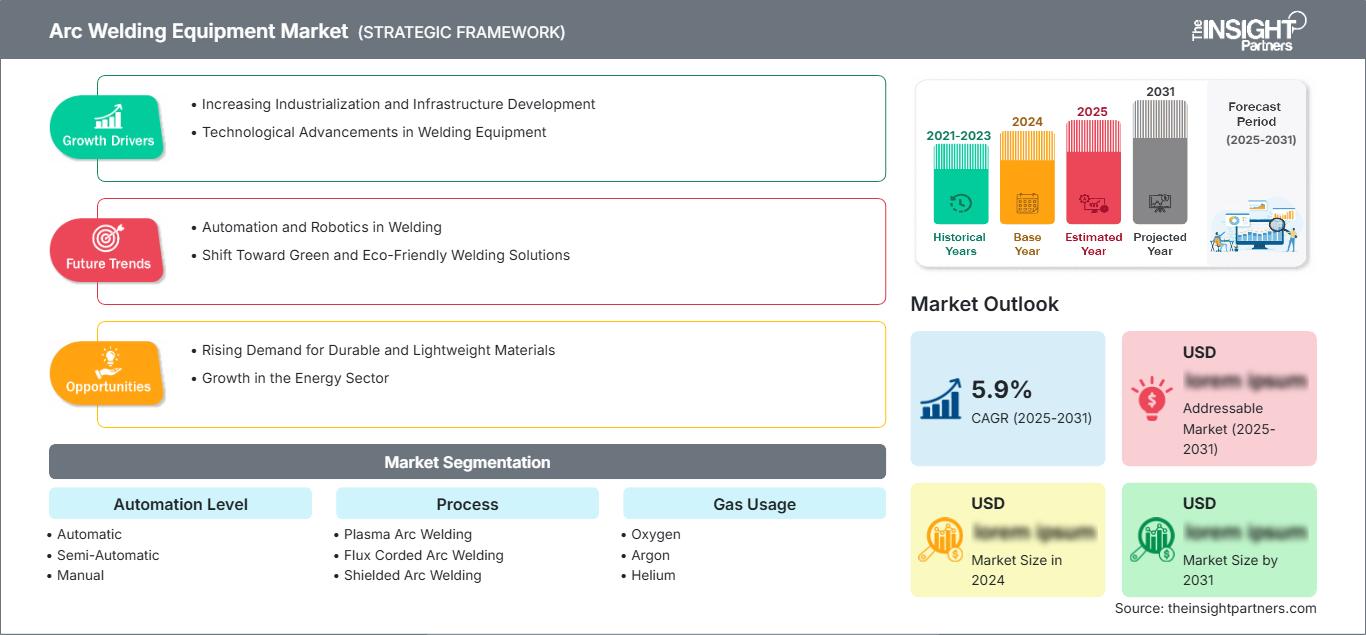
Regional Insights
North America Arc Welding Equipment Market
North America accounted for 31–34% share in 2025 and is projected to grow at a CAGR of 4.1–4.4% during 2026–2034. The development of infrastructure, maintenance of oil and gas equipment, fabrication of metals, and military-related manufacturing contribute to the need for robust arc welders. The statistics from the US workforce indicate 771,000 people who are professional welders and 320,500 estimated job opportunities by 2029 back up automation
Regional buyers are prioritizing inverter efficiency, integrated safety features, and weld quality monitoring. The Arc Welding Equipment Market share in North America is reinforced by established distributors, training ecosystems, and automation integrators. Canada and Mexico add demand through automotive, mining, construction, and machinery supply chains, while US reshoring programs continue to support fabrication capacity expansion.
U.S. Arc Welding Equipment Market
The US represented 72–76% of North America in 2025 and is forecast to grow at a CAGR of 4.0–4.3% during 2026–2034. Demand is concentrated in automotive corridors, aerospace clusters, energy construction, and structural fabrication. The Arc Welding Equipment Market forecast indicates strong company presence through ESAB Corporation, AMADA WELD TECH INC., Panasonic welding automation operations, and Kobe Steel’s US welding subsidiary.
The trend in applications is to use gas metal arc welding in robots in high production situations, while shielded metal arc welding is favored for on-site construction and repairs. Federal investment in infrastructure, bridge refurbishment, and renewable energy development helps to replace equipment. Lack of qualified manpower leads to semi-automatic and automatic processes.
Europe Arc Welding Equipment Market
Europe held 24–27% share in 2025 and is expected to grow at a CAGR of 3.8–4.1% through 2034. Germany leads regional demand, supported by machinery, automotive, rail equipment, and industrial automation. Within the Arc Welding Equipment Market, manufacturers emphasize energy-efficient inverter technology, robotic integration, and compliance with strict worker safety and emissions-related operating practices.
Factors influencing the UK market include infrastructure development, naval vessels construction, wind turbine manufacturing, and maintenance. There will be high demand for portable, rugged, and digitally controlled solutions suitable for both workshop and outdoor use. Semi-automatic systems find success among contractors who require increased productivity but lack full automation of their production processes.
Contribution from France, Italy, and Spain comes from the aerospace industry, construction machinery, metal fabrication, and the automotive sector. Welding equipment manufacturers in Italy improve availability in the region, France provides equipment for precise applications in aerospace and transportation, whereas Spain enjoys rail, energy, and naval vessel repair work, ensuring steady demand for gas metal and flux cored arc welding systems.
APAC Arc Welding Equipment Market
APAC accounted for 30–33% share in 2025 and is projected to grow at a CAGR of 5.0–5.4% during 2026–2034. China leads due to shipbuilding, construction machinery, steel fabrication, and infrastructure activity, while Japan and South Korea maintain advanced demand through automotive, shipbuilding, and precision manufacturing. The Arc Welding Equipment Market continues to benefit from expanding industrial output, manufacturing investments, and increasing adoption of automated welding technologies across the region.
India is emerging as a rapidly growing market due to improvements in infrastructure, railroads, renewable energy, and industrial corridors that enhance the need for fabrication. Local manufacturers as well as imports compete on cost, accessibility, and inverter quality, making it feasible for manual and semi-automatic use.
In Australia, the addition of mining equipment and infrastructure construction, together with energy project development, enhances welding needs within the region. There is a favorable policy for local manufacturing and clean energy, which increases the need for automation and semi-automation.
Middle East & Africa Arc Welding Equipment Market
The Middle East & Africa is expected to grow at a CAGR of 4.4–4.8% during 2026–2034. Saudi Arabia leads regional demand through oil and gas maintenance, petrochemical construction, transportation projects, and industrial diversification programs that require heavy steel fabrication and pipeline welding capacity. The Arc Welding Equipment Market is also supported by ongoing infrastructure development and expanding industrial manufacturing activities across the region.
Demand stimulation in the UAE is done through construction, ship repairing, logistics infrastructure, and fabrication for energy and industry projects. Buyers are interested in equipment that is durable, backed up by services, and system compatibility with the high temperatures and skill levels in the market.
South Africa and the rest of MEA stimulate demand through mining equipment repair, power infrastructure, ports, and construction. In procurement, rugged manual and semi-automatic equipment are sought after, whereas automatic welding cells are selectively bought for large energy and industrial projects.
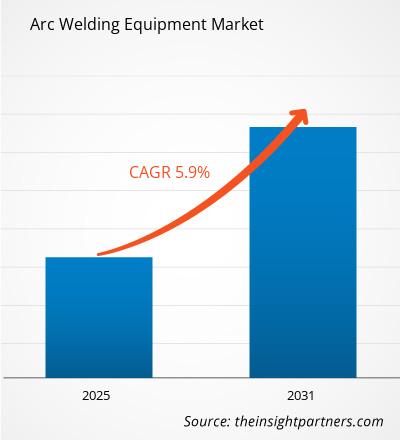
Segmentation Analysis
Automation Level
The automation level segment is expected to grow at a CAGR of 4.3–4.7% during 2026–2034 as users balance labor availability, repeatability, and capital budgets. Manual systems remain vital for repairs and site fabrication, while semi-automatic systems improve productivity in workshops. Automatic equipment gains share in automotive, shipbuilding, and machinery, where consistent weld quality and cycle-time reduction justify investment.
- Automated systems play a very crucial role in high-volume assembly lines due to robotic control, synchronized feeders, and weld monitoring, which reduces wastage, improves reliability, and assists in documenting quality in a controlled manufacturing process.
- Semi-Automated Systems are applicable in fabrication shops that require productivity improvement without the total automation system, and they assist in improved wire feeding, operator control, and application in various machines, construction products, and vehicle parts.
- Manual systems have still maintained their importance in maintenance work, construction sites, ship repair works, and small workshops due to portability and cost efficiency.
Process
The process segment is projected to grow at a CAGR of 4.2–4.6% during 2026–2034, reflecting broad use of gas metal, shielded, flux-cored, and plasma arc methods. Process selection depends on material thickness, productivity needs, shielding availability, and application environment. Gas metal arc welding remains central in manufacturing, while shielded and flux-cored processes support outdoor and heavy-fabrication work.
- Plasma Arc Welding is a welding method that finds its application in precision work where precise control of heat input, small weld cross-section, and high quality weld joints are needed.
- Flux Corded Arc Welding is vital in heavy fabrication, ship building, and construction work since it ensures high deposition rate, capability to perform outdoors, and good performance on thick structures.
- Shielded Arc Welding has been widely employed in field repair, construction, and maintenance works due to its commercial feasibility.
- Electroslag Arc Welding is applied in thick-section vertical welding, which plays a crucial role in heavy fabrication due to its high productivity and deep penetration.
- Electrogas Arc Welding is utilized in vertical plate welding for tanks, ships, and structures since it is productive in welding that requires long welds.
- Gas Metal Arc Welding is an essential manufacturing process owing to the fact that it lends itself well to automation, higher deposition rate, and cleaner welding.
Gas Usage
The gas usage segment is expected to grow at a CAGR of 4.0–4.4% during 2026–2034 as shielding gas selection becomes more closely tied to weld quality, cost, and process optimization. Argon and carbon dioxide blends are widely used in gas metal arc welding, while helium and hydrogen support specialized applications requiring heat control, penetration, or material-specific performance.
- The use of oxygen in mixed gases improves arc stability and the quality of the weld bead, particularly when there is a need for improved wetting, faster speed, and efficiency in certain applications using steel.
- Argon plays an important role as the shielding gas in aluminum, stainless steel, and precision welding, ensuring a good quality arc and compatibility with both TIG and MIG processes.
- Helium plays an important role in applications that require higher heat input and penetration, including aluminum, copper, and special industrial applications.
- Hydrogen finds its use in stainless steel and plasma welding in cases where the characteristics of reduction and heat input lead to certain metallurgical reactions.
- Carbon dioxide retains its significance in steel welding processes due to low cost and high penetration power.
End-user
The end-user segment is projected to grow at a CAGR of 4.4–4.8% during 2026–2034, supported by transportation manufacturing, construction activity, aerospace precision needs, and shipbuilding capacity. Automotive users emphasize automation and consistency, construction users prioritize rugged field equipment, aerospace requires high-quality weld documentation, and shipbuilding relies on high-deposition processes for large steel structures.
- In the automotive industry, there is a need for consistent, fast welding of chassis, frames, exhaust systems, and any other parts related to EV technology, and automation and semi-automation of the process is essential for efficiency and quality control.
- The construction sector is characterized by the need for welding of structural steel, bridges, repairs, and fabrications on site, and for this purpose, heavy-duty manual and semi-automatic systems are needed.
- The aerospace and defense industries rely on precise work, quality documentation, and certification of welding quality; thus, controlled arc welding systems are in great demand.
- Shipbuilding involves high deposition welding for hulls, decks, and assemblies of the ship, and flux cored welding and gas metal arc welding become strategic.
Opportunity Snapshot
| End-user | Revenue Contribution | Trend Tag | Adoption Stage |
| Automotive | High | EV Frames | Scaling |
| Construction | High | Bridge Repair | Mature |
| Aerospace and Defense | Medium | Precision Welds | Scaling |
| Shipbuilding | Medium | Hull Automation | Scaling |
| Others | Low | Repair Shops | Mature |
Arc Welding Equipment Market Growth Drivers and Impact Analysis
Automation Adoption to Offset Skilled Welder Shortages
The chronic shortage of skilled welders is causing manufacturers to invest in semi-automated and automated arc welding systems. Based on the American Welding Society’s workforce forecast, there will be considerable replacement requirements, which means that efficiency per operator becomes an important procurement criterion. Robotic systems, collaboration fixtures, and guided parameter systems will assist in minimizing reliance on limited skilled labor and increasing the quality of welds. The reason for this trend has immediate implications for the market, as investments are moved from replacement systems to more advanced ones featuring software and sensors.
Infrastructure Renewal and Energy Construction
There are many welding operations in bridges, pipelines, transmission system infrastructure, refineries, and renewable energy infrastructure that need to be carried out. There is a constant requirement from public infrastructure projects and private energy sectors for portable arc welding systems, semi-automatic wire feeding systems, and robust power sources. This effect can be particularly seen in North America, Asia Pacific, and the Middle East, where the use of structural steel and energy pipeline projects will ensure continuous usage of these systems. Arc welding is favorable since it can be used in workshops as well as field sites without any need for specialized joining operations.
Quality, Safety, and Compliance Requirements
Greater demands for weld quality, employee protection, and documentation are affecting equipment buying decisions. Ventilation, electrical, and fume standards are leading to equipment purchases that provide for the stability of the arc, control of the heat input, and proper ventilation system compatibility. Equipment manufacturers involved in aerospace, defense, automotive, and pressure equipment are requesting weld traceability based on information, favoring digital power sources and monitoring systems. The effects are a move toward equipment that minimizes spatter, provides repeatability, and allows for record-keeping.
Arc Welding Equipment Market Future Trends
Connected Welding Platforms and Data-Driven Quality
Future Arc Welding Equipment Market trends will increasingly center on connected power sources that record parameters, monitor arc behavior, and integrate with factory quality systems. Rather than depending solely on post-weld testing for quality control purposes, manufacturing firms will make use of live data to spot deviations, decrease wastage, and perform predictive maintenance. Such practices are expected to gain more traction in industries such as automobiles, aerospace and heavy machinery, where production logs are of utmost importance. Equipment makers will compete on the basis of software interface, cloud-based diagnostic features and increased operator ease of use. Eventually, welding data will turn into a performance metric.
Low-Spatter and Energy-Efficient Welding Processes
Energy efficiency and cleaner welding outcomes will become more influential in procurement as manufacturers pursue lower operating costs and safer workplaces. Advanced inverter platforms, waveform control, and optimized shielding gas processes can reduce spatter, post-weld cleaning, and electricity consumption. This trend will be important for high-volume fabrication where small efficiency gains multiply across thousands of welds. It also supports sustainability goals by lowering consumable waste and improving process stability. Vendors that deliver measurable savings in power use, gas consumption, and rework are likely to gain preference in competitive replacement cycles.
Arc Welding Equipment Market Opportunities
Robotic Welding Cells for Mid-Sized Fabricators
Middle-sized fabrication shops provide significant room for investments since they still rely on manual welding but lack skilled personnel, have quality issues, and have to meet rising customer requirements. This problem may be solved by suppliers using modular robotic cells, user-friendly programming interfaces, various financial schemes, and application expertise. The most promising industries are automotive parts, agricultural machines, construction machines, and metal furniture; in these industries, parts production is repeatable enough to use automation while the budget is limited. The right combination of power source, robot, fixture, training, and service will allow increasing the target market size and retaining customers.
Portable and Battery-Assisted Field Welding Systems
The use of field welding applications in the construction industry, agricultural industry, pipeline maintenance, utility services, and remote repair applications will lead to the need for mobile solutions, which will minimize generator requirements and increase mobility. The battery-powered arc welding machine or hybrid arc welding machines could be used in limited time repair applications, restricted urban areas, or even places with inconsistent power availability. The development of such equipment is in line with the requirements of contractors who require mobile, easy-to-set-up equipment.
Recent Developments
- July 2026: Miller Electric Mfg. LLC, a leading global manufacturer of Miller brand arc welding equipment, announced a free product upgrade for the Millermatic 211 PRO and Multimatic 215 PRO. The upgrade introduces new capabilities, including Dyna-Pulse technology, which has never before been available from Miller in this amp class, to machines already in welders' shops. It is delivered through a quick USB-enabled software download at no additional cost.
- August 2025: ESAB, a global leader in welding technology, today announced the official launch of its new FABRICATOR EM series of industrial-grade welding power sources in Asia market. This strategic release marks a significant milestone in ESAB’s commitment to localized innovation for Asia. The FABRICATOR EM series builds upon the proven Fabricator ES/ET hardware platform, achieving breakthroughs in reliability, smart functionality, and energy efficiency. This next-generation solution is set to deliver higher productivity and unmatched stability for heavy industrial and general manufacturing applications.
- September 2025: Miller Electric Mfg. LLC, a leading worldwide manufacturer of Miller brand arc welding equipment, is partnering with Gullco International to introduce Hercules, a high-deposition welding automation system engineered for high-efficiency MIG welding. The solution will make its debut at FABTECH 2025, where welders will experience how this innovation integrates automation platforms from Gullco, power sources from Miller, filler metals from Hobart and MIG gun technology from Tregaskiss — delivering a streamlined, high-performance solution tailored for efficiency and productivity in heavy fabrication.
Frequently Asked Questions

- Comprehensive Market Sizing and Forecast Analysis
- Detailed Segmentation Analysis
- In-Depth Market Dynamics Assessment
- Regional and Country-Level Insights
- Competitive Landscape and Company Benchmarking
- Strategic Business Intelligence
Recent Reports
Testimonials

The Insight Partners' SCADA System Market report is comprehensive, with valuable insights on current trends and future forecasts. The team was highly professional, responsive, and supportive throughout. We are very satisfied and highly recommend their services.
RAN KEDEM Partner, Reali Technologies LTDs
I requested a report on a very specific software market and the team produced the report in a few days. The information was very relevant and well presented. I then requested some changes and additions to the report. The team was again very responsive and I got the final report in less than a week.
JEAN-HERVE JENN Chairman, Future Analytica
We worked with The Insight Partners for an important market study and forecast. They gave us clear insights into opportunities and risks, which helped shape our plans. Their research was easy to use and based on solid data. It helped us make smart, confident decisions. We highly recommend them.
PIYUSH NAGPAL Sr. Vice President, High Beam Global
The Insight Partners delivered insightful, well-structured market research with strong domain expertise. Their team was professional and responsive throughout. The user-friendly website made accessing industry reports seamless. We highly recommend them for reliable, high-quality research services
YUKIHIKO ADACHI CEO, Deep Blue, LLC.
This is the first time I have purchased a market report from The Insight Partners.While I was unsure at first, I visited their web site and felt more comfortable to take the risk and purchase a market report.I am completely satisfied with the quality of the report and customer service. I had several questions and comments with the initial report, but after a couple of dialogs over email with their analyst I believe I have a report that I can use as input to our strategic planning process.Thank you so much for taking the extra time and making this a positive experience.I will definitely recommend your service to others and you will be my first call when we need further market data.
JOHN SUZUKI President and Chief Executive Officer, Board Director, BK Technologies
I wish to appreciate your support and the professionalism you displayed in the course of attending to my request for information regarding to infectious disease IVD market in Nigeria. I appreciate your patience, your guidance, and the fact that you were willing to offer a discount, which eventually made it possible for us to close a deal. I look forward to engaging The Insight Partners in the future, all thanks to the impression you have created in me as a result of this first encounter.
DR CHIJIOKE ONYIA MANAGING DIRECTOR, PineCrest Healthcare Ltd.Reason to Buy
- Informed Decision-Making
- Understanding Market Dynamics
- Competitive Analysis
- Identifying Emerging Markets
- Customer Insights
- Market Forecasts
- Risk Mitigation
- Boosting Operational Efficiency
- Strategic Planning
- Investment Justification
- Tracking Industry Innovations
- Aligning with Regulatory Trends





 Get Free Sample for