
Artificial Insemination Market Trends, Size & Forecast by 2034
Coverage: by Product type (Insemination Kits, Home Conception Devices, Accessories); End-use (Fertility Clinics and Others, Home); Source Type (AIH - Husband, AID - Donor); Technique (Intrauterine Insemination, Intracervical Insemination, Intravaginal Insemination Intratubal Insemination, Intratubal Insemination) , and Geography (North America, Europe, Asia Pacific, and South and Central America)
- Status : Data Released
- Report Code : TIPRE00004561
- Category : Life Sciences
- No. of Pages : 150
- Available Report Formats :


- Last update date : September 02, 2026


2025 Market Size
US$ 2.58 Bn
Base year value
2034 Forecast
US$ 5.12 Bn
Projected by 2034
CAGR 2026-2034
7.91 %
Growth rate
Addressable Market
US$ 34.64 Bn
(2026-2034)
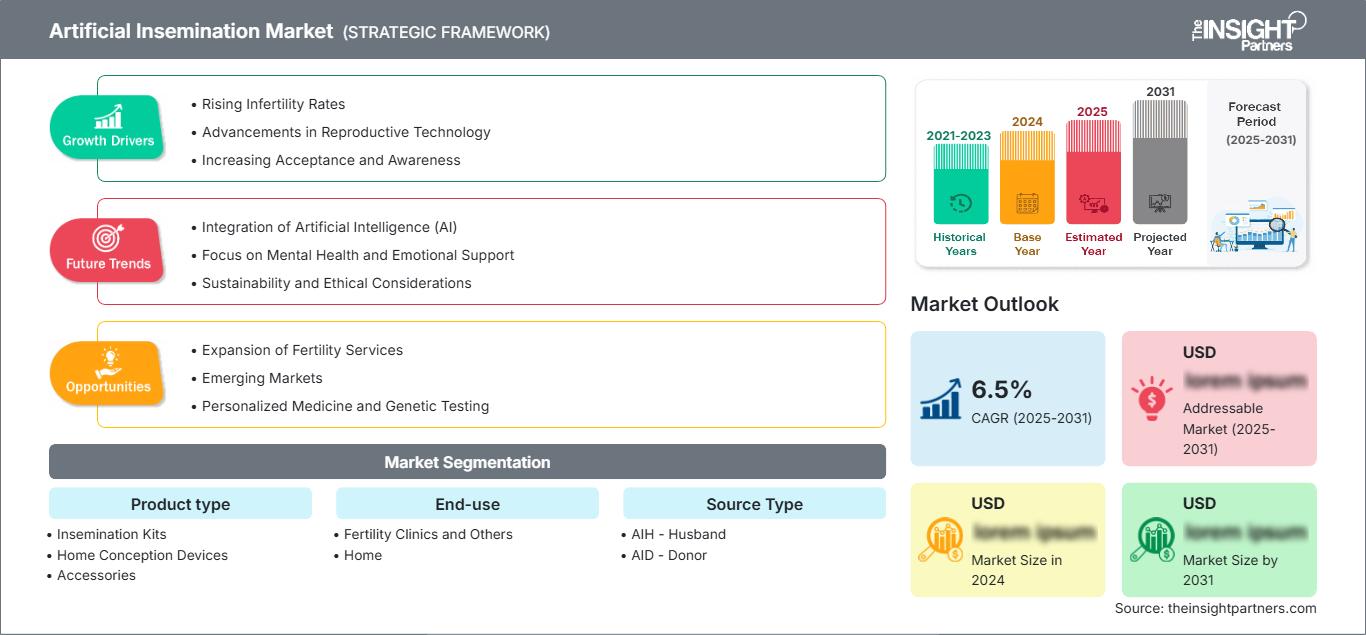
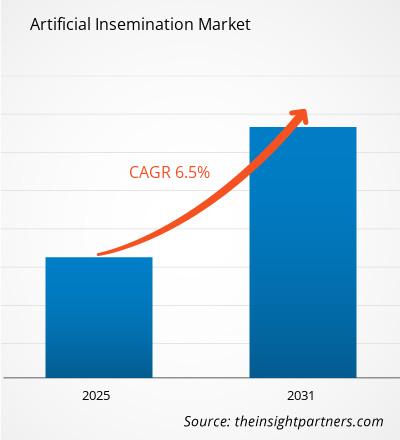
The artificial insemination market is projected to expand from US$ 2.58 Billion in 2025 to US$ 5.12 Billion by 2034, registering a CAGR of 7.91% during 2026–2034. The market comprises the use of both clinical and domestic methods for sperm insemination due to increased awareness about infertility, improved access to reproductive health services, additional sources of donors, and increasing consumer preferences for a non-invasive process of conception.
North America is set to continue being an important revenue generator, with the artificial insemination market size underpinned by strong fertility care infrastructure, relatively high treatment awareness, insurance innovations, and increasing acceptance of donor-assisted conception techniques. This region is projected to exhibit a CAGR of around 6.9-7.3% between 2026 and 2034. Growth in the market would be driven by increasing service capacities of fertility clinics and customers opting for affordable solutions prior to advanced assisted reproduction technologies.
Artificial Insemination Market Assessment and Insights
- North America: North America is estimated to account for 34–38% share in 2025 and expand at a 6.9–7.3% CAGR between 2026–2034, supported by established fertility clinics, donor programs, reproductive health awareness, and home-based fertility solutions.
- US: The US represents approximately 76–80% of North America's 2025 market and is expected to grow at a 7.0–7.4% CAGR during 2026–2034, led by fertility service availability and consumer adoption.
- Europe: Europe is estimated at 28–32% share in 2025, growing at a 7.1–7.5% CAGR through 2034. The UK, Germany, France, Italy, and Spain provide substantial clinical capacity and increasingly structured fertility-care pathways.
- Asia Pacific: Asia Pacific represents approximately 22–26% share in 2025 and is projected to grow at an 8.4–8.8% CAGR. China, Japan, India, South Korea, and Australia are key contributors as fertility awareness and healthcare investment increase.
- Largest Segment: Insemination Kits hold an estimated 52–56% market share in 2025 and are expected to expand at a 7.1–7.5% CAGR, reflecting affordability, convenience, and broad usability.
- High Growth Segment: Home end use represents approximately 14–18% share in 2025 and is expected to grow at a 9.2–9.8% CAGR, driven by privacy, accessibility, and direct-to-consumer availability.
- Key companies analyzed in detail: Nikon Instruments Inc., Genea Limited, Rinovum Women's Health LLC, Pride Angel, Hi-Tech Solutions, Irvine Scientific, Kitazato Corporation, Clearblue (SPD Swiss Precision Diagnostics GmbH), Rocket Medical PLC, Conceivex, Inc.
Source: The Insight Partners' analysis based on proprietary research, government publications, company annual reports, investor presentations, industry databases, and expert interviews.
Treatment paths have progressed from simple delivery devices of the sperm to more standardized kits, ergonomics of the applicator, better sample handling, and ovulation tracking by using digital technologies. Dynamics of manufacturing have increasingly involved sterile components, standard device geometry, proper packaging, and compliance with regulations. Clinical vendors will remain committed to providing reliable consumables, whereas retail vendors will be interested in making their products easy to use, discretely distributed, and compatible with fertility management practices. This trend opens up new product opportunities that go beyond traditional clinic procedures.
In the forecast period, it is reasonable to expect that new markets will be developed due to greater availability of fertility services and greater recognition of reproductive health in the national healthcare policies. Clarification of regulatory issues for low-risk home products could facilitate commercialization of such products, and clinics are increasingly integrating electronic scheduling, coordination of donors, and cycle tracking. This creates an opportunity for suppliers who can provide both clinical-grade quality and ease-of-use.
Artificial Insemination Market Report Scope
| Report Attribute | Details |
|---|---|
| Market size in 2025 | US$ 2.58 Billion |
| Market Size by 2034 | US$ 5.12 Billion |
| Global CAGR (2026 - 2034) | 7.91% |
| Historical Data | 2021-2024 |
| Forecast period | 2026-2034 |
Artificial Insemination Market Analysis
The demand pattern is becoming influenced by delayed childbearing, the increasing awareness about infertility and more acceptance of assisted reproductive methods. There are several stages that characterize the pathway of artificial insemination market growth from the procurement of the semen to the donor banks, from fertility assessment to the insemination devices, clinical procedures, and follow-up.
In addition to that, the supplier works in the environment comprising the fertility clinics, laboratories, reproductive doctors, donor banks, pharmacy, e-commerce channel and at-home channel. The differentiation in the structure of the supply continues to be driven by different needs of the consumer and the clinical setting where the latter requires standard tools and controlled processes while the former favors convenience, packaging, etc.
Competition is fragmented by the clinical devices, fertility services, diagnostic monitors, and the direct-to-consumer products. The artificial insemination market report therefore examines positioning through the entire process path beyond merely the sale of the clinical devices. Nikon Instruments Inc., Irvine Scientific, Kitazato Corporation, and Rocket Medical PLC have abilities associated with reproductive medicine. Rinovum Women's Health LLC, Pride Angel, and Conceivex, Inc. offer opportunities that are more consumer-facing.
There is increasing strategic investment in the digital fertility assistance, ergonomic design of products, channel partners, and regional growth. Genea Limited has an extensive fertility service platform while Clearblue (SPD Swiss Precision Diagnostics GmbH) adds to the cycle monitoring platform. Kitazato Corporation is extending its international operations and product capabilities, showing how suppliers may leverage their portfolios in reproductive medicine to develop better institutional ties and lessen reliance on one procedure class.
● REPORT CUSTOMIZATION
Tailor This Report To Align With Your Specific Business Requirements
This report can be customized to align precisely with your business objectives, scope, and target markets. Customization options include tailored segmentation, geography, competitive analysis, and strategic insights to support informed decision-making.
Customize This Report →WHAT YOU CAN ADJUST
- ● Segmentations
- ● Geography
- ● Competitive Analysis
- ● Language Preferences
Artificial Insemination Market: Strategic Insights
Regional Insights
North America artificial insemination market
North America is expected to have a artificial insemination market share of 34–38% by 2025 and will grow with a 6.9–7.3% CAGR up to 2034. The region has favorable conditions in terms of a developed fertility ecosystem, sperm bank system, expertise of reproductive doctors, and awareness of the consumers. The US is responsible for the largest part of the market, whereas Canada represents a secondary but already developed ecosystem. Adoption is still focused on fertility clinics, but home use products offer another channel for certain consumers.
Drivers include rising fertility assessment, needs for donor conception, and increasing opportunities for reproductive treatments. Product providers also enjoy favorable regulatory frameworks and developed e-commerce infrastructure. Consumers are affected by the cost of treatment, presence of insurance programs, and desire to have a less intrusive procedure than IVF. The business environment in North America allows for successful operation for the companies able to satisfy both clinical and consumer needs.
U.S. artificial insemination market
US is estimated to make up 76%-80% of North American value in 2025, and it will grow at a CAGR of 7.0%-7.4% up to 2034. The wide network of fertility clinics, donor sperm access, competence in reproductive endocrinology, and awareness drive acceptance. Rinovum Women's Health LLC, Conceivex, Inc., Clearblue (SPD Swiss Precision Diagnostics GmbH), and Irvine Scientific operate in the fertility product and monitoring subcategories.
More differentiated application profiles are emerging in clinic-based insemination vs. home conception assistance. The role of clinics is being relegated to diagnostic, donor handling, and medically-assisted processes, while consumers turn to ovulation monitoring to synchronize. Clear regulatory framework for home products that fit into the classification will be helpful, but clinical data, labelling, and education are crucial. Prices and coverage policies affect consumer choice of self-help products vs. assisted fertility solutions.
Europe artificial insemination market
Europe is projected to possess 28–32% share in 2025 and be experiencing growth rate of 7.1–7.5% CAGR over 2034, where the leading countries would be the UK, Germany, France, Italy, and Spain. The region enjoys a developed system of reproductive health care, presence of fertility clinics and growing demand for fertility treatments in both public and private spheres.
The UK possesses a good level of clinic infrastructure and development of the donor conception industry. In turn, Germany boasts reproductive medicine traditions and relatively structured clinical regulations. The contribution of France, Italy, and Spain is due to the developing market of fertility services and the rise of medical tourism. In Europe, the leading markets will include the markets with higher clinic infrastructure and better regulations on reimbursement.
APAC artificial insemination market
APAC is predicted to have a market size of 22–26% in 2025 and expected to increase at a CAGR of 8.4–8.8% through 2034. China, Japan, South Korea, India, and Australia are considered the major consumer countries. China and Japan offer significant clinical facilities, while India represents great growth potential due to urbanization and fertility awareness. Australia is a combination of existing fertility services and donor sperm services.
The opportunities in APAC region have been boosted by policy support, delayed marriage, investment in healthcare services, and improved reproductive service availability. Japan will be benefited from fertility treatment support from the government. India and China are focusing on creating a wider treatment facility. Australia will still be strategic for donor services. The opportunities in the region’s industrial segment are from clinic consumables to monitoring systems and home care products.
Middle East & Africa artificial insemination market
MEA is forecasted to experience a growth rate of 6.2-6.8% CAGR by 2034. In this region, Saudi Arabia and UAE drive commercial development with the help of high-end private healthcare infrastructure, whereas South Africa contributes with existing reproductive healthcare facilities. The remaining markets of MEA lack consistency due to variations in accessibility, reimbursement, availability of reproductive specialists, and regulation.
The development of healthcare and healthcare infrastructure creates opportunities for the fertility clinics and suppliers of standardized products. UAE and Saudi Arabia get advantages due to private healthcare infrastructure development and the availability of specialists, South Africa adds to regional medical expertise. Growth relies on affordable prices, availability of reproductive specialists, donor management programs, and product distribution channels.
Segmentation Analysis
Product type
The Product type segment in the artificial insemination market is expected to register a 7.0–7.4% CAGR during 2026–2034. Demand is concentrated around products that simplify sperm handling, improve procedural consistency, and support privacy. Insemination kits remain commercially important because they combine essential components into accessible formats, while home conception devices and accessories broaden the product ecosystem. Product differentiation increasingly depends on ergonomic design, sterility, packaging, instructions, and compatibility with fertility-monitoring routines.
- Insemination Kits: Insemination kits remain the principal product category because integrated components simplify preparation and use. Their affordability and standardized packaging support both consumer purchases and selected clinic-assisted applications.
- Home Conception Devices: Home conception devices address users seeking greater privacy and controlled self-administration. Their strategic importance is increasing as manufacturers introduce easier handling, improved applicator designs, and clearer usage guidance.
- Accessories: Accessories support sperm collection, timing, sample handling, and fertility planning. Their recurring and complementary role makes them useful for increasing product-basket value and maintaining consumer engagement across multiple cycles.
End-use
The End-use segment in the artificial insemination market is projected to expand at a 7.8–8.2% CAGR through 2034. Fertility Clinics and Others remain central because diagnosis, donor management, and supervised treatment require professional infrastructure. Home use is developing faster as consumers seek privacy, convenience, and lower barriers to initiating conception attempts. The artificial insemination market scope therefore increasingly includes both institutional procurement and direct-to-consumer pathways.
- Fertility Clinics and Others: Fertility clinics and related professional settings remain essential for diagnosis, sperm preparation, donor coordination, treatment selection, and monitoring. Their role supports standardized procurement and recurring demand for procedure-related products.
- Home: Home use is gaining strategic importance among consumers seeking convenience and privacy. Digital education, online purchasing, ovulation tracking, and discreet delivery can reduce practical barriers to accessing selected conception products.
Source Type
The Source Type segment is expected to grow at a 7.2–7.6% CAGR during 2026–2034. AIH - Husband remains relevant where couples use partner sperm, while AID - Donor gains importance as donor conception becomes more visible among single parents, same-sex couples, and couples affected by male-factor infertility. Regulatory requirements around screening, storage, traceability, and donor information remain central to market development.
- AIH - Husband: AIH - Husband represents partner-sperm use and remains closely associated with fertility evaluation and cycle-timed treatment. Demand depends on clinical diagnosis, sperm quality, ovulation management, and patient preference.
- AID - Donor: AID - Donor supports individuals and couples requiring donor sperm. Its strategic importance is increasing alongside changing family structures, donor shortages in selected markets, and stronger requirements for screening and traceability.
Technique
The Technique segment is forecast to register a 7.4–7.8% CAGR through 2034. Intrauterine Insemination remains the principal clinically supervised approach, while intracervical and intravaginal methods support less invasive or home-oriented applications. Intratubal approaches represent a specialized pathway. Technique selection depends on infertility cause, sperm quality, reproductive anatomy, clinical evidence, and the degree of medical supervision required.
- Intrauterine Insemination: Intrauterine Insemination is widely integrated into fertility-clinic protocols because prepared sperm can be placed directly into the uterine cavity. It is particularly relevant when timed ovulation and controlled sperm preparation are clinically appropriate.
- Intracervical Insemination: Intracervical Insemination provides a comparatively simple sperm-delivery approach and is relevant to donor conception and selected home-oriented applications. Its lower procedural complexity supports accessibility where clinical supervision is limited.
- Intravaginal Insemination: Intravaginal Insemination represents a straightforward approach that can be performed with limited equipment. Its strategic role is strongest in home settings where privacy, affordability, and ease of administration influence product selection.
- Intratubal Insemination: Intratubal Insemination is a specialized technique requiring greater clinical expertise and appropriate reproductive anatomy. Its commercial importance is narrower, but it remains relevant within selected fertility-treatment pathways.
- Intratubal Insemination: Intratubal Insemination is a specialized technique requiring greater clinical expertise and appropriate reproductive anatomy. Its commercial importance is narrower, but it remains relevant within selected fertility-treatment pathways.
Opportunity Snapshot
| End-use | Revenue Contribution (High/Medium/Low) | Trend Tag | Adoption Stage |
|---|---|---|---|
| Fertility Clinics and Others | High | Clinic IUI | Mature |
| Home | Medium | Home Conception | Scaling |
Artificial Insemination Market Growth Drivers and Impact Analysis
Increasing recognition of infertility and earlier fertility evaluation
Infertility affects approximately one in six people of reproductive age globally, according to WHO, creating a substantial population requiring evaluation and treatment pathways. This burden is translating into stronger demand for accessible fertility services, particularly where patients seek lower-complexity options before considering IVF. Earlier diagnosis can expand the addressable population for timed insemination, donor procedures, monitoring products, and related consumables. The commercial impact extends across clinics, sperm banks, diagnostic providers, and manufacturers of procedure-specific products. As awareness improves, purchasing decisions are also becoming more informed, increasing the importance of clinical evidence, transparent instructions, and appropriate product positioning. WHO's 2025 guideline reinforces progressive infertility management, helping establish clearer pathways from assessment toward treatments such as intrauterine insemination.
Expansion of donor conception and changing family structures
Demand for donor sperm is increasingly influenced by changing household structures, greater visibility of solo parenthood, and improved acceptance of same-sex family building. Genea reported that donor-sperm demand in Australia increased 97.6% between 2022 and 2025, illustrating how demand can rise faster than supply in mature reproductive markets. Such conditions increase the need for coordinated donor screening, storage, traceability, and distribution. For product manufacturers, the impact extends beyond sperm-delivery devices because donor pathways require reliable clinical consumables and supporting infrastructure. Shortages can also encourage international sourcing, creating additional logistics and regulatory requirements. Suppliers able to integrate dependable product availability with clinic relationships and compliant documentation can capture value from expanding donor-conception pathways while managing increasingly complex supply conditions.
Digital fertility monitoring is improving treatment timing
Digital fertility monitoring is changing how consumers identify fertile windows and coordinate conception attempts. Modern ovulation platforms can combine hormone detection, cycle tracking, and app-based interpretation, giving users more structured information before deciding whether professional treatment is necessary. Clearblue's current portfolio illustrates the direction of development, with digital tests, camera-read functionality, and cycle-tracking applications supporting personalized fertility timing. The commercial impact is significant because monitoring products can create an entry point into broader fertility-care ecosystems. Manufacturers of insemination products can use compatibility with monitoring workflows as a differentiation factor, while clinics can use patient-generated cycle information to improve consultation efficiency. This convergence also supports recurring sales of tests and consumables alongside procedure-related products.
Artificial Insemination Market Future Trends
Integration of home insemination with digital fertility ecosystems
Home-oriented conception is likely to become more connected with digital fertility management rather than remaining a standalone product category. Future platforms may combine ovulation-test results, cycle histories, educational guidance, product instructions, and clinician referral pathways within one patient journey. This model could help consumers distinguish between appropriate self-directed use and situations requiring medical assessment. Manufacturers are likely to prioritize interoperable packaging, QR-linked instructions, mobile compatibility, and personalized timing support. The trend should also encourage partnerships between consumer fertility brands, diagnostic companies, telehealth providers, and fertility clinics. Over time, differentiation may shift from the physical applicator alone toward the quality of the surrounding information ecosystem. Companies that can demonstrate responsible patient education and clear escalation pathways should gain greater credibility in a market where clinical appropriateness remains critical.
Greater emphasis on regulated, sterile consumer fertility products
The next phase of artificial insemination market trends development is likely to place stronger emphasis on sterile manufacturing, validated materials, traceable supply chains, and transparent regulatory status for products sold directly to consumers. Greater scrutiny can distinguish professionally designed medical products from informal conception tools that lack consistent quality controls. This shift creates opportunities for manufacturers to invest in biocompatibility testing, packaging validation, usability engineering, and post-market surveillance. It may also encourage retailers and online platforms to apply more stringent supplier qualification procedures. As consumers become more informed, trust will increasingly depend on visible evidence of manufacturing quality and appropriate labeling. Regulatory differentiation could therefore reshape competitive positioning, favoring companies that combine consumer-friendly design with documented quality systems and clinically responsible communication.
Artificial Insemination Market Opportunities
Regional expansion through fertility-clinic partnerships
Suppliers can pursue growth by partnering with fertility clinics in countries where reproductive healthcare infrastructure is expanding but product availability remains fragmented. India, selected Southeast Asian markets, the Middle East, and parts of Latin America provide opportunities to establish distributor relationships, clinician education programs, and localized inventory. A partnership-led model can reduce market-entry friction because clinics influence product selection and can provide feedback on usability and patient needs. Companies should prioritize regulatory mapping, local-language materials, temperature and storage requirements where relevant, and dependable after-sales support. Strategic partnerships can also help suppliers understand differences in donor regulations and clinical practice. The strongest opportunities will likely involve portfolios combining procedure products with fertility monitoring, education, and complementary consumables.
Premiumization through precision-designed conception products
Product developers can create higher-value offerings by improving ergonomic design, sterility assurance, packaging, instructions, and compatibility with digital fertility tools. Rather than competing solely on unit price, suppliers can differentiate through simplified preparation, reduced handling steps, clearer dosing or placement guidance, and discreet packaging. Premium positioning may be particularly relevant for consumers who value privacy and reliability but remain sensitive to the cost of clinic-based treatment. Companies can also explore subscription or replenishment models for complementary accessories and fertility-monitoring products. The artificial insemination market Forecasts opportunity is strongest where manufacturers combine physical-product innovation with digital education and appropriate clinical referral mechanisms. Such strategies can increase recurring engagement while reducing dependence on one-time purchases.
Recent Developments
- August 2026: Kitazato Corporation announced a business collaboration with SIOS Technology to develop a fertility-treatment support system using advanced artificial intelligence technologies. The initiative extends Kitazato's reproductive-medicine strategy into digital support and demonstrates increasing interest in combining fertility products with data-driven technologies. The collaboration was announced on August 3, 2026.
- July 2026: Kitazato Corporation completed installation of automated manufacturing equipment for its oocyte retrieval needles, replacing a previously manual assembly process. The system includes image inspection and is intended to improve productivity, manufacturing consistency, and quality control. The development reflects broader investment in automated reproductive-device production and strengthens the company's manufacturing capabilities for global fertility-care markets
- July 2025: Genea Limited confirmed that its February 2025 cybersecurity investigation found patient information had been accessed and published on the dark web. The company subsequently communicated with affected individuals and implemented support measures. The incident highlights the increasing importance of cybersecurity, privacy governance, and resilient digital infrastructure for fertility providers managing highly sensitive reproductive and medical information.
Frequently Asked Questions

- Comprehensive Market Sizing and Forecast Analysis
- Detailed Segmentation Analysis
- In-Depth Market Dynamics Assessment
- Regional and Country-Level Insights
- Competitive Landscape and Company Benchmarking
- Strategic Business Intelligence
Recent Reports
Testimonials

The Insight Partners provided valuable market intelligence that supported our global go-to-market strategy. Their team was professional, responsive, and attentive to our feedback, providing thoughtful analysis and helpful methodological clarifications throughout the project.
Junmo Kim Chief Financial Officer (CFO), Enertech Co., Ltd.
The Insight Partners' SCADA System Market report is comprehensive, with valuable insights on current trends and future forecasts. The team was highly professional, responsive, and supportive throughout. We are very satisfied and highly recommend their services.
RAN KEDEM Partner, Reali Technologies LTDs
I requested a report on a very specific software market and the team produced the report in a few days. The information was very relevant and well presented. I then requested some changes and additions to the report. The team was again very responsive and I got the final report in less than a week.
JEAN-HERVE JENN Chairman, Future Analytica
We worked with The Insight Partners for an important market study and forecast. They gave us clear insights into opportunities and risks, which helped shape our plans. Their research was easy to use and based on solid data. It helped us make smart, confident decisions. We highly recommend them.
PIYUSH NAGPAL Sr. Vice President, High Beam Global
The Insight Partners delivered insightful, well-structured market research with strong domain expertise. Their team was professional and responsive throughout. The user-friendly website made accessing industry reports seamless. We highly recommend them for reliable, high-quality research services
YUKIHIKO ADACHI CEO, Deep Blue, LLC.
This is the first time I have purchased a market report from The Insight Partners.While I was unsure at first, I visited their web site and felt more comfortable to take the risk and purchase a market report.I am completely satisfied with the quality of the report and customer service. I had several questions and comments with the initial report, but after a couple of dialogs over email with their analyst I believe I have a report that I can use as input to our strategic planning process.Thank you so much for taking the extra time and making this a positive experience.I will definitely recommend your service to others and you will be my first call when we need further market data.
JOHN SUZUKI President and Chief Executive Officer, Board Director, BK Technologies
I wish to appreciate your support and the professionalism you displayed in the course of attending to my request for information regarding to infectious disease IVD market in Nigeria. I appreciate your patience, your guidance, and the fact that you were willing to offer a discount, which eventually made it possible for us to close a deal. I look forward to engaging The Insight Partners in the future, all thanks to the impression you have created in me as a result of this first encounter.
DR CHIJIOKE ONYIA MANAGING DIRECTOR, PineCrest Healthcare Ltd.Reason to Buy
- Informed Decision-Making
- Understanding Market Dynamics
- Competitive Analysis
- Identifying Emerging Markets
- Customer Insights
- Market Forecasts
- Risk Mitigation
- Boosting Operational Efficiency
- Strategic Planning
- Investment Justification
- Tracking Industry Innovations
- Aligning with Regulatory Trends





 Get Free Sample for