
Atherectomy Devices Market Size, Growth & Trends by 2034
Coverage: By Product (Rotational Atherectomy Systems, Directional Atherectomy Systems, Orbital Atherectomy Systems, Photo-Ablative (Laser) Atherectomy Systems, Support Devices); Application (Cardiovascular, Peripheral Vascular, Neurovascular); End User (Hospitals, Ambulatory Surgical Centers, Others), and Geography (North America, Europe, Asia Pacific, and South and Central America)
- Status : Data Released
- Report Code : TIPHE100001272
- Category : Life Sciences
- No. of Pages : 150
- Available Report Formats :


- Last update date : September 08, 2026


2025 Market Size
US$ 1.08 Bn
Base year value
2034 Forecast
US$ 1.96 Bn
Projected by 2034
CAGR 2026-2034
6.85 %
Growth rate
Addressable Market
US$ 13.74 Bn
(2026-2034)
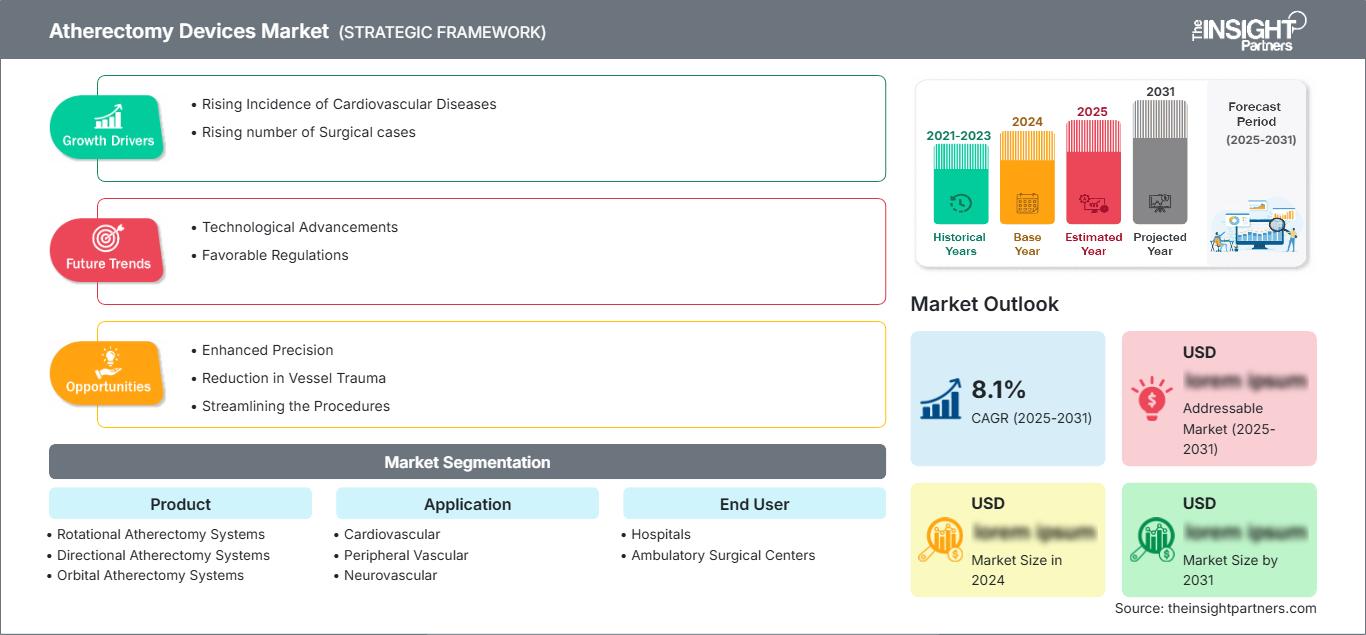
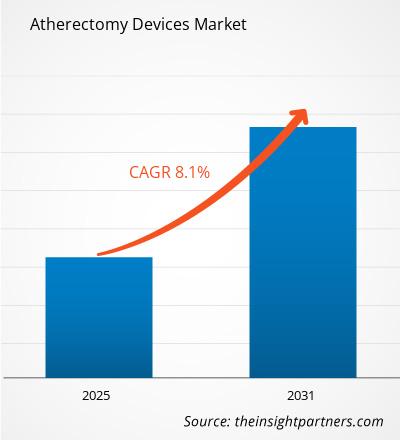
The atherectomy devices market is valued at US$ 1.08 Billion in 2025 and is projected to reach US$ 1.96 Billion by 2034, expanding at a CAGR of 6.85% during 2026–2034. The market includes a range of technologies that employ different ways such as rotational, directional, orbital, and photo-ablation methods to change or eliminate atherosclerotic plaque, complemented by various delivery and procedural tools employed for coronary and peripheral vascular procedures.
North America atherectomy devices market size is set to continue its strong position in terms of generating revenues, with a forecasted CAGR of 6.9%–7.4% through 2034. Regional prospects are determined by the high number of procedures performed, well-established interventional cardiology base, and increasing usage of plaque modification devices for complex, calcified cases.
Atherectomy Devices Market Assessment and Insights
- North America: North America is expected to account for a 48–52% share in 2025, supported by established endovascular infrastructure and high physician familiarity, while growing at a 6.9–7.4% CAGR between 2026–2034.
- US: The US is expected to represent 78–83% of North America's 2025 revenue, with adoption supported by advanced cardiovascular centers and established reimbursement pathways, expanding at a 7.0–7.5% CAGR.
- Europe: Europe is projected to hold a 23–27% share in 2025, led by Germany, the UK, France, Italy, and Spain, with increasing adoption of minimally invasive plaque modification and a 6.2–6.8% CAGR through 2034.
- Asia Pacific: Asia Pacific is estimated to represent a 16–20% share in 2025, with China, Japan, South Korea, India, and Australia supporting expansion through cardiovascular disease burden and improving intervention capacity, resulting in a 7.5–8.2% CAGR.
- Largest Segment: Peripheral Vascular is expected to hold a 72–77% market share in 2025, reflecting broad PAD utilization, and is projected to expand at a 7.0–7.6% CAGR.
- High Growth Segment: Ambulatory Surgical Centers are estimated at an 18–22% market share in 2025 and are expected to grow at an 8.0–8.6% CAGR as outpatient vascular procedures expand.
- Key companies analyzed in detail: B. Braun Melsungen AG, Koninklijke Philips N.V., Cardinal Health, Medtronic, Terumo Corporation, C. R. Bard, Inc., Minnetronix, Inc., Avinger, Straub Medical AG, Biomerics, Abbott, RA Medical Systems, and Boston Scientific Corporation.
Source: The Insight Partners' analysis based on proprietary research, government publications, company annual reports, investor presentations, industry databases, and expert interviews.
From traditional plaque removal to lesion specific calcium modification, controlled debulking and workflow integration, atherectomy technologies have come far. The rotatory systems employ high speed abrasive techniques, directional systems use mechanical excision of the plaque while orbital systems perform calcium modification by eccentric motion. The FDA guidelines classify directional, rotatory, orbital and photo-ablation systems as major device categories while newer technologies focus on lower profiles, improved trackability, controlled plaque modification and compatibility with current guidewires and catheters.
During the forecast period, commercial success is anticipated to expand from the existing US and European facilities to selected Asian and Middle Eastern cardiovascular centers. Funding will be more focused on delivery profiles, improved calcium crossing capabilities, procedural efficiency and evidential use in complex peripheral diseases. Regulatory activities are also important as recent FDA data indicates that changes and approvals are taking place for orbital and rotatory atherectomy devices.
Atherectomy Devices Market Report Scope
| Report Attribute | Details |
|---|---|
| Market size in 2025 | US$ 1.08 Billion |
| Market Size by 2034 | US$ 1.96 Billion |
| Global CAGR (2026 - 2034) | 6.85% |
| Historical Data | 2021-2024 |
| Forecast period | 2026-2034 |
Atherectomy Devices Market Analysis
The market growth for the atherectomy devices market depends upon the rising requirement for treatment of heavily calcified, stenotic and hard-to-cross arterial lesions. Peripheral artery disease, coronary artery disease, diabetes, chronic kidney disease, elderly population, and repeat vascular diseases lead to the creation of large patient pool that requires lesion preparation prior to performing balloon angioplasty or stenting procedure. The value chain includes the manufacturing of precision catheters, abrasive or cutting elements, guidewires, motors, pumps, sterile packaging, clinical training, marketing and purchase by hospitals.
The economics of manufacturing atherectomy catheters depends upon special materials used in manufacturing, catheter extrusion, torque transmission, coatings, miniaturized bearings, abrasives and sterilization requirements. Thus, suppliers compete on the basis of engineering robustness and procedure efficacy besides catheter production volumes. Another factor that boosts atherectomy devices market is the preference for minimal invasive revascularization procedures where lesion preparation adds value to the procedure.
The atherectomy devices market report shows an industry landscape that is characterized by competition between diverse cardiovascular companies and companies specializing in vascular technologies. Abbott, Boston Scientific Corporation, Medtronic, Koninklijke Philips N.V., Terumo Corporation, and B. Braun Melsungen AG have comprehensive interventional product portfolios, while Avinger, Straub Medical AG, Biomerics, Minnetronix, and RA Medical Systems have more specific technologies or manufacturing strengths. C.R. Bard, Inc. works under the larger Becton, Dickinson and Company umbrella.
Lesion selectivity, device profiles, procedural control, and vascular compatibility have been found to underlie differentiation. Abbott orbital devices reflect an ongoing emphasis on calcium modulation, while Boston Scientific retains its rotational technology. The recent regulations concerning the ROTAPRO and Diamondback technologies are a reflection of ongoing investment in production and lifecycle management.
● REPORT CUSTOMIZATION
Tailor This Report To Align With Your Specific Business Requirements
This report can be customized to align precisely with your business objectives, scope, and target markets. Customization options include tailored segmentation, geography, competitive analysis, and strategic insights to support informed decision-making.
Customize This Report →WHAT YOU CAN ADJUST
- ● Segmentations
- ● Geography
- ● Competitive Analysis
- ● Language Preferences
Atherectomy Devices Market: Strategic Insights
Regional Insights
North America atherectomy devices market
In 2025 and 2034, North America is expected to be the largest regional market in terms of 48% - 52% share and 6.9% - 7.4% CAGR respectively. United States is the leading region due to its interventional cardiology setup, peripheral vascular programs and availability of dedicated cath labs. Canada adds up via tertiary care centers and improved procedure expertise.
Adoption will be facilitated by the need for plaque modification in complex cases, especially with severe calcification hindering balloon and/or stent expansion. Development will be driven by the active regulatory environment as well as already developed training channels for physicians. FDA documentation of 2025 and 2026 reflects life cycle activity in the field of orbital and rotational systems with manufacturing and labeling changes. This suggests that providers are still refining existing technology rather than introducing completely new types of devices.
U.S. atherectomy devices Market
North America's anticipated US share of revenue generation by 2025 will be 78-83%, growing at a CAGR of 7.0-7.5%. Major market demand will be generated from hospitals and dedicated vascular facilities, with outpatient facilities playing an increasingly significant part. The clinical presence of Abbott, Boston Scientific Corporation, Medtronic, and Koninklijke Philips N.V. is highly prevalent for interventional technologies.
Current atherectomy devices market trends are biased toward peripheral procedures due to significant requirements for PAD and the difficulties in treating calcified lesions. Coronary application is still important where lesion preparation prior to stent implantation is needed. The FDA classifies peripheral atherectomy catheters as Class II devices; recent regulatory activities with regard to ROTAPRO and Diamondback systems show that products' lifecycles are active.
Europe atherectomy devices Market
Europe is anticipated to command 23% to 27% of the atherectomy devices market share in 2025, and is projected to grow at 6.2% to 6.8% CAGR, with Germany as one of the major markets. The UK and France have well-established infrastructure for vascular interventions, while Italy and Spain are contributing through the growth of specialist centers and minimally invasive techniques.
Germany can be leveraged because of its state-of-the-art cardiovascular hospitals and skilled interventionalists who will utilize the complex plaque modification technologies. The UK follows the approach of centralizing the specialist care and selecting procedures based on evidence. There are opportunities in France, Italy, and Spain because of peripheral vascular programs that are growing and the integration of catheter-based interventions into cardiovascular pathways. Purchase considerations include budgeting by the hospitals, clinical evidence, reimbursement systems, and procedure economics.
APAC atherectomy devices Market
APAC is expected to contribute 16-20% share in 2025 with a CAGR of 7.5-8.2%, led by China in terms of demand from the region. Japan and South Korea are the countries where intervention has reached its maturity phase, whereas India and Australia will add up to their potential.
The expansion within this region is facilitated through the prevalence of cardiovascular disease, development of urban hospitals, training of specialists, and availability of catheter-based interventions. China would continue to lead in terms of contributions to growth, whereas Japan focuses on advanced lesion management and Australia takes advantage of its vascular services.
Middle East & Africa atherectomy devices Market
Middle East and Africa is projected to remain smaller but increasingly relevant, with Saudi Arabia and the UAE leading demand and South Africa representing the principal sub-Saharan market. The region is expected to expand at a 6.4–7.0% CAGR through 2034.
Tertiary hospitals, cardiovascular centers, and other health care infrastructure investments aid in the uptake of this technology. Saudi Arabia and the UAE have specialized healthcare facilities; South Africa forms a regional referral base for the area. The Rest of MEA is hindered by inadequate infrastructure and cost. Energy sector earnings and healthcare funding can help develop such intervention ability in richer areas.
Segmentation Analysis
Product
Product-based atherectomy devices market scope is shaped by differences in plaque morphology, lesion location, vessel diameter, and procedural objective. The segment is expected to grow at a 6.4–7.0% CAGR during 2026–2034 as hospitals seek technologies capable of addressing increasingly complex calcified lesions while improving procedural control and device deliverability.
- Rotational Atherectomy Systems: Rotational platforms remain important for heavily calcified coronary lesions, where high-speed abrasive mechanisms facilitate lesion modification before balloon expansion or stent placement.
- Directional Atherectomy Systems: Directional systems provide controlled plaque excision and collection, supporting selective treatment of peripheral lesions where directional tissue removal can assist vessel preparation.
- Orbital Atherectomy Systems: Orbital systems occupy a strategically important position in calcium modification, using eccentric movement to address varying plaque morphology while maintaining procedural flexibility.
- Photo-Ablative Atherectomy Systems: Photo-ablative approaches provide specialized plaque modification through energy-based mechanisms and remain relevant where precise tissue interaction offers procedural advantages.
- Support Devices: Support devices include complementary components that facilitate delivery, guidewire compatibility, fluid management, and procedural control, making them important to complete system performance.
Application
Application dynamics are strongly influenced by disease prevalence, lesion complexity, procedural volumes, and physician preference. The segment is expected to expand at a 7.0–7.6% CAGR, with peripheral vascular procedures representing the largest application because of extensive PAD treatment requirements and complex calcified lesions.
- Cardiovascular: Cardiovascular applications center on coronary calcium modification and lesion preparation, particularly when calcification may compromise balloon expansion, stent delivery, or optimal stent deployment.
- Peripheral Vascular: Peripheral vascular use represents the dominant application, supported by PAD interventions involving femoropopliteal, below-the-knee, and other complex arterial lesions requiring plaque modification.
- Neurovascular: Neurovascular applications remain comparatively specialized because vessel anatomy, procedural risk, and device requirements demand highly controlled technology development and careful clinical selection.
End User
End-user adoption is shifting toward settings capable of performing catheter-based interventions efficiently while maintaining access to imaging, specialist teams, and emergency support. Hospitals and ambulatory surgical centers together are expected to grow at a 7.1–7.7% CAGR during 2026–2034.
- Hospitals: Hospitals remain the principal end users because complex vascular disease requires multidisciplinary teams, advanced imaging, intensive procedural support, and access to inpatient care when complications occur.
- Ambulatory Surgical Centers: Ambulatory centers are gaining strategic relevance as selected vascular interventions migrate toward shorter stays, standardized workflows, and lower-acuity procedural environments.
Opportunity Snapshot
| End User | Revenue Contribution | Trend Tag | Adoption Stage |
|---|---|---|---|
| Hospitals | High | Complex Lesions | Mature |
| Ambulatory Surgical Centers | Medium | Outpatient Vascular | Scaling |
Atherectomy Devices Market Growth Drivers and Impact Analysis
Rising Burden of Peripheral Artery Disease and Vascular Calcification
The expanding clinical burden of peripheral artery disease is increasing the addressable population for plaque-modification technologies. Diabetes, hypertension, chronic kidney disease, smoking history, dyslipidemia, and advanced age are associated with greater arterial calcification and more difficult revascularization. In these cases, conventional balloon angioplasty may provide insufficient lesion preparation, creating a role for atherectomy before definitive therapy. The commercial impact extends beyond catheter sales because successful lesion modification can support broader use of complementary balloons, stents, guidewires, and imaging technologies. Manufacturers that demonstrate consistent performance in complex calcified anatomy can therefore strengthen procedural adoption and build recurring demand across integrated vascular intervention portfolios.
Preference for Minimally Invasive Revascularization
Clinical preference for catheter-based intervention is supporting demand for devices capable of treating complex vascular disease without open surgical exposure. Atherectomy can be integrated into percutaneous workflows, allowing physicians to modify plaque before angioplasty or stenting while preserving the minimally invasive nature of treatment. This trend creates commercial opportunities for systems that reduce procedural steps, improve deliverability, and support predictable lesion preparation. It also encourages suppliers to design lower-profile catheters compatible with smaller access systems and diverse vascular anatomies. As hospitals evaluate procedure time, complication management, inventory requirements, and total treatment economics, devices that combine plaque modification with efficient workflow integration are likely to gain purchasing consideration.
Technological Progress in Calcium Modification
Advances in catheter engineering are improving the ability of manufacturers to address complex calcium through differentiated mechanical and energy-based mechanisms. Orbital systems can modify plaque across varying vessel conditions, rotational technologies provide established high-speed abrasive treatment, and directional devices offer controlled plaque excision. These approaches create opportunities for more lesion-specific treatment selection rather than relying on a single mechanism across all anatomies. Product development is also concentrating on lower profiles, improved tracking, ergonomic controls, and compatibility with contemporary guidewires. The resulting innovation cycle can support replacement demand even within mature markets because hospitals and physicians evaluate newer systems based on procedural efficiency, lesion coverage, safety characteristics, and ease of use.
Atherectomy Devices Market Future Trends
AI-Assisted Lesion Characterization and Procedure Planning
Future workflows may increasingly combine intravascular imaging, angiography, and computational decision support to characterize calcium distribution before atherectomy. Algorithms could assist physicians in identifying lesion length, eccentricity, calcification severity, vessel diameter, and treatment priorities, helping match device selection with anatomy. Such systems may also support procedure planning by integrating imaging findings with previous intervention data and expected stent requirements. The commercial implication is a shift toward connected procedural ecosystems rather than standalone catheters. Manufacturers capable of combining atherectomy hardware with imaging, software, and data platforms could create differentiated value propositions. Adoption is likely to begin in advanced cardiovascular centers before extending to broader hospital networks as clinical evidence and workflow integration improve.
Multi-Functional and Lower-Profile Atherectomy Platforms
Future device development is likely to emphasize platforms capable of treating multiple lesion morphologies without requiring extensive equipment changes during a procedure. Exchangeable crowns, smaller sheath requirements, flexible shaft architectures, and improved torque control can increase procedural versatility across vessel sizes and access routes. Multi-functional systems may also combine plaque modification with aspiration or thrombectomy capabilities for selected mixed lesions. The objective will be to reduce inventory complexity while expanding anatomical coverage. Smaller delivery profiles could further support treatment through alternative access routes and facilitate use in outpatient environments. As procedural volumes migrate toward lower-acuity settings, suppliers that combine versatility, simplified setup, and predictable performance may gain stronger consideration from physicians and procurement teams.
Atherectomy Devices Market Opportunities
Expansion of Outpatient Peripheral Intervention
The migration of selected peripheral vascular procedures toward ambulatory settings creates an opportunity for manufacturers to redesign systems around shorter workflows, compact equipment, and predictable procedural requirements. Products that can be deployed with smaller access systems and simplified preparation may be particularly suitable for outpatient centers. Suppliers can pursue this opportunity through dedicated training programs, standardized procedure kits, and partnerships with ambulatory networks. Commercial strategies should prioritize applications where clinical complexity can be managed safely outside traditional inpatient environments. The atherectomy devices market forecast opportunity is also relevant to distributors because outpatient centers may favor streamlined procurement and predictable inventory. Over time, successful adoption could expand the addressable customer base beyond large hospitals and increase recurring demand for disposable procedural components.
Localized Manufacturing and Emerging-Market Partnerships
Emerging markets provide an opportunity to improve affordability and availability through localized manufacturing, contract production, regional distribution partnerships, and physician training programs. India, China, Southeast Asia, the Middle East, and selected Latin American markets can benefit from lower-cost manufacturing models while maintaining access to specialized cardiovascular technologies. Companies can reduce market-entry barriers by adapting packaging, procurement models, training, and service support to local healthcare structures. Partnerships with regional distributors and tertiary hospitals can also accelerate clinical familiarity. The most attractive opportunities are likely to combine cost-efficient production with internationally consistent quality systems. Such strategies can broaden access while giving manufacturers a platform for longer-term regional expansion as interventional infrastructure develops.
Frequently Asked Questions

- Comprehensive Market Sizing and Forecast Analysis
- Detailed Segmentation Analysis
- In-Depth Market Dynamics Assessment
- Regional and Country-Level Insights
- Competitive Landscape and Company Benchmarking
- Strategic Business Intelligence
Recent Reports
Testimonials

The Insight Partners' SCADA System Market report is comprehensive, with valuable insights on current trends and future forecasts. The team was highly professional, responsive, and supportive throughout. We are very satisfied and highly recommend their services.
RAN KEDEM Partner, Reali Technologies LTDs
I requested a report on a very specific software market and the team produced the report in a few days. The information was very relevant and well presented. I then requested some changes and additions to the report. The team was again very responsive and I got the final report in less than a week.
JEAN-HERVE JENN Chairman, Future Analytica
We worked with The Insight Partners for an important market study and forecast. They gave us clear insights into opportunities and risks, which helped shape our plans. Their research was easy to use and based on solid data. It helped us make smart, confident decisions. We highly recommend them.
PIYUSH NAGPAL Sr. Vice President, High Beam Global
The Insight Partners delivered insightful, well-structured market research with strong domain expertise. Their team was professional and responsive throughout. The user-friendly website made accessing industry reports seamless. We highly recommend them for reliable, high-quality research services
YUKIHIKO ADACHI CEO, Deep Blue, LLC.
This is the first time I have purchased a market report from The Insight Partners.While I was unsure at first, I visited their web site and felt more comfortable to take the risk and purchase a market report.I am completely satisfied with the quality of the report and customer service. I had several questions and comments with the initial report, but after a couple of dialogs over email with their analyst I believe I have a report that I can use as input to our strategic planning process.Thank you so much for taking the extra time and making this a positive experience.I will definitely recommend your service to others and you will be my first call when we need further market data.
JOHN SUZUKI President and Chief Executive Officer, Board Director, BK Technologies
I wish to appreciate your support and the professionalism you displayed in the course of attending to my request for information regarding to infectious disease IVD market in Nigeria. I appreciate your patience, your guidance, and the fact that you were willing to offer a discount, which eventually made it possible for us to close a deal. I look forward to engaging The Insight Partners in the future, all thanks to the impression you have created in me as a result of this first encounter.
DR CHIJIOKE ONYIA MANAGING DIRECTOR, PineCrest Healthcare Ltd.Reason to Buy
- Informed Decision-Making
- Understanding Market Dynamics
- Competitive Analysis
- Identifying Emerging Markets
- Customer Insights
- Market Forecasts
- Risk Mitigation
- Boosting Operational Efficiency
- Strategic Planning
- Investment Justification
- Tracking Industry Innovations
- Aligning with Regulatory Trends





 Get Free Sample for