
Biophotonics Market Demand, Trends & Forecast by 2034
Coverage: By Technology (In-Vitro, In-Vivo); End-Use (Medical Diagnostics, Medical Therapeutic, Tests and Components, Non-medical Application); Application (See-Through Imaging, Microscopy, Inside Imaging, Spectro Molecular, Analytics Sensing, Light Therapy, Surface Imaging, Biosensors) , and Geography (North America, Europe, Asia Pacific, and South and Central America)
- Status : Data Released
- Report Code : TIPRE00005255
- Category : Electronics and Semiconductor
- No. of Pages : 150
- Available Report Formats :


- Last update date : August 10, 2026


2025 Market Size
US$ 1.42 Bn
Base year value
2034 Forecast
US$ 2.75 Bn
Projected by 2034
CAGR 2026-2034
7.62 %
Growth rate
Addressable Market
US$ 18.78 Bn
(2026-2034)
The Bio-photonics Market size was valued at US$ 1.42 Billion in 2025 and is projected to reach US$ 2.75 Billion by 2034, registering a CAGR of 7.62% during 2026–2034. The market encompasses light-based technologies and optical techniques for biological and medical applications, including imaging, diagnostics, therapeutics, and analytical sensing across clinical, research, and industrial settings. These technologies leverage photons to interact with biological tissues, cells, and molecules, enabling non-invasive visualization, detection, and treatment of diseases while advancing fundamental biological research.
North America is expected to expand at a CAGR of 7.0–7.7% during 2026–2034, supported by advanced medical imaging adoption, research funding, and diagnostic technology innovation. Demand is reinforced by healthcare infrastructure investments, aging population diagnostics requirements, and procurement preferences for non-invasive optical technologies in clinical and research environments.
Biophotonics Market Assessment and Insights
- North America held 34–37% share in 2025 and is growing at a CAGR of 7.0–7.7% during 2026–2034, led by medical research investment, diagnostic adoption, and healthcare spending across the US and Canada.
- US represented 82–85% of North American revenue in 2025 and is growing at a CAGR of 7.2–7.9% during 2026–2034.
- Europe accounted for 25–28% share in 2025 and is growing at a CAGR of 6.8–7.5% during 2026–2034, led by Germany, the UK, France, Italy, and Spain.
- Asia Pacific held 28–31% share in 2025 and is growing at a CAGR of 8.5–9.2% during 2026–2034, led by China, India, Japan, South Korea, and Australia.
- Largest Segment In-Vivo held 42–45% market share in 2025 and is growing at a CAGR of 7.5–8.2% during 2026–2034.
- High Growth Segment In-Vitro represented 55–58% market share in 2025 and is growing at a CAGR of 7.8–8.5% during 2026–2034.
- Key companies analyzed in detail: Becton, Dickinson and Company (BD); Biophotonic Solutions Inc. (IPG Photonics Corporation); Carl Zeiss AG; Hamamatsu Photonics K.K.; Lumenis Ltd.; Nu Skin Enterprises, Inc.; Olympus Corporation; Oxford Instruments plc; Thermo Fisher Scientific Inc.; Zenalux Biomedical, Inc.; Leica Microsystems; Newport Corporation.
Source: The Insight Partners' analysis based on proprietary research, government publications, company annual reports, investor presentations, industry databases, and expert interviews.
Biophotonics technology has seen advancement from its primitive microscope form to more advanced imaging, spectroscopy and sensing systems integrated into complex optical systems. Biophotonics production is centered on high resolution optics, sensitive detectors, advanced light sources, and analysis via software in clinical and research settings. Demand for biophotonics market is also driven by system integrators who integrate optical technologies for diagnosis, surgery, and therapeutic delivery in the context of healthcare and life sciences.
Future investments are moving towards Asia Pacific, North America, and Europe research centers where precision medicine, point of care diagnostics, and therapy require advanced photonic technologies with higher sensitivity, specificity and user-friendliness. Regulatory conformance to medical devices requirements and research standards helps in commercialization of the technology. Purchasers prefer integrated products which have hardware and software with applications integration along with technical support without disturbing clinical or research processes.
Biophotonics Market Report Scope
| Report Attribute | Details |
|---|---|
| Market size in 2025 | US$ 1.42 Billion |
| Market Size by 2034 | US$ 2.75 Billion |
| Global CAGR (2026 - 2034) | 7.62% |
| Historical Data | 2021-2024 |
| Forecast period | 2026-2034 |
Biophotonics Market Analysis
Bio-photonics Market growth is driven by aging population diagnostics, research funding, therapeutic applications, and point-of-care technology development. The value chain includes optical component suppliers, system manufacturers, clinical research organizations, and healthcare providers. Supply dynamics are shaped by component availability, regulatory compliance, and application-driven development cycles. Bio-photonics Market analysis indicates that in-vivo technologies gain preference for clinical diagnostics and therapeutic applications while in-vitro solutions address laboratory research. Service capability is decisive because applications support, training, and technical service affect clinical adoption and research productivity.
Competition is led by optical technology specialists and life science suppliers. Carl Zeiss AG, Olympus Corporation, Thermo Fisher Scientific Inc., Hamamatsu Photonics K.K., Oxford Instruments plc, Becton, Dickinson and Company (BD), Lumenis Ltd., Biophotonic Solutions Inc. (IPG Photonics Corporation), Nu Skin Enterprises, Inc., and Zenalux Biomedical, Inc. compete on optical performance, application expertise, installed-base support, and regulatory compliance. Investment trends favor multi-modal imaging, portable diagnostics, and AI-enhanced analysis. Carl Zeiss AG and Olympus Corporation maintain leadership through comprehensive microscopy and imaging portfolios, while Thermo Fisher Scientific and BD benefit from diagnostics and life sciences market presence. Strategic positioning depends on certified performance, clinical validation, and application-specific expertise.
The market continues to evolve as healthcare systems prioritize early disease detection, precision medicine, and minimally invasive procedures. Advances in spectroscopy, fluorescence imaging, optical coherence tomography, and laser-based technologies are expanding the scope of bio-photonics across oncology, cardiology, neurology, and ophthalmology. Collaboration between academic institutions, medical device manufacturers, and healthcare providers accelerates product innovation and clinical validation. Emerging economies present significant growth opportunities due to expanding healthcare infrastructure and increasing investments in biomedical research. Furthermore, integration of cloud connectivity, digital health platforms, and data analytics strengthens workflow efficiency, enabling broader adoption across clinical, research, and industrial applications worldwide.
● REPORT CUSTOMIZATION
Tailor This Report To Align With Your Specific Business Requirements
This report can be customized to align precisely with your business objectives, scope, and target markets. Customization options include tailored segmentation, geography, competitive analysis, and strategic insights to support informed decision-making.
Customize This Report →WHAT YOU CAN ADJUST
- ● Segmentations
- ● Geography
- ● Competitive Analysis
- ● Language Preferences
Biophotonics Market: Strategic Insights
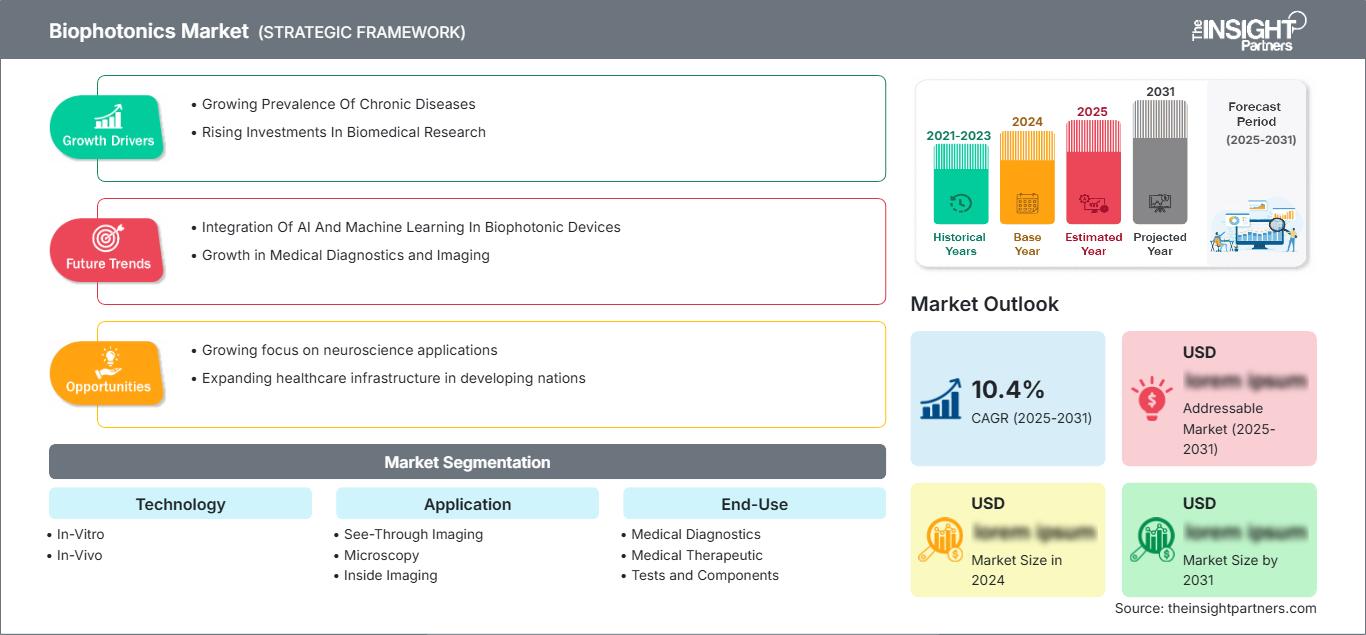
Regional Insights
North America Bio-photonics Market
North America accounted for 34–37% of Bio-photonics Market share in 2025 and is projected to grow at a CAGR of 7.0–7.7% during 2026–2034. Demand is supported by medical research investment, diagnostic technology adoption, healthcare infrastructure, and life sciences R&D spending. The region's research institutions and healthcare system drive consistent demand for advanced optical technologies. Carl Zeiss AG, Olympus Corporation, Thermo Fisher Scientific Inc., Hamamatsu Photonics K.K., and Becton, Dickinson and Company (BD) support installed bases across research laboratories, clinical facilities, and diagnostic centers in the US and Canada.
U.S. Bio-photonics Market
The U.S. represented 82–85% of North American revenue in 2025 and is forecast to grow at a CAGR of 7.2–7.9% during 2026–2034. Application demand is concentrated in medical diagnostics, life sciences research, therapeutic applications, and point-of-care testing. Company presence is reinforced by Carl Zeiss AG, Olympus Corporation, Thermo Fisher Scientific Inc., Becton, Dickinson and Company (BD), and Oxford Instruments plc. Buyers prioritize imaging performance, diagnostic accuracy, regulatory clearance, and applications support, plus clinical validation that improves diagnostic confidence and research productivity.
Europe Bio-photonics Market
Europe held 25–28% share in 2025 and is expected to grow at a CAGR of 6.8–7.5% during 2026–2034. Germany leads through medical technology manufacturing, research excellence, and clinical innovation, while the UK supports demand from research institutions and healthcare infrastructure. France, Italy, and Spain add demand through clinical diagnostics and research applications. Medical device regulation and research funding favor suppliers with documented performance and regulatory approvals. Carl Zeiss AG, Olympus Corporation, Thermo Fisher Scientific Inc., and Hamamatsu Photonics K.K. remain visible across clinical and research projects.
APAC Bio-photonics Market
Asia Pacific accounted for 28–31% share in 2025 and is projected to grow at a CAGR of 8.5–9.2% during 2026–2034. China leads through research investment and healthcare infrastructure expansion, while India expands through medical diagnostics and research capacity development. Japan and South Korea prioritize advanced imaging and diagnostic technologies, while Australia adds research and clinical applications. Policy support for healthcare modernization and research funding strengthen adoption where optical technology performance carries significant clinical and research value.
Middle East & Africa Bio-photonics Market
The Middle East & Africa market is projected to grow at a CAGR of 6.0–6.7% during 2026–2034. Saudi Arabia leads through healthcare infrastructure investment and research development, while the UAE adds medical diagnostics and clinical research capacity. South Africa and Rest of MEA rely on healthcare development and research infrastructure. Healthcare investment and research capacity expansion create demand for optical diagnostic and research solutions. Suppliers succeed when they combine product quality, applications support, and local service partnerships for clinical and research requirements.
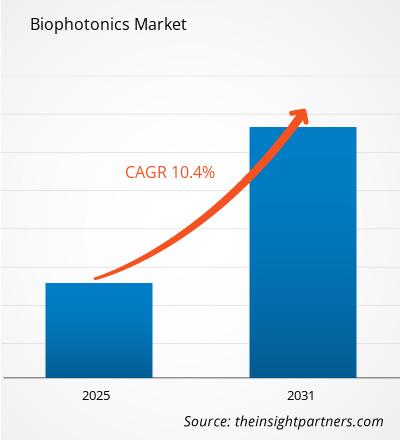
Segmentation Analysis
Technology
Technology is projected to grow at a CAGR of 7.4–8.1% during 2026–2034. Bio-photonics Market scope covers In-Vitro and In-Vivo technologies. Selection depends on application requirements, sample characteristics, and clinical or research objectives. In-Vivo leads through clinical diagnostic and therapeutic applications enabling real-time tissue assessment.
- In-Vitro technologies analyze biological samples outside the living organism, including microscopy, spectroscopy, and biosensing applications supporting research and diagnostic testing.
- In-Vivo technologies enable optical assessment within living organisms, including imaging, therapy, and monitoring applications for clinical diagnostics and therapeutic interventions.
Application
Application is forecast to grow at a CAGR of 7.6–8.3% during 2026–2034. See-Through Imaging, Microscopy, Inside Imaging, Spectro Molecular, Analytics Sensing, Light Therapy, Surface Imaging, and Biosensors are becoming more strategic as optical technology capabilities expand across clinical and research applications. Application adoption intensifies when diagnostic and therapeutic requirements drive technology selection.
- See-Through Imaging enables visualization through tissue using optical coherence tomography, endoscopy, and other transmission-based techniques for clinical diagnostic applications.
- Microscopy provides cellular and subcellular imaging for research and clinical applications, supporting fundamental biology, pathology, and diagnostic examination.
- Inside Imaging encompasses endoscopic and catheter-based visualization for internal organ assessment and minimally invasive diagnostic procedures.
- Spectro Molecular applications use spectroscopic techniques for molecular analysis and disease biomarker detection.
- Analytics Sensing applications employ optical techniques for detection and quantification of biological analytes.
- Light Therapy utilizes photobiomodulation and photodynamic therapy for therapeutic applications.
- Surface Imaging provides visualization of tissue surfaces for dermatology, surgery, and diagnostic applications.
- Biosensors integrate optical detection for point-of-care diagnostics and analytical applications.
End-Use
End-Use is expected to grow at a CAGR of 7.2–7.9% during 2026–2034. Medical Diagnostics, Medical Therapeutic, Tests and Components, and Non-medical Applications represent distinct market segments with varying technology requirements. End-use adoption grows when clinical and research applications drive technology investment.
- Medical Diagnostics includes clinical laboratory testing, pathology, and point-of-care diagnostics using optical technologies for disease detection.
- Medical Therapeutic applications encompass light-based therapies and surgical guidance using photonic technologies for treatment.
- Tests and Components includes diagnostic test manufacturing and component supply for optical diagnostic systems.
- Non-medical Application includes research, industrial, and environmental applications of bio-photonics technologies.
Opportunity Snapshot
| End-Use | Revenue Contribution | Trend Tag | Adoption Stage |
|---|---|---|---|
| Medical Diagnostics | High | Clinical Testing | Mature |
| Medical Therapeutic | Medium | Light Therapy | Scaling |
| Tests and Components | Medium | Assay Development | Mature |
| Non-medical Application | Low | Research Tools | Emerging |
Biophotonics Market Growth Drivers and Impact Analysis
Precision Medicine Initiatives Drive Optical Diagnostic Demand
Precision medicine approaches require molecular and cellular characterization of diseases, creating demand for optical technologies capable of providing detailed biological information. Bio-photonics enables non-invasive assessment of tissue characteristics, supporting personalized treatment decisions and disease monitoring. As precision medicine expands across oncology, neurology, and other specialties, demand for optical diagnostic technologies increases. The practical impact is increased investment in imaging systems, spectroscopic platforms, and diagnostic devices supporting precision medicine applications. Additionally, advances in artificial intelligence, machine learning, and digital pathology enhance the interpretation of optical imaging data, improving diagnostic accuracy and clinical decision-making. Healthcare providers increasingly integrate bio-photonics into precision care pathways to achieve earlier detection, optimized treatment selection, and continuous patient monitoring across diverse medical specialties.
Aging Population Increases Diagnostic and Therapeutic Demand
Global demographic shifts toward aging populations are increasing the prevalence of age-related diseases including cancer, cardiovascular disease, and neurodegenerative conditions. Bio-photonics technologies provide critical diagnostic, monitoring, and therapeutic capabilities for these conditions. Healthcare systems invest in optical technologies to address the growing disease burden. This driver benefits suppliers that can deliver reliable, clinically validated technologies for aging-related healthcare applications with demonstrated diagnostic or therapeutic value. Growing demand for minimally invasive procedures and routine health screening further accelerates adoption of advanced optical imaging and laser-based therapies. Continuous improvements in healthcare infrastructure, combined with increasing awareness of preventive diagnostics, strengthen long-term market opportunities for bio-photonics solution providers globally.
Research Funding Supports Technology Development and Adoption
Government and private research funding for life sciences and biomedical research drives bio-photonics technology development and adoption. Research institutions invest in advanced optical technologies to support fundamental research and translational applications. The expansion of research infrastructure across global life sciences creates consistent demand for optical technologies. The market impact is demand for sophisticated optical research platforms across academic, pharmaceutical, and research institution settings. Collaborative research initiatives involving universities, healthcare organizations, and biotechnology companies further accelerate innovation and commercialization of advanced bio-photonics solutions. Increased funding for interdisciplinary biomedical projects supports the development of next-generation imaging systems, enhancing research productivity while expanding clinical applications and technology transfer opportunities worldwide.
Biophotonics Market Future Trends
AI-Enhanced Optical Analysis Reshapes Diagnostic Capabilities
Bio-photonics Market trends point toward artificial intelligence-enhanced optical analysis enabling automated image interpretation, pattern recognition, and diagnostic support. The next product cycle will combine optical imaging with AI algorithms for more efficient, consistent, and accurate clinical and research analysis. This shift matters because healthcare systems increasingly value diagnostic efficiency and consistency. Vendors with AI capabilities and clinical validation will be better positioned as optical diagnostics become more intelligent and automated.
Portable and Point-of-Care Optical Technologies Expand Access
Portable and point-of-care optical technologies are emerging as solutions for expanding diagnostic access in resource-limited and decentralized healthcare settings. Next-generation devices will combine miniaturized optics with integrated analysis for rapid, accessible diagnostics. This evolution enables earlier disease detection and broader healthcare access. Suppliers that can deliver portable, validated diagnostic technologies will gain credibility with healthcare systems seeking expanded access solutions.
Biophotonics Market Opportunities
Point-of-Care Diagnostic Platforms for Decentralized Healthcare
Bio-photonics Market Forecasts support investment in point-of-care diagnostic platforms using optical technologies for rapid, accessible testing. Healthcare systems need portable, easy-to-use diagnostic solutions supporting decentralized testing and early disease detection. Providers can create opportunities by developing and validating optical point-of-care platforms. The opportunity is strongest where healthcare access limitations create demand for distributed diagnostic capabilities.
Image-Guided Therapy Solutions for Surgical Applications
Image-guided therapy and surgical navigation applications are expanding, creating demand for optical technologies supporting real-time tissue assessment and procedure guidance. Surgeons need reliable imaging tools for tumor margin assessment, tissue identification, and treatment monitoring. Suppliers with optical guidance expertise can capture opportunities in the surgical and interventional market. This opportunity rewards companies that combine optical technology with clinical utility and regulatory validation.
Recent Developments
- April 2026: ZEISS and EDGE Biotechnologies aim to pioneer advanced biopharma solutions and reshape the role of bioimaging from a “niche tool” to a “core quantitative decision-making engine” in the biopharma industry. By combining the leadership of ZEISS in optical innovation with EDGE’s assays and AI analytics, the collaboration aspires to deliver end-to-end solutions to customers that simplify their workflows, enhance their research capabilities, and enable faster decisions – as well as complementing customers’ existing AI missions with novel data sets.
- April 2025: PredxBio, a pioneer in AI-powered spatial biomarker discovery, announced a strategic collaboration with Hamamatsu Photonics K.K., a global leader in imaging technologies. The partnership unites Hamamatsu’s advanced MoxiePlex multiplex immunofluorescence imaging system with PredxBio’s SpaceIQ spatial analytics platform to deliver an integrated workflow tailored to basic and translational research tailored to immuno-oncology.
- May 2023: BD (Becton, Dickinson and Company) (NYSE: BDX), a leading global medical technology company, announced the worldwide commercial launch of a new-to-world cell sorting instrument featuring two breakthrough technologies that enable researchers to uncover more detailed information about cells that was previously invisible in traditional flow cytometry experiments. With BD CellView Image Technology, researchers can see detailed microscopic images of individual cells and sort at high speeds based on visual characteristics to confirm insights in real time. With BD SpectralFX Technology, researchers can achieve full-spectrum cell sorting, coupled with expanded performance enabled by a new modular optical architecture and system-aware algorithms, to perform high-parameter experiments within a simplified workflow. The combination of these technologies in the BD FACSDiscover S8 Cell Sorter expands capabilities for researchers, introducing the potential to transform research and cell-based therapeutic development across numerous fields, including drug discovery, immuno-oncology and genomics.
Frequently Asked Questions

- Comprehensive Market Sizing and Forecast Analysis
- Detailed Segmentation Analysis
- In-Depth Market Dynamics Assessment
- Regional and Country-Level Insights
- Competitive Landscape and Company Benchmarking
- Strategic Business Intelligence
Recent Reports
Testimonials

The Insight Partners' SCADA System Market report is comprehensive, with valuable insights on current trends and future forecasts. The team was highly professional, responsive, and supportive throughout. We are very satisfied and highly recommend their services.
RAN KEDEM Partner, Reali Technologies LTDs
I requested a report on a very specific software market and the team produced the report in a few days. The information was very relevant and well presented. I then requested some changes and additions to the report. The team was again very responsive and I got the final report in less than a week.
JEAN-HERVE JENN Chairman, Future Analytica
We worked with The Insight Partners for an important market study and forecast. They gave us clear insights into opportunities and risks, which helped shape our plans. Their research was easy to use and based on solid data. It helped us make smart, confident decisions. We highly recommend them.
PIYUSH NAGPAL Sr. Vice President, High Beam Global
The Insight Partners delivered insightful, well-structured market research with strong domain expertise. Their team was professional and responsive throughout. The user-friendly website made accessing industry reports seamless. We highly recommend them for reliable, high-quality research services
YUKIHIKO ADACHI CEO, Deep Blue, LLC.
This is the first time I have purchased a market report from The Insight Partners.While I was unsure at first, I visited their web site and felt more comfortable to take the risk and purchase a market report.I am completely satisfied with the quality of the report and customer service. I had several questions and comments with the initial report, but after a couple of dialogs over email with their analyst I believe I have a report that I can use as input to our strategic planning process.Thank you so much for taking the extra time and making this a positive experience.I will definitely recommend your service to others and you will be my first call when we need further market data.
JOHN SUZUKI President and Chief Executive Officer, Board Director, BK Technologies
I wish to appreciate your support and the professionalism you displayed in the course of attending to my request for information regarding to infectious disease IVD market in Nigeria. I appreciate your patience, your guidance, and the fact that you were willing to offer a discount, which eventually made it possible for us to close a deal. I look forward to engaging The Insight Partners in the future, all thanks to the impression you have created in me as a result of this first encounter.
DR CHIJIOKE ONYIA MANAGING DIRECTOR, PineCrest Healthcare Ltd.Reason to Buy
- Informed Decision-Making
- Understanding Market Dynamics
- Competitive Analysis
- Identifying Emerging Markets
- Customer Insights
- Market Forecasts
- Risk Mitigation
- Boosting Operational Efficiency
- Strategic Planning
- Investment Justification
- Tracking Industry Innovations
- Aligning with Regulatory Trends





 Get Free Sample for