
Cardiac Color Ultrasound Diagnostic Equipment Market Size, Growth & Trends by 2034
Coverage: by Type (General Class, Clinical Class); Application (Adults, Juveniles, Newborns), and Geography (North America, Europe, Asia Pacific, and South and Central America)
- Status : Data Released
- Report Code : TIPRE00011639
- Category : Life Sciences
- No. of Pages : 150
- Available Report Formats :


- Last update date : September 07, 2026


2025 Market Size
US$ 4.08 Bn
Base year value
2034 Forecast
US$ 7.56 Bn
Projected by 2034
CAGR 2026-2034
7.09 %
Growth rate
Addressable Market
US$ 52.53 Bn
(2026-2034)
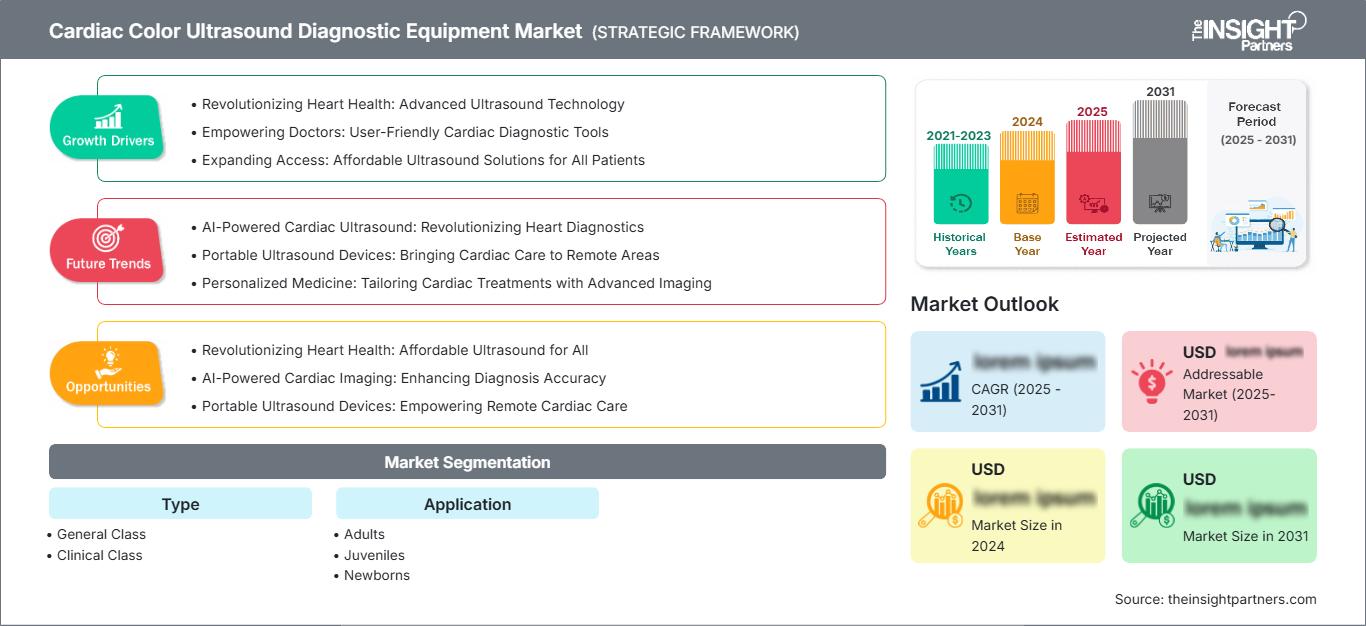
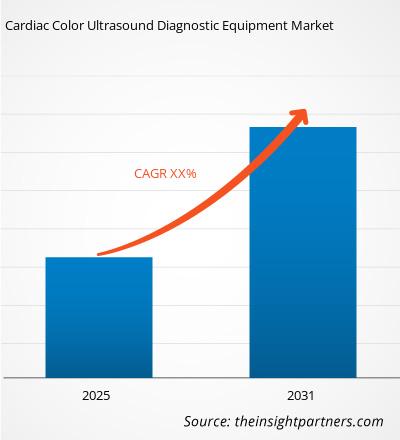
The global Cardiac Color Ultrasound Diagnostic Equipment market was valued at US$ 4.08 billion in 2025 and is expected to reach US$ 7.56 billion by 2034; it is estimated to record a CAGR of 7.09% during 2026-2034.
Cardiac Color Ultrasound Diagnostic Equipment Market Assessment and Insights
- North America: The region accounted for an estimated 34–36% share in 2025 and is expected to register a 7.4–7.9% CAGR during 2026–2034, supported by advanced cardiac imaging infrastructure, equipment replacement, and artificial intelligence integration.
- US: The country represented 81–84% of North American revenue in 2025 and is projected to record a 7.3–7.8% CAGR during 2026–2034 as outpatient echocardiography capacity expands.
- Europe: Europe held approximately 27–29% of the market in 2025 and is forecast to grow at a 7.1–7.6% CAGR during 2026–2034, led by Germany, the UK, France, Italy, and Spain.
- Asia Pacific: Asia Pacific captured an estimated 25–27% share in 2025 and is anticipated to post a 9.2–9.8% CAGR during 2026–2034, with China, Japan, India, and South Korea leading procurement.
- Largest Segment: Adults accounted for approximately 72–75% market share in 2025 and are expected to register a 7.6–8.1% CAGR during 2026–2034, reflecting high cardiovascular disease prevalence.
- High Growth Segment: Clinical Class equipment represented approximately 56–59% market share in 2025 and is forecast to expand at an 8.5–9.1% CAGR during 2026–2034 as advanced echocardiography capabilities become standard.
- Key companies analyzed in detail: Shanghai Aohua Photoelectricity Endoscope Co., Ltd., FUJIFILM Holdings Corporation, Guangdong Goworld Co., Ltd., GE HealthCare Technologies Inc., Shenzhen Mindray Bio-Medical Electronics Co., Ltd., Olympus Corporation, RICOH IMAGING COMPANY, LTD., Koninklijke Philips N.V., Siemens Healthineers AG, and SonoScape Medical Corp.
Source: The Insight Partners' analysis based on proprietary research, government publications, company annual reports, investor presentations, industry databases, and expert interviews.
Cardiac ultrasound devices have developed from traditional two-dimensional to color Doppler, three-dimensional imaging, strain analysis, and automated cardiac quantification. Modern manufacturing focuses on transducer sensitivity, signal processing capabilities, software compatibility, and ergonomic console. Common hardware is being adopted among vendors for general and clinical systems, while differentiations come from applications, services, and artificial intelligence offerings. This trend is in line with the Cardiac Color Ultrasound Diagnostic Equipment Market because healthcare facilities are looking for equipment that provides reproducibility, quick examinations, and the ability to work with adults, children, and neonates.
In the coming years, the market is expected to move towards flexible devices which allow upgrading software without changing hardware components. Hospital renovations in Asia Pacific and the Middle East, along with cardiovascular screenings programs, will contribute to geographical diversity. Regulation of artificial intelligence medical devices will push manufacturers to prove their algorithms' performance, bias mitigation, cybersecurity, and postmarket surveillance. Thus, service networks, training of clinicians, and technical assistance remotely will play a major role in purchasing decisions.
Cardiac Color Ultrasound Diagnostic Equipment Market Report Scope
| Report Attribute | Details |
|---|---|
| Market size in 2025 | US$ 4.08 Billion |
| Market Size by 2034 | US$ 7.56 Billion |
| Global CAGR (2026 - 2034) | 7.09% |
| Historical Data | 2021-2024 |
| Forecast period | 2026-2034 |
Cardiac Color Ultrasound Diagnostic Equipment Market Analysis
The market growth drivers stem from the demand for non-invasive evaluation of heart anatomy, blood flow, ventricular function, and valvular dysfunction. According to the World Health Organization, cardiovascular diseases were responsible for approximately 19.8 million deaths in 2022, accounting for about 32% of deaths worldwide. The disease burden drives demand for the use of echocardiography in cardiology, emergency care, intensive care, surgical procedures, and preventative tests.
Acoustic-component suppliers, transducer makers, electronics suppliers, software providers, equipment manufacturers, distributors, hospitals, and diagnostic centers comprise the industry value chain. The availability of phased-array probes and semiconductors affects production planning, whereas installation, calibration, training, and maintenance influence life-cycle costs. The companies' response consists of modular systems design, regional assembly, standardization of service components, and remote diagnostics. The hospitals evaluate not only the acquisition cost but also total ownership cost in addition to image quality, efficiency, cybersecurity, and compatibility with picture archiving systems.
The Cardiac Color Ultrasound Diagnostic Equipment Market analysis shows a competitive landscape characterized by competition among premium platforms and greater access to mid-range systems. GE HealthCare Technologies Inc., Koninklijke Philips N.V., and Siemens Healthineers AG compete in the area of advanced cardiac applications, workflow automation, and installed-base service relationships. Competition among Shenzhen Mindray Bio-Medical Electronics Co., Ltd. and SonoScape Medical Corp. includes feature-laden platforms across developed and developing health care systems.
FUJIFILM Holdings Corporation offers clinical workflow competencies in addition to imaging capabilities, whereas Guangdong Goworld Co., Ltd. takes part in competition with its ultrasound technology and manufacturing skills. Shanghai Aohua Photoelectricity Endoscope Co., Ltd., Olympus Corporation, and RICOH IMAGING COMPANY, LTD. offer adjacent optical, endoscopic, and medical imaging capabilities. Strategic investments target artificial intelligence, innovative transducers, portable equipment, and subscription-based software. Competitive position of companies requires not only technical specifications of their hardware but also automated, validated applications, and cybersecurity capabilities and local services as well.
● REPORT CUSTOMIZATION
Tailor This Report To Align With Your Specific Business Requirements
This report can be customized to align precisely with your business objectives, scope, and target markets. Customization options include tailored segmentation, geography, competitive analysis, and strategic insights to support informed decision-making.
Customize This Report →WHAT YOU CAN ADJUST
- ● Segmentations
- ● Geography
- ● Competitive Analysis
- ● Language Preferences
Cardiac Color Ultrasound Diagnostic Equipment Market: Strategic Insights
Regional Insights
North America Cardiac Color Ultrasound Diagnostic Equipment Market
North America held an estimated 34–36% Cardiac Color Ultrasound Diagnostic Equipment Market share in 2025 and is expected to register a 7.4–7.9% CAGR during 2026–2034. Demand is supported by established echocardiography laboratories, high cardiovascular caseloads, structured screening pathways, and regular replacement of hospital imaging systems. The region also provides a developed environment for evaluating artificial intelligence-assisted measurement and acquisition technologies.
The procurement of the technology has moved towards platforms incorporating color flow sensitivity, automatic calculation of ejection fractions, strain analysis, and standardized reports. Clinical class systems are preferred by academic hospitals while community centers have embraced smaller systems with software that can be scaled up. The US FDA’s lifecycle-based approach to AI-enabled medical devices encourages vendors to improve transparency, monitoring, and change management processes. This is an advantage for companies with more resources.
U.S. Cardiac Color Ultrasound Diagnostic Equipment Market
The US accounted for approximately 81–84% of North American revenue in 2025 and is projected to expand at a 7.3–7.8% CAGR during 2026–2034. The demand arises from the nation’s extensive hospital infrastructure, cardiovascular disease spending, and increasing use of echocardiography in the outpatient, emergency, critical care, and intervention sectors. Cardiac studies on adults will continue to dominate, whereas studies on children and newborns require specialized probes and reproducibility.
GE HealthCare Technologies Inc., Koninklijke Philips N.V., and Siemens Healthineers AG continue to enjoy a significant presence through the services they offer as well as through their application specialists and hospital connections. Committees evaluating the purchase are beginning to ask how automation can decrease variability and minimize time spent on the procedure while retaining the element of diagnostic control. Artificial intelligence technology for wall motion analysis, chamber measurement, and image acquisition is now strategically relevant. The American Heart Association found that there were 941,652 cardiovascular disease deaths in America in 2022.
Europe Cardiac Color Ultrasound Diagnostic Equipment Market
Europe represented an estimated 27–29% share in 2025 and is expected to post a 7.1–7.6% CAGR during 2026–2034. Germany is the foremost European nation, owing to its extensive hospital infrastructure, cardiology capabilities, and use of clinical-class medical equipment. Equipment replacement focuses on energy-efficiency, interoperability, automation of measurements, and maintenance longevity.
The UK excels in its centralized procurement process and workflow-based systems that aid in minimizing the backlogs in diagnosis. Germany places importance on advanced echocardiography, structural heart imaging, and maintenance services. The French are working to improve their hospitals and outpatient diagnostic facilities, while Italians and Spaniards create demand through imaging networks, cardiology departments, and portable devices.
Compliance with regulations, clinical validation, and patient privacy play a critical role in commercializing medical imaging products. More European vendors are now requesting devices that are compatible with electronic record systems and image archives and offer standard tests in multiple hospital networks. The pediatric cardiology centers create demand in certain applications for congenital heart disease.
APAC Cardiac Color Ultrasound Diagnostic Equipment Market
Asia Pacific accounted for an estimated 25–27% share in 2025 and is forecast to grow at a 9.2–9.8% CAGR during 2026–2034. In China, revenue leadership is generated through hospital growth, domestic production, and improvements in diagnostic capability at the county level. In Japan, emphasis lies on premium imaging and the need for replacements, whereas South Korea provides support through hospitals with cutting-edge technology.
India presents ample scope for growth due to the adoption of cardiac diagnostics that go beyond the metropolitan areas. Australia continues to have demand for high-end devices and point-of-care usage. It is a combination of all these factors that is driving the adoption rate in the region.
Middle East & Africa Cardiac Color Ultrasound Diagnostic Equipment Market
The Middle East and Africa market is projected to register a 6.8–7.4% CAGR during 2026–2034. Saudi Arabia leads regional demand through hospital construction, specialist-care investment, and broader health-system transformation. The UAE emphasizes advanced private hospitals and connected diagnostic infrastructure, while South Africa remains a principal sub-Saharan market.
Across the rest of the region, constrained specialist availability encourages interest in portable and automated systems. Energy reliability, equipment durability, distributor capabilities, and maintenance access remain decisive procurement considerations, particularly outside major urban hospitals.
Segmentation Analysis
Type
The type segment is projected to register a 7.8–8.4% CAGR during 2026–2034. The Cardiac Color Ultrasound Diagnostic Equipment Market scope covers general-class systems suited to routine examinations and clinical-class platforms designed for advanced cardiology workflows. Adoption depends on image quality, color-flow sensitivity, measurement automation, probe compatibility, service availability, and departmental case complexity. Clinical-class systems should progressively gain importance as advanced cardiac quantification becomes more widely used.
- General Class: General-class equipment addresses routine cardiac assessment, primary diagnostics, and lower-complexity hospital workflows, offering a balanced combination of affordability, portability, color Doppler functionality, and manageable training requirements.
- Clinical Class: Clinical-class platforms support advanced echocardiography, strain imaging, three-dimensional assessment, interventional planning, and complex valvular evaluation, making them strategically important for tertiary hospitals and dedicated cardiology centers.
Application
The application segment is anticipated to expand at a 7.7–8.3% CAGR during 2026–2034. Adult examinations generate the largest installed-base utilization, whereas juvenile and newborn applications require specialized transducers, presets, and anatomical measurement packages. Adoption is influenced by cardiovascular disease prevalence, congenital-heart screening, referral availability, and clinician expertise. Manufacturers that provide age-specific workflows can address a broader range of hospital departments and strengthen platform utilization.
- Adults: Adult applications dominate examination volumes because cardiac ultrasound is routinely used to investigate heart failure, coronary disease, cardiomyopathy, valve disorders, hypertension-related changes, and treatment response.
- Juveniles: Juvenile imaging requires adaptable probes, congenital-heart protocols, and age-adjusted measurements, creating specialized demand among pediatric hospitals, cardiology departments, and regional referral centers.
- Newborns: Newborn applications depend on high-resolution imaging, small-footprint transducers, rapid bedside assessment, and neonatal expertise, with strategic importance in intensive-care units and congenital-heart screening pathways.
Opportunity Snapshot
| Application | Revenue Contribution | Trend Tag | Adoption Stage |
| Adults | High | Strain Imaging | Mature |
| Juveniles | Medium | Congenital Protocols | Scaling |
| Newborns | Low | Neonatal Screening | Emerging |
Cardiac Color Ultrasound Diagnostic Equipment Market Growth Drivers and Impact Analysis
Increasing Cardiovascular Diagnostic Volumes
Cardiovascular disease prevalence is sustaining demand for non-invasive imaging that can support diagnosis, treatment planning, and follow-up. Color cardiac ultrasound enables clinicians to assess chamber dimensions, ventricular performance, blood-flow direction, valve function, and structural abnormalities without ionizing radiation. The WHO estimate of 19.8 million cardiovascular deaths in 2022 demonstrates the scale of the underlying clinical burden. More than three-quarters of cardiovascular deaths occur in low- and middle-income countries, creating a parallel requirement for accessible diagnostic capacity. Equipment manufacturers can address this need through tiered portfolios, compact systems, durable transducers, and simplified cardiac presets. Hospitals benefit when equipment supports multiple departments and patient categories, improving utilization and strengthening the economic case for procurement.
Artificial Intelligence Improves Echocardiography Productivity
Artificial intelligence is changing cardiac ultrasound by automating measurements, supporting image acquisition, and standardizing interpretation inputs. These functions can reduce repetitive manual steps and help laboratories manage rising examination volumes despite shortages of experienced sonographers. Regulatory authorization remains critical because algorithms must demonstrate appropriate performance across patient populations and operating conditions. In January 2025, the US Food and Drug Administration issued draft guidance addressing transparency, bias, documentation, postmarket monitoring, and total-product-lifecycle controls for artificial intelligence-enabled medical devices. Manufacturers that embed governance and clinical validation into development processes can reduce commercialization risk. For healthcare providers, the practical impact includes more reproducible measurements, faster preliminary analysis, improved protocol adherence, and the ability to deploy advanced functionality across distributed care environments.
Migration Toward Portable and Decentralized Cardiac Imaging
Compact and portable ultrasound platforms are extending cardiac imaging into emergency departments, intensive-care units, ambulatory centers, rural hospitals, and community screening programs. Decentralized deployment reduces patient transfers and allows clinicians to conduct timely assessments near the point of care. Color Doppler capability is especially valuable when rapid blood-flow and valve evaluation is required. The commercial impact extends beyond unit sales because portable fleets generate requirements for probe protection, software management, wireless connectivity, cybersecurity, training, and fleet-level service. Vendors must balance mobility with diagnostic consistency, battery performance, display quality, and infection-control requirements. Systems that can escalate from focused examinations to more comprehensive studies are positioned to attract institutions seeking flexible capital allocation and wider equipment utilization.
Cardiac Color Ultrasound Diagnostic Equipment Market Future Trends
Multimodal Artificial Intelligence and Predictive Cardiac Assessment
Cardiac Color Ultrasound Diagnostic Equipment Market trends will increasingly involve algorithms that combine images, Doppler measurements, strain data, patient history, and prior examinations. Instead of automating isolated measurements, future platforms are expected to identify longitudinal changes, prioritize abnormal studies, and generate structured decision-support outputs. Vendors will need representative training datasets, explainable outputs, and monitoring mechanisms capable of detecting performance drift. Hospitals will favour systems that preserve clinician oversight while transferring validated findings into reporting and electronic-record workflows. Commercial differentiation should consequently move toward clinical evidence, algorithm governance, application coverage, and enterprise-level deployment rather than relying solely on improvements in image resolution.
Software-Defined Platforms and Remote Capability Expansion
Ultrasound platforms are expected to become increasingly software-defined, enabling healthcare providers to add cardiac applications, workflow tools, and security updates after installation. This approach can extend useful equipment life and allow hospitals to align capabilities with changing clinical requirements. Manufacturers may develop subscription-based application packages, remote support, and centralized fleet-management services. Procurement models will therefore place greater emphasis on upgrade rights, data ownership, interoperability, and long-term software support. Suppliers able to maintain common architectures across general and clinical classes can accelerate feature deployment, simplify service inventories, and create recurring revenue while giving customers a more predictable technology-development pathway.
Cardiac Color Ultrasound Diagnostic Equipment Market Opportunities
Localized Cardiac Imaging Networks in Emerging Healthcare Systems
Emerging economies present an investment opportunity for manufacturers that combine localized distribution, clinical education, financing, and dependable service coverage. Cardiac Color Ultrasound Diagnostic Equipment Market Forecasts support targeted deployment in secondary hospitals, diagnostic centers, and regional referral networks where specialist imaging capacity remains uneven. Rather than selling isolated systems, suppliers can establish hub-and-spoke models that connect community sites with centralized cardiology expertise. Remote review, standardized acquisition protocols, multilingual interfaces, and modular training can improve diagnostic consistency. Investment priorities should include regional spare-parts inventories, application specialists, distributor certification, and equipment configurations capable of operating under variable infrastructure conditions. These measures can create sustainable adoption while reducing customer concerns regarding downtime and workforce readiness.
Age-Specific Clinical Applications and Transducer Portfolios
Pediatric and neonatal cardiology offer focused opportunities for companies capable of developing specialized probes, measurement packages, and congenital-heart workflows. These examinations involve smaller anatomical structures, faster heart rates, and patient-movement challenges, requiring high-resolution imaging and optimized presets. Manufacturers can invest in age-adjusted reference tools, automated congenital measurements, bedside system configurations, and training partnerships with specialist centers. Hospitals may favor platforms that support adult, juvenile, and newborn examinations because shared infrastructure improves utilization while retaining application specificity. Commercial success will depend on clinical validation, ergonomic transducer design, reliable color-flow sensitivity, and clear positioning for neonatal intensive-care units, pediatric referral centers, and congenital-heart screening programs.
Recent Developments
- August 2025: GE HealthCare Technologies Inc. launched the Vivid Pioneer cardiovascular ultrasound system after receiving CE Mark approval and US FDA 510(k) clearance. The platform introduced cSound Pioneer architecture, enhanced two-dimensional, four-dimensional, and color-flow imaging, new probes, and artificial intelligence performance designed for adult and pediatric cardiac examinations.
- August 2025: Koninklijke Philips N.V. released Transcend Plus for its EPIQ CVx and Affiniti CVx cardiovascular ultrasound systems. The update incorporated FDA-cleared two-dimensional and three-dimensional image-quality enhancements, artificial intelligence-enabled applications, and 2D Auto EF Advanced functionality intended to improve cardiac quantification, workflow speed, and diagnostic consistency.
- March 2025: Shenzhen Mindray Bio-Medical Electronics Co., Ltd. presented the Resona A20 premium ultrasound platform at the European Congress of Radiology. The system uses Acoustic Intelligence Technology, advanced transducers, multiparametric imaging functions, and artificial intelligence tools designed to improve image quality, operational efficiency, and clinical research capabilities.
Frequently Asked Questions

- Comprehensive Market Sizing and Forecast Analysis
- Detailed Segmentation Analysis
- In-Depth Market Dynamics Assessment
- Regional and Country-Level Insights
- Competitive Landscape and Company Benchmarking
- Strategic Business Intelligence
Recent Reports
Testimonials

The Insight Partners' SCADA System Market report is comprehensive, with valuable insights on current trends and future forecasts. The team was highly professional, responsive, and supportive throughout. We are very satisfied and highly recommend their services.
RAN KEDEM Partner, Reali Technologies LTDs
I requested a report on a very specific software market and the team produced the report in a few days. The information was very relevant and well presented. I then requested some changes and additions to the report. The team was again very responsive and I got the final report in less than a week.
JEAN-HERVE JENN Chairman, Future Analytica
We worked with The Insight Partners for an important market study and forecast. They gave us clear insights into opportunities and risks, which helped shape our plans. Their research was easy to use and based on solid data. It helped us make smart, confident decisions. We highly recommend them.
PIYUSH NAGPAL Sr. Vice President, High Beam Global
The Insight Partners delivered insightful, well-structured market research with strong domain expertise. Their team was professional and responsive throughout. The user-friendly website made accessing industry reports seamless. We highly recommend them for reliable, high-quality research services
YUKIHIKO ADACHI CEO, Deep Blue, LLC.
This is the first time I have purchased a market report from The Insight Partners.While I was unsure at first, I visited their web site and felt more comfortable to take the risk and purchase a market report.I am completely satisfied with the quality of the report and customer service. I had several questions and comments with the initial report, but after a couple of dialogs over email with their analyst I believe I have a report that I can use as input to our strategic planning process.Thank you so much for taking the extra time and making this a positive experience.I will definitely recommend your service to others and you will be my first call when we need further market data.
JOHN SUZUKI President and Chief Executive Officer, Board Director, BK Technologies
I wish to appreciate your support and the professionalism you displayed in the course of attending to my request for information regarding to infectious disease IVD market in Nigeria. I appreciate your patience, your guidance, and the fact that you were willing to offer a discount, which eventually made it possible for us to close a deal. I look forward to engaging The Insight Partners in the future, all thanks to the impression you have created in me as a result of this first encounter.
DR CHIJIOKE ONYIA MANAGING DIRECTOR, PineCrest Healthcare Ltd.Reason to Buy
- Informed Decision-Making
- Understanding Market Dynamics
- Competitive Analysis
- Identifying Emerging Markets
- Customer Insights
- Market Forecasts
- Risk Mitigation
- Boosting Operational Efficiency
- Strategic Planning
- Investment Justification
- Tracking Industry Innovations
- Aligning with Regulatory Trends





 Get Free Sample for