
Cartilage Repair Market Size, Growth & Demand by 2034
Coverage: By Modality Type (Chondroplasty and Microfracture, Autologous Chondrocyte Implantation, Osteochondral Allograft, Juvenile Allograft Fragments); Type ( Hyaline Cartilage, Fibrocartilage); Application ( Knee, Shoulder, Others); End User (Hospitals and Clinics, Ambulatory Surgical Centers, Others) , and Geography (North America, Europe, Asia Pacific, and South and Central America)
- Status : Data Released
- Report Code : TIPRE00009282
- Category : Life Sciences
- No. of Pages : 150
- Available Report Formats :


- Last update date : September 07, 2026


2025 Market Size
US$ 6.36 Bn
Base year value
2034 Forecast
US$ 10.06 Bn
Projected by 2034
CAGR 2026-2034
5.22 %
Growth rate
Addressable Market
US$ 74.46 Bn
(2026-2034)
The Cartilage Repair Market was valued at US$ 6.36 Billion in 2025 and is projected to reach US$ 10.06 Billion by 2034, registering a CAGR of 5.22% during 2026–2034. The growing diagnosis of focal cartilage lesions, sports-related joint injuries, and focus on preservation of native joints will fuel the demand for products. Innovations in terms of cell-based implants, osteochondral grafts, scaffolds, and minimally invasive delivery methods have increased the number of treatment options available in the market.
North America will continue to be the dominant region with CAGR of 4.8–5.4% until 2034. The Cartilage Repair Market Size in this region is positively impacted by well-established sports medicine community, availability of specialists, and wide arthroscopy access. Adoption of the product will depend on regulations for cell therapy and scaffold-based therapies, and investments of hospitals in joint preservation programs for early intervention of defects before patients become eligible for arthroplasty.
Cartilage Repair Market Assessment and Insights
- North America: North America accounted for 38–42% share in 2025 and is expected to record a CAGR between 4.8–5.4% during 2026–2034, supported by specialist availability, reimbursement infrastructure, and adoption of restorative biologic procedures.
- US: The US represented 84–88% of North American revenue in 2025 and is projected to expand at a CAGR between 4.9–5.5% during 2026–2034.
- Europe: Europe held a 27–31% share in 2025 and is forecast to register a CAGR between 4.6–5.2% during 2026–2034, led by Germany, the UK, France, Italy, and Spain.
- Asia Pacific: Asia Pacific accounted for 20–24% share in 2025 and is anticipated to grow at a CAGR between 6.1–6.8% during 2026–2034, with China, Japan, India, and South Korea leading adoption.
- Largest Segment: Chondroplasty and Microfracture held a 40–44% market share in 2025 and is projected to record a CAGR between 4.2–4.8% during 2026–2034.
- High Growth Segment: Autologous Chondrocyte Implantation represented a 21–25% market share in 2025 and is expected to grow at a CAGR between 6.3–7.0% during 2026–2034.
- Key companies analyzed in detail: Stryker Corporation, Zimmer Biomet Holdings, Inc., Smith & Nephew plc, Vericel Corporation, B. Braun Melsungen AG, Anika Therapeutics, Inc., Geistlich Pharma AG, Regentis Biomaterials Ltd., Arthro Kinetics AG, and RTI Surgical, Inc.
Source: The Insight Partners' analysis based on proprietary research, government publications, company annual reports, investor presentations, industry databases, and expert interviews.
From being symptom-based with debridement and marrow stimulation techniques, cartilage treatment methods have advanced towards those that attempt to repair joint surface architecture. While microfracture will still be within reach due to its compatibility with common arthroscopic procedures, matrix-mediated cell transplantation and biphasic scaffolds aim at producing lasting tissue. This trend will result in manufacturing focusing on cell proliferation, collagen purification, sterility of materials, and trackable allograft management. Cartilage Repair Market will need collaboration between biopsy sites, tissue processors, graft stores, orthopedic suppliers, rehabilitation specialists, and skilled surgeons.
During the coming period, research is anticipated to focus on single-stage treatments, arthroscopic systems, and scalable biologic production. The opportunity for growth in Asia Pacific is presented by developing orthopedic industry and increasing insurance coverage of the region, although Europe continues to play an essential role in creating evidence. With the help of clinical endpoint validation, reimbursement code clarification, and delaying joint replacement efforts of hospitals, companies with the ability to offer clinical training, cost evidence, and biologic consistency will be favored.
Cartilage Repair Market Report Scope
| Report Attribute | Details |
|---|---|
| Market size in 2025 | US$ 6.36 Billion |
| Market Size by 2034 | US$ 10.06 Billion |
| Global CAGR (2026 - 2034) | 5.22% |
| Historical Data | 2021-2024 |
| Forecast period | 2026-2034 |
Cartilage Repair Market Analysis
Cartilage Repair Market Drivers include increasing number of patients suffering from cartilage trauma, focal chondral lesions, and early-stage degeneration. Cartilage is not a self-repairing tissue; hence there will be a need to have solutions for its repair and replacement before arthroplasty. Knee joints account for the highest number of cases due to their high mechanical loads and injuries during sport or occupation and ligaments injury.
The supply chain network involves imaging facilities, orthopedic surgeons, hospitals, tissue banks, cell processing labs, biomaterial suppliers, distributors, and physiotherapists. The supply requirements vary significantly depending on the procedure. Microfracture surgery does not have complex supply needs while autologous implants involve biopsy, personalized implant production, cold chain, and additional operation. Allograft implants involve donor sourcing and screening process.
According to the Cartilage Repair Market report, competitive trends have shifted from implant availability to evidence quality, surgeon support, procedure reproducibility, and reimbursement preparedness. Stryker Corporation, Zimmer Biomet Holdings, Inc., and Smith & Nephew plc rely on existing orthopedic distribution networks to incorporate cartilage repair solutions within arthroscopic procedures. On the other hand, Vericel Corporation stands out by means of cell-based production, whereas Anika Therapeutics, Inc. and Geistlich Pharma AG focus on regeneration technologies.
The focus is now on the generation of production capabilities, regulatory approval, postmarket data, and devices that make surgery easier. B. Braun Melsungen AG, RTI Surgical, Inc., and specialized manufactures are well-positioned because of their experience in processing grafts and working with hospitals. For competitiveness, it will be important to identify correct lesion locations, ensure sustainable results, reduce learning curve, and build health economic cases for deferred replacement.
● REPORT CUSTOMIZATION
Tailor This Report To Align With Your Specific Business Requirements
This report can be customized to align precisely with your business objectives, scope, and target markets. Customization options include tailored segmentation, geography, competitive analysis, and strategic insights to support informed decision-making.
Customize This Report →WHAT YOU CAN ADJUST
- ● Segmentations
- ● Geography
- ● Competitive Analysis
- ● Language Preferences
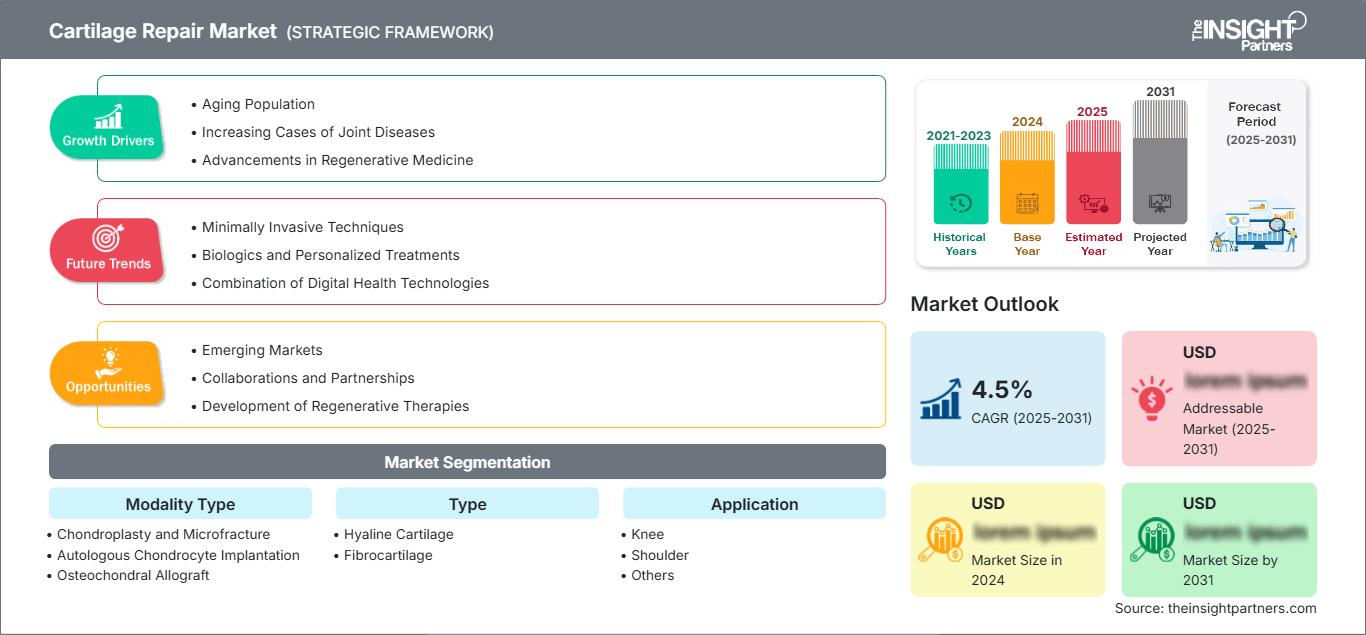
Cartilage Repair Market: Strategic Insights
Regional Insights
North America Cartilage Repair Market
North America accounted for 38-42% of the Cartilage Repair Market share in 2025 and anticipated to grow at a CAGR of 4.8–5.4% between 2026 and 2034. This region has been helped by the availability of arthroscopic capabilities, existing referral networks for orthopedics, and significant participation in activities that cause traumatic knee injury. Over 33 million US adults suffer from osteoarthritis, driving the need for joint preservation evaluation despite the non-indication of focal repair devices for severe disease.
Commercial success has been achieved in regions with hospitals that have a dedicated sports medicine team, cartilage restoration expertise, rehabilitation, and insurance authorization capability. US approval of cellular scaffolds and cartilage implants has diversified the technology portfolio, along with Canadian facilities due to their specific orthopedic programs. Maturity of the supply chain allows for autologous processing and allograft delivery, although disparity in coverage, difficult patient selection criteria, and need for extended rehabilitation limit procedure growth.
U.S. Cartilage Repair Market
In 2025, the US accounted for 84-88% of North American revenue and is expected to register a CAGR of 4.9-5.5% until 2034. The high availability of sports medicine experience, ambulatory arthroscopic capability, sophisticated magnetic resonance imaging, and tissue processing systems facilitates the treatment of lesions. The knee lesions are prevailing since focal lesions may arise along with damage of meniscus or ligaments and could develop into degenerative conditions.
Stryker Corporation, Zimmer Biomet Holdings, Inc., Smith & Nephew plc, Vericel Corporation, and Anika Therapeutics, Inc. have significant market or clinical presence in the country. The increased use of the approach will depend on the difference between simple bone marrow stimulation procedure and more complex regenerative procedures that require better justification and approval. Specific insurance coverage, training of surgeons, minimal invasiveness of the administration method, and five-year outcomes could decrease organizational uncertainties. However, inconsistent coverage and prolonged rehabilitation require decision-making and characterization of lesions.
Europe Cartilage Repair Market
The share of Europe in the worldwide revenues was estimated at 27–31% for 2025, and the region is forecasted to achieve a CAGR of 4.6–5.2% for 2026–2034. Germany is ahead of the pack by virtue of specialized orthopedic hospitals, sports medicine knowledge, and experience with matrix-assisted techniques. Clinical networks within the country ensure the evaluation of scaffolds, and the requirement of cost-effectiveness promotes the development of products showing sustainable functional recovery and prevention of secondary interventions.
The UK unites centralized technology assessment with high prevalence of musculoskeletal diseases, preferring comparative evidence and clear patient selection criteria. France, Italy, and Spain are involved via university hospitals and arthroscopy centers; however, purchasing processes and reimbursement differ from country to country. Geistlich Pharma AG, Arthro Kinetics AG, B. Braun Melsungen AG, and international vendors facilitate the access to the products in the region. The growth in Europe will depend on Medical Device Regulation compliance, multicenter evidence, and effective marketing of collagen matrices and osteochondral grafts.
APAC Cartilage Repair Market
The Asia Pacific region represented a 20–24% market share in 2025 and is expected to record a CAGR of 6.1–6.8% till 2034. Japan is most advanced in clinical terms, whereas China presents the largest base of patients that can expand. South Korea features highly advanced hospitals and the adoption of medical technologies, whereas India adds new orthopedic surgery capacity privately.
Sports medicine treatment modalities and sports medicine clinical research can be obtained in Australia. The development of the regional sports medicine market depends on the following aspects: hospital investments, availability of biomaterials in the region, training of surgeons, and regulatory consistency. Aging of the population and insurance penetration assist in treatment; nevertheless, cost and lack of specialists support arthroscopic surgeries.
Middle East & Africa Cartilage Repair Market
MEA will register a CAGR in the range of 4.4-5.0% from 2026 to 2034. Saudi Arabia will see investments towards hospital upgrade and specialists hiring, while UAE will focus on sports medicine and medical tourism. South Africa will continue being the main sub-Saharan country for procedures.
Infrastructure developments funded by oil money in the Gulf countries make high-end operating theaters and imaging accessible. Lack of reimbursement, grafting logistics, and rehabilitation facilities restrict adoption in other areas. In RO MEA, there will be an emphasis on tertiary hospitals and easy-to-use arthroscopic devices first.
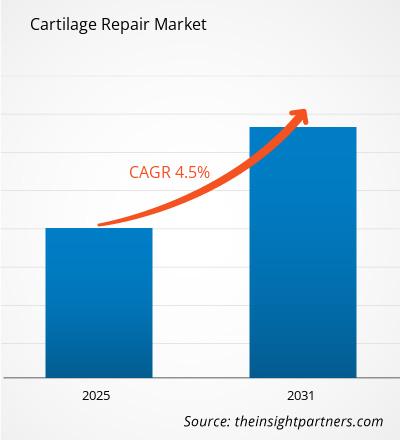
Segmentation Analysis
Modality Type
Modality type is forecast to record a CAGR of 5.0–5.6% during 2026–2034. The Cartilage Repair Market scope covers established marrow stimulation, cultured-cell implantation, and donor-derived graft approaches with distinct treatment costs and logistics. Selection depends on lesion size, subchondral bone involvement, patient age, prior procedures, and surgeon expertise. Demand is shifting toward techniques that balance durable restoration with fewer surgical stages.
- Chondroplasty and Microfracture: This segment remains the largest because hospitals can perform procedures arthroscopically with familiar instruments, limited product preparation, and comparatively accessible costs, particularly for small focal lesions.
- Autologous Chondrocyte Implantation: Adoption is concentrated in symptomatic full-thickness knee defects where patient-specific cell expansion and matrix-supported implantation can provide a restorative option after careful clinical selection.
- Osteochondral Allograft: Demand centers on larger defects involving cartilage and underlying bone, making donor screening, graft preservation, size matching, surgeon expertise, and timely tissue-bank coordination strategically important.
- Juvenile Allograft Fragments: The modality provides viable donor cartilage fragments for focal lesions and holds specialist value where clinicians seek a single-stage biologic procedure without autologous cell-culture timelines.
Type
Type segmentation is projected to register a CAGR of 5.1–5.7% during 2026–2034. Treatment development increasingly targets tissue that resembles native articular cartilage in composition and mechanical performance. Hyaline restoration commands clinical attention because of its load-bearing role, whereas fibrocartilage frequently results from marrow stimulation. Outcomes depend on defect preparation, joint alignment, biological environment, fixation, and adherence to rehabilitation protocols.
- Hyaline Cartilage: Hyaline-focused repair carries strategic importance because native articular surfaces require low-friction, load-distributing tissue, encouraging investment in cellular implants, osteochondral grafts, and scaffolds designed for durable integration.
- Fibrocartilage: Fibrocartilage remains associated with accessible marrow-stimulation procedures and shorter initial workflows, but its different mechanical properties can limit durability in larger or highly loaded defects.
Application
Application is expected to advance at a CAGR of 5.0–5.6% from 2026 to 2034. Knee procedures dominate because the joint sustains substantial load and frequently presents cartilage damage alongside meniscal or ligament injury. Shoulder repair addresses a smaller, anatomically diverse patient group. Diagnostic imaging, lesion mapping, alignment assessment, rehabilitation resources, and surgeon specialization shape procedural suitability and referral volumes.
- Knee: Knee repair holds the leading position because focal condylar and patellofemoral lesions are routinely evaluated in sports medicine, with multiple modalities available according to lesion depth and size.
- Shoulder: Shoulder demand is comparatively specialized, reflecting lower procedure volumes, variable lesion presentation, and the need to distinguish cartilage defects from instability, tendon pathology, and degenerative disease.
End User
End user demand is projected to grow at a CAGR of 5.1–5.7% during 2026–2034. Hospitals and clinics retain procedural leadership through multidisciplinary care and biologic product handling, while ambulatory surgical centers gain relevance for selected arthroscopic interventions. Site choice depends on anesthesia requirements, graft storage, cell-product coordination, payer contracts, postoperative monitoring, and the ability to manage concurrent ligament or meniscal procedures.
- Hospitals and Clinics: These facilities lead complex cases because they combine imaging, tissue handling, experienced surgical teams, inpatient contingency resources, and coordinated rehabilitation for cell-based implantation and osteochondral transplantation.
- Ambulatory Surgical Centers: Centers are scaling selected chondroplasty, microfracture, and minimally invasive implantation procedures by offering efficient scheduling and lower facility costs where patient risk and product logistics permit outpatient care.
Opportunity Snapshot
| End User | Revenue Contribution (High/Medium/Low) | Trend Tag | Adoption Stage (Emerging/Scaling/Mature) |
| Hospitals and Clinics | High | Biologic Centers | Mature |
| Ambulatory Surgical Centers | Medium | Outpatient Arthroscopy | Scaling |
| Others | Low | Specialty Access | Emerging |
Cartilage Repair Market Growth Drivers and Impact Analysis
Expanding Burden of Joint Injury and Early Degeneration
Traumatic lesions, repetitive loading, and joint instability create a sustained pipeline of patients requiring cartilage evaluation. Articular cartilage heals poorly because of its limited vascularity, and untreated focal defects may contribute to pain, functional loss, and degenerative progression. Approximately 33 million US adults have osteoarthritis, while cartilage injury and degeneration affect more than 500 million people worldwide. Although not every affected person qualifies for restorative surgery, greater disease awareness expands imaging, referral, and lesion detection. The commercial impact is strongest in knee-preservation programs that identify younger or active patients before diffuse osteoarthritis develops. Suppliers benefit when clinical pathways connect sports medicine, magnetic resonance imaging, arthroscopy, physiotherapy, and long-term monitoring.
Improved Evidence for Joint-Preserving Technologies
Long-term comparative data are becoming central to adoption because procurement committees and payers require evidence beyond short-term pain relief. Randomized studies of newer biphasic implants have reported sustained functional improvement and reduced progression to knee replacement or osteotomy compared with conventional surgical care. Cell-based products also benefit from accumulated real-world experience and refinements in implantation technique. Better evidence affects the Cartilage Repair Market Forecast by helping clinicians match products to lesion characteristics and by supporting reimbursement discussions. Companies that collect five-year outcomes, revision rates, rehabilitation measures, and return-to-activity data can strengthen value propositions. Evidence development also raises entry barriers for products lacking controlled trials, standardized manufacturing, or credible post-market surveillance.
Migration Toward Less Invasive Surgical Delivery
Arthroscopic delivery reduces incision size and aligns advanced repair with surgical workflows already used for cartilage assessment, meniscal repair, and ligament reconstruction. Less invasive instrumentation can simplify defect access, reduce operating-room disruption, and expand the number of trained surgeons willing to adopt restorative products. This transition is particularly important for cellularized scaffolds and conformable matrices that previously required open approaches. Commercial impact extends beyond implant sales because suppliers can provide delivery instruments, procedural education, case planning, and rehabilitation protocols. Ambulatory surgical centers may participate more actively when product handling and patient selection are standardized. However, minimally invasive delivery must preserve accurate lesion preparation, secure fixation, and appropriate cell orientation to avoid compromising clinical outcomes.
Cartilage Repair Market Future Trends
Patient-Specific Biologic and Mechanical Treatment Planning
Cartilage Repair Market trends will increasingly reflect patient stratification using lesion geometry, tissue quality, alignment, age, activity level, and subchondral bone status. Imaging analytics and structured clinical data may help surgeons distinguish cases suitable for marrow stimulation, cellular implantation, allograft transplantation, or biphasic scaffolds. Treatment planning will also incorporate concurrent correction of instability, malalignment, and meniscal deficiency. Manufacturers are likely to develop procedure-specific instruments and digital education around these decision pathways. Over time, evidence linking patient phenotypes to outcomes could reduce failed procedures, support payer authorization, and shift competition from broad product claims toward demonstrable performance in clearly defined clinical cohorts.
Single-Stage Scaffolds and Scalable Regenerative Manufacturing
Development priorities will favor products that combine biologic activity, structural support, and practical operating-room handling. Off-the-shelf scaffolds used with marrow-derived cells can eliminate culture periods, whereas advanced autologous platforms will pursue greater manufacturing capacity, automation, and geographic reach. These pathways will coexist because lesion complexity and regulatory requirements vary. Producers will invest in validated raw materials, closed processing, cold-chain visibility, and manufacturing redundancy to improve consistency. The Cartilage Repair Market will consequently become more sensitive to operational scale and quality systems. Technologies that shorten treatment timelines without sacrificing tissue integration or durability can broaden adoption beyond a limited group of highly specialized academic centers.
Cartilage Repair Market Opportunities
Build Integrated Cartilage Preservation Centers
Hospitals can create differentiated service lines by connecting orthopedic assessment, advanced imaging, cartilage restoration, graft coordination, and rehabilitation within a single pathway. Investment should prioritize surgeon training, patient-selection protocols, biologic handling, outcomes registries, and payer documentation. Such centers can manage cases across microfracture, osteochondral allograft, cultured-cell implantation, and scaffold-based procedures rather than relying on one modality. Suppliers can support this opportunity through procedural planning, inventory models, educational programs, and registry infrastructure. Integrated pathways also improve referral visibility and enable earlier treatment of focal lesions. The economic objective is not merely higher procedure volume, but predictable outcomes and evidence that joint-preserving intervention can defer more invasive surgery.
Localize Access Across High-Growth Asian Markets
China, India, South Korea, and Southeast Asian markets offer opportunities for companies that adapt pricing, training, and supply models to local hospital structures. Investors should consider regional biomaterial manufacturing, qualified distribution partners, surgeon fellowships, and multicenter evidence generated in representative Asian populations. Cellular therapies require sophisticated logistics, while off-the-shelf matrices may penetrate new centers more quickly. Market entry should therefore sequence products according to regulatory complexity and institutional readiness. Local health-economic evidence is essential because reimbursement and out-of-pocket exposure vary substantially. Companies that establish reliable product availability and clinical support can build durable relationships as private hospitals expand sports medicine and joint-preservation services.
Recent Developments
- March 2026: Vericel Corporation received US Food and Drug Administration approval to manufacture MACI at its new advanced therapy facility in Burlington, Massachusetts. Commercial production was scheduled to begin in the second quarter of 2026, substantially increasing cell-therapy capacity, strengthening supply continuity, and creating infrastructure that could support future MACI commercialization outside the US.
- November 2025: Anika Therapeutics, Inc. filed the third and final module of its Premarket Approval application for Hyalofast, a resorbable hyaluronic acid scaffold used with autologous bone marrow aspirate concentrate. The submission included 24-month FastTRACK trial results, additional analyses, and real-world evidence supporting evaluation for US treatment of articular knee cartilage defects.
- October 2025: Smith & Nephew plc announced that the American Medical Association established a Category I CPT code for procedures involving the CARTIHEAL AGILI-C Cartilage Repair Implant, effective January 1, 2027. The coding milestone is intended to streamline reimbursement pathways for the single-stage implant used in knee cartilage and osteochondral defects
Frequently Asked Questions

- Comprehensive Market Sizing and Forecast Analysis
- Detailed Segmentation Analysis
- In-Depth Market Dynamics Assessment
- Regional and Country-Level Insights
- Competitive Landscape and Company Benchmarking
- Strategic Business Intelligence
Recent Reports
Testimonials

The Insight Partners' SCADA System Market report is comprehensive, with valuable insights on current trends and future forecasts. The team was highly professional, responsive, and supportive throughout. We are very satisfied and highly recommend their services.
RAN KEDEM Partner, Reali Technologies LTDs
I requested a report on a very specific software market and the team produced the report in a few days. The information was very relevant and well presented. I then requested some changes and additions to the report. The team was again very responsive and I got the final report in less than a week.
JEAN-HERVE JENN Chairman, Future Analytica
We worked with The Insight Partners for an important market study and forecast. They gave us clear insights into opportunities and risks, which helped shape our plans. Their research was easy to use and based on solid data. It helped us make smart, confident decisions. We highly recommend them.
PIYUSH NAGPAL Sr. Vice President, High Beam Global
The Insight Partners delivered insightful, well-structured market research with strong domain expertise. Their team was professional and responsive throughout. The user-friendly website made accessing industry reports seamless. We highly recommend them for reliable, high-quality research services
YUKIHIKO ADACHI CEO, Deep Blue, LLC.
This is the first time I have purchased a market report from The Insight Partners.While I was unsure at first, I visited their web site and felt more comfortable to take the risk and purchase a market report.I am completely satisfied with the quality of the report and customer service. I had several questions and comments with the initial report, but after a couple of dialogs over email with their analyst I believe I have a report that I can use as input to our strategic planning process.Thank you so much for taking the extra time and making this a positive experience.I will definitely recommend your service to others and you will be my first call when we need further market data.
JOHN SUZUKI President and Chief Executive Officer, Board Director, BK Technologies
I wish to appreciate your support and the professionalism you displayed in the course of attending to my request for information regarding to infectious disease IVD market in Nigeria. I appreciate your patience, your guidance, and the fact that you were willing to offer a discount, which eventually made it possible for us to close a deal. I look forward to engaging The Insight Partners in the future, all thanks to the impression you have created in me as a result of this first encounter.
DR CHIJIOKE ONYIA MANAGING DIRECTOR, PineCrest Healthcare Ltd.Reason to Buy
- Informed Decision-Making
- Understanding Market Dynamics
- Competitive Analysis
- Identifying Emerging Markets
- Customer Insights
- Market Forecasts
- Risk Mitigation
- Boosting Operational Efficiency
- Strategic Planning
- Investment Justification
- Tracking Industry Innovations
- Aligning with Regulatory Trends





 Get Free Sample for