
Continuous Fiber Composites (CFC) for Aerospace Market Growth, Size & Forecast by 2034
Coverage: By Type (Glass Fiber, Carbon Fiber, Others); Application (Primary Structure, Secondary Structure, Aircraft Interior, Aircraft Engine), and Geography (North America, Europe, Asia Pacific, and South and Central America)
- Status : Data Released
- Report Code : TIPRE00015487
- Category : Chemicals and Materials
- No. of Pages : 150
- Available Report Formats :


- Last update date : September 01, 2026


2025 Market Size
US$ 3.01 Bn
Base year value
2034 Forecast
US$ 6.83 Bn
Projected by 2034
CAGR 2026-2034
9.53 %
Growth rate
Addressable Market
US$ 43.89 Bn
(2026-2034)
The Continuous Fiber Composites for Aerospace Market was valued at US$ 3.01 Billion in 2025 and is projected to reach US$ 6.83 Billion by 2034, advancing at a 9.53% CAGR during 2026–2034. The market is moving from being an advanced materials sector market to one in the aerospace manufacturing sector. This growth will be fueled by rising demand for commercial and military aircraft production, lightweighting requirements, automated composite manufacturing, and more continuous reinforcement in aerospace structures.
The demand for North America is forecast to grow at around 9.0% - 10.0% compound annual growth rate between 2026 and 2034 due to a recovery in commercial aircraft production and continued defense procurement activities. The region also has existing composite manufacturing expertise, robust aerospace supply chain, and investment in automated fiber placement systems and digital control manufacturing processes. These are expected to help drive a relatively robust Continuous Fiber Composites for Aerospace Market size.
Continuous Fiber Composites (CFC) for Aerospace Market Assessment and Insights
- North America: North America represented an estimated 34–38% share in 2025 and is expected to grow at a 9.0–10.0% CAGR during 2026–2034, supported by aircraft production, defense programs, composite manufacturing infrastructure, and advanced processing investments.
- US: The US accounted for approximately 70–75% of North America's 2025 share and is projected to expand at a 9.1–10.1% CAGR during 2026–2034, led by Boeing, defense programs, and advanced manufacturing.
- Europe: Europe held approximately 28–32% share in 2025 and is forecast to grow at a 8.5–9.5% CAGR during 2026–2034, with France, Germany, the UK, Italy, and Spain supported by Airbus-centered aerospace production.
- Asia Pacific: Asia Pacific represented approximately 24–28% share in 2025 and is projected to advance at a 10.0–11.0% CAGR during 2026–2034, with China, Japan, South Korea, and India strengthening aerospace manufacturing capabilities.
- Largest Segment: Carbon Fiber represented approximately 82–86% market share in 2025 and is expected to grow at a 7.8–8.8% CAGR during 2026–2034, reflecting superior stiffness-to-weight performance.
- High Growth Segment: Aircraft Engine represented approximately 10–14% market share in 2025 and is estimated to grow at a 10.0–11.0% CAGR during 2026–2034, supported by lightweight thermal-management components.
- Key companies analyzed in detail: Chomarat, Continuous Composites, Cytec Solvay Group, GKN Plc., Gurit Holding AG, Hexcel Corporation, Honeywell International Inc., Safran SA, Spirit AeroSystems, Toray Industries, Inc.
Source: The Insight Partners' analysis based on proprietary research, government publications, company annual reports, investor presentations, industry databases, and expert interviews.
The Continuous Fiber Composites for Aerospace Market has progressed with advancements in the area of continuous-fiber placement, resins, automated production and digital control of the path of reinforcement. Carbon fiber retains its market position due to its preference in aircraft structures where there is a need for sturdiness, durability, endurance and lightweight construction. The example of Boeing's programs for composite wing manufacture shows a growing trend towards automation. Toray Company has vertical integration from carbon fiber to composite products manufacturing.
A further trend for aircraft manufacturers will be focus on the producibility of materials in addition to their properties. Production of aerospace components in Asia Pacific, aircraft assembly facilities expansion and modernization of military aircraft fleet will result in an increased number of suppliers. Digital manufacturing will help to save on materials and to optimize the load path. Sustainability concerns will drive the development of recyclability of composite materials.
Continuous Fiber Composites (CFC) for Aerospace Market Report Scope
| Report Attribute | Details |
|---|---|
| Market size in 2025 | US$ 3.01 Billion |
| Market Size by 2034 | US$ 6.83 Billion |
| Global CAGR (2026 - 2034) | 9.53% |
| Historical Data | 2021-2024 |
| Forecast period | 2026-2034 |
Continuous Fiber Composites (CFC) for Aerospace Market Analysis
Continuous Fiber Composites for Aerospace Market Demand is being influenced by weight reduction of aircraft, fuel efficiency requirements, and increased rate of production. The value chain comprises of fiber producers, resin/prepreg suppliers, intermediate materials producers, automated processing providers, Tier 1 suppliers, and aircraft Original Equipment Manufacturer. Availability and qualification of carbon fibers are supply factors due to the long certification period and constant property of materials used in aerospace programs.
Aircraft program suppliers have started delivering not only reinforcement materials but material processing solutions too. Automated fiber placement, resin infusion, pultrusion, and digital fiber steering could increase structural efficiency and lower assembly requirements. Thus, resilience in the supply chain is becoming competitive advantage when the program uses qualified carbon fiber, resin systems, and unique processing machinery. Airbus has produced 793 commercial aircraft in 2025, and it demonstrates the production environment of the market where composite material is required.
The competitive environment in the Continuous Fiber Composites for Aerospace Market Report comprises vertically integrated material producers alongside special composite producers and aerospace Tier 1 suppliers. Hexcel Corporation, Toray Industries, Inc., Gurit Holding AG, and Chomarat compete using advanced materials portfolio whereas Continuous Composites uses digitally controlled continuous fiber manufacturing technology. Spirit AeroSystems and GKN Plc. are involved at a lower level using complex aerostructure manufacturing technology that could give rise to integrated supply.
Strategic investments are made in the area of automation, engineering, qualification, and local manufacturing. Investment by Hexcel in 2026 together with Wichita State University's National Institute for Aviation Research reflects this trend towards integrated composite design and automation of manufacturing process. On the other hand, Toray Industries works with carbon fiber, prepregs, fabrics, and composites and thus gains an advantage over coordinating material and processing technologies within aerospace projects.
● REPORT CUSTOMIZATION
Tailor This Report To Align With Your Specific Business Requirements
This report can be customized to align precisely with your business objectives, scope, and target markets. Customization options include tailored segmentation, geography, competitive analysis, and strategic insights to support informed decision-making.
Customize This Report →WHAT YOU CAN ADJUST
- ● Segmentations
- ● Geography
- ● Competitive Analysis
- ● Language Preferences
Continuous Fiber Composites (CFC) for Aerospace Market: Strategic Insights
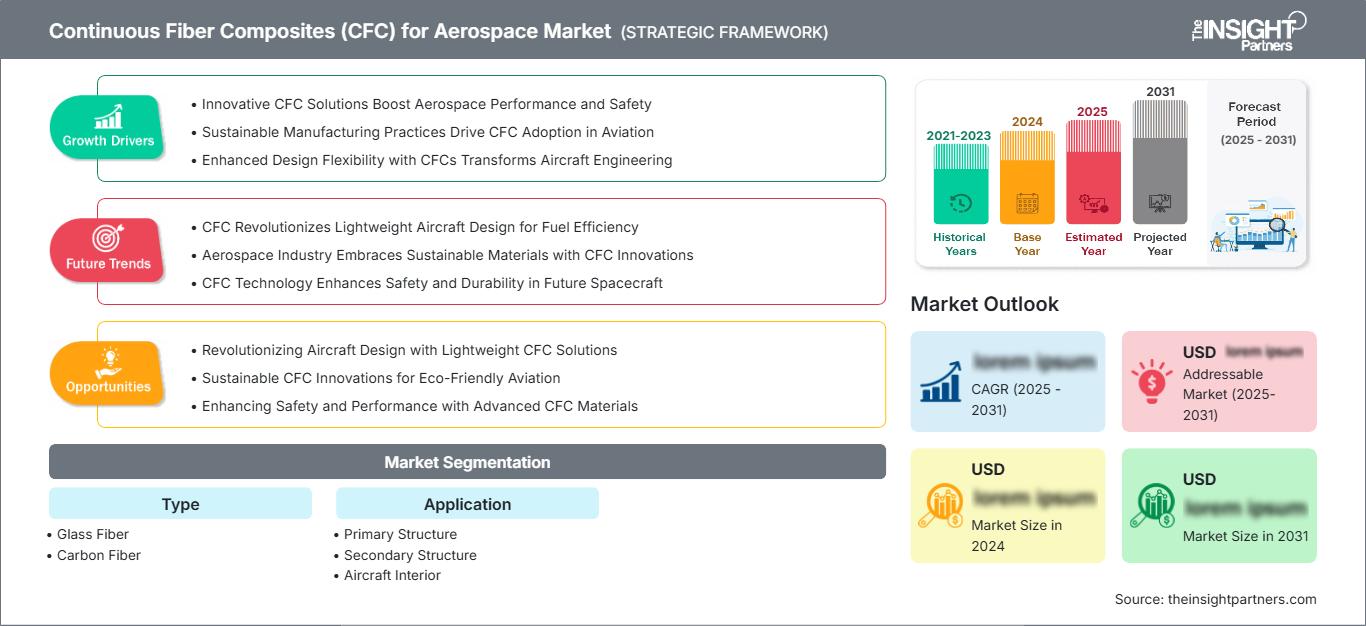
Regional Insights
North America Continuous Fiber Composites for Aerospace Market
North America is estimated to account for 34–38% of the Continuous Fiber Composites for Aerospace Market share in 2025, with growth of 9.0–10.0% CAGR during 2026–2034. The US dominates regional demand because Boeing, defense contractors, composite Tier 1 suppliers, and specialized material producers create a dense aerospace ecosystem. Continuous-fiber processing is increasingly relevant to wing, fuselage, control-surface, and structural applications.
This area enjoys advantages such as certified capabilities and investments in automated production. The Boeing Composite Wing Center is constructing large 777X wings by using automated fiber placement technology, while future manufacturing projects stress process control and digital manufacturing technologies. The defense market adds to the demand side since lighter but strong structures will increase efficiency of payloads and range.
U.S. Continuous Fiber Composites for Aerospace Market
The United States is responsible for about 70-75% of North America's market in 2025 and is estimated to grow at a CAGR of 9.1-10.1% from 2026-2034. Boeing, Honeywell International Inc., Spirit AeroSystems, Hexcel Corporation, and Continuous Composites make up a developed ecosystem that includes materials, engineering, manufacturing, and defense applications.
Manufacture of commercial aircrafts, modernization of military equipment, unmanned aerial vehicles, and advanced air mobility constitute different application avenues. Large supplier base of the country helps qualify aerospace materials. The case of Continuous Composites working with Aurora Flight Sciences and US Army shows how digitally fabricated continuous-fiber composites are being brought to defense application, while Hexcel sets up an application center.
Europe Continuous Fiber Composites for Aerospace Market
Europe is forecast to be in the range of 28-32% by 2025, which is expected to grow at CAGR of 8.5-9.5% in 2026-2034, with France being a prominent hub. Airbus production, European defense projects, as well as already existing composite processing capabilities enable such adoption within the region.
The UK has a competitive advantage in the field of aerostructures and advanced materials, while Germany is a leader in terms of production and engineering/research capabilities. France has Airbus and Safran-focused aerospace production. Italy and Spain have aerostructures, aircraft assembly, and defense manufacturing capabilities.
APAC Continuous Fiber Composites for Aerospace Market
The APAC region is projected to hold 24-28% market share by 2025 and grow at a 10.0-11.0% CAGR from 2026 to 2034. Leadership in regional growth will be witnessed by China, followed by Japan, South Korea, India, and Australia, which have growing manufacturing capability in the aerospace industry.
China’s commercial aerospace goals, Japan’s advanced material know-how, India’s localization policies, and Australia’s composite material manufacturing are some of the factors driving demand. Notably, India stands out owing to government programs that promote aircraft component manufacturing and aerospace supply chain in the country. Expansion in aerospace manufacturing in India provides business opportunities for composites.
Middle East & Africa Continuous Fiber Composites for Aerospace Market
Middle East & Africa remains smaller than the major aerospace manufacturing regions but is positioned for steady expansion at an estimated 8.0–9.0% CAGR during 2026–2034. Saudi Arabia and the UAE lead regional aerospace investment, supported by diversification and defense strategies.
South Africa brings proven aerospace engineering capability, and the rest of MEA is developing aerospace capability through aviation infrastructure, defense spending, MROs, and localization. There is potential for energy availability and industrial investments to aid composite manufacturing; however, certification capability, availability of labor force, and supply chain depth pose significant challenges.
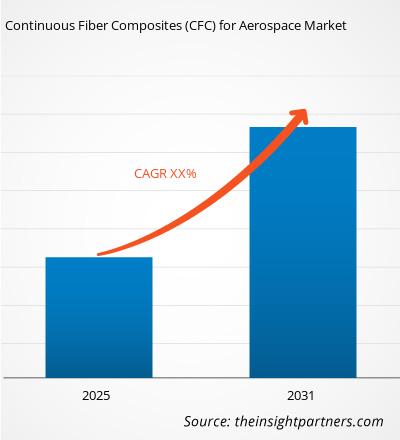
Segmentation Analysis
Type
Type segment in the Continuous Fiber Composites for Aerospace Market is differentiated by the reinforcement material used to manufacture continuous composite structures. Carbon fiber commands the majority of aerospace demand because of its high specific strength and stiffness, while glass fiber remains relevant where cost, impact performance, electrical characteristics, or specific application requirements influence material selection. The segment is expected to grow at a 8.0–9.0% CAGR during 2026–2034. The Continuous Fiber Composites for Aerospace Market scope therefore remains strongly linked to high-performance reinforcement requirements.
- Glass Fiber: Glass fiber provides comparatively economical reinforcement with strong corrosion resistance and favorable electrical properties. Aerospace applications use it selectively where extreme stiffness requirements are less restrictive, including interiors, secondary structures, and specialized components.
- Carbon Fiber: Carbon fiber dominates aerospace structural applications because its high stiffness-to-weight ratio supports weight reduction without compromising structural performance. Its established qualification history across commercial and defense aircraft reinforces long-term demand.
Application
Application segment in the Continuous Fiber Composites for Aerospace Market determines how continuous-fiber materials are incorporated into aircraft systems, with structural applications representing the largest consumption base. Primary and secondary structures benefit most directly from lightweighting, while interiors and engine-related components offer specialized opportunities requiring tailored thermal, mechanical, or dimensional performance. The segment is projected to advance at a 9.0–10.0% CAGR during 2026–2034.
- Primary Structure: Primary structures require stringent mechanical performance and certification, making continuous reinforcement particularly valuable for wings, fuselage sections, spars, and other load-bearing components where weight savings affect aircraft efficiency.
- Secondary Structure: Secondary structures provide a broader qualification pathway for continuous composites, including fairings, doors, control surfaces, and support components where stiffness and weight reduction remain important.
- Aircraft Interior: Interior applications include structural panels, partitions, flooring-related components, and lightweight cabin systems. Adoption is supported by airline efforts to reduce aircraft weight while maintaining durability and design flexibility.
- Aircraft Engine: Engine applications represent a specialized opportunity where continuous composites can support lightweight components exposed to demanding thermal and mechanical conditions. Material selection depends heavily on temperature capability and qualification requirements.
Opportunity Snapshot
| Application | Revenue Contribution | Trend Tag | Adoption Stage |
|---|---|---|---|
| Primary Structure | High | Load Optimization | Mature |
| Secondary Structure | High | Weight Reduction | Mature |
| Aircraft Interior | Medium | Cabin Lightweighting | Scaling |
| Aircraft Engine | Medium | Thermal Composites | Emerging |
Continuous Fiber Composites (CFC) for Aerospace Market Growth Drivers and Impact Analysis
Rising aircraft production and fleet replacement requirements
Commercial aircraft production is a fundamental demand catalyst because every increase in aircraft output creates incremental requirements for lightweight structural materials. Airbus delivered 793 commercial aircraft in 2025 and ended the year with an order backlog of 8,754 aircraft, indicating substantial forward production visibility. Boeing is likewise working to stabilize manufacturing and prepare for higher production rates. Higher aircraft volumes increase demand for qualified composite materials while encouraging suppliers to invest in production capacity, automation, and quality systems. The impact is particularly significant for continuous-fiber applications because these materials are incorporated into structural components where production programs can generate recurring, high-value demand over extended aircraft lifecycles.
Aircraft lightweighting and structural efficiency requirements
Weight reduction remains a central engineering objective because lower structural mass can improve fuel efficiency, payload capability, range, and operating economics. Continuous reinforcement enables engineers to align fibers with expected load paths, allowing material to be concentrated where structural performance is required. This capability is particularly valuable in primary structures, where small reductions in mass can influence aircraft-level performance. The competitive effect extends beyond fiber properties because manufacturing processes determine how efficiently reinforcement can be positioned. Digital fiber steering and automated placement can reduce unnecessary material and improve structural integration. Consequently, aerospace manufacturers are increasingly evaluating continuous composites as part of broader design-for-manufacturing strategies rather than treating them solely as replacement materials for conventional metallic structures.
Expansion of automated composite manufacturing technologies
Automation is improving the economic feasibility of producing complex continuous-fiber components at aerospace quality levels. Automated fiber placement, resin infusion, digitally controlled deposition, and advanced inspection technologies can increase repeatability while reducing manual labor requirements. Continuous Composites' CF3D technology illustrates the direction of development, combining fiber steering with digitally controlled production and rapid curing. In January 2026, the company received a US$1.25 million AFWERX Manufacturing Challenge contract to advance joining and stiffening approaches for aerospace structures. Such projects demonstrate how manufacturing innovation can expand the addressable application base beyond conventional composite fabrication.
Continuous Fiber Composites (CFC) for Aerospace Market Future Trends
Digital fiber placement will become increasingly design integrated
The next phase of manufacturing will connect structural design software directly with fiber-placement strategies, enabling engineers to optimize reinforcement according to actual load paths before production begins. This approach can reduce unnecessary material, minimize joints, and create highly tailored structures. Computational modeling will increasingly evaluate fiber orientation, resin behavior, manufacturing tolerances, and structural performance together. As certification methodologies mature, digitally defined manufacturing instructions could become more important in qualifying repeatable composite processes. The Continuous Fiber Composites for Aerospace Market trends are therefore likely to move beyond automation alone toward integrated engineering platforms where design, simulation, manufacturing, and inspection operate as a connected workflow. This evolution should favor suppliers capable of combining materials expertise with software, process-control, and application-engineering capabilities.
Thermoplastic and recyclable composite systems will gain attention
Environmental considerations are likely to influence future material development, particularly as aerospace companies seek lower manufacturing waste and improved end-of-life pathways. Thermoplastic matrices can provide shorter processing cycles and potential recyclability advantages, while recycling technologies for carbon fiber can recover reinforcement from manufacturing scrap and end-of-life components. Toray is already developing recycled carbon fiber applications and exploring customer-factory scrap recovery. Over time, aerospace qualification requirements will determine how rapidly these materials move into flight-critical applications. The strongest opportunity may initially emerge in secondary structures, interiors, and noncritical components, where qualification barriers can be lower.
Continuous Fiber Composites (CFC) for Aerospace Market Opportunities
Localization of composite supply chains in emerging aerospace hubs
Suppliers can capture new opportunities by establishing qualified manufacturing, conversion, and engineering capabilities closer to emerging aerospace production centers. India offers a particularly relevant example because government programs are promoting aircraft component localization, defense manufacturing, and international aerospace partnerships. The country has also expanded production infrastructure for military aircraft and aircraft components. Similar opportunities exist in Southeast Asia and selected Middle Eastern markets as governments pursue aerospace industrialization. Companies entering these markets should prioritize qualification support, technical training, local engineering, and partnerships with established Tier 1 suppliers rather than focusing only on material sales. The Continuous Fiber Composites for Aerospace Market Forecasts therefore favor business models that combine local production capability with global certification and supply-chain standards.
Integrated material and process solutions for complex structures
A second opportunity lies in supplying integrated solutions that combine reinforcement, resin systems, processing equipment, simulation, inspection, and component engineering. Aerospace customers increasingly evaluate total manufacturing economics rather than fiber price alone, particularly for complex structures requiring automated production and stringent quality control. Suppliers with vertically integrated capabilities can reduce qualification interfaces and accelerate application development. This creates room for partnerships between material producers, equipment developers, aerospace Tier 1 manufacturers, and digital engineering firms. Companies can also differentiate through process monitoring, predictive quality systems, and customized fiber architectures. Such capabilities can increase switching costs after qualification and create longer-term program relationships while helping aircraft manufacturers achieve repeatable production at higher rates.
Recent Developments
- May 2026: Hexcel Corporation — Hexcel and Wichita State University's National Institute for Aviation Research broke ground on the Hexcel Applications Center. The facility is intended to accelerate end-to-end composite development, automated processing, and aerospace manufacturing innovation. The collaboration expands Hexcel's application-development ecosystem and strengthens its ability to support aerospace customers from material innovation through structural realization.
- January 2026: Continuous Composites — Continuous Composites received a US$1.25 million AFWERX Manufacturing Challenge contract to advance joining and stiffening approaches for aerospace structures. The project applies CF3D's digitally controlled continuous-fiber manufacturing capabilities to load-bearing stiffeners, targeting higher structural efficiency while reducing weight and improving integration of composite panels.
Frequently Asked Questions

- Comprehensive Market Sizing and Forecast Analysis
- Detailed Segmentation Analysis
- In-Depth Market Dynamics Assessment
- Regional and Country-Level Insights
- Competitive Landscape and Company Benchmarking
- Strategic Business Intelligence
Recent Reports
Testimonials

The Insight Partners' SCADA System Market report is comprehensive, with valuable insights on current trends and future forecasts. The team was highly professional, responsive, and supportive throughout. We are very satisfied and highly recommend their services.
RAN KEDEM Partner, Reali Technologies LTDs
I requested a report on a very specific software market and the team produced the report in a few days. The information was very relevant and well presented. I then requested some changes and additions to the report. The team was again very responsive and I got the final report in less than a week.
JEAN-HERVE JENN Chairman, Future Analytica
We worked with The Insight Partners for an important market study and forecast. They gave us clear insights into opportunities and risks, which helped shape our plans. Their research was easy to use and based on solid data. It helped us make smart, confident decisions. We highly recommend them.
PIYUSH NAGPAL Sr. Vice President, High Beam Global
The Insight Partners delivered insightful, well-structured market research with strong domain expertise. Their team was professional and responsive throughout. The user-friendly website made accessing industry reports seamless. We highly recommend them for reliable, high-quality research services
YUKIHIKO ADACHI CEO, Deep Blue, LLC.
This is the first time I have purchased a market report from The Insight Partners.While I was unsure at first, I visited their web site and felt more comfortable to take the risk and purchase a market report.I am completely satisfied with the quality of the report and customer service. I had several questions and comments with the initial report, but after a couple of dialogs over email with their analyst I believe I have a report that I can use as input to our strategic planning process.Thank you so much for taking the extra time and making this a positive experience.I will definitely recommend your service to others and you will be my first call when we need further market data.
JOHN SUZUKI President and Chief Executive Officer, Board Director, BK Technologies
I wish to appreciate your support and the professionalism you displayed in the course of attending to my request for information regarding to infectious disease IVD market in Nigeria. I appreciate your patience, your guidance, and the fact that you were willing to offer a discount, which eventually made it possible for us to close a deal. I look forward to engaging The Insight Partners in the future, all thanks to the impression you have created in me as a result of this first encounter.
DR CHIJIOKE ONYIA MANAGING DIRECTOR, PineCrest Healthcare Ltd.Reason to Buy
- Informed Decision-Making
- Understanding Market Dynamics
- Competitive Analysis
- Identifying Emerging Markets
- Customer Insights
- Market Forecasts
- Risk Mitigation
- Boosting Operational Efficiency
- Strategic Planning
- Investment Justification
- Tracking Industry Innovations
- Aligning with Regulatory Trends





 Get Free Sample for