
Flexible Electronics And Circuit Market Growth, Size & Forecast by 2034
Coverage: by Structure Type (Single-Sided Flex Circuit, Double-Sided Flex Circuit, Multilayer Flex Circuit, Rigid Flex Circuit, and OTHERS); Applications (Display, Thin-Film Photovoltaics (PV), Printed Sensor, Battery, OLED Lighting and Others); Industry (Consumer Electronics, Healthcare, Military, Defense, and Aerospace, Energy & Power, Automotive, and Others) , and Geography (North America, Europe, Asia Pacific, and South and Central America)
- Status : Data Released
- Report Code : TIPTE100001319
- Category : Electronics and Semiconductor
- No. of Pages : 150
- Available Report Formats :


- Last update date : September 09, 2026


2025 Market Size
US$ 44.20 Bn
Base year value
2034 Forecast
US$ 88.10 Bn
Projected by 2034
CAGR 2026-2034
7.97 %
Growth rate
Addressable Market
US$ 595.19 Bn
(2026-2034)
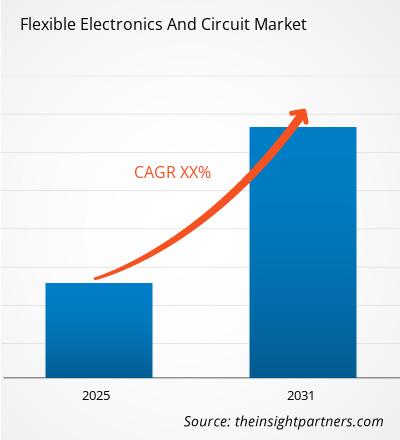
The Flexible Electronics & Circuit Market is positioned for sustained expansion as bendable substrates, thin interconnects, flexible displays, and conformable power components move from specialized applications toward broader commercial deployment. The market is valued at US$ 44.20 Billion in 2025 and is projected to reach US$ 88.10 Billion by 2034, registering a CAGR of 7.97% during 2026–2034. Demand is increasingly shaped by compact product architectures, lightweight electronics, and higher integration requirements.
North America is expected to remain a significant technology and commercialization center, supported by healthcare wearables, aerospace electronics, automotive interfaces, and advanced semiconductor ecosystems. The Flexible Electronics & Circuit Market size in the region is assessed at a 6.8–7.6% CAGR through 2034, with domestic research programs, reshoring initiatives, and demand for lightweight electronic assemblies providing structural support.
Flexible Electronics And Circuit Market Assessment and Insights
- North America: North America is expected to hold a 25–29% Flexible Electronics & Circuit Market share in 2025 and expand at a 6.8–7.6% CAGR between 2026–2034, supported by healthcare wearables, aerospace systems, automotive displays, and domestic electronics manufacturing initiatives.
- US: The US represents 78–82% of North America's 2025 market and is projected to grow at a 7.0–7.8% CAGR between 2026–2034, led by healthcare, defense, and advanced electronics.
- Europe: Europe is estimated to account for 19–23% share in 2025 and grow at a 7.1–7.9% CAGR through 2034, with Germany, the UK, France, Italy, and Spain supporting automotive, industrial, healthcare, and energy applications.
- Asia Pacific: Asia Pacific is assessed at a 31–35% share in 2025 and a 8.5–9.3% CAGR through 2034, with China, Japan, South Korea, and India driving display manufacturing, automotive electronics, batteries, and printed technologies.
- Largest Segment: Display applications represent an estimated 42–46% market share in 2025, with a 7.8–8.4% CAGR through 2034, supported by foldable, curved, and lightweight display architectures.
- High Growth Segment: Healthcare is estimated at a 9–11% market share in 2025 and is projected to expand at a 9.6–10.6% CAGR through 2034, reflecting wearable and monitoring applications.
- Key companies analyzed in detail: Samsung Electronics Co., Ltd., Panasonic Holdings Corporation, 3M Company, E Ink Holdings Inc., Blue Spark Technologies, Inc., Enfucell Oy, AUO Corporation, Cymbet Corporation, Imprint Energy, Inc., BrightVolt, Inc.
Source: The Insight Partners' analysis based on proprietary research, government publications, company annual reports, investor presentations, industry databases, and expert interviews.
Flexible Electronics & Circuit market report shows that development has moved from traditional flexible printed circuitry to integrated systems incorporating substrates, conductive lines, display components, sensors, batteries, and lighting. Advances in polyimide films, conductive inks, thin film transistors, adhesives, and deposition technologies are providing more design possibilities. Cost structure is changing as firms automate patterning, roll-to-roll processing, and inspection to increase consistency and lessen assembly limitations for mass production of consumer and automobile applications.
In the forecast period, it is projected that the adoption of flexible electronics will increase in new manufacturing centers and industrial applications. Domestic semiconductor and electronics manufacturing capabilities should prompt the development of local component supply chains, as well as increased demand from automobiles with greater electrical content and smaller medical devices. Environmental regulation of product sustainability, reparability, energy conservation, and material tracking could also benefit thinner products with less material usage but equal functionality.
Flexible Electronics And Circuit Market Report Scope
| Report Attribute | Details |
|---|---|
| Market size in 2025 | US$ 44.20 Billion |
| Market Size by 2034 | US$ 88.10 Billion |
| Global CAGR (2026 - 2034) | 7.97% |
| Historical Data | 2021-2024 |
| Forecast period | 2026-2034 |
Flexible Electronics And Circuit Market Analysis
The growth of Flexible Electronics & Circuit Market will be further strengthened by the combination of display technologies, printed electronics, miniaturized power sources and sensors. The value chain consists of substrate providers, providers of conductive materials, circuit manufacturers, display manufacturers, battery manufacturers, original equipment manufacturers and specialized system integrators. The demand is high when flexibility allows reducing the weight of a product, provides opportunities to use non-traditional designs or facilitates the assembly of electronic circuits. Supply remains highly localized in advanced electronics clusters in Asia, although some localization initiatives are developed in North America and Europe.
Material qualification continues to play an important role in terms of supply since reliability under bending, temperature variations, humidity and mechanical stress defines commercial success. Flexible circuits must also have good electrical properties under smaller bending radius. This means that suppliers with good process control and application engineering capabilities can get longer qualification cycle, but new players have to compete using specific materials, rapid prototyping and unique architecture.
Competitive advantages are increasingly provided by the capability to combine materials knowledge with application engineering. Thus, Samsung Electronics Co., Ltd. is oriented at integrated foldable displays, while Panasonic Holdings Corporation provides capabilities in electronics and energy technologies. 3M Company is strong in optical films and adhesives materials, and E Ink Holdings Inc. is developing low-power flexible displays. On the other hand, AUO Corporation continues to develop its positions in flexible displays and automotive solutions, which creates competition for adjacent application areas.
Specialized suppliers including Blue Spark Technologies, Inc., Enfucell Oy, Cymbet Corporation, Imprint Energy, Inc. and BrightVolt, Inc. provide thin and flexible energy solutions, and broader technology suppliers provide materials, sensing and electronics integration. Development priorities are now moving towards process yield, flexible battery integration, displays and multi-functional substrates. According to the Flexible Electronics & Circuit Market analysis, strategic partnership between material suppliers and OEMs will remain an important way of shortening qualification cycle and distribution of development risks.
● REPORT CUSTOMIZATION
Tailor This Report To Align With Your Specific Business Requirements
This report can be customized to align precisely with your business objectives, scope, and target markets. Customization options include tailored segmentation, geography, competitive analysis, and strategic insights to support informed decision-making.
Customize This Report →WHAT YOU CAN ADJUST
- ● Segmentations
- ● Geography
- ● Competitive Analysis
- ● Language Preferences
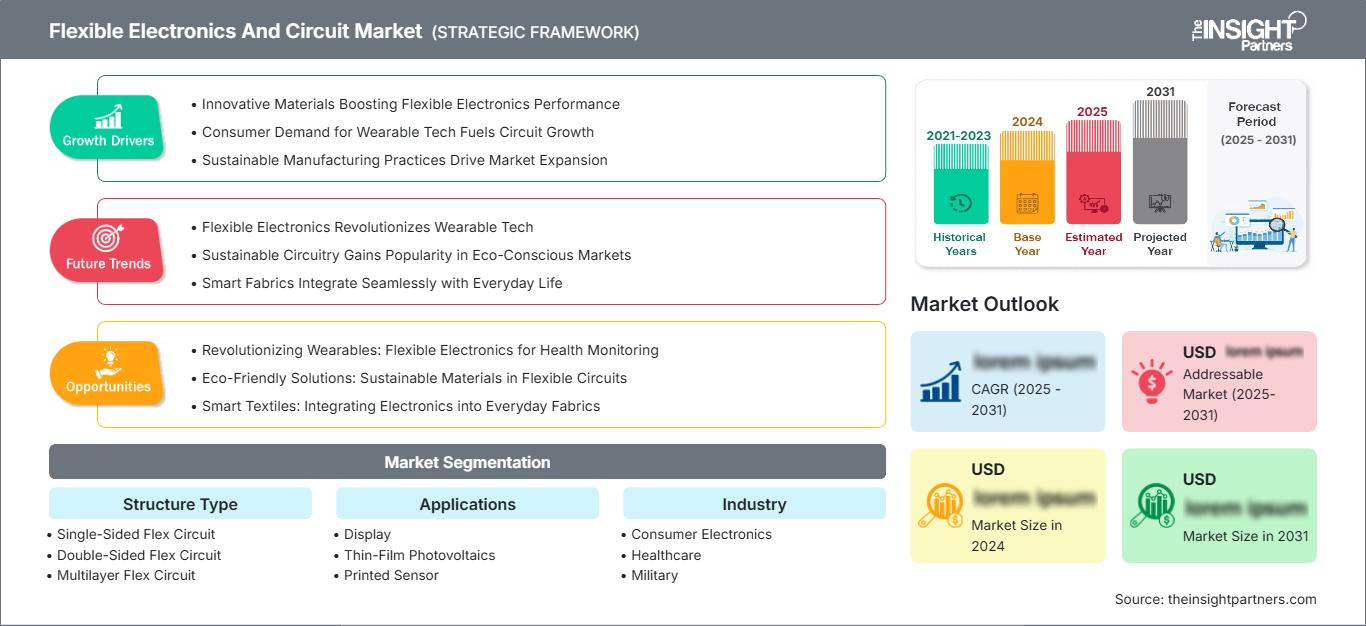
Flexible Electronics And Circuit Market: Strategic Insights
Regional Insights
North America Flexible Electronics & Circuit Market
North America is estimated to command a 25–29% share in 2025, with a 6.8–7.6% CAGR through 2034. This region sees benefits from its capability in semiconductor design, medical device design, aerospace production, and automotive engineering. Flex circuit usage increases wherever there is need for lighter, smaller, more complex routing, and mechanical conformity within systems. The US continues to be the main source of demand, with its good R&D infrastructure and advanced OEM environment.
Medical and military uses add further resilience, since qualification needs emphasize reliability over minimal upfront costs. Also, automobile manufacturers are incorporating flexible interfaces and displays in their increasingly software-driven cars. The manufacturing policy within the region encourages local electronics production, but Asian providers still play a big role in volume production. Consequently, the share of the Flexible Electronics & Circuit Market will continue being significant due to regional design dominance and higher manufacturing costs.
U.S. Flexible Electronics & Circuit Market
The US represents an estimated 78–82% of North America's 2025 market and is projected to expand at a 7.0–7.8% CAGR through 2034. Applications demand is driven by medical wearables, aerospace systems, defense electronics, automotive interfaces, and smart consumer goods. Native capabilities for engineering ensure early commercialization especially in situations where flexible systems need to undergo qualification.
Samsung Electronics Co., Ltd., 3M Company, E Ink Holdings Inc., Blue Spark Technologies, Inc., Imprint Energy, Inc., and BrightVolt, Inc. possess applicable technology or exposure to market. Trends in applications involve small size diagnostic tools, light-weighted aerospace electronics, flexible displays, and thin-film energy sources. US acquisition demands for electronic systems designed to work in constrained environment further encourage use of valuable flexible components. United States is the main innovator and commercializer in North America.
Europe Flexible Electronics & Circuit Market
Europe is assessed at a 19–23% share in 2025 and a 7.1–7.9% CAGR through 2034, with Germany representing the leading national market. The region’s demand is founded on automotive design, industrial automation, healthcare electronics, renewable energy technology, and custom consumer electronics.
The United Kingdom’s focus is in healthcare technology, aerospace research, and advanced materials. Germany leverages its automotive manufacturing industry and industrial electronics environment to create a need for light-weighted interfaces and flexible circuits. There is a potential for France in the aerospace, defense, and healthcare electronics sectors. Italy and Spain offer other demand streams in automotive parts, industrial equipment, energy systems, and smart devices.
APAC Flexible Electronics & Circuit Market
Asia Pacific is estimated to hold a 31–35% share in 2025 and grow at an 8.5–9.3% CAGR through 2034. China is the leading market, supported by large-scale electronics manufacturing. Japan and South Korea contribute advanced materials and displays, while India and Australia broaden regional demand.
Industrial policy, electronics localization, automotive production, and display manufacturing reinforce regional momentum. China and South Korea remain particularly important for flexible OLED and advanced display ecosystems, while Japan supports precision materials and manufacturing equipment. India is developing a broader electronics production base, creating additional opportunities for flexible components.
Middle East & Africa Flexible Electronics & Circuit Market
Middle East and Africa adoption remains smaller but increasingly diversified across energy, healthcare, telecommunications, infrastructure, and defense. Saudi Arabia leads regional demand, followed by the UAE and South Africa, while the Rest of MEA provides emerging opportunities. The regional CAGR is assessed at 6.2–7.0% through 2034.
Energy infrastructure modernization and smart-city programs create opportunities for flexible sensing, displays, and distributed electronics. Saudi Arabia and the UAE are particularly relevant for connected infrastructure and advanced industrial projects, while South Africa contributes through mining, industrial automation, and healthcare. Flexible electronics can support space-constrained installations where conventional rigid assemblies are less suitable.
Segmentation Analysis
Structure Type
Structure Type is projected to expand at a 7.5–8.1% CAGR from 2026–2034. Selection depends on circuit complexity, bending requirements, layer density, reliability, and assembly cost. Rigid-flex configurations increasingly bridge flexible routing with mechanically stable components, while multilayer designs support greater functionality in constrained spaces. This broadens the Flexible Electronics & Circuit Market scope across consumer, automotive, medical, aerospace, and industrial products.
- Single-Sided Flex Circuit: Single-sided structures remain relevant for straightforward routing and compact assemblies where low thickness and cost control are priorities. They support sensors, displays, consumer devices, and simple interconnect applications.
- Double-Sided Flex Circuit: Double-sided structures provide greater routing density without the thickness of multilayer constructions. Demand is supported by compact consumer electronics and automotive assemblies requiring more connection flexibility.
- Multilayer Flex Circuit: Multilayer circuits address high-density designs requiring multiple electrical pathways. Their strategic importance increases as connected products combine processors, sensors, power management, and communications within smaller spaces.
- Rigid Flex Circuit: Rigid-flex circuits combine mechanical stability with flexible routing, making them valuable for aerospace, medical, automotive, and premium electronics where reliability and packaging efficiency are critical.
Applications
Applications is expected to register a 8.0–8.6% CAGR during 2026–2034. Display remains the largest demand center, while thin-film photovoltaics, printed sensors, batteries, and OLED lighting extend flexible architectures beyond conventional circuitry. Integration increasingly depends on compatible materials, thermal management, mechanical durability, and scalable manufacturing, making application-specific engineering a key competitive factor.
- Display: Flexible displays lead demand because they enable foldable, curved, lightweight, and space-efficient interfaces. Smartphone, wearable, automotive, and commercial display manufacturers increasingly use flexible substrates to expand design possibilities.
- Thin-Film Photovoltaics: Thin-film photovoltaics benefit from lightweight construction and conformability, supporting applications where conventional rigid modules are difficult to install. Portable, architectural, and specialized energy systems provide attractive use cases.
- Printed Sensor: Printed sensors enable large-area, low-profile sensing across healthcare, automotive, industrial, and consumer products. Their ability to conform to surfaces supports applications requiring unobtrusive data acquisition.
- Battery: Flexible batteries support thin wearables, smart labels, medical devices, and connected products requiring unconventional power geometries. Their strategic role increases as electronic functionality becomes more distributed.
- OLED Lighting: Flexible OLED lighting enables thin, lightweight, and conformable illumination. Adoption is strongest in premium automotive interiors, architectural applications, and specialized lighting designs where surface integration matters.
Industry
Industry is projected to grow at a 8.2–8.9% CAGR through 2034. Consumer electronics remains the largest demand base, while healthcare, automotive, aerospace, and energy applications are expanding the addressable opportunity. Industrial users increasingly evaluate flexible technologies based on total system value, including weight reduction, installation efficiency, packaging, reliability, and maintenance requirements.
- Consumer Electronics: Consumer electronics drives high-volume adoption through smartphones, wearables, tablets, foldable products, and connected accessories. Manufacturers prioritize thinner assemblies, improved durability, and efficient internal space utilization.
- Healthcare: Healthcare applications increasingly use flexible circuits for wearable monitoring, diagnostic patches, smart textiles, and compact medical devices. Patient comfort and conformability make flexible architectures strategically valuable.
- Military: Military systems require lightweight electronics that can operate in demanding environments. Flexible circuitry can reduce packaging constraints in communication, sensing, wearable, and portable defense equipment.
- Defense: Defense applications emphasize ruggedized electronics, secure communications, sensing, and compact system integration. Flexible architectures provide design freedom where weight, volume, and mechanical conformity influence equipment performance.
- Aerospace: Aerospace manufacturers prioritize low weight, reliability, and space efficiency. Flexible circuits can simplify routing within aircraft and spacecraft while supporting sensors, displays, controls, and communications.
- Energy & Power: Energy applications use flexible electronics in monitoring, power management, thin-film generation, and emerging storage architectures. Flexible form factors can support distributed and space-constrained installations.
- Automotive: Automotive demand is expanding through smart cockpits, flexible displays, sensors, lighting, and compact wiring. Software-defined vehicle architectures create additional opportunities for integrated electronic interfaces.
Opportunity Snapshot
| Industry | Revenue Contribution | Trend Tag | Adoption Stage |
|---|---|---|---|
| Consumer Electronics | High | Foldable Displays | Mature |
| Healthcare | Medium | Wearable Patches | Scaling |
| Military | Low | Rugged Wearables | Scaling |
| Defense | Medium | Conformal Systems | Scaling |
| Aerospace | Medium | Lightweight Avionics | Scaling |
| Energy & Power | Medium | Thin Energy | Emerging |
| Automotive | High | Smart Cockpit | Scaling |
Flexible Electronics And Circuit Market Growth Drivers and Impact Analysis
Foldable and Conformable Device Architectures
The expansion of foldable smartphones, flexible wearables, curved interfaces, and space-constrained electronic products is increasing demand for circuits capable of repeated mechanical movement. Flexible architectures allow designers to route electrical connections around hinges, curved surfaces, and compact enclosures without relying on multiple rigid boards. This changes procurement priorities from component price alone toward bend-cycle reliability, dimensional stability, thermal performance, and assembly compatibility. Samsung Electronics Co., Ltd. has continued advancing foldable display structures, illustrating how material engineering directly affects product design. Similar requirements are emerging in automotive displays and wearable devices. The market impact extends across substrates, adhesives, conductive materials, connectors, and circuit fabrication because every layer must withstand mechanical deformation without compromising electrical performance.
Healthcare Miniaturization and Continuous Monitoring
Healthcare is creating a distinct demand pathway because wearable and skin-conforming devices require electronics that remain comfortable during extended use. Flexible circuits can support lightweight patches, physiological sensors, diagnostic platforms, and compact therapeutic devices while reducing mechanical interference with the body. Regulatory requirements place strong emphasis on reliability, biocompatibility, electrical safety, and repeatable manufacturing, encouraging suppliers to develop application-specific materials rather than generic circuit products. The commercial effect is particularly important for companies able to combine flexible interconnects with sensors, batteries, and wireless communications. As healthcare providers increasingly value continuous rather than episodic monitoring, electronics that can operate unobtrusively for longer periods become strategically relevant. This creates opportunities for specialized manufacturers with validated processes and medical-device qualification experience.
Automotive Electronics Integration and Weight Optimization
Automotive electronics are moving toward software-defined architectures containing more displays, sensing functions, connectivity, and personalized interfaces. Flexible circuitry can simplify packaging around curved instrument panels, seats, doors, lighting systems, and constrained electronic modules. The technology also supports transparent and conformable display concepts that would be difficult to implement using conventional rigid boards. Vehicle manufacturers increasingly assess electronics on packaging efficiency, thermal behavior, reliability, and manufacturing integration. As electric vehicles place greater emphasis on mass reduction and cabin design, flexible components can contribute to lower assembly complexity and improved space utilization. The impact extends beyond premium vehicles because scalable manufacturing and standardized interfaces can gradually reduce adoption barriers. Automotive qualification requirements will nevertheless keep reliability testing and long-term supplier support central to purchasing decisions.
Flexible Electronics And Circuit Market Future Trends
Integrated Flexible Systems With Embedded Intelligence
Future Flexible Electronics & Circuit Market trends are expected to center on multifunctional structures in which circuits, sensors, displays, antennas, and power elements are engineered as coordinated layers rather than separate components. This approach can reduce connectors, assembly steps, and package volume while enabling new product geometries. Embedded sensing will increasingly allow surfaces, displays, and wearable structures to respond directly to user interaction or environmental conditions. Advances in conductive inks, thin-film transistors, flexible batteries, and printed semiconductor materials should improve integration density. Manufacturers are likely to invest in automated inspection and digital process control to maintain yield as multilayer architectures become more complex. Over time, design software and simulation tools may become more important because mechanical strain and electrical performance must be evaluated simultaneously during product development.
Localized Production and Circular Material Strategies
A second trend is the gradual localization of flexible electronics production alongside stronger emphasis on material efficiency and recoverability. Electronics manufacturers are reassessing supply-chain exposure for specialty films, conductive materials, display components, and batteries. Regional manufacturing programs in North America, Europe, and Asia Pacific are encouraging greater redundancy, although high-volume production will remain concentrated where mature ecosystems already exist. Sustainability requirements will also influence substrate selection, adhesive chemistry, process energy, and end-of-life handling. E Ink Holdings Inc. illustrates how low-power display technologies can align product functionality with energy-efficiency objectives. Future product specifications are therefore likely to incorporate environmental criteria alongside electrical and mechanical performance. Suppliers that can document material provenance, manufacturing efficiency, and consistent reliability should gain stronger positions in regulated procurement environments.
Flexible Electronics And Circuit Market Opportunities
Flexible Healthcare Platforms for Remote Patient Monitoring
Healthcare represents an attractive investment opportunity because flexible electronics can combine sensing, processing, communications, and power in unobtrusive formats. Developers can target chronic-condition monitoring, rehabilitation, post-operative observation, sports medicine, and home-based diagnostics where patient comfort influences adherence. Investment should prioritize validated materials, low-power electronics, secure wireless communication, and manufacturing processes compatible with medical-device requirements. Partnerships between circuit manufacturers, sensor developers, battery specialists, and healthcare-device companies can shorten qualification timelines and distribute development costs. The strongest opportunities are likely to arise where flexible architecture provides a measurable clinical or operational benefit rather than simply a thinner package. Flexible Electronics & Circuit Market Forecasts therefore favor application-led investment strategies focused on recurring monitoring, specialized diagnostics, and devices designed for prolonged wear.
Automotive and Industrial Flexible Interface Platforms
Automotive and industrial equipment offer another opportunity in the Flexible Electronics & Circuit Market as electronic interfaces become more distributed and physically integrated. Investors can target flexible displays, sensor arrays, lighting systems, smart surfaces, and compact control modules that simplify installation within curved or space-constrained structures. Collaboration with Tier-1 suppliers and industrial automation companies can provide access to established qualification channels while reducing the burden of direct OEM development. Product strategies should emphasize thermal stability, vibration resistance, long service life, and compatibility with automated assembly. Opportunities are also emerging in smart buildings and energy infrastructure, where thin sensors can be deployed across surfaces without extensive rewiring. Commercial success will depend on demonstrating lower installation complexity, improved functionality, or measurable lifecycle savings compared with rigid alternatives.
Recent Developments
- August 2026: Uni Chem surged to its daily upper price limit after announcing the acquisition of U.S.-based flexible electronics company Lumia Technologies, marking a move to strengthen Korea’s position in the growing flexible electronics industry. The deal is intended to bring Lumia’s flexible electronics technologies and intellectual property into Uni Chem’s portfolio, supporting expansion into next-generation applications that require lightweight, bendable and conformable electronic components.
- June 2026: Covestro partnered with Insulectro to expand access to advanced film materials and technical support for flexible electronics manufacturers across the Americas, combining Covestro’s specialty film portfolio with Insulectro’s distribution and engineering capabilities. The collaboration provides access to Covestro’s Platilon and Dureflex thermoplastic polyurethane (TPU) films, designed for applications requiring flexibility, stretchability, durability and process reliability, alongside Insulectro’s expertise in advanced substrates and conductive inks.
- July 2026: All Flex Solutions partnered with Flex Interconnect Technologies (FIT), a Silicon Valley-based specialist in quick-turn and prototype flexible circuits, to expand its flexible circuit capabilities. The partnership is expected to combine All Flex’s broader flexible circuit manufacturing capabilities with FIT’s expertise in rapid-turn prototyping, enabling customers to move more efficiently from early-stage designs and prototypes toward production.
Frequently Asked Questions

- Comprehensive Market Sizing and Forecast Analysis
- Detailed Segmentation Analysis
- In-Depth Market Dynamics Assessment
- Regional and Country-Level Insights
- Competitive Landscape and Company Benchmarking
- Strategic Business Intelligence
Recent Reports
Testimonials

The Insight Partners provided valuable market intelligence that supported our global go-to-market strategy. Their team was professional, responsive, and attentive to our feedback, providing thoughtful analysis and helpful methodological clarifications throughout the project.
Junmo Kim Chief Financial Officer (CFO), Enertech Co., Ltd.
The Insight Partners' SCADA System Market report is comprehensive, with valuable insights on current trends and future forecasts. The team was highly professional, responsive, and supportive throughout. We are very satisfied and highly recommend their services.
RAN KEDEM Partner, Reali Technologies LTDs
I requested a report on a very specific software market and the team produced the report in a few days. The information was very relevant and well presented. I then requested some changes and additions to the report. The team was again very responsive and I got the final report in less than a week.
JEAN-HERVE JENN Chairman, Future Analytica
We worked with The Insight Partners for an important market study and forecast. They gave us clear insights into opportunities and risks, which helped shape our plans. Their research was easy to use and based on solid data. It helped us make smart, confident decisions. We highly recommend them.
PIYUSH NAGPAL Sr. Vice President, High Beam Global
The Insight Partners delivered insightful, well-structured market research with strong domain expertise. Their team was professional and responsive throughout. The user-friendly website made accessing industry reports seamless. We highly recommend them for reliable, high-quality research services
YUKIHIKO ADACHI CEO, Deep Blue, LLC.
This is the first time I have purchased a market report from The Insight Partners.While I was unsure at first, I visited their web site and felt more comfortable to take the risk and purchase a market report.I am completely satisfied with the quality of the report and customer service. I had several questions and comments with the initial report, but after a couple of dialogs over email with their analyst I believe I have a report that I can use as input to our strategic planning process.Thank you so much for taking the extra time and making this a positive experience.I will definitely recommend your service to others and you will be my first call when we need further market data.
JOHN SUZUKI President and Chief Executive Officer, Board Director, BK Technologies
I wish to appreciate your support and the professionalism you displayed in the course of attending to my request for information regarding to infectious disease IVD market in Nigeria. I appreciate your patience, your guidance, and the fact that you were willing to offer a discount, which eventually made it possible for us to close a deal. I look forward to engaging The Insight Partners in the future, all thanks to the impression you have created in me as a result of this first encounter.
DR CHIJIOKE ONYIA MANAGING DIRECTOR, PineCrest Healthcare Ltd.Reason to Buy
- Informed Decision-Making
- Understanding Market Dynamics
- Competitive Analysis
- Identifying Emerging Markets
- Customer Insights
- Market Forecasts
- Risk Mitigation
- Boosting Operational Efficiency
- Strategic Planning
- Investment Justification
- Tracking Industry Innovations
- Aligning with Regulatory Trends





 Get Free Sample for