
Medical Device Coating Market Size, Trends & Growth by 2034
Coverage: By Material Type (Polymer, Metal, and Others), Device Type (Medical Equipment and Tools, Medical Devices, Medical Implant, and Others), Coating (Hydrophilic Coating, Anti-Microbial Coating, Drug-Eluting Coating, Anti-Thrombogenic Coating, and Others), and Application (Infection Diseases, General Surgery, Orthopedic, Neurology, and Others), and Geography (North America, Europe, Asia Pacific, and South and Central America)
- Status : Data Released
- Report Code : TIPRE00009272
- Category : Chemicals and Materials
- No. of Pages : 150
- Available Report Formats :


- Last update date : July 15, 2026


2025 Market Size
US$ 16.97 Bn
Base year value
2034 Forecast
US$ 33.21 Bn
Projected by 2034
CAGR 2026-2034
7.75 %
Growth rate
Addressable Market
US$ 225.97 Bn
(2026-2034)
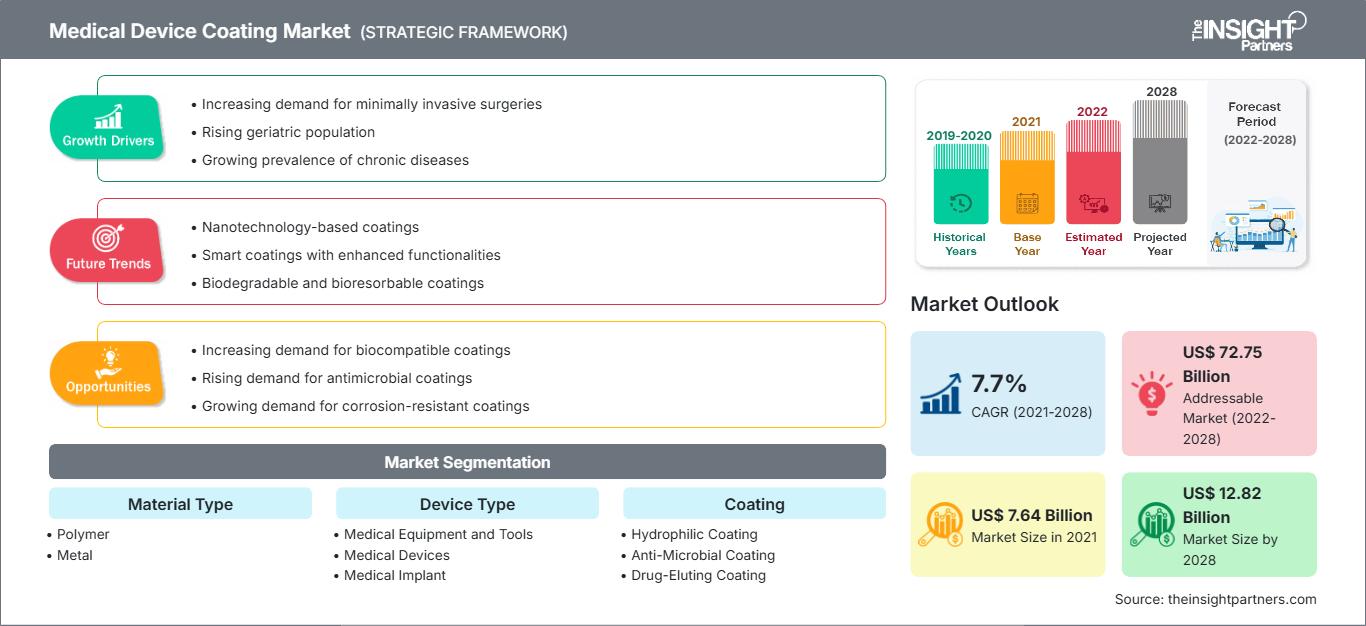
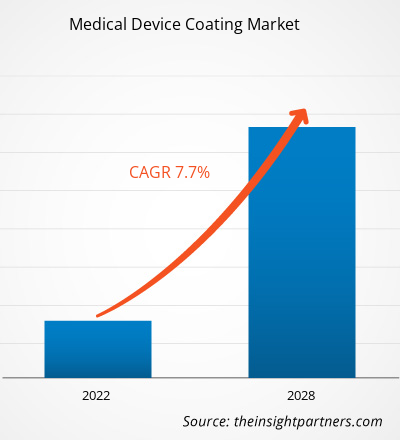
The medical device coating market size was valued at US$ 16.97 Billion in 2025 and is projected to reach US$ 33.21 Billion by 2034, expanding at a CAGR of 7.75% during 2026–2034. The sector has been experiencing an increase in the use of minimally invasive devices, more implants, and increased needs for surface technologies that can improve the efficacy of the devices' biocompatibility and performance. There has been a significant trend in the use of coating technologies to help in the differentiation of products in various sectors such as cardiology, neurology, orthopedics, and surgery.
In North America, the manufacturers have continued investing in advanced coating technologies, which help in ensuring that infections are prevented and functionalities of the devices are enhanced. The medical device coating market size in the region is aided by the presence of medical devices manufacturing capacity, favorable reimbursements, and more procedures. Market growth has also been facilitated by the rising use of antimicrobial and hydrophilic technologies among others.
Medical Device Coating Market Assessment and Insights
- North America: Accounted for 36–38% of the medical device coating market share in 2025 and is expected to grow at a 7.0–7.8% CAGR during 2026–2034. Demand is supported by high procedural volumes, extensive medical device manufacturing capabilities, and increasing adoption of coated catheters, guidewires, and implantable products.
- US: Represented 82–86% of North America in 2025 and is projected to expand at a 7.1–7.9% CAGR during 2026–2034. Continuous product innovation, strong healthcare expenditure, and robust clinical adoption support market expansion.
- Europe: Held 27–29% share in 2025 and is anticipated to register a 7.2–8.0% CAGR during 2026–2034. Germany, the UK, France, Italy, and Spain remain major contributors due to advanced healthcare infrastructure and device manufacturing activities.
- Asia Pacific: Captured 24–26% share in 2025 and is expected to grow at a 8.8–9.6% CAGR during 2026–2034. China, Japan, India, and South Korea are leading demand centers supported by healthcare investments and expanding medical device production.
- Largest Segment: Hydrophilic Coating accounted for 31–35% market share in 2025 and is projected to grow at a 7.8–8.6% CAGR during 2026–2034, driven by extensive use in guidewires, catheters, and minimally invasive procedures.
- High Growth Segment: Anti-Microbial Coating held 18–22% market share in 2025 and is anticipated to expand at a 9.2–10.0% CAGR during 2026–2034 owing to heightened infection-control requirements across healthcare facilities.
- Key companies analyzed in detail: Koninklijke DSM N.V., Hydromer, Inc., Surmodics, Inc., Biocoat Incorporated, AST Products, Inc., Covalon Technologies Ltd., Harland Medical Systems, Inc., Precision Coating Company, Inc., KISCO Ltd., and Formacoat LLC.
Source: The Insight Partners' analysis based on proprietary research, government publications, company annual reports, investor presentations, industry databases, and expert interviews.
There have been tremendous changes in the strategies of manufacture of medical devices due to advances in the field of surface engineering in the last ten years. There is a growing use of coating of devices in order to increase their lubricity, reduce risks of thrombosis, prevent microbial contamination and ensure their enhanced performance. The development of implantable products, rise of chronic diseases and trend towards minimal invasiveness have fueled the trend toward coating of medical devices. At the same time, stringent requirements for safety and efficiency of the devices have driven manufacturers to use high-quality coatings in their products.
In the future, potential for growth can be found in Asia Pacific, Latin America and in some countries in the Middle East, where infrastructure of healthcare will continue to develop. Investments of public and private sector in the manufacture of medical devices, as well as the trend towards localization, will contribute to further development of manufacturing capacities. Attention to infection control, personalized medicine and biomaterials may also drive innovation and commercial success of the industry.
Medical Device Coating Market Report Scope
| Report Attribute | Details |
|---|---|
| Market size in 2025 | US$ 16.97 Billion |
| Market Size by 2034 | US$ 33.21 Billion |
| Global CAGR (2026 - 2034) | 7.75% |
| Historical Data | 2021-2024 |
| Forecast period | 2026-2034 |
Medical Device Coating Market Analysis
The major driver of medical device coating market growth will be the growing demand for minimally invasive surgery and increased chronic conditions that require medical intervention. In addition to cardiovascular disorders, orthopedic and neurological conditions will continue to fuel the demand for coated catheters, guidewires, implants, and surgical instruments. Hospitals and other healthcare facilities choose coatings due to the increased efficiency of procedures, reduced friction, increased biocompatibility, and minimized risks of adverse effects on patients.
The value chain of the market includes raw material producers, coating technology developers, coating service providers, medical device manufacturers, healthcare facilities, and regulatory agencies. Polymer-based and specialized coating materials will continue to play an important role in the supply chain due to their potential to provide lubricity, antimicrobial protection, and drug delivery. Cooperation between coating technology companies and medical device developers becomes more active allowing developing coatings tailored to certain types of therapy.
According to the medical device coating market report, competition among top players is increasing on the back of differentiating technology, regulatory acumen, and partnerships. Leading firms are developing proprietary coating technologies that not only improve medical devices’ performance but can also fulfill changing requirements for clinical and regulatory compliance. Some of the leading firms that are expanding their portfolio in response to increased demand in cardiovascular, orthopedic, and anti-infection applications include Koninklijke DSM N.V., Surmodics, Inc., Hydromer, Inc., Biocoat Incorporated, and Covalon Technologies Ltd.
There is significant investment being made in developing new biomaterials, antimicrobial technologies, and hydrophilic coatings. Some of the firms that have enhanced manufacturing and coating technologies to cater to a global clientele base include Harland Medical Systems, Inc., Precision Coating Company, Inc., AST Products, Inc., KISCO Ltd., and Formacoat LLC.
● REPORT CUSTOMIZATION
Tailor This Report To Align With Your Specific Business Requirements
This report can be customized to align precisely with your business objectives, scope, and target markets. Customization options include tailored segmentation, geography, competitive analysis, and strategic insights to support informed decision-making.
Customize This Report →WHAT YOU CAN ADJUST
- ● Segmentations
- ● Geography
- ● Competitive Analysis
- ● Language Preferences
Medical Device Coating Market: Strategic Insights
Regional Insights
North America Medical Device Coating Market
North America accounted for 36–38% of global medical device coating market share in 2025 and is anticipated to expand at a 7.0–7.8% CAGR during 2026–2034. The strength of the region is supported by a number of factors including the availability of experienced medical device manufacturers, modern healthcare infrastructure, and high adoption rate of minimally invasive treatments. The demand for coated catheters, guidewires, surgical instruments, and implantable devices will continue to rise because of the focus on patient safety and efficient procedures. Regulatory attention to infection prevention and device performance becomes another driver of coating technology uptake within several therapeutic areas.
The region is also characterized by active research activities and constant investment in advanced biomaterials and surface engineering techniques. Medical device manufacturers are increasingly using hydrophilic, anti-thrombogenic, and antimicrobial coatings in order to enhance clinical outcomes and minimize adverse events during medical treatment procedures. Well-developed reimbursement policies, rising incidence of chronic diseases, and procedure volumes will drive further market growth in the region. Furthermore, cooperation of coating experts and medical device manufacturers becomes an important driver of innovation and commercialization of advanced coating solutions.
U.S. Medical Device Coating Market
The United States represented 82–86% of the North American market in 2025 and is projected to grow at a 7.1–7.9% CAGR during 2026–2034. This nation continues to be the biggest market in the region owing to the presence of a vast medical device manufacturing network, high spending on healthcare, and the wide clinical adoption of sophisticated technology. Increased use of coated cardiovascular devices, neurovascular devices, and orthopedic implants is boosting the need for coatings that enhance the performance of the devices.
Leading players in the sector of coating technologies and the manufacturers of medical devices have considerable operations within this country, thus providing room for innovation. The rising demand for infection-resistant devices, increase in outpatient treatments, and the increasing trend of using minimally invasive surgical approaches continues to boost the market. In addition, healthcare providers continue to favor solutions that minimize complication and enhance success rates in the process, therefore promoting advanced coating technologies.
Europe Medical Device Coating Market
Europe held 27–29% share in 2025 and is expected to register a 7.2–8.0% CAGR during 2026–2034. The region benefits from advanced healthcare systems, a strong medical technology manufacturing base, and increasing demand for high-performance coated medical devices. Germany is still the market leader owing to the presence of huge manufacturing capacity for medical devices, active research activities, and innovation in the healthcare segment.
The UK still faces rising demand on account of an increase in procedure volume, healthcare innovations, and increased usage of coated medical diagnostic and therapeutic devices. Germany retains its position owing to large investments made in medical engineering technology and manufacturing technology. The French, Italian, and Spanish markets form a major portion of regional demand owing to healthcare expenditure growth, increased surgery procedures, and infection prevention practices. Regulations regarding device performance and safety are further driving companies toward advanced coating solutions.
APAC Medical Device Coating Market
Asia Pacific captured 24–26% share in 2025 and is forecast to expand at a 8.8–9.6% CAGR during 2026–2034. China continues to dominate the regional market on account of growth in its healthcare infrastructure and medical devices industry within the country. Japan and South Korea continue to incorporate advanced coating technologies into their medical applications.
India and Australia are seeing rising demand owing to investments in healthcare, increase in procedures performed, and growth in their respective medical technology industries. Such government initiatives will help drive the adoption of advanced coating technologies in the region.
Middle East & Africa Medical Device Coating Market
The Middle East & Africa market is projected to grow at a 7.8–8.6% CAGR during 2026–2034. Development of healthcare infrastructure, increased investments in the development of medical devices technology, and rising awareness about infection control are among the factors that will drive the growth of this market. Saudi Arabia and UAE are the major demand centers in the region.
South Africa is another major market that will be driven by the presence of an already developed healthcare system along with rising usage of advanced medical equipment. Increased investments in hospitals, specialized treatment centers, and healthcare infrastructure developments in the region will lead to further growth in this market.
Segmentation Analysis
Material Type
The Material Type segment represents a critical component of the medical device coating market forecast, as coating performance is directly influenced by material compatibility, durability, and clinical requirements. Manufacturers increasingly select materials based on biocompatibility, wear resistance, lubricity, and sterilization performance. Continuous advancements in material science are enabling the development of coatings that improve device longevity and procedural outcomes. The segment is projected to grow at a 7.4–8.2% CAGR during 2026–2034.
- Polymer – Polymer-based coatings are extensively used due to their flexibility, biocompatibility, and ability to provide lubricious, antimicrobial, and drug-delivery functionalities. Their broad applicability across catheters, guidewires, and implants supports sustained commercial importance.
- Metal – Metal-based coatings are utilized where durability, corrosion resistance, and mechanical performance are essential. These coatings are commonly applied in orthopedic implants and surgical instruments requiring long-term structural integrity and wear resistance.
Device Type
Medical device manufacturers increasingly integrate advanced coating technologies to enhance functionality, reduce complications, and improve patient outcomes. Surface modification has become an important differentiator for product performance across both implantable and non-implantable devices. Demand is being supported by increasing surgical procedures, aging populations, and technological innovation. The Device Type segment is expected to register a 7.6–8.4% CAGR during 2026–2034.
- Medical Equipment and Tools – Coatings improve durability, corrosion resistance, and cleaning efficiency for reusable equipment and surgical tools. Healthcare providers increasingly seek coated products that support operational efficiency and infection control objectives.
- Medical Devices – A wide range of diagnostic and therapeutic devices utilize coatings to enhance lubricity, biocompatibility, and clinical effectiveness. Growing procedural complexity continues to increase demand for advanced surface technologies.
- Medical Implant – Implant coatings improve tissue compatibility, reduce inflammatory responses, and enhance long-term performance. Rising orthopedic, cardiovascular, and dental implantation procedures continue to support segment demand globally.
Coating
The Coating segment represents the technological foundation of the industry, with manufacturers focusing on solutions that improve device performance and patient safety. Continuous innovation in surface engineering has expanded coating functionality beyond lubrication to include infection prevention, drug delivery, and thrombus reduction. The segment is anticipated to expand at a 8.0–8.8% CAGR during 2026–2034.
- Hydrophilic Coating – The largest coating category due to extensive use in catheters and guidewires. These coatings reduce friction during insertion procedures, improving maneuverability and supporting minimally invasive interventions.
- Anti-Microbial Coating – Designed to inhibit microbial growth on device surfaces, these coatings are increasingly adopted to reduce healthcare-associated infections and improve patient safety in clinical environments.
- Drug-Eluting Coating – Drug-eluting technologies enable controlled therapeutic delivery directly at treatment sites. Their growing use in cardiovascular and implant applications supports continued strategic importance.
- Anti-Thrombogenic Coating – These coatings help minimize clot formation on blood-contacting devices. Rising cardiovascular procedures and demand for safer long-term device performance are strengthening adoption.
Application
Application diversity remains a defining characteristic of the medical device coating market, as coating requirements vary significantly across therapeutic areas. Growing procedural volumes, increasing chronic disease prevalence, and rising healthcare expenditures continue to create opportunities across multiple clinical specialties. The Application segment is projected to grow at a 7.7–8.5% CAGR during 2026–2034.
- Infection Diseases – Infection-related applications increasingly utilize antimicrobial and specialized protective coatings to reduce contamination risks and improve patient outcomes in both acute and long-term care settings.
- General Surgery – Surgical instruments and intervention devices benefit from coatings that improve lubricity, durability, and sterilization performance, supporting procedural efficiency and clinician preference.
- Orthopedic – Orthopedic applications rely on advanced coatings to improve implant integration, wear resistance, and long-term durability. Increasing joint replacement procedures continue to support demand.
- Neurology – Neurological devices increasingly incorporate specialized coatings that enhance navigability, reduce tissue trauma, and improve device performance during complex minimally invasive procedures.
Opportunity Snapshot
| Application | Revenue Contribution | Trend Tag | Adoption Stage |
| Infection Diseases | High | Infection Control | Mature |
| General Surgery | High | Minimally Invasive | Mature |
| Orthopedic | High | Implant Longevity | Scaling |
| Neurology | Medium | Neuro Navigation | Scaling |
| Others | Low | Specialty Care | Emerging |
Medical Device Coating Market Growth Drivers and Impact Analysis
Rising Adoption of Minimally Invasive Medical Procedures
Increasingly preferred minimally invasive procedures will drive the medical device coating market trends in a positive manner. Increasing use of catheters, guidewires, delivery systems, and endoscopic devices requiring coating technology for easier maneuvering and minimizing complications of the procedure is witnessed among healthcare facilities. The hydrophilic coatings are especially useful as they minimize friction during the process of insertion and maneuvering of devices. Increasing cases of cardiovascular disease, peripheral vascular disease, and neurology are resulting in a high number of procedures being performed worldwide. With an increasing focus on shorter hospital stays and better clinical outcomes in hospitals, coating technology is increasingly used in various devices.
Growing Focus on Infection Prevention and Patient Safety
Healthcare-associated infections still pose a serious threat to health care organizations globally and thus encourage the implementation of antimicrobial surface coatings. Increasingly, medical devices producers are producing coatings capable of preventing microbial growth and reducing the risks of contamination of surgical equipment, implants, and other indwelling devices. Regulators and health care organizations are paying more attention to measures of patient safety and infection prevention techniques, which creates an appropriate environment for implementing coatings. There are also hospitals that are buying devices that can reduce costs of procedures related to post-procedure infections and long-term patient stays. As the providers are striving to improve their clinical results, coatings have become an important value-add feature in numerous devices
Expansion of Implantable Medical Device Utilization
The rising use of implantable devices in orthopedics, cardiology, neurology, and dentistry is creating significant demands for innovative coatings. Coatings help in improving biocompatibility, anti-corrosion capabilities, wear resistance, and better tissue compatibility. Aging of the population and increase in the incidence of chronic disorders are contributing to the rise in implantation rates globally. Additionally, innovations in the field of biomaterials and surface technology are facilitating the manufacture of coating technologies based on clinical needs. Innovations in research and development in order to make implants last longer and reduce biological responses are gaining traction among manufacturers.
Medical Device Coating Market Future Trends
Expansion of Advanced Functional Coatings for Multi-Purpose Performance
Current trends in medical device coatings suggest that there is an increasing trend towards multifunctional coatings that can provide multiple advantages. Coatings that have the properties of being lubricious, anti-microbial, anti-thrombogenic, and providing sustained release of drugs are being developed. This enables the manufacturer to achieve increased clinical performance through reduced device complexity. The increasing need for highly sophisticated medical devices along with the growing regulatory requirements for safety and efficacy of the device have led to increased commercial success of the multifunctional coatings.
Growing Integration of Advanced Biomaterials and Surface Engineering
There is a growing trend toward the use of more sophisticated biomaterials that can increase the compatibility of the medical devices with the biological environment. Novel polymers, bioactive materials, and nanostructured surface technologies are being researched by scientists and manufacturers for their ability to increase efficiency of the devices without causing side effects. Future improvements in this field will lead to the better integration of the tissues, reduced inflammation, and increased lifespan of the devices. In line with the growth of precision medicine and individualized healthcare, coating specialists will produce coating products specific to a particular application.
Medical Device Coating Market Opportunities
Emerging Manufacturing Investments Across Asia Pacific
Medical device coating market forecasts indicate substantial investment potential across Asia Pacific as governments continue supporting domestic medical technology production. Countries including China, India, South Korea, and several Southeast Asian economies are strengthening healthcare infrastructure and encouraging local manufacturing capabilities. These initiatives are creating opportunities for coating suppliers to establish regional production facilities, technical service centers, and strategic partnerships. Increasing demand for cost-effective medical technologies, combined with rising healthcare expenditure, supports long-term growth prospects. Companies that expand regional manufacturing footprints and localize coating technologies are expected to strengthen customer relationships while benefiting from growing demand across emerging healthcare markets.
Commercialization of Next-Generation Infection Prevention Technologies
Increasing focus on reducing healthcare-associated infections presents significant opportunities for developers of advanced antimicrobial and protective coatings. Healthcare providers are seeking technologies that offer measurable improvements in infection control without compromising device functionality or patient comfort. Coating manufacturers can capitalize on this trend by developing solutions tailored for catheters, implants, surgical instruments, and wound-care devices. Strategic collaboration between healthcare institutions, coating developers, and medical device manufacturers is expected to accelerate commercialization efforts. Organizations that successfully demonstrate clinical effectiveness, regulatory compliance, and cost benefits are likely to secure competitive advantages within high-value medical technology segments.
Recent Developments
- February 2026: Freudenberg Medical, a global contract design and manufacturing (CDMO) partner to the medical device and biopharma industry, announced the launch of LUBRITEQ, a new high-performance hydrophilic coating solution, along with a comprehensive suite of associated development and manufacturing services. LUBRITEQ is available globally across Freudenberg Medical’s vertically integrated operations. With the launch of LUBRITEQ, Freudenberg Medical becomes the only hydrophilic coating provider to unite advanced surface chemistry with deep, in-house medical device design and manufacturing capabilities—bringing together complementary technologies to enhance manufacturability and deliver greater productivity and reliability across the entire product development lifecycle.
- September 2025: BioInteractions, pioneers of the Surface-Active Systems category of coatings, announced the launch of their Surface-Active Materials (SAMs), a new generation of surface treatments delivering the greatest performance without compromise in durability or safety. The first technology within this category is Assist™, a highly lubricious and durable coating. It provides standout lubricity instantly, long term durability under high-stress conditions and ultra-low particulate performance for medical devices.
Frequently Asked Questions

- Comprehensive Market Sizing and Forecast Analysis
- Detailed Segmentation Analysis
- In-Depth Market Dynamics Assessment
- Regional and Country-Level Insights
- Competitive Landscape and Company Benchmarking
- Strategic Business Intelligence
Recent Reports
Testimonials

The Insight Partners' SCADA System Market report is comprehensive, with valuable insights on current trends and future forecasts. The team was highly professional, responsive, and supportive throughout. We are very satisfied and highly recommend their services.
RAN KEDEM Partner, Reali Technologies LTDs
I requested a report on a very specific software market and the team produced the report in a few days. The information was very relevant and well presented. I then requested some changes and additions to the report. The team was again very responsive and I got the final report in less than a week.
JEAN-HERVE JENN Chairman, Future Analytica
We worked with The Insight Partners for an important market study and forecast. They gave us clear insights into opportunities and risks, which helped shape our plans. Their research was easy to use and based on solid data. It helped us make smart, confident decisions. We highly recommend them.
PIYUSH NAGPAL Sr. Vice President, High Beam Global
The Insight Partners delivered insightful, well-structured market research with strong domain expertise. Their team was professional and responsive throughout. The user-friendly website made accessing industry reports seamless. We highly recommend them for reliable, high-quality research services
YUKIHIKO ADACHI CEO, Deep Blue, LLC.
This is the first time I have purchased a market report from The Insight Partners.While I was unsure at first, I visited their web site and felt more comfortable to take the risk and purchase a market report.I am completely satisfied with the quality of the report and customer service. I had several questions and comments with the initial report, but after a couple of dialogs over email with their analyst I believe I have a report that I can use as input to our strategic planning process.Thank you so much for taking the extra time and making this a positive experience.I will definitely recommend your service to others and you will be my first call when we need further market data.
JOHN SUZUKI President and Chief Executive Officer, Board Director, BK Technologies
I wish to appreciate your support and the professionalism you displayed in the course of attending to my request for information regarding to infectious disease IVD market in Nigeria. I appreciate your patience, your guidance, and the fact that you were willing to offer a discount, which eventually made it possible for us to close a deal. I look forward to engaging The Insight Partners in the future, all thanks to the impression you have created in me as a result of this first encounter.
DR CHIJIOKE ONYIA MANAGING DIRECTOR, PineCrest Healthcare Ltd.Reason to Buy
- Informed Decision-Making
- Understanding Market Dynamics
- Competitive Analysis
- Identifying Emerging Markets
- Customer Insights
- Market Forecasts
- Risk Mitigation
- Boosting Operational Efficiency
- Strategic Planning
- Investment Justification
- Tracking Industry Innovations
- Aligning with Regulatory Trends





 Get Free Sample for