
Shrink Wrapping Equipment Market Growth, Demand & Size by 2034
Coverage: by Process (Automatic, Semi-Automatic, Manual); Product Type (L-Bar Sealers, I-Bar Sealers, Other); End-User (Food and Beverages, Personal Care, Pharmaceutical, Industrial and Household, Others) , and Geography (North America, Europe, Asia Pacific, and South and Central America)
- Status : Data Released
- Report Code : TIPRE00004102
- Category : Electronics and Semiconductor
- No. of Pages : 150
- Available Report Formats :


- Last update date : July 20, 2026


2025 Market Size
US$ 906.69 Mn
Base year value
2034 Forecast
US$ 1,251.61 Mn
Projected by 2034
CAGR 2026-2034
3.65 %
Growth rate
Addressable Market
US$ 9,804.08 Mn
(2026-2034)
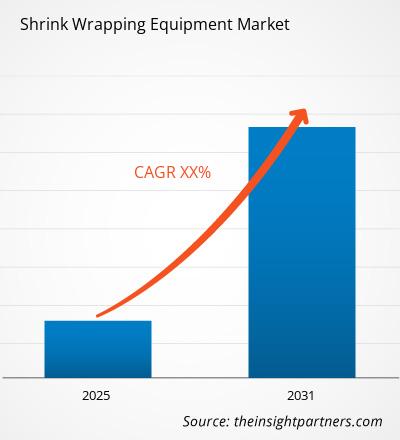
The global Shrink Wrapping Equipment market was valued at US$ 906.69 million in 2025 and is expected to reach US$ 1251.61 million by 2034; it is estimated to record a CAGR of 3.65% during 2026-2034.
Shrink Wrapping Equipment Market Assessment and Insights
- North America accounted for 31–34% share in 2025 and is growing at a CAGR of 4.2–4.8% during 2026–2034, supported by automation retrofits and regulated packaging operations.
- US represented 76–80% of North America in 2025 and is growing at a CAGR of 4.3–4.9% during 2026–2034, driven by food, pharma, and fulfillment investments.
- Europe held 25–28% share in 2025 and is growing at a CAGR of 3.5–4.1% during 2026–2034, with Germany, the UK, France, Italy, and Spain leading equipment replacement.
- Asia Pacific captured 29–32% share in 2025 and is growing at a CAGR of 4.8–5.5% during 2026–2034, led by China, India, Japan, South Korea, and Australia.
- Largest Segment Automatic process equipment held 48–52% market share in 2025, growing at a CAGR of 4.4–5.0% during 2026–2034 as high-volume lines standardize automation.
- High Growth Segment Pharmaceutical end use held 16–19% market share in 2025, growing at a CAGR of 5.1–5.8% during 2026–2034 due to tamper-evident packaging needs.
- Key companies analyzed in detail: Aetna Group S.p.A., Axon LLC, Clamco Packaging, Duravant LLC, Massman Automation Designs LLC, Syntegon Technology GmbH, Standard-Knapp Inc., Texwrap Packaging Systems, Tripack LLC, Conflex Incorporated
Source: The Insight Partners' analysis based on proprietary research, government publications, company annual reports, investor presentations, industry databases, and expert interviews.
There is a shift from independent sealers to equipment with sensors, in which the infeed, sealing, shrinking, and discharge processes are synchronized. Changes are happening in the industry as people look for shorter changeover times, less scrap and thin polyolefin films, and compatibility with recyclable films. Automatic machinery is becoming important in beverage multipack and pharmaceutical packages, while semi-automatic machinery is still important for personal care and industrial products.
Investment trends in the market should increase in countries such as India, Southeast Asia, Mexico, and Eastern Europe due to the adoption of medium-speed lines near consumption centers. Focusing on food safety, drug traceability, and durability during transportation makes equipment investment important through repeatable sealing parameters. There is also increased investment in reshoring, warehouse automation, and packaging of private-label products.
Shrink Wrapping Equipment Market Report Scope
| Report Attribute | Details |
|---|---|
| Market size in 2025 | US$ 906.69 Million |
| Market Size by 2034 | US$ 1,251.61 Million |
| Global CAGR (2026 - 2034) | 3.65% |
| Historical Data | 2021-2024 |
| Forecast period | 2026-2034 |
Shrink Wrapping Equipment Market Analysis
Market expansion is driven by increases in production of packaged foods, multi-pack drinks, serialization of drugs, and protection during transport for e-commerce. Shrink solutions offer better product visibility and barrier properties while employing less corrugated material in secondary bundling packs. The market is most attractive to companies which require consistent sealing, higher speed lines, and reduced manual handling.
The value chain includes producers of films, shrink technologies, heat tunnels, control systems, and service providers in the aftermarket. Availability of equipment depends on stainless steel construction, electronics, servo motors, and installers. Purchasers are beginning to look at total cost of ownership, energy consumption, availability of spare parts, and compatibility with mono-material recyclable films.
Market analysis reveals a reasonably fragmented competitive landscape with a struggle between global suppliers and specialist builders in terms of customizability, service and automation capability. Aetna Group S.p.A., Duravant LLC, Syntegon Technology GmbH, and Texwrap Packaging Systems focus on integrated systems, while Clamco Packaging and Conflex Incorporated focus on compact and specialized packaging systems.
Key investments are now focused on digital diagnostics, fast-changeover tooling, effective heat dissipation and modularity of the equipment. Axon LLC, Massman Automation Designs LLC, Standard-Knapp Inc., and Tripack LLC concentrate their efforts on beverage, consumer products and contract packaging applications in which reliability is crucial. The main source of differentiation here is lifecycle service capabilities, proven line integration and validation of packaging performance across various film gauges.
● REPORT CUSTOMIZATION
Tailor This Report To Align With Your Specific Business Requirements
This report can be customized to align precisely with your business objectives, scope, and target markets. Customization options include tailored segmentation, geography, competitive analysis, and strategic insights to support informed decision-making.
Customize This Report →WHAT YOU CAN ADJUST
- ● Segmentations
- ● Geography
- ● Competitive Analysis
- ● Language Preferences
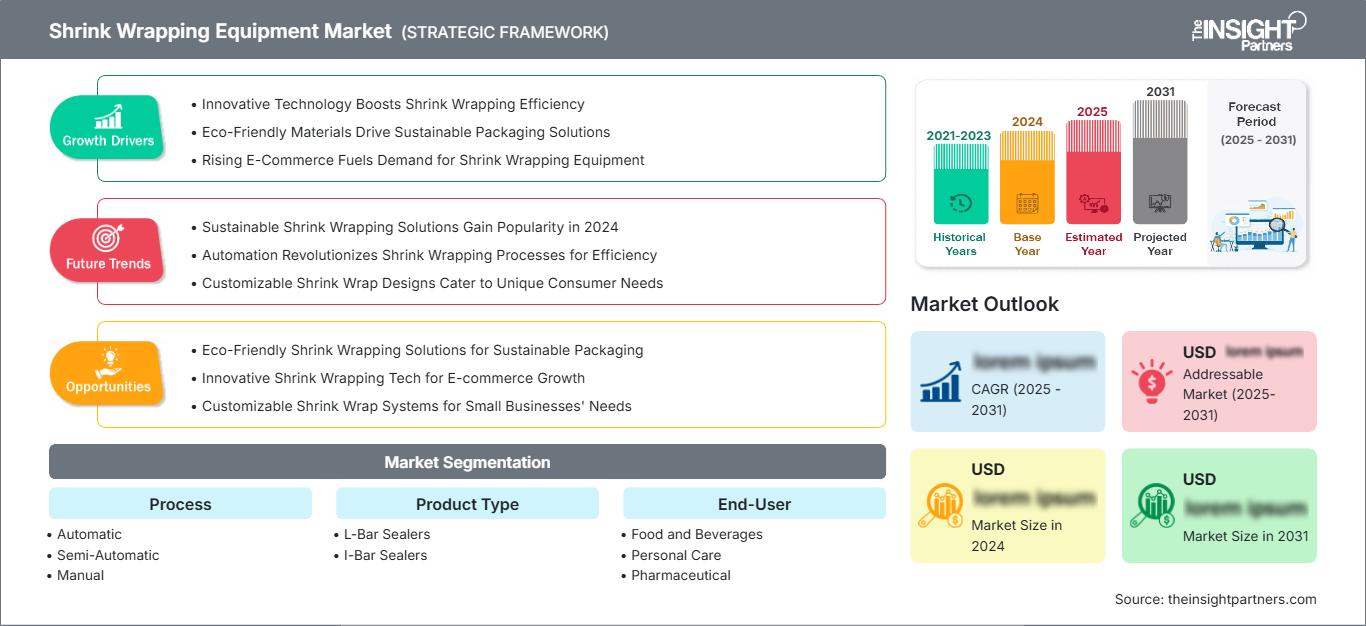
Shrink Wrapping Equipment Market: Strategic Insights
Regional Insights
North America Shrink Wrapping Equipment Market
North America accounted for 31–34% share in 2025 and is expected to expand at a CAGR of 4.2–4.8% during 2026–2034. The Shrink Wrapping Equipment Market share is supported by strong packaged food, bottled beverage, nutraceutical, and warehouse automation spending. PMMI’s packaging machinery coverage highlights continued attention to U.S. and Canadian machinery shipments, imports, exports, and services demand.
Buyers in different regions prefer automatic L-Bar Sealers, Side Sealers, and Shrink Tunnels that can be integrated with cartoning machines, case packing machines, and palletizers. Shortage of labor is driving buyers to upgrade from manual sealing machinery to semi-automatic and fully automatic sealing equipment. Buyers who operate under sustainability initiatives require machinery that uses thin films and mono-material films.
U.S. Shrink Wrapping Equipment Market
The U.S. represented 76–80% of North America in 2025 and is projected to grow at a CAGR of 4.3–4.9% during 2026–2034. Demand is concentrated in food and beverages, medical products, personal care, and fulfillment centers. Domestic equipment builders and integrators benefit from proximity to installed bases requiring service, validation, and periodic controls upgrades.
Trends in applications are retail ready packs, tamper evidence drug packs, branded film printing for products, and e-commerce optimized packaging size. Texwrap Packaging Systems, Axon LLC, Massman Automation Designs LLC, Standard-Knapp Inc., Tripack LLC, and Conflex Incorporated have their U.S. relevance in terms of their offerings of shrink wrapping, sleeving, bundling, or packaging machines.
Europe Shrink Wrapping Equipment Market
Europe held 25–28% share in 2025 and is expected to grow at a CAGR of 3.5–4.1% during 2026–2034. Germany is at the forefront due to engineering capabilities and automation of packaged goods while the UK focuses on flexible retail solutions and improved warehouse packaging systems.
France, Italy, and Spain cater to demand through beverages, dairy products, personal care, and pharmaceutical production. The presence of Italian machinery clusters is beneficial for the region such as Aetna Group S.p.A. and end-of-line integration knowledge. European buyers focus on energy-saving tunnels, temperature regulation, machine safety standards, and equipment flexibility through varied seasons and private label production.
APAC Shrink Wrapping Equipment Market
Share of APAC in 2025 was 29-32% and growth CAGR forecasted during 2026-2034 is 4.8-5.5%. China is the key driver in this region due to production of consumer goods, beverages, and export packaging. Countries like Japan and South Korea focus on quality of automation whereas India and Australia also contribute in demand for food processing and healthcare packaging.
Industrial policy promoting manufacturing localization and cold chain logistics boosts the demand for the equipment. Cost-efficient automation, service reachability, and adaptability with different sized packs are the key factors where companies compete. Regional packagers are upgrading from manual tunnel systems to semi-automatic lines due to labor shortage issues and consistent package appearance.
Middle East & Africa Shrink Wrapping Equipment Market
Middle East & Africa region is forecasted to witness a CAGR of 3.6-4.3% over 2026-2034 with Saudi Arabia being the front runner. Growth is directly dependent on food security initiatives, beverages manufacturing, pharmaceutical localization, and industrial diversification. Secondary packaging needs in distribution centers in UAE are crucial for reexportation and high temperature logistics.
South Africa anchors equipment replacement in packaged foods, household products, and industrial consumables, while Rest of MEA demand remains project-based. Energy infrastructure and logistics investment create opportunities for bundled industrial goods packaging. Buyers prioritize robust heat tunnels, service simplicity, and equipment that tolerates inconsistent utilities and varied operator skill levels.
Segmentation Analysis
Process
Process is projected to grow at a CAGR of 4.1–4.7% during 2026–2034. The Shrink Wrapping Equipment Market scope across process types reflects a migration from manual sealing toward flexible automation, especially where throughput, labor availability, and packaging consistency influence purchasing decisions. Automatic systems dominate high-volume lines, while semi-automatic and manual units remain relevant for lower-volume or space-constrained operations.
- Automatic systems serve high-throughput food, beverage, and pharmaceutical lines where repeatable sealing, integrated conveyors, and reduced labor dependency are central to equipment justification.
- Semi-Automatic equipment fits mid-volume producers and contract packagers needing better consistency than manual sealing while retaining flexibility for frequent product changeovers.
- Manual machines remain important for small businesses, trial runs, repair packaging, and specialty industrial products where capital budgets and throughput requirements are limited.
Product Type
Product Type is expected to register a CAGR of 3.9–4.5% during 2026–2034. Equipment selection depends on package geometry, film type, labor model, and required finish quality. L-Bar sealers address broad packaging needs across consumer goods, while I-Bar sealers are favored for simple operations, short runs, and lower investment environments.
- L-Bar Sealers hold stronger adoption in retail packaging because they support clean perimeter sealing, varied package dimensions, and integration with shrink tunnels for consistent presentation.
- I-Bar Sealers are preferred by small manufacturers and service operations requiring simple film sealing, lower maintenance complexity, and affordable entry into shrink packaging.
End-User
End-User is forecast to grow at a CAGR of 4.2–4.9% during 2026–2034. End-user demand is driven by product protection, tamper evidence, transport efficiency, and shelf presentation. Food and beverages lead installed demand, while pharmaceutical users generate higher specification requirements for validation, traceability, and controlled packaging outcomes.
- Food and Beverages represent the largest adoption base, using shrink systems for multipacks, trays, freshness protection, and shelf-ready formats across processed foods and drinks.
- Personal Care users prioritize product visibility, multipack promotions, and attractive retail finish while maintaining packaging flexibility for seasonal and branded product launches.
- Pharmaceutical applications require tamper evidence, clean handling, and repeatable sealing parameters, making validated equipment performance important for regulated production environments.
- Industrial and Household users adopt shrink packaging for bundled consumables, spare parts, cleaning products, and durable goods where transport protection and compact grouping matter.
Opportunity Snapshot
| End-User | Revenue Contribution | Trend Tag | Adoption Stage |
| Food and Beverages | High | Retail Packs | Mature |
| Personal Care | Medium | Brand Bundles | Scaling |
| Pharmaceutical | Medium | Tamper Packs | Scaling |
| Industrial and Household | Medium | Transit Bundles | Mature |
Shrink Wrapping Equipment Market Growth Drivers and Impact Analysis
Automation Replaces Labor-Intensive Secondary Packaging
Manufacturers are increasingly transforming manual wrapping stations into semi-automatic and fully automatic packaging cells to address labor shortages, improve operational efficiency, and maintain profitability in competitive markets. Automation helps reduce handling variability, ensuring more uniform wrapping performance and improving overall line balance across production environments. The benefits are evident through lower rejection rates, enhanced seal integrity, consistent package appearance, and reduced product damage during transit. In addition, automation enables skilled operators to focus on higher-value upstream production activities rather than repetitive packaging tasks. Within the market, this trend is driving demand for modular and scalable machines that can initially operate as standalone units and later integrate seamlessly with conveyors, cartoners, case packers, and broader production systems. Equipment suppliers that offer rapid installation, simplified commissioning, comprehensive operator training, predictive maintenance capabilities, and remote diagnostic support are well positioned to secure replacement and upgrade projects as manufacturers modernize their packaging operations.
Food Safety and Pharmaceutical Integrity Requirements
Packaged food and pharmaceutical manufacturers increasingly require shrink wrapping systems that ensure tamper evidence, contamination prevention, and consistently reliable sealing performance. These requirements become even more critical when multipack products travel through extended distribution networks, ambient storage facilities, transportation channels, and multiple retail touchpoints before reaching consumers. To meet quality and regulatory expectations, equipment buyers are prioritizing machines with stainless-steel contact surfaces, precisely controlled heat zones, validated operating parameters, and well-documented maintenance procedures that support compliance audits. Within the market, rising standards from regulators, retailers, and brand owners are accelerating the replacement of older manual sealing equipment. Automated and semi-automated systems provide greater process control, traceability, and packaging integrity, helping manufacturers reduce risk, protect product quality, and maintain compliance in highly regulated production environments.
Sustainability Pressure on Film and Corrugated Use
Brand owners are reducing packaging weight and looking for alternatives to oversized corrugated packs. Shrink wrapping equipment helps create tight, visible bundles that use less material while preserving product stability. The shift requires machines capable of running thinner films, recyclable structures, and precise heat profiles without burn-through or weak seals. In the market, sustainability pressure changes purchasing criteria from simple machine price to film savings, energy consumption, scrap reduction, and compatibility with evolving packaging material standards.
Shrink Wrapping Equipment Market Future Trends
Digital Diagnostics Become Standard in Mid-Speed Lines
Sensors, status lighting, electronic logbooks, and remote troubleshooting will move from premium systems into mid-speed packaging lines. The Shrink Wrapping Equipment Market trends point toward machines that alert operators before seal quality deteriorates, tunnel temperatures drift, or film tracking causes scrap. This will change aftermarket models because suppliers can sell uptime services, preventive maintenance, and software-enabled support. Buyers will favor equipment with intuitive interfaces and data export capability, especially when packaging lines must document performance for quality audits and retailer compliance.
Film-Compatible Heat Systems Improve Energy Performance
Future equipment development will focus on heat tunnels and sealing jaws that maintain package quality while reducing energy intensity. Better airflow control, insulated tunnel designs, and recipe-based temperature management will help processors run thinner films and recyclable materials with fewer rejects. This trend is especially relevant for food and beverage plants with high operating hours. Equipment makers that combine film testing, thermal design, and application engineering will be better placed to support sustainability targets without sacrificing speed or package appearance.
Shrink Wrapping Equipment Market Opportunities
Mid-Market Automation Packages for SMEs
Small and medium manufacturers need automation that improves output without requiring full-line replacement. The most attractive opportunity is packaged solutions that combine a sealer, tunnel, basic conveyor, installation support, and financing-friendly pricing. Shrink Wrapping Equipment Market Forecasts indicate that semi-automatic and entry-level automatic systems can capture users moving beyond manual operations. Vendors should target bakeries, personal care producers, nutraceutical brands, and contract packagers with short lead times, configurable guarding, and clear payback models based on labor savings, film reduction, and fewer damaged shipments.
Validated Pharmaceutical Bundling Solutions
Pharmaceutical manufacturers and healthcare contract packagers need secondary packaging that preserves product integrity while supporting traceability and audit readiness. Suppliers can differentiate through validation documentation, recipe controls, cleanable machine designs, and integration with serialization or inspection systems. The opportunity is strongest for equipment that bundles cartons, kits, and multipacks without damaging labels or compromising tamper evidence. Partnerships with film suppliers and line integrators can shorten qualification timelines and increase confidence among regulated buyers.
Recent Developments
- June 2026: Ningbo Zhongyixing Machinery Co., LTD officially launches a newly optimized hot air bottle shrink wrapping machine, further enriching its comprehensive portfolio of multi-scene Food machinery, integrated Food packaging machinery, stable Sealing machine, precision Filling machine and heavy-duty Vacuum packaging machine to satisfy diversified automated packaging demands across food, beverage, dairy and condiment manufacturing sectors.
- November 2025: Aetna Group takes part in Prod&Pack: France’s leading trade fair dedicated to industrial solutions and the entire production, packaging, and logistics supply chain. With over 750 exhibitors, this event solidifies its position as a benchmark for the European industry and a leading networking hub for decision-makers and professionals engaged in transition processes and improving production performance.
- January 2025: Kite Packaging has announced the addition of four new shrink wrapping machines to its range of product offerings, designed to deliver improved efficiency and reliability. Packaging distributor, Kite Packaging, has announced an upgrade to its range of shrink wrap machines. The new range features four models from Robopac, namely the Micra L, Micra M, 5040 M, and 6050 M. The new machines are designed to deliver improved efficiency and reliability in comparison to previous ranges.
Frequently Asked Questions

- Comprehensive Market Sizing and Forecast Analysis
- Detailed Segmentation Analysis
- In-Depth Market Dynamics Assessment
- Regional and Country-Level Insights
- Competitive Landscape and Company Benchmarking
- Strategic Business Intelligence
Recent Reports
Testimonials

The Insight Partners' SCADA System Market report is comprehensive, with valuable insights on current trends and future forecasts. The team was highly professional, responsive, and supportive throughout. We are very satisfied and highly recommend their services.
RAN KEDEM Partner, Reali Technologies LTDs
I requested a report on a very specific software market and the team produced the report in a few days. The information was very relevant and well presented. I then requested some changes and additions to the report. The team was again very responsive and I got the final report in less than a week.
JEAN-HERVE JENN Chairman, Future Analytica
We worked with The Insight Partners for an important market study and forecast. They gave us clear insights into opportunities and risks, which helped shape our plans. Their research was easy to use and based on solid data. It helped us make smart, confident decisions. We highly recommend them.
PIYUSH NAGPAL Sr. Vice President, High Beam Global
The Insight Partners delivered insightful, well-structured market research with strong domain expertise. Their team was professional and responsive throughout. The user-friendly website made accessing industry reports seamless. We highly recommend them for reliable, high-quality research services
YUKIHIKO ADACHI CEO, Deep Blue, LLC.
This is the first time I have purchased a market report from The Insight Partners.While I was unsure at first, I visited their web site and felt more comfortable to take the risk and purchase a market report.I am completely satisfied with the quality of the report and customer service. I had several questions and comments with the initial report, but after a couple of dialogs over email with their analyst I believe I have a report that I can use as input to our strategic planning process.Thank you so much for taking the extra time and making this a positive experience.I will definitely recommend your service to others and you will be my first call when we need further market data.
JOHN SUZUKI President and Chief Executive Officer, Board Director, BK Technologies
I wish to appreciate your support and the professionalism you displayed in the course of attending to my request for information regarding to infectious disease IVD market in Nigeria. I appreciate your patience, your guidance, and the fact that you were willing to offer a discount, which eventually made it possible for us to close a deal. I look forward to engaging The Insight Partners in the future, all thanks to the impression you have created in me as a result of this first encounter.
DR CHIJIOKE ONYIA MANAGING DIRECTOR, PineCrest Healthcare Ltd.Reason to Buy
- Informed Decision-Making
- Understanding Market Dynamics
- Competitive Analysis
- Identifying Emerging Markets
- Customer Insights
- Market Forecasts
- Risk Mitigation
- Boosting Operational Efficiency
- Strategic Planning
- Investment Justification
- Tracking Industry Innovations
- Aligning with Regulatory Trends





 Get Free Sample for