Urbanization is transforming how cities manage limited land resources, rising vehicle ownership, and increasing mobility demands. Traditional parking facilities are struggling to keep pace with high-density developments, where every square foot of space carries significant value. As a result, automated parking systems (APS) are emerging as a vital component of smart urban infrastructure, offering an efficient, technology-driven solution for maximizing parking capacity while improving user convenience.
According to The Insight Partners, the Automated Parking System Market is projected to grow from US$ 2.61 billion in 2025 to US$ 8.41 billion by 2034, registering a CAGR of 13.9% during 2026 to 2034. The market's expansion is fueled by urban land constraints, high-density real estate development, growing adoption of smart building technologies, and increasing investments in sustainable mobility infrastructure. As cities evolve into digitally connected ecosystems, automated parking systems are set to become a cornerstone of modern infrastructure through 2034.
Why Automated Parking Systems Are Gaining Momentum
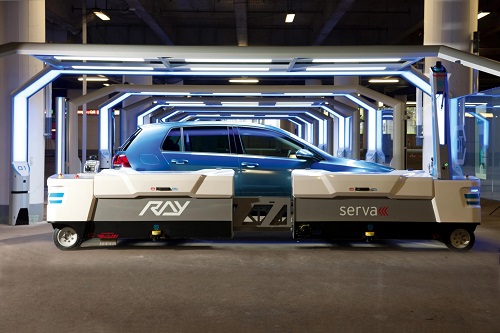
Conventional parking garages require ramps, drive lanes, ventilation systems, and large circulation areas, reducing the number of vehicles that can be accommodated within a given footprint. Automated parking systems eliminate many of these inefficiencies by using robotic lifts, elevators, conveyors, and intelligent software to park and retrieve vehicles automatically.
This approach allows developers to maximize available land while improving operational efficiency. It is particularly valuable in city centers, residential towers, hospitals, airports, commercial complexes, and mixed-use developments where land costs continue to rise.
Beyond space optimization, automated parking systems reduce vehicle circulation inside buildings, lowering fuel consumption, emissions, and congestion while creating safer pedestrian environments.
Smart Infrastructure Is Driving Market Growth
The evolution of smart cities is reshaping urban mobility, and parking infrastructure is becoming an integral part of connected city planning.
Modern automated parking systems now integrate with:
- Internet of Things (IoT) sensors
- License Plate Recognition (LPR)
- Mobile parking applications
- Digital payment platforms
- Building Management Systems (BMS)
- Predictive maintenance software
- Cloud-based monitoring platforms
These capabilities allow facility operators to monitor occupancy, automate reservations, optimize traffic flow, and improve customer experiences in real time.
Rather than functioning as standalone parking structures, automated systems are becoming intelligent infrastructure assets that communicate with buildings, transportation networks, and city management platforms.
Hardware Continues to Dominate While Software Becomes the Growth Engine
Hardware currently represents the largest share of the automated parking system market because every installation requires structural components such as robotic lifts, elevators, transfer cabins, conveyors, pallets, motors, sensors, and safety mechanisms.
However, software is rapidly becoming a major competitive differentiator.
Advanced parking management software enables:
- Remote diagnostics
- Predictive maintenance
- Automated parking allocation
- Mobile reservations
- Contactless payment integration
- Building security connectivity
- Energy management
- Operational analytics
As operators increasingly seek long-term operational efficiency rather than simply parking capacity, software-driven services are expected to generate recurring revenue opportunities for solution providers throughout the forecast period.
Fully Automated Parking Systems Are Redefining User Experience
Although semi-automated parking systems continue serving cost-sensitive applications, fully automated solutions are witnessing significantly faster adoption.
Fully automated systems offer several advantages:
- Driverless vehicle storage and retrieval
- Faster parking operations
- Improved safety
- Reduced vehicle damage
- Lower operating costs
- Higher parking density
- Minimal human intervention
These systems are increasingly deployed in premium residential developments, luxury hotels, airports, healthcare campuses, and commercial buildings where customer experience and operational efficiency are top priorities.
As automation technologies mature, retrieval times continue improving, making fully automated systems more attractive for high-traffic environments.
Artificial Intelligence Is Revolutionizing Parking Operations
Artificial intelligence is becoming one of the most transformative technologies within automated parking infrastructure.
AI-powered parking platforms can analyze historical parking patterns, vehicle departure schedules, reservation data, and sensor inputs to optimize vehicle positioning.
Instead of retrieving vehicles based solely on request order, intelligent algorithms can anticipate demand and strategically position frequently requested vehicles closer to retrieval points.
Future AI capabilities may include:
- Dynamic parking allocation
- Queue prediction
- EV charging optimization
- Automated maintenance scheduling
- Traffic flow forecasting
- Personalized parking recommendations
These intelligent features significantly reduce waiting times while maximizing operational efficiency for building owners.
Electric Vehicles Are Creating New Infrastructure Opportunities
The rapid adoption of electric vehicles is changing parking infrastructure requirements worldwide.
Future automated parking facilities must accommodate:
- Integrated EV charging stations
- Smart energy management
- Battery safety monitoring
- Charging bay allocation
- Load balancing across buildings
Automated parking systems equipped with intelligent charging management can optimize electricity consumption while maintaining maximum parking capacity.
This convergence of automated parking and EV infrastructure creates substantial opportunities for developers seeking to future-proof residential and commercial projects.
Regional Markets Continue Expanding
North America remains one of the leading markets, supported by urban redevelopment, premium housing projects, healthcare campuses, and commercial developments in major metropolitan areas. The United States accounts for the majority of regional demand due to increasing investments in robotic parking infrastructure across high-value urban locations.
Europe continues demonstrating strong adoption, particularly across Germany, the United Kingdom, and France, where dense city centers, strict planning regulations, and sustainable urban development policies favor compact parking solutions.
Meanwhile, Asia Pacific is projected to experience the fastest growth through 2034. Rapid urbanization across China, Japan, South Korea, and India, combined with smart city initiatives and large-scale infrastructure investments, is creating strong demand for intelligent parking systems.
Emerging smart city developments across the Middle East are also contributing to market expansion, particularly within luxury real estate, airports, healthcare facilities, and mixed-use mega projects.
Retrofit Projects Are Unlocking New Growth Opportunities
While new construction remains a major growth driver, existing buildings present equally attractive opportunities.
Many aging commercial buildings, apartment complexes, hotels, and hospitals were designed before current parking requirements evolved.
Modular automated parking systems allow property owners to convert underutilized basements, irregular spaces, and constrained parking areas into high-capacity parking facilities without requiring major structural expansion.
As land availability continues shrinking in urban centers, retrofit projects are expected to become an increasingly important source of market growth.
Recent Innovations Highlight Industry Progress
Recent product launches demonstrate how parking technology is rapidly evolving.
AI-powered parking management solutions now enable automatic vehicle recognition, seamless payment processing, and gateless parking experiences through advanced computer vision technology.
Digital parking management platforms are also integrating cloud-based monitoring, mobile applications, analytics, and enterprise management capabilities to simplify facility operations.
Infrastructure projects such as Hyderabad Metro Rail's fully automated multi-level parking facility further illustrate how cities are embracing intelligent parking solutions to reduce congestion while improving commuter convenience.
These developments signal a broader transition from conventional parking facilities toward digitally connected mobility infrastructure.
Future Outlook
Automated parking systems are no longer viewed as premium mechanical parking solutions reserved for luxury developments. They are becoming essential components of future-ready urban infrastructure.
Driven by rising urban density, smart city investments, AI-powered automation, electric vehicle integration, and software-enabled parking management, the automated parking system market is entering a period of sustained innovation and expansion. As governments, developers, and infrastructure planners prioritize sustainability, land optimization, and digital transformation, automated parking systems will play a central role in shaping the cities of tomorrow.
With technological advancements accelerating and global adoption expanding across residential, commercial, and mixed-use developments, the smart infrastructure revolution in automated parking is only beginning, positioning the market for remarkable growth through 2034.