
Canned Salmon Market Growth, Share & Trends by 2034
Coverage: By Product (Sockeye Salmon, Coho Salmon, Pink Salmon, Chum Salmon, and Others), Distribution Channel (Online Retail, Mass Retailers, Direct Selling, and Others), Form (Skinless and Boneless, Chunk, Flaked, and Others), Packaging (Standard Can, Easy-Open Can, Bulk or Foodservice Can, and Premium or Specialty Can), End User (Household or Retail Consumer and Foodservice), and Nature (Wild and Farmed)
- Status : Published
- Report Code : TIPRE00011747
- Category : Food and Beverages
- No. of Pages : 739
- Available Report Formats :


- Last update date : August 11, 2026


2025 Market Size
US$ 4.12 Bn
Base year value
2034 Forecast
US$ 6.11 Bn
Projected by 2034
CAGR 2026-2034
4.5 %
Growth rate
Addressable Market
US$ 46.51 Bn
(2026-2034)
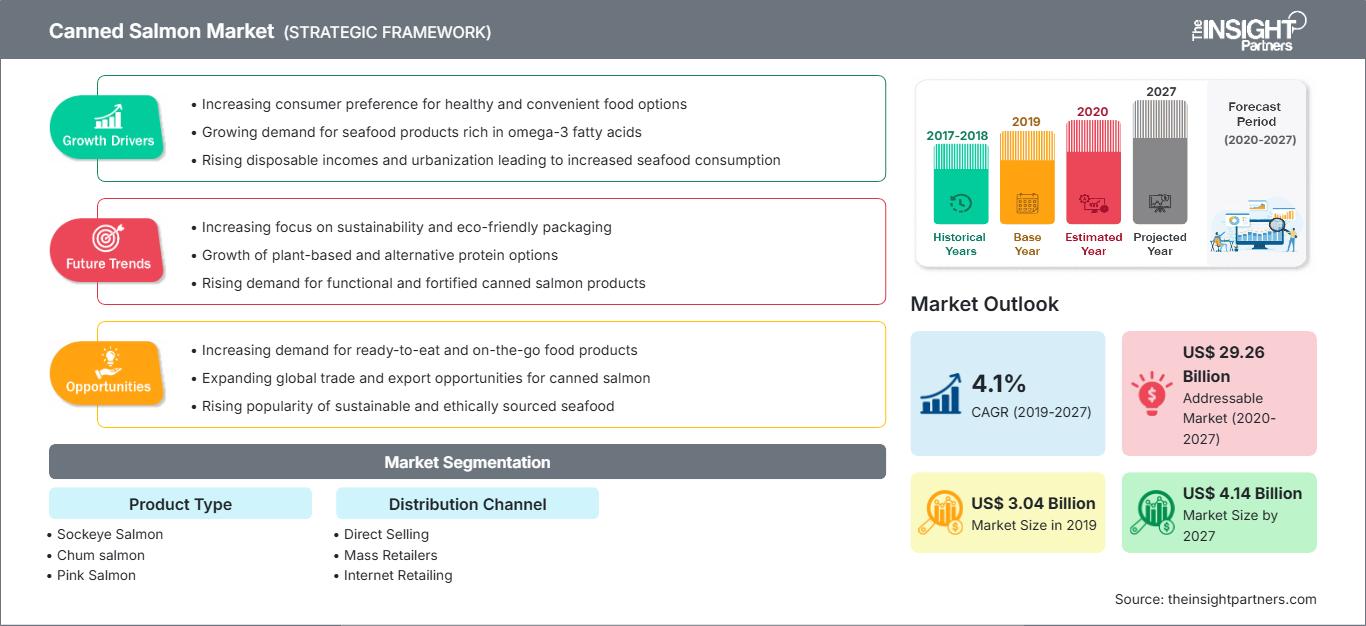
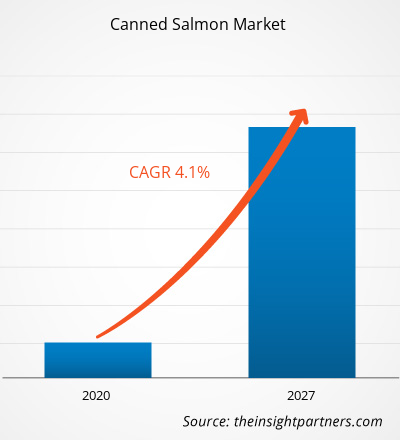
The Canned Salmon market was valued at US$ 4.12 Billion in 2025 and is projected to reach US$ 6.11 Billion by 2034, registering a CAGR of 4.50% during 2026–2034. Rising consumer preference for protein-rich packaged seafood, coupled with expanding retail availability and product innovation, continues to support stable market expansion across developed and emerging economies.
Across North America, the scope is supported by steady seafood consumption, well-established seafood processing facilities, and growing consumer awareness of the health benefits associated with omega-3-rich diets. The Canned Salmon Market in the region benefits from a strong retail presence, high-quality product offerings, and increased online grocery shopping. The regional market is expected to grow at 4.3%-5.4% annually through 2034, driven by investments in sustainable fisheries and high-end packaged seafood.
Canned Salmon Market Assessment and Insights
- North America: North America accounted for an estimated 29.93% share in 2025 and is projected to expand at a CAGR of 4.3% during 2026–2034. Strong consumer preference for seafood protein, mature retail networks, and sustainable fisheries continue to reinforce regional demand.
- U.S.: The U.S. represented approximately 82.31% of the North American market in 2025 and is anticipated to record a CAGR of 4.2% during 2026–2034, supported by premium retail products and expanding e-commerce grocery sales.
- Europe: Europe contributed around 35.12% of the global market in 2025 and is expected to grow at a CAGR of 3.9% during 2026–2034. The UK, Germany, France, Italy, and Spain remain key consuming countries driven by convenience-oriented seafood consumption.
- Asia Pacific: Asia Pacific held approximately 23.56% market share in 2025 and is forecast to register the fastest regional CAGR of 5.4% during 2026–2034. China, Japan, Australia, South Korea, and India continue to drive demand for packaged seafood through organized retail channels.
- Largest Segment: Household or Retail Consumer accounted for approximately 58.69% market share in 2025 and is expected to grow at a CAGR of 4.8% during 2026–2034, reflecting increasing at-home seafood consumption.
- High Growth Segment: Online Retail represented approximately 15.52% market share in 2025 and is projected to register a CAGR of 5.0 % during 2026–2034, supported by digital grocery platforms and direct-to-consumer seafood brands.
- Key companies analyzed in detail: Thai Union Group PCL, StarKist Co., Silver Bay Seafoods, Raincoast Trading, Pure Alaska Salmon Co. LLC, Princes Limited, Golden Prize Canning Co. Ltd., Bumble Bee Foods LLC, Alaska Seafood Co., The Clover Leaf Seafoods Family, Blue Harbor Fish Co., Trident Seafoods Corporation, Wild Planet Foods, and Fishwife Tinned Seafood Co.
Source: The Insight Partners' analysis based on proprietary research, government publications, company annual reports, investor presentations, industry databases, and expert interviews.
Growing consumer preference for easy-to-use seafood products has changed production strategies. Product formulations are now more diversified, canning technologies have been enhanced, and manufacturers have expanded their sustainable sourcing programs. Improved cold-chain logistics, digital inventory management, recyclable metal packaging, and automated processing lines have increased manufacturing efficiency without compromising product quality. Stable production in the major salmon fishing areas is due to stricter resource-use management, while producers continue to reconcile the need for resource security with environmental stewardship.
Additionally, the growing middle class in the Asia-Pacific region, improved retail networks in emerging economies, and investment in premium seafood brands will further boost industry momentum. More investment in sustainable fisheries certification, traceability, and responsible sourcing will likely attract additional capital. Meanwhile, innovations in flavored, ready-to-eat, and high-quality canned seafood will expand consumer interest in the home and foodservice sectors.
Canned Salmon Market Report Scope
| Report Attribute | Details |
|---|---|
| Market size in 2025 | US$ 4.12 Billion |
| Market Size by 2034 | US$ 6.11 Billion |
| Global CAGR (2026 - 2034) | 4.5% |
| Historical Data | 2021-2024 |
| Forecast period | 2026-2034 |
Canned Salmon Market Analysis
The Canned Salmon Market Growth is driven by increased consumer awareness of seafood's nutritional value. In addition to its rich content of omega-3 fatty acids, protein, vitamin D, and essential minerals, canned seafood is considered an affordable alternative to fresh fish. The demand is further driven by changing lifestyles, rising demand for shelf-stable foods, and increased attention to healthy lifestyles. Retailers are diversifying their premium seafood selection, and manufacturers are rolling out low-sodium, new-flavor, and eco-friendly-packaged seafood to differentiate themselves in the marketplace.
The value chain comprises sustainable fisheries, aquaculture operators, seafood processors, can manufacturers, distributors, retailers, and food service providers. Advantages of new processing technologies, high-quality standards, and traceability systems to optimize efficiency and compliance with the rules in global markets. Gone are the days when young people have to rely on outdoor retailers to get access to their products—online retailers are also helping younger consumers get their hands on goods, particularly convenient meal options.
Competition is intensifying among global seafood companies as they seek to improve their production processes, explore new markets, and invest in quality products. The Canned Salmon Market analysis reveals that established manufacturers are now vying with one another by focusing on sustainability certifications, branded quality assurance efforts, innovative packaging, and consumer messaging. In addition, companies are emphasizing transparency about their products to help establish trust and foster brand loyalty in both existing and new markets.
Some of the key players are Thai Union Group PCL, StarKist Co., Bumble Bee Foods LLC, Trident Seafoods Corporation, Princes Limited, Wild Planet Foods, Silver Bay Seafoods, Blue Harbor Fish Co., John West Foods Limited, Rio Mare, Saupiquet, and King Oscar. They develop their business via partnerships, product diversification, and investment in premium seafood. In addition, there has been an increasing emphasis on responsible fishing, recyclable packaging, and online distribution, as these drive their competitive strategies. Regional specialists are especially helping to bring locally sourced salmon products and develop unique brand identities.
● REPORT CUSTOMIZATION
Tailor This Report To Align With Your Specific Business Requirements
This report can be customized to align precisely with your business objectives, scope, and target markets. Customization options include tailored segmentation, geography, competitive analysis, and strategic insights to support informed decision-making.
Customize This Report →WHAT YOU CAN ADJUST
- ● Segmentations
- ● Geography
- ● Competitive Analysis
- ● Language Preferences
Canned Salmon Market: Strategic Insights
Regional Insights
North America Canned Salmon
North America held 29.93% of the Canned Salmon Market share in 2025 and is expected to grow at a rate of 4.3% from 2026 to 2034. The region has plenty of wild salmon, especially in Alaska. It also has good seafood processing infrastructure and strong retail distribution channels. A rising consumer preference for protein-rich, convenient foods drives demand. More people are choosing sustainable seafood and becoming aware of the health benefits of omega-3s. Major retailers are expanding their premium seafood options. Improvements in recyclable packaging and traceability systems help boost consumer confidence. Government oversight of fisheries also supports long-term resource sustainability and consistent product quality. NOAA's science-based fishery management and Alaska's commercial harvest regulations provide stability for processors and exporters in both domestic and international markets.
Consumers are increasingly interested in premium canned seafood that features wild-caught labels, clean ingredients, and easy-to-eat options. Investments in automated processing facilities, new quality-control technologies, and digital supply chain monitoring improve production efficiency while maintaining high food safety standards. Foodservice operators, institutional buyers, and outdoor recreation markets continue to support regional consumption, alongside household demand. The rise of online grocery shopping and the growth of private-label products also help maintain stable regional growth throughout the forecast period. Sustainable fisheries certifications give North American producers a competitive edge as they aim for premium positions in export markets.
U.S. Canned Salmon Market
The United States accounted for 82.31% of the North American market in 2025 and is projected to have a compound annual growth rate of 4.2% through 2034. Alaska is the main production center, providing most of the wild salmon for domestic canning and exports. Consumer demand continues to grow in supermarkets, warehouse clubs, specialty food stores, and online grocery platforms, driven by rising interest in nutritious shelf-stable seafood. Companies like StarKist Co., Bumble Bee Foods LLC, Wild Planet Foods, Trident Seafoods Corporation, and Blue Harbor Fish Co. are expanding their premium product lines that focus on responsible sourcing and traceability.
Retailers are increasingly marketing canned salmon as an affordable protein source ideal for meal preparation, emergency food storage, and healthy lifestyles. Demand also rises as older adults seek heart-healthy diets and younger consumers seek convenient meal options. Ongoing investments in automated canning technologies, recyclable metal packaging, and value-added product innovations help improve competitiveness while boosting domestic manufacturing capabilities and export potential.
Europe Canned Salmon Market
Europe held 35.12% of the global market in 2025 and is expected to grow at a CAGR of 3.9% during the forecast period. The United Kingdom remains the top regional consumer due to its well-established canned seafood market, widespread supermarket presence, and high demand for convenient protein products. Germany follows with a rising preference for premium sustainable seafood. France, Italy, and Spain support demand by expanding retail options and promoting Mediterranean seafood eating habits.
The United Kingdom shows steady demand, fueled by growth in private-label seafood, rising preference for healthy ready-to-eat products, and strong availability through national retail chains. Sustainable sourcing certifications and innovative premium packaging boost consumer confidence in both branded and retailer-owned canned seafood.
Germany benefits from growing health awareness, improvements in premium grocery retail, and increasing demand for responsibly sourced seafood. France, Italy, and Spain play a significant role in consumption due to their seafood traditions, expanding supermarket networks, and rising interest among urban consumers in premium imported canned salmon as a nutritious convenience food.
APAC Canned Salmon Market
Asia Pacific accounted for 23.56% of the global market in 2025 and is expected to grow the fastest, with a 5.4% CAGR. Japan remains the largest consumer in the region due to established seafood consumption habits. Meanwhile, China shows the highest demand growth, driven by premium retail expansion, rising disposable incomes, and the rapid development of e-commerce grocery channels.
Australia, South Korea, and India are also boosting regional demand by increasing awareness of healthy protein choices and making imported canned seafood more widely available. Government support for food safety standards, the growth of modern retail, and digital commerce continue to create a favorable environment for long-term market growth.
Middle East & Africa Canned Salmon Market
The Middle East and Africa market is expected to grow at a rate of 5.1% from 2026 to 2034. Saudi Arabia and the United Arab Emirates are the top import markets. They rely heavily on packaged food imports, see a rise in premium supermarkets, and have increasing demand for convenient protein products among urban consumers.
South Africa is the largest market in Sub-Saharan Africa. It benefits from a strong retail infrastructure and a rise in packaged seafood consumption. Ongoing investments in cold-chain logistics, organized retail, foodservice development, and premium imported food products should boost regional demand and create more opportunities for international canned salmon manufacturers.
Segmentation Analysis
Product
The Product segment is expected to expand at a CAGR of 4.5% during 2026–2034, supported by diverse consumer preferences for taste, texture, and nutritional profiles. Premium wild-caught varieties continue gaining traction among health-conscious consumers, while value-oriented products maintain broad retail appeal. Product innovation, sustainability certifications, and expanded distribution across supermarkets and digital retail channels continue to broaden the scope of the Canned Salmon Market in developed and emerging markets.
- Sockeye Salmon: This variety is popular among health-conscious consumers and specialty retailers. Its premium appeal comes from its rich flavor, vibrant color, and high omega-3 content, which offer strong brand value.
- Coho Salmon: Coho salmon maintains steady demand due to its mild flavor and moderate price. It appeals to mainstream retail customers and foodservice operators looking for versatile canned seafood ingredients.
- Pink Salmon: Pink salmon is one of the most widely consumed varieties because it is affordable and widely available. Its suitability for everyday home consumption contributes to consistent demand across mass retail channels.
- Chum Salmon: Chum salmon meets the needs of price-sensitive consumers and institutional buyers. It offers reliable nutritional value, stable supply, and competitive pricing across commercial distribution networks.
Distribution Channel
The Distribution Channel segment is expected to grow at a rate of 4.5% from 2026 to 2034. This trend reflects changing buying habits and the rise of omnichannel retail strategies. Traditional supermarkets still generate significant revenue, while online shopping increases access to premium seafood brands. Manufacturers are focusing more on direct consumer engagement, subscription models, and digital marketing to build customer relationships and boost brand visibility.
- Online Retail: The rapid growth of e-commerce grocery platforms enables greater product access, convenient home delivery, and stronger consumer engagement through personalized promotions, premium selections, and subscription-based buying models.
- Mass Retailers: Supermarkets, hypermarkets, and warehouse clubs continue to account for a large portion of product sales by offering a wide range of brands, competitive prices, and easy access for consumers in both urban and suburban areas.
- Direct Selling: Direct-to-consumer channels reinforce premium positioning by allowing manufacturers to share information about sustainability, product traceability, and nutritional benefits. These channels also help build long-term customer loyalty through digital platforms.
Form
The Form segment is expected to grow at a CAGR of 4.5% from 2026 to 2034 as manufacturers diversify product formats to meet different culinary needs. Convenience, ease of preparation, and recipe flexibility influence purchasing choices for both retail consumers and commercial food service operators. Ongoing improvements in packaging and portion options make products more appealing across various end-use categories.
- Skinless and Boneless: This premium format appeals to consumers seeking convenience, quick preparation, and consistent quality. It is especially popular among busy households and high-end retail stores.
- Chunk: Chunk products offer versatile meal-preparation options while maintaining a recognizable fish texture. They appeal to families, restaurants, and institutional kitchens that want good quality at a reasonable price.
- Flaked: Flaked salmon is commonly used in salads, sandwiches, pasta dishes, and prepared meals due to its ease of use, uniform consistency, and compatibility with many recipes in both retail and food service settings.
Packaging
The Packaging segment is set to grow at a rate of 4.5% from 2026 to 2034. Improvements in packaging convenience, sustainability, and shelf-life preservation drive this growth. Manufacturers are introducing recyclable materials, better sealing technologies, and user-friendly opening designs. These changes improve purchasing convenience and lessen environmental impact in both domestic and international markets.
- Standard Can: Standard cans are the preferred packaging choice. They are affordable, have a long shelf life, are widely available in retail, and allow for efficient transportation through global seafood supply chains.
- Easy-Open Can: Easy-open packing is becoming more popular with consumers who value convenience and accessibility. This trend is especially noticeable in premium retail and ready-to-eat product categories.
- Bulk or Foodservice Can: Larger packaging formats are effective for restaurants, catering services, institutional kitchens, and food manufacturers. These options provide cost-effective purchasing and reliable product consistency for high-volume operations.
- Premium or Specialty Can: Premium packaging highlights higher-value seafood products. It focuses on superior quality, sustainable sourcing, eye-catching presentation, and unique branding for specialty retail settings.
End User
The end-user segment is expected to grow at a rate of 4.5% from 2026 to 2034. This growth is due to steady household seafood consumption and rising demand from restaurants and hotels. Retail consumers make up the largest customer base because they prefer convenient shopping habits. At the same time, foodservice operators are using more canned seafood in prepared meals, salads, and catering.
- Household or Retail Consumer: Household buying is the main source of revenue. Consumers are focusing on nutritious, shelf-stable protein options that offer convenience, affordability, and versatility for daily meal preparation.
- Foodservice: Restaurants, cafés, catering providers, institutional kitchens, and meal prep companies are increasingly using canned seafood. This is due to its reliable supply, operational efficiency, and menu flexibility.
Nature
The Nature segment is expected to grow at 4.5% from 2026 to 2034. This growth is driven by steady demand for sustainably harvested wild salmon and responsibly farmed alternatives. As consumers become more aware of environmental responsibility, seafood traceability, and certification programs, their purchasing choices change. This shift also pushes manufacturers to improve their responsible sourcing practices.
- Wild: Wild salmon continues to attract premium consumers due to its natural origin, unique flavor, sustainability certifications, and strong reputation for high nutritional quality.
- Farmed: Farmed salmon ensures a reliable supply throughout the year, allows for scalable production, and offers competitive pricing. This helps manufacturers meet the rising global demand while strengthening supply chain stability.
Opportunity Snapshot
| End User | Revenue Contribution | Trend Tag | Adoption Stage |
|---|---|---|---|
| Household or Retail Consumer | High | Healthy Meals | Mature |
| Foodservice | Medium | Menu Innovation | Scaling |
Canned Salmon Market Growth Drivers and Impact Analysis
Growing Consumer Preference for Nutritious Shelf-Stable Seafood
Growing awareness of the health benefits of eating seafood is increasing demand for canned salmon worldwide. Consumers are looking for more protein in the foods they eat, as well as foods rich in omega-3 fatty acids, vitamin D, selenium, and essential amino acids to support heart health and overall wellness. Meanwhile, canned salmon is a convenient and healthy option for busy families and businesses, as it keeps well and is easy to prepare. Retailers are increasing their availability of higher-quality seafood, and manufacturers are creating low-sodium, flavored, and ready-to-eat seafood products. These changes increase the availability of products in shops like supermarkets, convenience stores, and online shops. This support enables the continuous expansion of the market and investment in additional seafood value creation and product development.
Expansion of Sustainable Fisheries and Responsible Sourcing Practices
Sustainability has become an important factor in the seafood industry. Governments, fisheries, and seafood processors are improving responsible harvesting to help safeguard fish stocks and ensure a consistent supply. As consumer demand for certified seafood products increases, manufacturers are investing in traceability, reducing environmental impacts in processing operations, and adopting recyclable packaging. Retailers increasingly want to work with suppliers that demonstrate clear sourcing practices and adhere to recognized sustainability standards. These activities help to create consumer trust and premium product positioning. In developed and emerging markets, responsible sourcing is becoming part of purchase decisions, and companies continue to invest in certification programs, digital traceability systems, and long-term collaborations with sustainable fisheries.
Digital Retail Expansion Strengthening Global Product Accessibility
The rapid growth of e-commerce has revolutionized the way consumers purchase seafood. It has helped to make premium packaged products more readily available in urban and rural areas. Canned seafood is rapidly gaining popularity among consumers, as they seek out online grocery stores, brand websites, and subscription food services. They appreciate the convenience and wider variety of options. Customer engagement is key, and manufacturers are investing in digital marketing, direct-to-consumer fulfillment, and related stock management. Improved logistics and efficient distribution systems facilitate timely, high-quality delivery. As the retail sector evolves into a digital business, big brands and small specialty seafood companies can access a more diverse range of customers, multiple revenue streams, and global markets by leveraging consumer insights and strategic promotions.
Canned Salmon Market Future Trends
Premiumization Through Value-Added Product Innovation
Canned seafood manufacturers are looking at premium products that are convenient, nutritious, and are creating specialty flavors. The Canned Salmon Market Trends reveal that consumers have been interested in skinless, boneless products, gourmet seasoning blends, organic ingredients, and better packaging that helps brands stand out from fierce competition in the retail market. In addition, businesses are also offering smaller serving sizes, convenience foods, and recyclable packaging to cater to consumers who value convenience. Continued investment in product innovation is expected to enhance brand positioning and drive adoption of premium products in both established and emerging markets throughout the forecast period.
Greater Adoption of Digital Traceability Technologies
As consumers increasingly demand transparency in their seafood, manufacturers will turn to digital traceability to ensure their supply chains move in that direction. QR code integration, blockchain tracking systems, and enhanced inventory management solutions empower both consumers and retailers to validate sourcing methods, harvesting areas, and processing practices. Enhanced traceability enables businesses to comply with regulations and promote consumer trust in sustainable seafood products. Businesses that adopt digital supply chain technologies can expect to improve efficiency, minimize product recalls, and boost brand value, among other benefits, due to greater transparency and quality assurance.
Canned Salmon Market Opportunities
Expansion Across Emerging Retail Markets
Emerging economies offer significant investment potential as organized retail, disposable incomes, and modern food distribution networks continue to grow. Canned Salmon Market Forecasts show increasing opportunities for manufacturers to build regional production partnerships, create localized product lines, and expand premium packaged seafood options in the Asia Pacific, Latin America, and some Middle Eastern markets. Investing in distribution infrastructure, local marketing strategies, and affordable product formats can improve market reach while supporting long-term revenue diversity. Companies that can balance premium quality with competitive pricing are expected to strengthen their market positions and build lasting relationships with fast-growing consumer groups.
Innovation in Sustainable Packaging and Premium Branding
Rising environmental awareness presents major opportunities for manufacturers that invest in recyclable packaging materials, lightweight metal containers, and eco-friendly production methods. Premium branding, backed by sustainability certifications, responsible sourcing, and attractive packaging, helps companies attract higher-value consumers who value both convenience and environmental care. Investments in new packaging technologies also extend product shelf life, improve transportation efficiency, and enhance the overall consumer experience. Businesses that effectively combine sustainable manufacturing practices with unique product positioning are expected to build customer loyalty, boost profit margins, and increase their presence in premium retail and foodservice sectors.
Recent Developments
- In June 2026, the USDA awarded Silver Bay Seafoods a contract worth USD 11.2 million for canned pink salmon. Despite this, the USDA decided against purchasing 6,080 cases of canned salmon and 80,000 pounds of frozen fillets due to pricing issues. The awarded contract includes 24,320 cases for USD 2.3 million and 94,240 cases for USD 9 million, intended for federal nutrition programs like the National School Lunch Program, with deliveries scheduled for August and September. Silver Bay Seafoods has expanded significantly by acquiring various Alaskan facilities, now controlling most of the state's canning operations.
- In August 2025, Silver Bay Seafoods was awarded a contract worth USD 876,943 by the U.S. Department of Agriculture to supply approximately 100 metric tons of canned pink salmon as part of a foreign nutrition program.
- In November 2025, King Oscar took seafood to a whole new level. The premium canned seafood company announced the launch of a new line of skinless and boneless Atlantic salmon in extra virgin olive oil.
Frequently Asked Questions

- Comprehensive Market Sizing and Forecast Analysis
- Detailed Segmentation Analysis
- In-Depth Market Dynamics Assessment
- Regional and Country-Level Insights
- Competitive Landscape and Company Benchmarking
- Strategic Business Intelligence
Recent Reports
Testimonials

The Insight Partners provided valuable market intelligence that supported our global go-to-market strategy. Their team was professional, responsive, and attentive to our feedback, providing thoughtful analysis and helpful methodological clarifications throughout the project.
Junmo Kim Chief Financial Officer (CFO), Enertech Co., Ltd.
The Insight Partners' SCADA System Market report is comprehensive, with valuable insights on current trends and future forecasts. The team was highly professional, responsive, and supportive throughout. We are very satisfied and highly recommend their services.
RAN KEDEM Partner, Reali Technologies LTDs
I requested a report on a very specific software market and the team produced the report in a few days. The information was very relevant and well presented. I then requested some changes and additions to the report. The team was again very responsive and I got the final report in less than a week.
JEAN-HERVE JENN Chairman, Future Analytica
We worked with The Insight Partners for an important market study and forecast. They gave us clear insights into opportunities and risks, which helped shape our plans. Their research was easy to use and based on solid data. It helped us make smart, confident decisions. We highly recommend them.
PIYUSH NAGPAL Sr. Vice President, High Beam Global
The Insight Partners delivered insightful, well-structured market research with strong domain expertise. Their team was professional and responsive throughout. The user-friendly website made accessing industry reports seamless. We highly recommend them for reliable, high-quality research services
YUKIHIKO ADACHI CEO, Deep Blue, LLC.
This is the first time I have purchased a market report from The Insight Partners.While I was unsure at first, I visited their web site and felt more comfortable to take the risk and purchase a market report.I am completely satisfied with the quality of the report and customer service. I had several questions and comments with the initial report, but after a couple of dialogs over email with their analyst I believe I have a report that I can use as input to our strategic planning process.Thank you so much for taking the extra time and making this a positive experience.I will definitely recommend your service to others and you will be my first call when we need further market data.
JOHN SUZUKI President and Chief Executive Officer, Board Director, BK Technologies
I wish to appreciate your support and the professionalism you displayed in the course of attending to my request for information regarding to infectious disease IVD market in Nigeria. I appreciate your patience, your guidance, and the fact that you were willing to offer a discount, which eventually made it possible for us to close a deal. I look forward to engaging The Insight Partners in the future, all thanks to the impression you have created in me as a result of this first encounter.
DR CHIJIOKE ONYIA MANAGING DIRECTOR, PineCrest Healthcare Ltd.Reason to Buy
- Informed Decision-Making
- Understanding Market Dynamics
- Competitive Analysis
- Identifying Emerging Markets
- Customer Insights
- Market Forecasts
- Risk Mitigation
- Boosting Operational Efficiency
- Strategic Planning
- Investment Justification
- Tracking Industry Innovations
- Aligning with Regulatory Trends






 Get Free Sample for