
Artificial Lift System Market Share, Demand & Growth by 2034
Coverage: by Type (Progressive Cavity Pumping (PCP), Rod Lift, Gas Lift, Electrical Submersible Pumping (ESP) and Others); Component (Pump, Motor, Cable System, Drive Head, Pump Jack, Controller, Separator and Others); and Vertical (On-Shore Oil & Gas Industry and Off-Shore Oil & Gas Industry), and Geography (North America, Europe, Asia Pacific, and South and Central America)
- Status : Data Released
- Report Code : TIPTE100000897
- Category : Electronics and Semiconductor
- No. of Pages : 150
- Available Report Formats :


- Last update date : July 15, 2026


2025 Market Size
US$ 15.34 Bn
Base year value
2034 Forecast
US$ 28.66 Bn
Projected by 2034
CAGR 2026-2034
7.19 %
Growth rate
Addressable Market
US$ 198.52 Bn
(2026-2034)
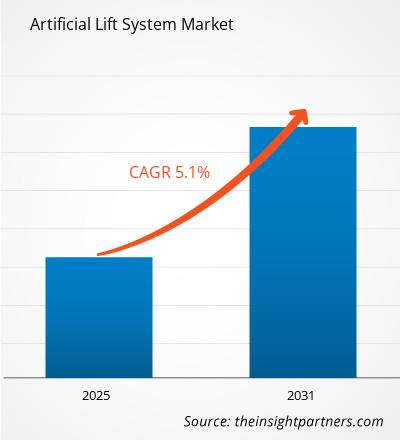
The Artificial Lift System Market is valued at US$ 15.34 Billion in 2025 and is projected to reach US$ 28.66 Billion by 2034, advancing at a CAGR of 7.19% during 2026–2034. The Artificial Lift Systems Market indicates the rising need for effective well intervention techniques that help maintain hydrocarbon production in case of falling reservoir pressure in onshore and offshore oil & gas assets.
In North America, the Artificial Lift Systems Market size is expected to grow owing to shale production, brownfield developments, and digital field optimization. It is forecasted that the region will witness a CAGR growth of 6.4-7.4% during 2026-2034 due to the application of ESPs, rod lifts, gas lift, and automation systems in the Permian, Eagle Ford, Bakken, and Canadian heavy oil fields.
Artificial Lift System Market Assessment and Insights
- North America holds 34–38% share in 2025 and is growing at a CAGR range of 6.4–7.4% during 2026–2034, led by shale wells, mature fields, and automated lift surveillance.
- US accounts for 80–84% of North American revenue in 2025 and grows at 6.3–7.3% CAGR, supported by unconventional wells and service depth.
- Europe represents 15–19% share in 2025 and grows at 5.4–6.4% CAGR, with Norway, the UK, Germany, and Italy leading offshore and brownfield upgrades.
- Asia Pacific captures 20–24% share in 2025 and expands at 7.6–8.6% CAGR, led by China, India, Indonesia, Australia, and Malaysia across mature and heavy oil assets.
- The largest segment is Electrical Submersible Pumping, holding 36–40% market share in 2025 and growing at 7.4–8.4% CAGR due to high-volume wells and offshore adoption.
- High Growth Segment is Off-Shore Oil & Gas Industry, with 28–32% share in 2025 and 8.0–9.0% CAGR, driven by deepwater reliability and subsea tiebacks.
- Key companies analyzed in detail: Baker Hughes Company, Dover Corporation, Flotek Industries, Inc., Halliburton Company, Tenaris S.A., SLB, National Oilwell Varco, Inc., Weatherford International plc, Alkhorayef Petroleum Company, ChampionX Corporation, Novomet Group, Borets International Limited, and General Electric Company.
Source: The Insight Partners' analysis based on proprietary research, government publications, company annual reports, investor presentations, industry databases, and expert interviews.
From just a mechanical process, artificial lift has developed into a production optimization process that entails the engineering of production. In selecting the technology to use, operators compare the efficiencies of the pump, temperature of motor, cable strength, gas lifting processes, ability to handle sand at the bottom hole, and ability to monitor remotely. There are changes in production dynamics as mature fields contribute increasingly to the total oil produced. At the same time, unconventional wells suffer steep decline curves that call for the introduction of lift technologies early in the well's lifespan.
In the future, demand for artificial lift is anticipated to be strong in North America, the Middle East, Latin America, and Asia Pacific as operators seek to protect their production against older reservoirs and unconventional wells. Investments are directed towards digital monitoring of ESP, intelligent rod lift controls, optimization of gas lifts, and modular surface systems. Flaring regulations and energy efficiency initiatives will help to enhance lift choices, as will national oil companies' brownfield initiatives.
Artificial Lift System Market Report Scope
| Report Attribute | Details |
|---|---|
| Market size in 2025 | US$ 15.34 Billion |
| Market Size by 2034 | US$ 28.66 Billion |
| Global CAGR (2026 - 2034) | 7.19% |
| Historical Data | 2021-2024 |
| Forecast period | 2026-2034 |
Artificial Lift System Market Analysis
Growth in the Artificial Lift System market is due to decreasing reservoir pressure, increasing unconventional extraction and the requirement to sustain flow in mature wells. Resilience in oil demand remains evident in the IEA despite improving efficiency policies, and therefore, the upstream players remain concerned with optimizing recovery. Artificial lift systems are used in reducing bottom-hole pressure, drawdown and converting marginal wells to economic ones.
The supply chain involves the pump makers, motor suppliers, cable makers, drive makers, controller makers, separators, servicing companies, production engineers and monitoring services. Supply issues are due to the availability of alloy, power electronics, elastomers, field installation capacity and maintenance facilities. Customers like integrated vendors who are able to design and install the systems, monitor wells, and act fast when instability of production becomes a threat.
As observed from the Artificial Lift System Market research, the competition landscape is characterized by diversified oilfield service companies and specialized lift manufacturers. Companies such as Baker Hughes Company, SLB, Halliburton Company, Weatherford International plc, and ChampionX Corporation have a wide range of technology portfolios, while companies like Dover Corporation, National Oilwell Varco, Inc., Novomet Group, Borets International Limited, and Alkhorayef Petroleum Company provide services in targeted pumps and field services.
The investment trend includes technologies that include digital surveillance, predictive failure analysis, variable speed drives, corrosion resistance materials, and gas handling designs in horizontal wells. Tenaris S.A. has an ecosystem of tubular and sucker rod products, while Flotek Industries, Inc. has production chemistry know-how. The current strategic position involves minimizing the cost per barrel and improving the run life of the equipment.
● REPORT CUSTOMIZATION
Tailor This Report To Align With Your Specific Business Requirements
This report can be customized to align precisely with your business objectives, scope, and target markets. Customization options include tailored segmentation, geography, competitive analysis, and strategic insights to support informed decision-making.
Customize This Report →WHAT YOU CAN ADJUST
- ● Segmentations
- ● Geography
- ● Competitive Analysis
- ● Language Preferences
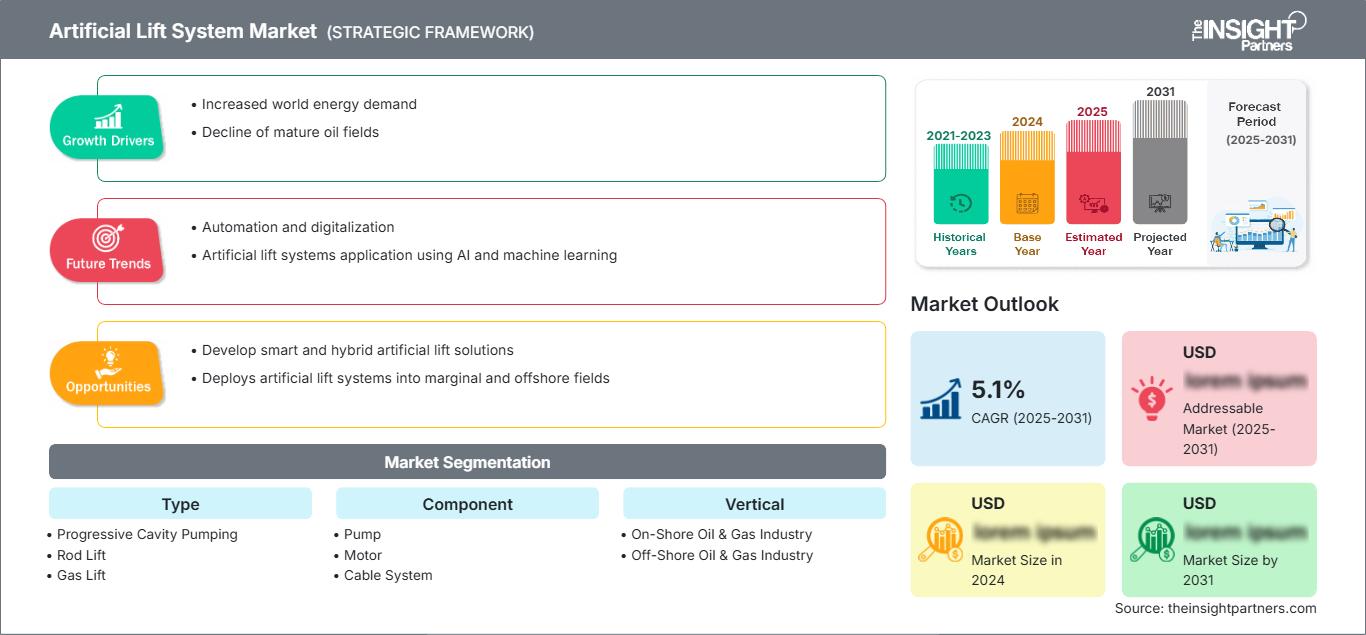
Artificial Lift System Market: Strategic Insights
Regional Insights
North America Artificial Lift System Market
North America holds an estimated 34–38% Artificial Lift System Market share in 2025 and is projected to grow at a CAGR range of 6.4–7.4% during 2026–2034. The demand for lift services is driven by shale plays, established conventional wells, Canadian heavy oil sites, and attempts by operators to minimize downtime by automating production monitoring.
Adoption of the technologies is most prevalent in regions that have large numbers of wells, fast decline rates, and established networks of service providers. Rod lift technology is still vital for low-rate wells; however, ESPs and gas lift become more common as higher volume and horizontal wells become prevalent.
U.S. Artificial Lift System Market Market
The U.S. accounts for 80–84% of North American revenue in 2025 and grows at a CAGR range of 6.3–7.3% through 2034. Production activities take place mainly in the Permian Basin, Eagle Ford, Bakken, Midcontinent, and mature Gulf Coast plays, where artificial lift systems help in maintaining the drawdown and continuity of production.
Key players operating in artificial lift solutions, such as Baker Hughes Company, Halliburton Company, SLB, Weatherford International plc, ChampionX Corporation, Dover Corporation, and National Oilwell Varco, Inc., have a substantial presence in the United States. Trends in the application of artificial lift systems involve high-gas horizontal wells, low-emission operations, and data-enabled lift systems.
Europe Artificial Lift System Market Market
Europe represents 15–19% share in 2025 and grows at a CAGR range of 5.4–6.4%. Projects in Norway and the UK are advanced by North Sea brownfield developments, subsea tieback, and offshore production optimization. Germany is an ally in terms of technology and components, but Italy and Spain provide service centers, engineering and operations in Mediterranean fields.
European oil and gas projects focus on reliability, minimizing emissions and intervention as downtime at sea is expensive. Projects value long life of ESPs, proper design of gas lift, durable components and digital surveillance. Another strength for Europe comes from strict safety standards and experienced asset management that promotes upgrading over replacement of equipment.
APAC Artificial Lift System Market Market
Asia Pacific captures 20–24% share in 2025 and records a CAGR range of 7.6–8.6% during 2026–2034. China dominates the regional demand through established fields and heavy crude oil production, whereas India, Indonesia, Malaysia, and Australia need lift systems for their old fields, offshore wells, and unconventional formations.
Domestic production policy support and energy security boost purchases, and Japanese and Korean firms have a larger role through their expertise in engineering and electronics. The region’s purchasing organizations seek durable products with low operating costs and easy repairs, as well as digital surveillance.
Middle East & Africa Artificial Lift System Market Market
CAGR growth in the Middle East and Africa lies between 6.8% to 7.8% owing to the dominance of Saudi Arabia, Kuwait, UAE, and Oman via large conventional reservoirs, enhanced oil recovery projects, and digital oilfield investments. South Africa and the rest of MEA are smaller but have their own mature or technically complex assets requiring lifting solutions.
The priorities within energy infrastructure are to increase recovery, minimize well interventions, and maintain availability in harsher conditions. ESPs and gas lift will be key for high-rate and offshore installations, whereas rod lift and P&C pumps will be relevant for low-rate and viscous fluid lifting applications.
Segmentation Analysis
Type
Artificial Lift System Market Scope Type Segmentation comprises Progressive Cavity Pumping, Rod Lift, Gas Lift, Electrical Submersible Pumping and Others, with the leading type segment expected to register a CAGR of 7.0%-8.0% in 2026-2034. Selection is based on factors such as well depth, viscosity of fluid, gas/liquid ratio, sand loading, and production rate.
- Progressive Cavity Pumping finds its application in viscous crudes, sandy fluids, and low-to-medium production rates due to its ability to ensure continuous flow, simpler surface facilities, and robust performance when encountering solid particles.
- Rod Lift has been extensively applied in mature onshore environments due to mechanical simplicity, maintenance availability, reduced cost of capital investment, and flexibility in adapting to decreasing well rates.
- Gas Lift finds its significant role in deviated, offshore, and high-gas content wells, where the injection of gas decreases hydrostatic head.
- Electrical Submersible Pumping dominates high-production operations due to its superior ability to generate drawdown, depth, and compatibility with surveillance systems.
Component
The segmentation of components includes Pump, Motor, Cable System, Drive Head, Pump Jack, Controller, Separator and Others and is expected to witness a CAGR from 6.8% to 7.8% between 2026 and 2034. The requirement of the components can be due to the following factors, such as replacement cycle, failure prevention, automation, and well engineering.
- Pump requirements are essential since the efficiency of production is based on the effectiveness of hydraulics, sand capability, gas handling, metallurgy, and the capability to have stable flow in different reservoir conditions.
- Motor specification is crucial since the motor efficiency depends on the temperature specification, load carrying capability, insulation, and variable speed drive compatibility for deep and stressful wells.
- Cable System is important for ESP since its performance relies on electrical quality, armor structure, chemical resistance, and installation efficiency.
- Drive Head is vital for progressive cavity pumping since it is responsible for the transmission of power from the surface to downhole equipment.
- The Pump Jack continues to be indispensable in rod lifting applications, since its familiarity, robustness, and serviceability help achieve longevity through low-rate wells.
- The use of Controllers is becoming increasingly common as producers strive towards achieving shutdown, load control, optimization, and performance visibility in multiple well applications.
- Separators shield the pumps from any free gas, solids, or unsteady fluid flow; therefore, their strategic significance cannot be understated, especially in unconventional formations.
Vertical
Vertical segmentation consists of the On-Shore Oil & Gas Industry and Off-Shore Oil & Gas Industry, where the primary segment is experiencing a CAGR growth of 7.2–8.2% between 2026 and 2034. The on-shore industry accounts for a majority of installed wells, whereas the off-shore industry presents more value-oriented demands for reliability, remote monitoring, and minimum intervention.
- Demand for the onshore oil and gas industry is wider in shale formations, heavy oil, and mature conventional fields in which producers have to consider lifting cost, service availability, and the frequency of equipment replacement.
- High value of strategy in Off-Shore Oil & Gas Industry is because of high costs of intervention, downtime, complexities of subsea operations, and limited space.
Opportunity Snapshot
| Vertical | Revenue Contribution | Trend Tag | Adoption Stage |
| On-Shore Oil & Gas Industry | High | Shale Optimization | Mature |
| Off-Shore Oil & Gas Industry | Medium | Subsea Reliability | Scaling |
Artificial Lift System Market Growth Drivers and Impact Analysis
Mature Fields Requiring Sustained Production Support
Pressure naturally falls in mature oilfields; hence, artificial lift becomes necessary to keep the process profitable. Many oilfields will need a lift at some point when extracting fluids from wells becomes difficult due to either an increase in water cut or reduced drawdown. The impact on market is more pronounced in mature oilfields, where exploration firms opt to expand their current resources rather than engaging in high-risk explorations. Artificial lift helps recover extra oil barrels, flatten decline rates, and help maximize the use of existing processing facilities.
Unconventional Wells Increasing Lift Complexity
This presents difficult lifting scenarios due to declining production rates, fluctuations in gas production, and the presence of horizontal sections, which make the movement of fluids difficult. Operators require systems that can switch from a situation where production is very high at the start of production to situations where production is low. ESPs, gas lifting, and rod pumping are among the lifting methods that can be used successively throughout the well life, while controllers and sensors can facilitate switching. The effect is an increased demand for flexible systems, gas separation systems, and analytics that reduce downtime.
Digital Monitoring Reducing Lifting Cost per Barrel
Monitoring of the digital lift is being used more and more as a production economics tool and not an expensive extra. Current, vibration, intake pressure, temperature, gas fraction, and flow information in real time enable adjustments of operational settings before any mechanical breakdowns or production loss takes place. It generates value since unplanned workovers are expensive, and lost production may cost more than the cost of equipment. The Artificial Lift System Market receives a boost from pumping systems that come together with controllers, drives, telemetric and surveillance services.
Artificial Lift System Market Future Trends
Autonomous Lift Optimization Across Multi-Well Pads
Artificial Lift System Market trends point toward autonomous optimization where algorithms adjust pump speed, gas injection, shutdown thresholds, and restart logic across entire pads or fields. Future deployments will combine downhole sensors, surface controllers, production allocation, and reservoir models to recommend settings with limited manual intervention. This approach is especially relevant for operators managing hundreds of wells with lean engineering teams. The shift will raise demand for secure data architecture, interoperable controllers, and field-proven analytics. Suppliers that prove reliability and transparent decision logic will be better positioned as buyers remain cautious about fully automated production changes.
Lower-Emission Lift Design and Power Efficiency
The way that lift systems are to be assessed will include considerations such as energy intensity, emissions monitoring, and ability to be electrified. Motor efficiency, speed variation, improvement in pump hydraulics, and gas lift optimization will lead to lower energy losses. It is an important issue for state-owned oil companies, publicly traded corporations, and offshore production that receives investor and government pressure. The need for equipment manufacturers to provide better information regarding the use of energy and the reduction of failures will arise. The chance does not apply only to equipment since surveillance providers can show a reduction of non-productive time and flaring dangers.
Artificial Lift System Market Opportunities
Integrated ESP Packages for Offshore Brownfields
Offshore brownfields offer a clear investment route because incremental barrels can be valuable when platforms, pipelines, and processing systems already exist. Artificial Lift System Market Forecasts indicate the Off-Shore Oil & Gas Industry is the high-growth vertical with 28–32% share in 2025 and 8.0–9.0% CAGR during 2026–2034. Vendors can target compact ESPs, subsea-compatible monitoring, gas lift optimization, and service contracts that reduce intervention frequency. The strongest proposition combines front-end engineering, reliability testing, installation support, and lifecycle surveillance. Operators will favor suppliers that can document run-life improvement and manage critical spares near offshore hubs.
Digital Retrofit Programs for Mature Onshore Fields
Large onshore oil and gas assets generate scalable retrofit opportunities due to the legacy nature of lifting equipment on large numbers of wells. Service providers have the opportunity to sell their packages comprising controllers, variable speed drives, load cells, pressure transmitters, and cloud-based analytics, along with some upgrade options for pumps. The economic feasibility of such projects increases when producers can lower truck trips, find inefficient wells, and avoid unnecessary breakdowns. Oil service companies need to design audit packages that would score wells based on production increase, past downtime, consumption, and cost recovery period.
Recent Developments
- December 2025: Baker Hughes announced a major award from Kuwait Oil Company to supply advanced artificial lift systems and services for Kuwait oil and gas fields, including ESPs, installation, surveillance, and maintenance. The agreement integrates FusionPro intelligent production drive and Leucipa automated field production solution to improve reliability and reduce nonproductive time.
- October 2025: Halliburton reported third-quarter 2025 Completion and Production revenue of US$ 3.2 billion and noted increased artificial lift activity in North America. The disclosure indicates lift demand remained active in the region despite broader equipment discipline and reinforces the role of production optimization within Halliburton’s Completion and Production portfolio.
- April 2024: SLB introduced Reda Agile compact wide-range ESP and Reda PowerEdge ESPCP systems to enhance artificial lift performance and operating range. The company stated that the technologies improve reliability, reduce installation time, support real-time optimization, and lower power consumption, operating costs, and CO2 emissions for mature and unconventional wells.
Frequently Asked Questions

- Comprehensive Market Sizing and Forecast Analysis
- Detailed Segmentation Analysis
- In-Depth Market Dynamics Assessment
- Regional and Country-Level Insights
- Competitive Landscape and Company Benchmarking
- Strategic Business Intelligence
Recent Reports
Testimonials

The Insight Partners' SCADA System Market report is comprehensive, with valuable insights on current trends and future forecasts. The team was highly professional, responsive, and supportive throughout. We are very satisfied and highly recommend their services.
RAN KEDEM Partner, Reali Technologies LTDs
I requested a report on a very specific software market and the team produced the report in a few days. The information was very relevant and well presented. I then requested some changes and additions to the report. The team was again very responsive and I got the final report in less than a week.
JEAN-HERVE JENN Chairman, Future Analytica
We worked with The Insight Partners for an important market study and forecast. They gave us clear insights into opportunities and risks, which helped shape our plans. Their research was easy to use and based on solid data. It helped us make smart, confident decisions. We highly recommend them.
PIYUSH NAGPAL Sr. Vice President, High Beam Global
The Insight Partners delivered insightful, well-structured market research with strong domain expertise. Their team was professional and responsive throughout. The user-friendly website made accessing industry reports seamless. We highly recommend them for reliable, high-quality research services
YUKIHIKO ADACHI CEO, Deep Blue, LLC.
This is the first time I have purchased a market report from The Insight Partners.While I was unsure at first, I visited their web site and felt more comfortable to take the risk and purchase a market report.I am completely satisfied with the quality of the report and customer service. I had several questions and comments with the initial report, but after a couple of dialogs over email with their analyst I believe I have a report that I can use as input to our strategic planning process.Thank you so much for taking the extra time and making this a positive experience.I will definitely recommend your service to others and you will be my first call when we need further market data.
JOHN SUZUKI President and Chief Executive Officer, Board Director, BK Technologies
I wish to appreciate your support and the professionalism you displayed in the course of attending to my request for information regarding to infectious disease IVD market in Nigeria. I appreciate your patience, your guidance, and the fact that you were willing to offer a discount, which eventually made it possible for us to close a deal. I look forward to engaging The Insight Partners in the future, all thanks to the impression you have created in me as a result of this first encounter.
DR CHIJIOKE ONYIA MANAGING DIRECTOR, PineCrest Healthcare Ltd.Reason to Buy
- Informed Decision-Making
- Understanding Market Dynamics
- Competitive Analysis
- Identifying Emerging Markets
- Customer Insights
- Market Forecasts
- Risk Mitigation
- Boosting Operational Efficiency
- Strategic Planning
- Investment Justification
- Tracking Industry Innovations
- Aligning with Regulatory Trends





 Get Free Sample for