
Assisted Reproductive Technology Market Growth, Demand & Size by 2034
Coverage: By Procedure (Fresh Donor, Fresh Non-Donor, Frozen Donor, Frozen Non-Donor, Embryo/Egg Banking); Technology ( In-vitro Fertilization, Artificial Insemination-Intrauterine Insemination, Frozen Embryo Replacement, Others); End User (Hospitals, Fertility Clinics, Others), and Geography\n, and Geography (North America, Europe, Asia Pacific, and South and Central America)
- Status : Data Released
- Report Code : TIPBT00002177
- Category : Life Sciences
- No. of Pages : 150
- Available Report Formats :


- Last update date : September 08, 2026


2025 Market Size
US$ 40.85 Bn
Base year value
2034 Forecast
US$ 75.27 Bn
Projected by 2034
CAGR 2026-2034
7.03 %
Growth rate
Addressable Market
US$ 524.35 Bn
(2026-2034)
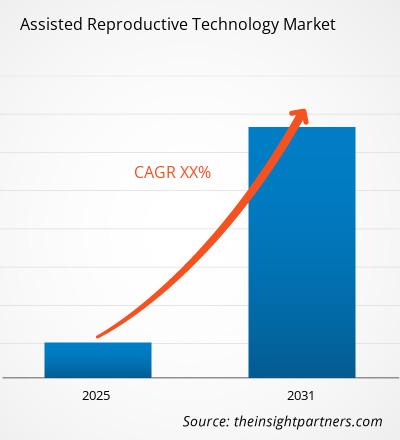
The assisted reproductive technology market is projected to reach US$ 40.85 Billion in 2025 and US$ 75.27 Billion by 2034, expanding at a CAGR of 7.03% during 2026–2034. The market comprises procedures, lab-based technologies, drugs, cryopreservation, and other fertility-related procedures being performed in hospitals and fertility centers. The growth of the market depends on late parenthood, infertility diagnosis, increased fertility preservation, and improved lab accuracy.
North America still presents an attractive geographic landscape due to the existing infrastructure for fertility, fertility benefits tied to employers, insurance coverages, and the adoption of advanced lab technologies. The assisted reproductive technology market size is forecasted to grow at the rate of 6.2–6.8% CAGR between 2026 and 2034.
Assisted Reproductive Technology Market Assessment and Insights
- North America: The region is expected to represent a 29–31% share in 2025, supported by established IVF capacity, reimbursement expansion, and high procedure intensity, with a 6.2–6.8% CAGR between 2026–2034.
- US: The US is expected to account for 78–82% of North America's 2025 value, with a 6.0–6.6% CAGR between 2026–2034, led by clinic scale and fertility-benefit adoption.
- Europe: Europe is projected to hold a 30–32% share in 2025 and expand at a 6.4–7.0% CAGR between 2026–2034, with Spain, France, Germany, Italy, and the UK providing substantial treatment capacity.
- Asia Pacific: Asia Pacific is projected to command a 28–30% share in 2025 and grow at a 7.6–8.4% CAGR between 2026–2034, led by China, Japan, India, South Korea, and Australia.
- Largest Segment: In-vitro Fertilization is expected to hold a 55–59% market share in 2025, with a 6.8–7.3% CAGR during 2026–2034, reflecting its central role across fertility treatment pathways.
- High Growth Segment: Embryo/Egg Banking is estimated at a 12–16% market share in 2025 and a 8.5–9.2% CAGR during 2026–2034, supported by fertility preservation and deferred family planning.
- Key companies analyzed in detail: California Cryobank, Bloom IVF Centre, Parallabs, OvaScience, Anecova, ORIGIO, Microm Ltd., Merck KGaA, CooperSurgical, Inc., Ferring Pharmaceuticals, Irvine Scientific, Genea Limited, Vitrolife, Nidacon International AB, Monash IVF Group, and INVO Bioscience.
Source: The Insight Partners' analysis based on proprietary research, government publications, company annual reports, investor presentations, industry databases, and expert interviews.
Laboratory processes are evolving towards greater environmental control, traceability, time-lapse analysis of embryos, improved cryopreservation and standardization of consumables. Production trends will increasingly focus on integrated companies that link media, laboratory instrumentation, cryostorage, genetic testing, and clinical support services. The assisted reproductive technology industry will, therefore, move away from procedure-focused purchasing towards laboratory ecosystems.
During the forecast period, investments will extend beyond well-established fertility centers into Asia Pacific and select Middle East markets where private sector fertility facilities are being built out. Regulations are getting more defined while clinical associations stress laboratory quality, patient safety, and transparency. All of which should be positive for investing in scaleable facilities, cryobanks, embryology training, and digital process management.
Assisted Reproductive Technology Market Report Scope
| Report Attribute | Details |
|---|---|
| Market size in 2025 | US$ 40.85 Billion |
| Market Size by 2034 | US$ 75.27 Billion |
| Global CAGR (2026 - 2034) | 7.03% |
| Historical Data | 2021-2024 |
| Forecast period | 2026-2034 |
Assisted Reproductive Technology Market Analysis
Demand in the assisted reproductive technology is supported by infertility, increasing age at first childbirth, male-factor infertility, fertility preservation, and broader treatment awareness. The assisted reproductive technology market growth is reinforced by ovarian stimulation medicines, retrieval devices, culture media, laboratory equipment, cryogenic storage, genetic testing, clinical services, and follow-up care. WHO identifies infertility as affecting about one in six people of reproductive age, underscoring substantial unmet need.
The ecosystem remains operationally sensitive because of the need to ensure that there is proper control in terms of the temperature, gas mixture, quality control, training of personnel, and validation of the consumables in embryology labs. Competitors battle it out over consistency, integration within the clinical setting, technical support, and evidence. Increased need for cryostorage and frozen transfers alters the procurement landscape, while clinics concentrate on throughput and reproducibility.
Competitive positioning in the ecosystem is shared between specialized suppliers of fertility technologies, pharmaceutical companies, producers of laboratory consumables, reproductive genetics service providers, and vertically integrated clinic organizations. According to the assisted reproductive technology market report, CooperSurgical, Ferring Pharmaceuticals, Vitrolife, Merck KGaA, Irvine Scientific, and ORIGIO play significant roles in different aspects of treatment workflow. Monash IVF Group and Genea Limited provide clinic network capabilities, while California Cryobank is known for its reproductive tissues and cryostorage services.
The current investment trend is centered on clinic networks, automated embryology, cryoconservation, reproductive genetics, and stimulation optimization. Among them, Anecova, Nidacon International AB, Microm Ltd., Parallabs, and INVO Bioscience stand out due to unique technology and innovative approach to product delivery. Future strategic advantage will be acquired through regulatory success, clinical validation, laboratory standardization, and commercialization.
● REPORT CUSTOMIZATION
Tailor This Report To Align With Your Specific Business Requirements
This report can be customized to align precisely with your business objectives, scope, and target markets. Customization options include tailored segmentation, geography, competitive analysis, and strategic insights to support informed decision-making.
Customize This Report →WHAT YOU CAN ADJUST
- ● Segmentations
- ● Geography
- ● Competitive Analysis
- ● Language Preferences
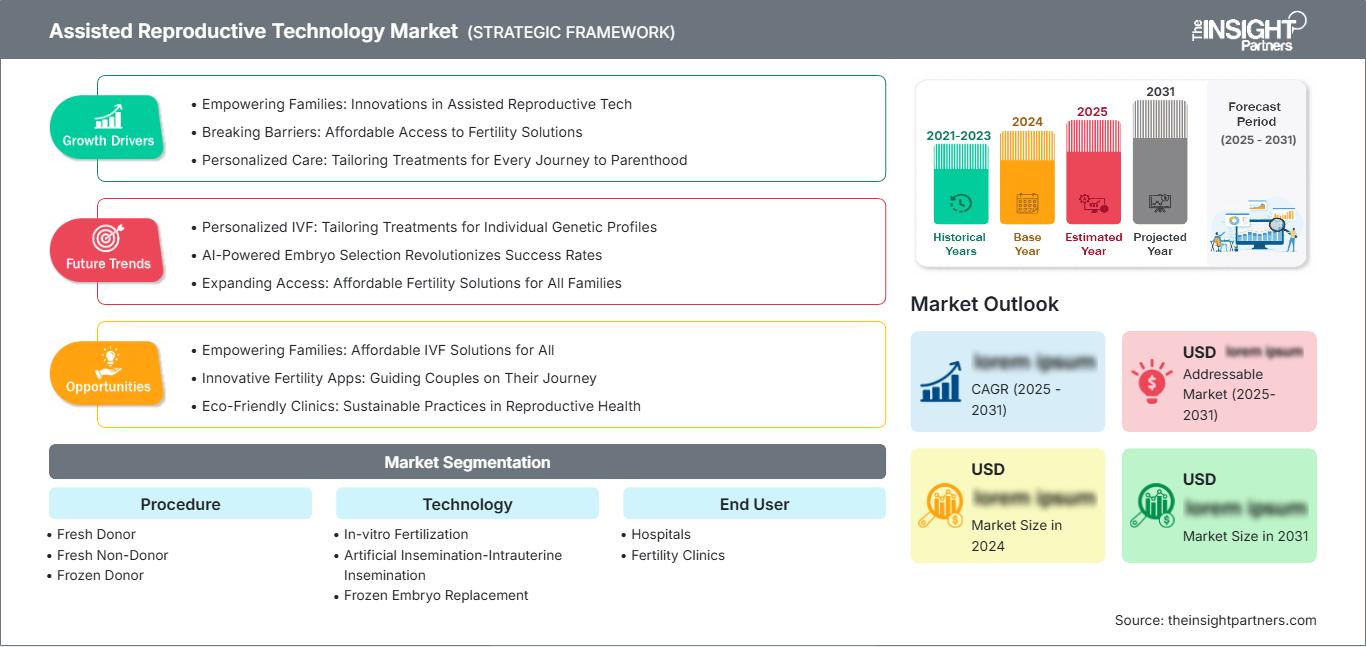
Assisted Reproductive Technology Market: Strategic Insights
Regional Insights
North America assisted reproductive technology market
North America is expected to continue holding a 29–31% of the assisted reproductive technology market share in 2025 and to report 6.2–6.8% CAGR in the forecast period till 2034. It can be attributed to high clinic density, lab standards, fertility insurance availability, employee benefits, and higher rate of elective fertility preservation adoption. The U.S. is the largest driver, while Canada is contributing via publically funded fertility programs in some provinces.
There is a trend of clinic consolidation in the ART market, which impacts procurement practices in terms of standardization of laboratory platforms, central procurement, and standard embryology protocols. There is growing demand for frozen embryo transfers, genetic screening, and cryopreservation services. Advantages of North America include matured clinical environment and high specialist availability, but low affordability for direct payments represents a major limitation.
U.S. assisted reproductive technology Market
The US constitutes 78% -82% of the 2025 value of North America and is projected to grow at a 6.0% -6.6% CAGR until 2034. In 2022, CDC surveillance showed 435,426 ART cycles performed in 457 reporting clinics with 98,289 live births, indicating high usage scale. Employer fertility benefits and consolidation in clinics contribute to further expansion of access for the commercial segment.
There is a big exposure of application in terms of IVF lab, stimulation, embryo transfer, cryopreservation, and genetic screening of key players. CooperSurgical, Ferring Pharmaceuticals, Vitrolife, Irvine Scientific, and Merck KGaA operate in different parts of the US ecosystem. There is growth in terms of frozen cycles, fertility preservation, and lab efficiency, and variation in reimbursement continues to impact the decision-making process.
Europe assisted reproductive technology Market
Europe is expected to represent a 30–32% share in 2025, with the assisted reproductive technology market share concentrated in Spain, France, Germany, Italy, and the UK, and grow at a 6.4–7.0% CAGR. ESHRE reporting has historically shown Europe as the largest regional ART activity base, while national reimbursement and regulatory frameworks materially shape utilization.
In the case of the UK, there is an already developed regulation and clinic network, and Germany is known for its large clinical infrastructure and thorough regulations. In France and Italy, the fertility service infrastructure is well developed, but in Spain, there is great cross-border fertility activity due to the highly developed private infrastructure.
APAC assisted reproductive technology Market
The APAC region is forecast to occupy a 28–30% share in 2025 with a CAGR of 7.6–8.4%, becoming one of the most rapidly growing regions. China and Japan have high volumes of procedures performed, whereas India, South Korea, and Australia have their contributions made by clinics' expansion and specialists' expertise.
China continues being a dominant country in terms of ARTs use; Japan has high ART usage rates among its population. India is expanding ART coverage by means of fertility clinics and legislation for ART. Australia is represented by well-established clinical facilities with reporting system, and South Korea supports fertility care using public policies.
Middle East & Africa assisted reproductive technology Market
The Middle East and Africa region is forecast to grow at a CAGR of 7.8% – 8.6%, where Saudi Arabia, UAE, and South Africa are considered key centers. The UAE has the advantage of private healthcare facilities and medical tourism capabilities, whereas Saudi Arabia sees the development of specialists combined with a growing need for fertility services.
South Africa offers a relatively advanced clinical setting, whereas other MEA countries remain fragmented owing to affordability, specialists availability, and lab capabilities. Energy stability, cold chain capabilities, and investments into tertiary healthcare facilities drive lab scalability. The UAE represents a leader in the region on account of private sector capabilities and patient mobility.
Segmentation Analysis
Procedure
The Procedure segment is projected to expand at a 6.8–7.4% CAGR during 2026–2034. Procedure mix is being reshaped by cryopreservation, fertility preservation, donor programs, and frozen transfer cycles. The market scope increasingly extends beyond a single fresh IVF cycle toward storage, testing, and subsequent embryo use.
- Fresh Donor: Fresh donor procedures remain strategically important for patients requiring donor oocytes. Demand depends on donor availability, screening requirements, regulatory rules, and clinic capabilities for matching and coordination.
- Fresh Non-Donor: Fresh non-donor procedures remain a foundational treatment pathway, particularly where ovarian response and embryo development support immediate transfer strategies. Clinics continue optimizing stimulation and laboratory protocols.
- Frozen Donor: Frozen donor procedures improve logistical flexibility by separating oocyte availability from recipient treatment timing. Their adoption supports broader donor access, inventory management, and standardized laboratory scheduling.
- Frozen Non-Donor: Frozen non-donor procedures are increasingly integrated into IVF pathways after embryo cryopreservation. They support staged treatment, genetic testing workflows, and transfer timing aligned with patient readiness.
- Embryo/Egg Banking: Embryo and egg banking supports fertility preservation and deferred reproductive planning. Strategic importance is increasing as patients seek to preserve reproductive options before medical treatment or later family formation.
Technology
Technology is expected to grow at a 6.9–7.5% CAGR during 2026–2034. IVF remains the core laboratory-intensive pathway, while artificial insemination and frozen embryo replacement provide complementary options. The analysis emphasizes workflow precision, individualized stimulation, embryo handling, and cryogenic continuity.
- In-vitro Fertilization: IVF remains the central technology platform because it integrates controlled ovarian stimulation, oocyte retrieval, laboratory fertilization, embryo culture, and transfer. Its broad clinical applicability sustains demand for specialized equipment and consumables.
- Artificial Insemination-Intrauterine Insemination: IUI provides a less invasive treatment option and can precede IVF in selected patient pathways. Its strategic role includes lower procedural complexity and uses in appropriately selected infertility cases.
- Frozen Embryo Replacement: Frozen embryo replacement supports flexible timing after cryopreservation and can follow genetic testing or clinical preparation. Its adoption strengthens demand for cryostorage and controlled warming workflows.
End User
The End User segment is expected to expand at a 6.7–7.3% CAGR during 2026–2034. Hospitals retain importance where fertility services integrate with broader reproductive medicine, while dedicated fertility clinics can specialize workflows and improve laboratory utilization.
- Hospitals: Hospitals benefit from multidisciplinary capabilities, including reproductive endocrinology, surgery, neonatal services, and complex patient management. Their strategic value is strongest where fertility treatment is linked to broader tertiary-care pathways.
- Fertility Clinics: Fertility clinics are central to procedure growth because they concentrate embryology expertise, laboratory infrastructure, patient coordination, and specialized reproductive services. Independent and networked clinics can also scale standardized treatment protocols.
Opportunity Snapshot
| End User | Revenue Contribution | Trend Tag | Adoption Stage |
| Hospitals | Medium | Complex Care | Mature |
| Fertility Clinics | High | Clinic Networks | Scaling |
Assisted Reproductive Technology Market Growth Drivers and Impact Analysis
Delayed Parenthood and Rising Infertility Treatment Need
Later family formation is increasing the population requiring fertility assessment and treatment, particularly where ovarian reserve and age-related constraints affect natural conception. WHO's 2025 infertility guideline identifies infertility as a major reproductive-health challenge and emphasizes improved access to diagnosis and treatment. This creates demand across stimulation medicines, retrieval devices, laboratory consumables, cryopreservation, and clinical services. The effect extends beyond IVF because patients increasingly enter pathways involving multiple retrievals, embryo banking, testing, and frozen transfers. Providers maintaining quality while reducing cycle friction can capture greater lifetime value.
Expansion of Fertility Preservation and Cryopreservation
Fertility preservation is broadening ART infrastructure beyond immediate conception. Egg and embryo banking separates collection from future treatment, creating recurring requirements for cryogenic storage, monitoring, inventory management, warming, and transfer. US surveillance data show the scale, with 184,423 egg or embryo banking cycles reported in 2022. Storage growth also requires reliable tanks, traceability systems, culture media, vitrification products, and quality controls. Clinics can improve laboratory utilization by scheduling retrieval and transfer more flexibly. This supports demand for integrated solutions rather than isolated procedural products.
Improving Laboratory Standardization and Precision
Embryology outcomes depend on tightly controlled laboratory conditions, making standardization an important differentiator. Improvements in culture systems, cryopreservation, embryo assessment, media formulation, and digital monitoring can reduce variability and support reproducible workflows. The impact favors suppliers combining validated products with training, technical support, and quality documentation. Embryologist skills remain important because equipment performance cannot compensate for inconsistent laboratory practice. Structured training programs demonstrate the need for workforce development. Standardized protocols can facilitate multi-site clinic networks by making processes easier to replicate, audit, and compare.
Assisted Reproductive Technology Market Future Trends
Data-Enabled Embryology and Workflow Automation
Future laboratories are likely to reflect assisted reproductive technology market trends through connected systems capturing incubation conditions, embryo observations, consumable records, and procedural events. Time-lapse imaging and decision-support tools may integrate more closely with laboratory information systems, although adoption will depend on evidence, regulation, and cost. Automation should focus on repetitive handling, documentation, and environmental monitoring rather than replacing embryologist judgment. Connected suppliers may gain stronger positions as clinics seek interoperable platforms.
Personalized Stimulation and Patient-Specific Treatment Pathways
Personalized ovarian stimulation is expected to become more prominent as clinics tailor protocols to ovarian reserve, age, prior response, and patient-specific risk factors. Ferring's 2025 Indian IRIS study illustrates interest in individualized follitropin delta dosing. Future models may combine biomarkers, clinical history, medication response, and laboratory outcomes to refine stimulation decisions. This can change purchasing patterns because clinics may value medicines and monitoring solutions that support protocol flexibility. It also encourages evidence generation in underrepresented populations.
Assisted Reproductive Technology Market Opportunities
Integrated Fertility Laboratory Platforms in Emerging Markets
The assisted reproductive technology market Forecasts indicate investment opportunities emerging where fertility demand is increasing faster than laboratory infrastructure. India, selected Southeast Asian markets, the Middle East, and parts of Latin America can support modular platforms combining incubators, culture systems, cryopreservation, monitoring, and consumables. Investors can reduce execution risk through partnerships with established clinics and local specialists. Embryologist training should accompany expansion because workforce capacity can constrain laboratory utilization. Commercial models combining equipment placement, consumables, technical service, and quality assurance may provide recurring revenue. The opportunity is strongest where regulation is clearer and private fertility capacity is expanding.
Cross-Border Fertility Services and Cryobank Networks
Cross-border fertility care creates opportunities for providers coordinating donor programs, cryostorage, laboratory services, genetic testing, and patient logistics across jurisdictions. Spain and the UAE illustrate markets where international patient flows can support specialized fertility infrastructure, while centralized cryobanks can improve inventory access and scale. Expansion requires careful management of import rules, donor eligibility, tissue traceability, data protection, and local clinical requirements. Companies can partner with fertility clinics, reproductive genetics providers, and logistics specialists to create compliant networks. Investment should prioritize traceability and interoperability because cross-border workflows amplify documentation risks. These capabilities can also support domestic clinics seeking broader donor and preservation inventories.
Recent Developments
- August 2026: CooperSurgical, Inc. — CooperSurgical announced FDA clearance for the Wallace Aspiration Pump, designed to provide stable pressure management during oocyte retrieval. The digital interface includes preset settings and configurable options, supporting fertility clinic workflows. The clearance strengthens CooperSurgical's product portfolio around retrieval procedures and laboratory-linked fertility care. —
- April 2026: Ferring Pharmaceuticals — Ferring and Gallup announced the Ferring Global Fertility Monitor, a planned global study covering 70 countries to examine factors influencing fertility choices and family-building. The initiative is intended to build evidence for policymaking and healthcare planning amid declining fertility rates and changing reproductive preferences across countries. —
- May 2025: Ferring Pharmaceuticals — Ferring reported results from the IRIS randomized study in Indian infertile patients, comparing individualized follitropin delta dosing with conventional follitropin alfa during controlled ovarian stimulation. The company reported numerically higher ongoing pregnancy and live birth rates with individualized dosing, while safety findings were consistent between groups.
Frequently Asked Questions

- Comprehensive Market Sizing and Forecast Analysis
- Detailed Segmentation Analysis
- In-Depth Market Dynamics Assessment
- Regional and Country-Level Insights
- Competitive Landscape and Company Benchmarking
- Strategic Business Intelligence
Recent Reports
Testimonials

The Insight Partners provided valuable market intelligence that supported our global go-to-market strategy. Their team was professional, responsive, and attentive to our feedback, providing thoughtful analysis and helpful methodological clarifications throughout the project.
Junmo Kim Chief Financial Officer (CFO), Enertech Co., Ltd.
The Insight Partners' SCADA System Market report is comprehensive, with valuable insights on current trends and future forecasts. The team was highly professional, responsive, and supportive throughout. We are very satisfied and highly recommend their services.
RAN KEDEM Partner, Reali Technologies LTDs
I requested a report on a very specific software market and the team produced the report in a few days. The information was very relevant and well presented. I then requested some changes and additions to the report. The team was again very responsive and I got the final report in less than a week.
JEAN-HERVE JENN Chairman, Future Analytica
We worked with The Insight Partners for an important market study and forecast. They gave us clear insights into opportunities and risks, which helped shape our plans. Their research was easy to use and based on solid data. It helped us make smart, confident decisions. We highly recommend them.
PIYUSH NAGPAL Sr. Vice President, High Beam Global
The Insight Partners delivered insightful, well-structured market research with strong domain expertise. Their team was professional and responsive throughout. The user-friendly website made accessing industry reports seamless. We highly recommend them for reliable, high-quality research services
YUKIHIKO ADACHI CEO, Deep Blue, LLC.
This is the first time I have purchased a market report from The Insight Partners.While I was unsure at first, I visited their web site and felt more comfortable to take the risk and purchase a market report.I am completely satisfied with the quality of the report and customer service. I had several questions and comments with the initial report, but after a couple of dialogs over email with their analyst I believe I have a report that I can use as input to our strategic planning process.Thank you so much for taking the extra time and making this a positive experience.I will definitely recommend your service to others and you will be my first call when we need further market data.
JOHN SUZUKI President and Chief Executive Officer, Board Director, BK Technologies
I wish to appreciate your support and the professionalism you displayed in the course of attending to my request for information regarding to infectious disease IVD market in Nigeria. I appreciate your patience, your guidance, and the fact that you were willing to offer a discount, which eventually made it possible for us to close a deal. I look forward to engaging The Insight Partners in the future, all thanks to the impression you have created in me as a result of this first encounter.
DR CHIJIOKE ONYIA MANAGING DIRECTOR, PineCrest Healthcare Ltd.Reason to Buy
- Informed Decision-Making
- Understanding Market Dynamics
- Competitive Analysis
- Identifying Emerging Markets
- Customer Insights
- Market Forecasts
- Risk Mitigation
- Boosting Operational Efficiency
- Strategic Planning
- Investment Justification
- Tracking Industry Innovations
- Aligning with Regulatory Trends





 Get Free Sample for