
Cardiovascular Ultrasound Market Size, Share & Demand by 2034
Coverage: By Test Type (Transthoracic Echocardiogram, Transesophageal Echocardiogram, Stress Echocardiogram, and Others); Technology (2D, 3D and 4D, and Doppler Imaging); Device Display (Color, and Black and White); End User (Hospitals, Cardiology Centers, Home Care, Ambulatory Centers, and Others), and Geography (North America, Europe, Asia Pacific, and South and Central America)
- Status : Data Released
- Report Code : TIPRE00004908
- Category : Life Sciences
- No. of Pages : 150
- Available Report Formats :


- Last update date : September 08, 2026


2025 Market Size
US$ 6.54 Bn
Base year value
2034 Forecast
US$ 11.51 Bn
Projected by 2034
CAGR 2026-2034
6.48 %
Growth rate
Addressable Market
US$ 81.63 Bn
(2026-2034)
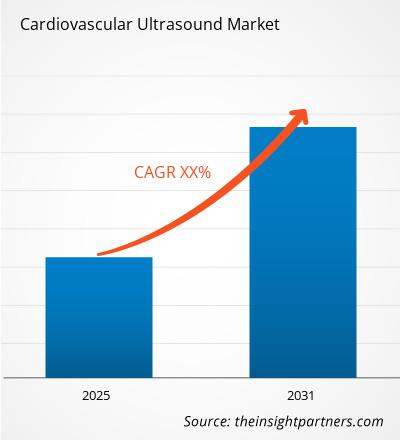
The Cardiovascular Ultrasound Market was valued at US$ 6.54 Billion in 2025 and is projected to reach US$ 11.51 Billion by 2034, expanding at a CAGR of 6.48% during 2026–2034. Echocardiography market growth is driven by the rising use of echocardiography in diagnostics, structural heart procedures, critical care, and long-term disease management. Advancements in transducer sensitivity, automated measurement tools, mobility, and multi-dimensional image generation are improving reliability for more challenging cardiovascular cases.
North America continues to be a major consumer base, and the Cardiovascular Ultrasound Market Size has been driven by its projected CAGR of 5.9–6.5% between 2026 and 2034. Large cardiac imaging numbers, established payment processes, and old ultrasound system upgrades continue to drive ongoing investments. North America additionally enjoys high cardiovascular disease incidence rates, as 5.0% of American adults had coronary heart disease in 2024, and heart disease caused 683,491 deaths in the US in 2024.
Cardiovascular Ultrasound Market Assessment and Insights
- North America: Accounted for a 34–37% share in 2025 and is expected to register a CAGR of 5.9–6.5% between 2026–2034, supported by advanced echocardiography laboratories, favorable technology replacement cycles, and expanding structural heart interventions.
- US: Represented 82–85% of North American demand in 2025 and is projected to grow at a CAGR of 5.8–6.4% between 2026–2034 as providers prioritize automation and productivity.
- Europe: Held a 27–30% share in 2025 and is forecast to expand at a CAGR of 5.6–6.2% between 2026–2034, with Germany, the UK, France, Italy, and Spain sustaining adoption.
- Asia Pacific: Captured a 24–27% share in 2025 and is anticipated to record a CAGR of 7.4–8.1% between 2026–2034, led by China, Japan, India, and South Korea.
- Largest Segment: Transthoracic Echocardiogram represented a 66–70% market share in 2025 and is expected to grow at a CAGR of 5.9–6.5% during 2026–2034.
- High Growth Segment: 3D and 4D technology held a 22–26% market share in 2025 and is projected to expand at a CAGR of 8.0–8.8% during 2026–2034.
- Key companies analyzed in detail: GE HealthCare Technologies Inc., Koninklijke Philips N.V., Canon Medical Systems Corporation, Hitachi, Ltd., Samsung Medison Co., Ltd., FUJIFILM Corporation, Esaote S.p.A., Shenzhen Mindray Bio-Medical Electronics Co., Ltd., Siemens Healthineers AG, Analogic Corporation, KPI Healthcare Inc., Whale Imaging Inc., CHISON Medical Technologies Co., Ltd., and Canon Inc.
Source: The Insight Partners' analysis based on proprietary research, government publications, company annual reports, investor presentations, industry databases, and expert interviews.
There has been a shift in cardiac ultrasound from its initial black-and-white and cart-based technology to a connected system that combines color Doppler, volume scanning, strain evaluation, automation, and guidance of procedures. This has shifted the focus of production in cardiac ultrasound towards software-based architectures, matrix array transducers, fast processing capabilities, and modular enhancements. Manufacturers have started differentiating their products using parameters such as image reconstruction, artificial intelligence, ergonomic design, and enterprise work flow integration other than hardware capabilities.
Future innovations in cardiac ultrasound will be focused towards underserved metropolitan regions, cardiology networks in outpatient settings, and decentralization of diagnostic process in Asia Pacific, Latin America, and Middle East. Investment would be targeted towards smaller machines with superior analytical features, remote access to results and standard reporting. Clearance of artificial intelligence capabilities by regulatory authorities, national programs for non-communicable diseases and expansion in training programs would help in accelerating the uptake of this modality although procurement budget, cyber security issues and lack of skilled sonographers will affect the purchase cycle.
Cardiovascular Ultrasound Market Report Scope
| Report Attribute | Details |
|---|---|
| Market size in 2025 | US$ 6.54 Billion |
| Market Size by 2034 | US$ 11.51 Billion |
| Global CAGR (2026 - 2034) | 6.48% |
| Historical Data | 2021-2024 |
| Forecast period | 2026-2034 |
Cardiovascular Ultrasound Market Analysis
Growth drivers in the Cardiovascular Ultrasound Market include increased diagnosis and monitoring of heart failure, valvular diseases, cardiomyopathies, congenital problems, and coronary disease. In 2022, cardiovascular diseases were responsible for about 19.8 million deaths worldwide, making up 32% of all global mortality. More than 75% of the deaths happened in developing nations.
Ecosystem participants comprise semiconductor suppliers, transducers, software firms, original equipment manufacturing (OEM), distributors, hospitals, cardiology clinics, and service companies. Factors that affect the total cost of ownership are availability of components, durability of probes, installation capabilities, and staff training. The significance of software upgrades and service agreements is growing due to the need to extend equipment lifespan, maintain cybersecurity and utilize new functions in analysis without acquiring a whole system.
Competitions in Cardiovascular Ultrasound Market Report take place among premium carts, midrange platforms, compact systems, and refurbished products. Companies GE HealthCare Technologies Inc., Koninklijke Philips N.V., Siemens Healthineers AG, Canon Medical Systems Corporation, and FUJIFILM Corporation are competing in imaging performance and enterprise integration. Companies Esaote S.p.A., Samsung Medison Co., Ltd., and Shenzhen Mindray Bio-Medical Electronics Co., Ltd. increase competitions through specialized, portable, and value-oriented portfolios.
In strategic investments, companies focus on artificial intelligence, automatic Doppler measurement, strain quantification, structural heart imaging, and cloud-based interpretation. For example, products like GE HealthCare’s Vivid Pioneer, Philips’ Transcend Plus platform, and Siemens Healthineers’ ACUSON Origin are positioned based on the fast analysis and low operator variability. Siemens has noted that ACUSON Origin offers over 5,600 AI-enabled measurements powered by the database that contains two billion multimodality images.
● REPORT CUSTOMIZATION
Tailor This Report To Align With Your Specific Business Requirements
This report can be customized to align precisely with your business objectives, scope, and target markets. Customization options include tailored segmentation, geography, competitive analysis, and strategic insights to support informed decision-making.
Customize This Report →WHAT YOU CAN ADJUST
- ● Segmentations
- ● Geography
- ● Competitive Analysis
- ● Language Preferences
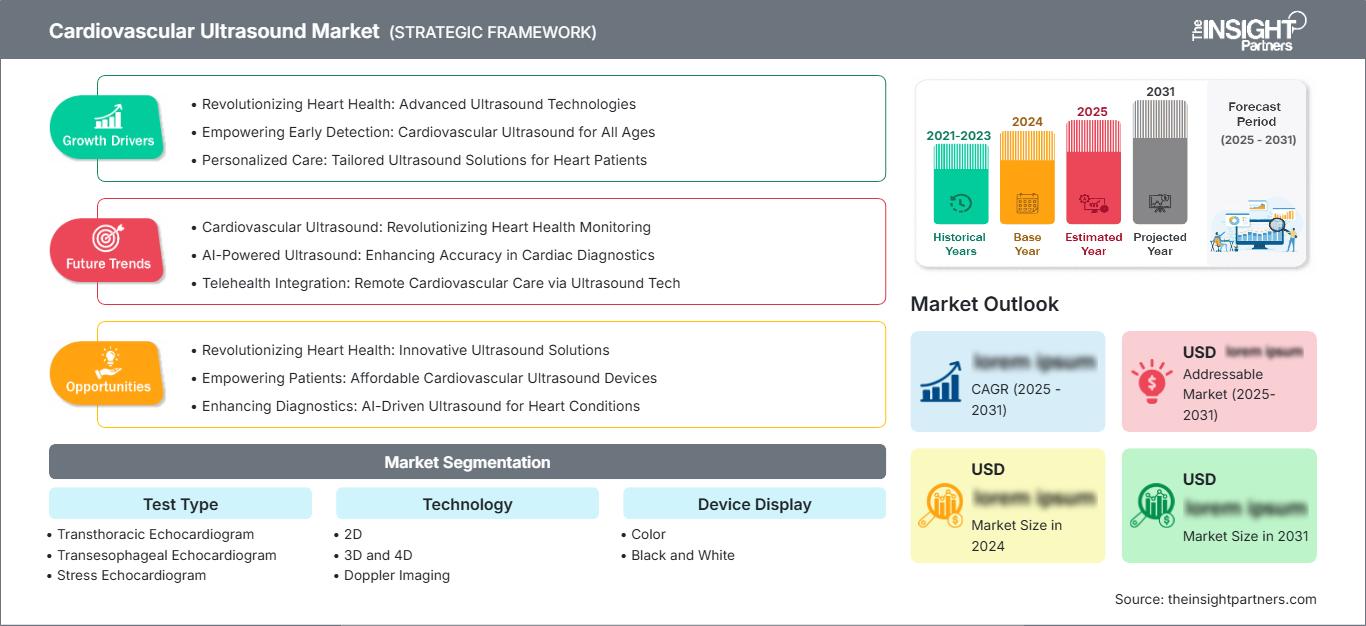
Cardiovascular Ultrasound Market: Strategic Insights
Regional Insights
North America Cardiovascular Ultrasound Market
North America has registered 34-37% Cardiovascular Ultrasound Market share in 2025 and estimated to exhibit a CAGR of 5.9-6.5% until 2034. The growth is driven by high number of diagnostics, well-developed cardiology ecosystem, structured heart programs, and fleet renewal. The integrated delivery networks emphasize common interface, automated measurements, and vendor neutrality in order to minimize variations in reporting from multiple centers.
Further, the market is fueled by an older population, shift towards outpatients, and cardiovascular expenditures. As per the data from 2017-2020, there were 127.9 million adults with any type of cardiovascular disease in the USA, and total costs of cardiovascular care were US$ 417.9 billion for 2020-2021. In Canada, the market is driven by provincial equipment upgrades and echocardiography need, whereas Mexico provides longer term growth opportunities through hospitals and urban diagnostics.
U.S. Cardiovascular Ultrasound Market
The United States held 82–85% of the North American market share in 2025, expected to grow with a CAGR of 5.8–6.4% between 2026 and 2034. Hospitals continue to be important buyers, while small-scale systems are increasingly being adopted by cardiological offices and ambulatory centers for transthoracic examinations, stress tests, and follow-up after procedures. Enterprise purchasers pay attention to cybersecurity, interoperability, service coverage, and analytical packages that are standardized.
Key players with active business operations include GE HealthCare Technologies Inc., Koninklijke Philips N.V., Siemens Healthineers AG, Canon Medical Systems Corporation, and Samsung Medison Co., Ltd. Increasingly common use cases include automatic calculations of ejection fraction, global longitudinal strain, color flow quantification, and structural heart imaging guidance. There were 13 million visits to physicians' offices where the primary diagnosis was coronary atherosclerosis or chronic ischemic heart disease in the country.
Europe Cardiovascular Ultrasound Market
Europe constituted a market share of 27–30% in 2025 and is forecasted to grow at a CAGR of 5.6–6.2% until 2034. Germany takes lead in regional demands owing to its hospital network, expertise in cardiology, and technology usage. Replacement purchasing will be inclined toward systems which provide high-performance Doppler, strain imaging, reporting structure, and transesophageal features for valves procedures.
Productivity and standardized pathway in limited-capacity services in the UK make it prone to automation and portable devices. France promotes advanced echocardiography through both private and government hospitals. Italy has a high-level of specialist ultrasound experience along with presence of local suppliers such as Esaote S.p.A. Spain has cardiovascular centers and interventional procedures as strength. Among these countries, purchasing is focused on devices which have efficient workflow management, upgradeable features, low-energy consumption, and service costs.
APAC Cardiovascular Ultrasound Market
The Asia Pacific region held a share of 24–27% in 2025 and is expected to exhibit a CAGR of 7.4–8.1% from 2026 to 2034. China holds an edge due to its high hospital capacity, local production, and medical imaging availability, while Japan focuses on providing premium solutions and replacement units.
There is a huge volume potential in India owing to its private hospitals and chain diagnostics. South Korea has combined high-quality treatment delivery with local manufacturing, while Australia has established high standards of care in terms of clinical practices.
Middle East & Africa Cardiovascular Ultrasound Market
The Middle East and Africa region is projected to expand at a CAGR of 6.7–7.4% during 2026–2034. Saudi Arabia leads regional purchasing through hospital development and health system transformation, while the UAE supports premium diagnostic and specialty care investment.
Sub-Saharan clinical need is driven by South Africa, though factors such as affordability and access to services play a role in uptake. In other parts of the sub-region, opportunities lie within increased health infrastructure, energy-driven public spending, mobile diagnostics, and more private hospitals.
Segmentation Analysis
Test Type
Test Type is expected to record a CAGR of 6.1–6.7% during 2026–2034. The Cardiovascular Ultrasound Market scope across test types reflects differing needs for routine assessment, detailed posterior cardiac imaging, procedural support, and exercise-induced functional evaluation. Transthoracic examinations dominate patient volumes, while transesophageal and stress protocols deliver higher clinical specialization and require trained personnel, dedicated probes, and advanced interpretation.
- Transthoracic Echocardiogram: Maintains the leading position because it is noninvasive, widely reimbursed, repeatable, and suitable for evaluating ventricular function, chamber dimensions, valve disease, congenital abnormalities, and treatment response.
- Transesophageal Echocardiogram: Serves complex valve assessment, thrombus detection, endocarditis evaluation, and structural heart procedures where closer probe proximity provides detailed visualization unavailable through standard transthoracic acoustic windows.
- Stress Echocardiogram: Supports ischemia assessment and functional evaluation by comparing cardiac performance at rest and under induced stress, making it strategically important for coronary disease investigation and risk stratification.
Technology
Technology is projected to grow at a CAGR of 6.6–7.2% during 2026–2034. Purchasing decisions increasingly balance routine image quality with advanced quantification, visualization, and automation. Although 2D imaging remains foundational, 3D and 4D systems are gaining importance in valve assessment and interventional guidance. Doppler imaging remains essential for evaluating blood-flow direction, velocity, pressure gradients, and hemodynamic severity.
- 2D: Remains the standard imaging foundation across routine echocardiography because of broad clinician familiarity, reliable anatomical visualization, lower computing requirements, and compatibility with established measurement and reporting protocols.
- 3D and 4D: Gains strategic relevance in structural heart planning, device guidance, ventricular quantification, and valve visualization by providing volumetric anatomical context and live multidimensional views during complex procedures.
- Doppler Imaging: Maintains indispensable diagnostic value in assessing stenosis, regurgitation, shunts, diastolic function, and vascular flow, while automated placement and tracing functions improve examination speed and reproducibility.
Device Display
Device Display is expected to expand at a CAGR of 5.8–6.4% during 2026–2034. Display selection is connected to system price, clinical complexity, portability, and the level of hemodynamic interpretation required. Color displays dominate new-system procurement because they integrate anatomical and flow information, while black-and-white configurations retain relevance in cost-sensitive settings and basic screening workflows.
- Color: Leads clinical adoption by enabling real-time distinction of flow direction, turbulence, jets, and vascular patterns, supporting faster interpretation of valve dysfunction and abnormal intracardiac hemodynamics.
- Black and White: Retains a position in basic anatomical imaging, education, screening, and budget-constrained facilities where purchasing decisions prioritize essential functionality, mobility, and lower acquisition costs.
End User
End User is forecast to register a CAGR of 6.2–6.8% during 2026–2034. Hospitals generate substantial demand through emergency, inpatient, surgical, and interventional workflows. Cardiology centers require specialized analytical capabilities, while ambulatory centers prioritize throughput and compact footprints. Home care remains emerging, supported by portable equipment, tele-echocardiography, and supervised community diagnostic models rather than unrestricted patient-operated scanning.
- Hospitals: Contribute the highest revenue through large examination volumes, emergency access, intensive care deployment, pediatric cardiology, cardiac surgery, and advanced structural heart programs requiring premium systems and specialized probes.
- Cardiology Centers: Prioritize dedicated cardiac workflows, stress protocols, strain analysis, and longitudinal monitoring, creating demand for systems that combine high throughput with consistent measurements and integrated reporting.
- Home Care: Represents an emerging delivery setting where portable equipment and remote expert review can improve access for mobility-limited patients, provided acquisition quality and clinical governance are maintained.
- Ambulatory Centers: Benefit from outpatient migration and shorter diagnostic pathways, favoring compact equipment with rapid startup, automated measurements, efficient patient turnover, and lower ownership costs than premium hospital platforms.
Opportunity Snapshot
| End User | Revenue Contribution | Trend Tag | Adoption Stage |
| Hospitals | High | Structural Guidance | Mature |
| Cardiology Centers | High | Strain Analytics | Scaling |
| Home Care | Low | Remote Echo | Emerging |
| Ambulatory Centers | Medium | Outpatient Imaging | Scaling |
Cardiovascular Ultrasound Market Growth Drivers and Impact Analysis
Increasing Cardiovascular Disease Detection and Monitoring
The increasing burden of cardiovascular diseases increases the application of ultrasounds for purposes of diagnosis, therapy planning, acute assessment, and follow-ups. An image of the heart is needed when there is heart failure, valve disease, congenital conditions, cardiomyopathy, and ischemia suspicion, leading to repeated testing and not one-time need. As of 2023, cardiovascular diseases were responsible for 19.2 million deaths and 437 million disability-adjusted life years. Since ultrasounds are non-invasive and give instantaneous functional data, they can be repeated in cases where the situation of a patient changes.
Expansion of Structural Heart and Interventional Programs
The increasing burden of cardiovascular diseases makes ultrasound imaging more common in diagnostics, planning of therapy, evaluation of emergencies, and follow-ups. Ultrasound cardiac imaging is necessary for heart failure, heart valves’ disease, congenital abnormalities, cardiomyopathy, and ischemia suspicions, thus leading to repetitive examinations but not one-time needs. Cardiovascular diseases were responsible for 19.2 million deaths and 437 million DALYs in 2023 around the globe. Due to the fact that ultrasound imaging does not involve any ionizing radiation and delivers instant functional information, repeated examinations are possible as the conditions of patients change.
Automation Addresses Workforce and Throughput Constraints
There is the problem of backlog in examinations, operator skills variance, and need for reproducible report generation among cardiology departments. Automatic view detection, automatic chamber tracing, automatic Doppler placement, automatic ejection fraction calculation, and strain analysis help eliminate redundant procedures and ensure uniform output results. According to Philips, 79% of cardiac care professionals surveyed by the company had lost clinical time due to incomplete or unavailable patient data with the average of 45 minutes per shift lost. Automation thus impacts buying decisions based on efficiency gains beyond image quality.
Cardiovascular Ultrasound Market Future Trends
AI-Guided Acquisition and Predictive Quantification
Cardiovascular Ultrasound Market trends will shift from isolated automated measurements toward context-aware acquisition support and predictive interpretation. Future systems are expected to identify views, guide probe positioning, verify image quality, complete measurement packages, and flag meaningful changes against prior examinations. Artificial intelligence will increasingly operate across the full workflow, including scheduling, scanning, reporting, and follow-up prioritization. Adoption will depend on regulatory clearance, explainability, representative training data, and clinician override capabilities. Vendors able to validate algorithms across diverse body types, disease states, and equipment configurations will gain stronger positions in enterprise purchasing and standardized care programs.
Connected Compact Systems Extend Specialist-Level Imaging
Compact and portable platforms will increasingly deliver functions previously limited to premium carts, including strain analysis, volumetric imaging, automated Doppler, and secure cloud review. This transition supports emergency departments, ambulatory centers, satellite clinics, and mobile diagnostic services without eliminating specialist oversight. Remote collaboration can allow experienced echocardiographers to review acquisition quality or interpret complex cases across distributed locations. Manufacturers will consequently compete on battery performance, probe ecosystems, cybersecurity, connectivity, and subscription analytics. The trend will expand addressable demand while encouraging providers to establish governance standards for credentialing, data retention, quality assurance, and escalation of abnormal findings.
Cardiovascular Ultrasound Market Opportunities
Localized Platforms for High-Volume Emerging Markets
Manufacturers can expand access by developing configurable systems aligned with regional purchasing power, clinical protocols, language requirements, and service infrastructure. Investment priorities include durable probes, simplified interfaces, local training, remote diagnostics, and financing arrangements for hospitals and diagnostic chains. India, China, Southeast Asia, the Middle East, and selected African markets offer opportunities where cardiac disease burden is rising faster than specialist capacity. Successful positioning requires more than lowering hardware prices. Companies must establish distributor accountability, spare-parts availability, application support, and upgrade pathways so providers can begin with routine echocardiography and add advanced capabilities as volumes and expertise increase.
Lifecycle Services and Software-Based Revenue Models
The installed base creates opportunities for vendors to generate recurring revenue through analytical software, cybersecurity updates, remote maintenance, probe protection, training, and fleet optimization. Providers increasingly prefer predictable operating expenditure and modular upgrades over frequent full-platform replacement. Subscription packages can link advanced strain tools, structural heart applications, reporting integration, and artificial intelligence functions to actual clinical requirements. The Cardiovascular Ultrasound Market Forecast indicates that vendors should support interoperability and transparent data ownership to reduce buyer resistance. Action-oriented investment in cloud infrastructure, service responsiveness, and measurable productivity outcomes can strengthen retention while extending the useful life of deployed systems.
Recent Developments
- July 2026: Canon Medical Systems USA, Inc. announced a reseller relationship with Us2.ai to expand access to artificial intelligence-enabled echocardiography measurement and reporting alongside Canon’s Aplio i-series systems. The arrangement is intended to reduce manual analysis and reporting demands while giving customers an integrated pathway to automated cardiac quantification within established ultrasound workflows.
- November 2025: Samsung Medison Co., Ltd. introduced the R20 ultrasound system at RSNA 2025, combining a new imaging engine with more than a dozen artificial intelligence-powered tools for exam guidance, automated measurements, diagnostic assistance, and workflow automation. The system also incorporated ergonomic design features independently assessed against recognized ultrasound ergonomics recommendations.
- August 2025: GE HealthCare Technologies Inc. launched Vivid Pioneer after receiving US FDA 510(k) clearance and CE marking. The cardiovascular platform introduced next-generation 2D, 4D, and color-flow imaging, new probe technology, automated Doppler and chamber analysis, and artificial intelligence performance reported as up to 360% faster than the preceding system architecture.
Frequently Asked Questions

- Comprehensive Market Sizing and Forecast Analysis
- Detailed Segmentation Analysis
- In-Depth Market Dynamics Assessment
- Regional and Country-Level Insights
- Competitive Landscape and Company Benchmarking
- Strategic Business Intelligence
Recent Reports
Testimonials

The Insight Partners' SCADA System Market report is comprehensive, with valuable insights on current trends and future forecasts. The team was highly professional, responsive, and supportive throughout. We are very satisfied and highly recommend their services.
RAN KEDEM Partner, Reali Technologies LTDs
I requested a report on a very specific software market and the team produced the report in a few days. The information was very relevant and well presented. I then requested some changes and additions to the report. The team was again very responsive and I got the final report in less than a week.
JEAN-HERVE JENN Chairman, Future Analytica
We worked with The Insight Partners for an important market study and forecast. They gave us clear insights into opportunities and risks, which helped shape our plans. Their research was easy to use and based on solid data. It helped us make smart, confident decisions. We highly recommend them.
PIYUSH NAGPAL Sr. Vice President, High Beam Global
The Insight Partners delivered insightful, well-structured market research with strong domain expertise. Their team was professional and responsive throughout. The user-friendly website made accessing industry reports seamless. We highly recommend them for reliable, high-quality research services
YUKIHIKO ADACHI CEO, Deep Blue, LLC.
This is the first time I have purchased a market report from The Insight Partners.While I was unsure at first, I visited their web site and felt more comfortable to take the risk and purchase a market report.I am completely satisfied with the quality of the report and customer service. I had several questions and comments with the initial report, but after a couple of dialogs over email with their analyst I believe I have a report that I can use as input to our strategic planning process.Thank you so much for taking the extra time and making this a positive experience.I will definitely recommend your service to others and you will be my first call when we need further market data.
JOHN SUZUKI President and Chief Executive Officer, Board Director, BK Technologies
I wish to appreciate your support and the professionalism you displayed in the course of attending to my request for information regarding to infectious disease IVD market in Nigeria. I appreciate your patience, your guidance, and the fact that you were willing to offer a discount, which eventually made it possible for us to close a deal. I look forward to engaging The Insight Partners in the future, all thanks to the impression you have created in me as a result of this first encounter.
DR CHIJIOKE ONYIA MANAGING DIRECTOR, PineCrest Healthcare Ltd.Reason to Buy
- Informed Decision-Making
- Understanding Market Dynamics
- Competitive Analysis
- Identifying Emerging Markets
- Customer Insights
- Market Forecasts
- Risk Mitigation
- Boosting Operational Efficiency
- Strategic Planning
- Investment Justification
- Tracking Industry Innovations
- Aligning with Regulatory Trends





 Get Free Sample for